
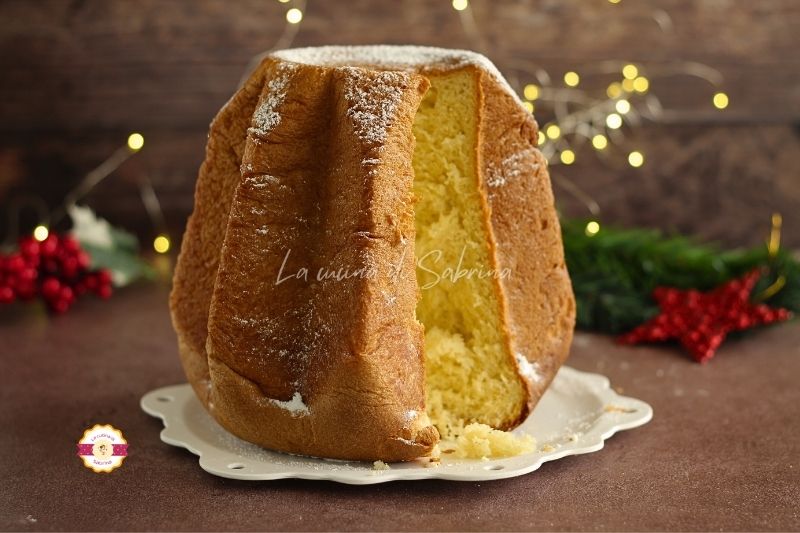
Super Soft Pandoro with Brewer’s Yeast: a recipe designed for those who want to tackle a large leavened dessert even without natural yeast, yet achieving a surprising result.
The peculiarity of this pandoro is not only its high and regular structure, but especially the softness that lasts for days: in my case, it stayed soft and pleasant for an entire week, which rarely happened to me using brewer’s yeast.
The secret is not in increasing the yeast or forcing the rises, but in the method: a well-balanced poolish, extended times, a carefully handled dough, and attentive temperature management. Even with the Thermomix, it’s possible to achieve a fragrant, elastic, and stable pandoro without resorting to shortcuts like accelerated fermentation at high temperatures.
The process respects the logic of great leavened desserts: a well-closed dough, correct rests, delicate pirlings, and a final rise that shouldn’t be rushed. It is precisely this balance that allows the pandoro to develop a soft, regular crumb that is pleasant to bite into, without becoming gummy or dry in the following days.
So I used the recipe from Giorilli’s pandoro with li.co.li. adapting it to brewer’s yeast. I kneaded with the Thermomix, but you can find the steps for using a stand mixer here and in the original recipe.
READ FAQ AND TIPS AT THE END OF THE RECIPE
OTHER INTERESTING RECIPES
- Difficulty: Medium
- Cost: Medium
- Rest time: 9 Hours
- Preparation time: 10 Minutes
- Cooking methods: Oven
- Cuisine: Italian
- Seasonality: Christmas, New Year's Eve
Ingredients
Prepare the aromatic emulsion and place it in the fridge. The poolish should be prepared the evening or at least 12 to 14 hours before starting to knead. 750 G MOLD.
- 2 oz g butter (softened)
- 1 oz g honey
- 1.5 oz g white chocolate
- vanilla (2 pods or 1 teaspoon extract)
- mandarin zest (grated)
- 1 tbsp tablespoon rum (or Marsala)
- 3/4 cup g Manitoba flour (with W360/380)
- 1/2 cup ml water
- 1 tsp g fresh brewer's yeast
- 1 tsp g sugar
- 1 cup g Manitoba flour (as above)
- 1/4 cup g sugar
- 2 oz g egg yolks
- 2 tbsp ml water
- 2 oz g butter
- 1/4 cup g Manitoba flour (as above)
- 1.5 oz g sugar
- 1 oz ml fresh whipping cream
- 1 oz g egg yolks
- 1 tsp g fine salt
- 2.5 oz g butter
- powdered sugar (to taste)
Tools
- Pandoro Mold 750 g
- Measuring Cups graduated
- Thermometer laser
Steps
Place all the ingredients and rum in a saucepan.
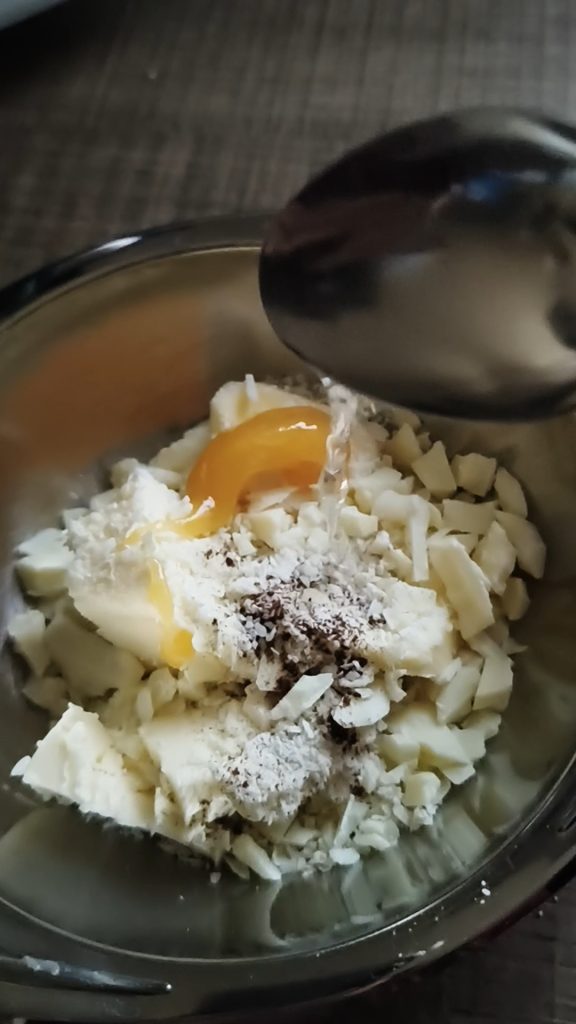
Turn on the stove to low heat and stir until the butter and chocolate are melted.
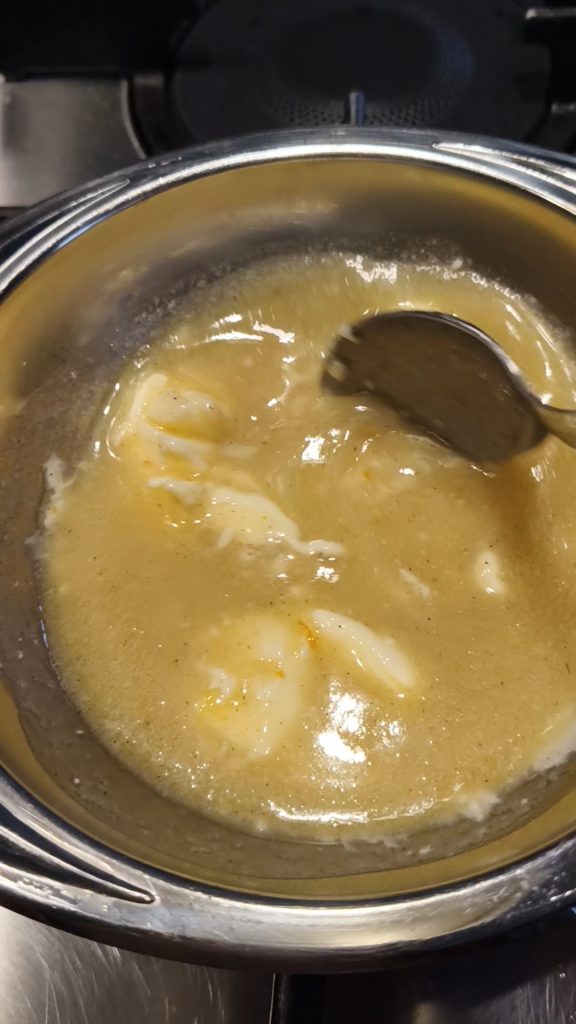
Off the heat, mix with a whisk or fork until you obtain an emulsion similar to custard. Cover with plastic wrap touching the surface and store in the fridge. When using, mix it with a whisk. If it’s too hard, slightly warm it up without melting everything. (otherwise, the butter and cocoa butter in the white chocolate will separate)

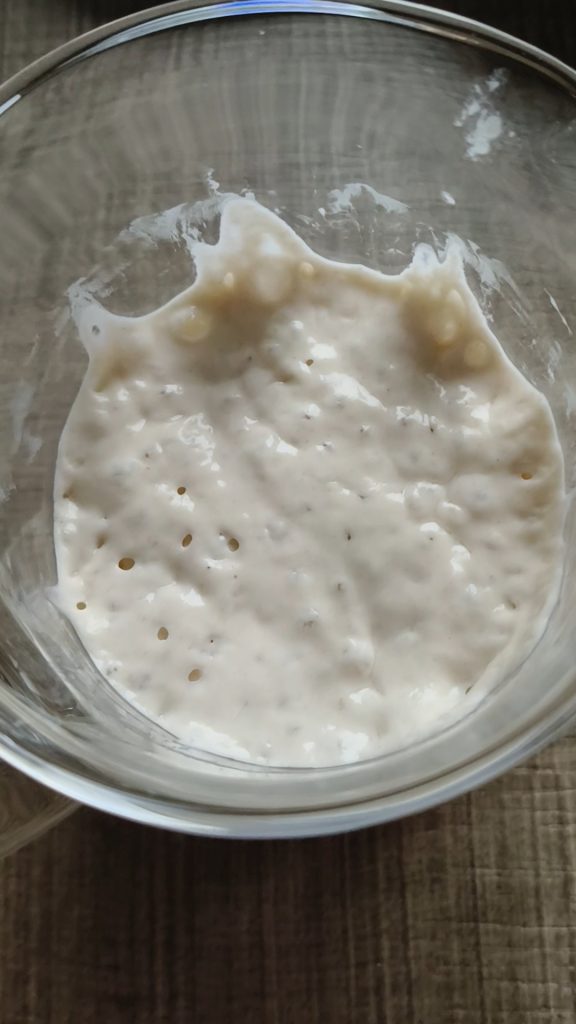
Briefly mix all the ingredients with a fork in a measuring cup. Cover and leave at room temperature for about 12 hours. The poolish is ready when, after reaching its maximum rise/fermentation, it starts to collapse in the center with small burst bubbles (see photo).
Place the poolish, water, and flour in the bowl; 20 sec./speed 3. Add the sugar; 30 sec./speed 3.
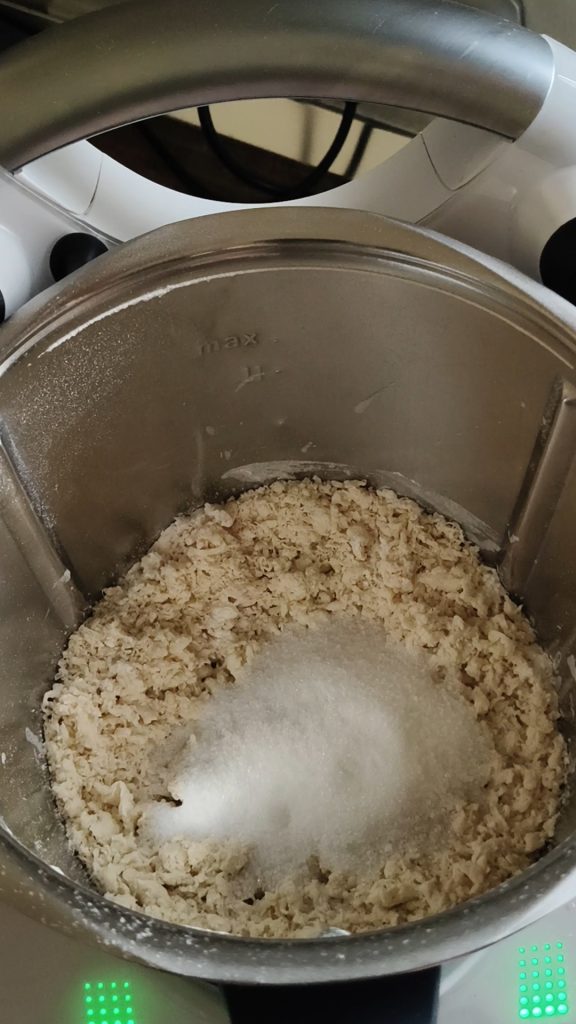
Add the yolks; 1 min./speed 3 (On average, a yolk weighs 20 g, but it’s not certain. Therefore, weigh 3 yolks and, if needed, crack an egg in a separate small bowl, separate the white and yolk, mix the yolk, and use the amount needed to reach 60 grams).

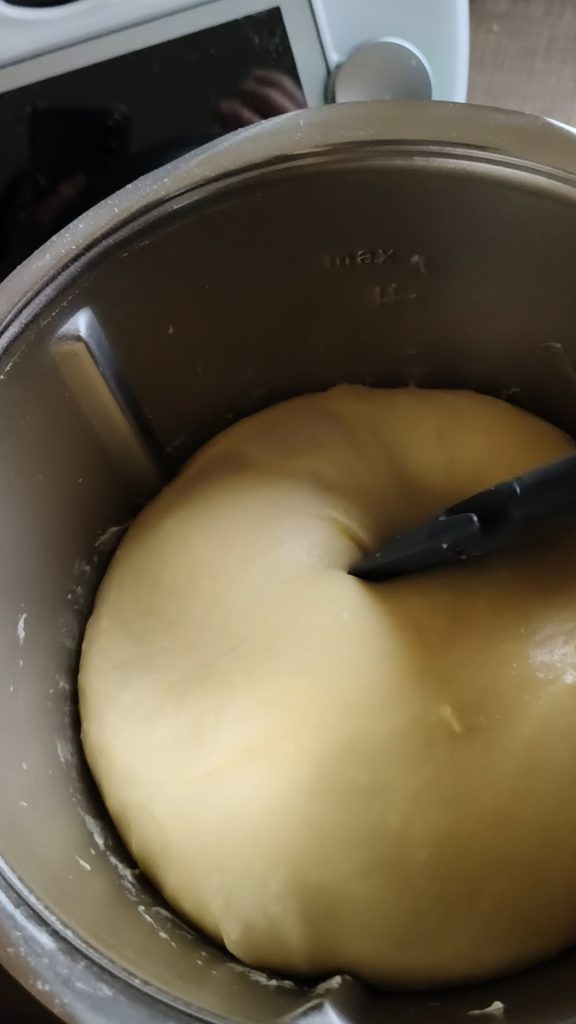
At this point, add the soft butter but not too much; 2 min./knead function. Let the dough rest for about ten minutes, first scraping to collect the dough on the sides, then mix for another 2 min./knead function. Let rise for 2 or 3 hours at about 79°F (check the temperature in the house, otherwise in the oven with the light off). It should triple.
The rising can occur either in the same bowl or, if you are new and want to be sure it triples, place the dough in a tall graduated glass and mark with a marker the starting dough and another mark to see where it should reach when tripled.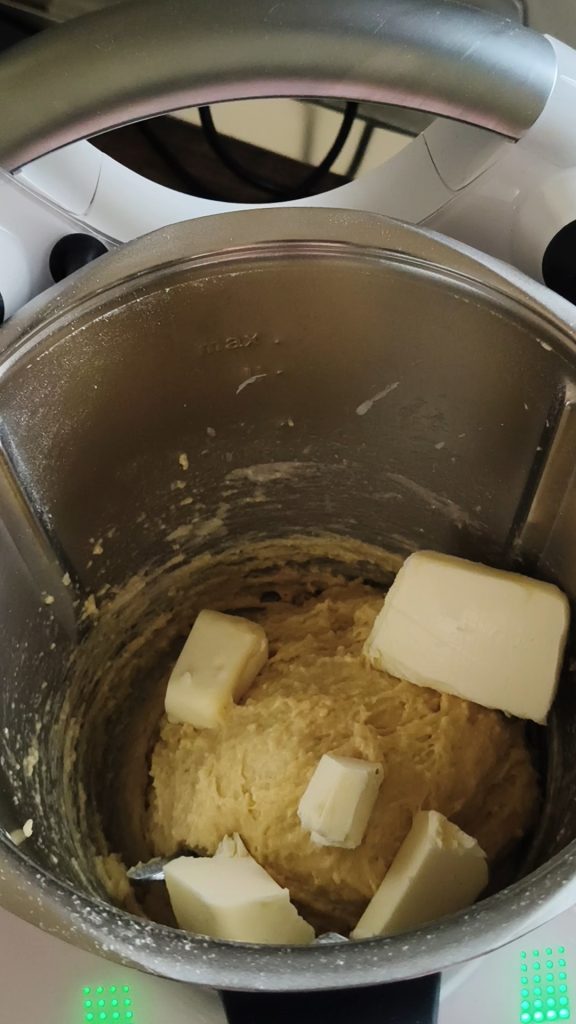
Gently deflate the dough and proceed with adding the other ingredients if the dough has risen in the bowl.
Mix the yolks and cream in a small bowl.
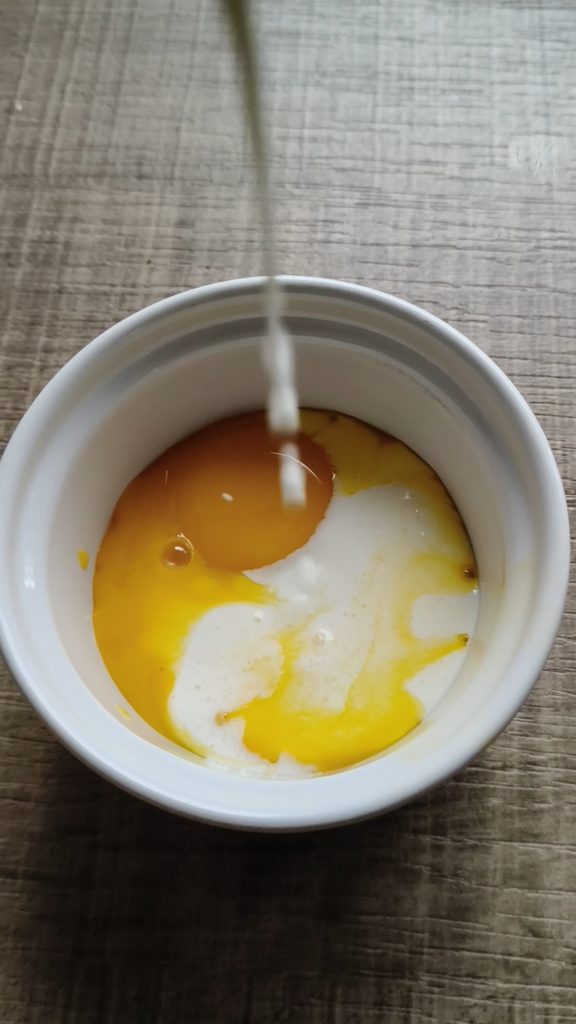
Pour the first dough into the bowl (if it has risen in another container) and the flour; 1 min./knead. Pour the sugar; 30 sec./knead, then add the yolk and cream mixture; 1 min./knead.
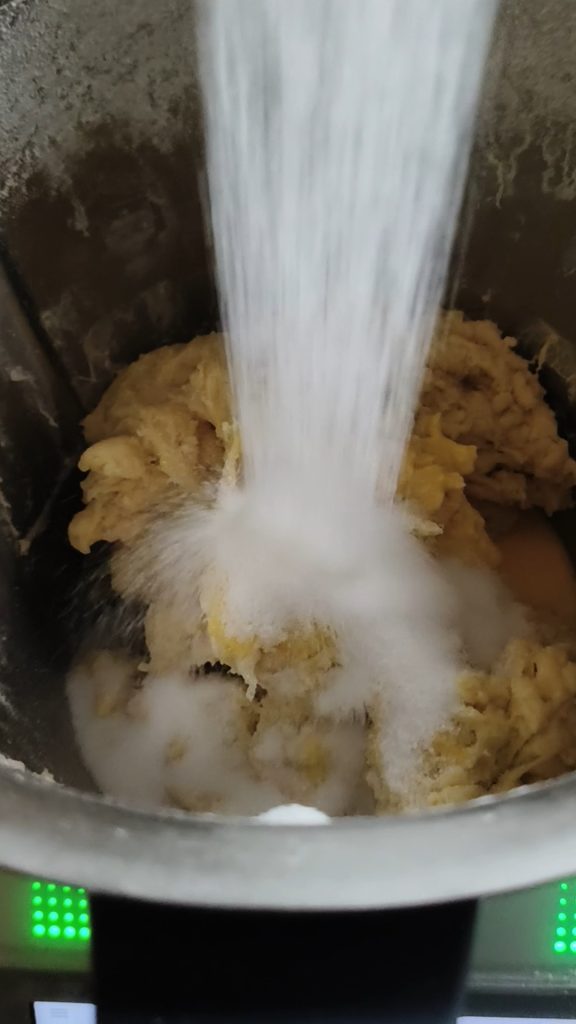
Add the salt; 20 sec./knead and add the emulsion gradually calculating 30 sec./knead at each addition. Add the slightly soft butter in two times 1 min. + 1 min./knead.
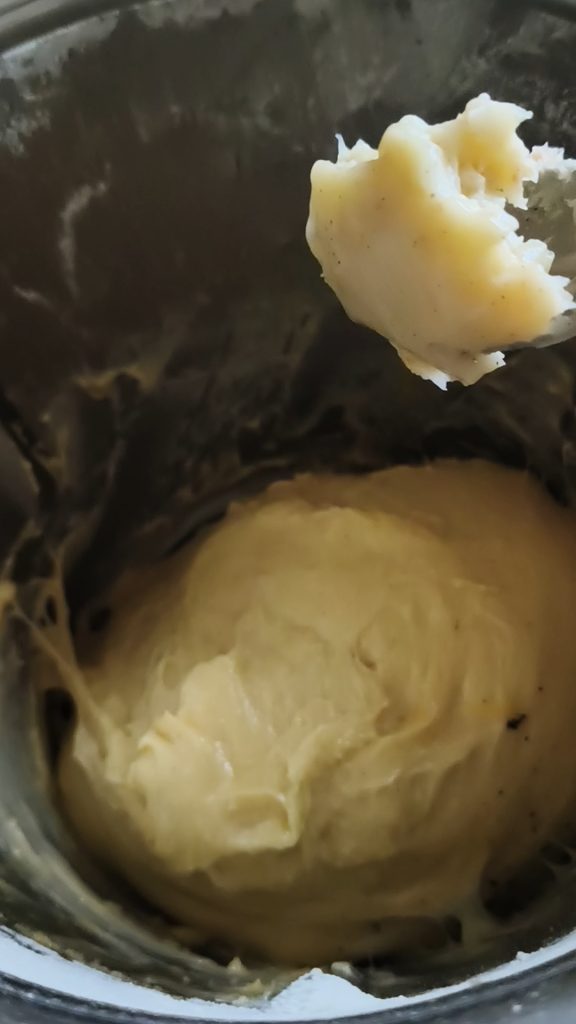
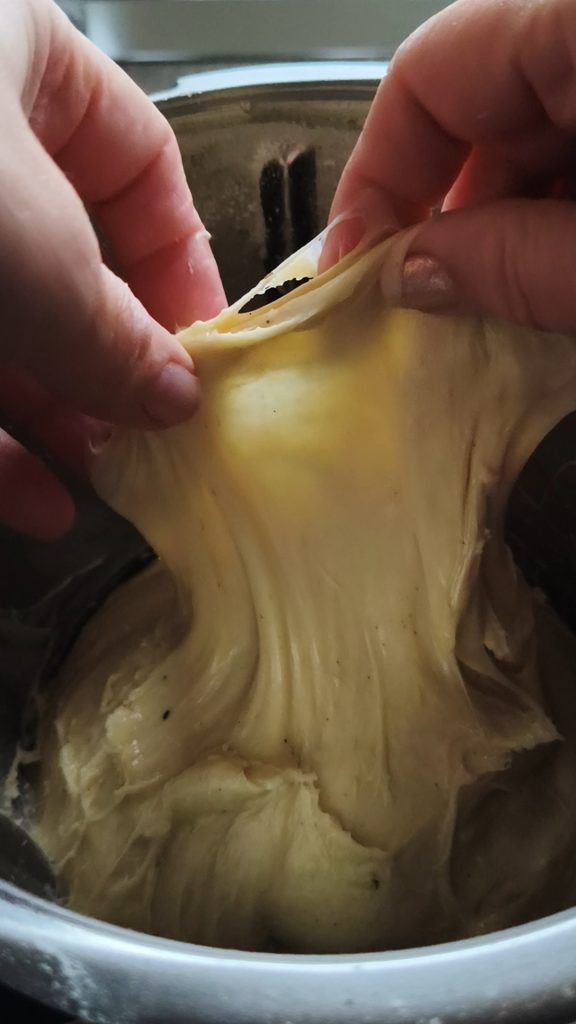
Check the dough’s windowpane and let it rest for 30 minutes, removing the bowl from the machine.
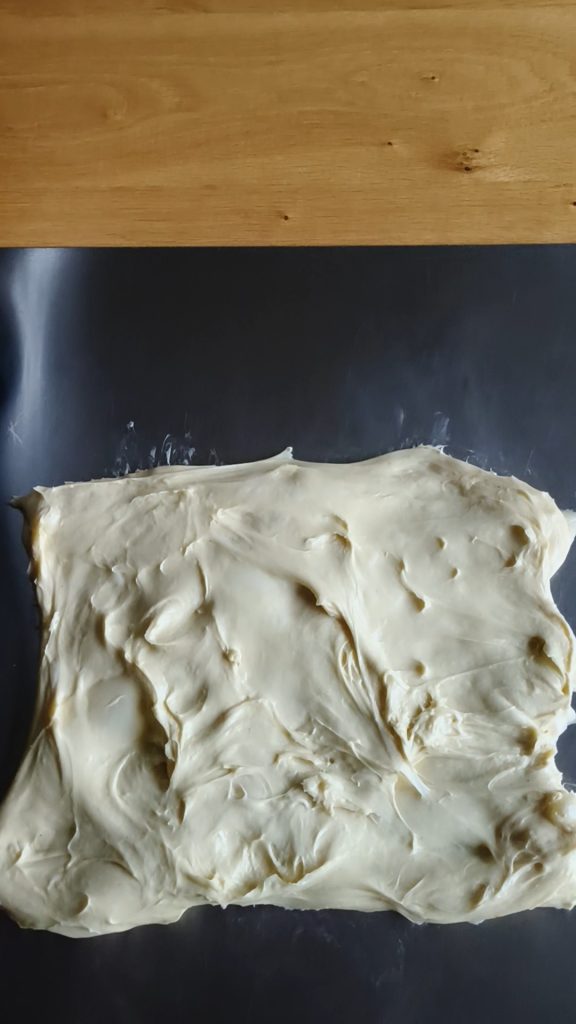
Lightly butter the work surface and stretch the dough into a rectangle.
Form a log, then coil it, and make some slap and fold folds. (see the video of the pandoro around minute 2.11)
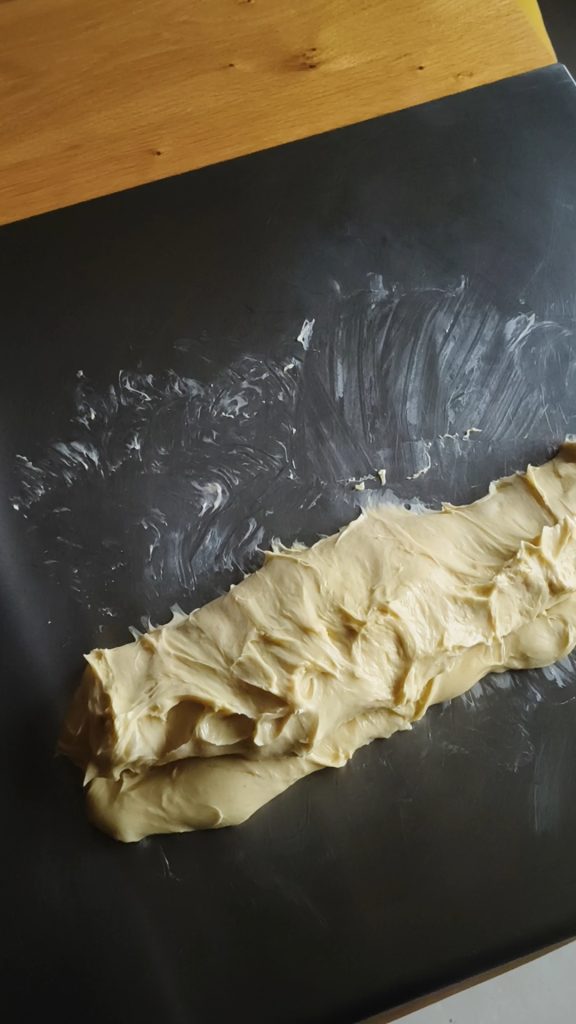
Pirl twice at 20-minute intervals, always with slightly oiled hands.
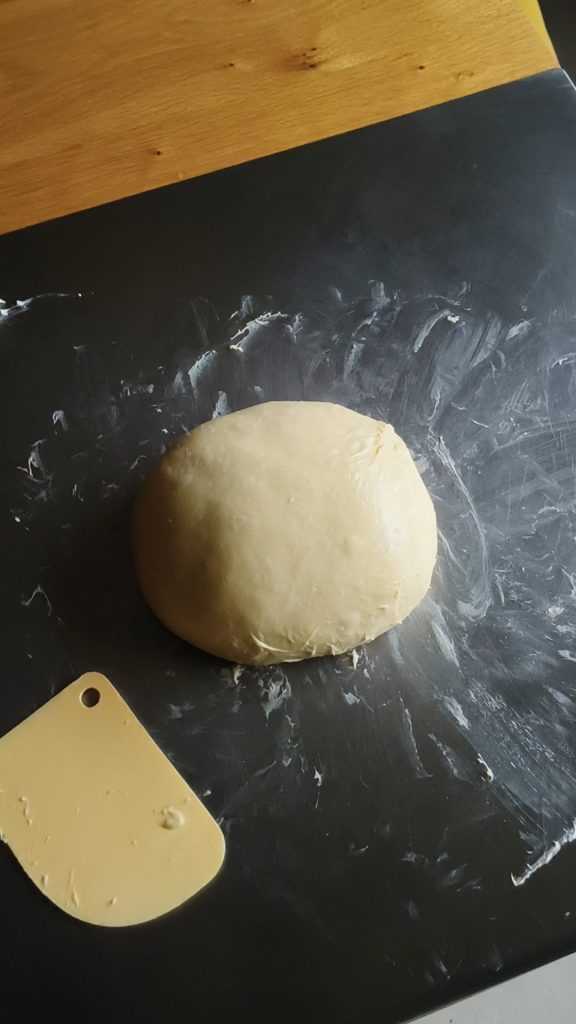
Perfectly grease (including the edges) the 750 g mold and place the dough ball, trying to have the underside of the ball (the closure) on the side.

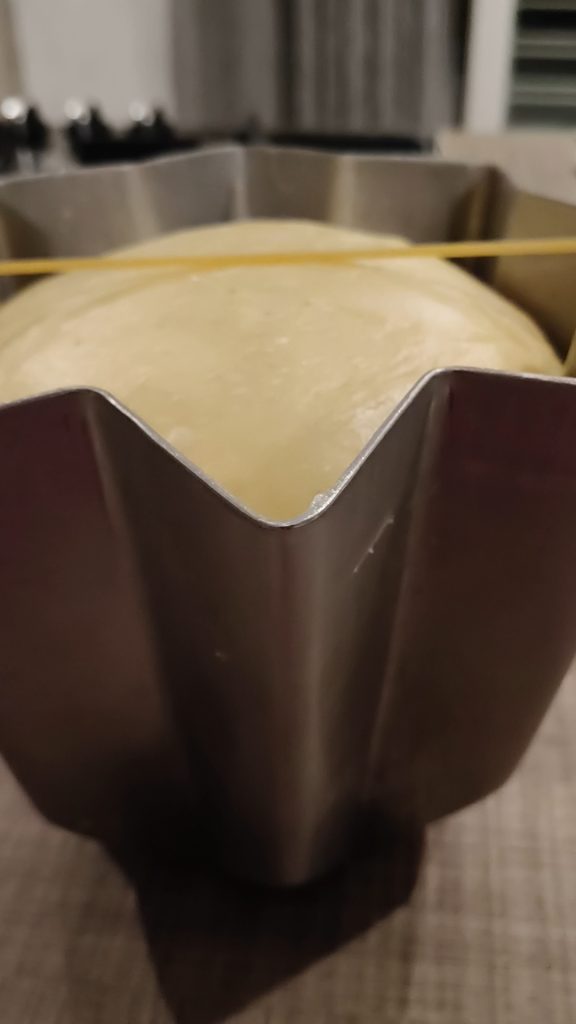
To check the rising, place a spaghetti strand on the mold’s edge and cover with plastic wrap or a disposable shower cap (obviously unused). The rising can be done in the oven with the light off, making sure it doesn’t exceed 77/79°F (since there’s no natural yeast, it’s better not to exceed these temperatures).) The pandoro is ready to be baked when the dough reaches the spaghetti.
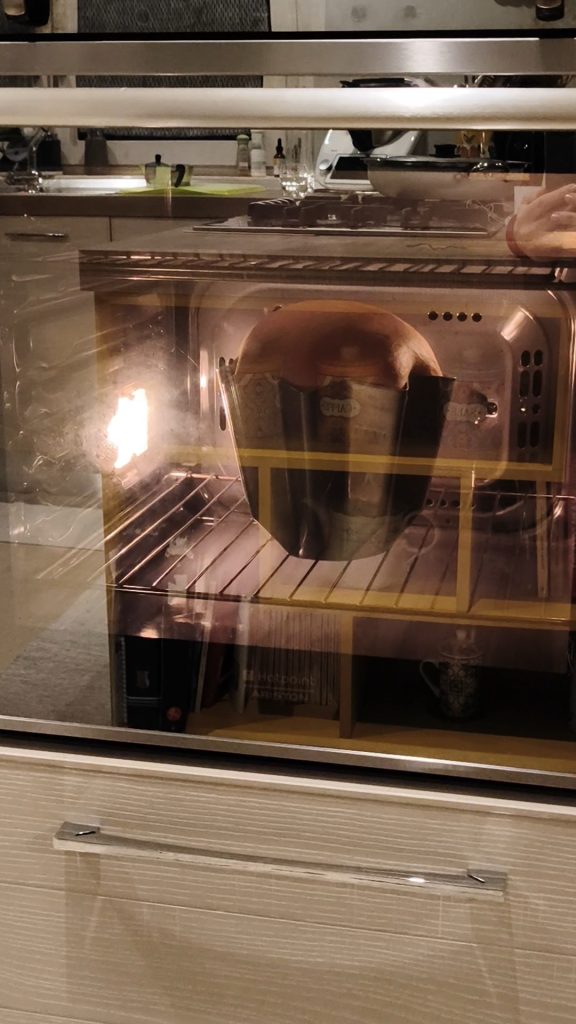
Turn on the oven to 311°F convection and bake for 45/50 minutes, core temperature (with the probe) measured about 5 minutes before 201°F or 329°F static for 40/45 minutes, always core temp 201°F. Remove from oven and let cool completely before unmolding.
Kneading with a Stand Mixer:
First dough:
In a stand mixer: poolish + flour + water for about 2 minutes, at speed 1.5. Rough dough.
Add sugar in 2 batches.
Insert yolks one at a time turning the dough (see the video of pandoro) and always keeping the sides of the mixer bowl clean.
When the dough tightens, add the soft butter in 3 batches turning it.
Incorporate well (smooth, elastic, shiny). Final dough temperature: 75–79°F with the infrared thermometer or probe.
Cover and let rise at 79–82°F until it triples in about 2–3 hours.
Second dough:
Insert the first dough into the mixer and give a few turns.
Add the flour and tighten again.
Sugar in 2 batches.
Yolks + cream gradually always turning the dough occasionally and keeping the sides of the bowl clean.
Salt.
Soft butter in several batches.
Vanilla at the end.
The dough should be:
very elastic, silky, not soft. Check the windowpane.
The video of the pandoro with li.co.li. is made with the stand mixer.
Storage:
If done well, it stays soft in a plastic food bag for a week.
How to serve the super soft pandoro with brewer’s yeast:
You can slightly warm it next to a radiator or in the off oven heated for a few minutes. Sprinkle with plenty of powdered sugar, even vanilla-flavored, and serve.
Useful Tips
Don’t tighten too much when pirl: especially the second should be gentle, so as not to overly ‘close’ the gluten network.
Don’t rush to bake: a slightly longer final rising improves cell structure.
Prepare the emulsion the day before: resting in the fridge makes it more aromatic and harmonious.
Don’t increase the yeast to achieve more softness: the risk is compromising taste and structure.
Storage: wrap the cooled pandoro in a tightly closed bag; it will remain soft for several days without preservatives.
Rising times: rising times are variable but certainly shorter than those with sourdough; here, apart from the poolish, everything is done in one day. Anyway, my first rising lasted about 3 and a half hours (I started kneading at 10 in the morning) and the second almost 4.
FAQ (Questions and Answers)
Can I substitute brewer’s yeast with dry yeast?
Yes, keeping the equivalences in mind (about 1/3). It’s important, however, to maintain the same fermentation times.
Is the Thermomix fermentation mode necessary?
In my opinion, no. For rich leavened desserts like pandoro, a gentler rising (around 77–82°F) is preferable, preserving structure and aromas. I’ve noticed, reading many comments in the Thermomix groups, that many people had poor results fermenting the dough in Varoma.
