
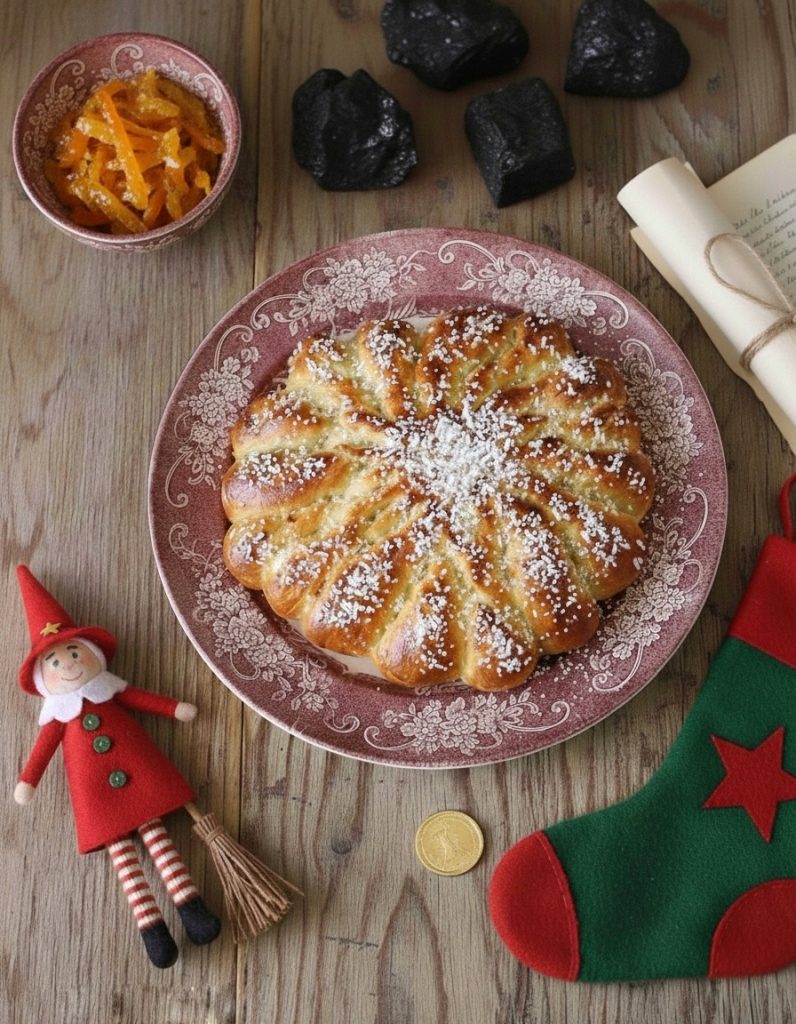
The Befana Bread is a soft and fragrant cake that brings the magic of the Epiphany to the table.
It is a soft leavened cake that encloses citrus essences and is typical of the Piedmont tradition where it is also called Fugassa d’la Befana. It is perfect to enjoy together, perhaps at breakfast or snack time, to celebrate the last day of the holidays in a convivial atmosphere.
This cake hides a surprise among its ‘petals’ that will make snack time fun for both adults and children. Tradition would have it that a coin is inserted inside the brioche dough, making the year of the lucky finder rich and prosperous. Honestly, I preferred to avoid it, but if you want to make snack time more playful, you could insert a small almond instead of the coin.
An alternative to the Befana Bread, equally good but more spectacular, is the Roscón de Reyes, typical of Spain.
Now take a minute to read the recipe and then… let’s COOK and let’s EAT!!
See also
- Difficulty: Easy
- Cost: Economical
- Rest time: 3 Hours
- Preparation time: 30 Minutes
- Portions: 6
- Cooking methods: Oven
- Cuisine: Italian
- Seasonality: Epiphany
Ingredients
- 4 cups Manitoba flour
- 3 eggs
- 1/2 cup sugar
- 1/2 cup milk (warm)
- 1/2 cup butter
- 1 tsp salt
- 3 oz candied orange peel
- 0.5 oz fresh brewer's yeast
- to taste lemon zest (grated)
- 1 egg white
- to taste sugar crystals
Tools
- 1 Stand mixer
- 1 Rolling pin
- 1 Baking pan
- Parchment paper
- 1 Brush silicone
- 1 Bowl
- 1 Small bowl
- 1 Cooling rack
- 1 Lemon grater
Steps
To prepare the Befana Bread, I used the stand mixer, but it is possible to work the dough by hand or with an electric mixer with spiral hooks.
Start by placing the flour, sugar, brewer’s yeast, eggs, grated lemon zest into the stand mixer bowl, and start mixing with the spiral hook at low speed.
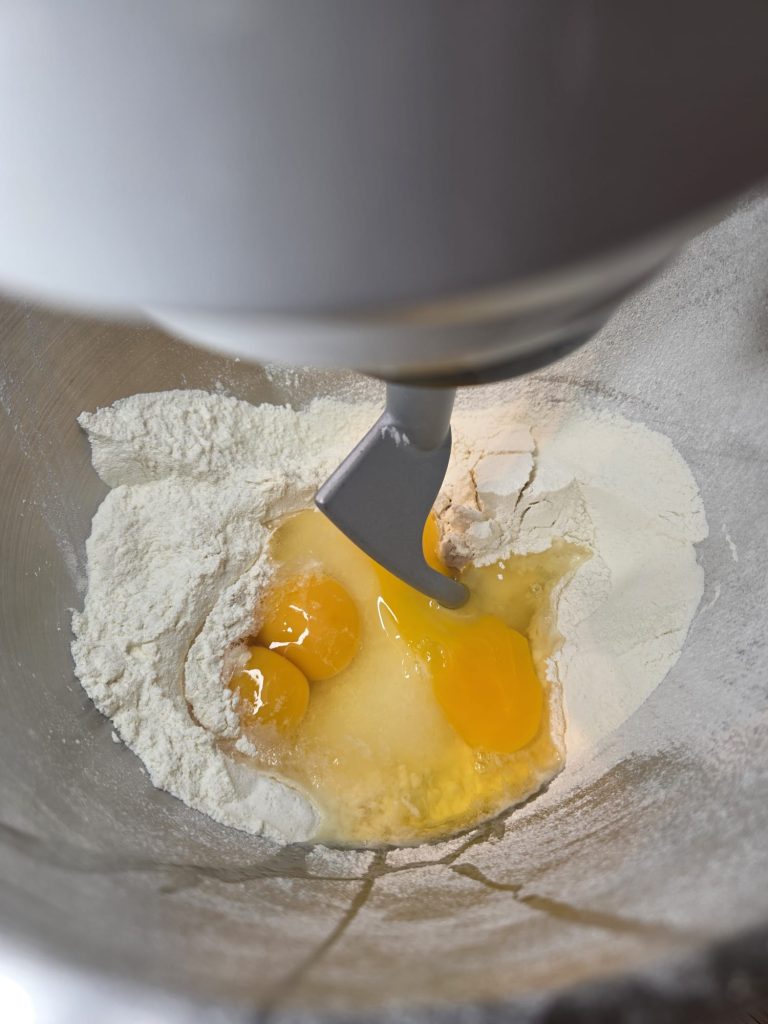
Continue by adding the warm melted butter and milk, and finally a level teaspoon of salt.
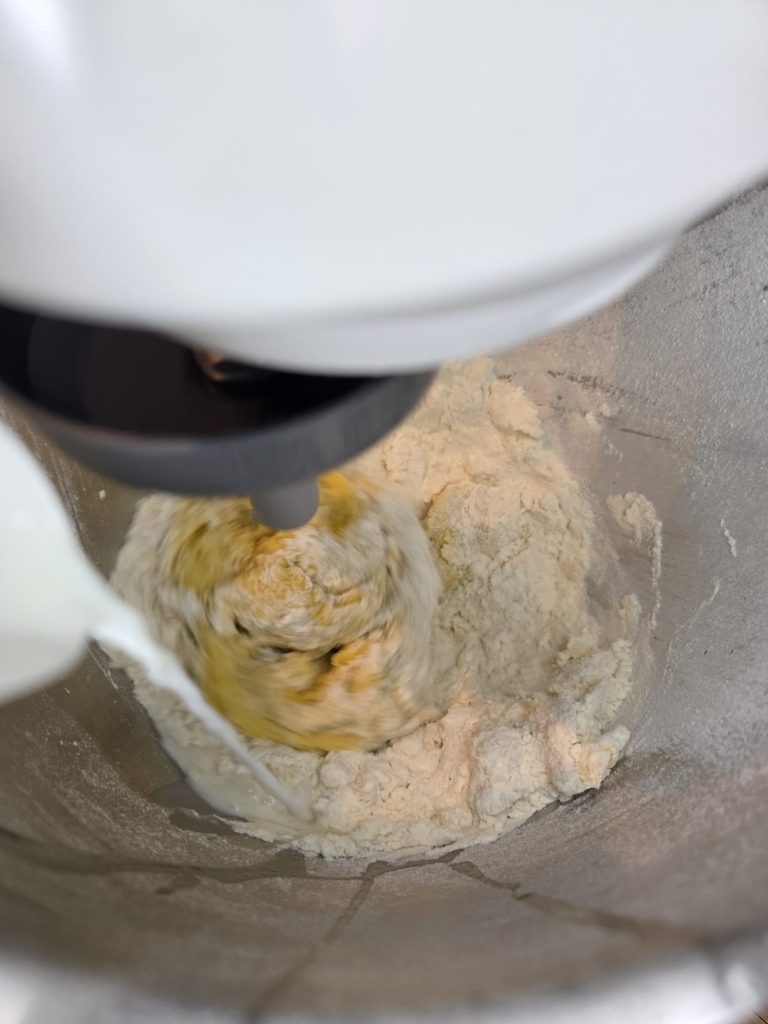
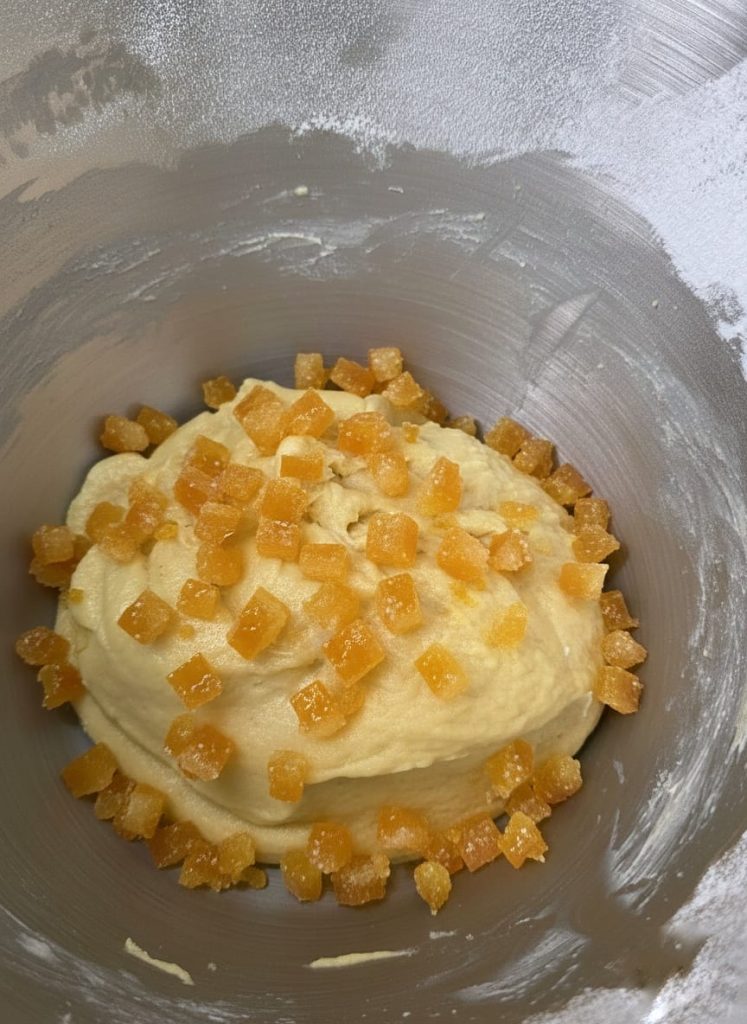
When the dough has absorbed all the liquids and acquired a homogeneous structure, add the candied orange peel.
Honestly, because my girls do not like candied fruit, in the picture I show you here they were inserted with AI to report the step as it should be.
If you, like my girls, do not like candied fruit, you can add a few drops of orange essence to the dough.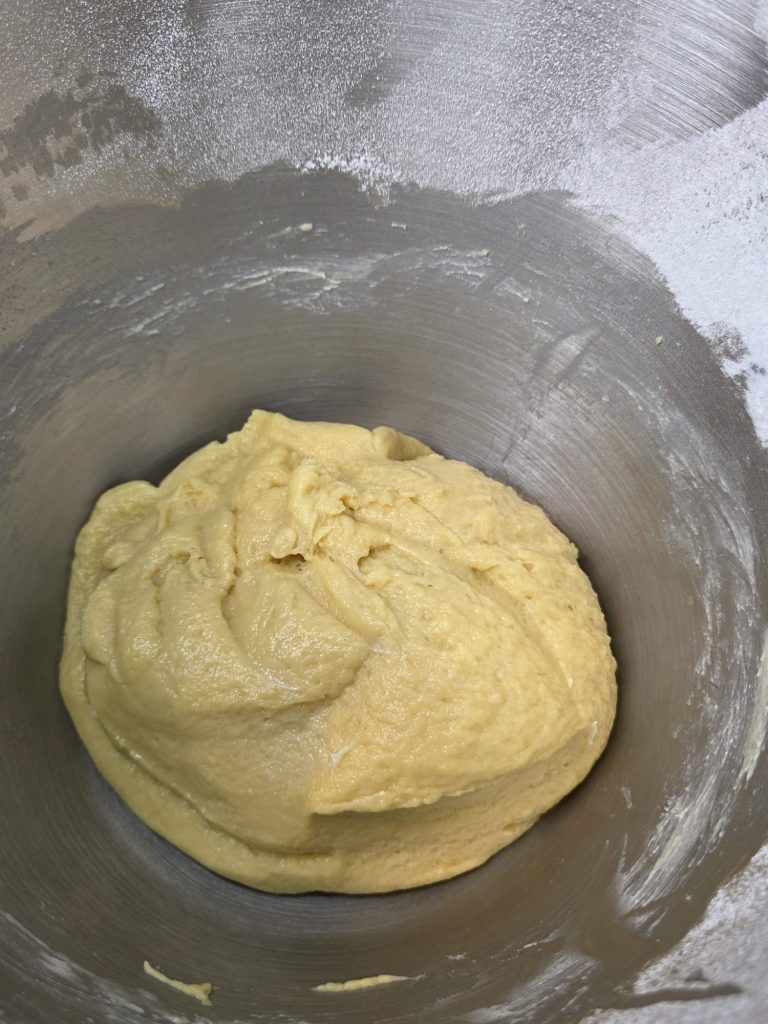
Continue to work the dough until perfectly combined.
Transfer the dough to a bowl, cover it with cling film, and let it rise until doubled in size.
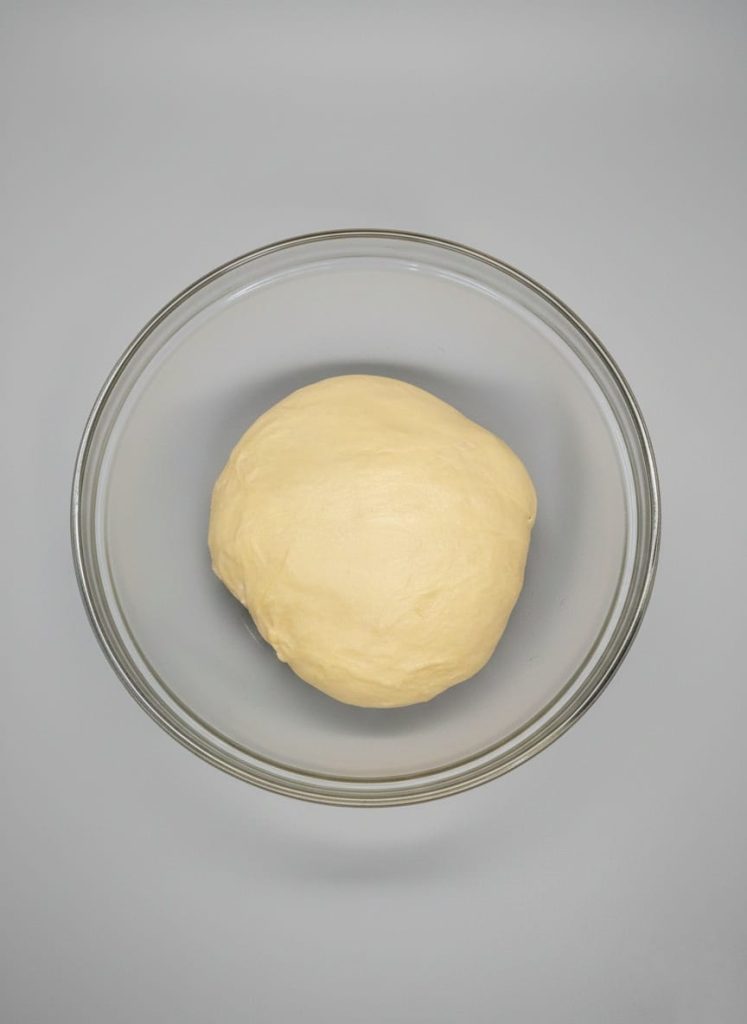
At the end of the rising, take the dough, deflate it, and transfer it to a lightly floured work surface.
Knead it again very quickly and shape it (give it a spherical, smooth, and taut shape). Let the dough rest covered on the work surface for 10 minutes, then roll it out with a rolling pin to give it a disc shape about 1 inch thick.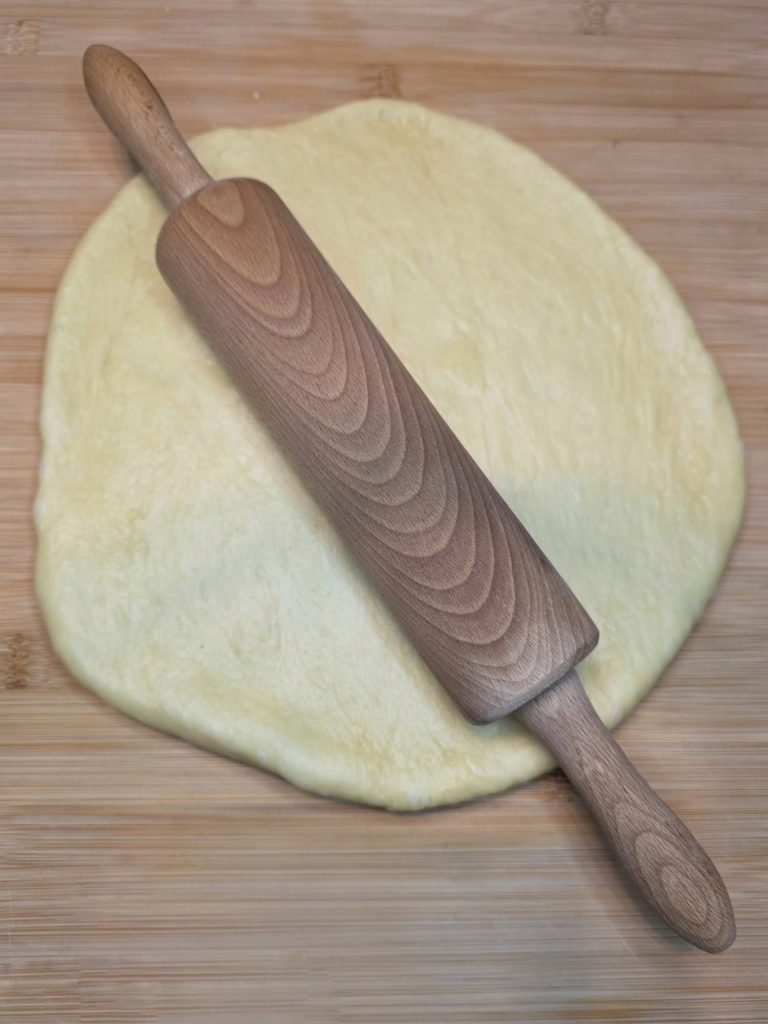
Make four cross cuts with a scraper, without reaching the center of the disc, then divide each part into another four parts.
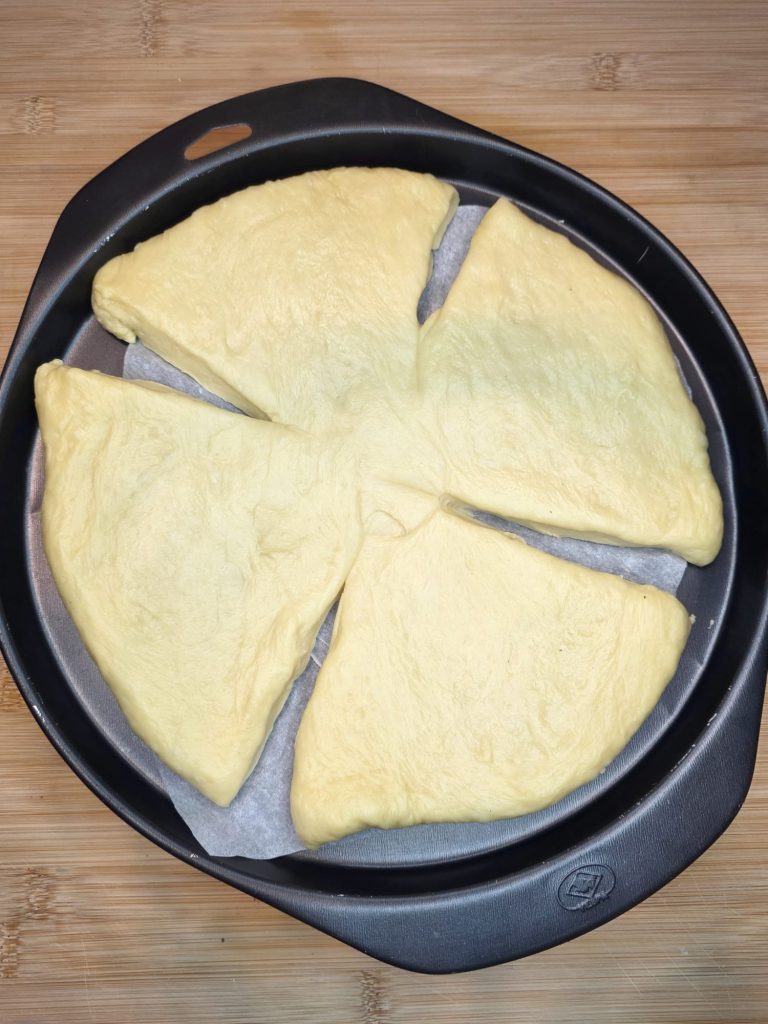
Twist each piece of dough on itself (see photo), cover the dough again, and let it rest for another hour.
At the end of the second rising, brush the surface of the bread with a little egg white and cover it with sugar crystals.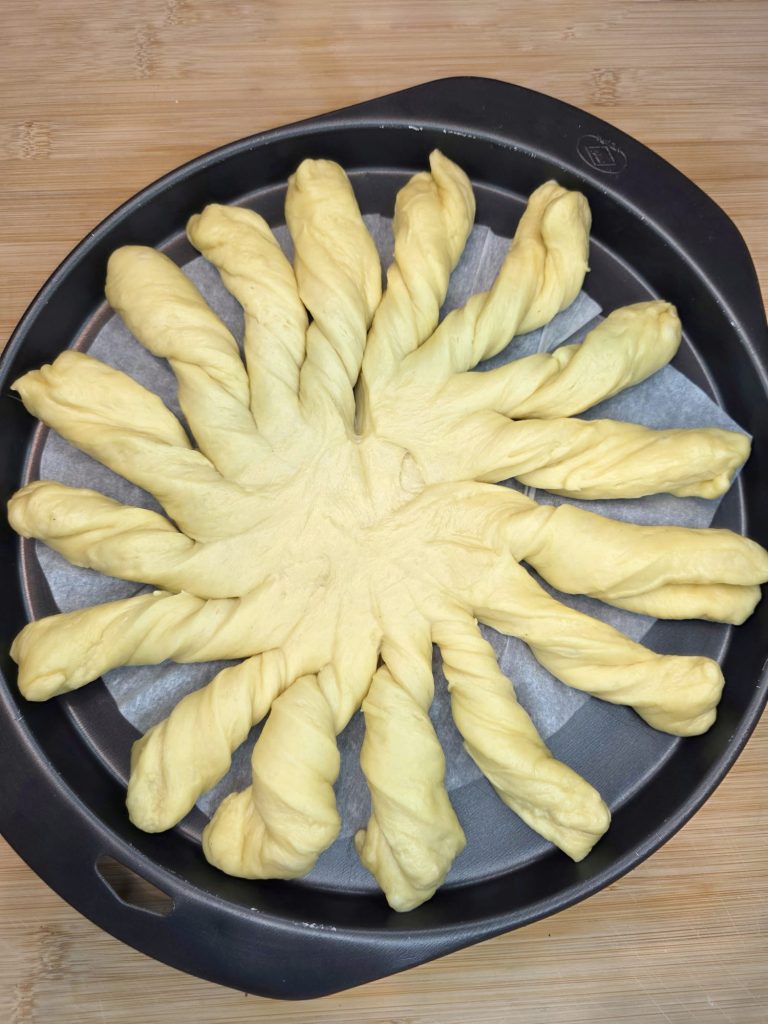
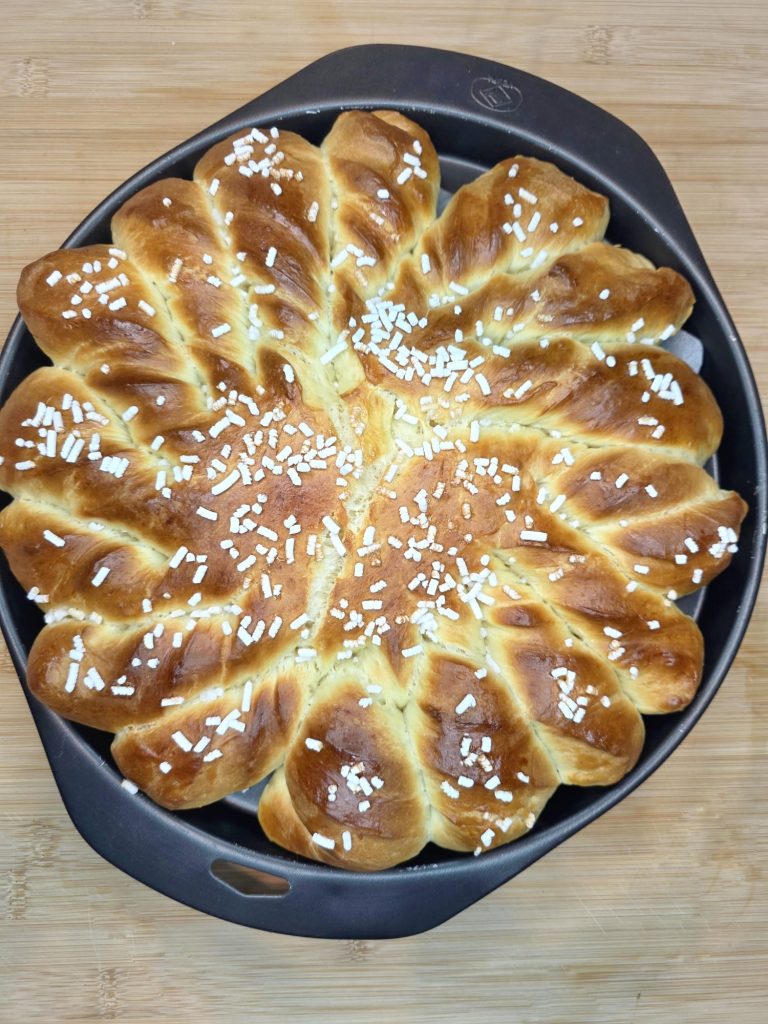
Finally, bake in a preheated static oven at 340°F for 20-25 minutes.
The surface should be evenly golden.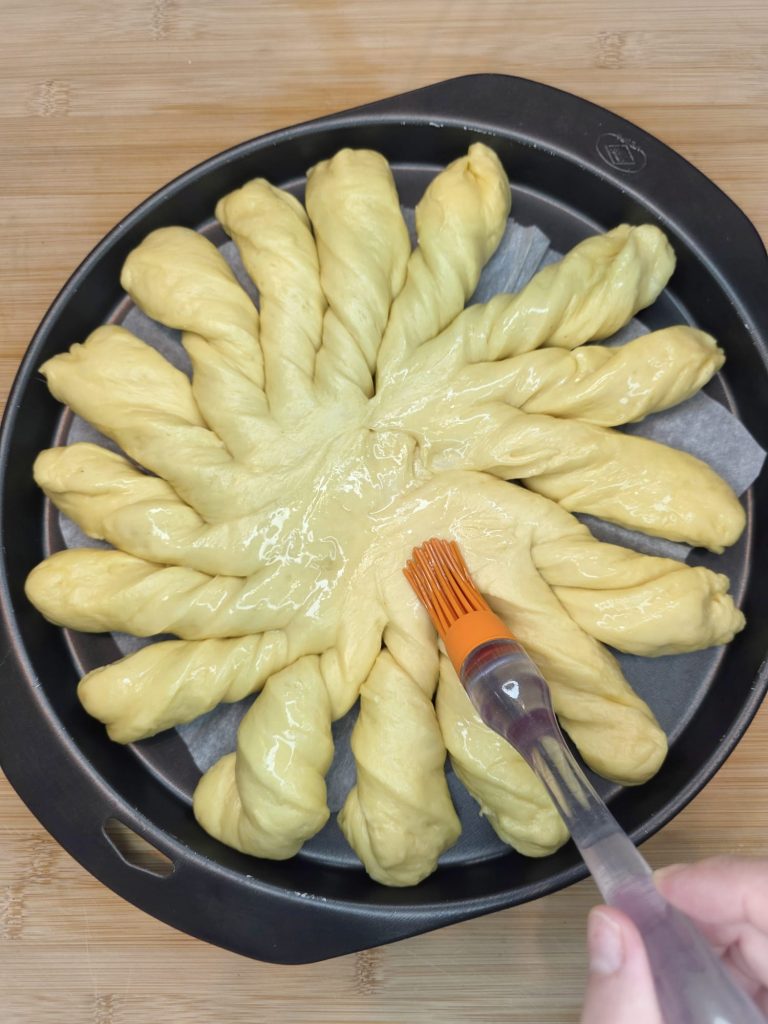
Storage
The Befana Bread, being a sweet leavened bread similar to a brioche, tends to dry out quickly if left exposed to air. Therefore, to preserve its freshness, you can wrap it in plastic wrap or food bags or store it under a glass cake dome. In this way, it should stay soft for 2-3 days.
FAQ (Questions and Answers)
Why won’t the dough rise?
This could be due to expired yeast or using milk that is too hot (over 104°F kills the yeast).
Can I use all-purpose flour instead of Manitoba?
It is not recommended. Befana Bread requires a long rising time and a strong structure to support butter and eggs. Manitoba (or a “strong” flour W300-350) is essential to achieve an airy and soft cake.
Can I prepare the dough the day before?
Absolutely yes, and it is recommended for flavor. After kneading, place the dough in a covered bowl and leave it in the refrigerator for 8-12 hours. The cold slows down the rising and matures the flavors. The next day, let it return to room temperature before forming the petals of the daisy. In this case, however, I recommend slightly reducing the amount of yeast used.
Why did my bread come out too dark on the outside but raw inside?
Butter and sugar can caramelize the crust quickly. If you see it darkening too early, cover it with a sheet of aluminum foil halfway through baking and lower the oven temperature by 10°F.
When and how should the coin (fava bean or almond) be inserted?
After deflating the dough, after the first rising, insert the fava bean, almond, or coin into the dough and work it quickly before proceeding with the typical shaping of Befana Bread.
I don’t like candied fruit, can I leave it out?
Of course, but if you want the bread to have the characteristic orange aroma, you can add grated orange zest and a vial of orange flavor to the dough.
