
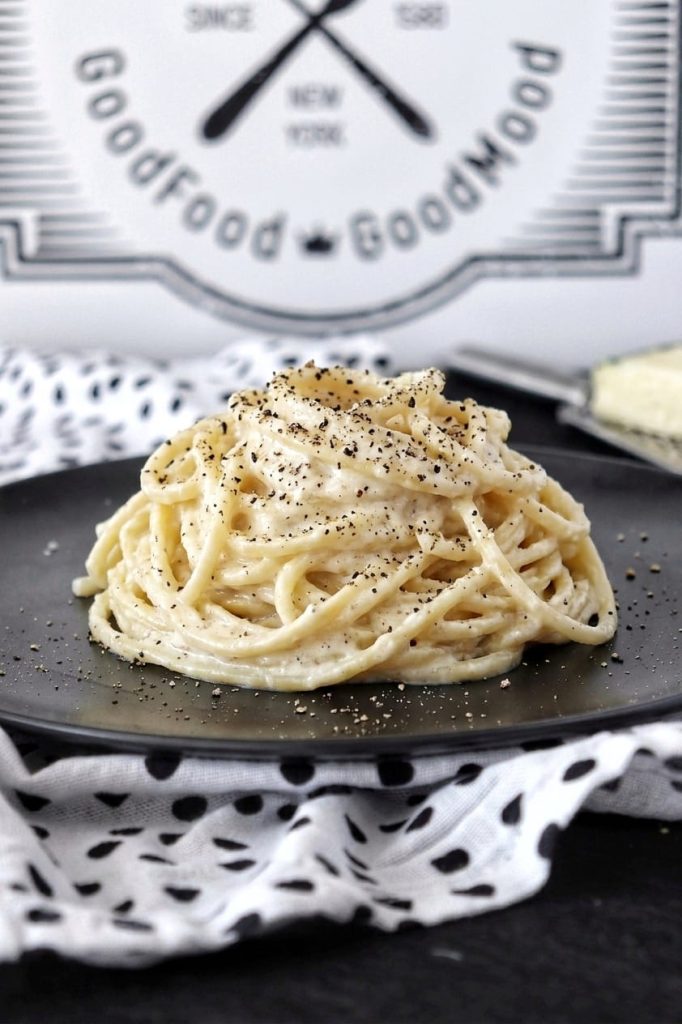
The cacio e pepe pasta is the classic first course prepared with only three ingredients and 10 minutes, which is the cooking time of the pasta. A dish that teases the taste buds with the salty flavor of Pecorino and delights the palate with the aromatic taste of pepper.
Seeing such a short list of ingredients, anyone would be tempted to think that cacio e pepe is a dish you can make with your eyes closed, a bit like tuna pasta for students living away from home. However, anyone who has tried this dish at least once knows it hides some pitfalls, especially when it comes to the final texture, which must be creamy with the Pecorino that does not “separate”.
I won’t hide that I’ve messed up this dish quite a few times, but I never gave up until I found the foolproof way to get a great cacio e pepe worthy of the best Roman osterias.
Where was I going wrong? First of all, by using pre-ground pepper and not toasting it, but the biggest mistake I made was creating a sauce with the Pecorino and pasta cooking water that was too runny, into which I tossed the spaghetti once cooked.
Nothing could be more wrong and today I reveal all the tricks so you don’t make the same mistakes I did, including how to grate the cheese.
Now take a minute to read the recipe and then… let’s cook AND eat!!
See also
- Difficulty: Medium
- Cost: Budget
- Preparation time: 10 Minutes
- Cooking time: 10 Minutes
- Cooking methods: Stovetop
- Cuisine: Italian
- Seasonality: All seasons
Ingredients
- 14 oz pasta
- 7 oz Pecorino Romano
- 3 tbsp peppercorns
- as needed pasta cooking water (for the pasta)
Tools
- 1 Mortar and Pestle
- 1 Frying Pan
- 1 Pot
- 1 Ladle
- 1 Bowl
- 1 Grater
- Whisk
- 1 Skimmer
Steps
To prepare cacio e pepe pasta, first bring the water for the pasta to a boil in a large pot. Salt the water taking into account the saltiness of the Pecorino you will use. This tip will also help you get an optimal final result, not overly salty.
In the meantime, finely grate the Pecorino using the smallest holes of your grater.
Continue by toasting the peppercorns in a skillet until they release all their aroma; at this point put them into a mortar and grind them, not too finely. Then lower the pasta into the now boiling water and return the ground pepper to the skillet (reserve a little for the finished dish).
Scoop out a little pasta cooking water with a ladle, let it cool for a few seconds and then add it little by little to the bowl with the Pecorino. The final result should not be a runny cream, but a kind of paste that will then melt in the skillet.
Add a ladleful of cooking water to the skillet with the pepper and let it infuse for a few minutes before adding the pasta, removing it halfway through cooking with a slotted spoon.
Finish cooking the pasta in the skillet risotto-style, adding a little cooking water at a time. Once ready, turn off the heat, move the skillet away from the burner and wait a few seconds for the temperature in the pan to drop.
At this point add the Pecorino paste to the skillet and let it melt while tossing the pasta and adding small amounts of cooking water until you obtain a lovely creamy consistency.
Finish with the extra pepper you set aside, plate up and serve your cacio e pepe while still hot 😉.
Storage
Cacio e pepe is a dish that tastes best just made, when the Pecorino cream is still smooth and enveloping. However, if you have leftovers, you can store them with a few precautions. Once cooled, transfer it to an airtight container and keep it in the fridge for up to 1 day.
When ready to eat, reheat it in a skillet, adding a little hot water which will help the Pecorino become creamy again.
FAQ (Questions & Answers)
Can I use a cheese other than Pecorino Romano?
The traditional cacio e pepe recipe calls exclusively for Pecorino Romano, which has the decisive flavor and perfect saltiness for this dish. Alternatively, you can use a small portion of Parmesan to make the cream milder, but the final taste will be slightly different from the original version.
What is the best pasta for cacio e pepe?
Roman tradition prefers tonnarelli or spaghetti because their surface holds the Pecorino and pepper cream better. Bucatini or rigatoni can also work, but long shapes are generally the most used.
Why does cacio e pepe get lumpy?
The secret is the balance between finely grated Pecorino and starchy pasta cooking water. By mixing vigorously you create a natural emulsion that makes the sauce velvety without adding butter or cream.
Can cacio e pepe be prepared in advance?
It’s best to prepare it at the moment because the cream tends to thicken quickly. If necessary, you can grate the Pecorino and toast the pepper in advance so the actual preparation will be faster.
How much Pecorino is needed for cacio e pepe?
The most used ratio is about 50 g of Pecorino Romano for every 100 g of pasta. This ratio allows you to obtain a flavorful but balanced cream.
What is the difference between cacio e pepe and gricia?
Cacio e pepe is made with pasta, Pecorino and pepper, while gricia also adds guanciale.
