
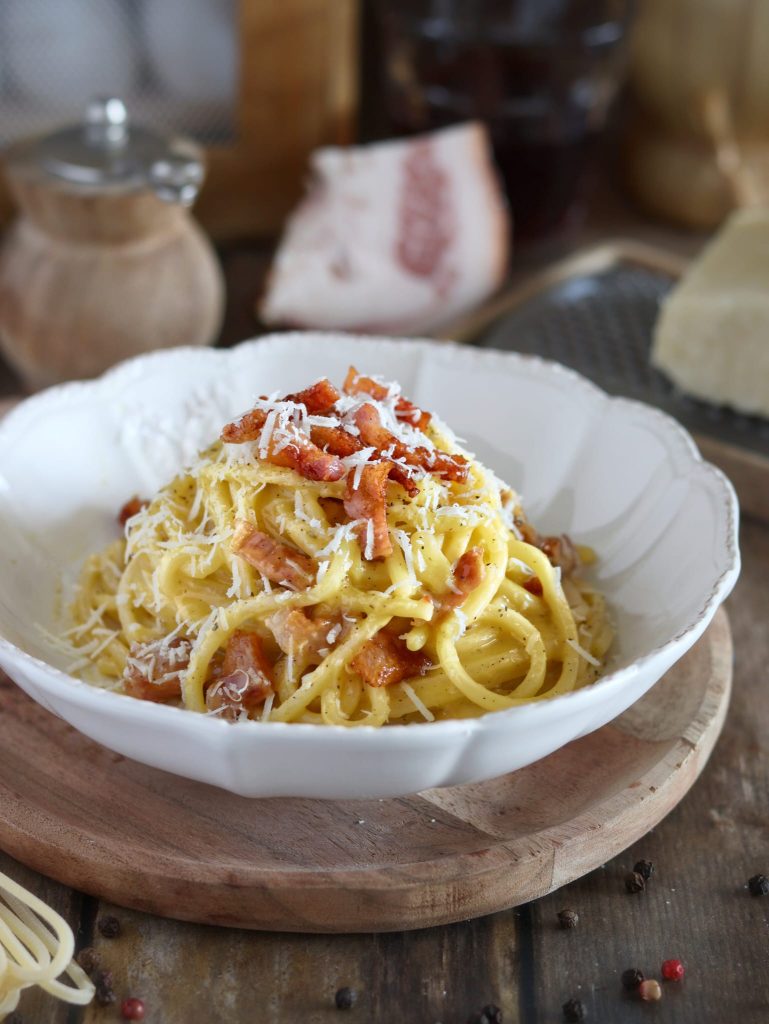
The pasta alla carbonara is a typical dish of the Roman culinary tradition.
Entering one of the many taverns scattered around the Capital, or the typical fraschette of the Castelli Romani, you will always find it on the menu along with other iconic dishes of Lazio cuisine like cacio e pepe, amatriciana, and gricia.
The basic ingredients of this dish are eggs, cheese, guanciale, and pepper.
It is precisely on the choice of ingredients that the controversies related to this dish are born.
The purists of carbonara, in fact, abhor the idea of using a cheese different from pecorino and pancetta or bacon instead of guanciale.
Many people, over time, have adapted the recipe to their liking by adding who onion who, even, cream (and here some starred chef has lost their way!!😅😅).
Even on the choice of the type of pasta, there are different schools of thought. There are those who prefer it long like spaghetti or tonnarelli and those who prefer it short and ribbed like mezze maniche and rigatoni.
But apart from the choice of ingredients, what is needed to achieve a good dish of pasta alla carbonara, are certainly all those precautions necessary, so that the egg does not cook, returning a “frittata” effect in the dish, but remains smooth and creamy.
Would you like to discover them with me?
So… let’s cook and eat!!
See also:
- Difficulty: Medium
- Cost: Medium
- Preparation time: 20 Minutes
- Portions: 4
- Cuisine: Italian
Ingredients
- 11 oz pasta (rigatoni or spaghetti)
- 1 egg
- 4 yolks
- 7 oz guanciale
- 3.5 oz pecorino romano
- to taste pepper
- 1 Frying pan
- 1 Pot
- 2 Bowls
- 1 Whisk
- 1 Pot
Steps
To prepare pasta alla carbonara, start by cutting the guanciale into strips, then place it in a non-stick pan and let it cook without adding other fats until it becomes crispy on the outside.
Once ready, transfer it to a small bowl, leaving the fat it released in the pan.
At this point, in a large pot, bring slightly salted water to a boil. The seasoning will then give the right saltiness to the finished dish.
Meanwhile, in another bowl, combine the yolks, egg, finely grated pecorino, and black pepper.
As for the pepper, my advice is to limit its use at this stage of the dish preparation, especially if it will also be consumed by children. You can then add more to taste when the dish is finished.
Mix everything with the tines of a fork or, better yet, with a whisk. Then also add a tablespoon of fat released from the guanciale, taking it from the pan, and continue mixing until you get a nice thick cream.
Once the pasta is in, let it cook for a couple of minutes less than the cooking time indicated on the package.
Add a tablespoon of pasta cooking water to the egg mixture to dissolve any cheese lumps.
When the pasta is ready, with a slotted spoon, transfer it to the pan with the guanciale fat. Finish cooking by adding small doses of still hot and starchy water to coat the pasta until it is completely enveloped in a “translucent cream”.
At this point, turn off the heat, remove the pan from the still hot plate, and let a few seconds pass so that the pasta temperature drops slightly. This operation will avoid the “frittata effect” of the egg. Then pour the egg cream into the pan and stir well, adding, if necessary, a little more pasta cooking water.
Finally, add the crispy guanciale and give it one last stir.
Once plated, you can add to your pasta alla carbonara a final and abundant sprinkle of ground black pepper.
For purely scenic effect, since the flavors are already all inside the dish, you can further complete the dish with a sprinkle of pecorino and some strips of crispy guanciale that you have set aside.
I can only wish you bon appétit!! 😋
