
The pastry cream is one of the most iconic and versatile basic preparations in Italian and international pastry. Soft, velvety and fragrant, this cream is used to fill sponge cake layers, tarts, cream puffs, mille-feuille, sweet rolls, but it’s also delightful on its own or served with a bowl of fresh fruit.
A few simple ingredients that must, however, be extremely fresh and of good quality such as eggs, milk, sugar, the starch for thickening and lemon and vanilla to give the classic aroma to the pastry cream.
It is often used as a base for other creams like diplomat cream and lends itself to many variations including chocolate pastry cream.
Now take a minute to read the recipe and then… let’s cook and eat!!
See also
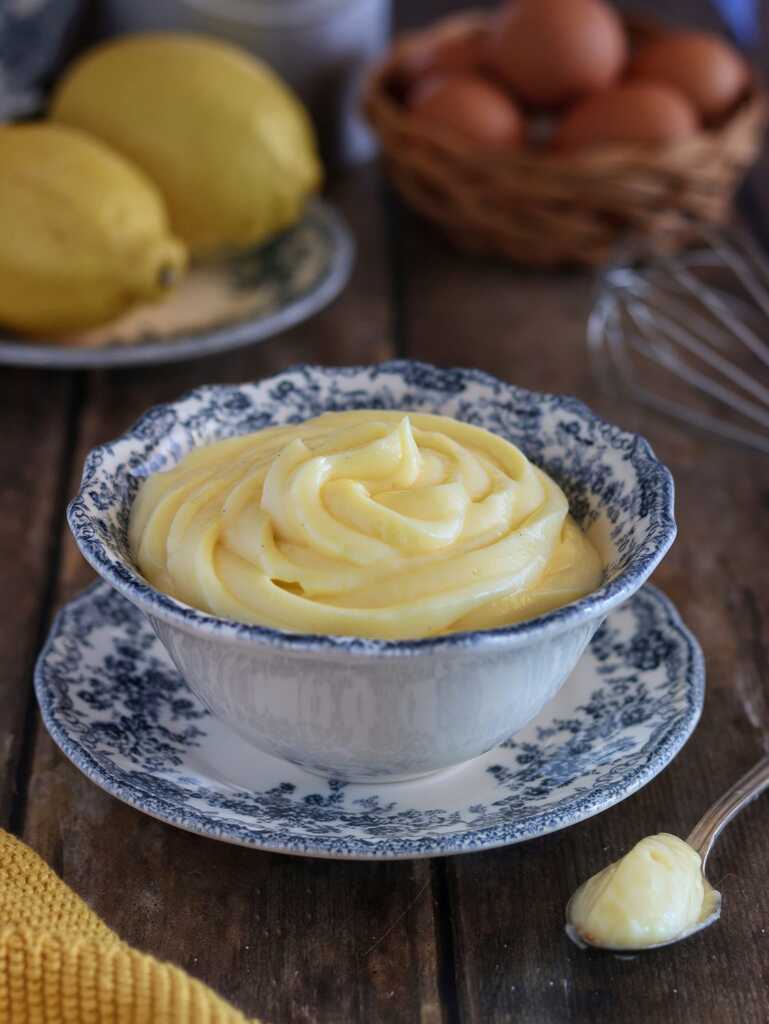
- Difficulty: Very easy
- Cost: Low cost
- Preparation time: 10 Minutes
- Cooking methods: Boiling
- Cuisine: Italian
- Seasonality: All seasons
Ingredients
- 4 egg yolks
- 1/2 cup granulated sugar
- 4 tbsp cornstarch (maizena) (or rice starch)
- 2 cups whole milk
- to taste lemon zest
- 1 teaspoon vanilla extract (in paste form or seeds from one vanilla pod)
Tools
- 1 Kitchen scale
- 1 Bowl
- 1 Sieve
- 1 Whisk silicone
- 1 Strainer
- 1 Saucepan
- 1 Bowl stainless steel
- 1 Plastic wrap
- 1 Thermometer kitchen
Steps
To prepare the pastry cream, first place a stainless steel bowl in the freezer. The purpose of this is to lower the cream’s temperature more quickly once it’s cooked.
Then heat the milk with the lemon zest and the vanilla seeds if you are using a pod. Stir occasionally until it just reaches a simmer.
Meanwhile, in a bowl combine the egg yolks, sugar, sifted starch and the vanilla paste if you are not using the pod and seeds in the milk. Whisk continuously by hand to prevent the starch from cooking the yolks and making the cream lumpy.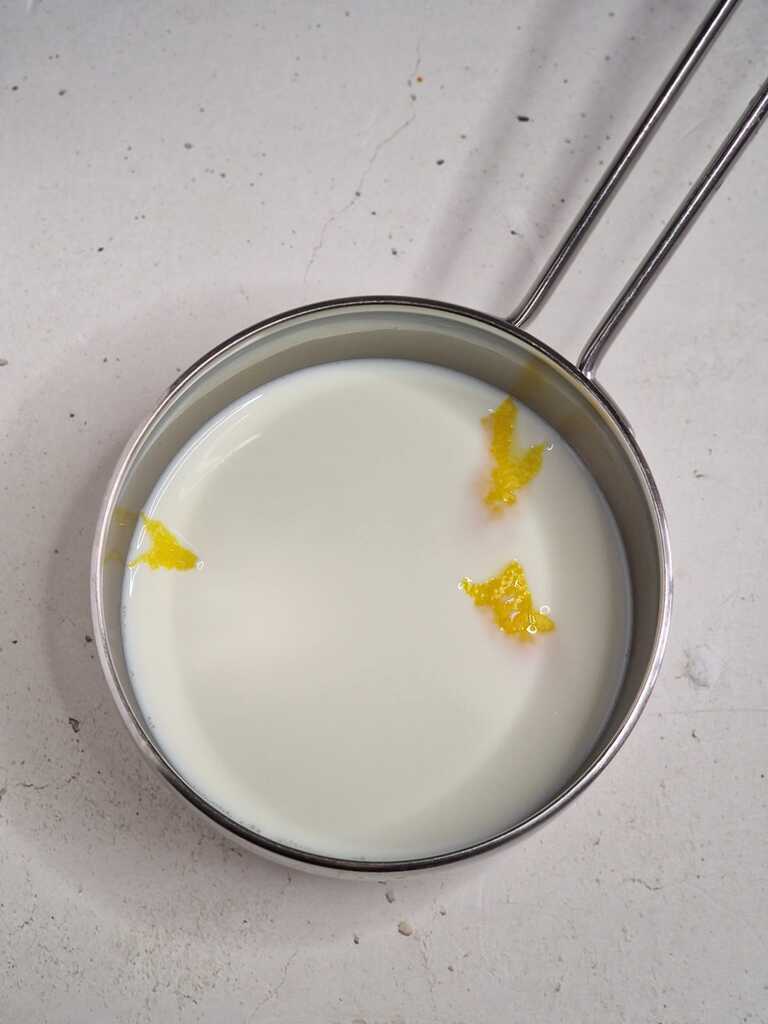
When the milk has reached a gentle boil, strain it and pour it gradually into the egg, sugar and starch mixture, mixing between additions.
When you have a uniform mixture, pour it back into the saucepan.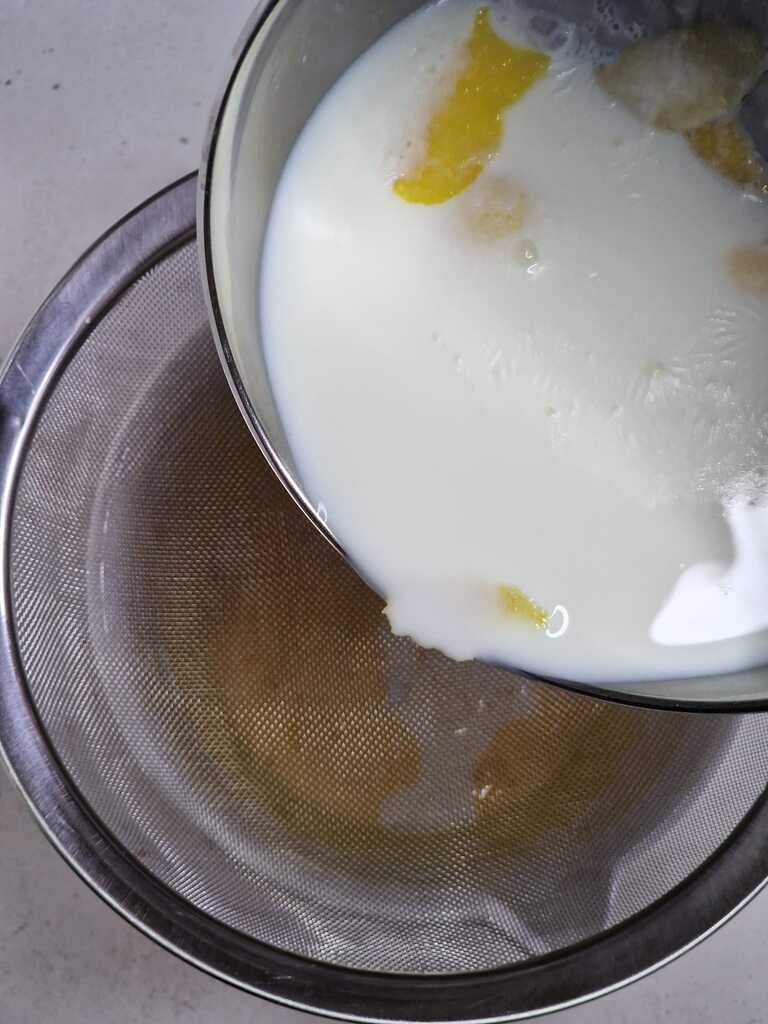
Return the saucepan to the heat and thicken the mixture while stirring continuously with the whisk.
When the pastry cream has reached a good, full-bodied consistency and looks smooth and glossy, transfer it into the chilled stainless steel bowl and continue whisking briskly until the cream reaches 122 °F, just below cooking temperature.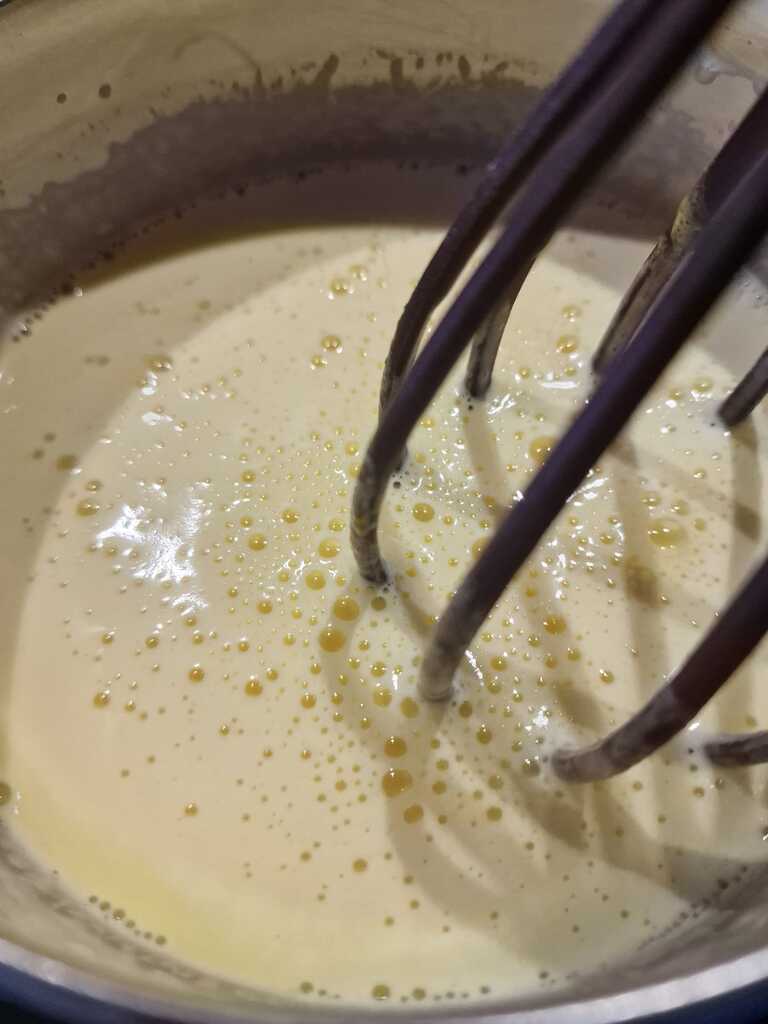
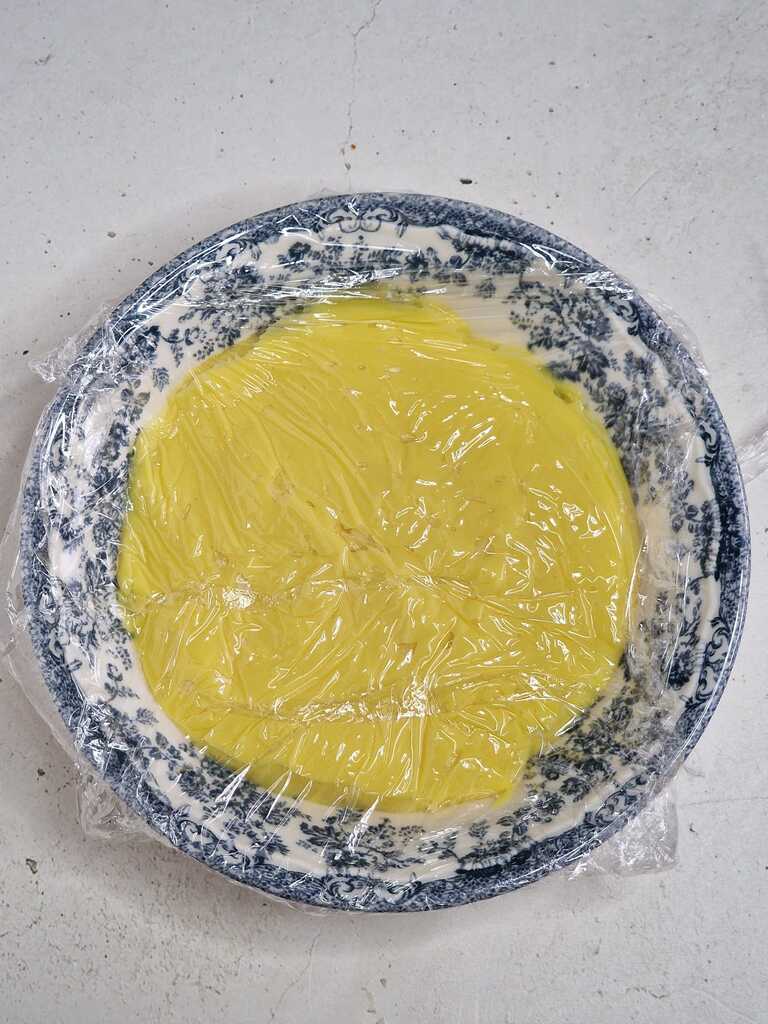
At this point your pastry cream is ready to use; alternatively, transfer it to a bowl, cover with plastic wrap and store in the fridge until ready to use 😉.
Storage
Storage
Pastry cream can be stored in the refrigerator covered with plastic wrap for 2-3 days.
FAQ (Questions and Answers)
Why did my cream stay too runny?
This usually happens for two reasons: either the cream did not boil enough (starch needs heat to thicken) or the amounts of thickeners were insufficient. Make sure to bring it to a near boil while stirring constantly.
The cream became too firm, almost gummy. What did I do wrong?
You’ve probably used too much starch or overcooked it after boiling. You can remedy this by passing it through a sieve and adding a tablespoon of warm milk, whisking vigorously.
Can I use flour instead of cornstarch (maizena)?
Yes, but I don’t recommend it because the cream will tend to change its texture. Cornstarch or rice starch makes the cream glossier and silkier, while flour tends to make it duller and slightly heavier on the palate.
I taste a strong egg flavor — why?
This often happens if the eggs are not very fresh or if the cream was overcooked. A trick is to add a pinch of salt and increase the flavoring (vanilla or lemon zest) to balance the taste.
How do I avoid that annoying “skin” forming on the surface while it cools?
Just cover the cream with plastic wrap directly in contact with the surface (it must touch the cream) while it is still warm. Alternatively, you can sprinkle a thin layer of granulated sugar on the surface.
Can I freeze pastry cream?
I don’t recommend it. Once thawed, the starch structure breaks down and the cream tends to become grainy and release water. It’s always better to consume it fresh within 3-4 days (kept in the fridge).
