
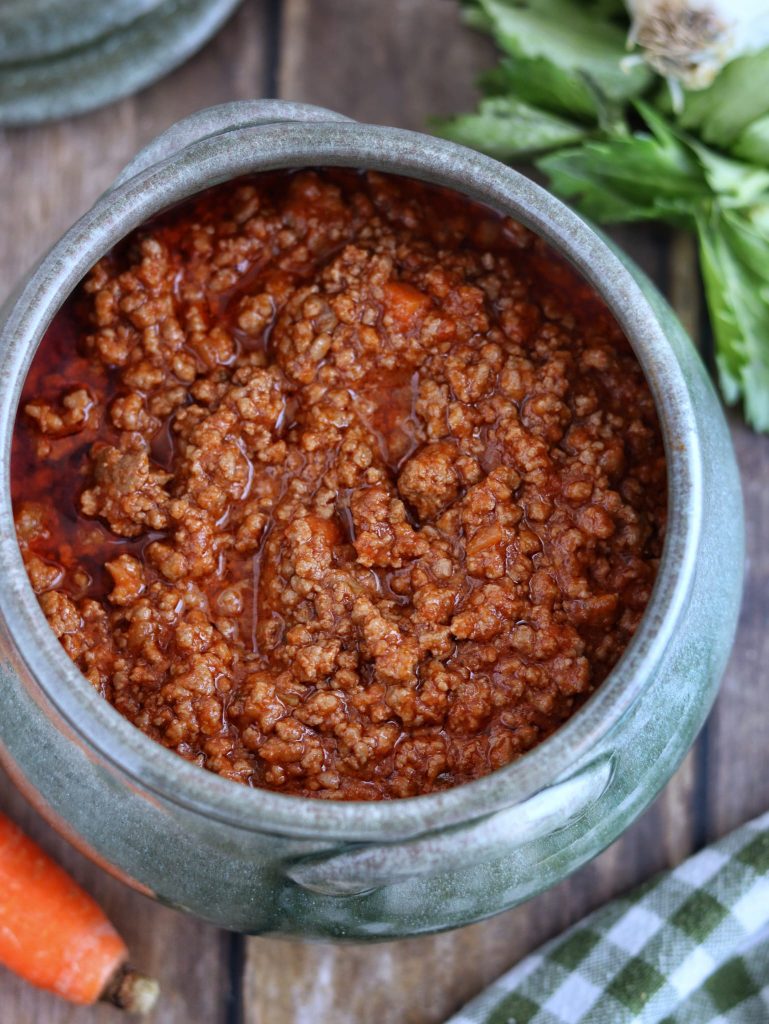
The Bolognese ragù is much more than a simple sauce: it is a symbol of Emilia cuisine, a slow tale made of aromas, patience and tradition.
Unlike the Neapolitan ragù, rich, opulent and dominated by tomato, the Bolognese version is distinguished by a more delicate balance, where the meat is the absolute star and the tomato plays a supporting role.
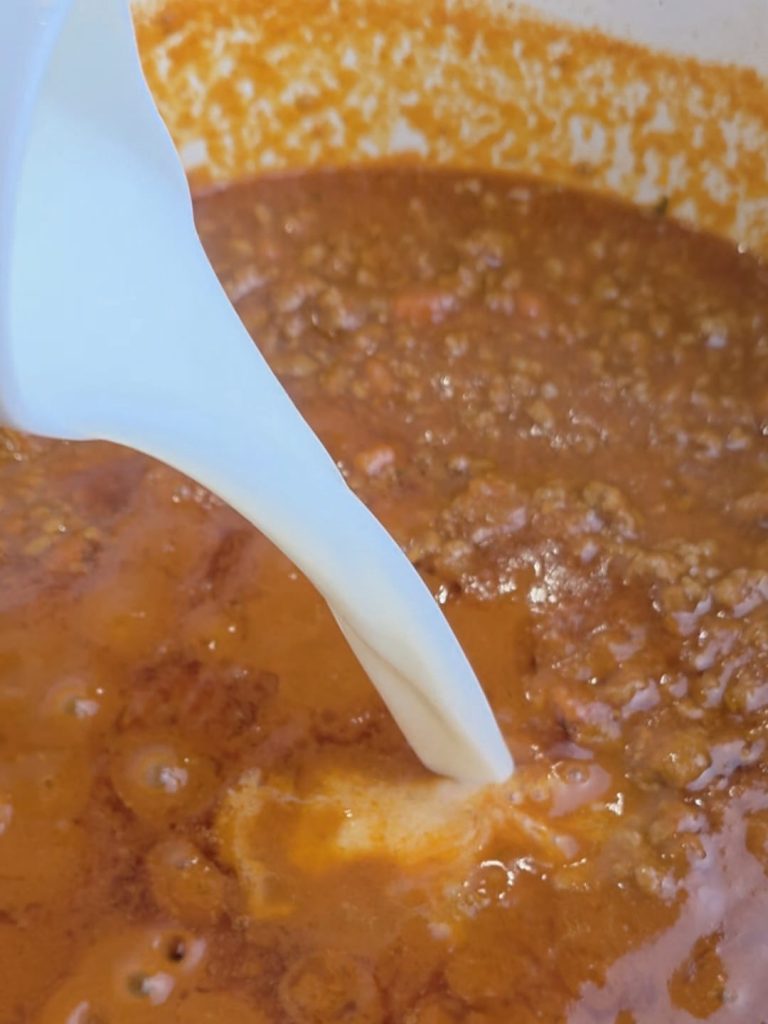
But the ingredient that, in my opinion, makes this sauce unique is milk. Adding a glass of milk toward the end of the ragù’s cooking time tones down the tomato’s acidity and wraps the meat in a subtle, almost velvety creaminess.
This ragù is especially famous for being the protagonist of the iconic Bolognese lasagna, where it alternates with layers of fresh pasta and béchamel, creating a rich and comforting dish. But its use isn’t limited to this: it is also perfect for dressing fresh egg pasta like tagliatelle or homemade ricotta and spinach ravioli, or for enriching dishes like stuffed cannelloni, baked pasta and even some variations of polenta.
In any case, the Bolognese ragù remains a preparation that tells a cooking philosophy made of balance, care and respect for ingredients, capable of transforming a simple dish into a deeply satisfying experience.
Now take a minute to read the recipe and then… let’s cook AND eat!!
See also
- Difficulty: Easy
- Cost: Medium
- Preparation time: 20 Minutes
- Cooking time: 3 Hours
- Portions: 6
- Cooking methods: Stovetop
- Cuisine: Italian
- Seasonality: All seasons
Ingredients
- 1 onion
- 1 carrot
- 1 stalk celery
- 1.1 lb mixed ground meat (beef and pork)
- 2 tbsp tomato paste (double)
- 1 2/3 cup tomato passata
- 3/4 cup water (or broth)
- Half glass wine (red or white)
- 1 cup milk
- to taste extra virgin olive oil
- to taste salt
Tools
- 1 Peeler
- 1 Knife
- 1 Pan
- 1 Pot enamelled cast iron
- 1 Spoon wooden
Steps
Preparing Bolognese ragù is a process that requires time, attention and a few fundamental precautions. Each phase has a precise role, from the initial soffritto that creates the aromatic base, to browning the meat, up to the long, slow cooking that allows the flavors to meld harmoniously. By carefully following the steps you will obtain a rich, enveloping sauce perfect to enhance the great classics of Italian cuisine.
First, peel, wash and finely dice the carrot, onion and celery for the soffritto. In a pot heat a drizzle of oil and gently sauté the vegetable mince over low heat.
At the same time, in a skillet, brown the meat over high heat.
When the meat is well browned, transfer it to the pot with the carrot, celery and onion soffritto.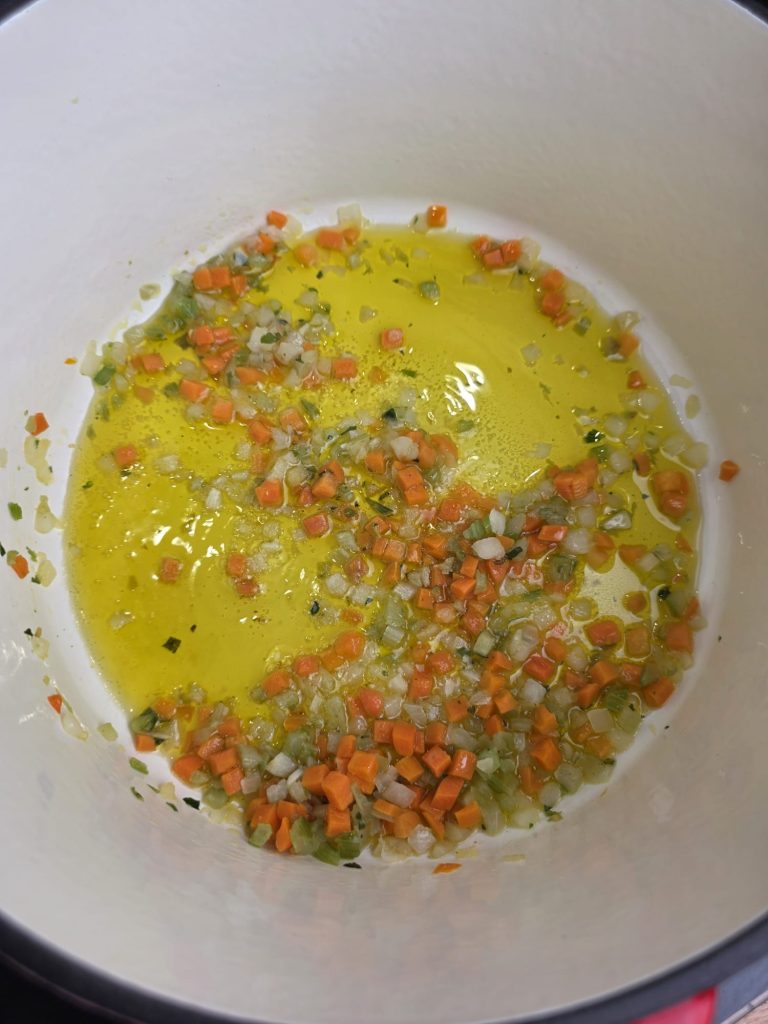
Let the meat absorb the flavors from the soffritto for a few minutes then deglaze with the wine.
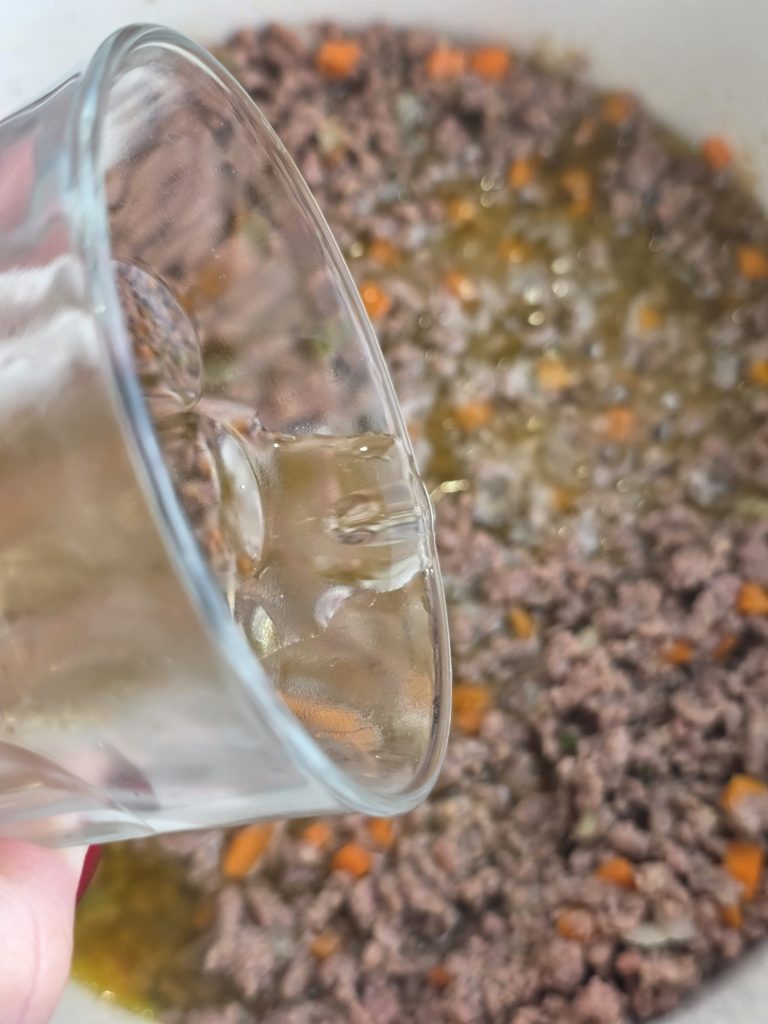
Allow the alcohol to evaporate and continue by adding first the tomato paste and then the tomato passata.
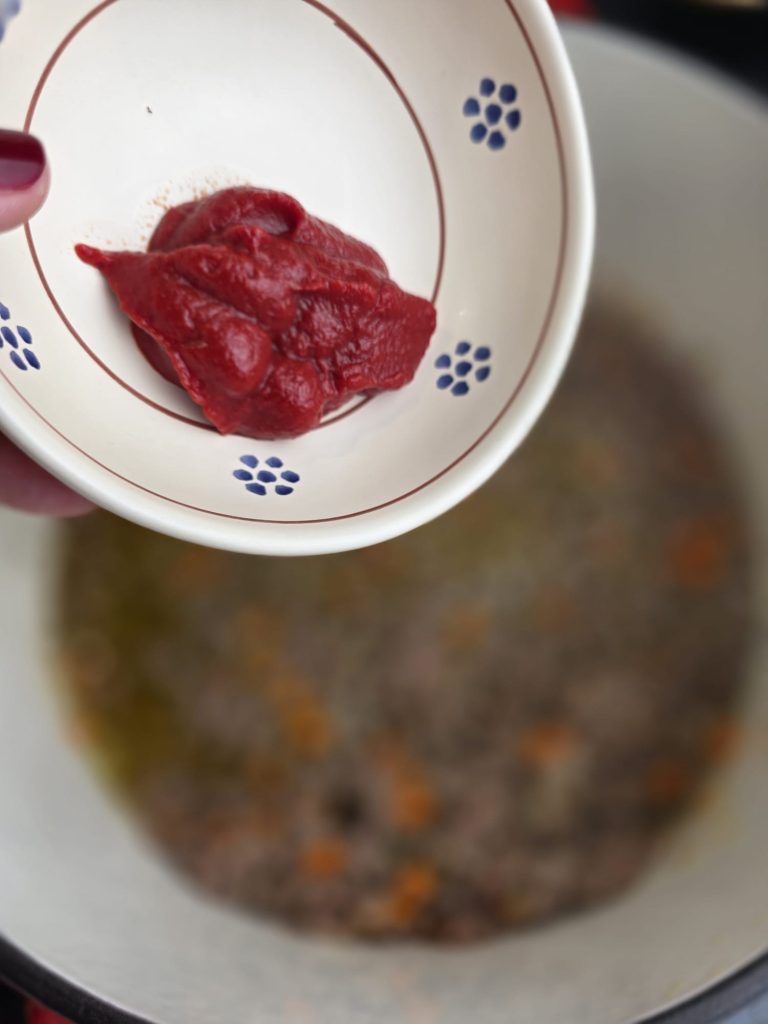
Stir with a wooden spoon.
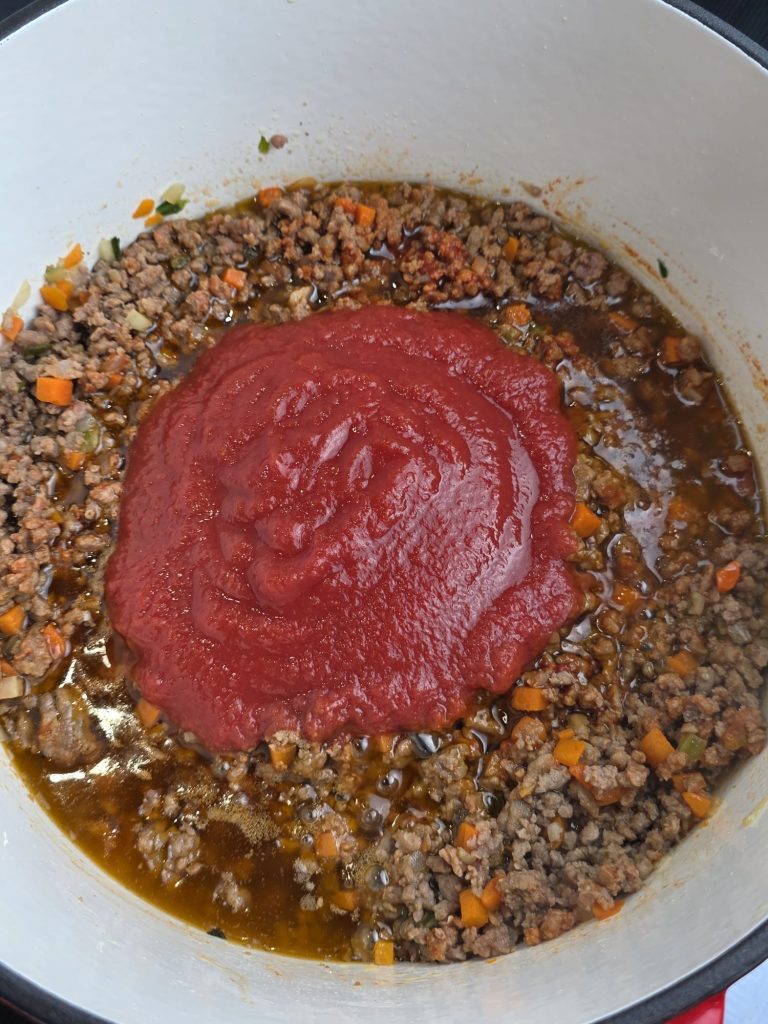
Add a cup of water (or broth), season with salt, stir and cover with a lid.
Let the Bolognese ragù simmer over low heat for about 2 hours, stirring from time to time.
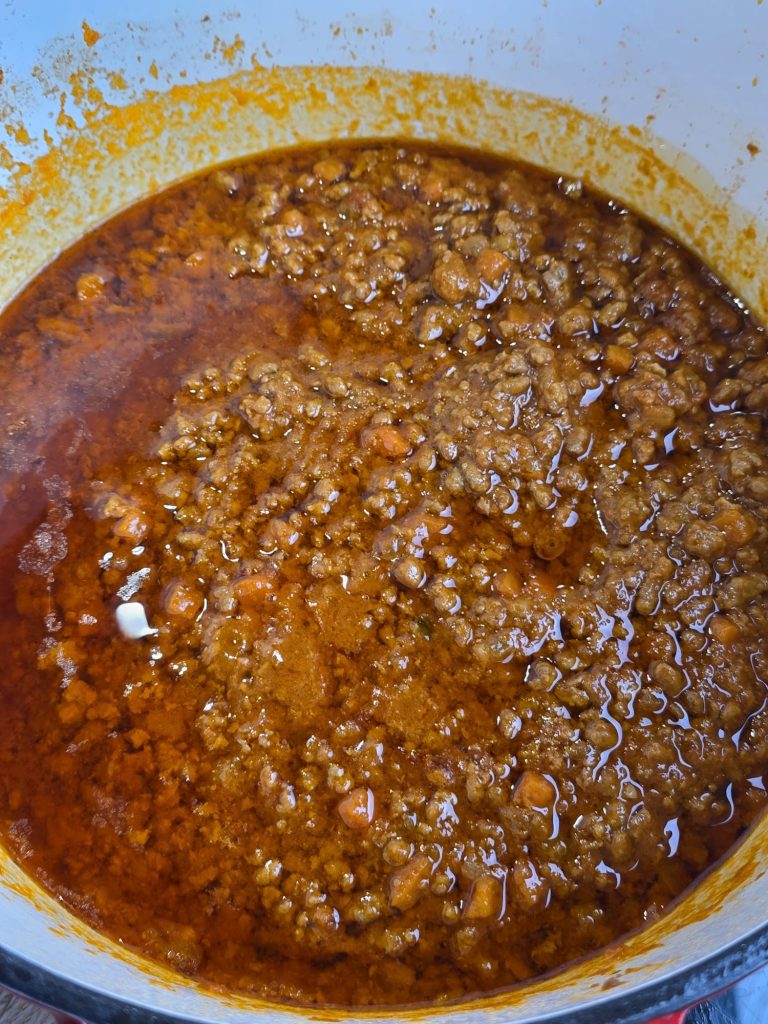
When about half an hour remains of the ragù’s cooking time, add the milk, adjust the salt, stir and continue cooking until the sauce has reduced and the oil comes to the surface.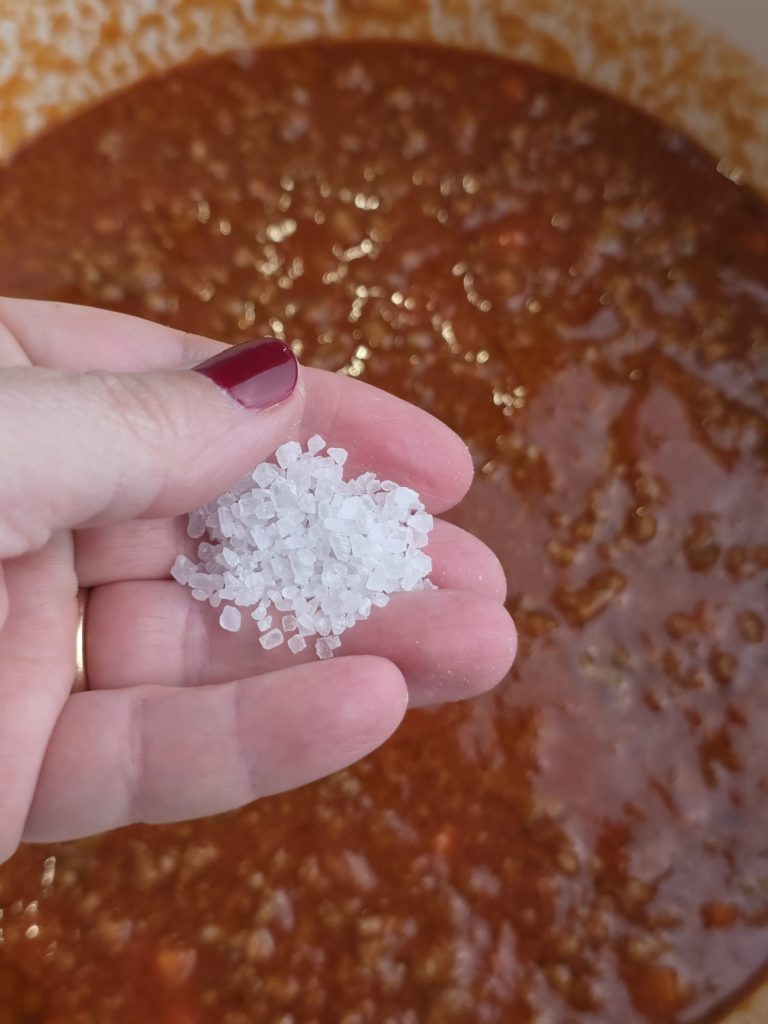
At this point your Bolognese ragù is ready to be used 😉.
Storage
Bolognese ragù keeps in the fridge for 2-3 days in an airtight container. Before using, reheat it slowly, adding a little liquid if necessary.
Tip
For an optimal result I recommend browning the meat over high heat in a separate pan rather than in the same pot as the soffritto. This way you avoid the meat having a “boiled” texture due to water released by the vegetables in the soffritto.
FAQ (Questions & Answers)
Is milk mandatory in the traditional recipe?
In the most authentic version of Bolognese ragù, milk is often included. However, there are family or regional variations that omit it.
What type of milk is best to use?
It is recommended to use whole milk because it is richer and gives more creaminess. Alternatively, you can use semi-skimmed milk, but the result will be slightly less enveloping.
Does Bolognese ragù with milk become sweet?
No, the milk does not make the ragù sweet, but it rounds the flavor, making it more balanced and less acidic.
Which meat is best for Bolognese ragù?
Traditionally a mix of beef and a small proportion of pork is used, which gives more flavor and tenderness.
Is it necessary to use wine?
Yes, wine (white or red) helps deglaze the meat and adds depth of flavor. It should be allowed to evaporate completely before continuing cooking.
Better tomato paste or passata?
Both can be used: the paste gives a more intense flavor, while the passata makes the ragù slightly more moist. They are often used together.
Can I prepare the ragù in advance?
Yes, in fact it is recommended: it is even better the next day because the flavors meld together more.
Is the soffritto essential?
Yes, the mix of onion, carrot and celery is the aromatic base of the ragù and contributes essentially to its flavor.
Can it be made without tomato?
There are “white” versions of ragù, but they are not the classic Bolognese ragù, which still includes a small amount of tomato.
Can I use butter instead of oil?
Yes, some versions use butter, which gives a rounder flavor compared to oil. Other versions include adding a knob of butter during cooking instead of milk.
