Sicilian Rollò

in

The Sicilian Rollò are one of the great classics of Sicilian street food, a small masterpiece of simplicity and taste that tells the convivial soul of the island better than a thousand words. You’ll find them in bar windows, lined up next to cipolline, cartocciate, arancine, and sfincione, ready to conquer with their unmistakable aroma and golden surface sprinkled with sesame seeds.


Born as counter food, practical and generous, the Rollò encapsulate all that makes Sicilian street food special: a soft and slightly sweet dough, a simple but irresistible filling, and the unique ability to turn everyday ingredients into something deeply satisfying. They are stars of parties, birthdays, buffets, and snacks, a symbol of sharing and the typically Sicilian way of dining, informal but full of flavor.
Making Rollò at home means bringing a piece of Sicily into your kitchen, recreating the aromas and sensations of neighborhood bars. A recipe that is not just a filled bread, but a journey into the tradition of Sicilian street food, made of handed-down gestures, patient waits, and flavors that taste like home.

Now take a minute to read the recipe and then…let’s cook and eat!!

See also
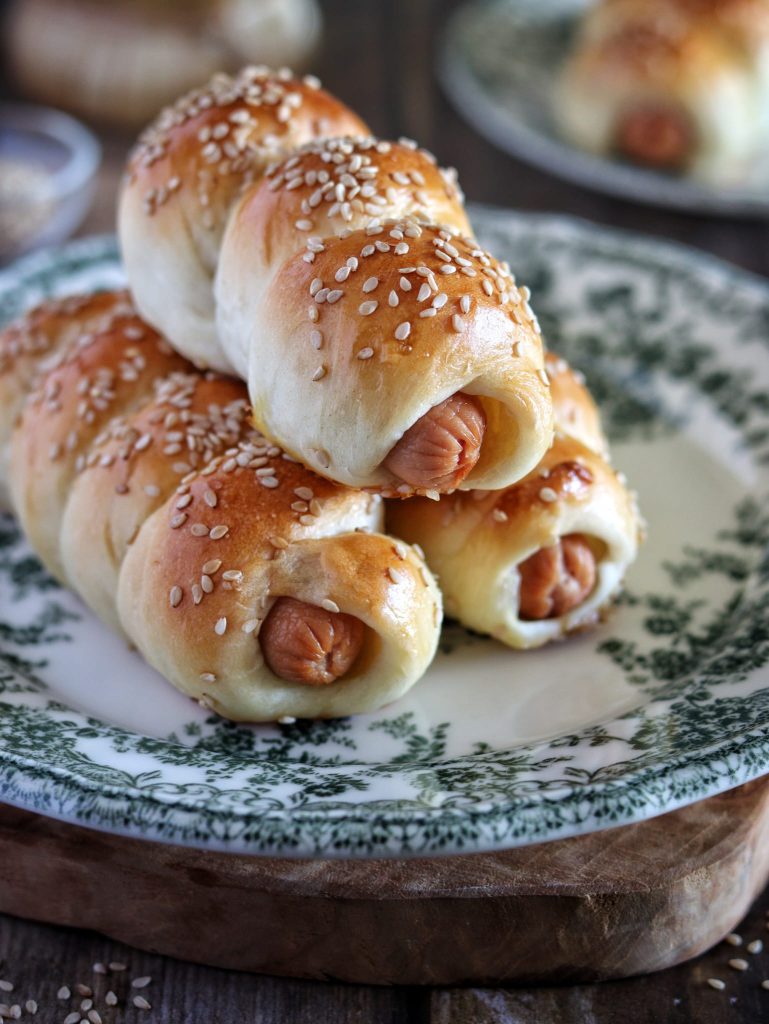
Sicilian Rollò
  • Difficulty: Medium
  • Cost: Economical
  • Preparation time: 30 Minutes
  • Portions: 6
  • Cooking methods: Oven
  • Cuisine: Italian
  • Seasonality: All seasons

Ingredients for 12 pieces

  • 2 cups Manitoba flour
  • 2 cups 00 flour
  • 1 tsp dry yeast (or 1 tbsp of fresh yeast)
  • 1/4 cup sugar
  • 2 tsp salt
  • 3 tbsp lard
  • 2/3 cup milk
  • 2/3 cup water
  • 12 pork sausages
  • 1 egg yolk
  • 1 tbsp milk
  • to taste sesame seeds

Tools

  • 1 Stand Mixer
  • 1 Bowl
  • 1 Metal Scraper
  • 1 Pastry Board
  • 1 Baking Tray
  • Parchment Paper
  • Food Wraps
  • 1 Brush silicone
  • 1 Cooling Rack

Steps

To achieve Rollò that look like they’ve just come out of one of the many bars in Catania or a rotisserie in Palermo, the secret lies in the dough processing (the so-called “savory brioche dough”).

  • In the bowl of the stand mixer, place the flour mix, yeast, sugar, and lard.

    Start mixing with the hook, gradually adding the milk and water. Before adding the last part of the water, add the salt and continue mixing until you get a smooth, homogeneous, and perfectly combined dough.

  • Give the dough a quick knead on the pastry board before transferring it to a large bowl. Cover with food wrap and let rise (in the oven with the light on) until doubled.

  • After this first rise, deflate the dough, transfer it onto the pastry board, and, using a scraper, divide it into 12 pieces and form logs about 12 inches long.

  • Now take a sausage, pat it dry with some paper towel, and start wrapping the dough cord around it in a spiral.

    During this operation, try not to overlap the dough too much, but make sure the ends are well sealed by pinching them under the last spiral, otherwise they will open during baking.

  • As they are ready, arrange the Rollò on a baking tray with parchment paper, well spaced, cover with a clean cloth and let rise a second time for another 40-45 minutes. They should become nice and puffy.

  • At the end of the second rise, mix the egg yolk with the milk and gently brush the entire surface of the dough and generously sprinkle with sesame seeds.

    Bake in a preheated static oven at 375°F for about 15-20 minutes or until they become a lovely intense golden color.

    Once out of the oven, let them cool slightly on a rack before serving 😉.

    Follow me also on:
    Instagram Facebook Pinterest

Storage

The Sicilian Rollò are spectacular just out of the oven, but thanks to the lard in the dough, they maintain good softness as the hours pass.

Once well cooled, you can store them for 24 hours at room temperature in a tightly closed food bag or in an airtight container.

In the fridge, they can be kept for 2-3 days, always in airtight containers.

Notes

To bring the not-so-fresh brioche dough back to life, heat the Sicilian Rollò for 3-4 minutes at 300°F. This is the best method as it keeps the surface slightly crispy and the inside soft. Alternatively, microwave for 20-30 seconds at medium power.

FAQ (Frequently Asked Questions)

  • The dough is too sticky, can I add more flour?

    Try to resist! Sicilian street food dough needs to be very hydrated to be as soft as a cloud. If you add too much flour, you’ll get a hard roll. Instead, slightly grease your hands with oil or a bit of lard to work it better.

  • Can I substitute lard with butter?

    In theory, yes, the ratio is 1:1, but remember that lard is the secret in the original recipe to achieving that extreme softness and typical street food flavor. If you use butter, make sure it’s at room temperature.

  • Why does the sausage detach from the bread or “slide” out after baking?

    This happens if you stretch the dough strip too much while wrapping or if you don’t dry the sausages well before using them. A trick is to pat the sausages with paper towels: if they’re moist, the dough won’t adhere well.

  • Do I need to boil the sausages before wrapping them in the dough?

    Absolutely not. The sausage will cook perfectly in the oven along with the dough, keeping its juices inside the brioche.

  • Can I prepare them in advance and bake them the next day?

    Certainly. You can form the Rollò, place them on the baking tray, cover with film and leave them in the fridge overnight. The next morning, let them come to room temperature for about 30-45 minutes before baking.

  • Can I freeze them?

    Yes, you have two options: you can freeze them raw (after shaping) and let them rise when you decide to use them, or freeze them cooked once cooled. In the latter case, just pass them a few minutes in a hot oven to make them fragrant again.

Author image

cuciniamoemangiamo

Hello, my name is Mariarosaria and my blog cuciniAMO e mangiAMO is my third child! I take care of it with passion and dedication, just like one would with a child or any beloved person. Here you will find recipes from the Neapolitan tradition, but not only that… I don't like to set limits for myself in life, much less in the kitchen 😉.

Read the Blog