
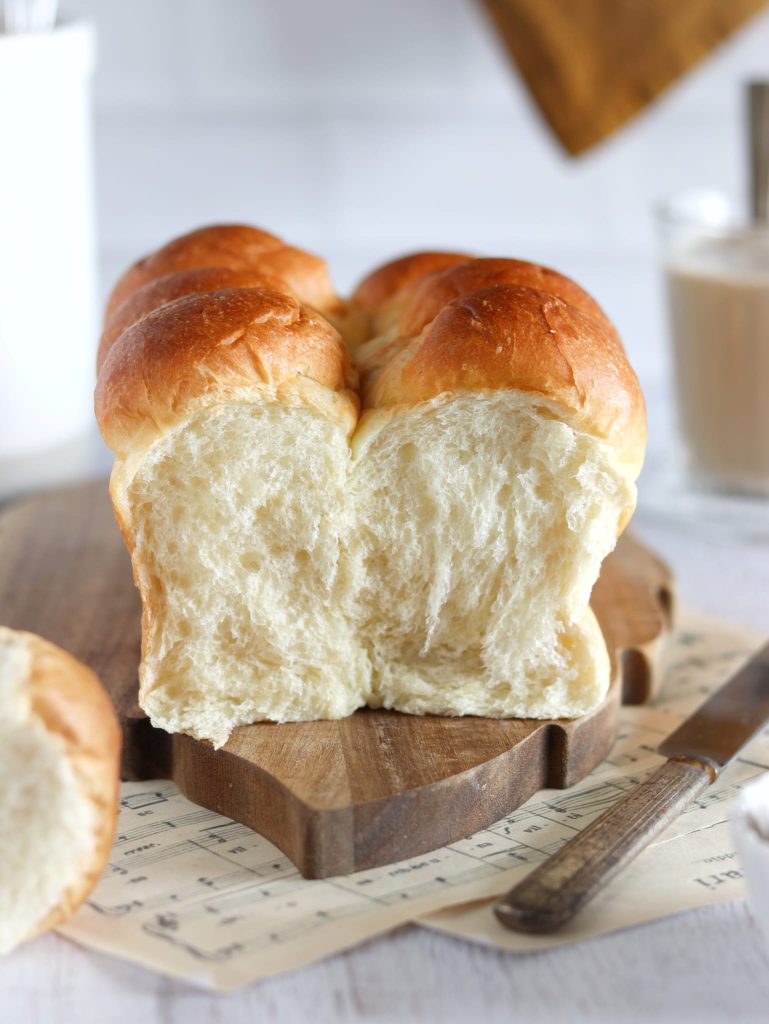
The milk bread, also known as Hokkaido milk bread, is a soft and light bread that captivates at the first bite with its incredibly soft and stringy texture.
Its most surprising feature is the texture: a crumb so soft it feels like a cloud, elastic and delicately moist, capable of staying soft for several days.
The secret of this extraordinary softness lies in the tang zhong technique, an Asian-origin method that involves pre-cooking a small portion of flour and liquid, which can be water (water roux) or milk (milk roux) until it becomes a sort of thick cream. This simple step allows the starches in the flour to gelatinize, retaining a greater amount of liquid in the dough. The result? A more hydrated, soft, and incredibly delicate bread, with a fine and silky structure.
Perfect for both sweet and savory preparations, milk bread is ideal for delicious breakfasts with jam or hazelnut cream, but also for soft and gourmet sandwiches. Its thin golden crust encloses a white and airy crumb, which flakes almost like a brioche.
With the same technique, I also prepared the pangoccioli that you can already find here on the blog.
Now take a minute to read the recipe and then…let’s cook and eat!!
See
- Cooking methods: Oven
- Cuisine: Italian
- Seasonality: All seasons
Ingredients
- 3/8 cup milk
- 0.7 oz all-purpose flour
- 2 3/4 cups Manitoba flour
- 0.14 oz instant yeast (or 0.42 oz fresh yeast)
- 1 egg
- 1 tbsp sugar
- Milk roux
- 1/2 cup milk
- 1 tsp salt
- 4 1/4 tbsp butter (softened)
- as needed milk
- as needed butter
Tools
- 1 Stand Mixer
- 1 Bowl
- 1 Small Bowl
- 1 Saucepan
- 1 Work Surface
- 1 Metal Scraper
- 1 Loaf Pan 8.66×3.94
- Parchment Paper
- 1 Brush silicone
- 1 Cooling Rack
Steps
The preparation of milk bread, for those already familiar with yeast doughs, is very simple, especially if using a stand mixer.
However, the dough can also be worked by hand, but it will require a bit more time and patience. Let’s see the various steps in detail.
First, prepare the milk roux, essential for the tang zhong technique.
In a small bowl, or directly in a saucepan, mix milk and flour until smooth and lump-free.
Bring to low heat, stirring continuously, and when the mixture thickens to a smooth cream (about 149°F), turn off the heat.
Transfer the milk roux to a small bowl, cover with plastic wrap, and let cool completely.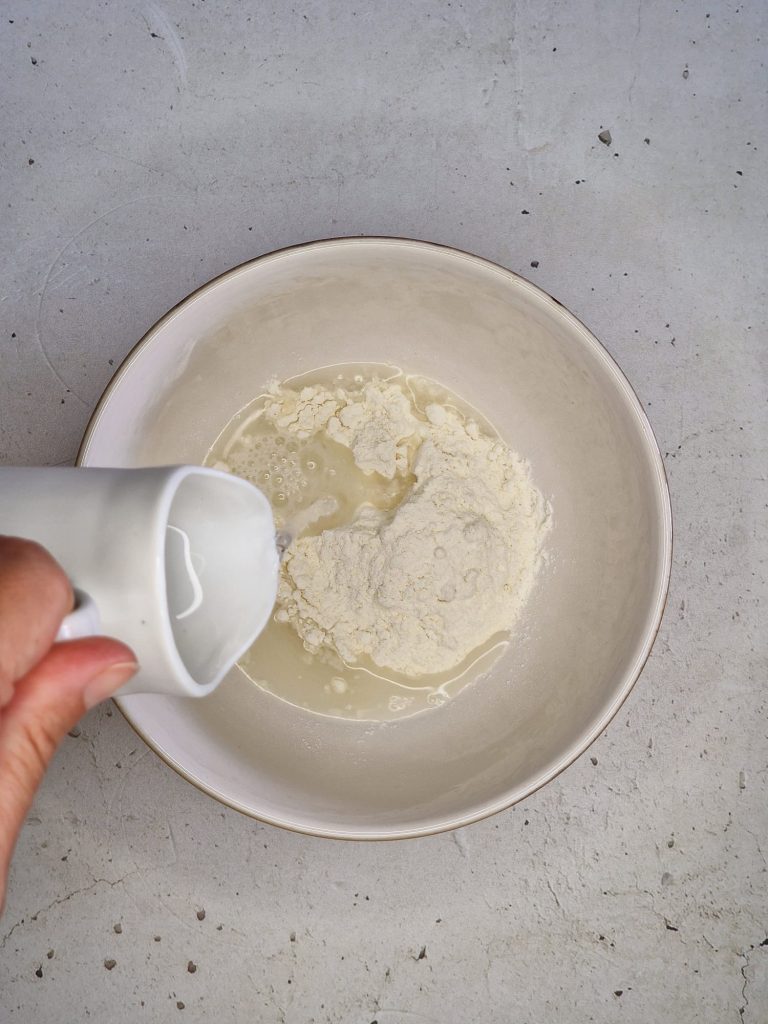
Once the milk roux has cooled, transfer it to the stand mixer bowl with the flour, yeast, sugar, and egg.
Start kneading with the dough hook, adding the milk slowly, and finally the salt.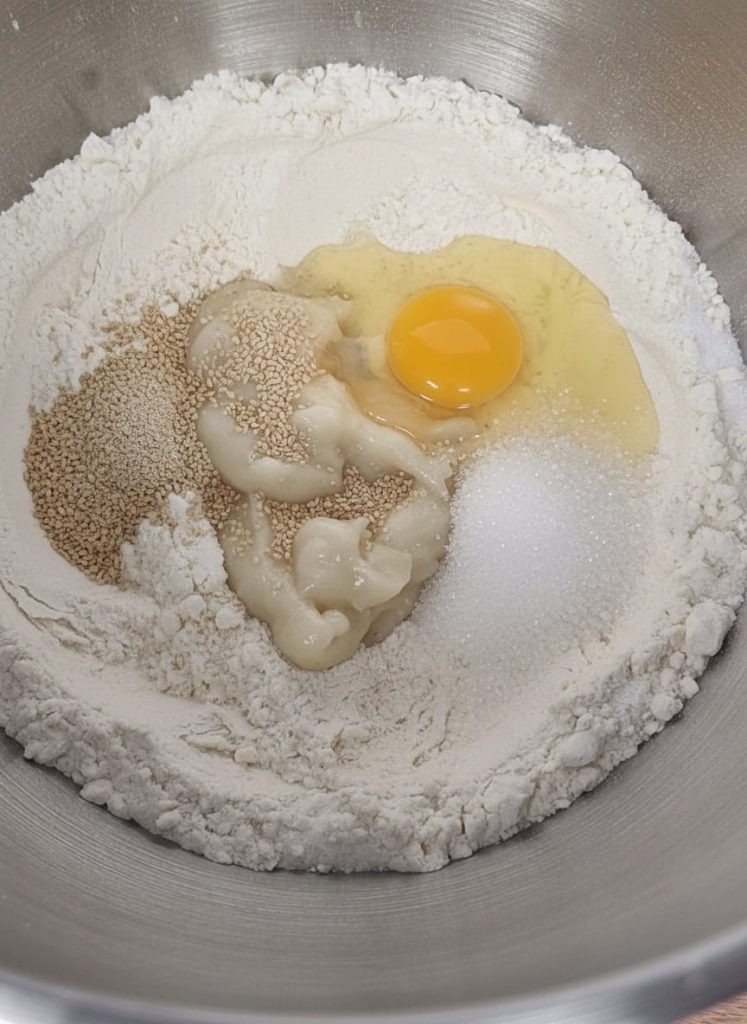
When the dough has gained consistency, start adding the softened butter a little at a time, adding the next piece only when the previous one is completely absorbed.
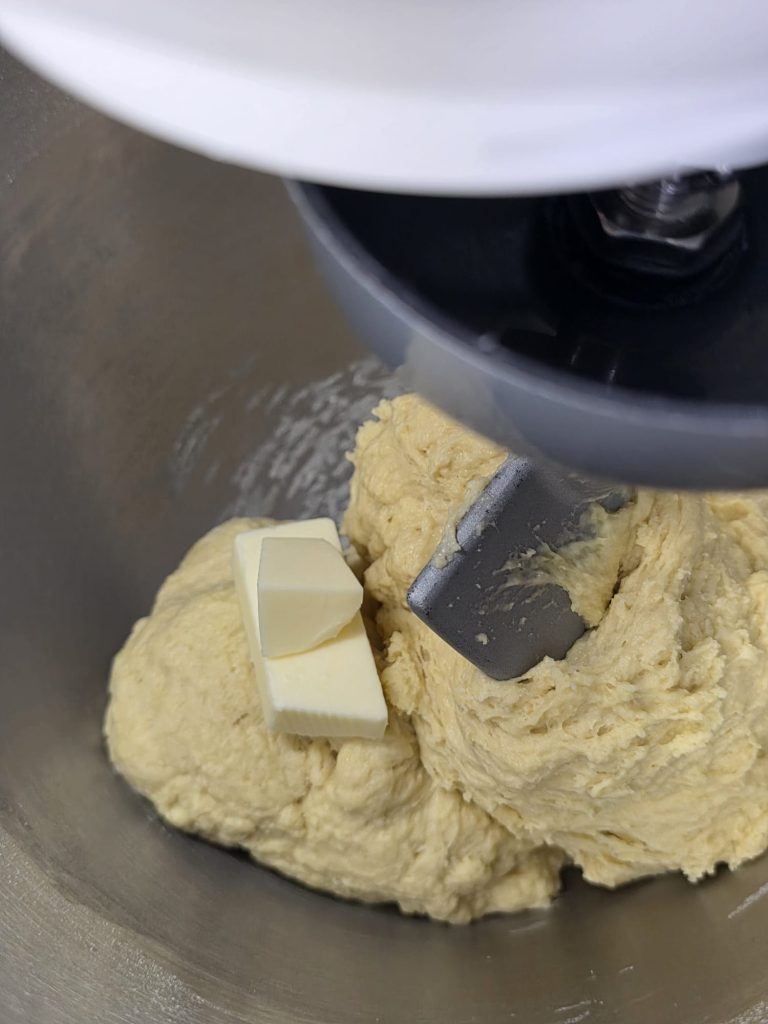
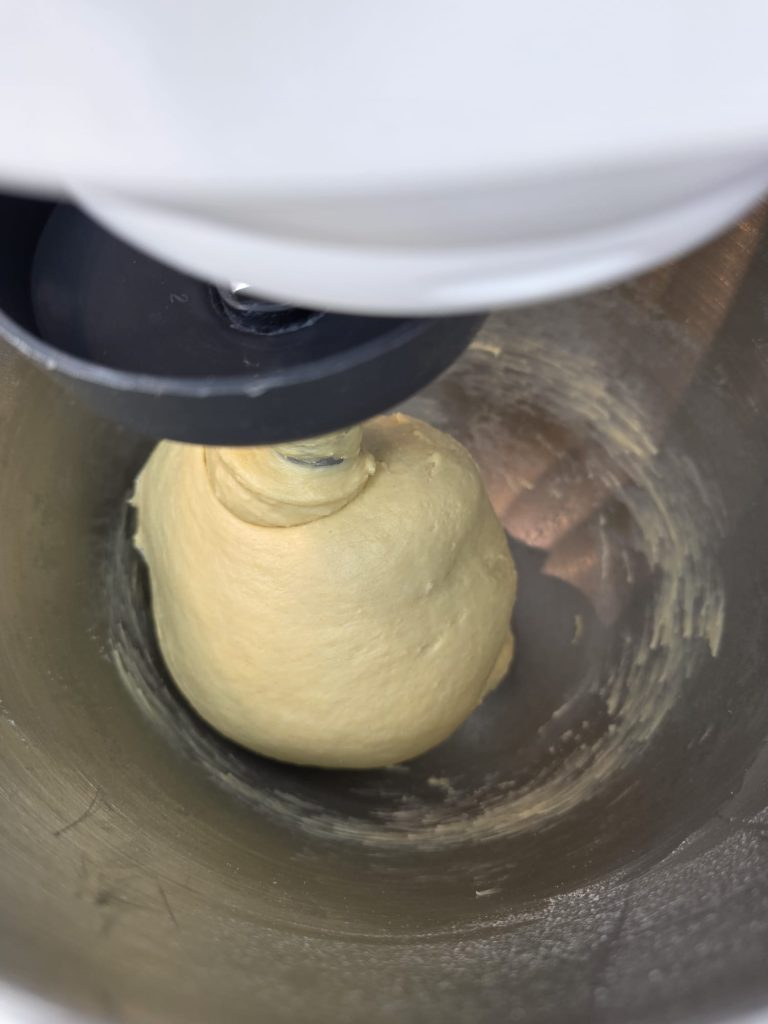
Work the dough until fully developed, then transfer it to a bowl, cover with cling film, and put it in the turned-off oven to rise.
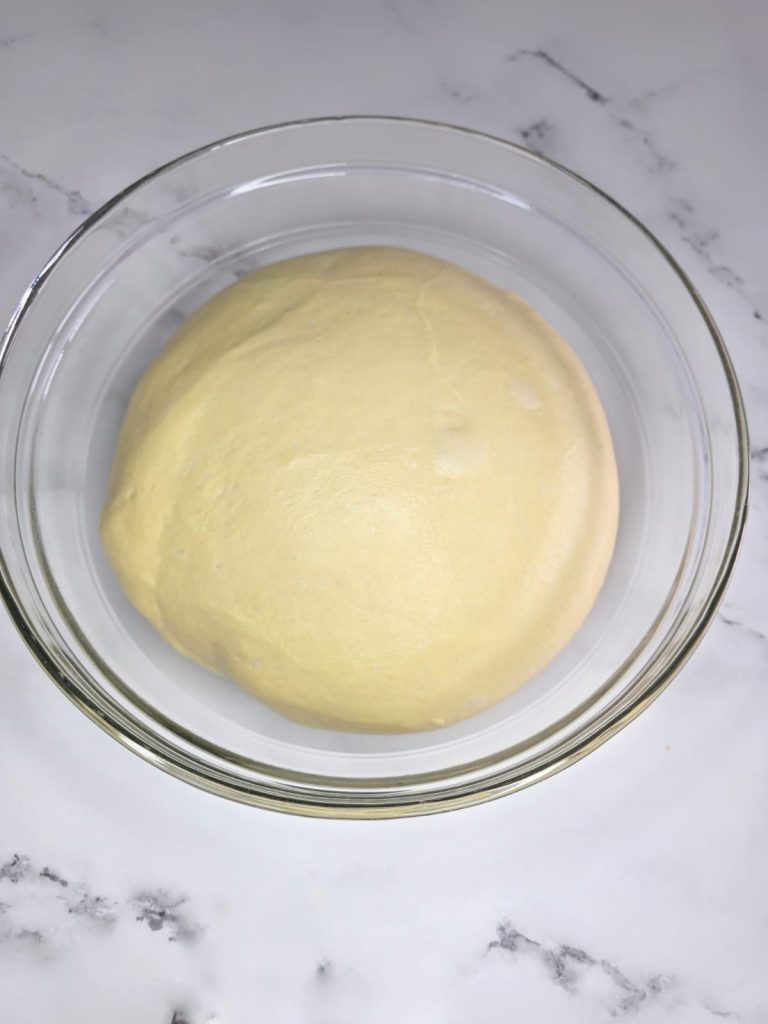
When the dough has doubled in size, transfer it to a work surface and, using a scraper, divide it into 10 pieces of about 2.3-2.5 oz each.
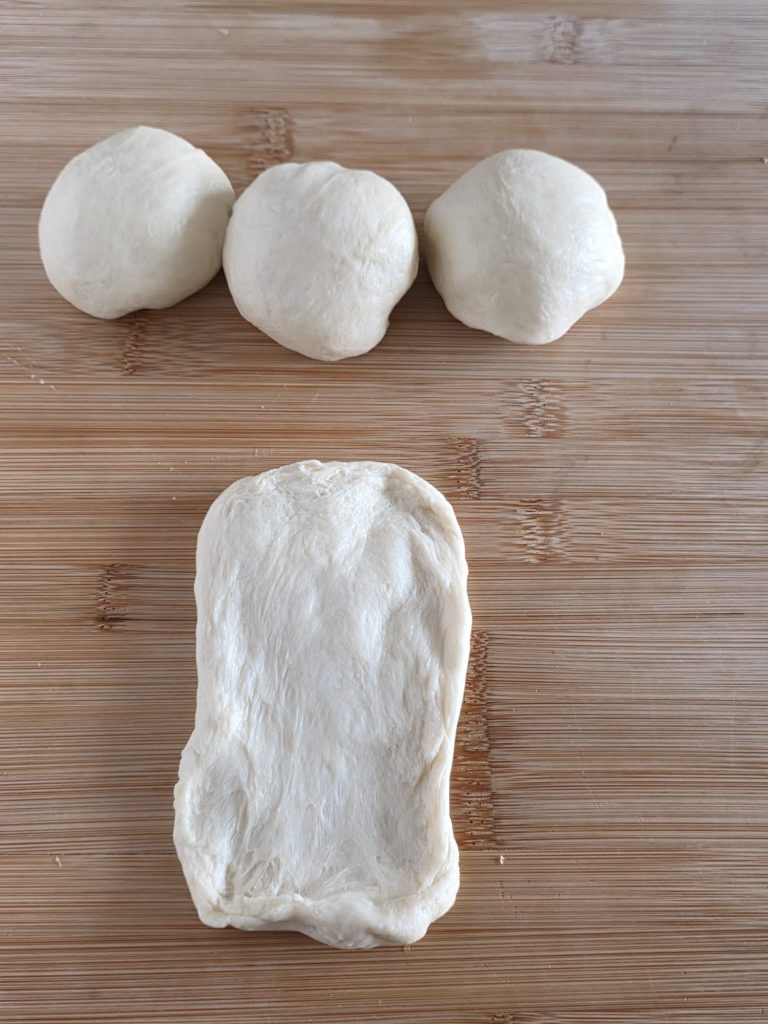
Flatten each piece of dough and then roll it up on itself to form a log. Pinch the edges well to close it.
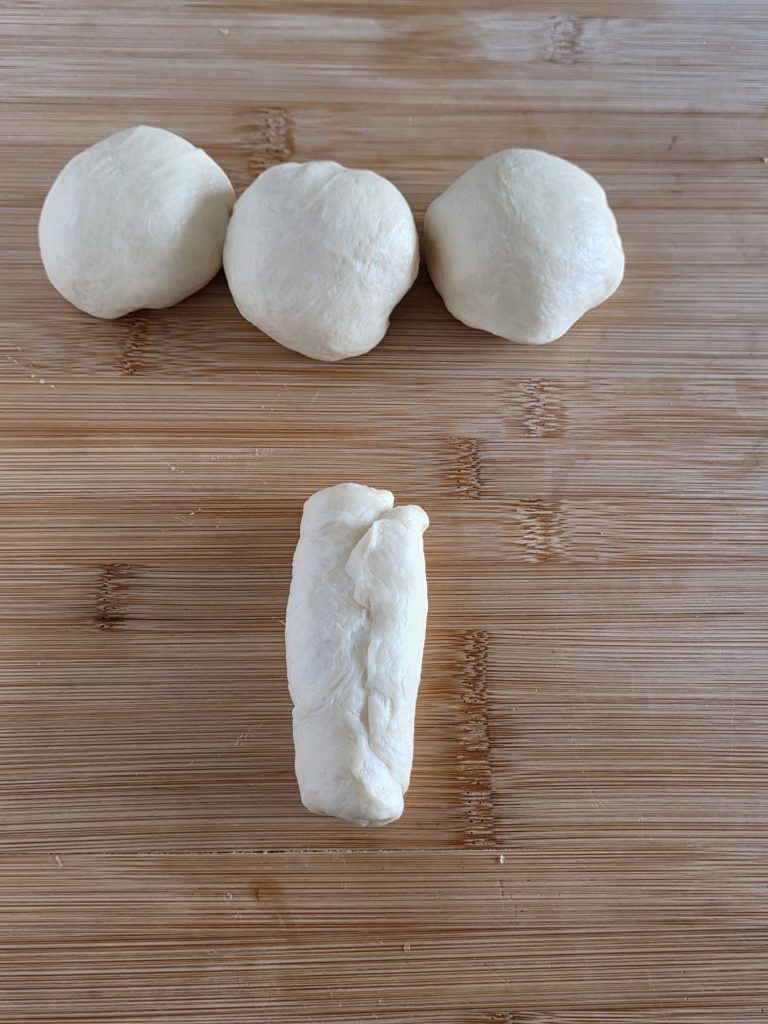
Rotate the log 90°, press it slightly, and roll it up on itself to obtain a small roll of dough.
Shape it by rolling it on the work surface until you get a perfectly smooth and homogeneous ball.
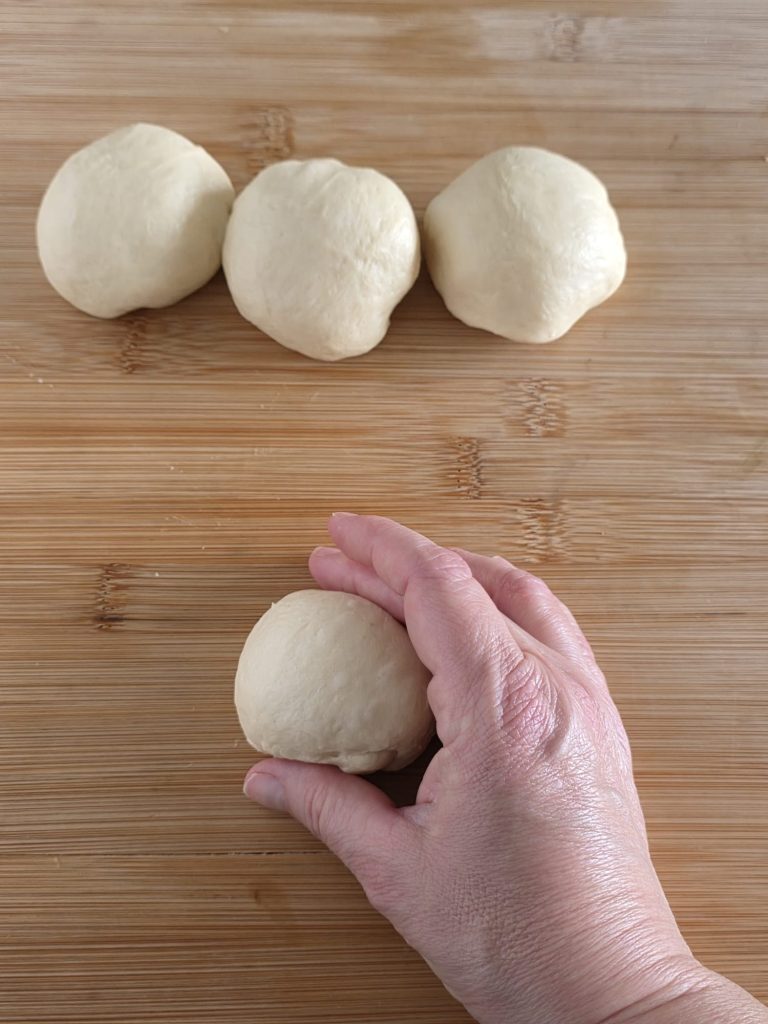
As they are ready, transfer the dough balls to a loaf pan lined with parchment paper, pairing them two by two.
Let the dough rise again until it reaches the top edge of the pan. At this point, brush the surface with some milk and bake your milk bread in a preheated static oven at 356°F for 30-35 minutes.
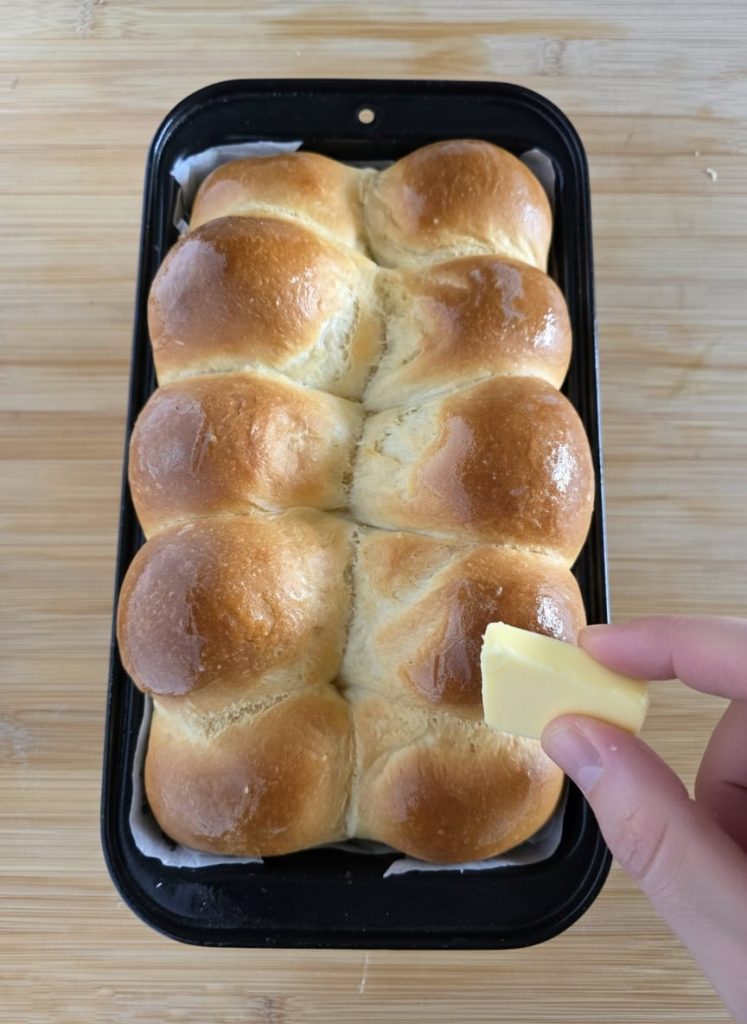
Once baked, let it cool on a rack before unmolding and slicing.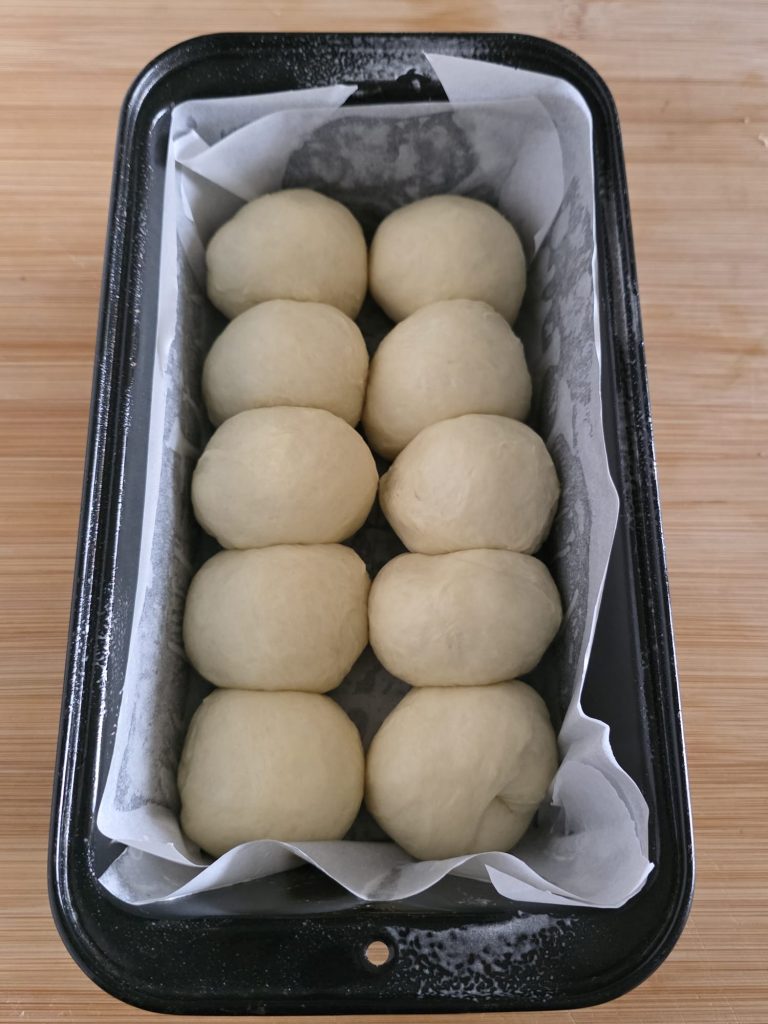
Storage
Milk bread, thanks to the tang zhong technique, stays soft longer than traditional bread, but storing it correctly is essential to maintain all its softness.
Once completely cooled, wrap it in a paper towel and then with cling film, or in tightly sealed food bags. Keep the milk bread away from heat sources and direct light. This way, it will stay fresh for 2-3 days.
You can freeze the milk bread, possibly in slices inside well-sealed freezer bags. Consume the milk bread within two months. Before consuming, let it return to room temperature to soften it before eating or toasting.
FAQ (Questions and Answers)
What is tang zhong and why is it so important?
Tang zhong is a pre-dough obtained by cooking a small portion of flour with milk or water until a thick cream forms. This step allows the starches to gelatinize and retain more liquid, making the bread incredibly soft, elastic, and able to stay soft longer.
Can I skip tang zhong?
Technically yes, but you won’t get the same texture. The bread will be less soft and will dry out more quickly. Tang zhong is precisely what makes milk bread so special.
How do I know when tang zhong is ready?
It’s ready when the mixture thickens and reaches a smooth custard-like consistency. If you have a thermometer, the ideal temperature is around 149°F.
Can I prepare tang zhong in advance?
Yes, you can prepare it up to 24 hours in advance and store it in the refrigerator covered with plastic wrap. Before using it, bring it to room temperature.
What type of flour is best to use?
It’s best to use a strong flour (Manitoba or with a good protein content, at least 12-13%) to achieve an elastic and well-developed structure.
Can I use only water instead of milk?
Yes, but milk contributes to making the bread softer and tastier. With water, the result will still be soft but slightly less rich.
Why is the dough so soft and sticky?
It’s normal! The high hydration, thanks to tang zhong, makes the dough more moist. With good kneading, it will develop gluten and become smooth and elastic.
How do I know if I have kneaded enough?
The dough should be smooth, elastic, and pass the “windowpane test”: when stretched with the fingers, it should form a thin membrane without breaking immediately.
Can I make it without a stand mixer?
Yes, but it will require more time and patience. Knead vigorously by hand until you obtain an elastic and well-developed dough.
