
The Eyes of Saint Lucia are small pastries from the Apulian tradition: simple in appearance but rich in history and symbolism. Prepared on December 13, the day dedicated to the saint who protects sight, these fragrant, snowy cookies are an act of devotion passed down through generations.
The origin of these cookies lies in popular devotion and the need for protection during a time of year that was once associated with the longest night. Before the Gregorian calendar reform (1582), in fact, December 13 was the shortest day of the year, and the feast of Saint Lucia symbolized the return of light.
Making these white, rounded, luminous sweets therefore had an auspicious meaning: bringing light into the home and protecting the eyes of children and family members.
The simple shape, almost like small pale irises, is not accidental: it is a symbolic offering to the Saint to invoke good sight, inner clarity and protection from illness.
The soft dough, made with basic ingredients such as flour, eggs, sugar and lard, contains the authentic flavor of old recipes, when every sweet had deep meaning and emotional value.
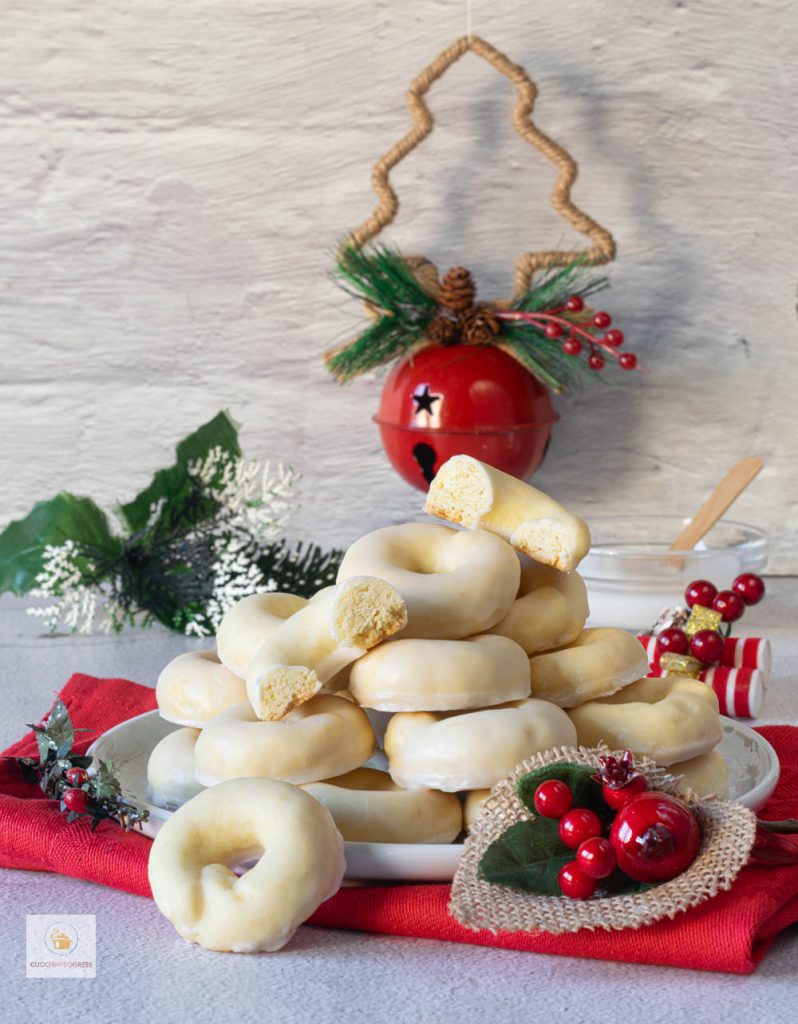
After a short bake that leaves them pale and tender, the Eyes of Saint Lucia are dipped in a shiny white glaze that characterizes them and makes them irresistible at first glance. Each bite releases the genuine sweetness of Apulian tradition, with a delicate scent of lemon or anise that evokes winter festivities and grandmothers’ kitchens. They are perfect sweets to share, give as gifts or enjoy with family, bringing a piece of history and popular devotion to the table.
Today the Eyes of Saint Lucia are still made in homes and sold in Apulian pastry shops, especially during the Feast of the Immaculate Conception and the Saint’s celebration.
The recipe has remained surprisingly faithful to the old one: a simple dough, few ingredients, and the characteristic white coating.
Despite their humility, these cookies preserve a precious cultural heritage of faith, tradition and small gestures that link generations.
You might also like:
- Difficulty: Very easy
- Cost: Very inexpensive
- Preparation time: 15 Minutes
- Portions: 48 pieces
- Cooking methods: Oven
- Cuisine: Italian
- Seasonality: Saint Lucia, Christmas
Ingredients
- 4 cups all-purpose flour
- 1/2 cup granulated sugar
- 2 tsp baking powder
- salt
- 2 eggs (medium, at room temperature)
- 7 tbsp lard (or 6 tbsp (about 80 g) vegetable oil)
- lemon zest
- 2 tbsp milk
- 1 7/8 cups powdered sugar
- 4 tbsp water
- 2 tbsp anise liqueur
For the Eyes of Saint Lucia you will need
- 1 Bowl
- 1 Baking sheet
- Parchment paper
- 1 Small bowl
Preparation of Eyes of Saint Lucia
In a large bowl or in a stand mixer, mix the flour with the sugar, baking powder and salt.
Add the lard (or oil), the eggs and work until the flour absorbs them.
Add the lemon zest and knead everything until you get a soft, homogeneous dough.
If needed, add the milk.Take pieces of dough and shape them into logs about 4 inches long. Then join the ends to form a small ring.
Place the cookies on a baking sheet lined with parchment paper, spaced slightly apart.Bake the Eyes of Saint Lucia in a preheated conventional oven at 356°F for 12–15 minutes.
They should remain pale and not become too browned. Remove them from the oven and let them cool.Prepare the glaze
In a bowl, mix the powdered sugar with water or lemon juice and the anise liqueur until you obtain a thick, white cream.
Dip the small rings into the glaze or brush them with it.Let them air-dry until the glaze becomes dull.
Storage
They keep perfectly for 7–10 days when stored at room temperature in a closed box.
If you glaze them with a double layer, they will last even longer.
