
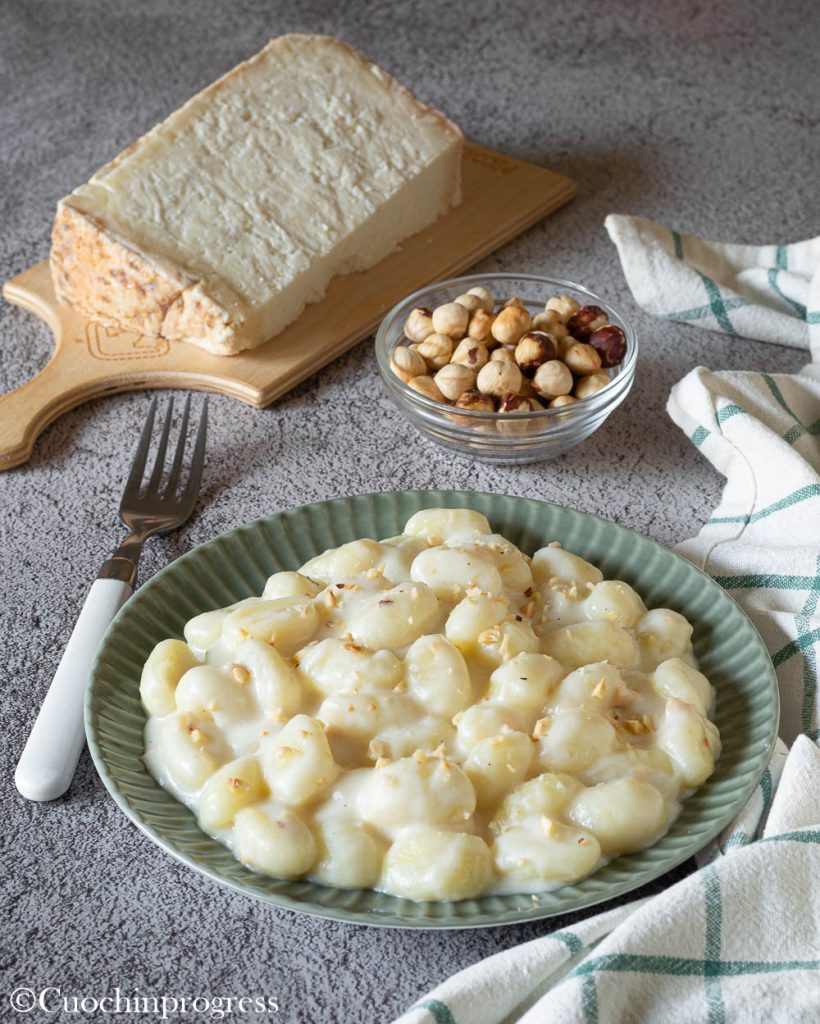
The CASTELMAGNO GNOCCHI are a typical Piedmontese recipe, particularly from the Cuneo area, where this exceptional hard cheese with a pungent but absolutely delightful flavor is produced. It makes a flavorful first course, perfect for a good family lunch or a meal with friends, so much so that it can become the star of the table.
The dish is prepared fairly quickly and without too much effort, and the result is really appealing thanks to the contrasting textures — soft gnocchi, creamy sauce and crunchy hazelnut crumble — and the enveloping, intense yet never cloying flavor. Of course, the key is to source good Castelmagno PDO and tasty hazelnuts. For territorial affinity, I recommend using the “tonda gentile” hazelnuts from the Langhe, truly exquisite, and I suggest pairing the dish with a good Piedmontese red. All that’s left is to get cooking.
YOU MIGHT ALSO LIKE:
- Difficulty: Very easy
- Cost: Inexpensive
- Preparation time: 15 Minutes
- Portions: 4 people
- Cooking methods: Stovetop
- Cuisine: Italian
- Seasonality: All seasons
Ingredients
- 2.2 lbs red potatoes
- 2 cups 00 flour (all-purpose)
- to taste salt
- 3/4 cup milk (or heavy cream)
- 7 oz Castelmagno cheese
- 2 fl oz cold milk (cold)
- 1.25 tbsp cornstarch
- 1/2 cup whole shelled hazelnuts
YOU WILL NEED FOR THE GNOCCHI WITH CASTELMAGNO AND HAZELNUTS
- 2 Pots
- 1 Bowl
- 1 Pan
- 1 Work surface
- 1 Gnocchi board
PREPARATION GNOCCHI WITH CASTELMAGNO AND HAZELNUTS
Preparing GNOCCHI WITH CASTELMAGNO AND HAZELNUTS is really very easy.
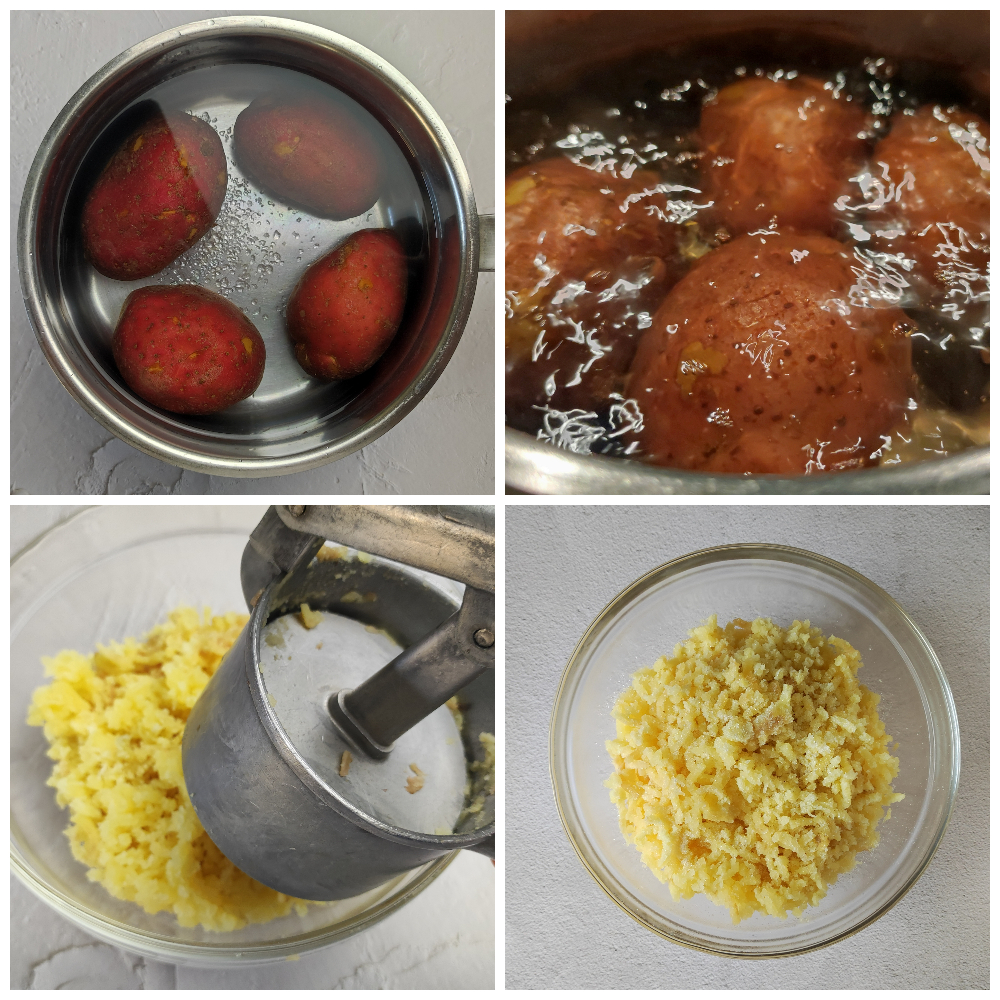
Wash the potatoes, place them in a pot and boil them unpeeled in plenty of salted water. As soon as they are cooked, peel them, pass them through a potato ricer and collect the puree in a bowl.
Add the flour and knead until you obtain a homogeneous, compact dough. On a lightly floured work surface, form rolls about the thickness of a finger (roughly 3/4 inch) and cut them into pieces about 3/4 inch long.
Run the gnocchi over the gnocchi board or over the back of a fork to turn them into slightly ridged shells.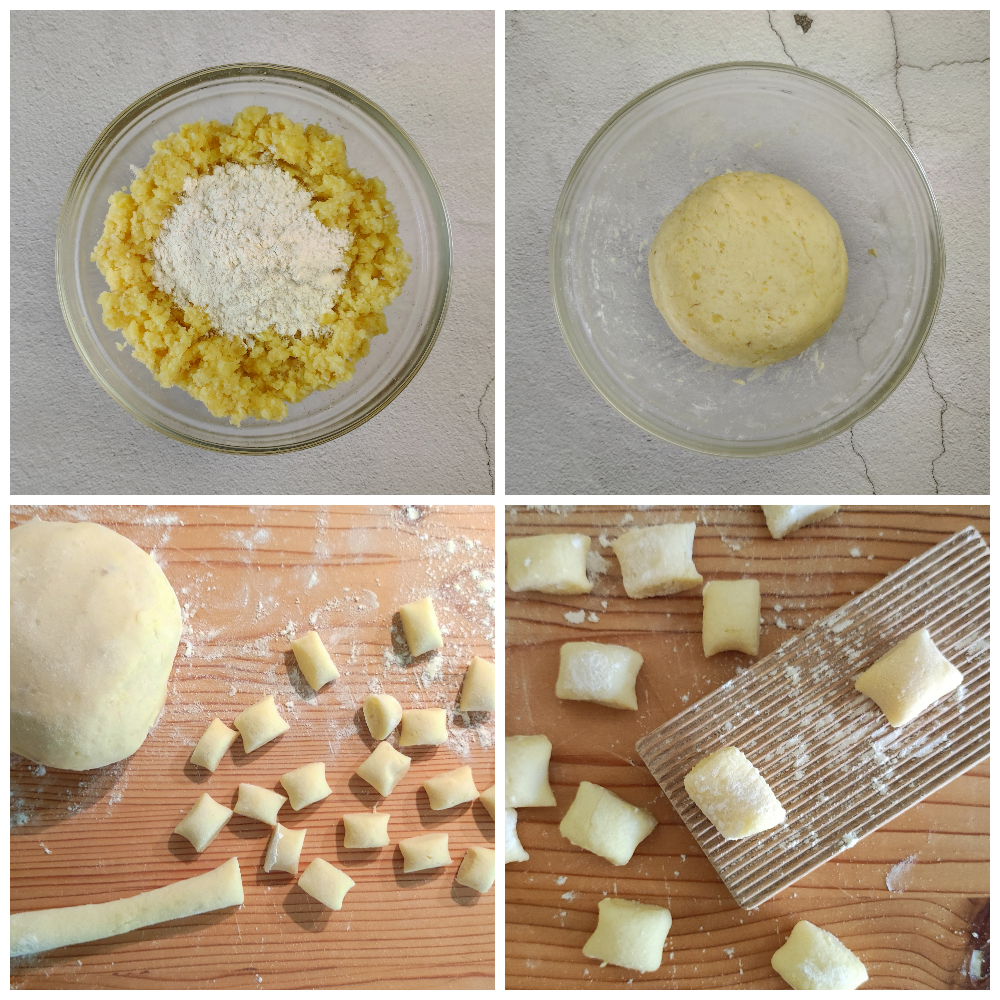
In a small saucepan, put the cream or milk and the crumbled Castelmagno to melt over low heat, stirring continuously. Dissolve the cornstarch in the small cup of cold milk, eliminating any lumps.
Pour it into the saucepan and, always stirring, let it thicken.
Lightly toast the hazelnuts and chop them with a knife. Transfer the cheese cream to a pan. Boil the gnocchi in plenty of boiling salted water. As soon as they come to the surface, drain them and transfer them to the pan with the sauce. Add part of the chopped hazelnuts and toss everything together. If it seems too dry, add a splash of the cooking water.
Plate your succulent gnocchi with Castelmagno, adding the remaining chopped hazelnuts and, if you wish, shavings of Castelmagno cheese.
CASTELMAGNO CHEESE
Castelmagno is an Italian cheese with Protected Designation of Origin (PDO), produced in the municipalities of Castelmagno, Pradleves and Monterosso Grana. It is a semi-hard, sometimes slightly blue-veined cheese, produced in cylindrical wheels with a diameter between fifteen and twenty-five centimeters (about 6 to 9 3/4 inches), a height between twelve and twenty centimeters (about 4 3/4 to 7 7/8 inches) and a weight ranging from two to seven kilograms (about 4.4 to 15.4 lbs). The rind, fairly thin, is yellow-brown, with darker variations depending on aging, while the paste is white or tending to yellowish, golden yellow when aged, with occasional greenish veins due to blueing. It is mainly made from cow’s milk from two consecutive milkings (evening and morning), sometimes supplemented with goat’s or sheep’s milk in percentages that never exceed 20%.
After adding calf rennet, the milk is brought to a temperature between 35° and 38°C (about 95°F to 100°F). After cutting the curd, the form is pressed and wrapped in a dry cloth, hung and then placed in appropriate containers. After this first phase, the wheels are broken again, salted, placed in cylindrical molds and pressed. Aging takes place in cool, dry rooms or in caves that naturally have these characteristics. Castelmagno is used in Piedmontese cuisine for preparing several dishes, first among them potato gnocchi dressed with melted Castelmagno. It is also often enjoyed as a table cheese, plain or with honey.
