
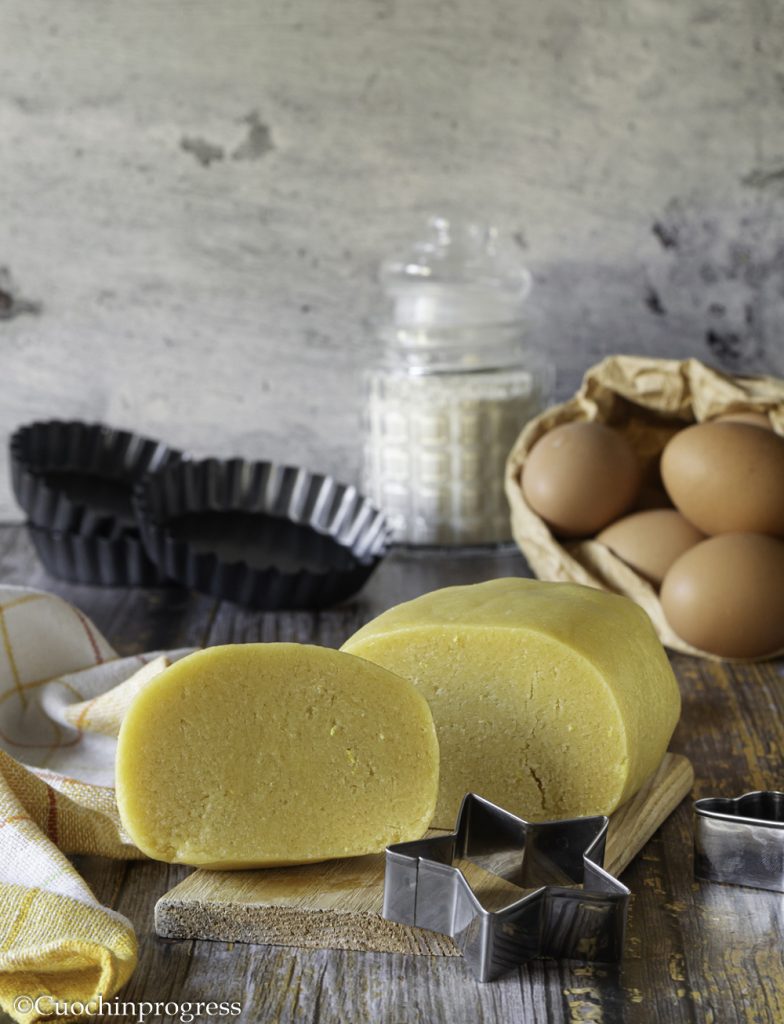
The SHORTCRUST PASTRY is a sweet dough used to make pies, tarts, cookies and many types of small baked pastries that, after baking, take on a rather crumbly texture because egg whites are not included in the dough.
The most important ingredient is butter, but it can be substituted with other fats such as margarine, which often gives a slightly different aroma, or olive oil. In the traditional procedure the butter should be cold from the refrigerator and gently worked with the fingers or, more conveniently, with a stand mixer.
It is important to avoid overheating the butter, which would make the dough elastic.
YOU MIGHT ALSO LIKE:
- Difficulty: Very easy
- Cost: Very inexpensive
- Rest time: 30 Minutes
- Preparation time: 10 Minutes
- Cooking methods: No baking
- Cuisine: Italian
Ingredients
- 2 cups all-purpose flour
- 9 tbsp butter (cold)
- 5/8 cup granulated sugar
- 1 egg (medium)
- 1 egg yolk
- pinch of salt
- lemon zest
Preparation
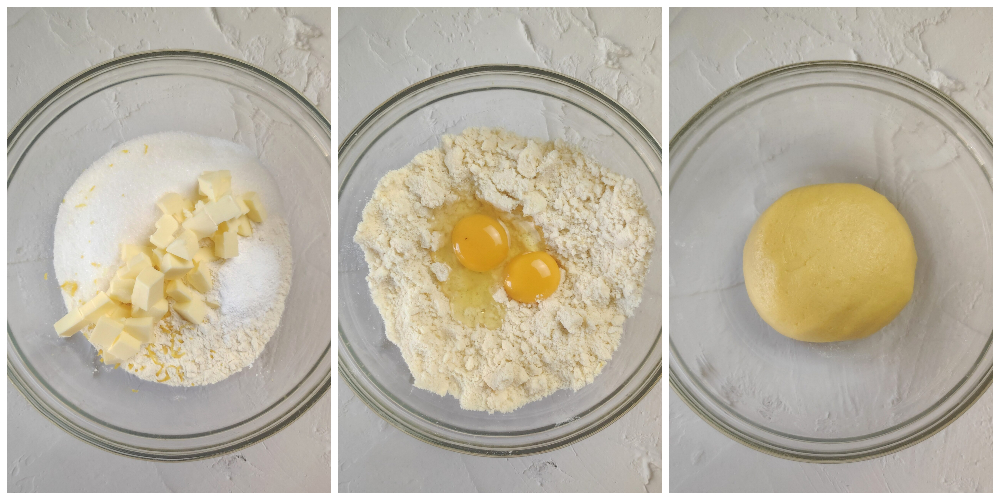
To prepare the SHORTCRUST PASTRY, place the flour in a mound on the work surface or in a bowl, add the sugar, cold butter cut into pieces, the pinch of salt and the grated lemon zest.
Work everything together until you obtain a sandy texture. Add the whole egg and the yolk and incorporate them quickly without overheating the butter.
Shape into a disk, wrap it in plastic wrap and let it rest in the refrigerator for at least 30 minutes.
To halve the cooling time, chill the shortcrust pastry after you have already rolled it out.
For an excellent shortcrust pastry the eggs should be at room temperature.
You can also prepare the shortcrust pastry dough in a stand mixer or food processor.
SECRETS FOR A PERFECT SHORTCRUST
THE FLOUR
The flour you choose affects the crumbly texture of the dough. If you use a weak flour (type 00 with strength W 150 – 180) you will get a more crumbly pastry. Conversely, using a strong flour (type 0) will give a firmer and more elastic shortcrust thanks to greater development of the gluten network.
THE FATS
Fats play an important role in the friability of the pastry and there are parameters to respect relative to the weight of the flour:
• a minimum of 30% and a maximum of 70% for common shortcrusts and tart bases
• a minimum of 50% and a maximum of 80% for creamed shortcrusts or fine biscuit pastry
If you go below these minimum values the pastry will lose friability, while exceeding the maximum threshold the dough will be too greasy and will tend to crumble after baking.
To make an excellent dough it is very important that your butter is at a temperature of around 55°F.
SUGARS
You can use different types of sugar: malt, raw cane sugar, fructose, stevia, etc. The most commonly used in recipes is granulated sugar because it remains suspended in the dough, absorbs more liquid and gives the shortcrust more crispness. Powdered sugar makes the dough more crumbly, so feel free to use it when making fine shortcrusts or creamed shortcrust for biscuits.
The amount of sugar to add to the dough ranges from a minimum of 25% to a maximum of 60%. Increasing or decreasing the amount of sugar will give you a more or less crunchy shortcrust. Be careful not to exceed the percentage otherwise you will obtain a mixture that is too sweet with the typical color (and flavor) of caramel.
EGGS
Yolks, being rich in fats, will make the shortcrust even more crumbly.
Instead, to make shortcrust intended as a tart base (i.e. the dough used to line molds, for example for tarts) it is better to use whole eggs, because the water in the egg white activates the gluten network making the final crust crispier.
