
Welcome to the kitchen with Dadcook!
If you’re looking for the right inspiration to impress at the table without going crazy with a thousand pots, you’re in the right place.
Today’s journey in flavors starts with a classic that you love so much on the blog: my SICILIAN EGGPLANT CAPONATA, the original, easy, and quick one that has conquered thousands of you.
But cooking is also about tricks to save time.
If you’re among those who devoured the tips on HOW TO COOK FRESH COTECHINO for Christmas, you will love the practicality of this pasta.
After experimenting with the heat of SPAGHETTI ALL’ASSASSINA and the elegance of SPAGHETTI WITH LOBSTER AND CONFIT TOMATOES, today we return to rustic simplicity with a touch of genius.
For those seeking a meal that tastes like home, this recipe ranks among my favorite dishes along with NEAPOLITAN SAUTÉED ESCAROLE.
And if you’re a fan of bold flavors, the Calabrian sausage in this “all raw” will give you the same satisfaction as a OVEN-BAKED SEA BASS cooked to perfection.
Today’s secret?
We set aside for a moment the long times of my FOCACCIA WITH SOURDOUGH to focus on a main course where the baking dish does all the work for us!
- Baked Pasta with Tuna, Mozzarella, Olives, and Capers
- Apple and Cinnamon Muffins Without Flour (Low Carb Recipe in Air Fryer)
- Savory Crepes with Ham and Béchamel: The Original Recipe for Air Fryer
- Pasta with Kale and Sausage: Tasty Winter Recipe
- Soft Strawberry Ring Cake: The Perfect Recipe for a Sweet Summer!
- Difficulty: Very Easy
- Cost: Very Affordable
- Rest time: 10 Minutes
- Preparation time: 20 Minutes
- Portions: 8 People
- Cooking methods: Oven
- Cuisine: Italian
- Seasonality: Fall, Winter, Winter, Spring
Ingredients
- 1.41 lbs penne rigate
- 10 artichokes
- 0.88 lbs Calabria sausage
- 1.32 lbs potatoes
- 1.5 cups peas
- 6 eggs (Hard-boiled)
- 6.3 cups vegetable broth
- to taste extra virgin olive oil
- to taste salt
- 1 pinch black pepper
- to taste chopped parsley
- 1 cup grated parmesan cheese
- 1 cup breadcrumb
- 0.35 oz parsley
- 1 clove garlic (Finely chopped)
Tools
- 1 Baking Dish Rossetto
Steps
Preparation of Ingredients
The secret to a perfect “raw” success lies in the cut.
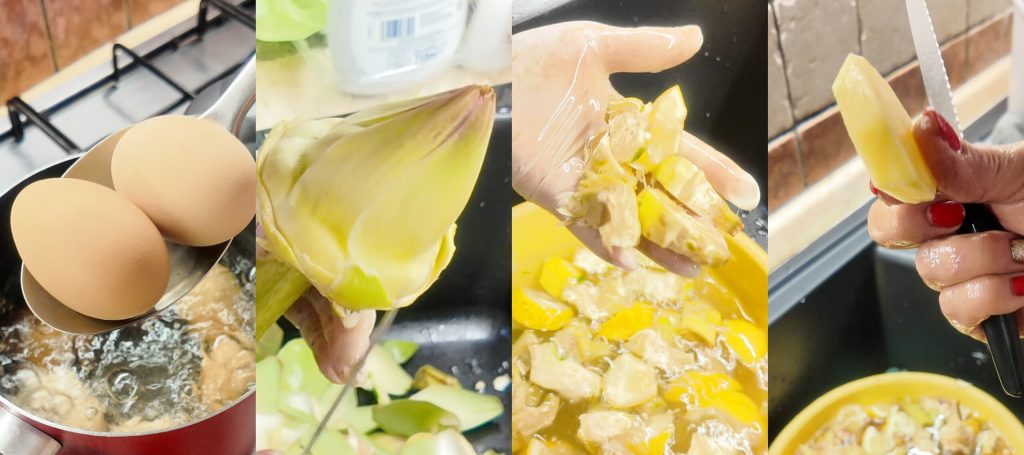
Start by boiling the eggs for about 9 minutes starting from cold water.
Meanwhile, clean the artichokes: remove the tougher outer leaves and remember, keep the stem as it’s the tastiest part!
Cut the hearts and stems into thin slices and immerse them in lemon water to prevent them from browning.
Then move on to the potatoes: peel them and cut into slices about half an inch thick (or slightly less for faster cooking).
Assembly of Layered Baking Dish
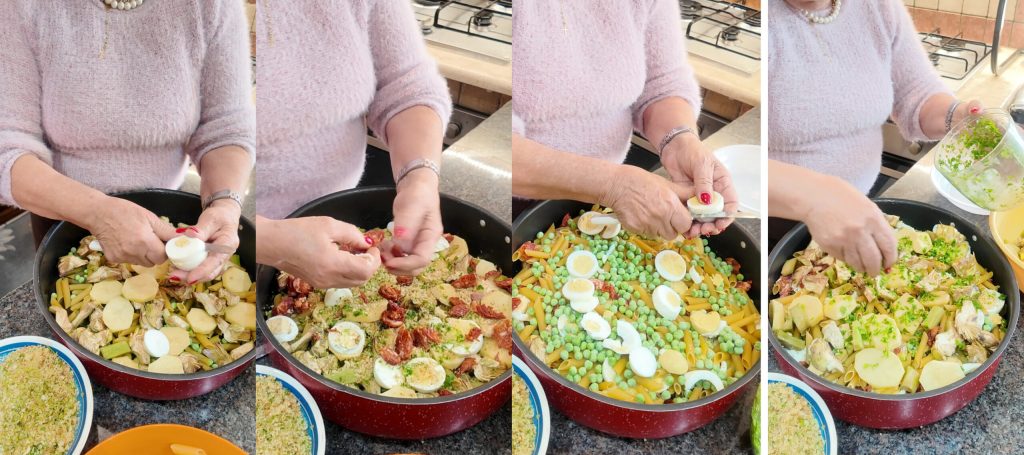
Take your largest baking dish and pour a drizzle of extra virgin olive oil and a splash of water on the bottom: this will prevent the pasta from sticking to the base.
Start creating the layers: distribute some of the raw pasta, add the peas (frozen are also fine), artichokes, potatoes, and hard-boiled eggs sliced into rounds.
Season with parsley, a handful of breadcrumbs, and the Calabrian sausage cut into small cubes.
Continue repeating these steps until the ingredients are used up, trying to evenly distribute flavors in every corner.
The Final Gratin
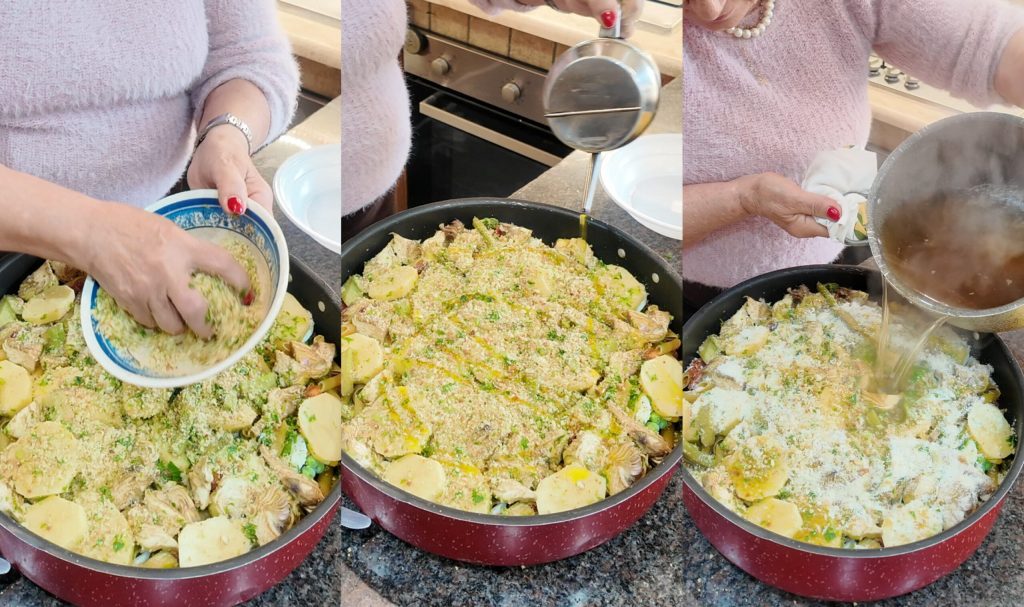
Once the layers are complete, it’s time to prepare the dream “crust”.
Generously cover the surface with grated parmesan cheese, more breadcrumbs for that “crunchy” push, and fresh chopped parsley.
Finish with a nice swirl of extra virgin olive oil that will help to brown it all in cooking.
The Cooking and the Secret of Resting
Once the dish is assembled, pour the boiling vegetable broth alongside until it nearly reaches the last layer of pasta.
Bake in a preheated static oven at 392°F and cook for about 45-50 minutes, until the broth is completely absorbed and the surface is well browned.
Once baked, let the dish rest for at least 5-10 minutes before serving: this time is necessary for all the flavors to emerge and to achieve the perfect consistency.
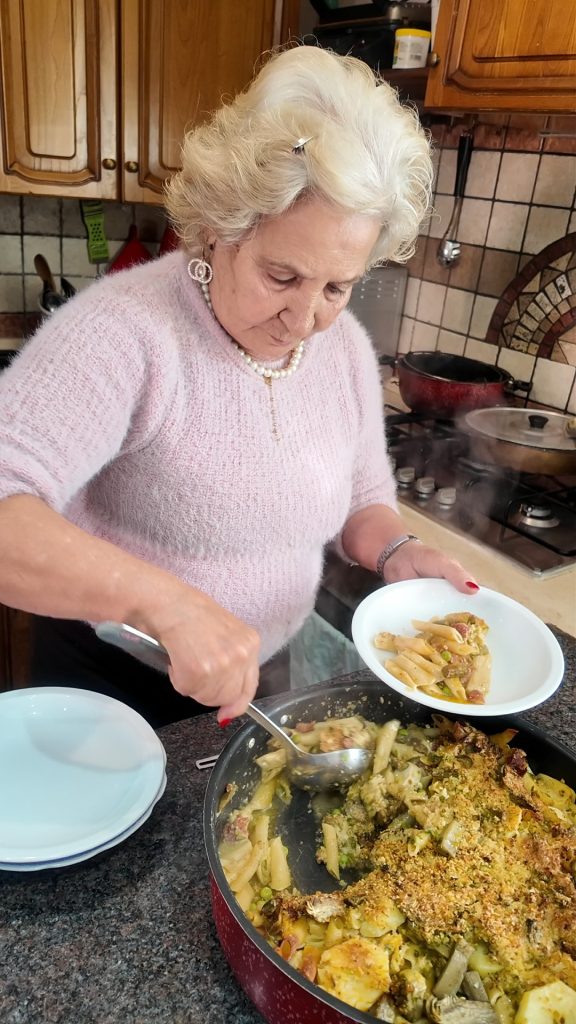
Tasting
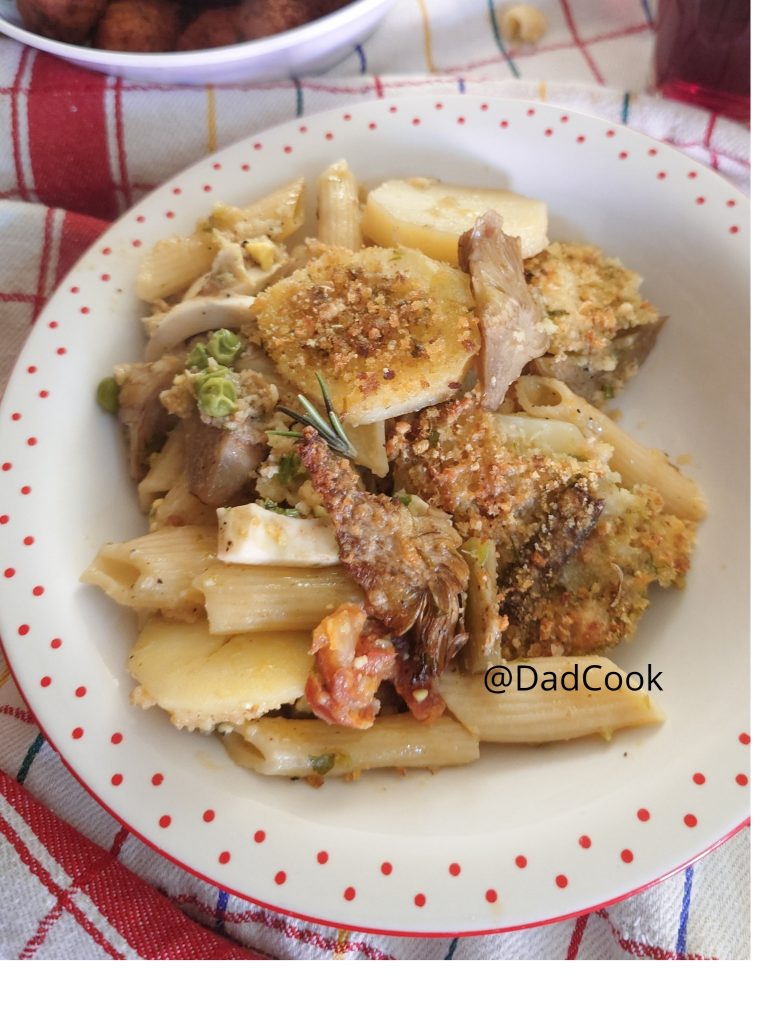
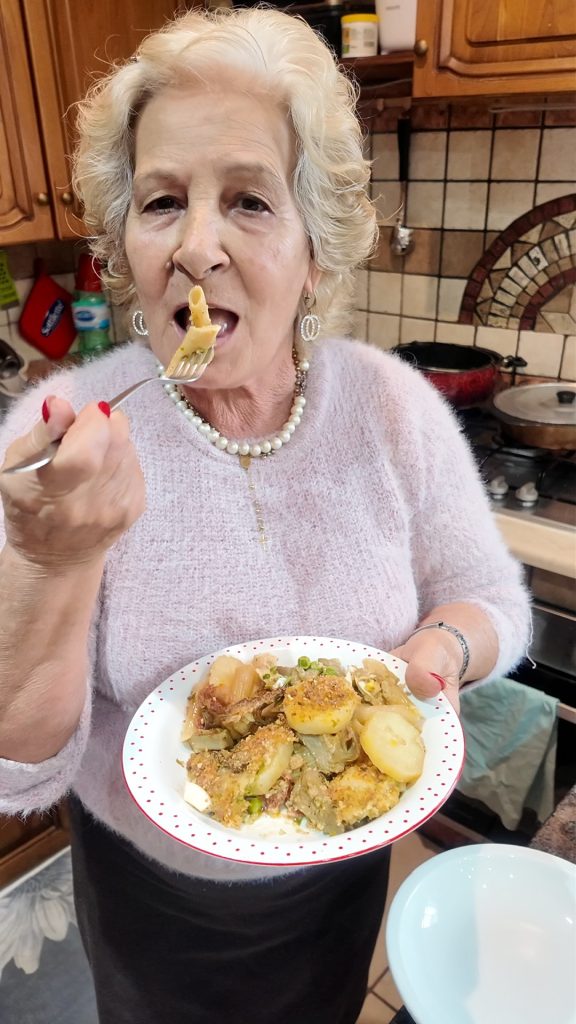
Now, it’s time to serve!Serve your baked pasta still hot and cheesy: you’ll feel how the sweetness of the artichokes perfectly matches the bold character of the Calabrian sausage.
A unique dish that smells of home and family.
Enjoy your meal!
STORAGE, TIPS, AND VARIATIONS
Storage
In the refrigerator: If there are leftovers, you can store it in an airtight container for 1-2 days at most.
How to reheat: To maintain the crunchiness of the breadcrumbs, I recommend reheating it in an air fryer at 320°F for 4-5 minutes or in a convection oven.
Avoid the microwave if you want to maintain the texture of the gratin.
Freezing:
I discourage freezing it, as the presence of potatoes and raw-cooked artichokes would change consistency too much once thawed.
Dadcook’s Tips
The cut is everything: Cut the artichokes and potatoes evenly.
If the potatoes are too thick, they risk remaining hard, while if the artichokes are too large, they won’t release their flavor in the broth.
Quality Broth: Use a good homemade vegetable broth or a quality one; being the only cooking liquid, the final taste of the pasta will largely depend on this.
The rest: Never skip the 10 minutes of rest after cooking.
It’s the moment when the pasta finishes “absorbing” the seasoning and becomes very creamy.
Variations on the theme
Cheesy Touch: Between layers, besides the Calabrian sausage, you can add smoked provolone cubes or scamorza cheese.
White Version: If you want a milder flavor, you can substitute the Calabrian sausage with pancetta or crispy guanciale.
Gluten-free: This recipe is perfectly suitable for those with celiac disease: just use gluten-free pasta (preferably rice and corn for holding purposes) and gluten-free breadcrumbs.
Gluten-free: This recipe is perfectly suitable for those with celiac disease: just use gluten-free pasta (preferably rice and corn for holding purposes) and gluten-free breadcrumbs.
💬 Did you try this recipe?
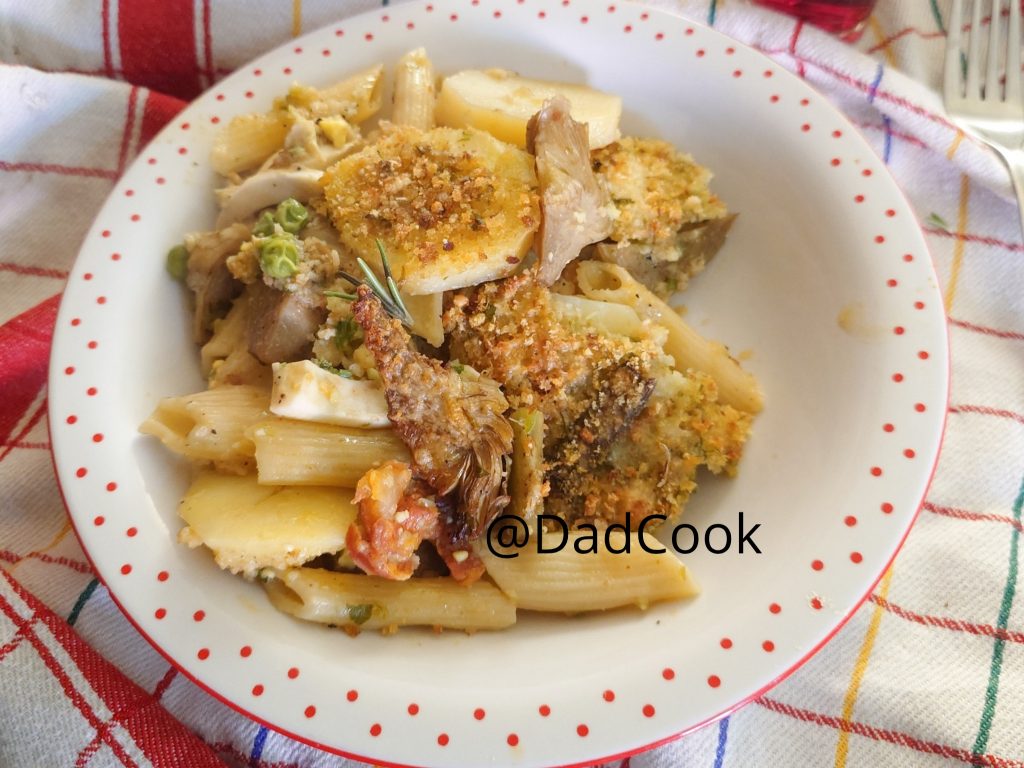
I hope this Baked Pasta with Artichokes and Sausage prepared with the “all raw” method brings a lot of flavor and the authentic taste of Calabria to your table!
It’s a practical and rich-in-character solution that I hope will become one of your favorite “dinner savers.”
If you have questions, curiosities, or variations to suggest, write me in the comments below: I always read everything with pleasure and love discovering how you personalize my dishes.
And don’t forget to follow me on DadCook to not miss the latest news and all the “rock” recipes I publish every week!
Frequently Asked Questions (FAQ)
Doesn’t the pasta remain hard when cooked directly raw?
Absolutely not! The secret is the heat of the broth and the final resting time. If you adhere to the indicated liquid doses and let the dish rest outside the oven for 5-10 minutes, the pasta will finish absorbing the residual moisture, becoming perfectly cooked and flavorful.
Can I use other pasta shapes?
Yes, but I highly recommend using short and ridged pasta shapes, like mezze maniche or rigatoni. These shapes are ideal for “capturing” the sauce between layers and hold up very well to prolonged baking without overcooking.
What can I use instead of Calabrian sausage?
If you prefer a less spicy or strong flavor, you can replace the sausage with sweet pancetta cubes or crumbled beef mince. If you want a vegetarian version, you can omit it and add a few more cubes of melting cheese.
Do the potatoes and artichokes cook well without pre-boiling?
Yes, as long as you slice them thinly. As we saw in the steps, potatoes sliced about a half-inch and artichokes sliced thinly have the same cooking time as the raw pasta immersed in boiling broth.
Do I have to use vegetable broth, or can I use water?
Vegetable broth (preferably homemade) adds an extra kick to the final flavor, as the pasta will absorb all the taste of the liquid while cooking raw. If you really don’t have it, use boiling salted water, but the result will be less rich.
