
The Experience that Brought Me to Tears (Literally)
When talking about Chinese cuisine, one often thinks of the usual spring rolls or Cantonese rice.
But there is a dish that went beyond all my expectations and left an indelible memory, halfway between suffering and ecstasy: “Tiger Skin Peppers” (in Chinese, 虎皮椒).
I discovered them in an authentic restaurant in Chinatown, Milan, and my first experience was… unforgettable.
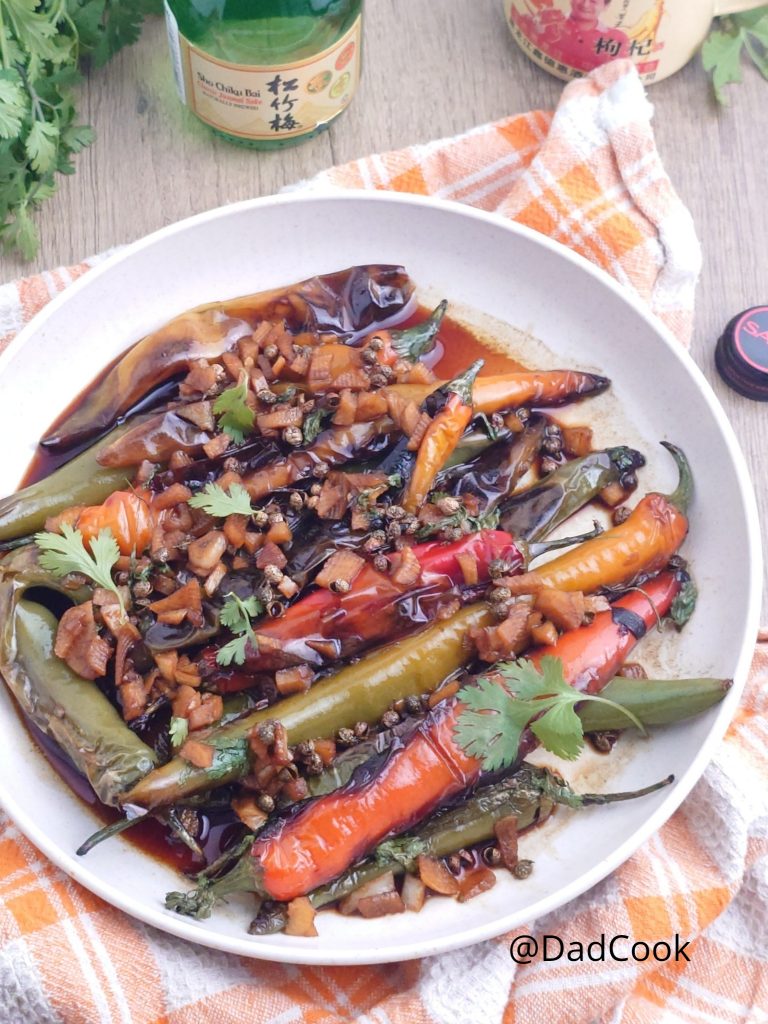
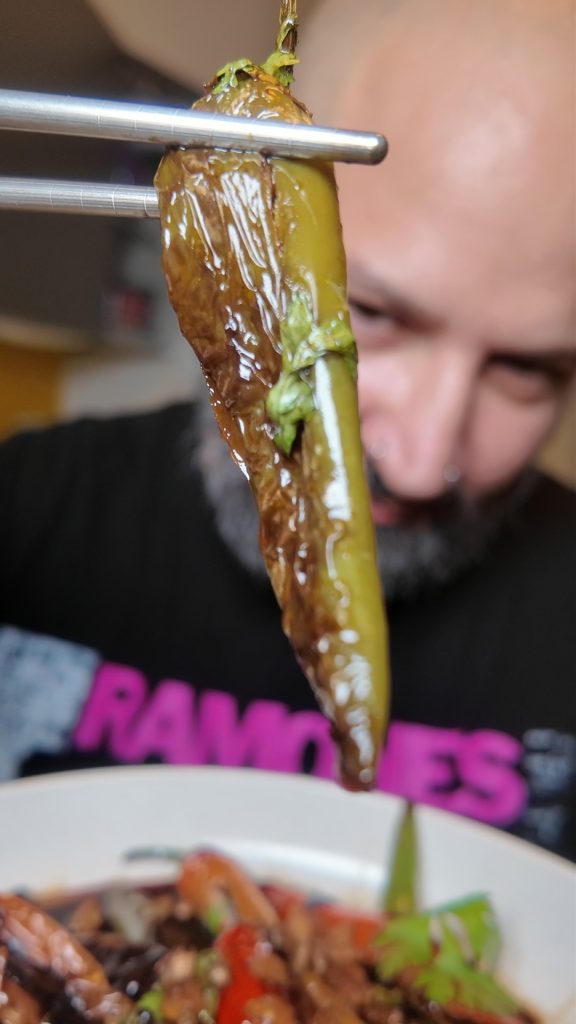
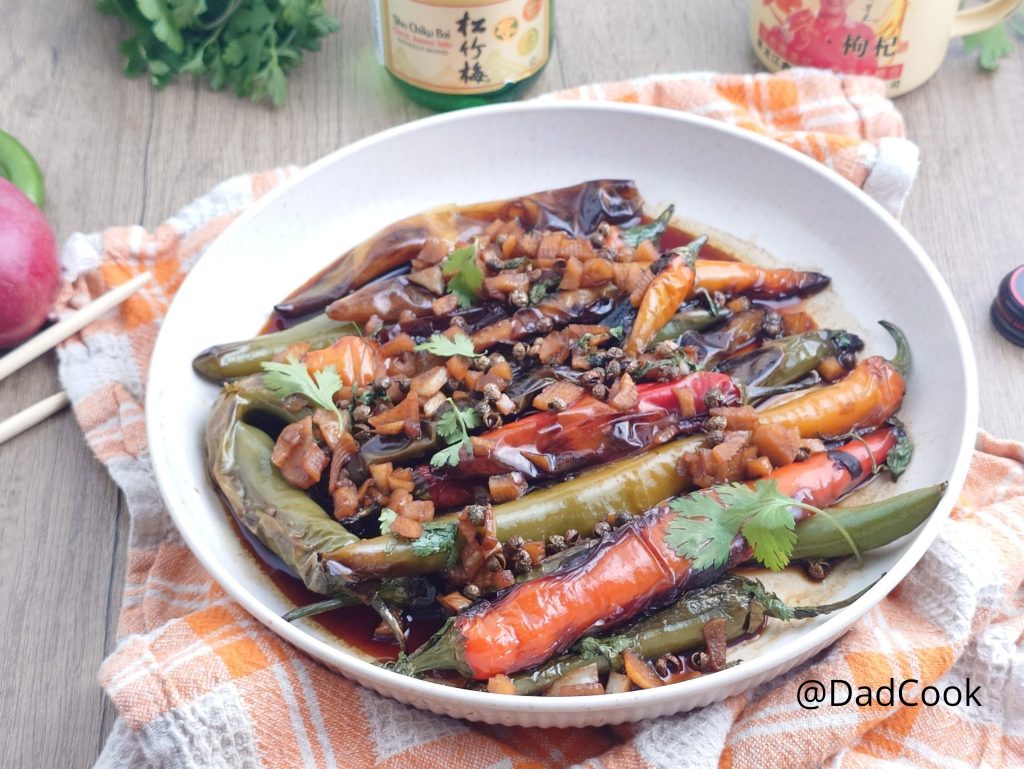
There were about ten on the plate: green peppers stir-fried to achieve that fascinating “burnt” and wrinkled appearance, typical of “tiger skin.”
Every bite was a challenge.
Tears welled up in my eyes from the extreme spiciness, but I couldn’t stop eating.
The deliciousness was overwhelming, with an intense flavor perfectly balanced between the heat of the spice, the pungency of the garlic, and the umami of the soy sauce.
I was so obsessed with this combination of flavors that, once I finished the plate, I called the waiter and begged him.
I recounted my entire story of culinary love and suffering and convinced him to dictate the recipe directly from the chef in the kitchen.
And today, I’m here to share it with you.
Get ready: this is the authentic “Tiger Skin Peppers” recipe that you can recreate at home, just as if you were in Milan!
- Quick Recipe: Oriental Fried Rice with Seasonal Vegetables, Peas and Eggs [+VIDEO]
- Century Egg: a Culinary Journey into Chinese Tradition
- Chinese Scrambled Eggs with Tomato: Easy and Quick Recipe (番茄炒蛋)
- Quick Recipe: Oriental Fried Rice with Seasonal Vegetables, Peas and Eggs [+VIDEO]
- Magical Egg Clouds: the Soft and Spectacular Recipe that Will Amaze Everyone at the Table
- Difficulty: Very Easy
- Cost: Very Cheap
- Rest time: 5 Minutes
- Preparation time: 5 Minutes
- Portions: 4
- Cooking methods: Stovetop
- Cuisine: Italian
- Seasonality: Spring, Summer, All Seasons
- Energy 22.78 (Kcal)
- Carbohydrates 3.00 (g) of which sugars 2.00 (g)
- Proteins 0.69 (g)
- Fat 1.10 (g) of which saturated 0.15 (g)of which unsaturated 0.03 (g)
- Fibers 0.35 (g)
- Sodium 138.88 (mg)
Indicative values for a portion of 100 g processed in an automated way starting from the nutritional information available on the CREA* and FoodData Central** databases. It is not food and / or nutritional advice.
* CREATES Food and Nutrition Research Center: https://www.crea.gov.it/alimenti-e-nutrizione https://www.alimentinutrizione.it ** U.S. Department of Agriculture, Agricultural Research Service. FoodData Central, 2019. https://fdc.nal.usda.gov
Ingredients
- 20 hot peppers (Long)
- cloves fresh garlic
- 2 tablespoons Sichuan peppercorns
- 5 tablespoons extra virgin olive oil
- 2 tablespoons light soy sauce
- 2 tablespoons soy sauce
- 1 tablespoon rice vinegar
- 1 tablespoon sugar
- 1 pinch salt
Tools
- 1 Wok Amazon BASIC
Steps
Prepare the “Tiger Skin”
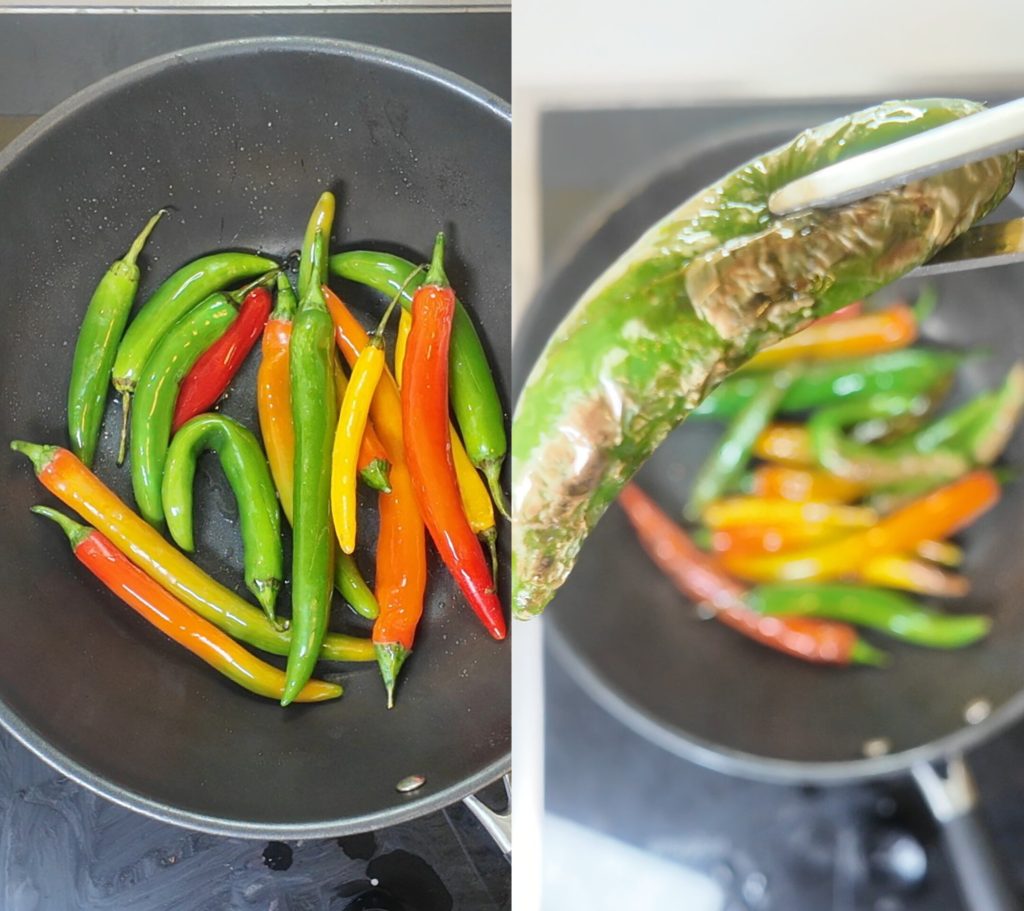
Prepare and Score:
Wash and dry the peppers well (they must be dry!).
Make a small cut on each to prevent them from bursting in the pan.
Sauté:
Heat the wok over medium-high heat with a dash of EVO Oil.
Add the peppers and sauté them quickly, pressing them to create dark bubbles, the “tiger skin” effect.
Set Aside:
Remove the sautéed peppers from the heat and set them aside.
If cooking two batches, repeat the operation.
Flavor and Stir
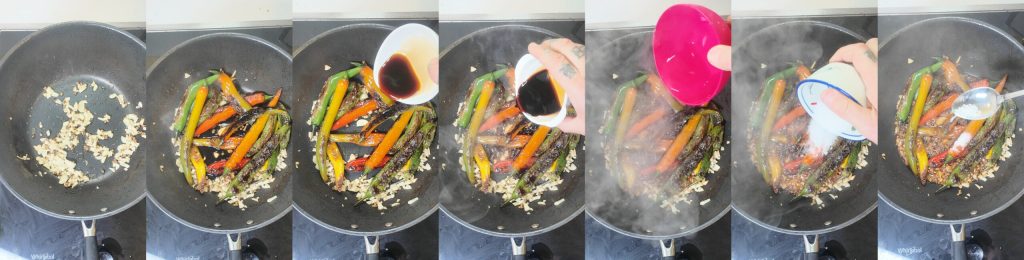
Aromas (Sichuan):
In the pan, add another dash of EVO Oil.
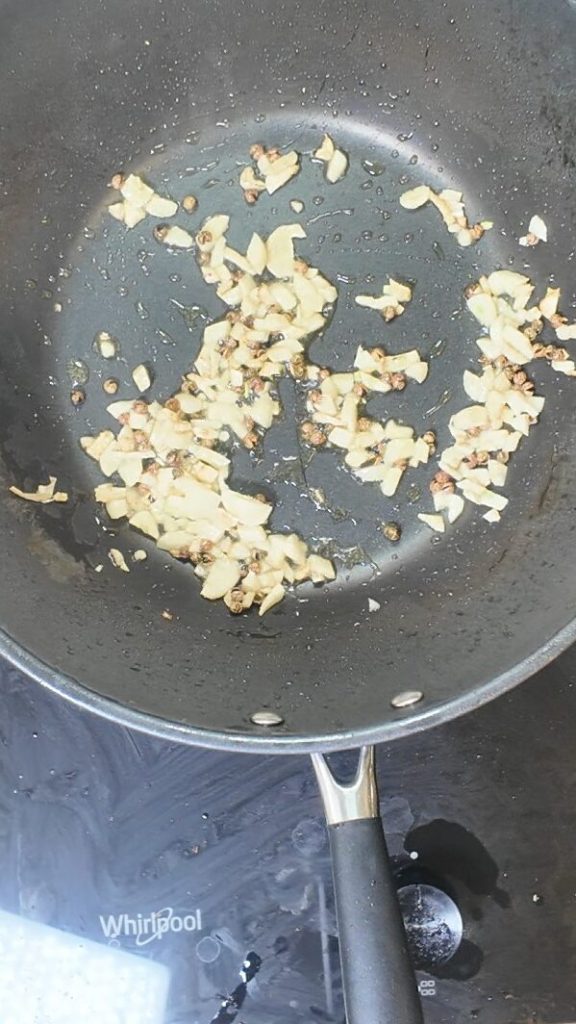
Add Sichuan peppercorns and minced garlic over medium heat.
Sauté for about a minute until you smell the intense aroma.
Then immediately put the “Tiger Skin Peppers” back in the pan.
Season:
Pour in all the sauce ingredients: light and dark soy sauce, rice vinegar, and sugar.
Add a pinch of salt only if necessary.
Caramelize the Sauce
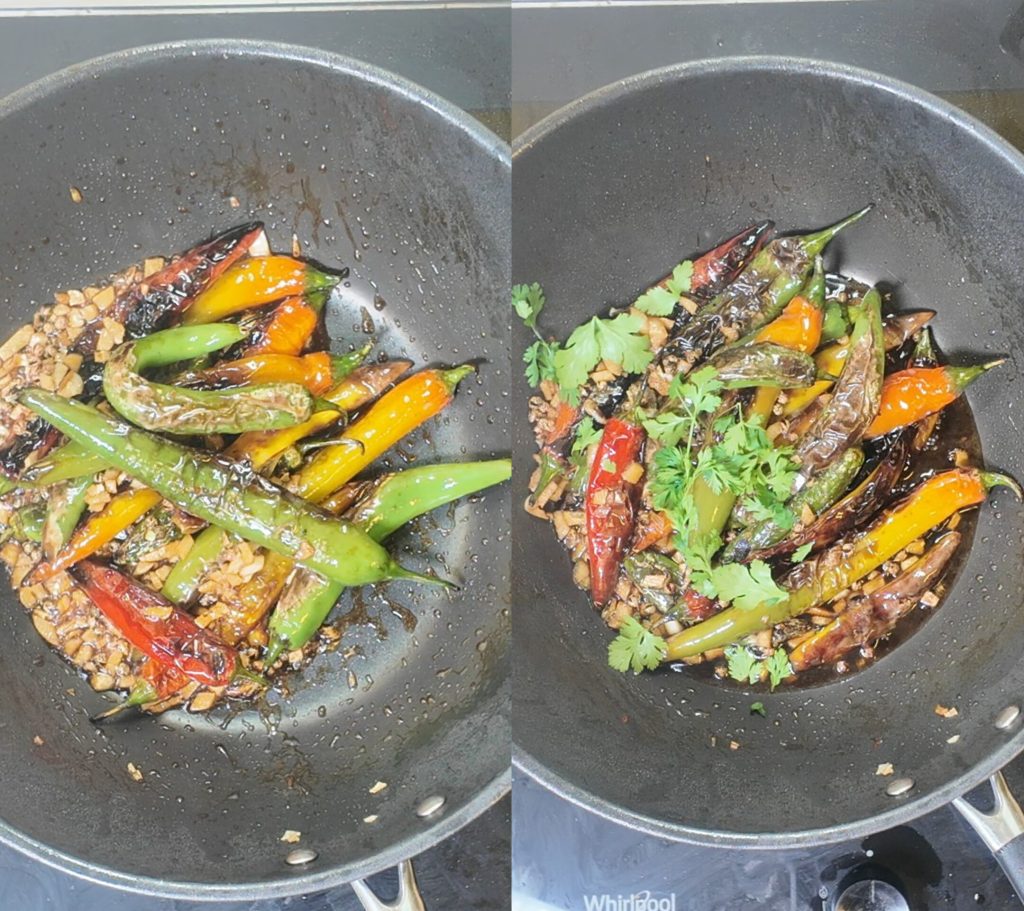
Flavor:
Stir quickly for a couple of minutes until the liquid reduces and the sauce slightly caramelizes around the peppers.
Serving and Garnish
Garnish:
Turn off the heat. Finish with some freshly chopped cilantro leaves to add freshness and color.
Serve and enjoy your “Tiger Skin Peppers” immediately, still hot, with white rice.
💡 Tips, Variations, and Storage
Storage:
Best When Fresh: Like all stir-fry dishes in Chinese cuisine, “Tiger Skin Peppers” are meant to be enjoyed immediately after cooking.
The spiciness and aroma of the Sichuan Pepper are at their peak when the dish is hot.
If Leftovers: If there are leftovers, you can store them in an airtight container in the refrigerator for up to 2 days.
Reheating: To reheat, use a non-stick pan on high heat for a few minutes, just enough to not soften them too much.
Avoid the microwave, which would make them soggy.
Tips for Perfect Results
Don’t Fear the Burn: The “Tiger Skin” effect is essential!
The dark spots are not burns in a negative sense, but the oxidation of the pepper skin that concentrates the flavor and gives it the desired chewy texture.
Don’t take the pan off the heat too soon.
Be mindful of Sichuan Pepper: When toasting the grains, watch the time. If Sichuan Pepper cooks too long, it will release an unpleasant bitter flavor instead of its characteristic numbing aroma (málà).
Wok Roar (Wok Hei): To achieve that smoky restaurant flavor, use the highest possible heat during Steps 2 and 3.
The cooking must be quick and intense!
Variations
Less Spicy: If the recipe with whole hot peppers is too intense, you can use only sweet peppers or remove the seeds and inner membranes of all peppers before cooking.
For Vegans: The recipe is already completely vegan!
Just ensure that the soy sauce you use is pure and contains no non-vegetable additives.
Add Meat: For a richer dish, you can stir-fry 150g of minced pork (or beef) after removing the Sichuan Pepper and garlic, and before putting the peppers back in the pan.
The meat will absorb the sauce perfectly.
The meat will absorb the sauce perfectly.
❓ FAQ – Frequently Asked Questions about the Dish
What does “Tiger Skin” mean and how is it achieved?
“Tiger Skin” (Hǔpí) is a Chinese term that describes the final appearance of the peppers.
It’s achieved by stir-frying them at very high heat with very little oil until the skin forms dark, blistered, and wrinkled bubbles.
This process concentrates the flavor and softens the pepper.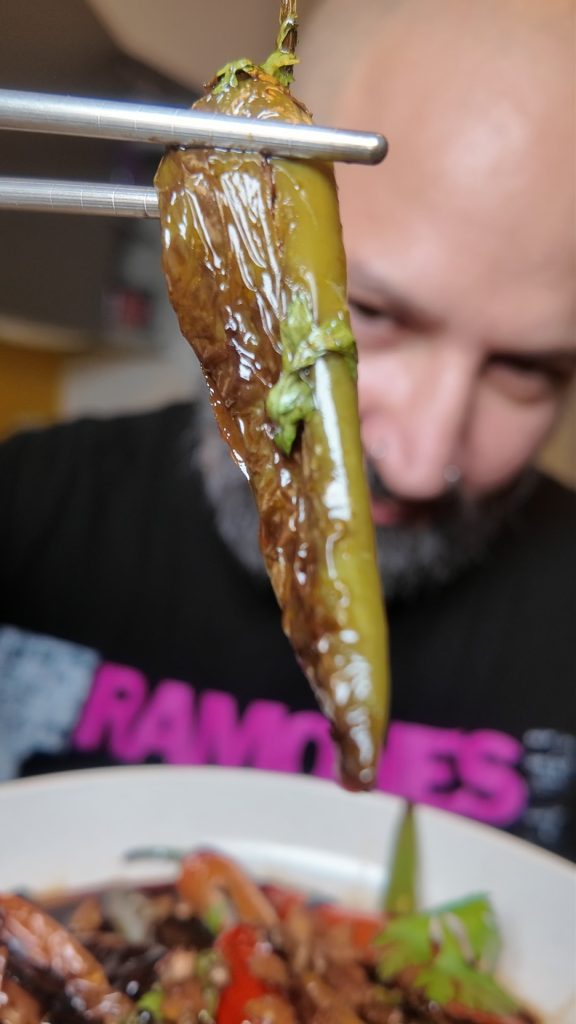
Are “Tiger Skin Peppers” very spicy?
The spiciness depends on the type of pepper you choose.
If you use hot red or green peppers, the dish will be very spicy.
If you use sweet peppers, the dish will only have the flavorful and slightly numbing taste given by the Sichuan Pepper, making it suitable for everyone.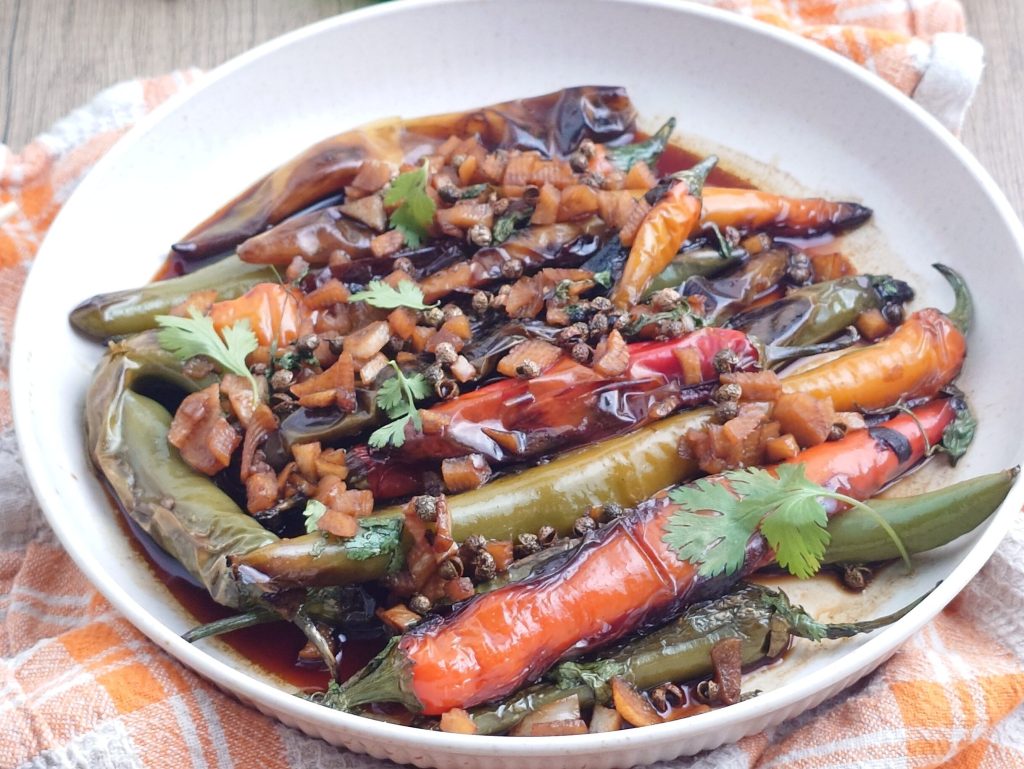
Can I use an oil other than Extra Virgin Olive Oil (EVO)?
Yes. Many chefs use oils with a higher smoke point like seed or peanut oil for stir-frying.
While EVO Oil adds flavor, for high-heat frying it is crucial to work quickly to avoid burning it.Where can I find Sichuan Pepper and Rice Vinegar?
You can find both ingredients in any good Asian grocery store (especially Chinese or Japanese ones), or in larger and well-stocked supermarkets in the ethnic section.
Do I have to remove the Sichuan Peppercorns?
It depends on how much you love the strong Sichuan flavor.
You can leave them: If, like me, you love the intense and numbing sensation of Sichuan Pepper, leave them in the dish. The taste will be at its maximum.
You can remove them: Many restaurants choose to remove them, partially or entirely, because chewing the grains can be unpleasant for those not used to it.
If you prefer a more controlled flavor, remove them after flavoring the oil.
