
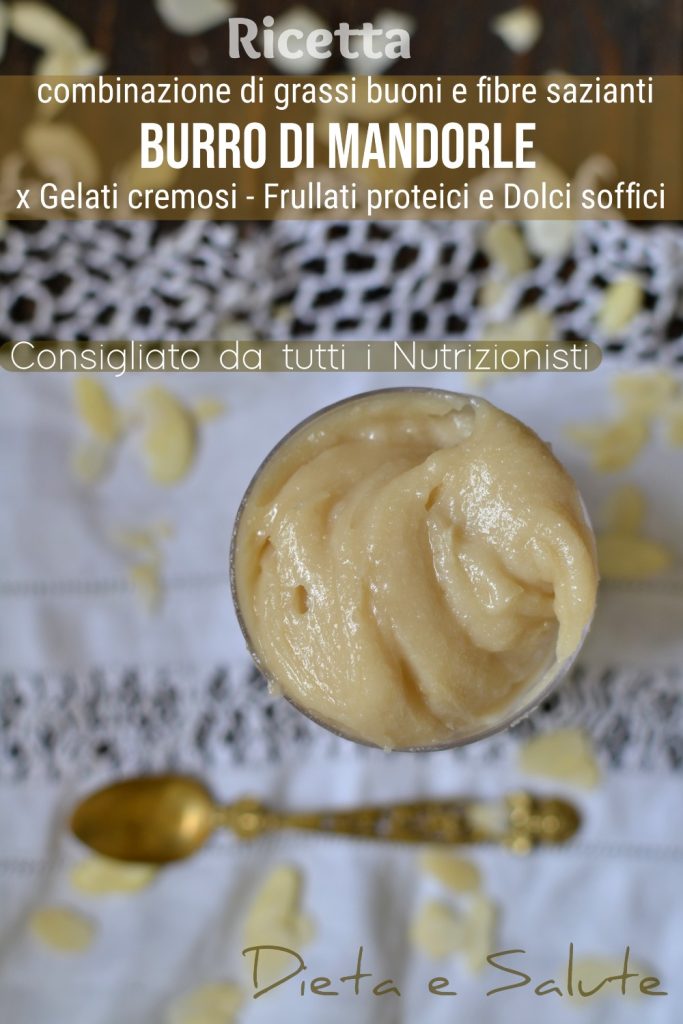
Today we make homemade vegetable butter, which can be used instead of regular butter to make mildly sweet desserts like cookies, cakes, tarts and ice creams, but it can also be added to fruit or vegetable smoothies to increase their energy and protein note. A product that reflects healthy, natural – holistic – eating. Believe it or not, it has more good fats and fiber than homemade peanut butter. In any case, both are rich in beneficial properties: they contain monounsaturated fatty acids (the good, natural fats) essential to keep the cells of our whole body healthy, for proper hormonal balance and for cardiovascular health. By now we all know how important Vitamin E is for our body: with its benefits it helps us stay younger and fitter for longer. In parallel, you should know that almond butter contains a lot of Vitamin E, more than 24 grams per 100 g of product (covering 120% of the recommended daily allowance, RDA), plus calcium (32% RDA), phosphorus (73% RDA), potassium (16% RDA), magnesium (100% RDA), niacin (21% RDA), riboflavin or Vit. B2 (77% RDA), folate (14% RDA) and zinc (34% RDA).
- Difficulty: Very easy
- Cost: Medium
- Preparation time: 10 Minutes
- Portions: 50
- Cooking methods: No cooking
- Cuisine: Italian
- Seasonality: All seasons
- Energy 57.90 (Kcal)
- Carbohydrates 2.16 (g) of which sugars 0.44 (g)
- Proteins 2.12 (g)
- Fat 4.99 (g) of which saturated 0.38 (g)of which unsaturated 4.39 (g)
- Fibers 1.25 (g)
- Sodium 0.10 (mg)
Indicative values for a portion of 10 g processed in an automated way starting from the nutritional information available on the CREA* and FoodData Central** databases. It is not food and / or nutritional advice.
* CREATES Food and Nutrition Research Center: https://www.crea.gov.it/alimenti-e-nutrizione https://www.alimentinutrizione.it ** U.S. Department of Agriculture, Agricultural Research Service. FoodData Central, 2019. https://fdc.nal.usda.gov
Ingredients
- 3 1/2 cups almonds
Tools
Preparation almond butter
To make almond butter, you can choose to make it with roasted or raw almonds, with or without the brown skins. Naturally, each version changes the color of the resulting butter, as well as the properties of the finished product (I leave a few lines about this at the end). Also, if you prefer to roast the almonds, it is recommended not to exceed a temperature of 356°F.
After roasting the almonds for 15 minutes at 356°F (or you can use them raw), place them in the bowl of a food processor (Thermomix or another sufficiently powerful one), then start blending. Increase the speed. The almonds will gradually turn into a sandy mixture, then increasingly sticky.
At this point, use a spatula to bring everything back to the bottom of the bowl, then continue blending.
You have to work at it to obtain a smooth, full-bodied almond butter. Blend and scrape with the spatula until the almonds begin to release their precious oil.
Continue until the oil and almond meal create a smooth mixture.
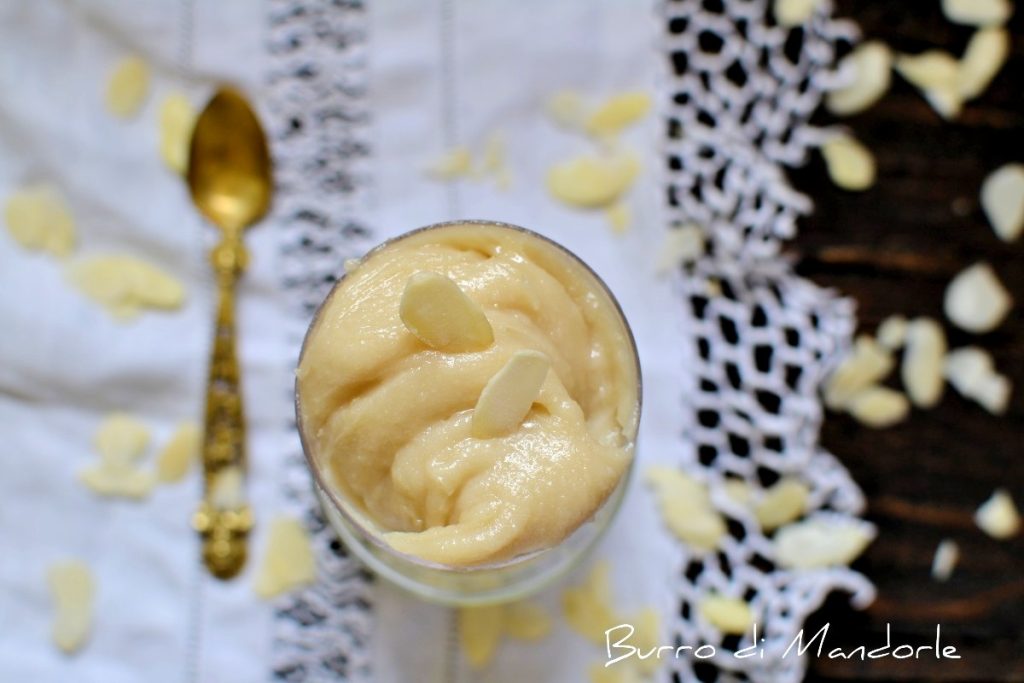
At this point, transfer the almond butter into a glass jar with an airtight lid.
It keeps in the fridge for 6 months
Anti-inflammatory almond butter for the gut
Confirmed by a study conducted at a hospital in New Delhi, almond butter can improve the balance of blood sugars and fats in just six months. For this reason it is also suitable for diabetics, as well as for those with high cholesterol. But the news that perhaps not everyone knows is that almond butter is a real source of prebiotics, which stimulates the production of butyrate (a beneficial fatty acid for the colon and gut, produced by gut bacteria during the fermentation of dietary fibers). Thanks to its strong anti-inflammatory properties, butyric acid is used to treat: celiac disease, ulcerative colitis, Crohn’s disease and other chronic inflammatory bowel diseases).
Confirmed by a study conducted at a hospital in New Delhi, almond butter can improve the balance of blood sugars and fats in just six months. For this reason it is also suitable for diabetics, as well as for those with high cholesterol. But the news that perhaps not everyone knows is that almond butter is a real source of prebiotics, which stimulates the production of butyrate (a beneficial fatty acid for the colon and gut, produced by gut bacteria during the fermentation of dietary fibers). Thanks to its strong anti-inflammatory properties, butyric acid is used to treat: celiac disease, ulcerative colitis, Crohn’s disease and other chronic inflammatory bowel diseases).
Uses in the kitchen
Almond butter or margarine is very versatile and delicious spread on bread or rusks, especially for breakfast (including light breakfasts) for an energy boost. It can also be added to cake batters, giving softness and an incomparable flavor. The same goes for muffin batters. And if you try replacing regular butter with almond butter to make your tart or cookie shortcrust pastry, you’ll notice how tasty and distinctive your recipes become. Finally, you can use your delicious almond butter to make a super-creamy and indulgent ice cream. On a hot muggy day, if unexpected guests arrive, try putting almond butter (1 tablespoon per person) + plant-based milk (150 g (~2/3 cup) per person) + plenty of ice in a blender — everyone will ask for seconds. But this is just the base for a tasty smoothie: add fruit or vegetables as you like to create incredibly fresh, thirst-quenching, protein-rich, energetic and healthy smoothies. To adapt them for winter, simply omit the ice and they will become perfect beverages for the season.
Does almond butter make you gain weight?
Despite being caloric, you cannot say almond butter necessarily makes you gain weight; it is much less caloric than any oil. One tablespoon of this tasty, protein-rich, nourishing and energy-giving spread can make us feel satisfied and full, preventing hunger spikes during the day. So eating almond butter every day is possible — it’s the amount you regulate; otherwise it can only be beneficial for health. It would be a good habit to consume it daily (in modest amounts).
Are almonds better with or without the skin?
Many nutrients, antioxidants and anti-inflammatory compounds are found in the brown skin of almonds, such as tannins (valuable for counteracting inflammation of the intestinal tract), phenolic acids (important for counteracting fat in the liver) and flavonoids (able to counter possible degenerative diseases, cardiovascular disorders and cancer), so it would be a shame to exclude them from our daily portion of almonds. Therefore, the advice is to consume almonds with the skin on.
Why are tannins good for the body?
Tannins are astringent substances that provide benefits especially at the intestinal level, where they are transformed by the gut flora and begin to exert possible astringent, anti-inflammatory, antioxidant, antibacterial and antidiarrheal actions. They can resolve mild bleeding of the gastrointestinal tract, internal hemorrhoids, gastroenteritis and ulcers. Plants rich in tannins are those with the most astringent and bitter tastes such as tea, coffee, pomegranate, apple, red grapes, berries, persimmons, dark chocolate, artichokes, walnuts, almonds and cinnamon.
