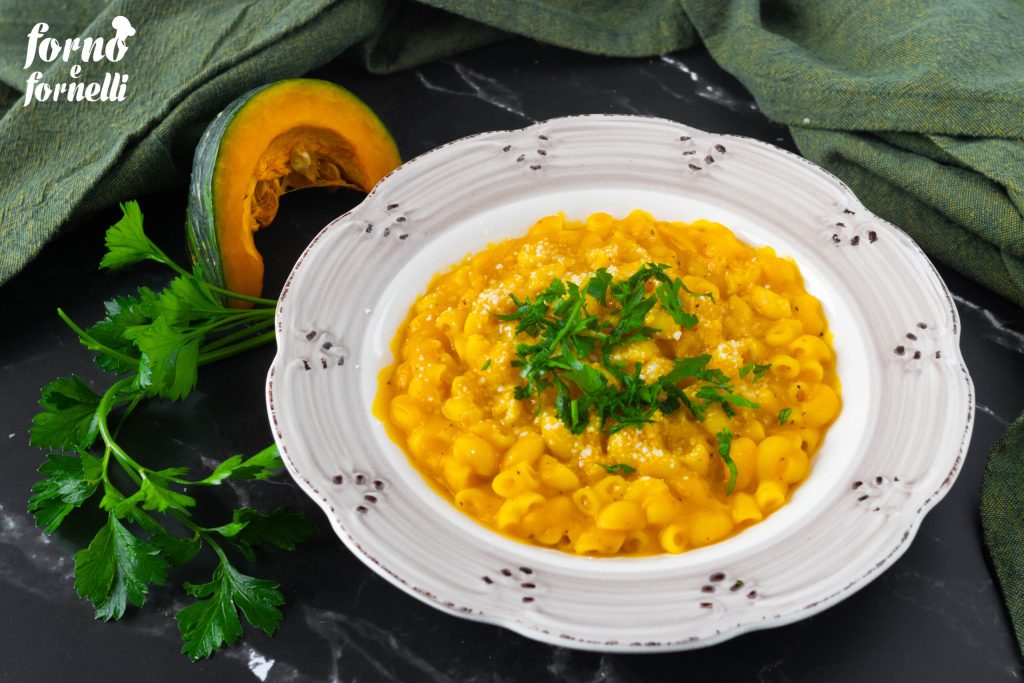
Neapolitan Pumpkin Pasta is a simple first course that celebrates the authentic flavors of Neapolitan culinary tradition. It is a recipe with a genuine character, combining few ingredients, but with an intense and enveloping flavor, perfect for warming autumn and winter evenings. Its creamy texture, thanks to the pumpkin, gives the dish a softness that conquers at first bite, making it perfect for a family dinner or a homely lunch.
This pasta is ideal for those looking for an economical, quick, and healthy recipe without sacrificing taste. It’s a dish that lends itself to various variations, such as the addition of Parmesan crust or pancetta, typical of the Neapolitan tradition. Neapolitan pumpkin pasta is also a perfect solution to make the most of seasonal pumpkin, giving it a starring role in a dish that enhances simple yet extraordinary flavors.
Try this traditional recipe that warms and comforts.
Pumpkin is never missing at this time, if you are looking for other ideas, also try these recipes!
- Difficulty: Very easy
- Cost: Very economical
- Preparation time: 15 Minutes
- Portions: 2 People
- Cooking methods: Stove
- Cuisine: Italian
- Seasonality: Autumn, Autumn, Winter
- Energy 266.57 (Kcal)
- Carbohydrates 35.61 (g) of which sugars 6.43 (g)
- Proteins 7.81 (g)
- Fat 11.69 (g) of which saturated 2.55 (g)of which unsaturated 0.87 (g)
- Fibers 2.51 (g)
- Sodium 583.44 (mg)
Indicative values for a portion of 410 g processed in an automated way starting from the nutritional information available on the CREA* and FoodData Central** databases. It is not food and / or nutritional advice.
* CREATES Food and Nutrition Research Center: https://www.crea.gov.it/alimenti-e-nutrizione https://www.alimentinutrizione.it ** U.S. Department of Agriculture, Agricultural Research Service. FoodData Central, 2019. https://fdc.nal.usda.gov
Ingredients for Neapolitan Pumpkin Pasta
- 14 oz delica pumpkin
- 1.5 tbsp extra virgin olive oil
- 1 Tropea red onion
- to taste salt
- to taste black pepper
- to taste parsley
- 5 oz pasta (short)
- 1 tbsp Parmigiano Reggiano DOP
Tools
- Pot
- Knife
- Cutting Board
- Wooden Spoon
- Immersion Blender
How to make Neapolitan Pumpkin Pasta
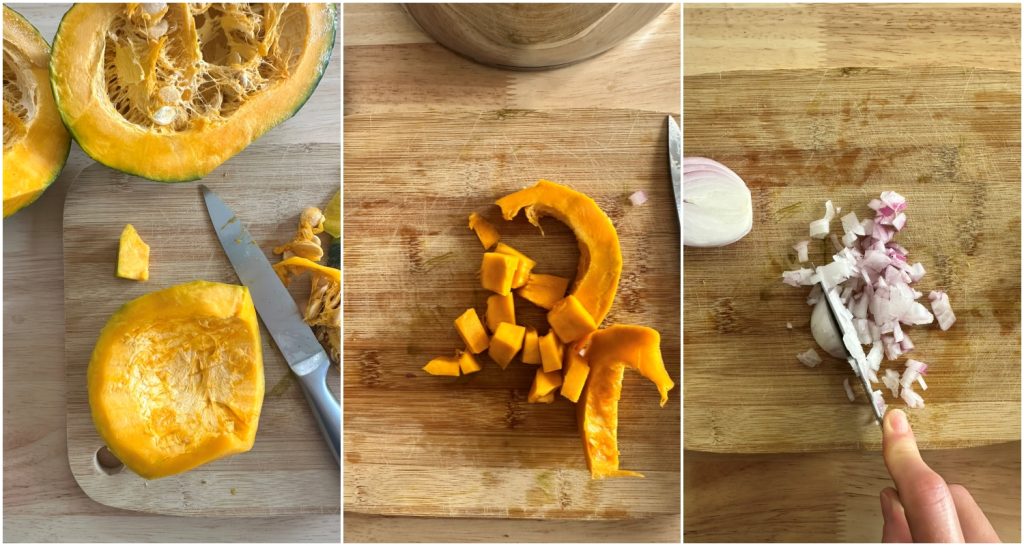
To prepare Neapolitan Pumpkin Pasta, first peel the pumpkin (yes, the delica can be used with the skin but it gave an unpleasant color. I used the peel separately). Wash it well. Cut into small pieces and set aside (small pieces cook faster). Also, chop an onion with a knife.
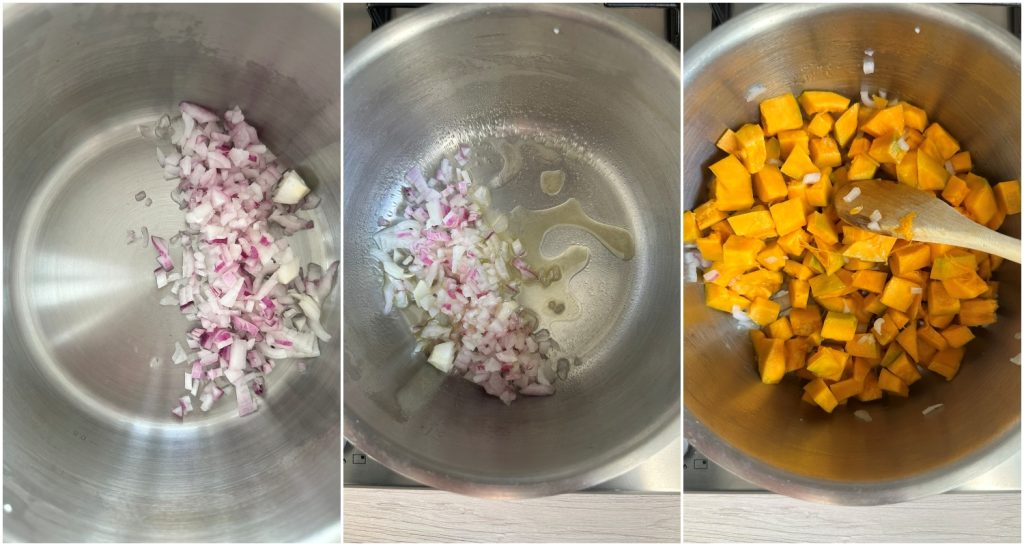
Put the onion in the pot with the oil and sauté for a few minutes. Add the pumpkin.
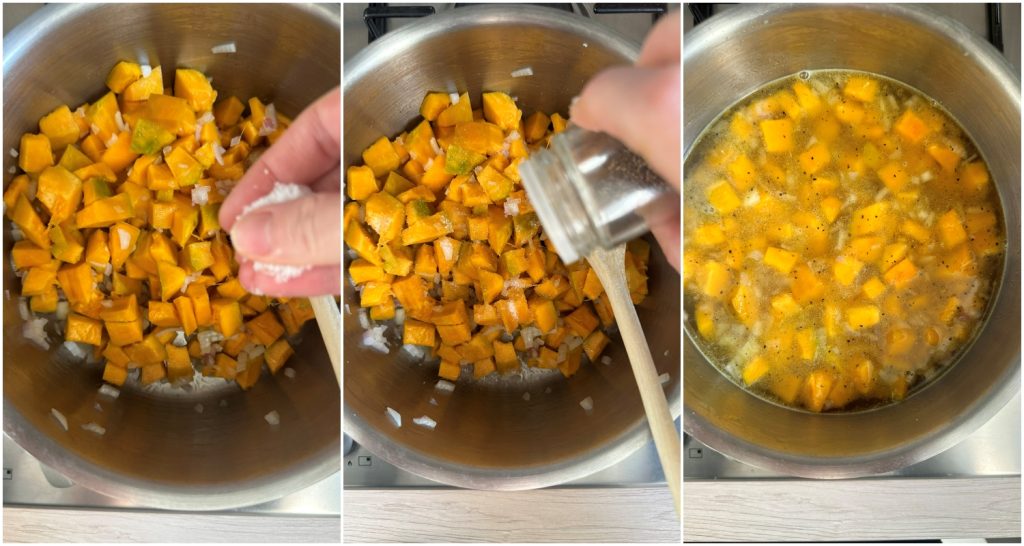
Adjust with salt and pepper and pour in 1 glass of water. Cook on low heat for 20 minutes, prolong cooking adding more water if necessary.
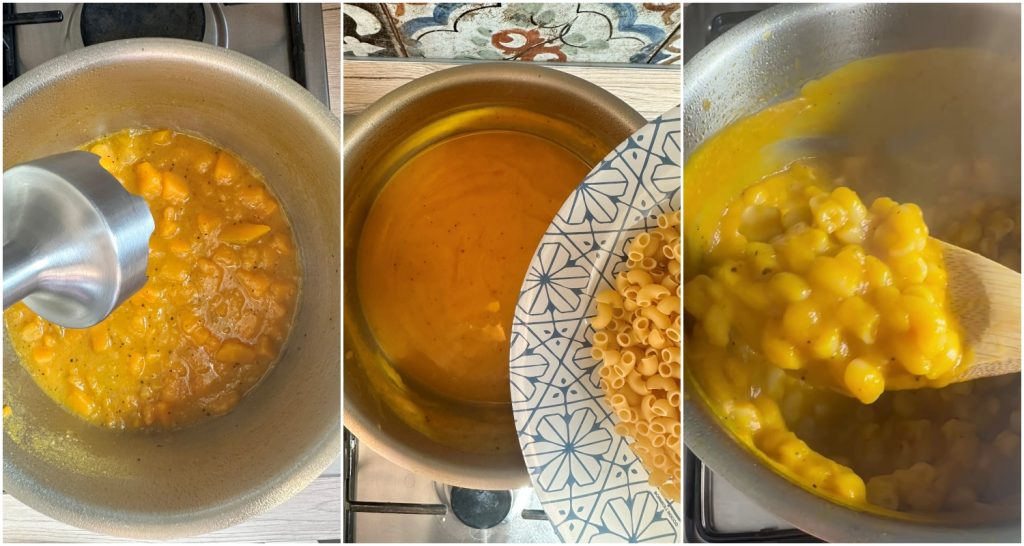
When the pumpkin is soft, blend with the immersion blender until you obtain a smooth and homogeneous cream. Reheat and add the pasta. Cook for the time indicated on the package. Add water to prolong cooking or if the pumpkin cream is too dry. Once cooked, serve, add freshly chopped parsley and a sprinkle of parmesan. Enjoy your meal!
Storage
You can store Neapolitan pumpkin pasta in the fridge, in a closed container, for 1-2 days. However, it may become a bit thicker after cooling; simply add a little water or broth when reheating.
FAQ
What is the best type of pumpkin for this recipe?
The ideal pumpkin for Neapolitan pumpkin pasta is the delica pumpkin or mantovana pumpkin, both with a sweet and compact pulp that mixes well with the pasta.
Which pasta is best suited for Neapolitan pumpkin pasta?
Traditionally, short pasta shapes like ditalini or tubetti are used, but it is also possible to use other types of short pasta that absorb the pumpkin cream well.
How can I make the dish creamier?
To achieve an even creamier consistency, you can add one or two tablespoons of cream cheese or cream.
Can I add other ingredients to enrich the dish?
Some variations include adding pancetta or guanciale, speck or diced ham for a more intense flavor, or Parmesan crusts during cooking for a richer taste.
How to prevent the pumpkin from becoming too watery?
To prevent the pumpkin from releasing too much water, it’s better to cook it on medium-low heat and add liquids only when necessary.