
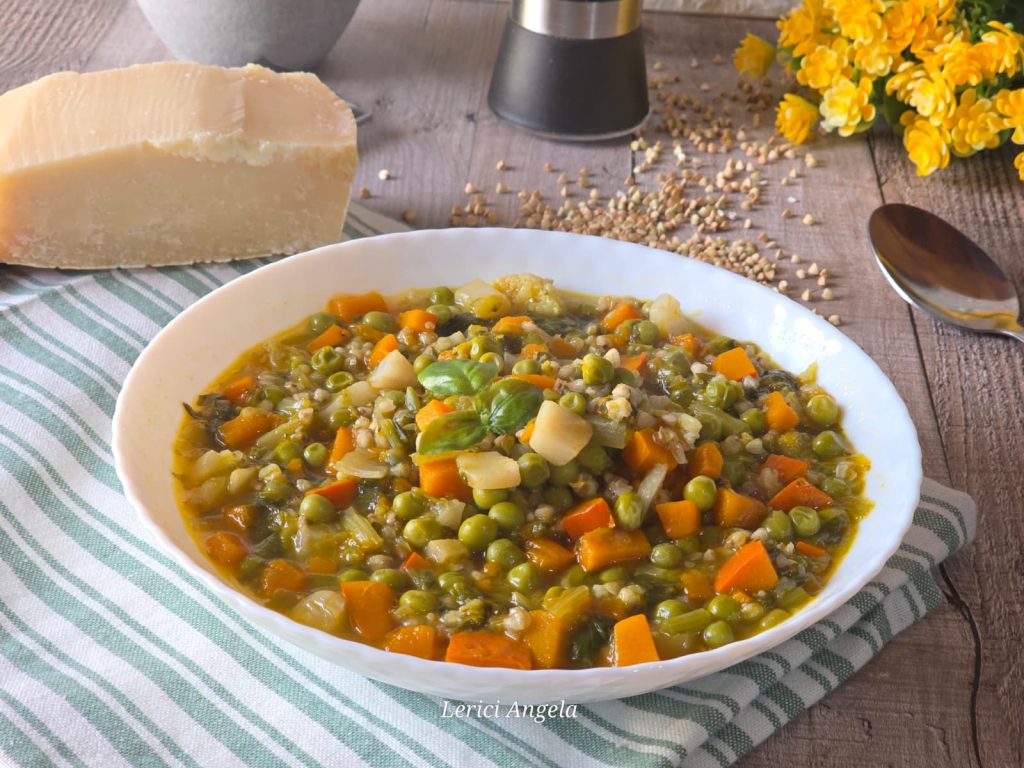
Buckwheat soup is the ideal solution for those seeking a one-pot meal that is quick, nutritious, and, above all, comforting. It is a healthy and tasty first course, a true gastronomic treat perfect for warming up on cold autumn and winter days.
In its simplicity, this soup amazes with its delightful taste and incredible versatility: the dark grains lend themselves to a thousand shades of colors and flavors, generously embracing seasonal vegetables, legumes, or spices to taste.
Buckwheat is a cereal rich in proteins of high biological value, which is used for people with celiac disease as it is naturally gluten-free.
Buckwheat has a high content of soluble carbohydrates called fagopyritols, which according to medical studies improve glycemic control in patients with diabetes.
The grains, which can be found whole or hulled, do not require soaking. Buckwheat should first be rinsed thoroughly under running water.
Then add twice the weight of used cereal in boiling water or vegetable broth.
After bringing the liquid back to a boil, reduce the flame, cover, and let it cook for about twenty minutes.
Served in generous portions, it can easily become a one-pot meal as it contains all the nutrients necessary for a complete meal.
Made with modest ingredients but rich in properties.
Delicious, let’s get cooking.
- Difficulty: Very Easy
- Cost: Cheap
- Preparation time: 10 Minutes
- Portions: 4/5
- Cooking methods: Stove
- Cuisine: Italian
- Seasonality: Autumn, Winter, and Spring
- Energy 182.88 (Kcal)
- Carbohydrates 30.24 (g) of which sugars 5.60 (g)
- Proteins 6.21 (g)
- Fat 5.66 (g) of which saturated 0.93 (g)of which unsaturated 0.66 (g)
- Fibers 5.85 (g)
- Sodium 807.90 (mg)
Indicative values for a portion of 190 g processed in an automated way starting from the nutritional information available on the CREA* and FoodData Central** databases. It is not food and / or nutritional advice.
* CREATES Food and Nutrition Research Center: https://www.crea.gov.it/alimenti-e-nutrizione https://www.alimentinutrizione.it ** U.S. Department of Agriculture, Agricultural Research Service. FoodData Central, 2019. https://fdc.nal.usda.gov
Ingredients
Buckwheat Soup
- 2 cups pumpkin (weight when cleaned)
- 7 oz kale (cleaned)
- Half onion
- 2 stalks celery
- carrot (or with celeriac)
- 1 cup peas (frozen)
- 6 oz buckwheat
- to taste extra virgin olive oil
- salt
- pepper
- 1 teaspoon tomato paste
- 0.5 gallon vegetable broth (made with carrot, celery, onion, or a stock cube)
Tools
- Pot
- Lid
Steps
Buckwheat Soup
Prepare a quick broth with the half onion, celery, and carrot.
Alternatively, you can use a broth made with a vegetable stock cube, here is the recipe homemade vegetable stock cube.
Wash and clean the vegetables well, dice the onion, carrots, celery, pumpkin, and cut the kale into strips.
(Place the kale on the cutting board and, with the knife, cut the central stem and remove the outer leaves. Then separate the remaining leaves and remove, with the knife, the central rib from each leaf as this is the hardest part and not ideal for cooking)
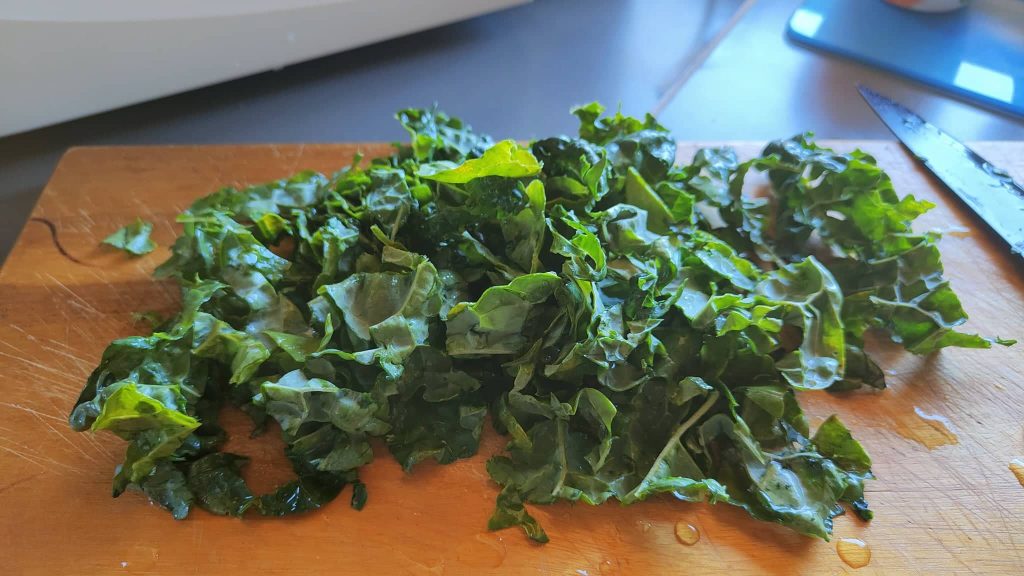
In a saucepan, sauté the chopped vegetables (onion, carrot, celery) and then add the chopped kale.
Cover with hot vegetable broth, and bring to a boil.
(Pour about one and a half liters of vegetable broth, bring to a boil).
Season with salt and pepper, add the diluted tomato paste, and only then the diced pumpkin and a handful of frozen peas.
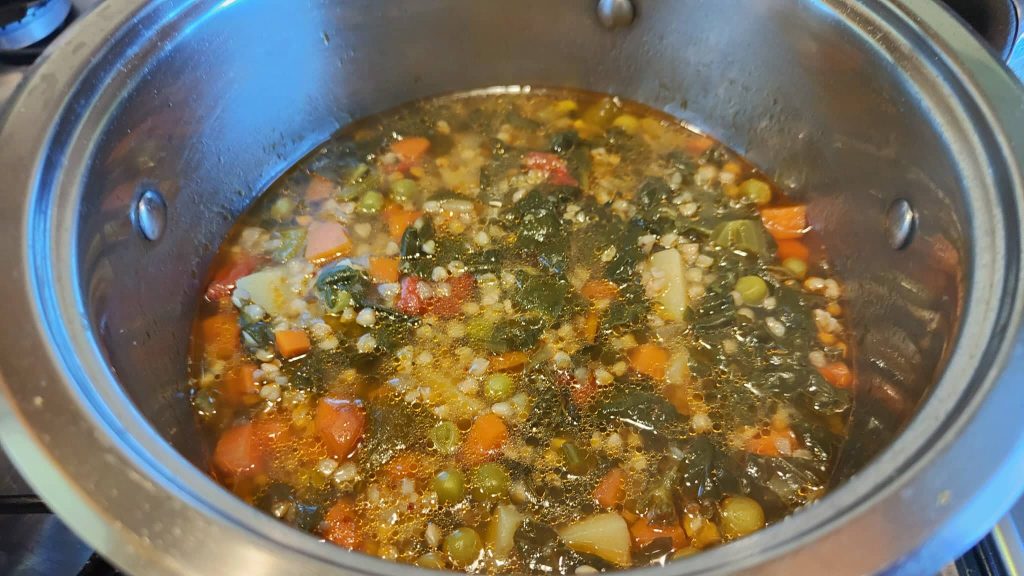
Let it cook for 30/35 minutes.
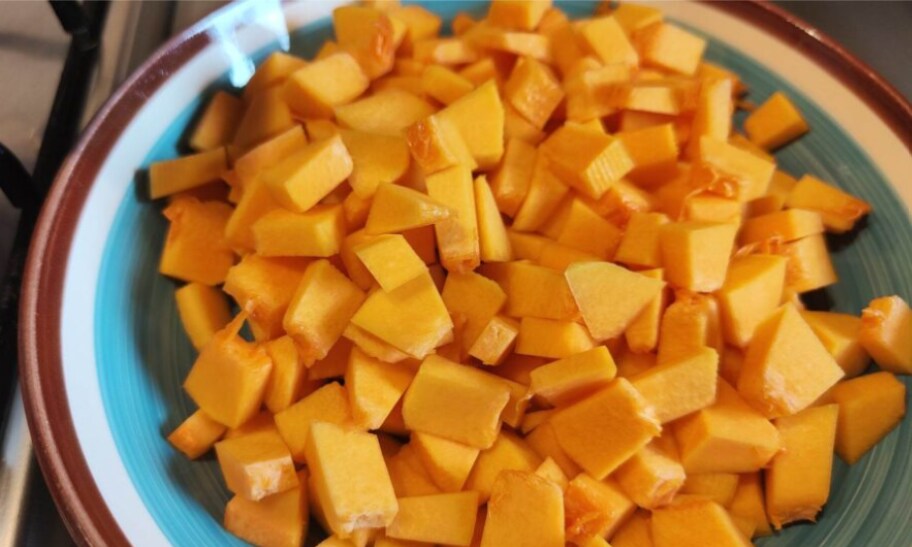
Wash the buckwheat thoroughly.
Now add the buckwheat and let it cook over low heat for about 15/20 minutes, then adjust with salt.
“The cooking of buckwheat has its own times, check the cooking times on the package.”
If it dries out too much, add more hot vegetable broth.
Add pepper to taste and serve.
To taste, a nice sprinkle of grated cheese.
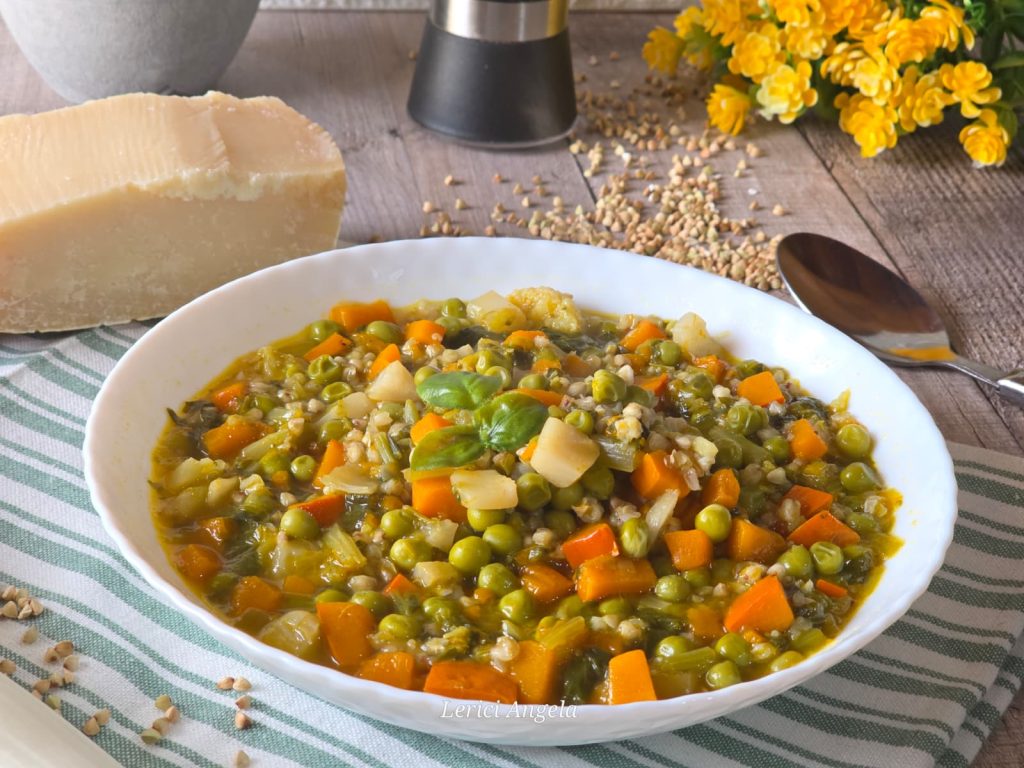
Enjoy your meal.
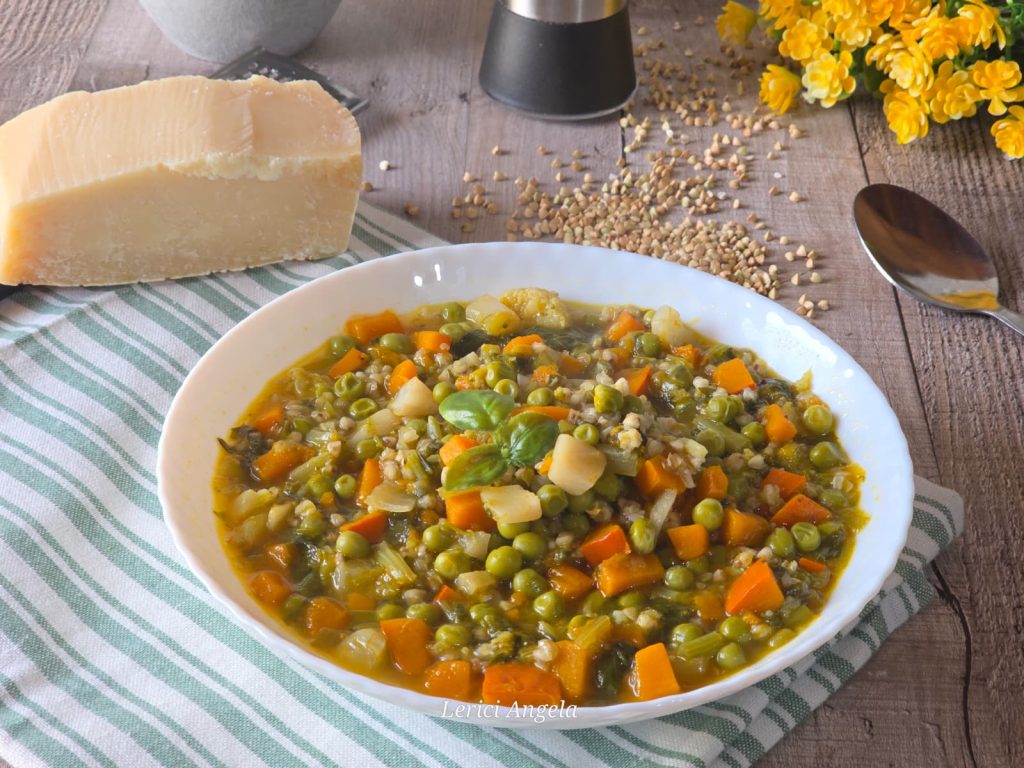
Tips
The benefits of buckwheat.
Buckwheat is very important for the high biological value of its proteins. It’s a good source of fiber and minerals, gluten-free, and rich in phosphorus, calcium, copper, and magnesium.
Buckwheat is very important for the high biological value of its proteins. It’s a good source of fiber and minerals, gluten-free, and rich in phosphorus, calcium, copper, and magnesium.
Buckwheat is very important for the high biological value of its proteins. It’s a good source of fiber and minerals, gluten-free, and rich in phosphorus, calcium, copper, and magnesium.
Curiosities
Being buckwheat an “earthy” flavor, it goes perfectly with sweet or slightly bitter ingredients.
Try these combinations:
Mountain Version: Add some cubes of savoy cabbage, potatoes, and a parmesan crust during cooking.
Autumn Version: Pumpkin diced small, leeks, and a sprig of rosemary.
Protein Version: Add some pre-cooked chickpeas or black lentils for an even more substantial one-pot meal.
Notes
Don’t just use water:
Use a shellfish broth if you want a bold seafood version.
Use a mushroom broth (also made with stems or dried mushrooms) to enhance the forest essence of the cereal.
Storage
Buckwheat tends to absorb a lot of liquid even after cooking. If there are leftovers:
Store the soup drier, and when you reheat it, add a drop of water or broth to make it creamy again.
How to Use
Buckwheat is a “pseudo-cereal” (technically it’s a pseudocereal) that’s very versatile, but to get the most flavor and ideal texture, you need to follow some key steps.
Before any use, buckwheat should be rinsed very well under cold running water using a fine-mesh sieve.
This removes impurities and, especially, saponins residues (which could give an excessively bitter or earthy aftertaste).
There are two main ways to cook it:
Absorption Method (Ideal for your soup): Use twice the liquid compared to the volume of the grain. Place the grain in boiling liquid, cover, reduce the flame to the minimum, and let it cook for about 15-20 minutes. Do not stir too much to avoid breaking the grains.
Like Pasta (Boiled): Cook it in plenty of salted water and drain when it’s al dente. This method is more suitable if you want to use it for cold salads or “pseudo-risottos”.
Once the heat is turned off, let the buckwheat rest with the lid on for 5 minutes.
The residual heat finishes swelling the grains evenly and allows the fibers to stabilize.
Besides the soup, remember you can use it:
Raw (sprouted): If you soak it for 24 hours and rinse it often, the grains sprout and become crunchy, perfect in salads or yogurts.
Sautéed: After cooking it for absorption, you can toss it in a pan with vegetables and soy sauce as if it were Cantonese fried rice.
In Patties: Cooked buckwheat has excellent binding power, perfect for creating veggie burgers or patties without using too much breadcrumbs.
Tips for Other Recipes
If you liked this recipe, click on many stars, thank you so much.
I invite you to become a fan of my Facebook page to always stay updated on my new recipes and stay in touch with me.
I’m waiting for you in my group: https://www.facebook.com/groups/488624465780860
or on my page: https://www.facebook.com/gustoamoreefantasie
Back to the Home page
