
Easter Bundt Cake glazed with dark chocolate. Easter brings the scent of flowers and the desire for color.
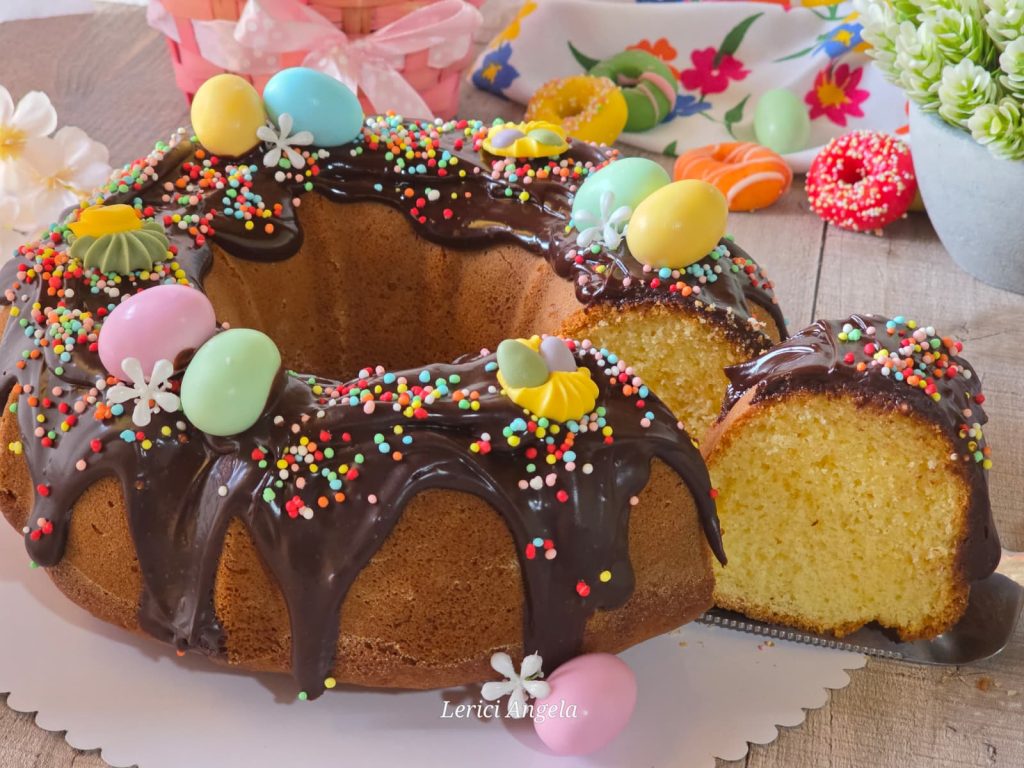
This Easter Bundt Cake is the essence of the celebration: a very tall, soft base, intensely scented with orange and lemon, embraced by a glossy, intense dark chocolate glaze.
It is not just a simple bundt cake, but a true spring ritual. Imagine walking into the kitchen on Easter morning: the air is filled with the zesty aroma of lemon and the sweet, sunny scent of orange, released from a batter made incredibly soft and moist thanks to the addition of plain yogurt.
The secret of this cake lies in the perfect contrast between its tender core, a citrus cloud thanks to the finely grated zests, and its celebratory “armor.”
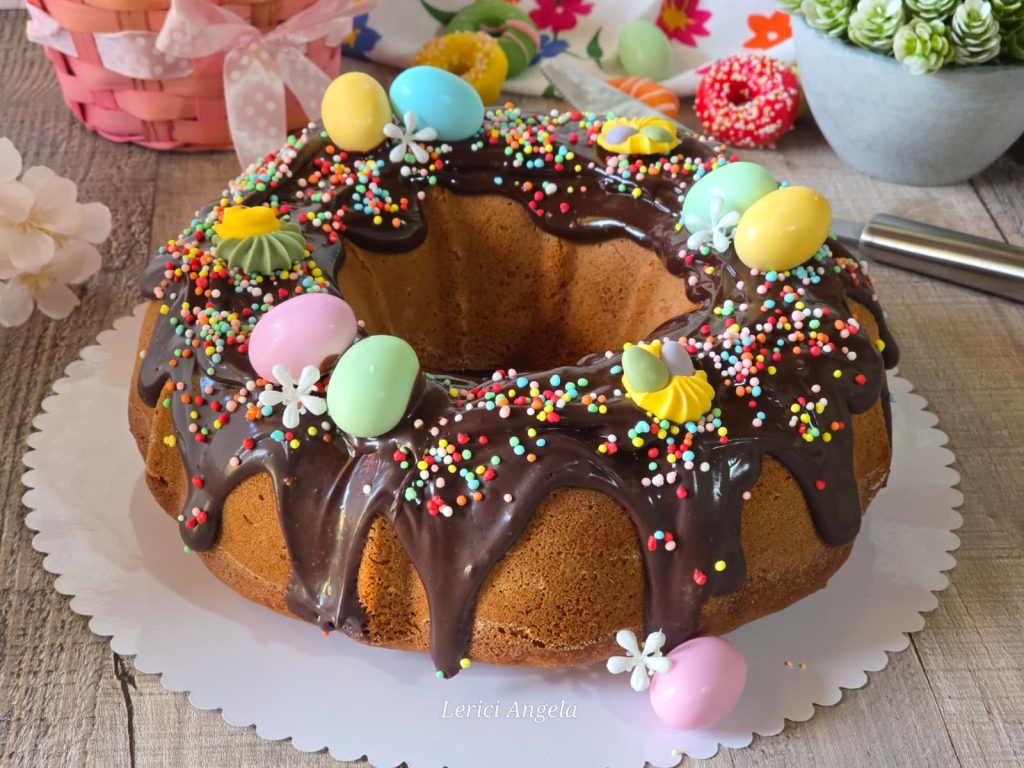
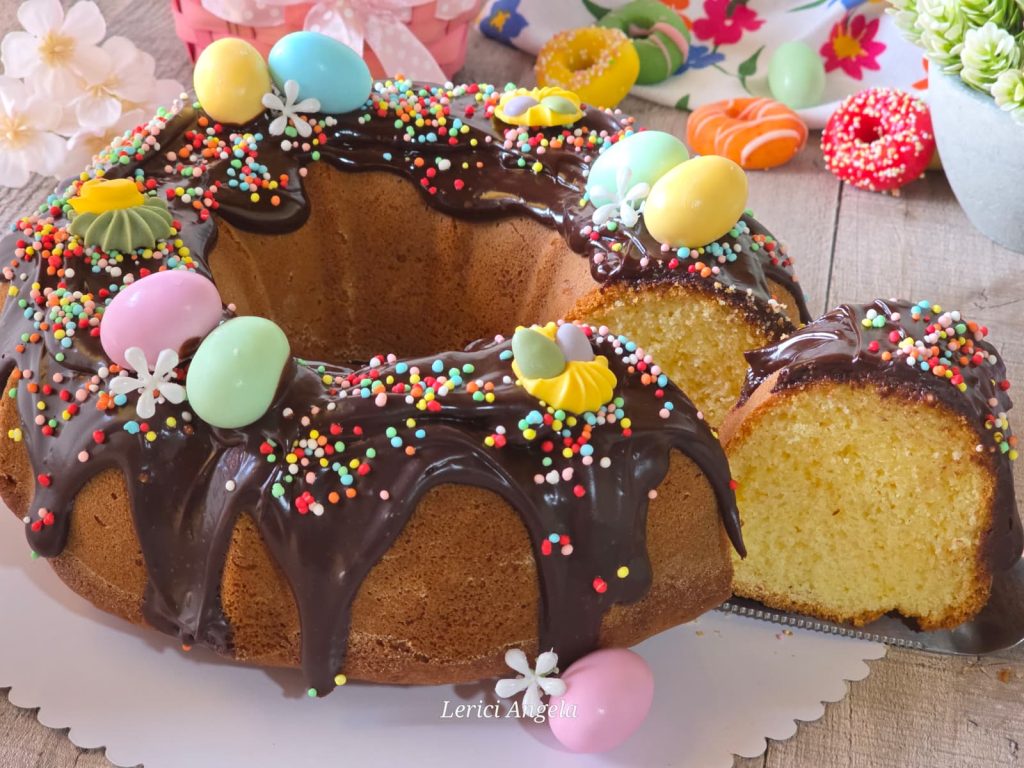
The dark chocolate glaze, deep and shiny, wraps the surface creating a delicious shell that lazily slides down the sides, just as seen in the photo.
But it is the shower of colorful sprinkles, combined with small pastel eggs and themed decorations, that gives the final touch: an explosion of joy that transforms a traditional farmhouse cake into a show-stopping centerpiece.
Imagine bringing this bundt to the table on Easter day: a triumph of elegance and liveliness that immediately captures the attention of both young and old.
Each slice tells of the care taken in hand preparation and the joy of sharing, making coffee time or the Easter breakfast an unforgettable memory.
Simple to prepare but spectacular like a high-pastry dessert, it is the perfect recipe for anyone who wants to bring all the cheer of spring and the bold taste of chocolate to the table.
- Difficulty: Very easy
- Cost: Budget-friendly
- Preparation time: 15 Minutes
- Cooking time: 40 Minutes
- Portions: 12
- Cooking methods: Electric oven
- Cuisine: Italian
- Seasonality: Easter
Ingredients
Easter Bundt Cake Glazed with Dark Chocolate
- 4 eggs (preferably at room temperature)
- 2 3/4 cups all-purpose flour (type 00) (sifted (about 350 g))
- 6 tbsp neutral vegetable oil (sunflower or corn oil for a delicate flavor)
- 1 cup granulated sugar
- 1/2 cup plain yogurt (Greek yogurt also works; room temperature)
- to taste orange (grated zest)
- to taste lemon (grated zest)
- 1 pinch salt
- 1 packet baking powder (about 16 g (approx. 4 tsp))
- 5.3 oz dark chocolate
- 1/3 cup milk (or heavy cream (about 100 ml / 3.4 fl oz))
- to taste colorful sprinkles
- 1/3 cup granulated sugar (for the glaze (about 70 g))
- to taste colorful sprinkles
- to taste chocolate eggs (decorative)
Tools
- Baking pan 9 1/2 in
- Stand mixer
- Kitchen scale
Steps
Easter Bundt Cake Glazed with Dark Chocolate
First, beat the whole eggs with the sugar and a pinch of salt until creamy using a stand mixer or an electric hand mixer.
(Use eggs at room temperature).
Continue beating until the mixture becomes pale, thick and very frothy.
I used a stand mixer but electric beaters work perfectly well.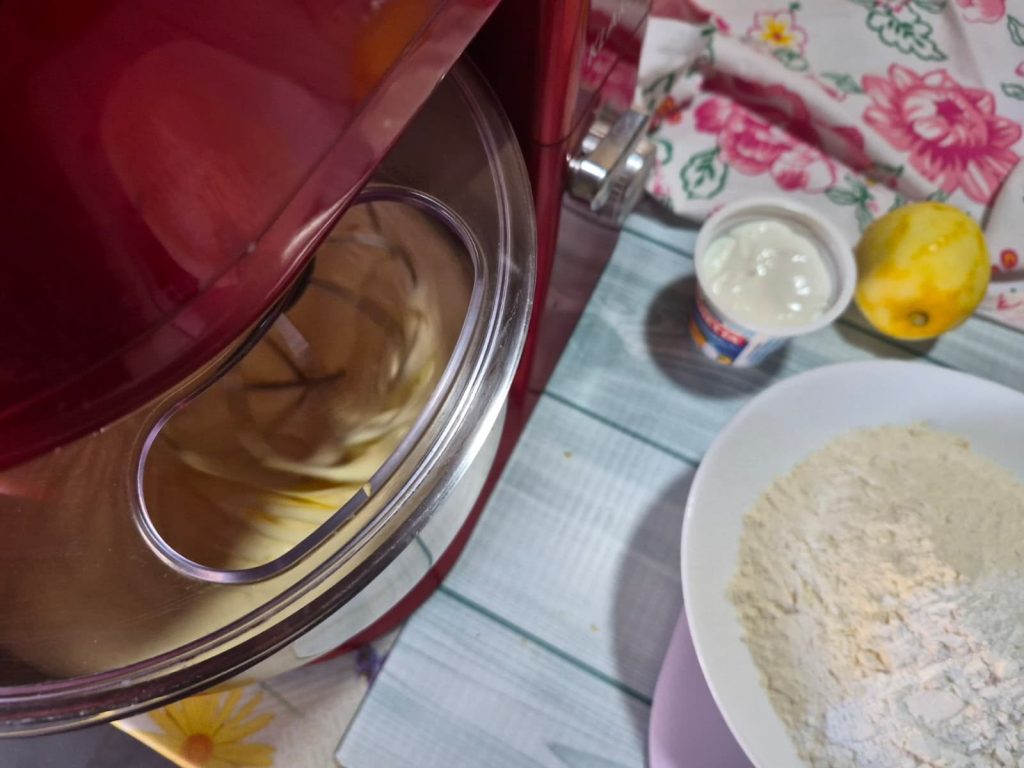
At this point, add the yogurt (also at room temperature), the vegetable oil and the grated zest of the orange and lemon.
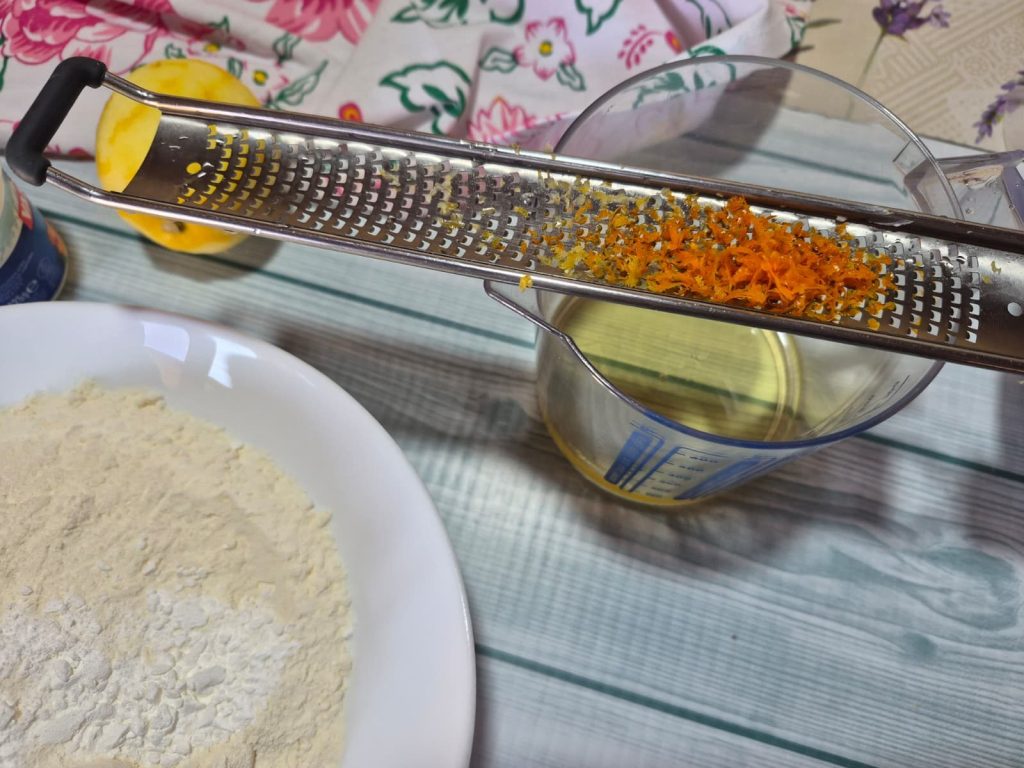
Fold gently to combine the wet ingredients without deflating the eggs.
Finally add the sifted flour combined with the baking powder and continue mixing until the batter is perfectly smooth and free of lumps when scraped with a spatula.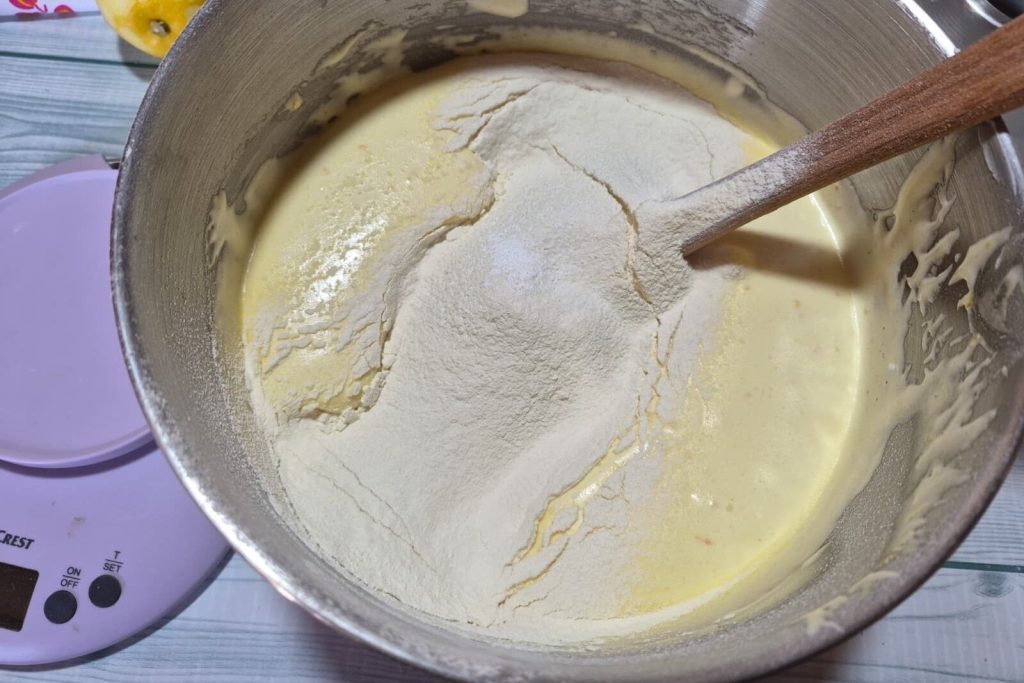
Pour the batter into the prepared bundt pan (buttered and floured). Bake in a preheated conventional oven at 356°F for about 35/40 minutes.
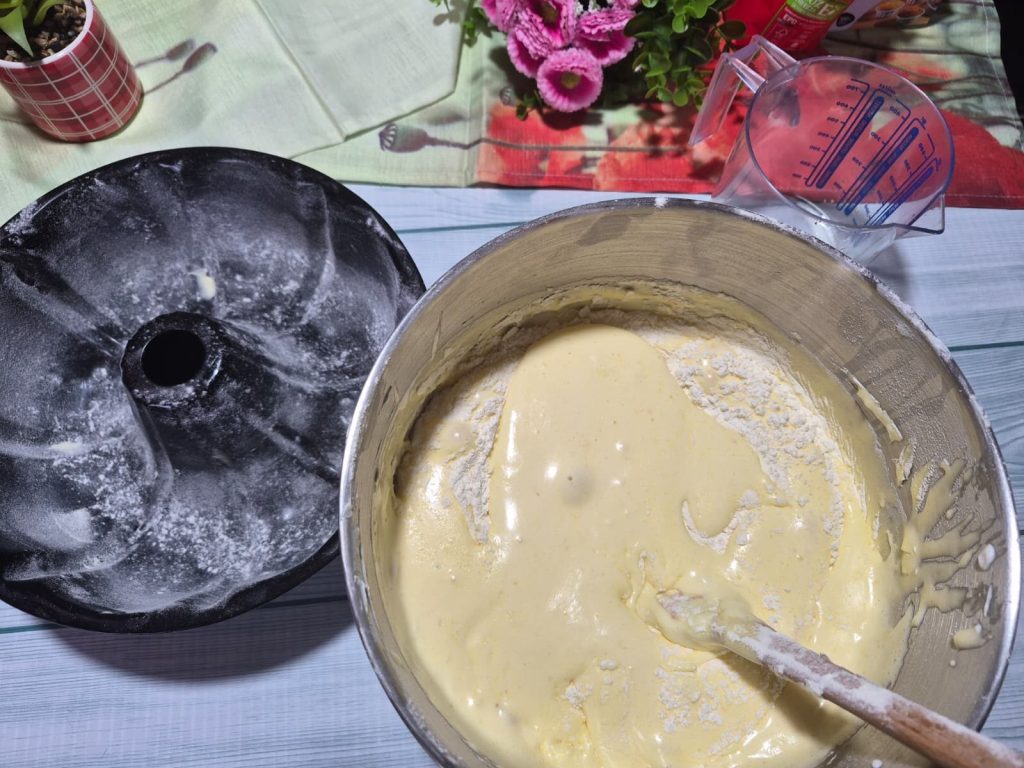
Once the baking time has passed and the surface is nicely golden (always do the toothpick test!), turn off the oven.
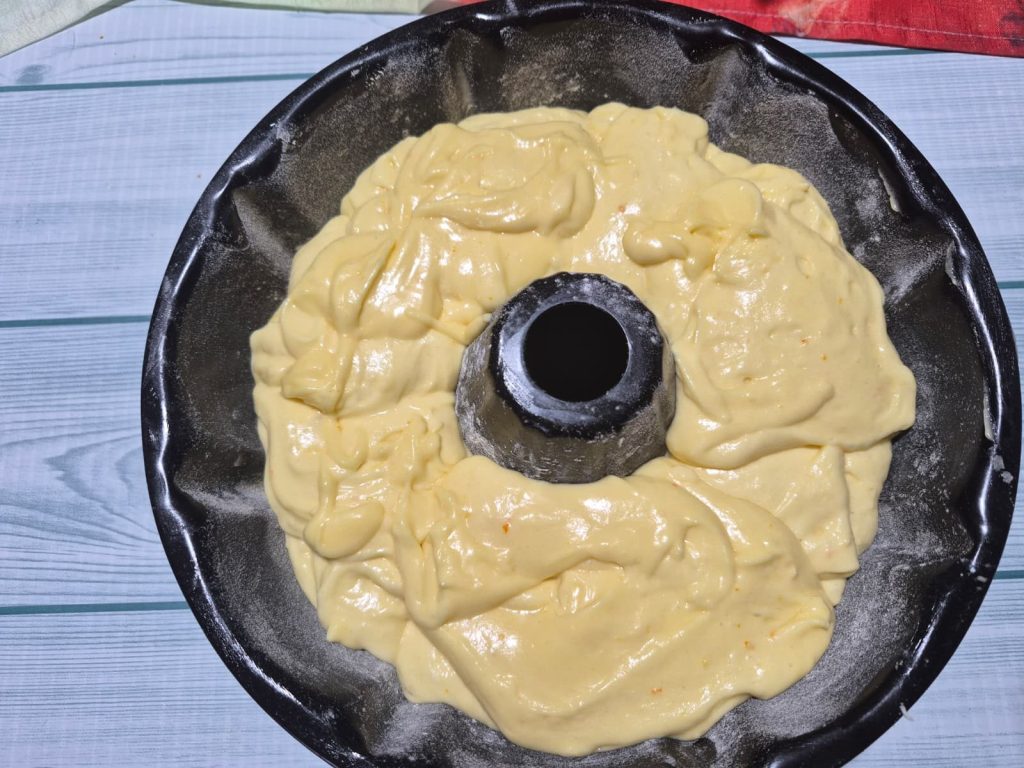
Then remove it and let it cool completely on a wire rack.
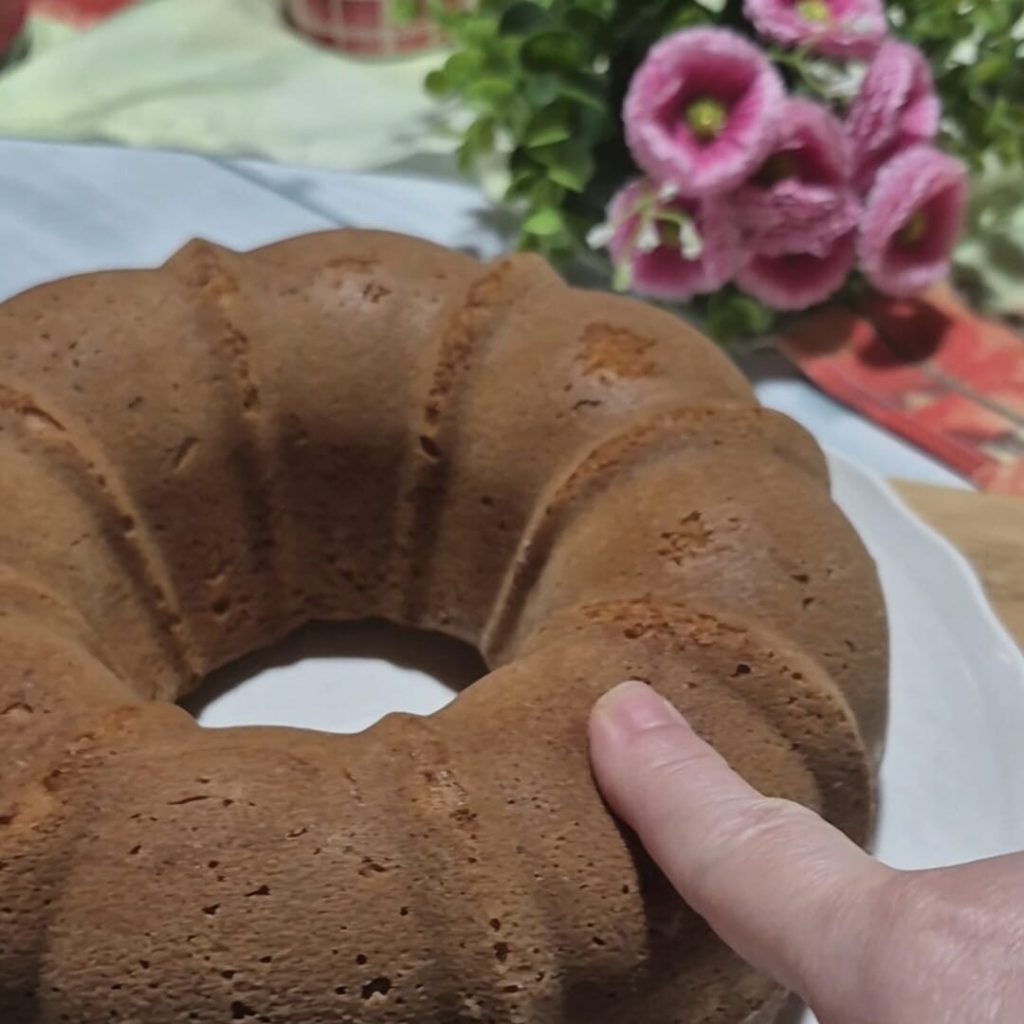
While the bundt cools, prepare the chocolate glaze.
In a small saucepan, warm the milk with the sugar. Stir well until the sugar has completely dissolved and the milk is just about to boil.
Remove from heat and add the broken pieces of dark chocolate. Let sit for one minute without touching, then begin stirring slowly from the center outward with a spatula or a whisk.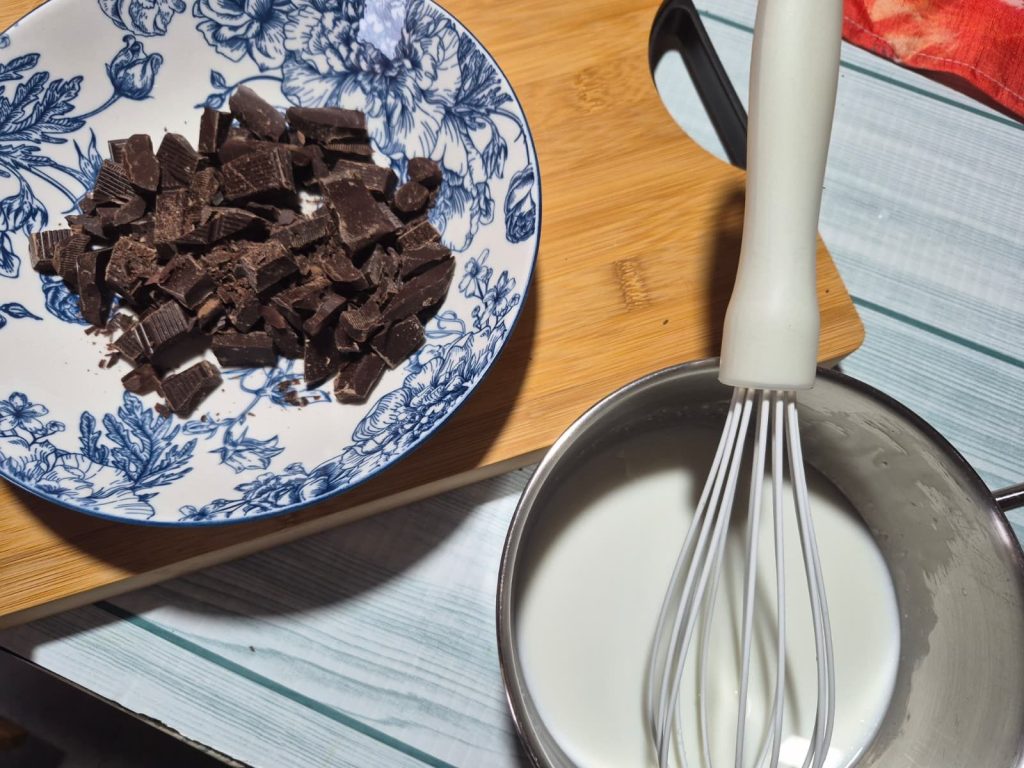
Don’t pour it immediately! The glaze should be shiny and smooth.
Let it cool for a few minutes: it should become as thick as honey. If it’s too runny, it will drip away; if it’s too cold, it won’t create those pretty “drops” on the sides.
Place the bundt on a rack or directly on the serving plate.
Pour the glaze over the top, letting it run around the circumference.
Use the back of a spoon to gently push it toward the edges and create that wave effect seen in the photo.While the glaze is still “wet” and sticky, add the colorful sprinkles, the chocolate eggs and other decorations.
Happy Easter
The Secret to Softness
It’s fundamental. Cold eggs from the refrigerator struggle to incorporate air. If they are warm, the whisked eggs will be much puffier and more stable.
When you beat eggs and sugar, wait until the mixture becomes almost white. The more air you incorporate at the start, the taller and lighter the bundt will be.
Never open the oven door before 30-35 minutes, otherwise the sudden change in temperature could cause the cake’s “heart” to collapse.
Notes
Once decorated, do not put it immediately in the fridge. Let it dry at room temperature for at least one hour.
This will allow the glaze to stabilize while keeping that mirror-like shine visible in the photo.
To avoid the glaze cracking or sticking to the crumb when you slice it, use a smooth-bladed knife slightly warmed under hot water (and then dried).
Storage
Since this is a yogurt bundt, internal moisture is its strength.
Storing it wrapped protects the cake from air (which would dry it out) while allowing the glaze not to “sweat”.
Duration: It keeps very well for 3-4 days.
Avoid the fridge if possible, unless the kitchen is at 86°F.
Why? Cold temperatures make dark chocolate lose its shine (the glossy look from the photo) and tend to harden the fats in the cake, making it seem less soft.
If you must: If you keep it in the fridge, take it out at least 1 hour before serving to allow the crumb to become soft and to let the orange and lemon aromas come back to life.
Watch humidity: If the environment is too humid, the sugar in the glaze may start to dissolve. In that case, move the cake to a cooler, drier place in the house.
Do not wrap with plastic film in direct contact: Plastic wrap would irreparably damage the smooth, decorated chocolate surface. Always use a dome-style cover.
FAQ (Questions & Answers)
Lower Glycemic Index Version
Instead of using only all-purpose flour, try a mix:
Replace 150 g of all-purpose flour with wholemeal or type 2 flour. The fiber slows sugar absorption.
Or add 30 g almond or hazelnut flour: the healthy fats from nuts lower the overall glycemic index of the cake.
2. Sugar (Substitute)
Erythritol: It’s the best option. It has a glycemic index of zero and does not alter the taste. Use about 240 g (because it sweetens a bit less than sugar).
Coconut sugar: It has a lower glycemic index (around 35 versus about 70 for white sugar) and a caramel-like aftertaste that pairs wonderfully with orange.
3. Yogurt and Fats
Greek yogurt: Prefer it to regular yogurt. It’s richer in protein, which helps blunt the glycemic spike.
Increase the citrus zest: The essential oils trick the palate, making us perceive more sweetness even with less sugar.
4. The Glaze (The secret is the dark chocolate)
85% chocolate: Switch from classic dark to chocolate with at least 85% cocoa. It contains very little sugar and many cocoa fibers and fats, which have a very low glycemic impact.
Omit sugar in the glaze: If you use milk, do not add the 70 g of sugar. The sweetness of the cake will balance the bitterness of the coating.
Here are the ingredients
4 eggs
200 g Erythritol
200 g Type 2 flour + 150 g Wholemeal flour
125 g Greek yogurt 0% or whole
90 ml vegetable oil
Lots of grated lemon and orange (essential!)
Glaze: 150 g 85% chocolate + 100 ml milk (no added sugar)
Small extra tip: Eat your slice of bundt after a meal rich in fiber or protein (or perhaps with a handful of nuts); this will help keep blood sugar even more stable!
