
Easter brings the scent of flowers and the desire for color. This Easter Bundt with white glaze is the essence of the celebration: a very tall, soft base intensely scented with orange and lemon, wrapped in a glaze as white as a cloud.
This is not just a simple bundt, but a true spring ritual.
Imagine entering the kitchen on Easter morning: the air is thick with the zesty aroma of lemon and the sweet, sunny scent of orange, coming from a batter made incredibly soft and moist thanks to the addition of plain yogurt.
The secret of this cake lies in the perfect contrast between its tender, almost cloud-like heart and its festive “armor.”
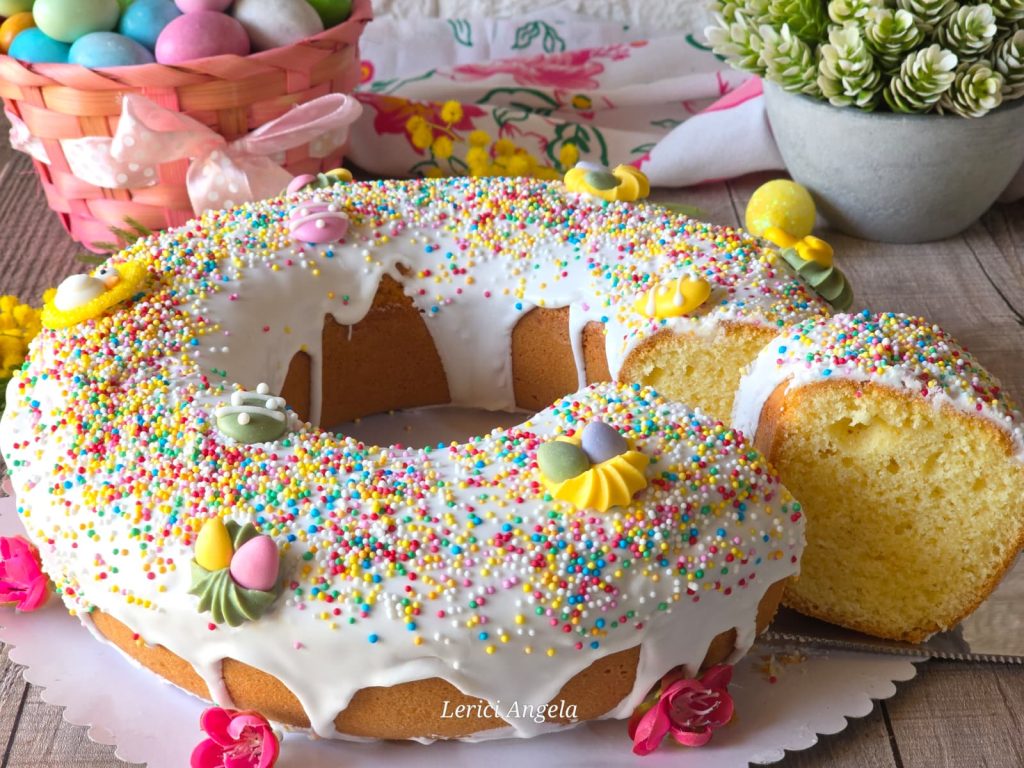
The royal icing, white as snow and glossy like porcelain, covers the surface creating a sweet shell that lazily slips down the sides, just as shown in the photo.
But it is the shower of colored sprinkles and small themed decorations that adds the final touch: an explosion of cheer that turns a traditional rustic cake into a show-stopping centerpiece.
Every slice speaks of careful handmade preparation and the joy of sharing, making the coffee or Easter breakfast a lasting memory for young and old alike.
Simple to make yet spectacular like a pastry-shop creation, it is the perfect recipe for bringing all the cheer of spring to the table.
- Difficulty: Very easy
- Cost: Inexpensive
- Preparation time: 15 Minutes
- Cooking time: 40 Minutes
- Portions: 12 Servings
- Cooking methods: Conventional oven
- Cuisine: Italian
- Seasonality: Easter
- Energy 313.15 (Kcal)
- Carbohydrates 53.32 (g) of which sugars 31.34 (g)
- Proteins 6.44 (g)
- Fat 9.44 (g) of which saturated 1.89 (g)of which unsaturated 7.11 (g)
- Fibers 0.65 (g)
- Sodium 137.12 (mg)
Indicative values for a portion of 90 g processed in an automated way starting from the nutritional information available on the CREA* and FoodData Central** databases. It is not food and / or nutritional advice.
* CREATES Food and Nutrition Research Center: https://www.crea.gov.it/alimenti-e-nutrizione https://www.alimentinutrizione.it ** U.S. Department of Agriculture, Agricultural Research Service. FoodData Central, 2019. https://fdc.nal.usda.gov
Ingredients
Easter Bundt with White Glaze
- 4 eggs (best at room temperature)
- 1 cup granulated sugar (≈ 200 g)
- 3 cups all-purpose flour ("00" type) (sifted, approx. 350 g)
- 6 tbsp neutral oil (sunflower or corn oil for a delicate flavor (90 ml))
- 1/2 cup plain yogurt (Greek yogurt also works, room temperature (≈125 g))
- as needed orange (grated zest)
- as needed lemon (grated zest)
- 1 pinch salt
- 1 packet baking powder (1 packet (about 7–8 g))
- 1 egg white
- 1 cup powdered sugar (about 130 g — adjust for desired consistency (up to 1¼ cups / ~150 g depending on egg white size))
- drops lemon (lemon juice (to make the glaze glossy and very white))
- as needed colored sprinkles
- as needed colored sprinkles (optional)
Tools
- Pan 9 1/2 in (24 cm)
- Stand mixer
- Kitchen scale
Steps
Easter Bundt with White Glaze
First, beat the whole eggs with the sugar and a pinch of salt until creamy using a stand mixer or electric whisks.
(Use eggs at room temperature.)
Continue whipping until the mixture becomes pale, thick and very frothy.
I used a stand mixer, but electric hand whisks work perfectly well too.
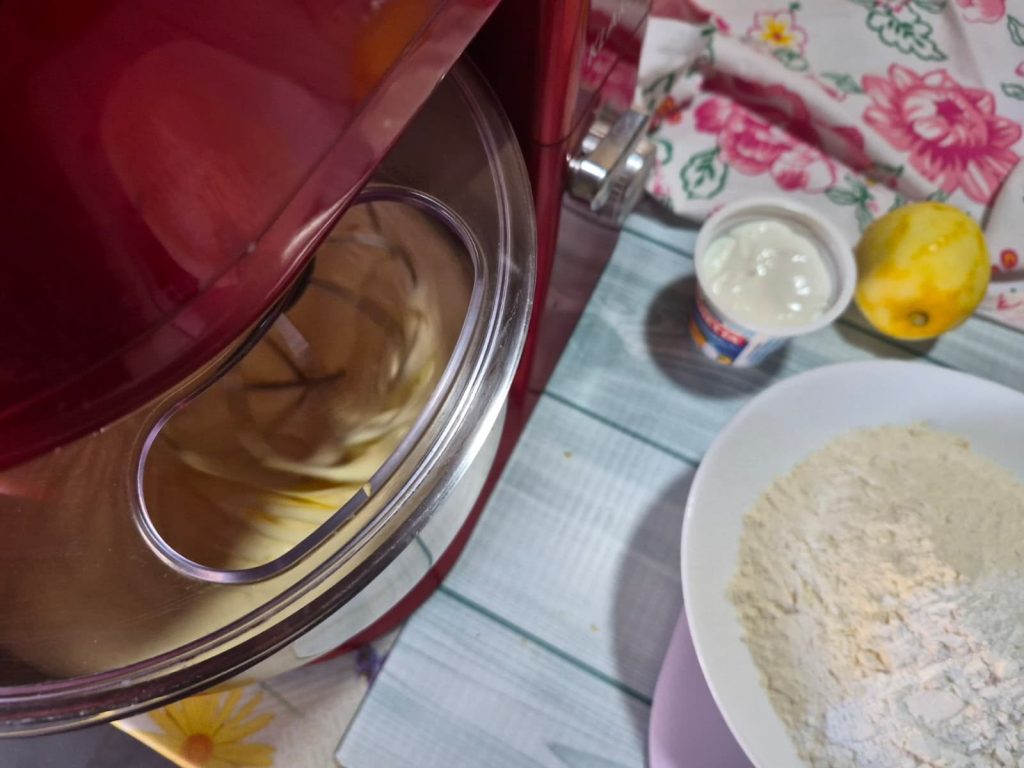
At this point, add the yogurt (also at room temperature), the neutral oil and the grated zest of the orange and lemon.
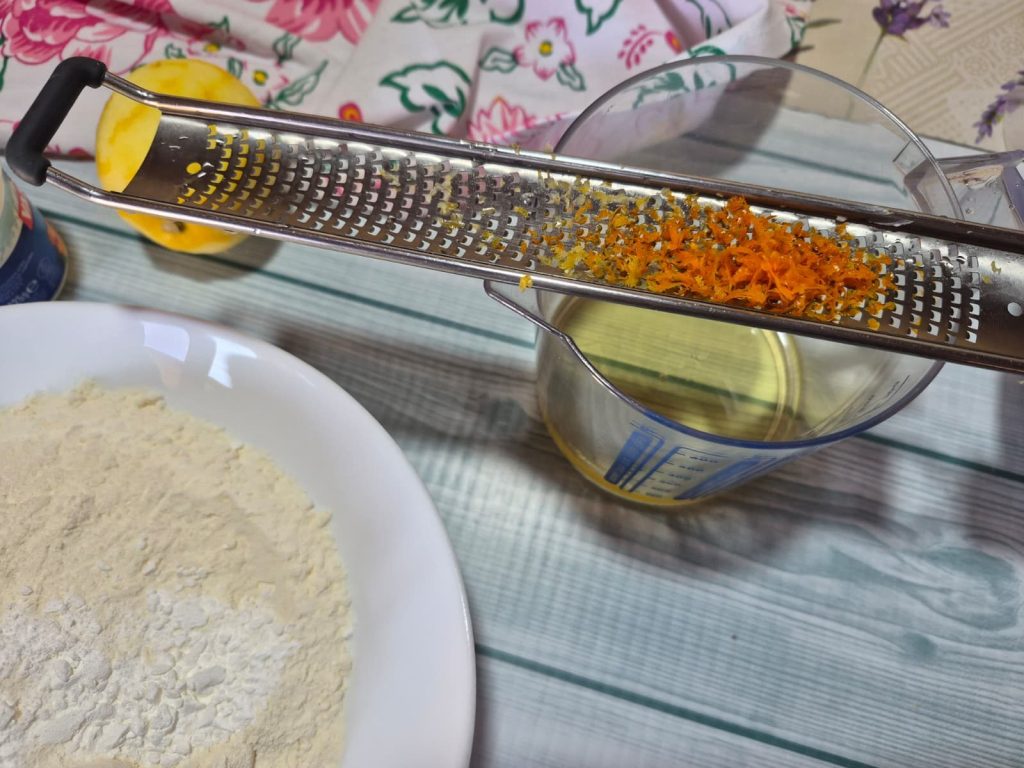
Fold gently to combine the liquids without deflating the eggs.
Finally add the sifted flour together with the baking powder and continue mixing until the batter is perfectly smooth and free of lumps when worked with a spatula.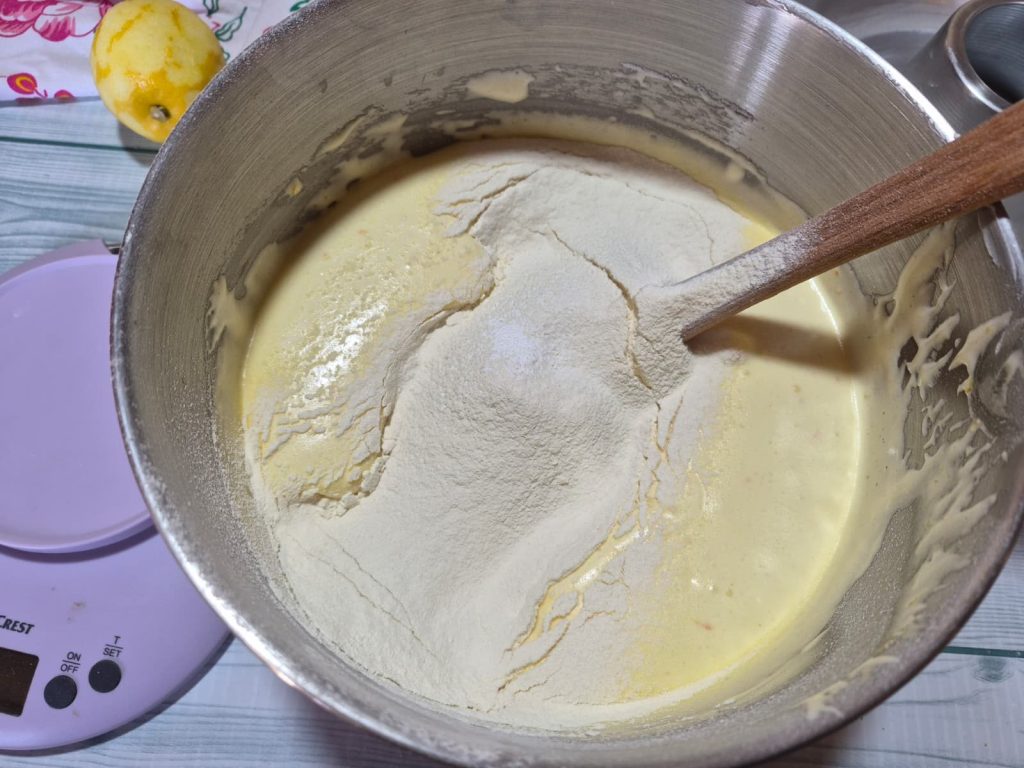
Pour the batter into the prepared bundt pan and bake in a preheated conventional oven at 356°F (180°C) for about 35–40 minutes.
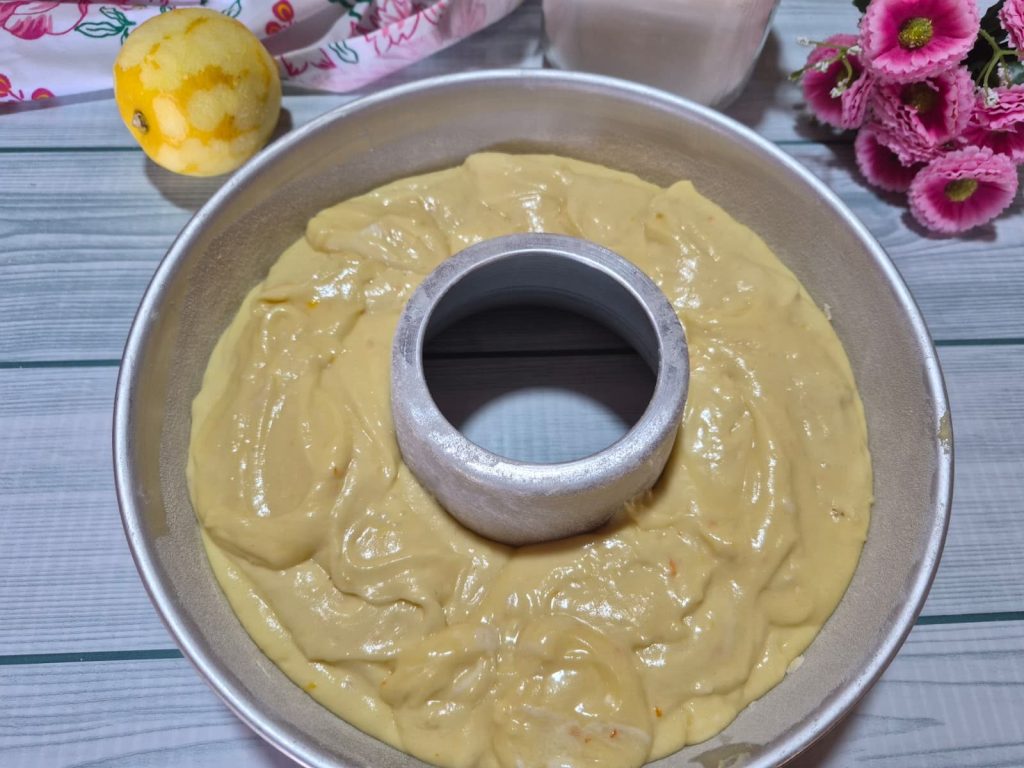
Once the cooking time has passed and the surface is nicely golden (always do the toothpick test!), turn off the oven.
Remove the cake and let it cool completely on a rack.
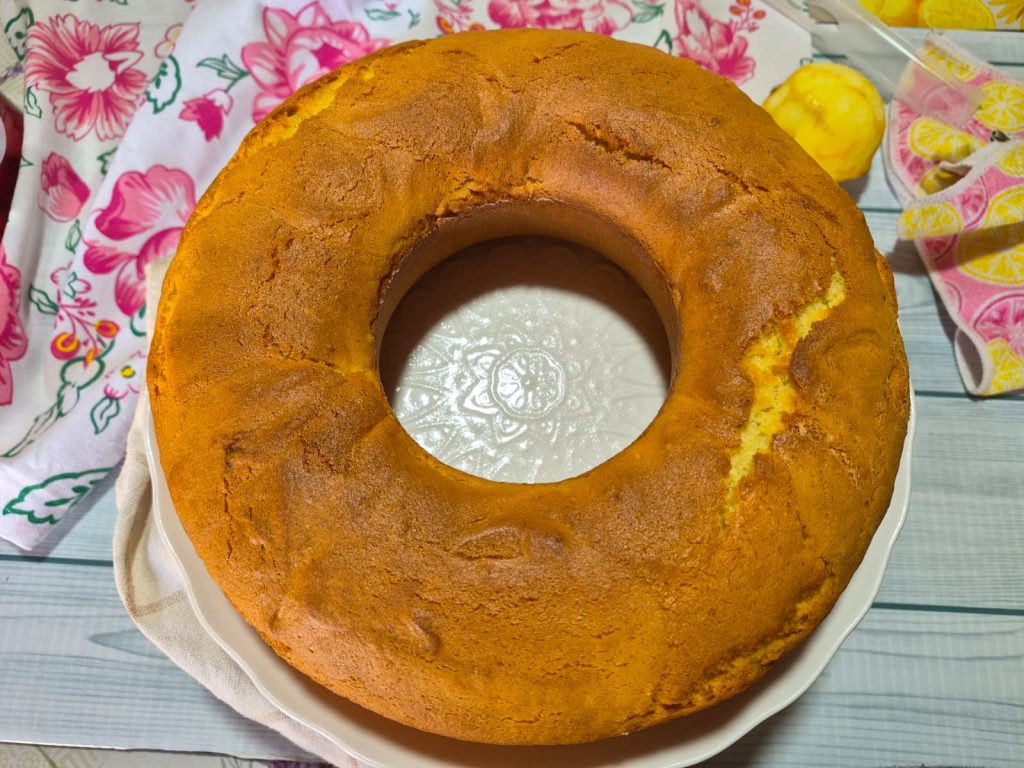
Once cold, cover the bundt with the white glaze (made with egg white and powdered sugar) and immediately decorate with colored sprinkles and Easter sprinkles, just like in your photo.
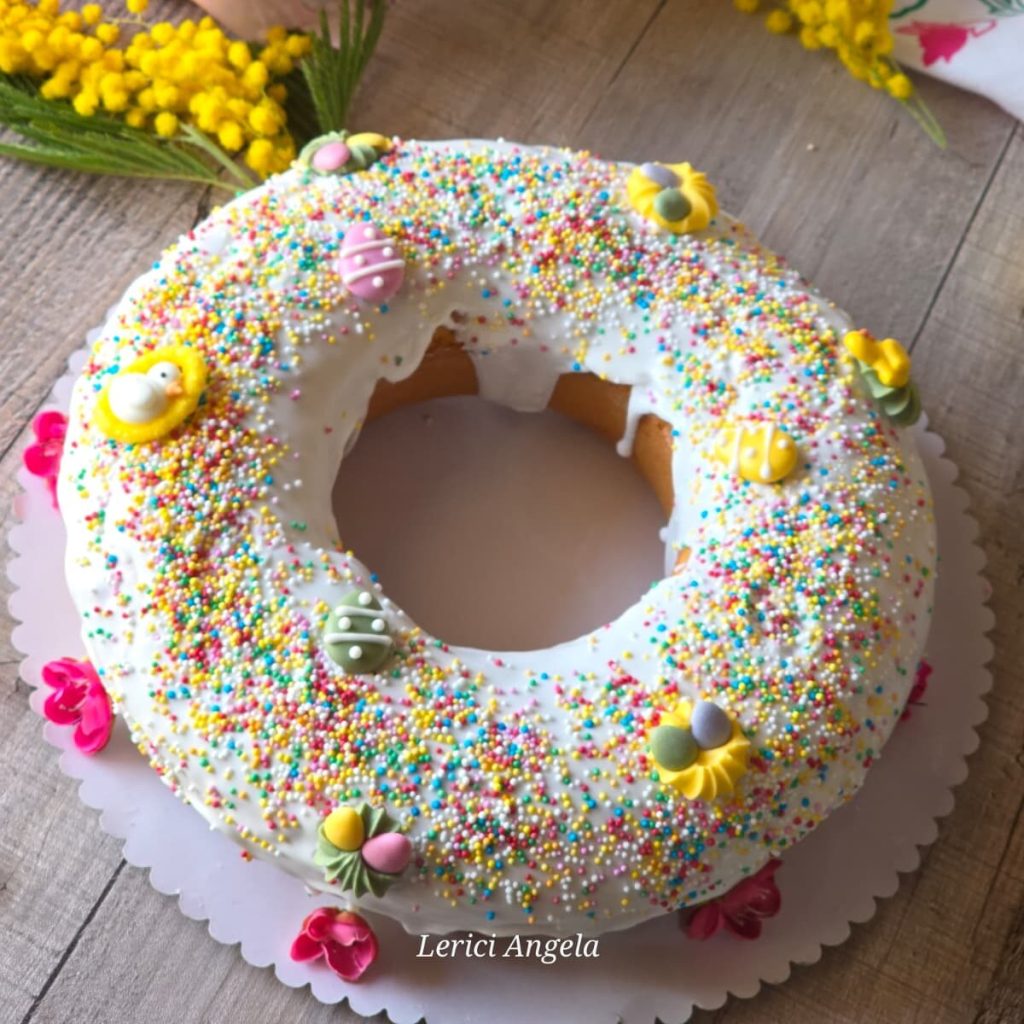
Happy Easter ……
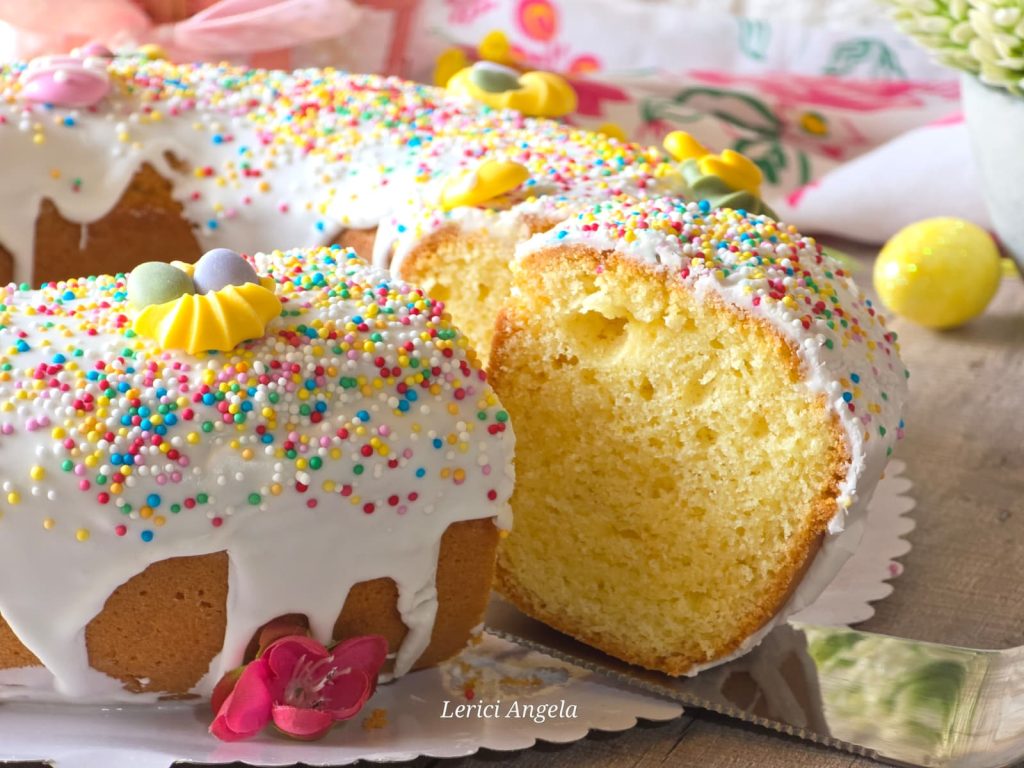
Tips
Put the egg white in a bowl with a few drops of lemon. Start whipping with electric whisks (or in the stand mixer) at medium speed.
Begin to incorporate the sifted powdered sugar, one tablespoon at a time, continuing to whip. It is essential to sift it to avoid lumps that would spoil the decoration.
Check the consistency:
If the glaze is too runny, add a bit more powdered sugar.
If it is too thick (hard to spread), add a couple of drops of lemon juice or water.
Lift the whisk: the glaze should fall in a “ribbon”, meaning it should form a thick thread that remains visible on the surface for a few seconds before sinking.
Pour the glaze over the bundt when it is completely cold. Use a spoon to guide the “drips” along the edges, as you masterfully did in your photo.
Add the sprinkles: Do it immediately, because this glaze dries quickly in the air creating a film. If you wait too long, the sprinkles will not stick.
The Secret to Softness
It is fundamental. Cold eggs from the fridge have trouble incorporating air. If they are warm, the whipped mixture in the stand mixer will be much fluffier and more stable.
When whipping eggs and sugar, wait until the mixture becomes almost white. The more air you incorporate at the beginning, the higher and lighter the bundt will be.
Never open the oven door before 30–35 minutes, otherwise the temperature change could make the “heart” of the bundt collapse.
If you pour the glaze over the bundt while still warm, the sugar will melt and the glaze will become transparent or slide off onto the plate. Wait at least 2 hours after baking.
Storage
Long-lasting softness: Being a yogurt-and-oil cake, it keeps very well. However, once glazed, do not wrap it immediately in cling film in direct contact or you will ruin the decoration. Use a glass cake dome or a tin box.
Humidity: If you live in a very humid place, the glaze may “sweat.” In that case, better to decorate it a few hours before serving.
The bundt keeps perfectly for 3–4 days.
Store it under a glass dome or in an airtight cake container.
Once the glaze is completely dry, avoid covering it with cling film in direct contact, because moisture could make it sticky or cause the colors of the sprinkles to run.
In the refrigerator (Only if it’s very hot)
If the room temperature is high (above 72–73°F / 22–23°C), you can place it in the fridge, but remember that the cold tends to firm up the crumb.
If you keep it in the fridge, take the slice out at least 30 minutes before eating to let it regain its natural softness.
FAQ (Questions and Answers)
Gluten-free, please?
The Flour: Replace the 350 g of “00” flour with 350 g of an all-purpose gluten-free flour blend (one formulated for pastries).
“DIY” alternative: If you prefer a homemade mix, use 250 g of very fine rice flour and 100 g of cornstarch (maize starch).
The Baking Powder: Make sure the baking powder packet is labeled “gluten-free” or has the crossed-ear symbol (some baking powders use wheat starch as a base).
Powdered sugar and Sprinkles: Always check that the powdered sugar for the glaze and the colored sprinkles are certified gluten-free, as they often contain traces of wheat starch to prevent lumping.
Sift well: Gluten-free flours tend to create small, stubborn lumps. Sift the mix at least twice together with the baking powder.
Once the batter is ready, let it rest in the bowl for 5–10 minutes before baking. This allows the gluten-free flours to hydrate properly with the yogurt and eggs, improving the final structure.
Gluten-free cakes sometimes need a few extra minutes to bake through or tend to remain paler on top. Rely on the toothpick test before removing from the oven.Lower glycemic index
The Modified Recipe (Low GI)
Ingredients:
4 Eggs
180 g Erythritol
200 g Type 2 (or whole wheat) flour + 150 g almond flour
90 g neutral oil
150 g plain Greek yogurt
Grated orange and lemon zest
1 packet baking powder
A pinch of salt
The glaze chapter (the biggest challenge)
The classic white glaze made with powdered sugar is unfortunately a concentrate of high-GI sugars. To keep it low-GI you have two options:
Erythritol glaze: Grind erythritol in a powerful blender until it becomes as fine as powdered sugar, then proceed as for the classic royal icing using the egg white.
Greek yogurt and stevia: You can make a “fake glaze” by mixing strained Greek yogurt with a little sweetener and lemon zest. It will be creamy and white but less firm than royal icing.
Dark chocolate: Melt 85% dark chocolate (very low GI). It won’t be white, but it’s the safest and healthiest option.
If you choose the low-GI version, use sprinkles sparingly or replace them with chopped almonds, since sprinkles are almost entirely sugar and food coloring.
