
Genoese veal meatballs. Soft, juicy, with that sweet-savory aftertaste that is addictive.
These Genoese veal meatballs are a journey into ancient flavors: slow cooking that transforms the onion into a golden and irresistible glaze.
If you’ve never tried them, get ready: they’ll become your new favorite ‘comfort food’.
As I prepare these meatballs, I can’t help but think back to my mother-in-law Lina’s kitchen.
I close my eyes and still see her hands: wrinkled, marked by time, but incredibly skilled and confident in their movements.
I see her patiently kneading the soaked bread together with the veal, adding the cheese, garlic, parsley, and that mix of spices which was her secret.
It was a ritual, a slow dance that turned simple ingredients into a masterpiece of flavor.
This recipe isn’t just food, it’s the legacy of those hands and that love for things done right.
But the real secret came afterwards: those meatballs were plunged into a sea of finely sliced onions, left to stew slowly until becoming an amber and sweet cream.
Cooked like this, in the ‘Genoese’ sauce, the meatballs become so tender they melt in your mouth.
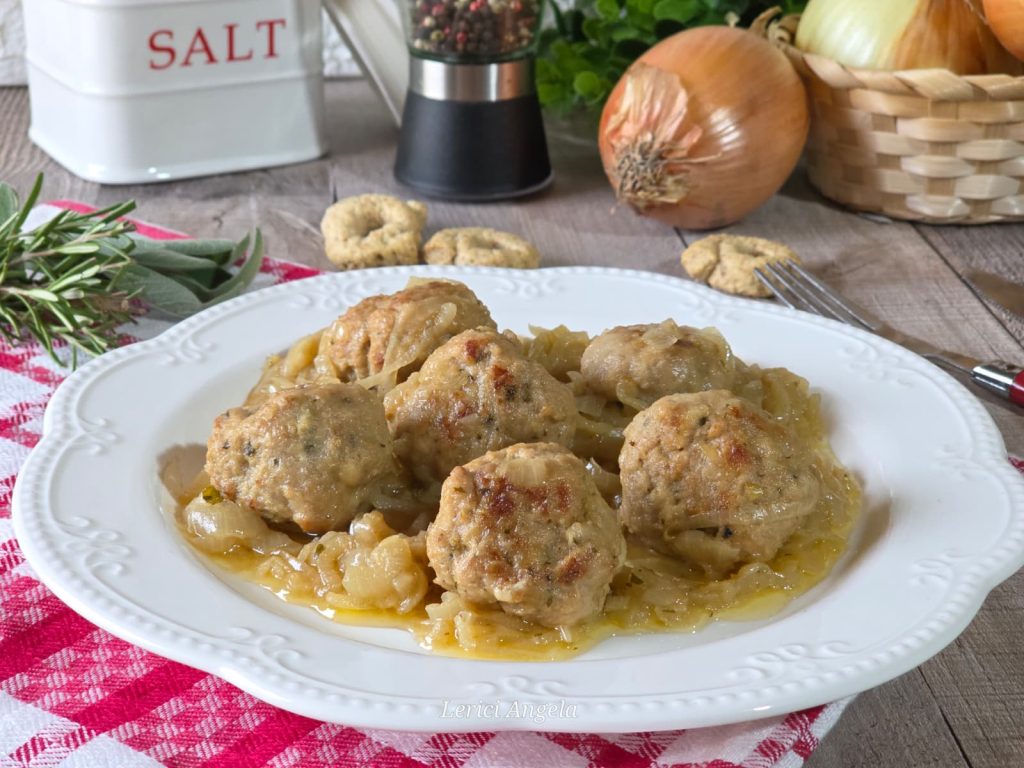
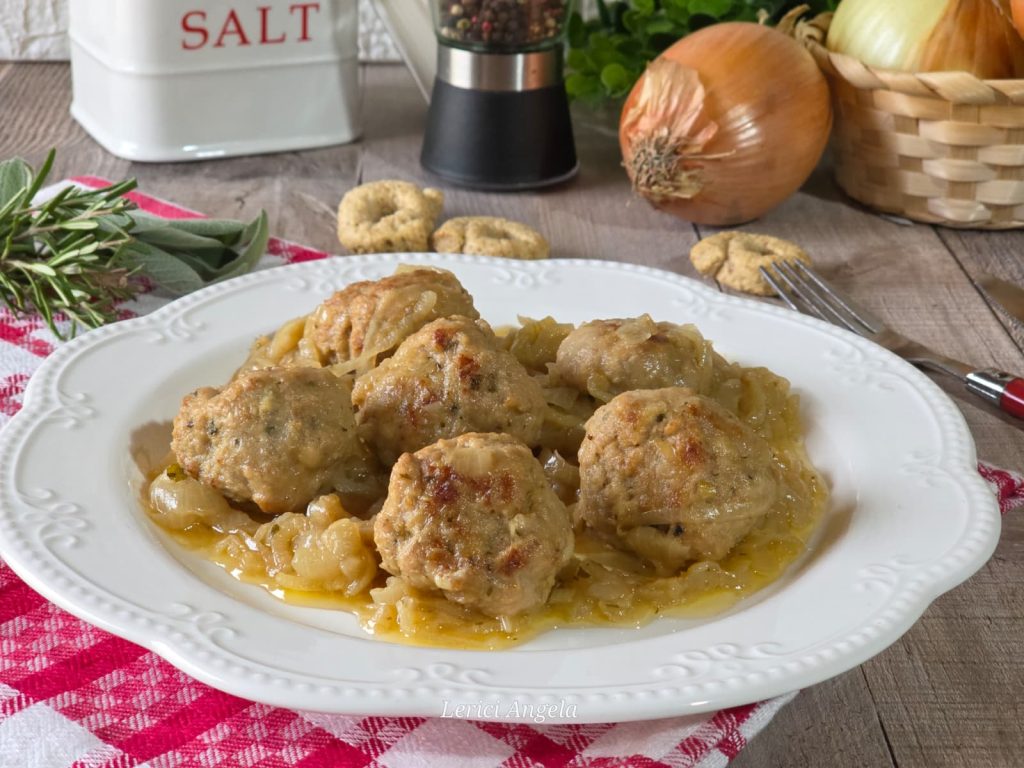
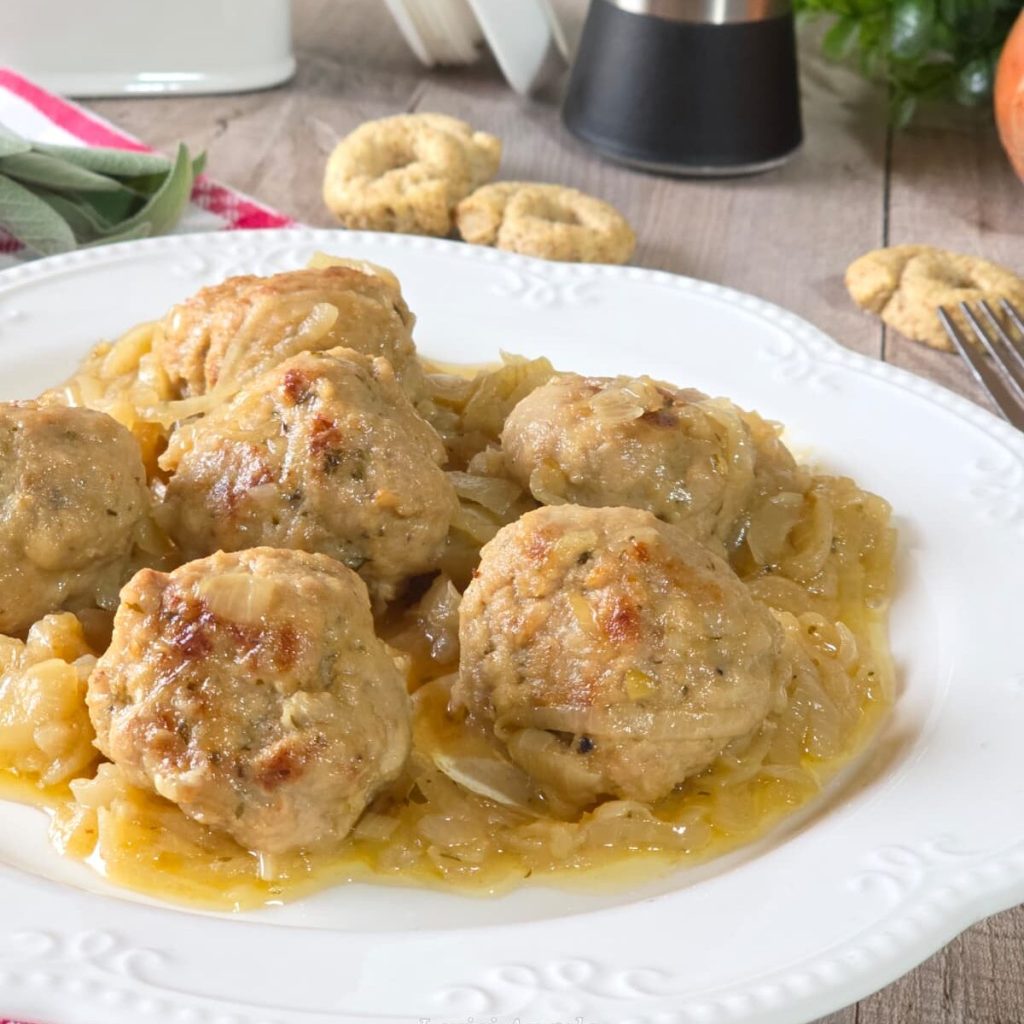
Look at the photo, it’s not just a dish, it’s the synthesis of hours of waiting.
The meatballs, golden on the outside and tender on the inside, rest on that bed of onions which has almost become liquid gold. The aroma rising from the dish is that of Sunday lunches, where time didn’t matter and the only rush was to grab a piece of bread so as not to leave a crumb of sauce, made of poor ingredients but with a richness of flavor that is unmatched.
Let’s put on the apron and get started!
- Difficulty: Easy
- Cost: Medium
- Preparation time: 30 Minutes
- Portions: 4People
- Cooking methods: Stovetop
- Cuisine: Italian
- Seasonality: All seasons
- Energy 1,063.66 (Kcal)
- Carbohydrates 39.87 (g) of which sugars 7.14 (g)
- Proteins 35.63 (g)
- Fat 108.65 (g) of which saturated 16.71 (g)of which unsaturated 2.27 (g)
- Fibers 5.63 (g)
- Sodium 969.74 (mg)
Indicative values for a portion of 215 g processed in an automated way starting from the nutritional information available on the CREA* and FoodData Central** databases. It is not food and / or nutritional advice.
* CREATES Food and Nutrition Research Center: https://www.crea.gov.it/alimenti-e-nutrizione https://www.alimentinutrizione.it ** U.S. Department of Agriculture, Agricultural Research Service. FoodData Central, 2019. https://fdc.nal.usda.gov
Ingredients
Genoese veal meatballs
- 1.1 lbs ground veal (or mixed)
- 2 slices stale bread (soaked in water and well squeezed)
- 1 egg
- to taste chopped parsley
- 1.8 oz parmesan
- 1 clove garlic
- to taste salt
- to taste lemon (grated zest optional)
- pepper
- 2.6 yellow onions
- 4 tablespoons extra virgin olive oil
- Half glass white wine (for deglazing)
- to taste water (or vegetable broth)
- to taste flour
Tools
- Casserole
- Bowl
Steps
Start by slicing the copper onions very thinly.
In a large pot (preferably with a thick bottom), heat 5 tablespoons of EVO oil and immediately add the onions with a pinch of salt.
Cover and let them wither on a very low flame: they must “sweat” and become transparent.
Once the onions are tender, slightly raise the heat and pour half a glass of dry white wine.
Allow the alcohol to completely evaporate until you no longer smell the pungent note, but only the sweet aroma of the onion beginning to caramelize.
Lower the heat to minimum and continue cooking for about 1 and a half hours.
Since there are no other vegetables to release water, keep a small pot of boiling water ready: add a ladleful whenever the bottom tends to dry up.
The onions should slowly transform into an amber and velvety cream.
While the Genoese sauce is cooking, prepare the meatball mixture.
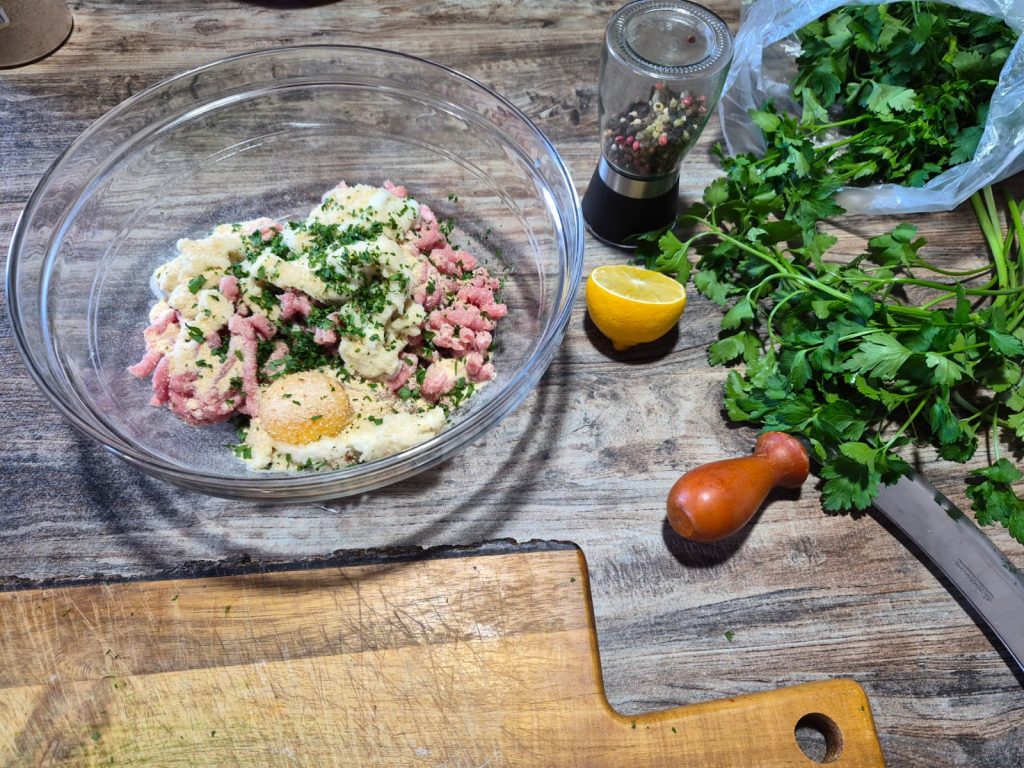
Combine the ground veal with the soaked and well-squeezed rustic bread.
Add the egg, grated cheese, garlic, pepper, and plenty of fresh parsley.
Grate some lemon zest to give that fragrant touch that balances the sweetness of the sauce.
Form walnut-sized balls.Lightly dust them with flour and remove the excess.
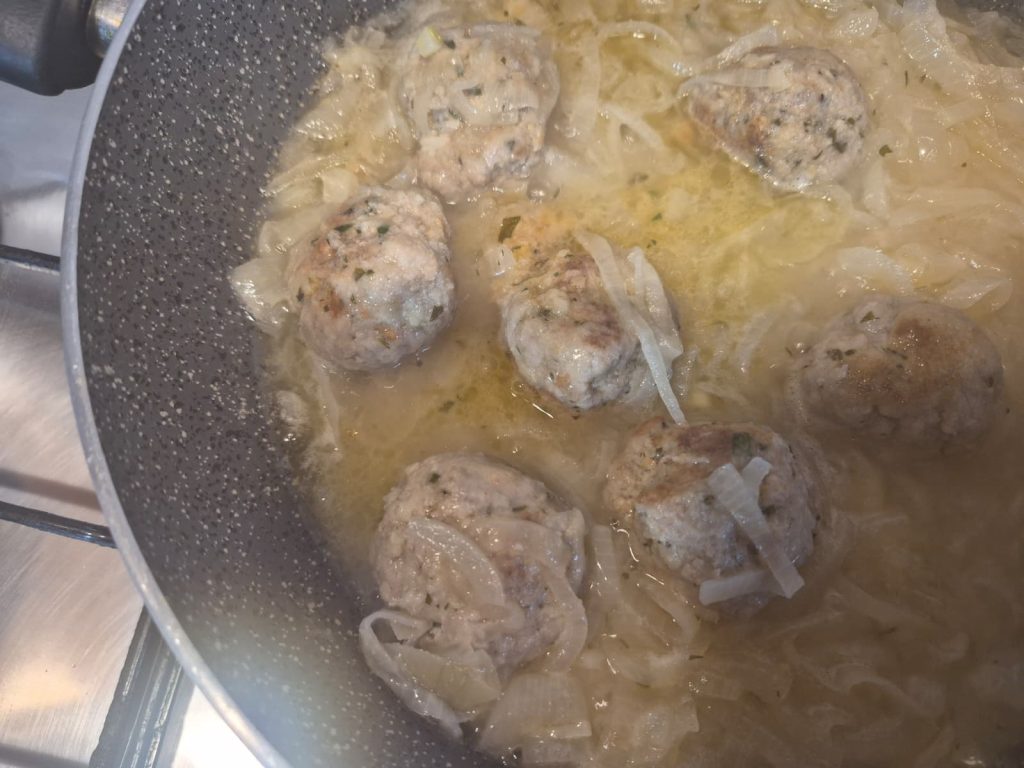
Quickly brown the meatballs in a pan with a drizzle of oil to seal them, then plunge them directly into the onion cream.
Let them finish cooking and absorb the flavors for about 20-30 minutes.
Serve the meatballs wrapped in their thick sauce.
Accompany them strictly with slices of rustic bread to not miss any of that cream.
If you prefer, use the sauce to dress a handful of broken ziti and serve the meatballs immediately after.
Enjoy your meal.
Tips
Slice the onions very thinly and evenly. The thinner they are, the more easily they’ll “disintegrate” into that velvety cream we see on your plate.
If you have one, use a terracotta or cast iron pot. These materials distribute heat gently and consistently, ideal for cooking that exceeds two hours.
As mentioned, use boiling water. Broth might make the sauce too “overpowering”; water instead lets the flavor of the onions and the aroma of the veal remain clear and central.
Once done, don’t serve right away.
Turn off the heat and let the meatballs rest in the sauce for at least 15-20 minutes. This allows the flavors to stabilize and the meat to become even juicier.
Curiosities
The Bread: Don’t just bring it to the table. Toast the slices of rustic bread on the grill until they become crunchy: the contrast between the “crunchy” bread and the softness of the meatball is heavenly.
The Pasta: If you decide to dress the ziti, drain the pasta two minutes before the time and finish cooking it directly in the onion sauce, adding a ladle of cooking water. It will become very creamy.
The Pepper Touch: Don’t use any pepper: treat yourself to a mix of grains to grind directly on the plate. The heat of the Genoese will release all the aroma of the spices, making every bite a surprise.
Storage
If (unlikely!) there are leftovers, these meatballs are even better the next day. Gently reheat them, adding a drop of water to restore fluidity to the onion cream.
FAQ (Questions and Answers)
Can I use other types of ground meat?
Beef (For a more intense flavor)
Beef is a great alternative. Compared to veal, beef has a more pronounced flavor and a firmer texture. In this case, the meatballs will be more “robust” and pair even better with a generous sprinkle of pecorino romano.
Veal and Pork Mix (For maximum tenderness)
This is the most common variant in Italian homes. The pork adds a fatty portion that makes the meatball even juicier. It’s a great solution if you’re looking for a rounder flavor and a texture that literally melts in your mouth.
Turkey or Chicken (For a light version)
If someone is looking for a lighter version, you can suggest white meats. However: as they are very lean and delicate meats, the risk is that they will “disappear” in front of the overwhelming sweetness of the onion. In this case, it’s crucial to be generous with spices and your freshly ground pepper mix to add character.What onions should I use?
Copper Onion (The Queen): It’s the choice for Genoese. The most famous variety is the Copper of Montoro. It has a sweet, fragrant pulp and extraordinary cooking resistance: it doesn’t disappear, but transforms into a dense and amber cream.
Classic Golden Onion: If you can’t find the copper one, the golden is the most reliable alternative. It has an intense flavor that sweetens a lot during the three hours of cooking, ensuring a good body to the sauce.
Tropea Onion (Red): Although very sweet, it’s less suitable for the long cooking of traditional Genoese because it tends to lose its characteristic color and break down too quickly, resulting in less “enveloping” than the copper one.
White Onion: Generally less suitable for this recipe because it has a more pungent and less sugary flavor, risking making the sauce less velvety.
