
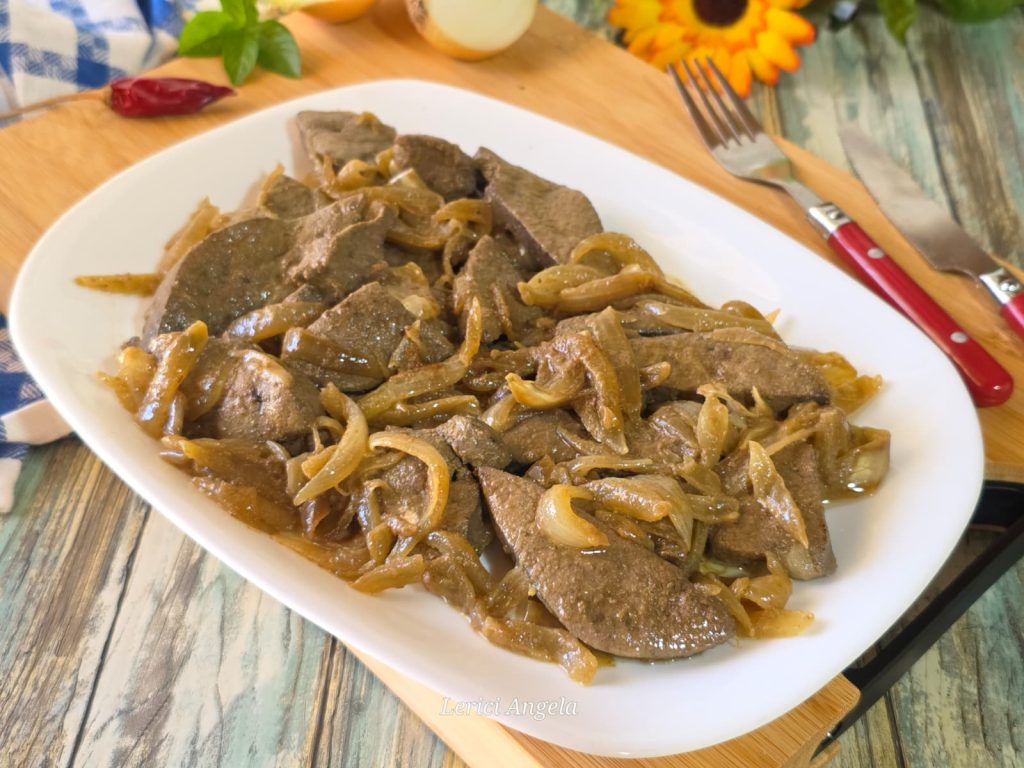
Liver with onions is a traditional main course from our heritage, combining quick execution with a unique flavor. What more could you wish for?
It might not appear on the table every day, but its strength lies in its simplicity: two ingredients that, if of excellent quality, guarantee an outstanding result.
For this preparation, I chose calf liver, preferred for its delicate taste compared to the strong character of pork liver, which was the star of recipes from the past. Naturally, depending on taste, you can also opt for beef or pork. Although liver lends itself to many interpretations, pairing it with onion remains the most loved version.
I chose the golden onion, appreciated for its balance between sweetness and aroma. Compared to white or red onions, the golden one is extremely versatile: perfect raw, but ideal especially for sautéing, ragù, and slow cooking like stews and braises. In any case, if you don’t have it in your pantry, you can substitute it with your preferred variety.
When consumed in moderation, liver is a valuable food for health. It is an exceptional source of minerals (including bioavailable iron, zinc, phosphorus, and potassium) and vitamins.
Although it is a nutritious food, it contains a share of fats and cholesterol that suggests enjoying it occasionally, making it a small “luxury” for the palate.
In short, a traditional dish to be rediscovered and, above all, savored!
- Difficulty: Very Easy
- Cost: Very Cheap
- Preparation time: 10 Minutes
- Portions: 4
- Cooking methods: Stove
- Cuisine: Italian
- Seasonality: All Seasons
- Energy 367.97 (Kcal)
- Carbohydrates 24.25 (g) of which sugars 15.24 (g)
- Proteins 31.85 (g)
- Fat 16.18 (g) of which saturated 4.14 (g)of which unsaturated 3.94 (g)
- Fibers 2.98 (g)
- Sodium 806.56 (mg)
Indicative values for a portion of 180 g processed in an automated way starting from the nutritional information available on the CREA* and FoodData Central** databases. It is not food and / or nutritional advice.
* CREATES Food and Nutrition Research Center: https://www.crea.gov.it/alimenti-e-nutrizione https://www.alimentinutrizione.it ** U.S. Department of Agriculture, Agricultural Research Service. FoodData Central, 2019. https://fdc.nal.usda.gov
Ingredients
Liver with onions
- 1.3 lbs calf liver
- 2.2 lbs golden onions
- 1/4 cup dry white wine
- 1 leaf bay leaf
- leaves sage
- to taste extra virgin olive oil
- salt
- pepper
Tools
- Pan
- Cutting Board
- Knife
Steps
Liver with onions
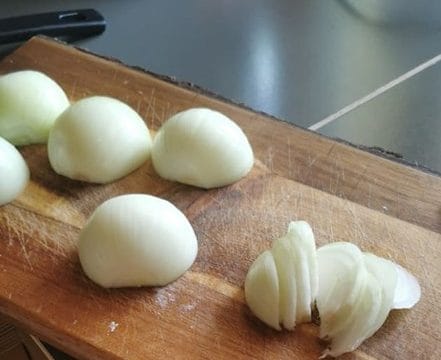
Wash, peel, and slice the onions.
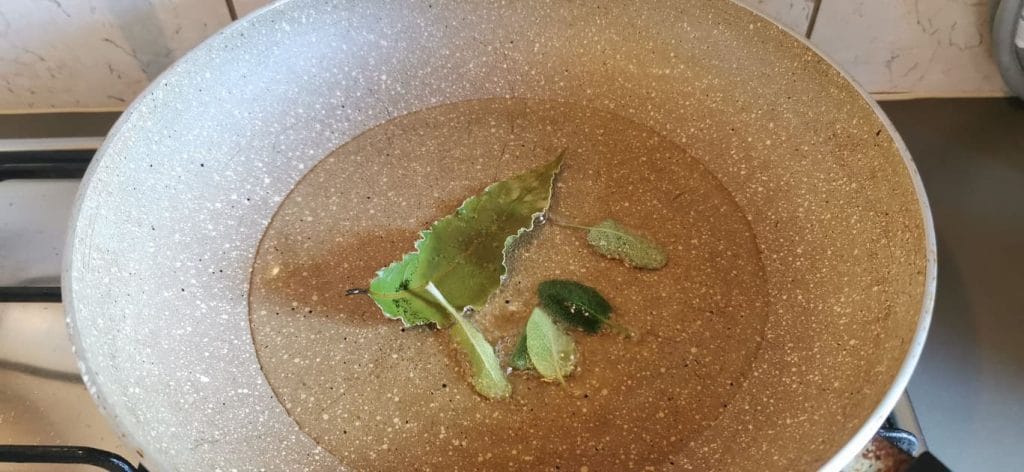
In a non-stick pan, pour some oil, add sage leaves and 1 bay leaf.
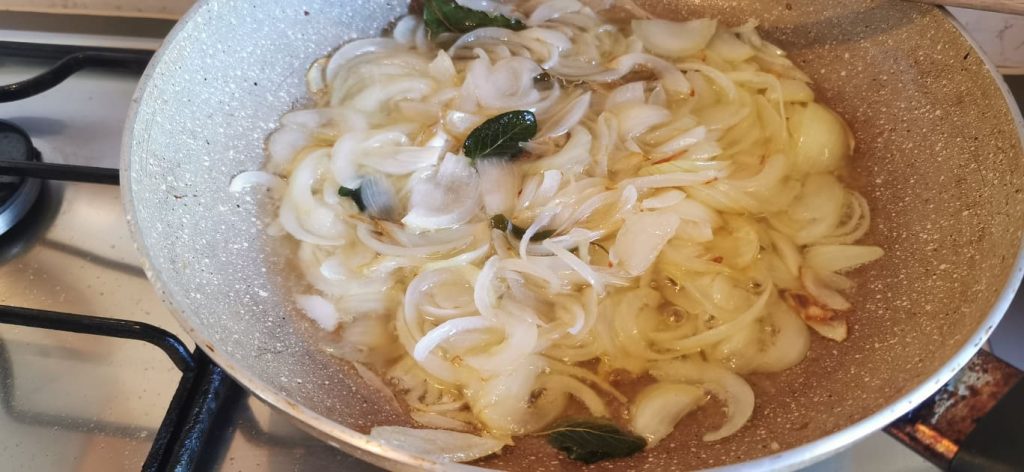
Add the finely sliced onions.
Sauté the onions, add 3 tablespoons of water, add salt, and stir the onions with a wooden spoon.
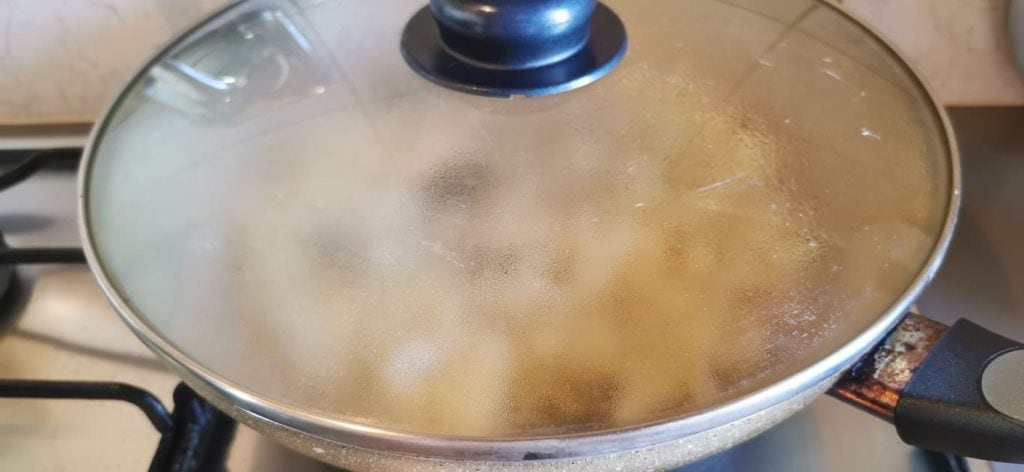
Cover with a lid, lower the heat and let them cook for about twenty minutes.
Cut the liver slices into pieces. Add the liver to the onions and brown well.
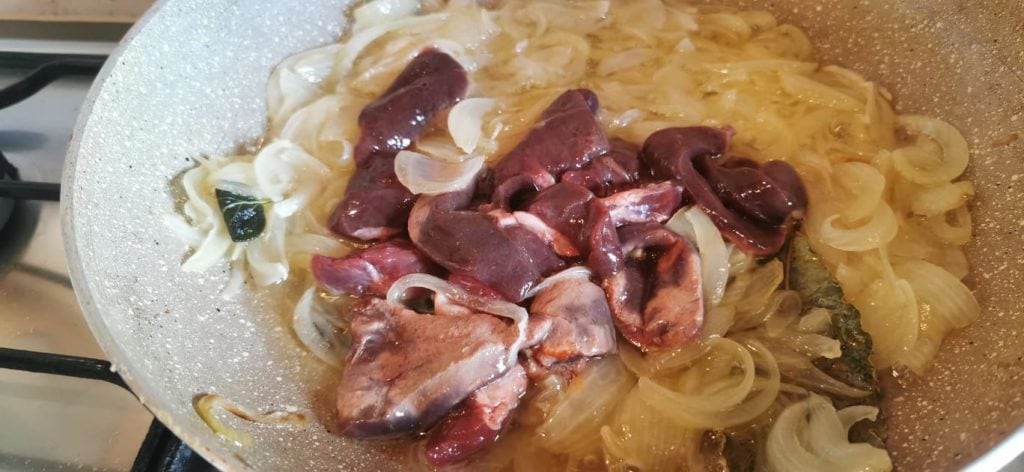
When the liver is browned, deglaze with the half cup of wine, lower the heat, and continue cooking until the wine has completely evaporated.
*Liver cooking should be short; this cut of meat, if overcooked, presents a bitter, tough, and unpleasant taste.
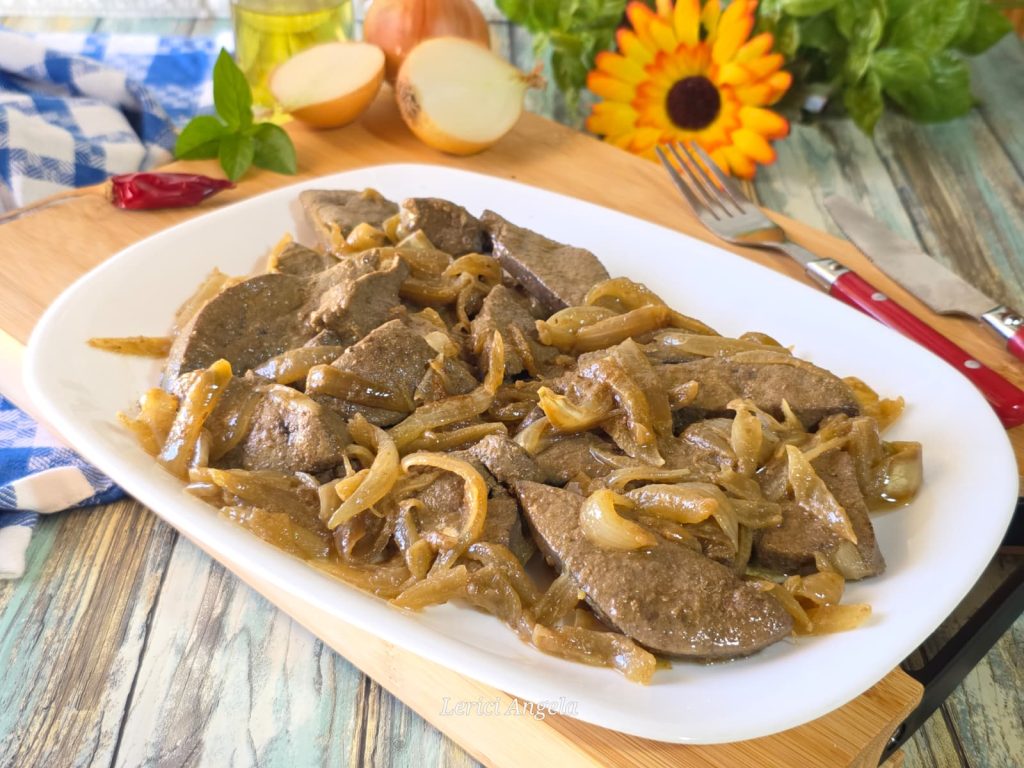
Serve hot.
Enjoy your meal.
Tips
The secret of softness
The main risk with liver is that it becomes rubbery or tough.
Liver should be cooked very briefly. Once the slices are added to the already sautéed onions, 2-3 minutes per side is enough. It should remain slightly pink inside.
Salt the liver only at the end of cooking. Salt tends to draw out the juices from the meat, risking hardening it if added too soon.
The onions shouldn’t “fry,” but stew.
Let them soften on very low heat with a drizzle of oil and, if necessary, a tablespoon of water or vegetable broth. They should become transparent and almost creamy before welcoming the meat.
For a gourmet touch, you can deglaze the onions with a tablespoon of white wine vinegar or apple cider. The acidity perfectly balances the sweetness of the onion and the fattiness of the liver.
FAQ (Questions and Answers)
Which onions do you recommend?
White Onion (The classic choice)
It is the absolute protagonist of the Venetian recipe.
Why: It has a pungent taste when raw that becomes sweet and almost creamy when cooked.
Top variety: If you can find it, the Chioggia Onion is the queen for this dish, but a common flat white onion works just fine.
2. Golden Onion (The balanced choice)
It’s the one you mentioned in the introduction, and it’s an excellent alternative.
It is the most versatile. It has a high sugar content that caramelizes well, creating that dark and flavorful sauce that envelops the liver.
Result: You get a dish with a more robust and “rustic” taste compared to the white one.
3. Red Onion (The gourmet choice)
Less traditional, but much appreciated for a modern touch.
It is naturally sweeter and more aromatic. If you use the Tropea Red, you’ll obtain an interesting contrast of flavors.
Aesthetic note: It tends to color the dish more, making it visually darker.
Whichever onion you choose, the trick is in the quantity. The purists’ golden rule is the ratio 1:1. If you have 500g of liver, you should use almost 500g of onions (weighed clean). The onion should become the “side dish” and the “sauce” at the same time.Which liver do you recommend?
Calf Liver (The most esteemed)
It is considered the top-of-the-line choice for this recipe.
Taste: Very delicate, sweet, and less “irony.”
Texture: Very tender, almost melts in the mouth if cooked correctly.
Recommended if: You want a refined dish or if there are diners who don’t like too strong offal flavors.
2. Beef Liver (The best compromise)
It is the liver of a young bovine (between 12 and 24 months).
Taste: More pronounced than calf, but still balanced.
Texture: Slightly more compact, but great for pan-frying.
Recommended if: You’re looking for the best quality-price ratio and a taste that stands well in contrast with the sweetness of the onions.
3. Pork Liver (The rustic tradition)
It is used in historical and rural recipes.
Taste: Very intense, strong, almost bitter.
Texture: More grainy and firm.
Recommended if: You love ancient and strong flavors. In this case, using a hint of vinegar or white wine during cooking is almost mandatory to balance the strong taste.
