
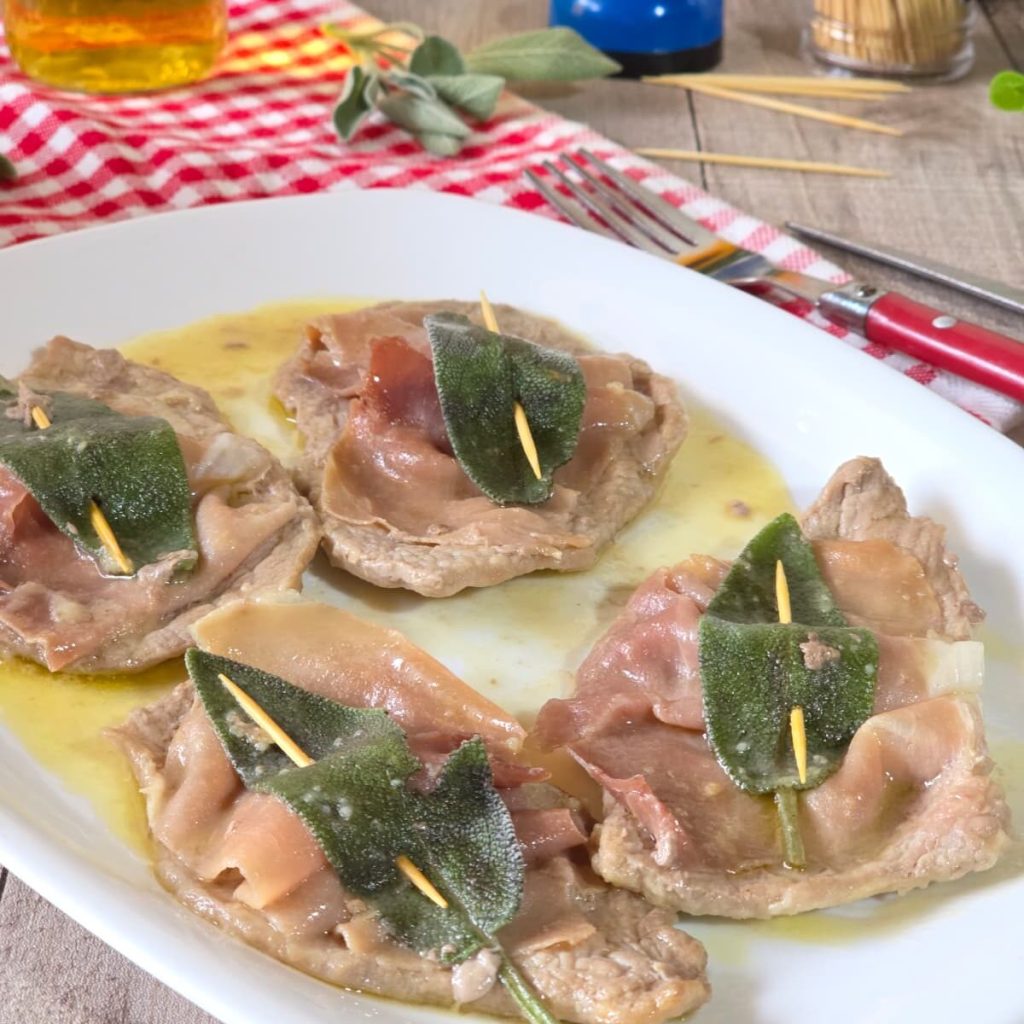
Do you have little time but don’t want to give up a true gourmet dish? Saltimbocca alla Romana is the perfect solution, tasty and very easy, the magic of a great classic ready in 10 minutes.
Aren’t we kitchen wizards but want to bring to the table a succulent dish that allows us to impress at a dinner with friends or family?
With very few ingredients and a very quick cooking time, you will transform simple veal slices into a masterpiece of balanced flavors.
The secret to success here doesn’t lie in complicated cooking techniques, but in the choice of raw materials. For an impeccable result, we focus everything on quality: a thinly sliced veal top round and a sweet, soft prosciutto crudo. Remember: the fewer ingredients there are, the more excellent they must be!
The most common mistake is prolonged cooking. Veal must be handled delicately: as soon as the white wine evaporates and creates that fragrant sauce, count just a couple of minutes and turn off the heat.
This will keep the slices very tender and the sauce fluid and enveloping, perfect for a final “scarpetta”.
Ideas for accompaniment and creative variations.
And if not everyone at home loves veal? No problem! You can replace it with slices of pork loin or roast pork, making sure to pound them well to make them thin.
In this recipe, we will see how to achieve a delicious creaminess thanks to the white wine reduction and how to perfectly fix the prosciutto for a restaurant result.
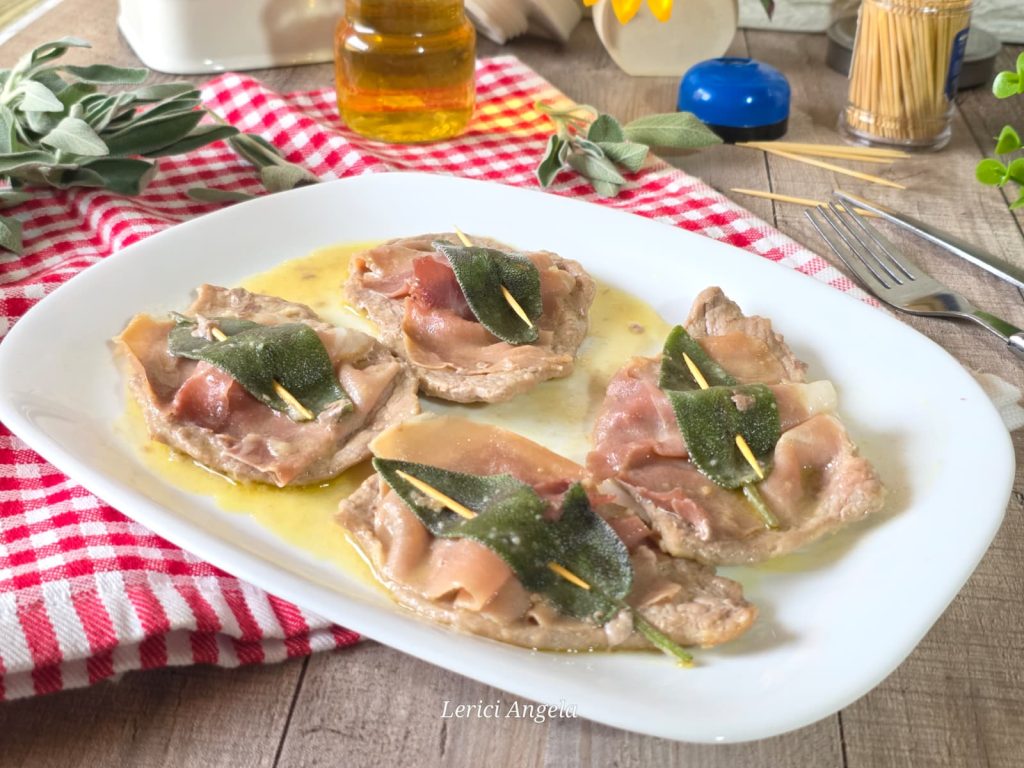
- Difficulty: Very easy
- Cost: Moderate
- Preparation time: 5 Minutes
- Portions: 4 People
- Cooking methods: Stovetop
- Cuisine: Italian
- Seasonality: All seasons
- Energy 329.50 (Kcal)
- Carbohydrates 10.42 (g) of which sugars 0.33 (g)
- Proteins 21.15 (g)
- Fat 21.68 (g) of which saturated 10.55 (g)of which unsaturated 10.20 (g)
- Fibers 1.96 (g)
- Sodium 663.21 (mg)
Indicative values for a portion of 140 g processed in an automated way starting from the nutritional information available on the CREA* and FoodData Central** databases. It is not food and / or nutritional advice.
* CREATES Food and Nutrition Research Center: https://www.crea.gov.it/alimenti-e-nutrizione https://www.alimentinutrizione.it ** U.S. Department of Agriculture, Agricultural Research Service. FoodData Central, 2019. https://fdc.nal.usda.gov
Ingredients
Saltimbocca alla Romana
- 14 oz veal (thinly sliced 14-18 oz 8 slices)
- 8 prosciutto crudo (preferably sweet and soft slices)
- Half glass dry white wine (1/2 glass to deglaze and create creaminess)
- 8 leaves sage (large)
- 3 tbsp butter (You can completely replace butter with EVO oil)
- as needed flour (to flour only the underside of the meat)
- as needed salt (be careful not to overdo it, as the prosciutto is already flavorful)
- pepper (as needed)
Tools
- Pan
- Meat Tenderizer
- 8 Toothpicks
- Lid
Steps
Saltimbocca alla Romana
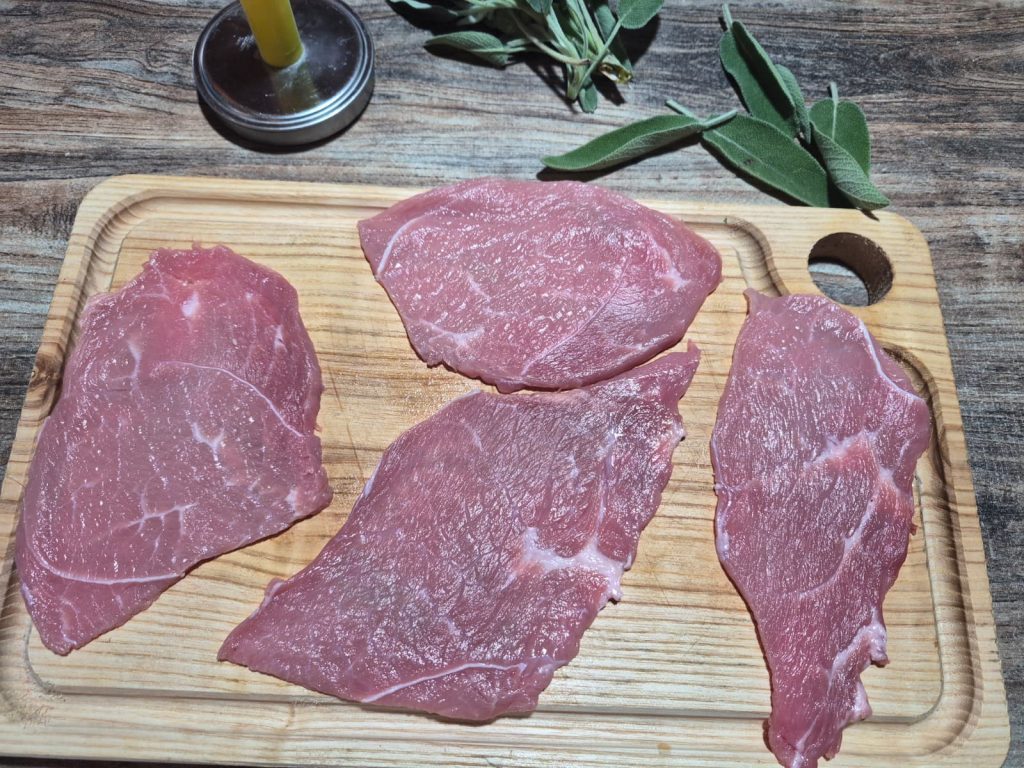
Take the veal slices and pound them with a meat tenderizer (or the bottom of a glass) to make them uniform and thin.
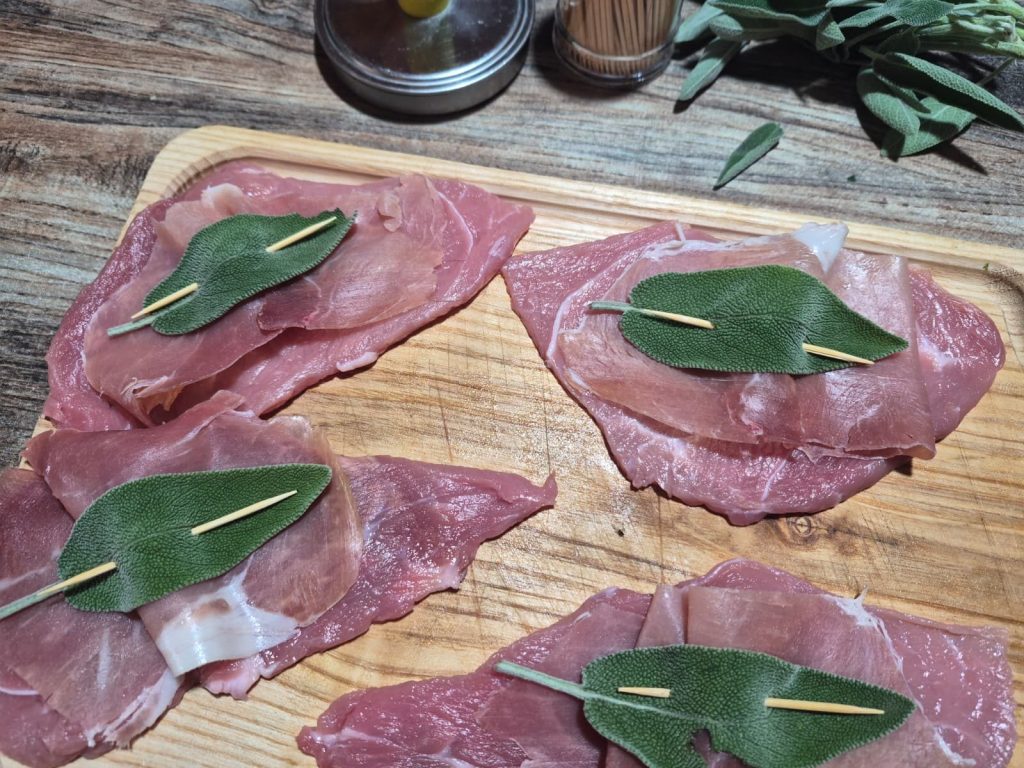
On each veal slice, place a slice of prosciutto crudo and a sage leaf in the center. Secure everything by skewering the layers with a toothpick horizontally.
Pass the saltimbocca in flour, but only on the meat side (the unstuffed side). This will protect the meat and help create a delicious creaminess.
In a large pan, heat a drizzle of oil and melt the butter.
When it sizzles, place the saltimbocca and brown them over high heat.
As soon as the underside is golden, deglaze with white wine.
Put the lid on and let it cook for another couple of minutes, until the alcohol has evaporated and the bottom has thickened into a glossy glaze.
Serve them piping hot, pouring the remaining sauce from the pan over each slice.
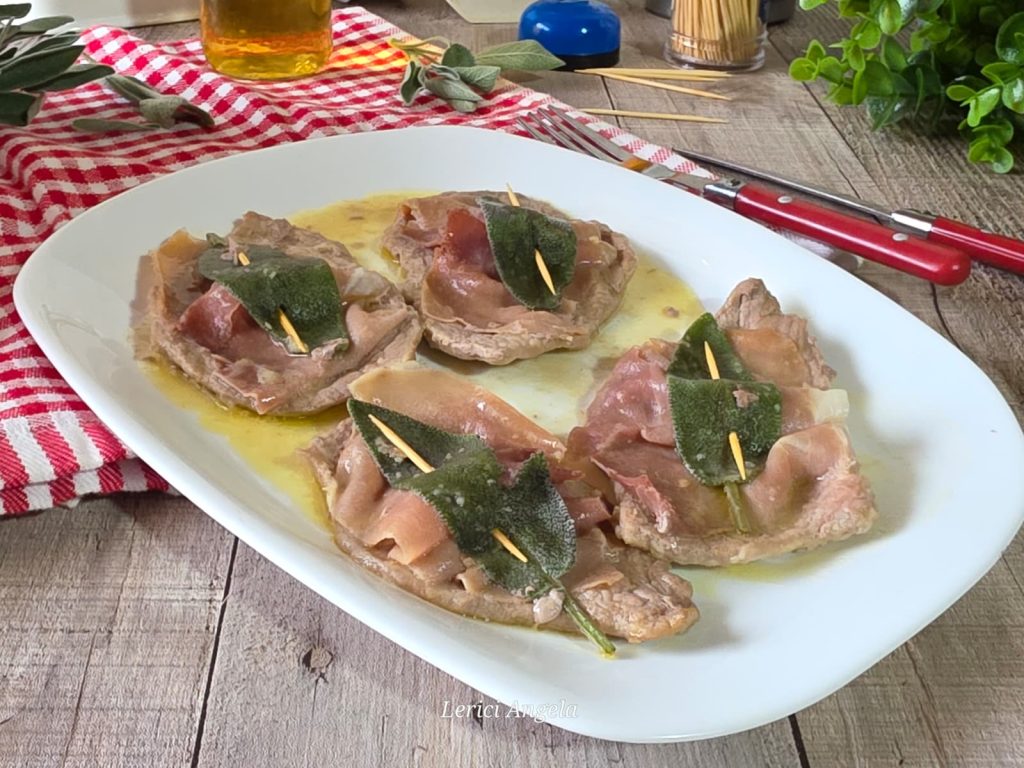
Bon appétit.
Tips
Flour is key: Flour the meat just before putting it in the pan. If you do it too early, the flour will absorb the meat’s moisture, becoming sticky, and you won’t get that glossy cream.
Watch the salt: I advise you not to salt the meat. Prosciutto crudo, depending on its aging, is already very flavorful and releases its salt during cooking.
Lid management: Use the lid only for a minute after deglazing with wine. If left too long, the steam will make the prosciutto “boiled” instead of keeping it flavorful and slightly seared.
The cooking base: If the sauce dries out too quickly, add a tablespoon of water or vegetable broth to dissolve the meat juices left on the bottom of the pan.
The cooking base: If the sauce dries out too quickly, add a tablespoon of water or vegetable broth to dissolve the meat juices left on the bottom of the pan.
If you want to save
Veal top round can be expensive. You can ask the butcher for bottom round or eye of round, which are excellent cuts but often slightly cheaper.
No need for long-aged prosciutto (which is more expensive). A sweet, young prosciutto is perfect because it doesn’t become too salty during cooking.
Storage
In the Refrigerator
Place them in an airtight container once they have completely cooled.
They keep well for 1-2 days at most.
The Sauce: It’s essential to store them together with their butter and wine cream; this will help prevent the meat from drying out when reheated.
How to Reheat Them
To avoid making the meat rubbery and the prosciutto too salty:
Place them in a pan with a tablespoon of water or vegetable broth to regenerate the sauce.
Cover with a lid and heat over very low heat for just a few minutes, just enough to warm them.
Avoid the microwave: it tends to cook the meat further, making it tough.
Can they be frozen?
Not recommended when cooked: The combination of thin meat, prosciutto, and sauce does not react well to freezing after cooking; the cream’s texture and the veal’s tenderness would be lost.
When raw: You can freeze them already assembled (meat, prosciutto, and sage), separating them with parchment paper.
When ready to use, let them thaw in the fridge and then proceed with the flouring and quick cooking as per the recipe.
FAQ
What meat do you recommend instead of veal
Pork Loin or Roast Pork (The most common alternative)
It’s the most common substitution because it significantly reduces the cost of the dish, as pork costs about
Tip: Pork is more compact than veal, so it’s essential to carefully pound the slices to make them very thin.
The flavor is slightly stronger but pairs beautifully with prosciutto and sage.
Chicken or Turkey Breast (The light alternative)
Highly preferred by those who like white meats or want an even quicker and lighter dish.
Tip: Cut the chicken breast “wallet” style or into very thin slices and pound them well. Since it’s a meat that tends to dry out, make sure not to cook it for more than 2-3 minutes per side.
You’ll get very delicate saltimbocca, where the “cream” of butter and white wine will stand out even more.
Bottom Round or Eye of Round (The cost-saving alternative)
If you don’t want to give up veal but want to spend less than for premium round veal, you can opt for these cuts.
Tip: They are still premium cuts but slightly less expensive.
The texture is practically identical to the top round, making it hard to notice the difference in the final dish.
In summary, what to recommend?
For those who want to save: Pork loin.
if you want lightness: Chicken breast.
For those who want tradition but with an eye on the budget: Veal bottom round.
