
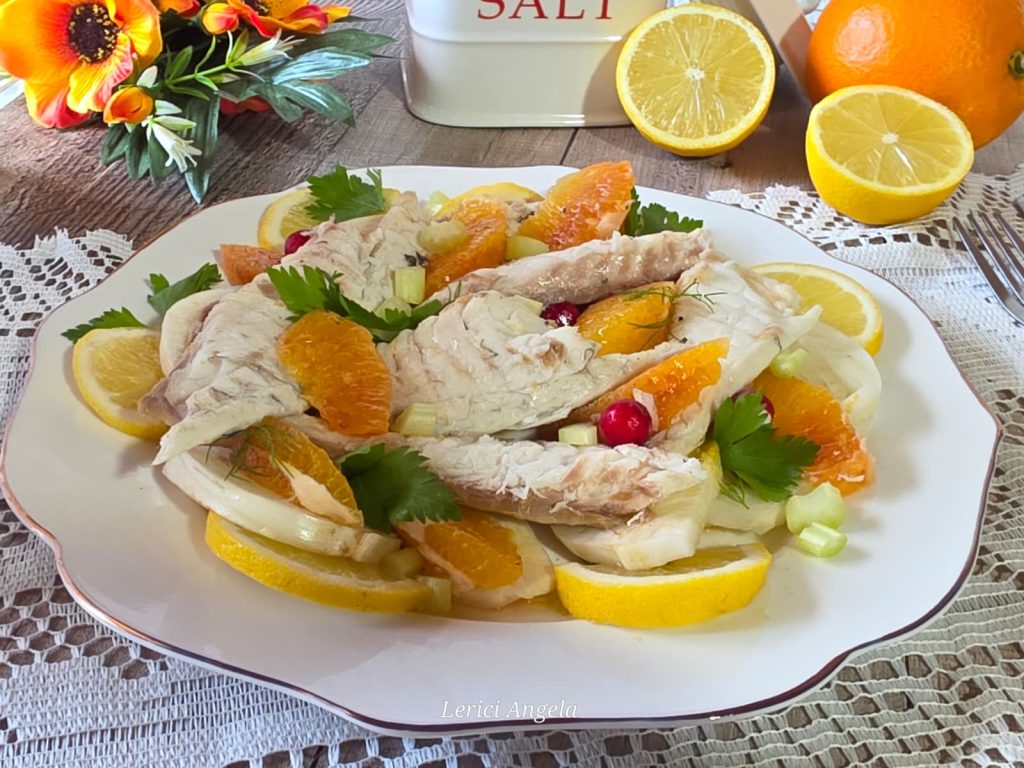
Sea Bream, Orange, and Fennel Salad: A Light and Tasty Dish. Today, I’m taking you to the kitchen to prepare a sea bream salad that will surprise you with its texture. Often, boiled fish turns out dry, but with the trick we’ll see today, you’ll get juicy and highly fragrant flesh.
Want a boiled fish that is never dry? The key is cooling in the cooking liquid. In this recipe, the sea bream takes on all the aromas of the court-bouillon before being filleted and served cold.
Court-bouillon… It’s called “short” because, unlike meat broths that take hours, this is prepared in about 20-30 minutes. It serves to impart delicate aromas to the food without overshadowing its natural flavor.
“Once I turned off the heat, I made a crucial choice: I let the sea bream rest undisturbed in its cooking water. This step allows the fish fibers to soak up the fragrant liquid of onion and celery. Only when the fish became lukewarm did I fillet it: the flesh will remain moist, firm, and full of flavor.”
The combination with raw fennel, orange, and lemon creates a surprising contrast of textures, while the currant adds a tart note that cleanses the palate. A healthy, elegant dish perfect for those seeking lightness without sacrificing flavor.
For this recipe, ensure the sea bream has shiny eyes and bright skin: thus during cooking, it enhances freshness, so the quality of the fish is crucial.
Anti-waste tip: Don’t throw the broth away! I’ll include some notes at the bottom of the recipe.
- Difficulty: Very easy
- Cost: Medium
- Rest time: 1 Hour
- Preparation time: 20 Minutes
- Portions: 4
- Cooking methods: Stovetop
- Cuisine: Italian
- Seasonality: All seasons
Ingredients
Sea Bream, Orange, and Fennel Salad
- 2 sea breams (fresh)
- 1 onion
- 2 stalks celery
- 3 cherry tomatoes
- coarse salt
- 2 fennels (large)
- to taste red currants
- celery (heart two stalks)
- 2 oranges (peeled)
- 1 lemon (organic)
- to taste wild fennel
- to taste extra virgin olive oil
- salt
- to taste black pepper (If you want a sharp and pungent note that contrasts the sweetness of the orange.)
Tools
- 1 Pan large
- Lid
- Knife
Steps
Sea Bream, Orange, and Fennel Salad
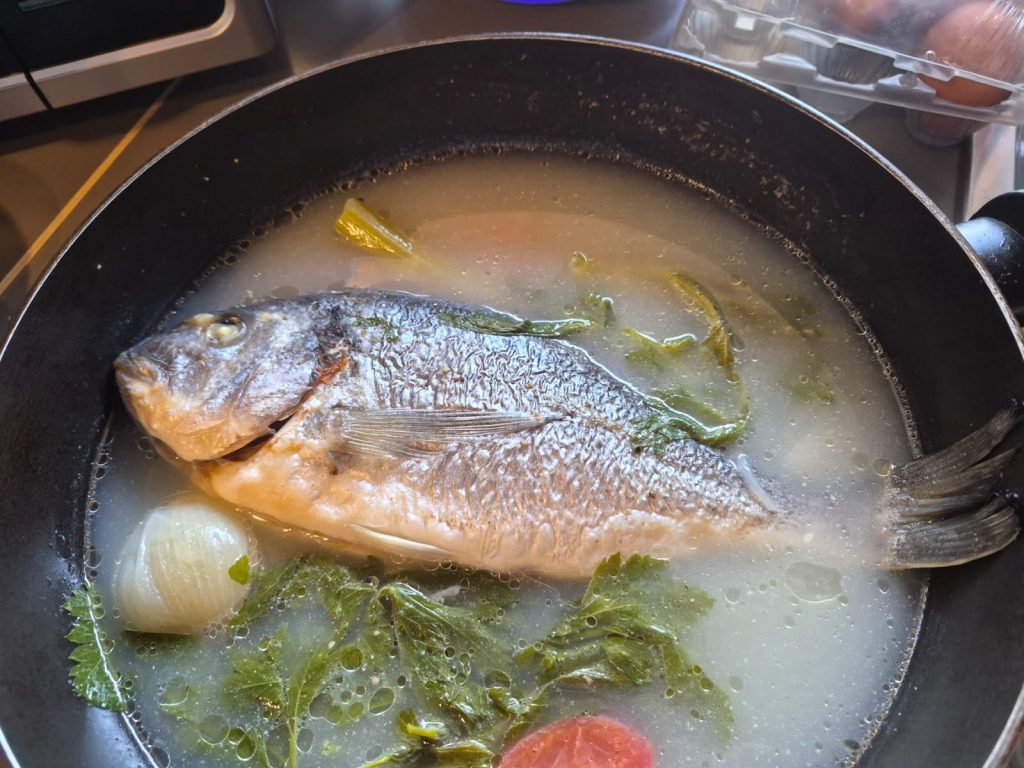
In a large pan or fish poacher, prepare a broth with water, the halved onion, celery, and cherry tomatoes.
Bring to a boil and let it infuse for 10-15 minutes.
Add a pinch of coarse salt to your onion and celery broth.
This will allow the fish, as it cools slowly, to absorb the right amount of saltiness deep into its flesh.”
Place the sea bream in the broth.
The heat must be gentle: the fish should cook delicately to avoid damaging the flesh.
Once cooked, turn off the heat.
Do not remove the fish! Let it cool completely immersed in its broth.
This is where the magic happens, and the flesh becomes flavorful and moist.
Meanwhile, finely slice the fennel and celery.
Peel the orange and slice the lemon thinly.
Fillet the now cold sea bream.
(Always run a finger over the flesh of the fillets before serving: you’ll immediately feel if there’s any small hidden bone.)
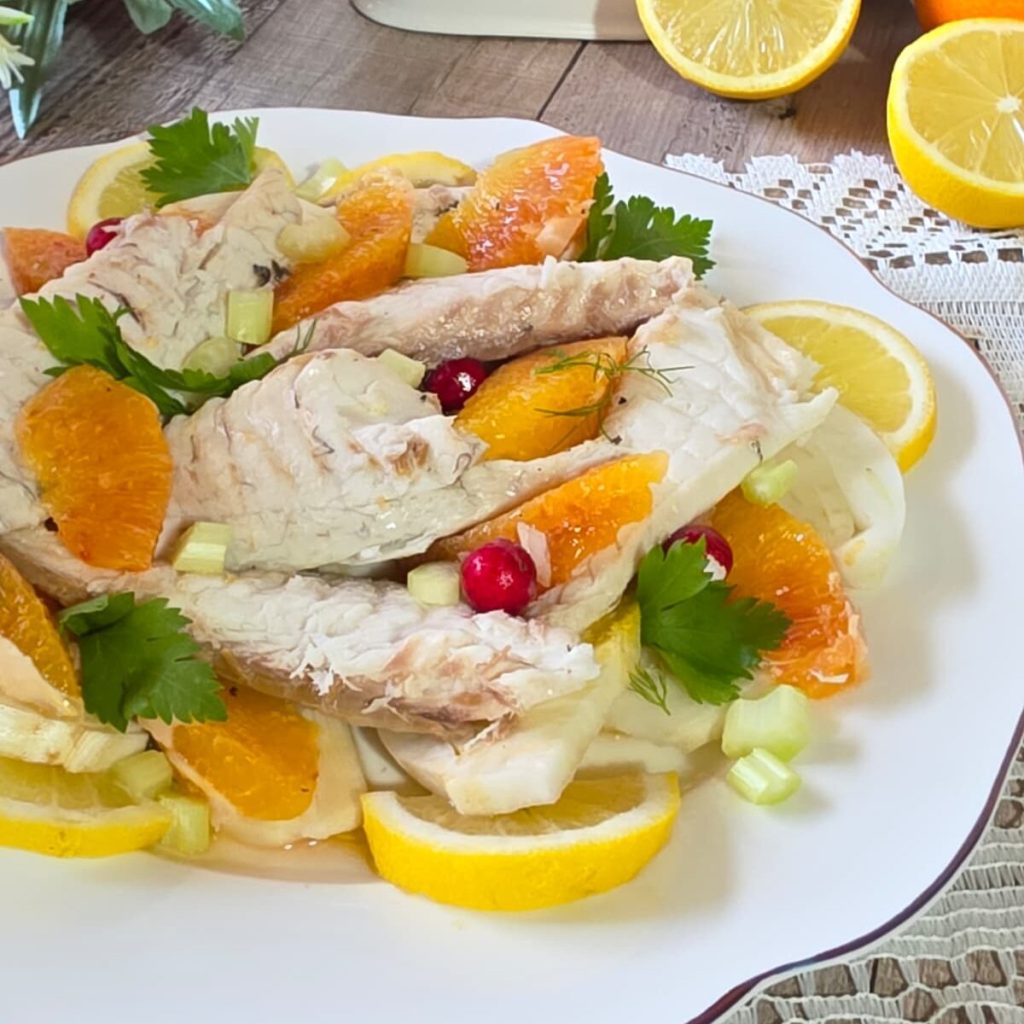
Create a bed with the raw fennel and celery, lay the fish fillets on top, and garnish with orange segments and lemon.
To maximize the delicacy of the filleted sea bream, don’t just drizzle the oil.
In a small bowl, mix the extra virgin olive oil with the salt, lightly beating with a fork until an emulsion is formed.
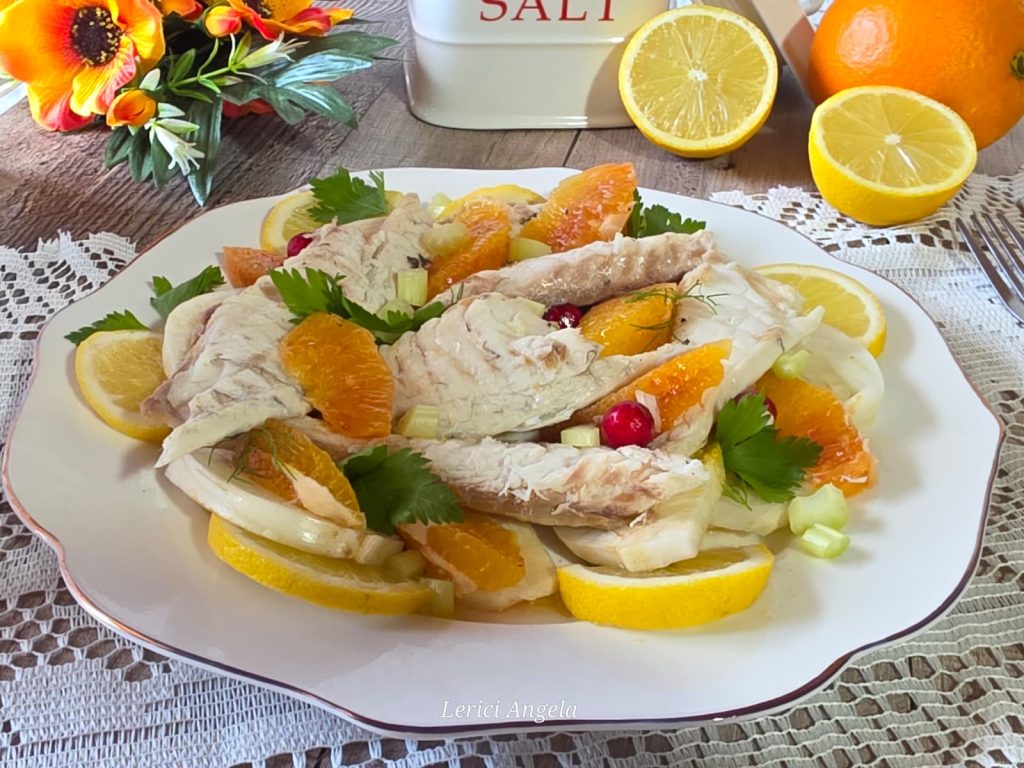
Generously drizzle the sea bream with this dressing: the salt dissolved in the oil will penetrate the fish’s flesh, making it glossy and flavorful.
Finally, finish with parsley leaves, fennel fronds, and red currants.”Enjoy your meal.
Notes
Once you’ve retrieved the sea bream, you’ll end up with a perfectly flavorful broth, fragrant with citrus and vegetables.
It would be a real shame to throw it away!
Here’s how you can reuse it:
For a seafood risotto: Strain the broth and use it to moisten a seafood or shrimp risotto. The citrus note will give it an extra kick.
Base for soups: It’s perfect as a base for a quick fish soup or for cooking smaller fish.
Storage: If you don’t use it immediately, strain it and freeze it in ice cube trays: you’ll have natural fish cubes ready for enhancing your seafood sauces in the pan.
Storage: If you don’t use it immediately, strain it and freeze it in ice cube trays: you’ll have natural fish cubes ready for enhancing your seafood sauces in the pan.
Storage: If you don’t use it immediately, strain it and freeze it in ice cube trays: you’ll have natural fish cubes ready for enhancing your seafood sauces in the pan.
Here’s my secret: strain the broth, pour it into plastic bottles, and freeze it. This way, you’ll always have a ready base for a seafood risotto or stew, to use as needed!
Curiosities
Pink Pepper: Would be ideal for this dish. It’s not a true pepper but a berry, and it’s perfect because it’s fragrant, less spicy, and visually matches the color of the currants.
White Pepper: More subtle, it pairs well with white fish without “staining” the dish aesthetically.
Black Pepper: If you want a sharp and pungent note that contrasts the sweetness of the orange.
Tips
Here are the 5 senses to recognize a very fresh sea bream when you’re at the fishmonger:
1. The Eye (The first signal)
Fresh: It should be bulging, with a shiny black pupil and a transparent cornea.
Not fresh: If the eye is sunken, veiled, or whitish, the fish is not fresh.
2. The Gills
Fresh: Gently lift the operculum (the “cheek” of the fish). The gills should be a vivid red or bright pink, moist and without mucus.
Not fresh: If they turn brown or gray, leave it.
3. The Texture (The finger test)
Fresh: The flesh should be firm and elastic. If you press with a finger, the print should disappear immediately.
Not fresh: If the flesh remains “soft” or the finger mark remains, the fish has started to lose tone.
4. The Appearance of the Skin and Scales
Fresh: The skin should be shiny, almost metallic, with vivid reflections (the sea bream typically has a golden spot between its eyes and a dark spot at the start of the lateral line). The scales should be well attached to the body.
Not fresh: Dull colors and opaque mucus on the skin are bad signs.
5. The Smell
Fresh: It should smell like sea or brine. A neutral or delicate fragrance is perfect.
Not fresh: Any hint of ammonia or too strong and pungent odor indicates the fish is old.
When serving it
This dish is at its best when served warm or at room temperature. If the sea bream is too cold from the fridge, the fats solidify, and you lose the sensation of “melting flesh”.
How to fillet sea bream
Remove the fins: Remove with your hands or scissors the dorsal fin, ventral fin, and side fins. If the fish is well cooked, they will come away very easily.
Incision of the skin: With a smooth blade knife, make a light cut along the back, from head to tail, and one behind the head.
Remove the skin: Lift the skin starting from the head towards the tail. If the fish is fresh and cooked correctly, the skin will come off in one piece, revealing the white flesh.
The first fillet (top): Insert the knife blade or a flat spatula along the central spine. Slide the tool between the flesh and the bone, lifting the first fillet gently so as not to crumble it. Place it directly on the bed of fennel.
Remove the central bone: Grasp the tail and lift the entire central bone. If well cooked, it will come away whole, bringing with it the head and side bones.
The second fillet (bottom): You will now have the second clean fillet in front of you. Check the edges well to remove any remaining bones and the skin left at the bottom, then place it on the plate.
My tip Always run a finger over the flesh of the fillets before serving: you’ll immediately feel if there’s any small hidden bone. Your guests will thank you!
FAQ (Frequently Asked Questions)
What fish can I use?
While sea bream is perfect for its sweet and firm flesh, other types of white fish are also suitable. Here are my suggestions: Sea Bass, Snapper, Hake or Fresh Cod, Meagre. Freshness is important.
If you liked this recipe, click on many stars, thank you so much.
I’ll wait for you in my group: https://www.facebook.com/groups/488624465780860
or on my page: https://www.facebook.com/gustoamoreefantasie
Return to Home page
