
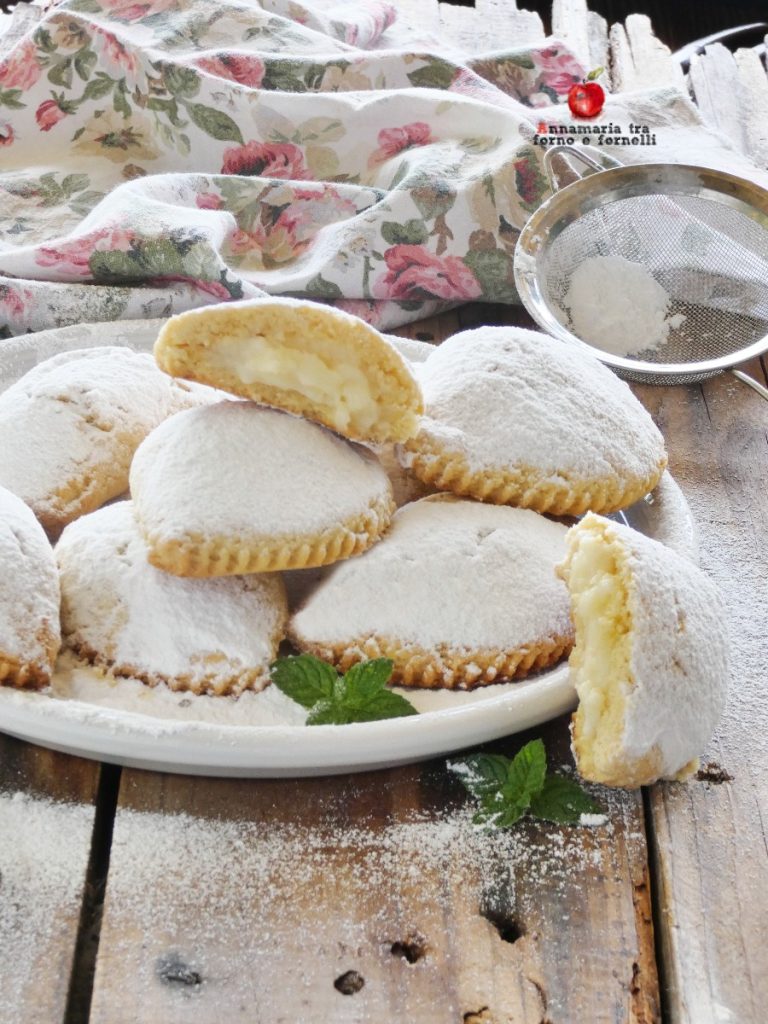
The Erice Genovesi are delightful pastries, originating from the beautiful town of Erice, a medieval village rich in history, culture, and breathtaking natural beauties. Here, Mrs. Maria Grammatico opened her pastry shop, treasuring the recipes of the nuns from the college where she spent some years of her life. The Ericine she made became a symbol. Naturally, Mrs. Maria’s recipe is secret, but we have tried to reproduce these exquisite pastries, hoping to come as close as possible to the original recipe. In my town, besides the custard filling, these pastries are also filled with zuccata. I hope to provide this other variant soon. But you may be wondering: “Why, if it’s a typical sweet of Erice in Sicily, are they called “genovesi?” Well, the shape of these pastries resembles the typical cap of Genoese sailors, and since years ago commercial relations between Trapani and Genoa were frequent, it’s thought that this name is due to this. Naturally, there’s nothing certain about it, but one thing we can count on is the goodness of the Genovesi or Ericine. Let’s prepare them together.
You can also read:
- Difficulty: Medium
- Cost: Medium
- Rest time: 1 Hour
- Preparation time: 40 Minutes
- Portions: 12
- Cooking methods: Oven
- Cuisine: Italian
- Seasonality: All seasons
Ingredients for Erice Genovesi
- 8.8 oz semolina flour
- 8.8 oz all-purpose flour
- 5.3 oz butter
- 6.3 oz sugar
- 4 egg yolks
- 1 pinch salt
- 4 tbsps water (lukewarm)
- 1 egg white
- 2 cups milk
- 5.3 oz sugar
- 2 egg yolks
- 1.4 oz cornstarch
- to taste vanilla powdered sugar
What You Need for Erice Genovesi
- 1 Stand Mixer
- 1 Baking Tray
- 1 Rolling Pin
- Parchment Paper
- 1 Small Pot
- Cling Film
- 1 Sugar Shaker
- 1 Wooden Spoon
- 1 Small Saucepan
- 1 Fluted Pastry Cutter
- 1 Brush
- Hand Whisk
Procedure for Erice Genovesi
I kneaded the dough with my stand mixer, but this can also be done by hand.
Sift together the two flours and place them in the bowl. Add the sugar, salt, and softened butter cut into pieces.
Let it work until you get a sandy dough, then add the yolks one at a time.
After the eggs are incorporated into the flour, add 4 tablespoons of lukewarm water and continue working.
Turn the dough onto a work surface and continue kneading by hand to form a dough ball.
Wrap the dough in cling film and place in the fridge for 30 minutes, just enough time to prepare the filling.
To make the cream, put the yolks with the sugar in a small saucepan and whisk until you get a frothy cream.
Meanwhile, heat the milk in a separate small pot and pour it over the yolks with sugar, stirring quickly.
If desired, you can scent the cream by adding a piece of lemon or orange zest (without the white spongy layer, which tastes bitter).
Place the saucepan on the burner over moderate heat and let the cream thicken (it must be very firm).
Turn off the heat, remove the citrus peel, cover with contact cling film, and let cool completely.
Take the dough out of the fridge, flour the work surface, and roll out pieces with a rolling pin, giving them an oval shape and a thickness of 1/8 to 1/6 inches.
Brush the edges with beaten egg white, place the cream in the center, and fold the genovese over itself. Cut into a half-moon shape with a fluted pastry cutter.
Line a baking tray with parchment paper and place the ericine on top. There’s no need to space them out much, as the dough doesn’t contain leavening agents, it won’t rise. Just space them 1/2 inch apart.
Let the pastries rest in the fridge for another 30 minutes. In the meantime, turn on the oven and wait until it reaches a temperature of 392°F.
Bake the Erice Genovesi for 10-15 minutes. They shouldn’t brown much; they should remain quite pale.
Once baked, take the pastries out of the oven and let them cool. Place them on a tray and generously dust with powdered sugar.
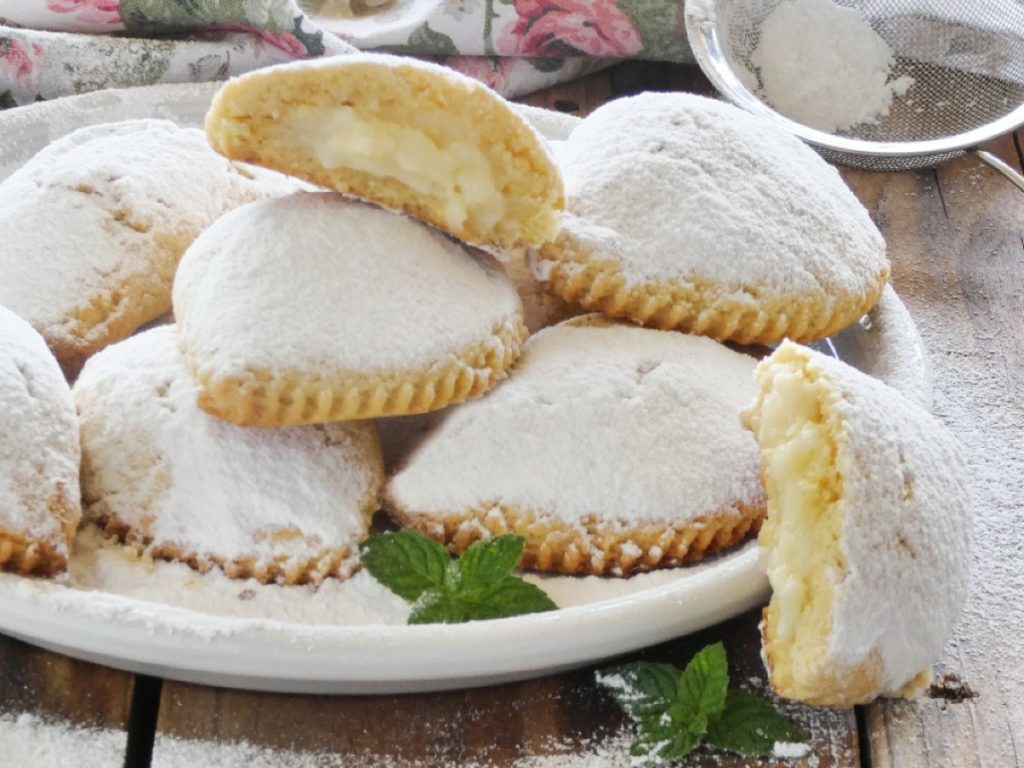
Enjoy your tasting!
FAQ (Questions and Answers)
How can I store them?
Leave them on the tray itself; the cream will keep them soft. Or, place them in a tin box.
Can I substitute the cream with something else?
You can replace the cream with a very thick jam or marmalade.
