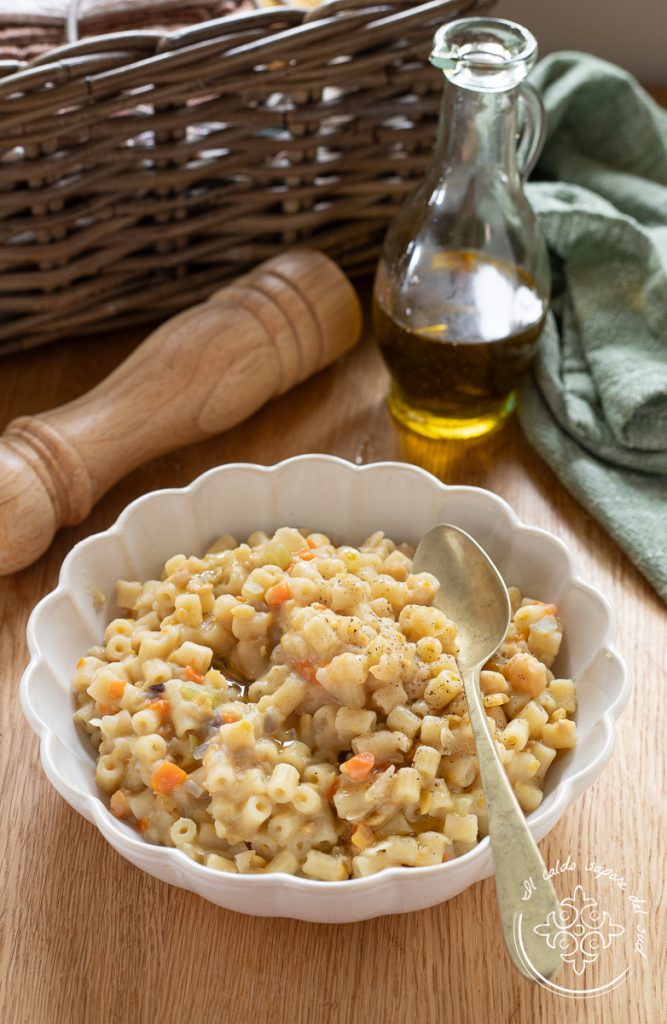
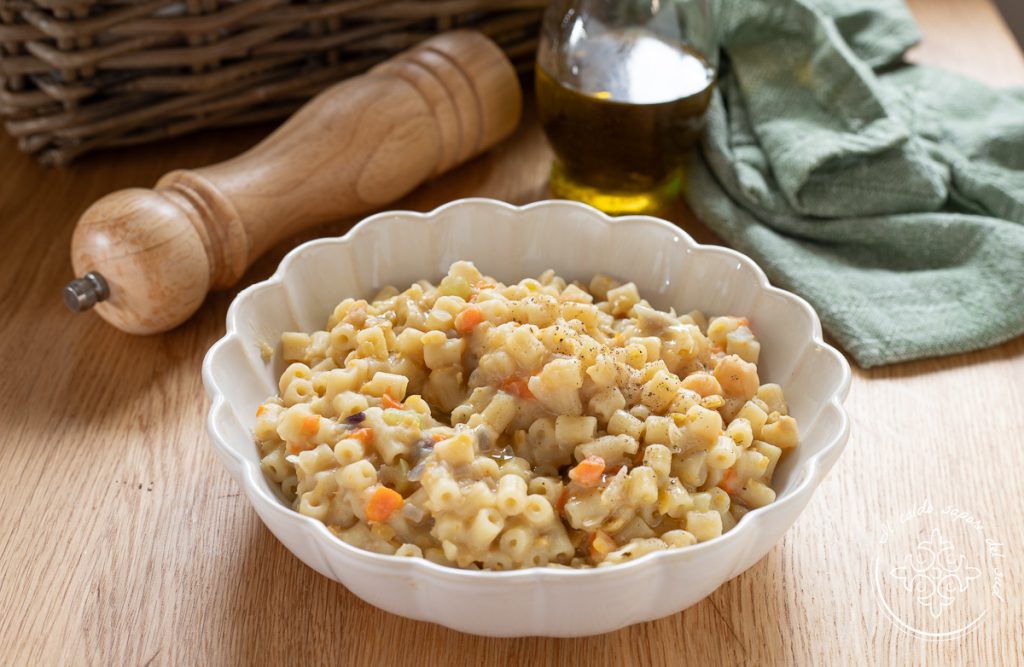
Creamy pasta and chickpeas — grandma’s recipe for a “perfect” pasta and chickpeas, thick, enveloping and creamy. It’s a pasta with canned chickpeas that is delicious as well, but I prepared it with dried chickpeas cooked at home! Chickpeas are wholesome legumes, flavorful and delicate; with their distinctive sweetness they can be used in many recipes, from the simplest to the most creative. Often the use of chickpeas in cooking is tied to regional tradition: for example in Sicily chickpea flour is used to make the famous panelle, but chickpeas also work well in heartier dishes like pasta with mushrooms and chickpeas or chickpeas stewed with speck. From chickpeas you can also make appetizing starters and mains like spiced fried chickpeas, hummus, chickpea flatbreads or chickpea omelette. Today, with these precious legumes, we’ll prepare one of the ultimate comfort foods: pasta and chickpeas “done right”, meaning thick and very creamy. The pasta and chickpeas without broth we’ll make today is a tasty vegan recipe. You can make it with home-cooked dried chickpeas or with canned chickpeas — it’s delicious either way. The base is made with a simple mirepoix of celery, carrots and onion, then water (you can also use the chickpea cooking liquid), salt, good olive oil and black pepper, which make it a flavorful one-dish meal and a real treat to enjoy with family or friends for a rustic, informal dinner. If you want a satisfying pasta dish that brings together healthy, genuine, simple and tasty ingredients, today I suggest a traditional Italian recipe that tastes like old times: pasta and chickpeas in white, grandma’s recipe! A completely vegan recipe rooted in the Mediterranean culinary tradition, where chickpeas are always the star! Are you ready to discover with me how to make pasta with chickpeas in white? Let’s go to the kitchen and make it together. If you’d like to stay updated on all my recipes you can follow my Facebook page (here) and my Instagram profile (here).
Also check these pasta-and-legume recipes:
- Difficulty: Very easy
- Cost: Very inexpensive
- Rest time: 5 Minutes
- Preparation time: 15 Minutes
- Portions: 5
- Cooking methods: Stovetop
- Cuisine: Italian
- Seasonality: All seasons
Ingredients to make pasta and chickpeas in white
- 3 cups chickpeas (cooked or canned (about 17.6 oz / 500 g))
- cup carrots (diced (about 5.3 oz / 150 g))
- 1 medium onion (about 5.3 oz / 150 g)
- 2 stalks celery
- 1.1 lb pasta (short pasta (about 17.6 oz / 500 g))
- to taste salt
- to taste extra virgin olive oil
- to taste black pepper
Tools
- Pot
Steps — how to make pasta and chickpeas
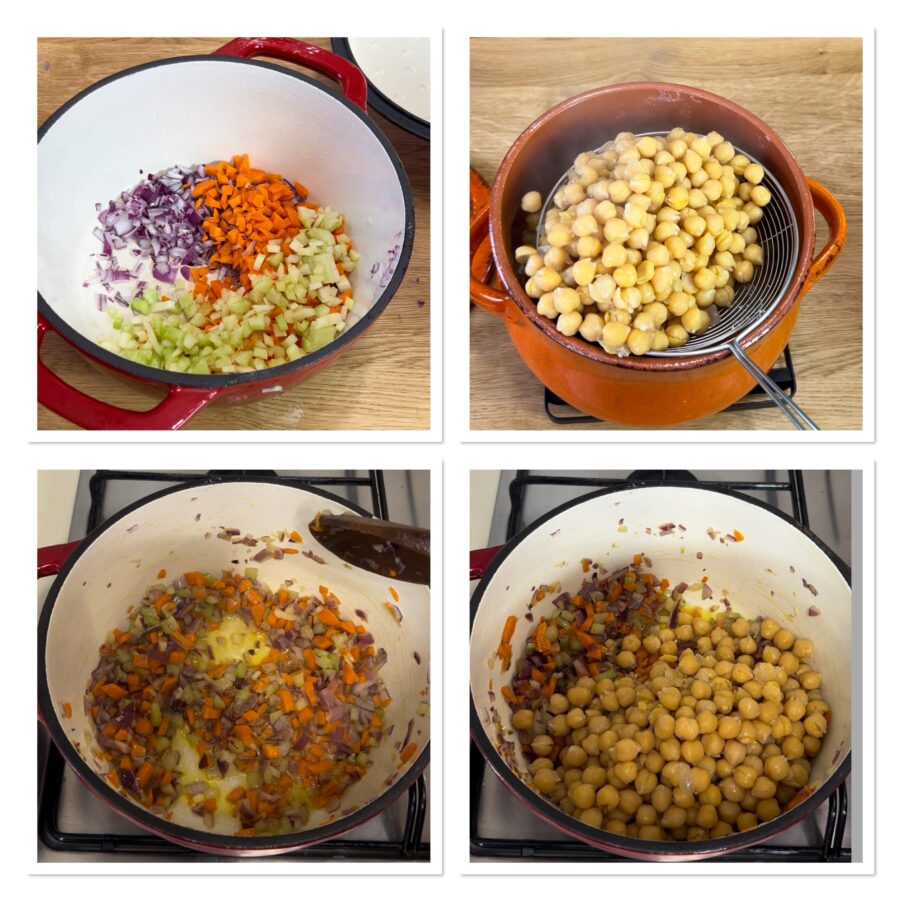
Rinse and peel the onion and carrots, cut them into fairly small cubes. Remove the leaves from the celery stalks, peel away the strings with a vegetable peeler and also cut the stalks into small cubes.
You can replace fresh diced vegetables with a frozen mirepoix if you prefer.
Pour in a generous drizzle of olive oil and let the vegetables soften over moderate heat in a heavy-bottomed pot or a cast-iron pan.
Now add the drained chickpeas — canned chickpeas work well too — but if you cooked the chickpeas yourself you can use their cooking liquid. If using canned chickpeas, drain and rinse them to remove impurities. After adding the chickpeas, let them mingle with the sautéed vegetables, stir and lightly mash them to help create a creamy texture for the final dish.
Pour in about 5 cups of water (approximately 1.2 L) or use the chickpea cooking liquid; if that’s not enough, add plain water as needed and bring to a boil, then add the pasta.
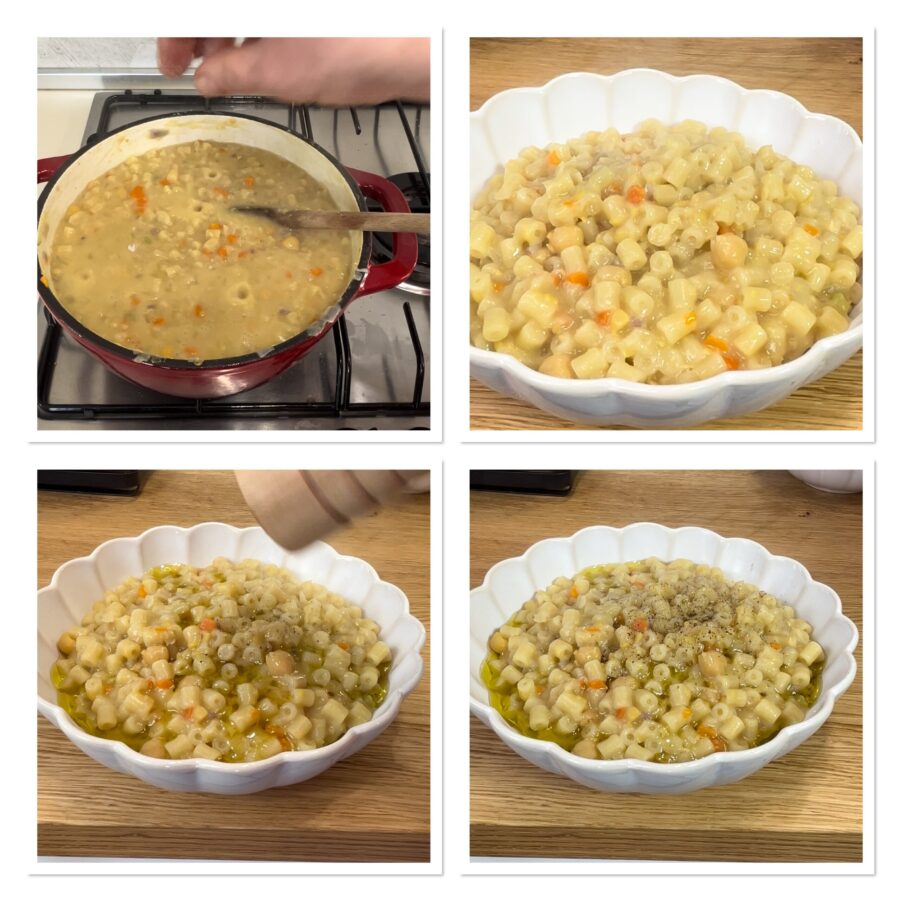
Cook, stirring frequently, especially toward the end, to prevent sticking to the bottom: pasta with chickpeas is a thick soup, and if necessary add more water during cooking, a little at a time.
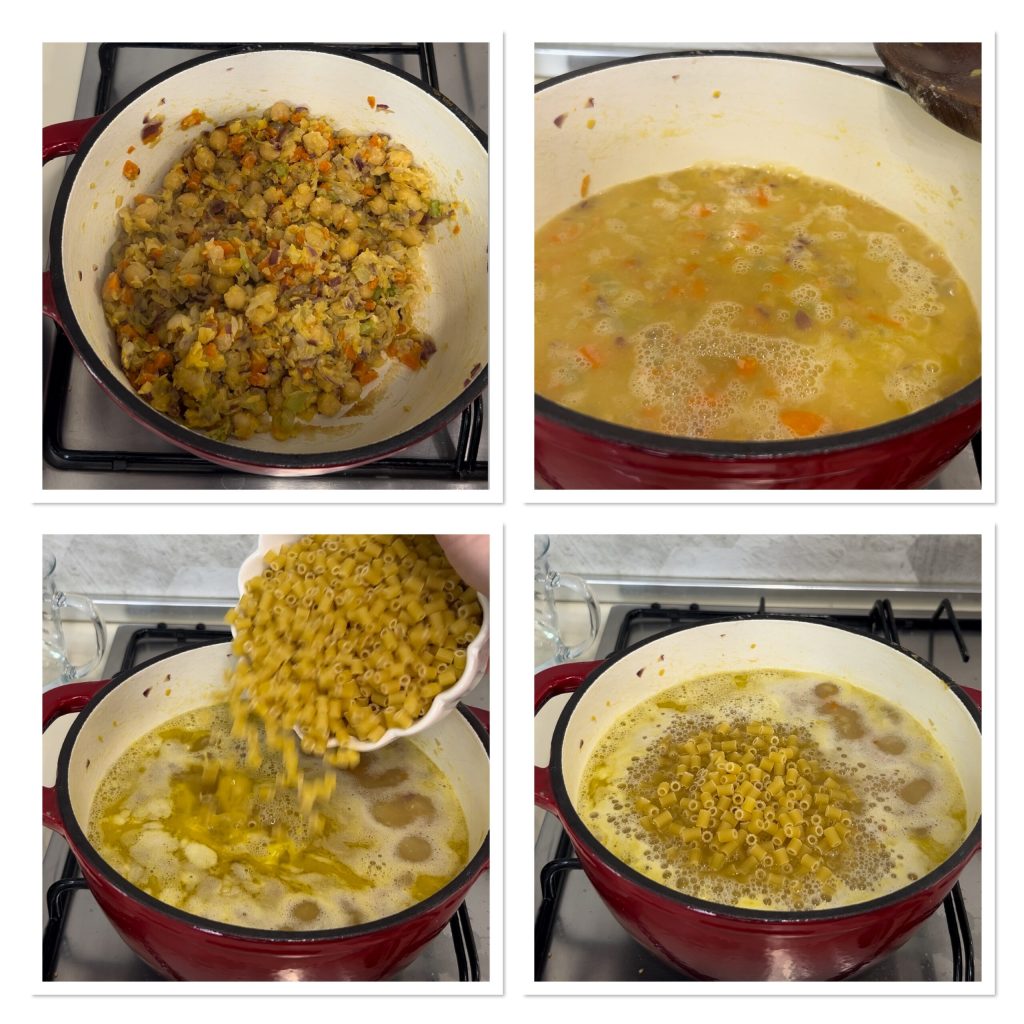
When the pasta is still al dente and the mixture is creamy, turn off the heat and plate immediately. Drizzle with a couple of turns of extra virgin olive oil, sprinkle with pepper, wait 5 minutes and serve — with a little rest the pasta will firm up and thicken further.
Pasta with chickpeas tends to become firmer and more compact as it cools, but it’s still delicious when warm. Leftovers can be kept in the fridge for up to two days; you can slice them into thick pieces or cubes and fry them in hot oil.
From here you can return to the HOME page and discover new recipes!