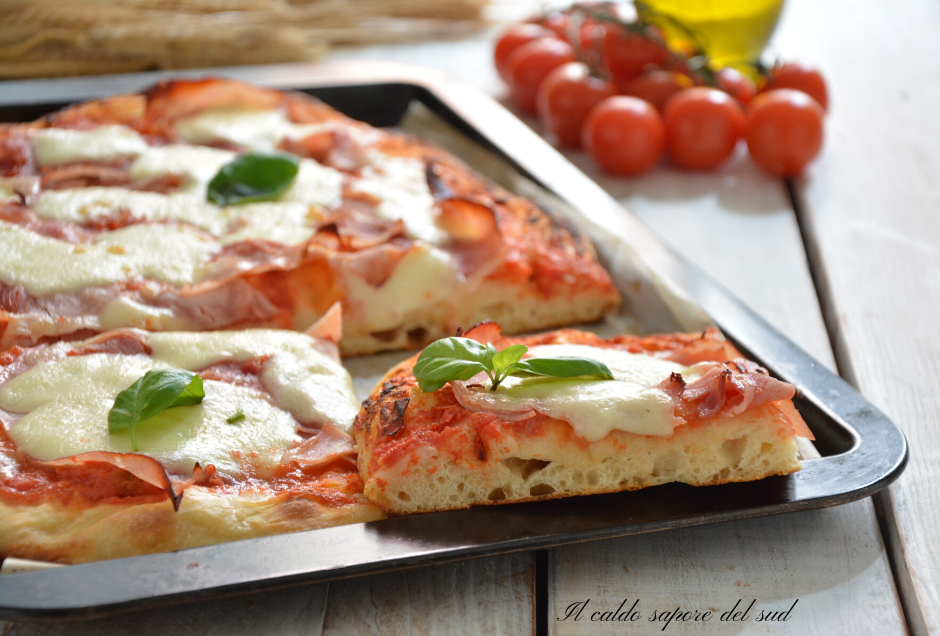
Crispy long-fermentation sheet-pan pizza made at home…
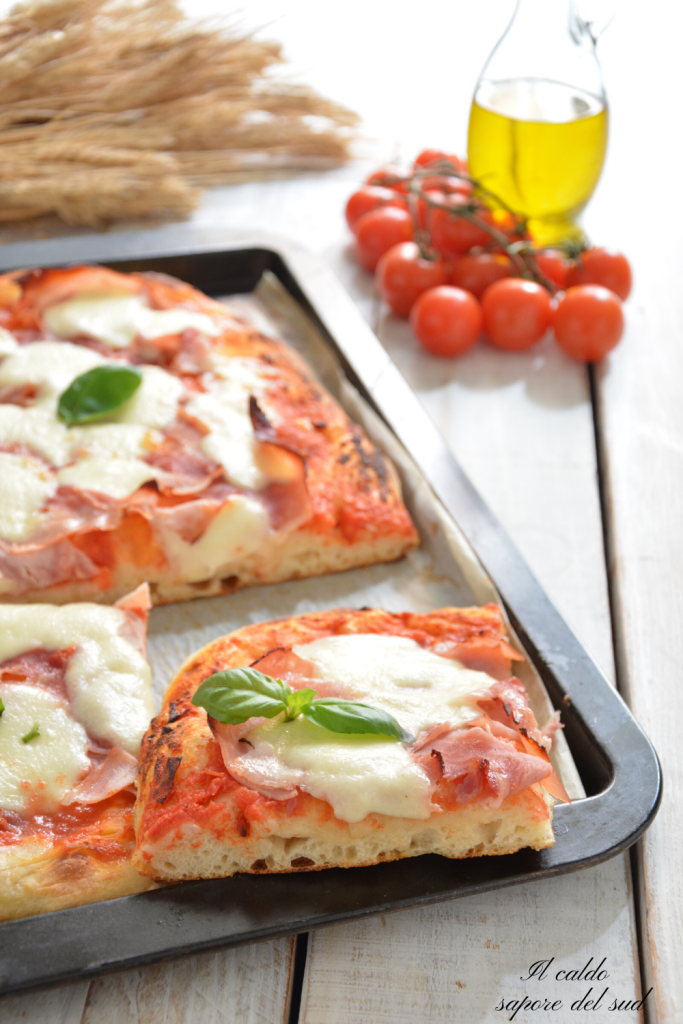
Have you ever tried making sheet-pan pizza at home? If you have never attempted the lovely experience of making a crispy sheet-pan pizza with your own hands, you really should try it, because homemade pizza, besides being very tasty, brings enormous satisfaction. I often prepare my quick sheet-pan pizza but when I can plan ahead I also make the long-fermentation sheet-pan pizza, crispy outside and super soft inside. How to make a sheet-pan pizza with a long-fermentation dough? I assure you it’s very easy and doesn’t require heavy work, just a bit of organization. And the result is really, really good — trust me, you’ll see that the long wait for the dough to mature will be amply rewarded by the taste of a pizza crispy outside, soft inside, with an open crumb and moreover a long-fermentation sheet-pan pizza is digestible, delicate, light and flavorful.
Curious? Let’s get our hands in the dough and try it at least once — I’m sure you’ll never give up this recipe. Before that, if you want to stay updated on all my recipes, you can follow my Facebook page (here) and my Instagram profile (here).
Also check out:
– Pizza with potatoes and high, soft mozzarella;
– Crispy sheet-pan pizza made at home;
– Pizza-focaccia with cherry tomatoes and extra virgin olive oil;
– Pizza-focaccia Facci di vecchia.
- Difficulty: Medium
- Cost: Very economical
- Rest time: 1 Day
- Preparation time: 1 Hour
- Portions: 6-8 servings
- Cooking methods: Oven
- Cuisine: Italian
Ingredients for a crispy sheet-pan pizza
- 17.6 oz (about 500 g / ~1.10 lb) re-milled durum wheat semolina
- 17.6 oz (about 500 g / ~4 cups / 1.10 lb) type 0 flour (Italian 'farina 0' — similar to all-purpose)
- 3 1/8 cups (about 750 ml / 25.4 fl oz) water
- 4 tsp salt
- 1 tsp sugar
- 2 tbsp (about 30 g / 1.1 oz) extra virgin olive oil
- 1 tsp instant dry yeast (or 10 g fresh yeast)
- 14.1 oz (about 400 g / ~1 2/3 cups) tomato pulp (crushed tomatoes)
- to taste salt
- to taste extra virgin olive oil
- 17.6 oz (about 500 g / ~4 1/2 cups shredded / 1.10 lb) mozzarella
- 10.6 oz (about 300 g / ~2/3 lb) cooked ham (prosciutto cotto)
- (use your imagination)
How to make a crispy long-fermentation sheet-pan pizza
You can prepare the dough using a stand mixer or by hand; in any case, at the end you should obtain an elastic, well-developed dough.
Put the flours in a bowl, add one-third of the water and the oil and mix; add a little more water and add the yeast and sugar, mix, and finish with the last part of the water and the salt.
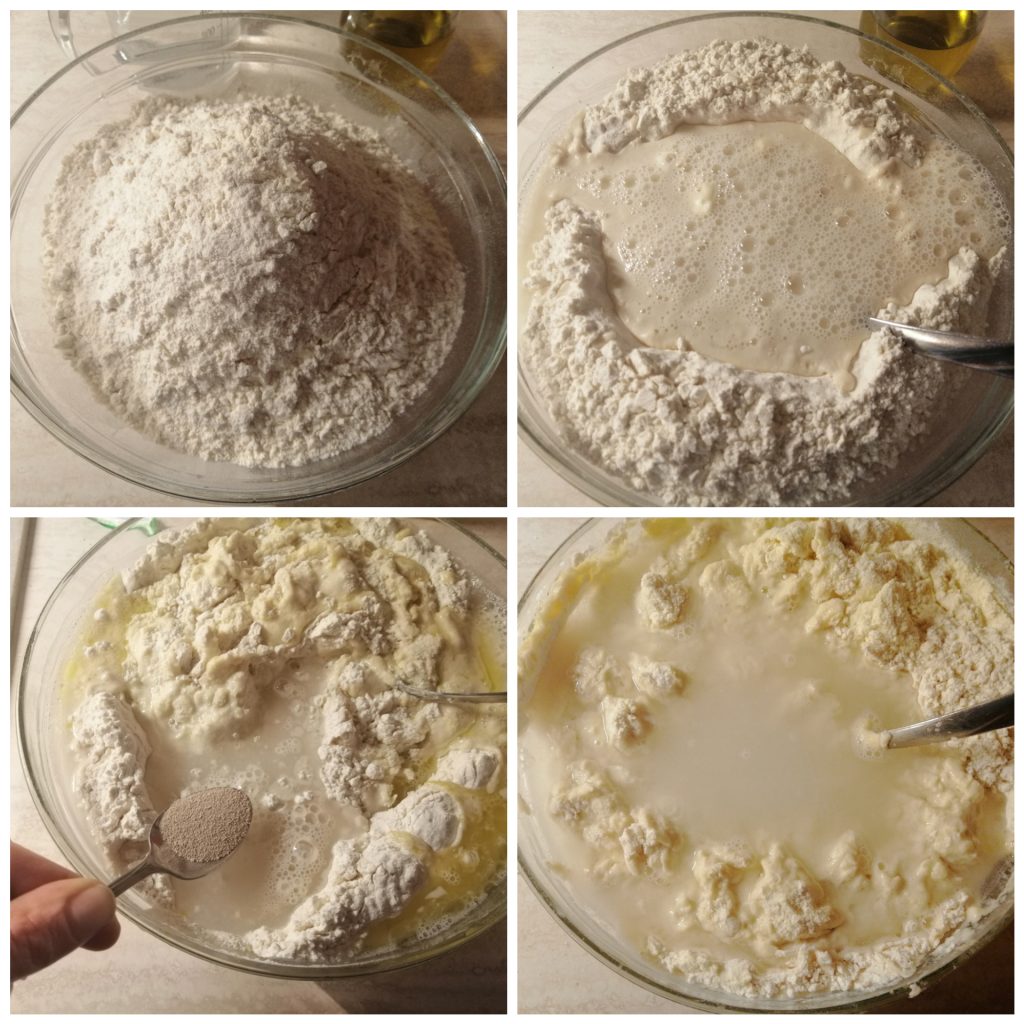
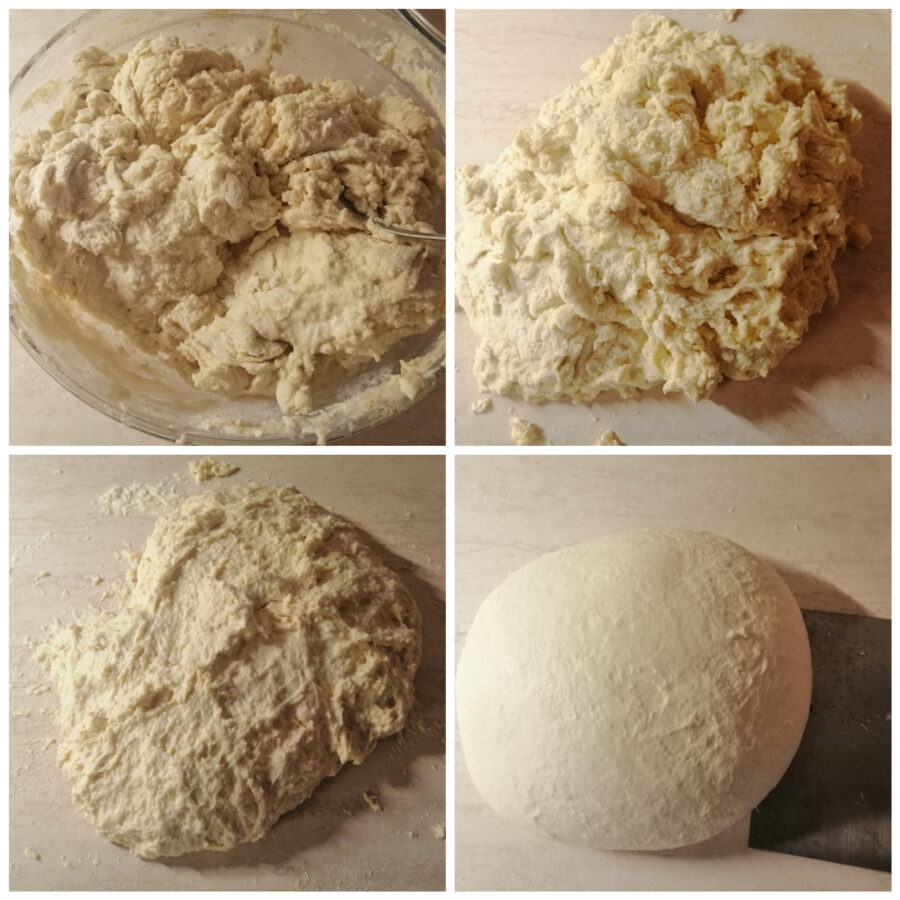
Work the dough in the bowl, then move to the work surface. The dough will appear sticky at first; do not add flour, but work vigorously for 10–15 minutes and stop only when you have formed an elastic, homogeneous, and “dry” mass that no longer tends to stick to your hands.
With a stand mixer it will take about 20 minutes.
Shape the dough into a ball (pirlatura), cover it with a kitchen towel and let it rest for 10 minutes.
After resting, flour the work surface well, stretch the dough with your hands and form a rectangle, perform letter folds (like a wallet) as in the photo and set aside covered for 10 minutes.
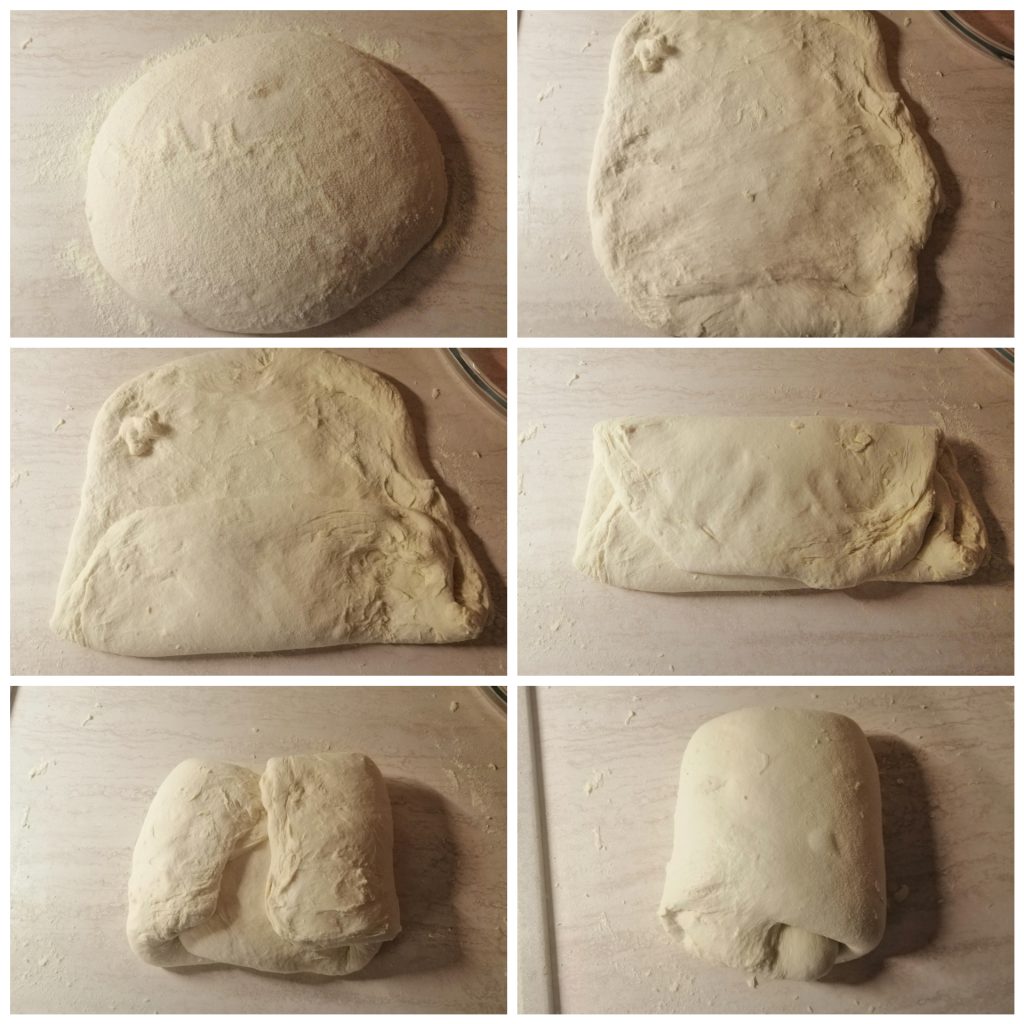
Then repeat the steps and wait another ten minutes.
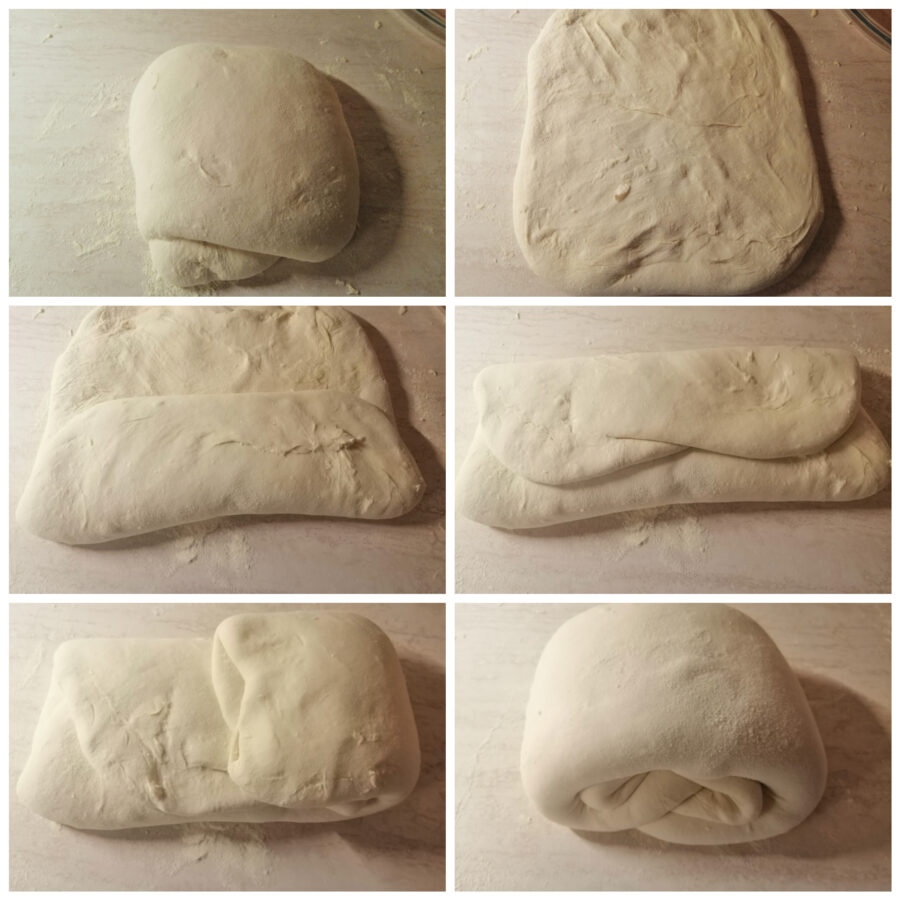
Repeat the folds one last time and place the dough in a lightly oiled, covered bowl. Leave it at room temperature for one hour, then place it in the refrigerator in the colder part for about 24 hours (mine was at about 43°F / 6°C).
But be careful: the timing is really variable, especially in summer or if you open the fridge often, so keep an eye on how the fermentation develops.
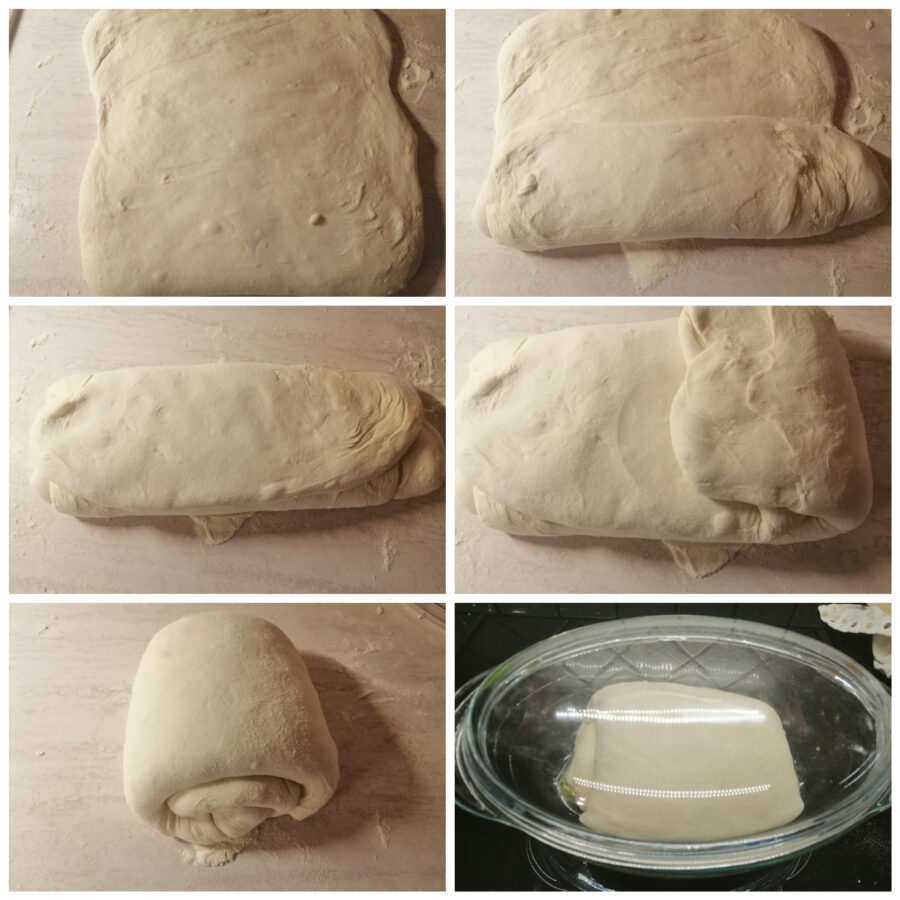
— After waiting 24 hours (but everything depends on the external temperatures and how often you open the fridge), you should have a nice, puffy dough, almost tripled in volume.
Take it out of the fridge and let it acclimate:
— for a couple of hours in the oven with the light on in winter;
— about one hour in summer.
If after 20 hours you notice the dough is still not rising, take it out of the fridge and let it rise in a warm spot.
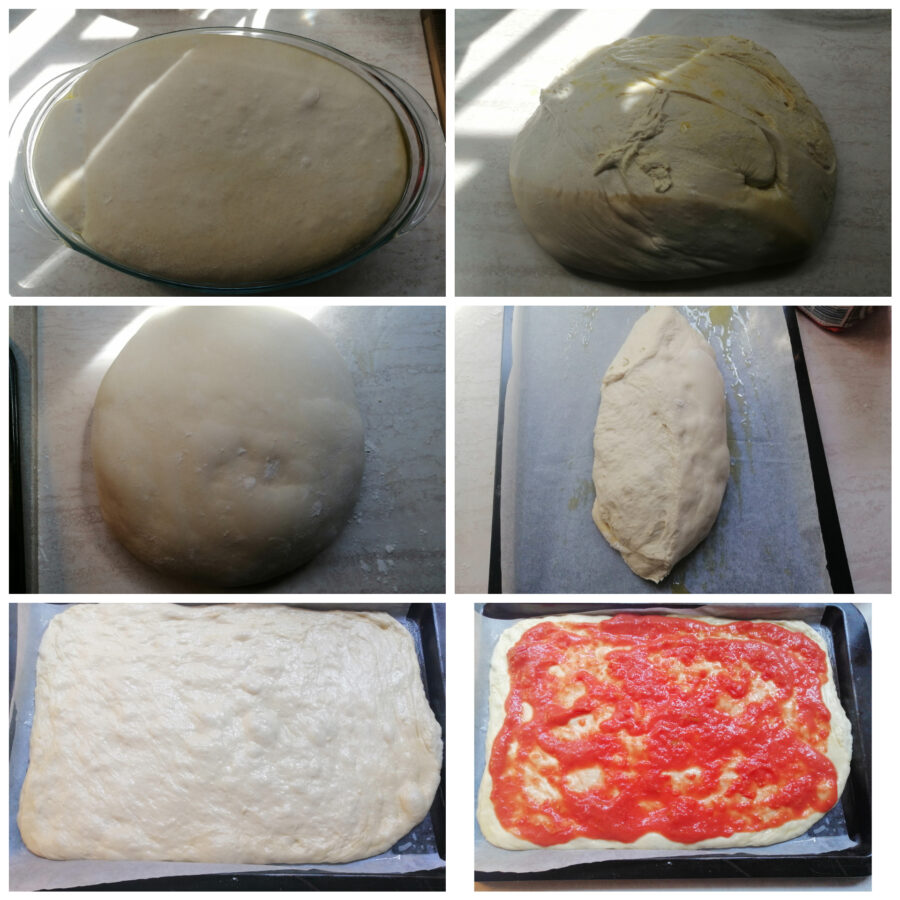
When the dough has at least doubled or tripled, turn it out onto the work surface and form a nice ball without stressing it too much — you don’t want to deflate it completely.
Divide it into two or three pieces depending on your pans; I prepared two pans of about 14 x 16 inches (35 x 40 cm) and a little dough was left over that I used to make a focaccia.
Line the baking pans with parchment paper and oil them well.
Take a piece of dough and stretch it with your hands into the pan; if it’s too elastic, let it rest ten minutes — the gluten will relax and you’ll be able to stretch it without problems.
Place the pans in the oven with the light on for about 30 minutes, then spread the tomato pulp (I blend mine) and season with salt, oregano and a pinch of sugar, give a good drizzle of oil and bake at 392°F (convection or conventional) for about 20–25 minutes.
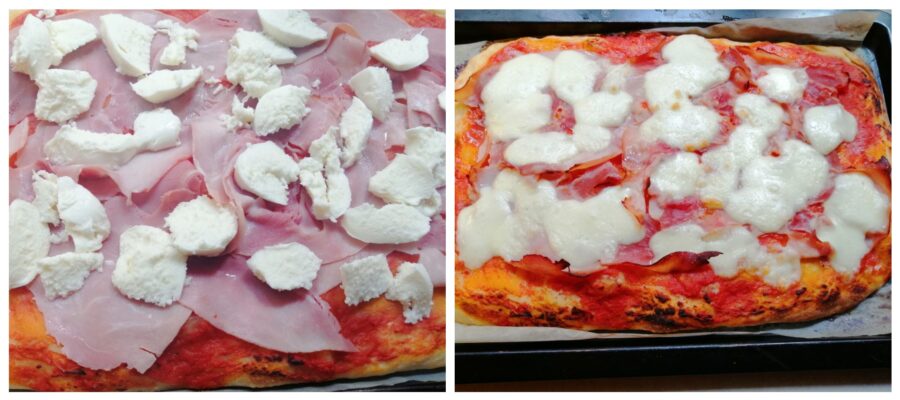
Take the pan out of the oven, top with the ingredients you prefer — I added only ham, cheese and oregano — and return to the oven to finish cooking for another ten minutes or so. If the bottom of the pizza is still pale, move it to the lower part of the oven, keeping an eye on it.
If you use ingredients that require longer cooking times, such as onions, peppers, raw sausages, or even hard-boiled eggs and mushrooms, add those immediately in the oven — distribute them over the tomato and bake.
Cheese, ham and other delicate ingredients should be added at the end of baking. If you use peas, blanch them briefly and add them at the end of cooking.
From here, you can return to the HOME and discover new recipes!