Grandma’s Easter cheese pie: a quick and very soft recipe.
Some call it pizza di Pasqua al formaggio, others know it as a cheese pie, and in the Marche region it is brought to the table as crescia di Pasqua.
It is one of the great savory leavened breads of the Central Italian Easter tradition — particularly from Umbria and Marche — and, just like other regional classics such as the tortano, the casatiello or the traditional Torta Pasqualina, it was born to celebrate festive days with rich ingredients: eggs, cheeses and long leavenings.
Prepared for Easter day and perfect also for the Easter Monday lunch, the cheese pie has always been served with cured meats, hard-boiled eggs and rustic savory pies, becoming the star of the picnic basket or the appetizer of the Easter menu, together with traditional Easter sweets.
Tall, soft and fragrant, this savory brioche encloses the whole meaning of festive cooking: waiting times, doughs prepared in advance and handed-down recipes that sit alongside other great Italian leavened breads, sweet and savory, made between Holy Week and Easter Monday.
Whether you call it torta al formaggio, pizza di Pasqua or crescia, it’s one of those flavors that announce spring and still tell the story of the festive table.
Regional variations of the Easter cheese pie:
Most widespread between Umbria and Marche, the cheese pie has numerous local variants.
In Umbria it is generally made with aged pecorino and parmesan. In the Marche it is known as crescia di Pasqua: in some areas small cubes of cheese are added to the dough,
elsewhere it is seasoned with pepper or spices.
Every family keeps its own version, just like for the tortano or casatiello or the pizza chiena of the Campanian tradition.
Want to discover more Easter recipes? Take a look:
- Difficulty: Easy
- Cost: Inexpensive
- Rest time: 4 Hours
- Preparation time: 3 Hours 30 Minutes
- Portions: 10
- Cooking methods: Oven
- Cuisine: Italian
- Seasonality: Easter Monday, Easter
Ingredients to make the Easter Cheese Pie (Pizza di Pasqua or Crescia di Pasqua)
- 4 cups type 0 flour (for long leavening)
- 6 eggs (medium)
- 7 tbsp lard
- 1 teaspoon active dry yeast (or about 0.4 oz fresh yeast)
- 1/3 cup water
- 1 2/3 tsp salt
- 1 cup grated Parmesan
- 1 cup grated Tuscan pecorino (medium-aged)
- 2 oz Parmesan (cubed, or Gruyère cubed)
- 2 oz Tuscan pecorino (cubed, medium-aged)
- to taste black pepper
- as needed egg (beaten with water or milk for finishing)
Tools
- Pan 8 2/3 in
- Stand mixer
- Oven
- Parchment paper
Steps to make the Easter cheese pie
To make the Crescia or Easter pizza, prepare the starter by mixing in a bowl 3/4 cup (about 100 g) of flour taken from the total and 1/3 cup (about 100 ml) of water, until you obtain a soft, lump-free batter.
Cover and let rest until the mixture is swollen and covered in bubbles on the surface — timing is indicative and depends on the temperature at which it is left to rest.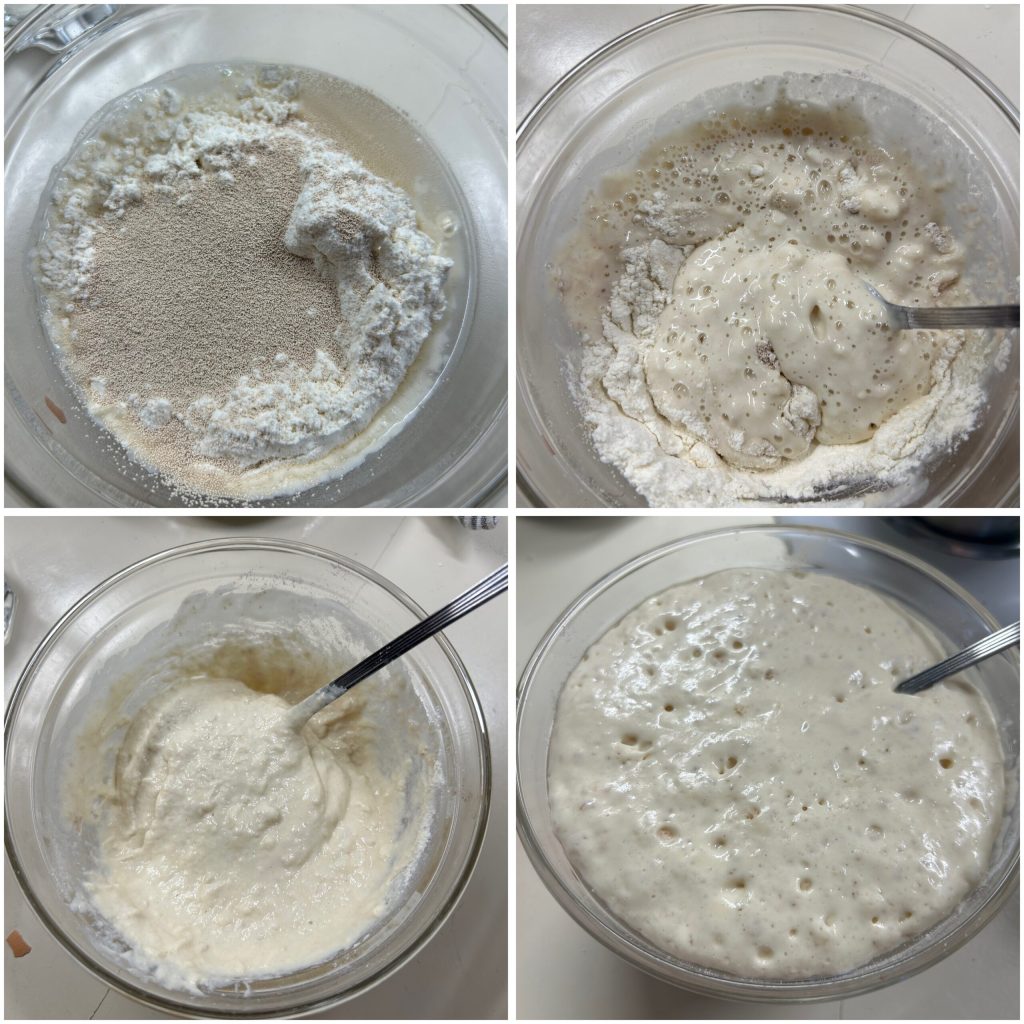
Put the eggs into the stand-mixer bowl, add the grated cheese and a grind of black pepper, then start mixing with the hook.
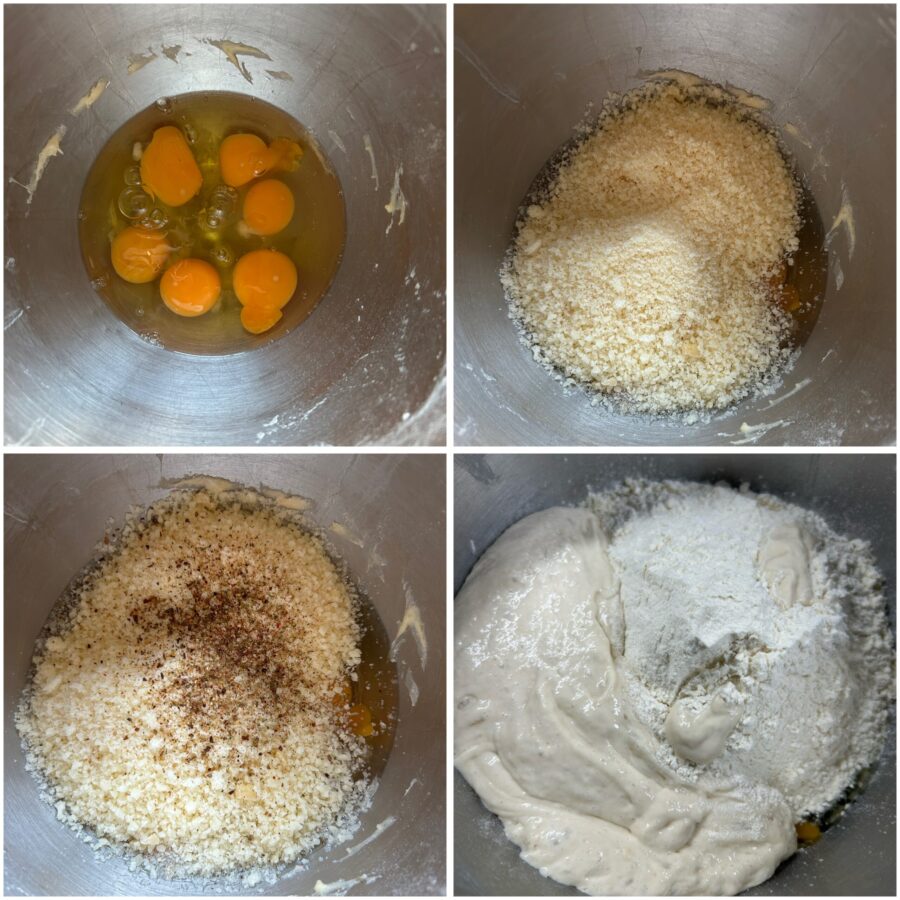
Add the starter you prepared and begin to incorporate the flour gradually, working until you get a homogeneous mixture.
Continue working until the dough is smooth and elastic and begins to come away from the sides of the bowl.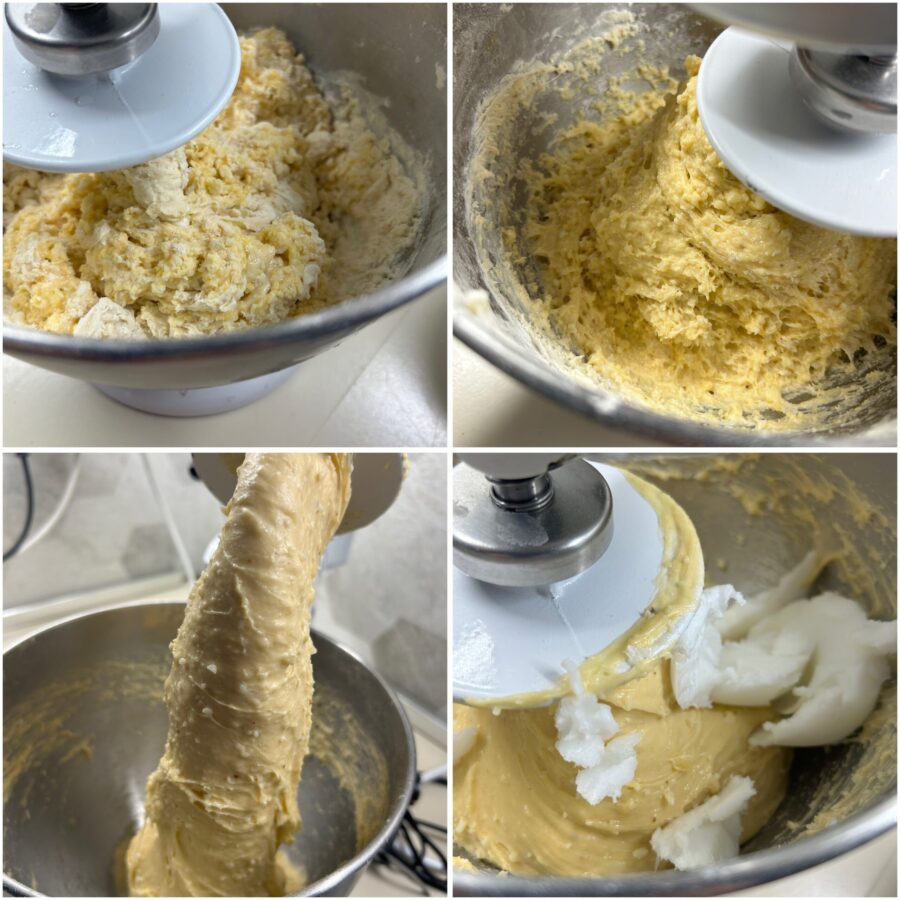
Then add the lard little by little, letting it be fully absorbed before adding more, and add the salt only at the end.
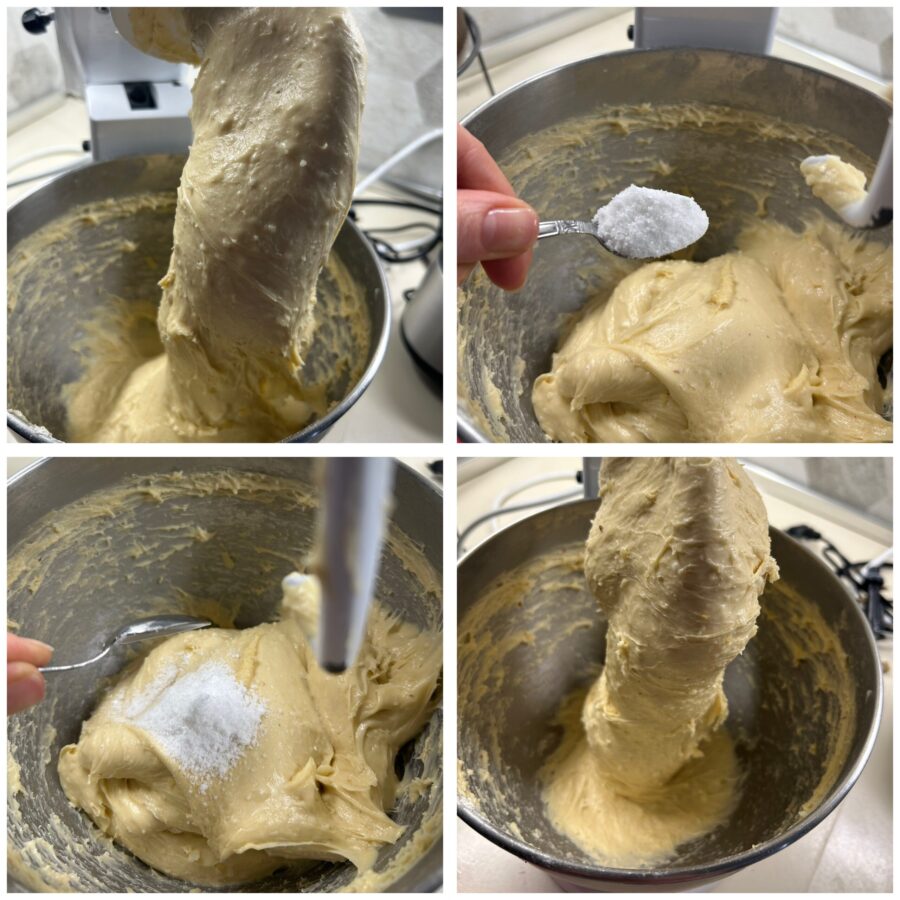
Once the salt is incorporated, transfer the dough to a work surface and shape it into a ball.
Cover and let rest for 30 minutes for a first rise.
After that time, gently stretch the dough and distribute the cheese cubes on top.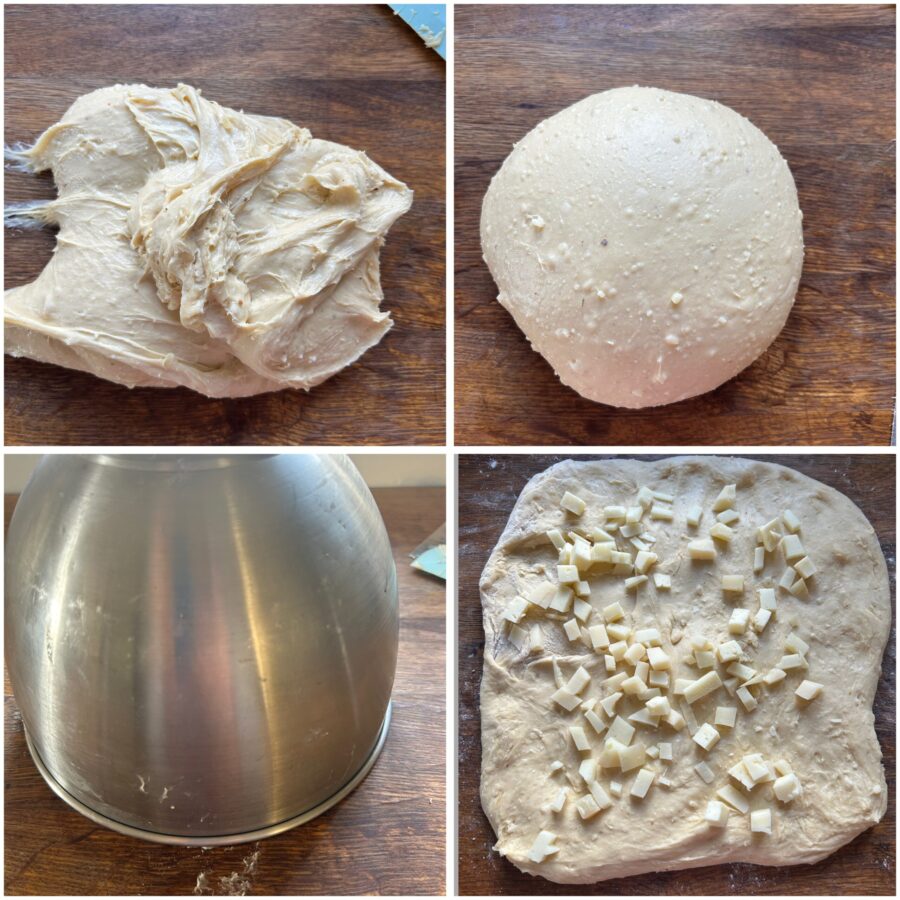
Fold the dough over itself, then round it again into a ball.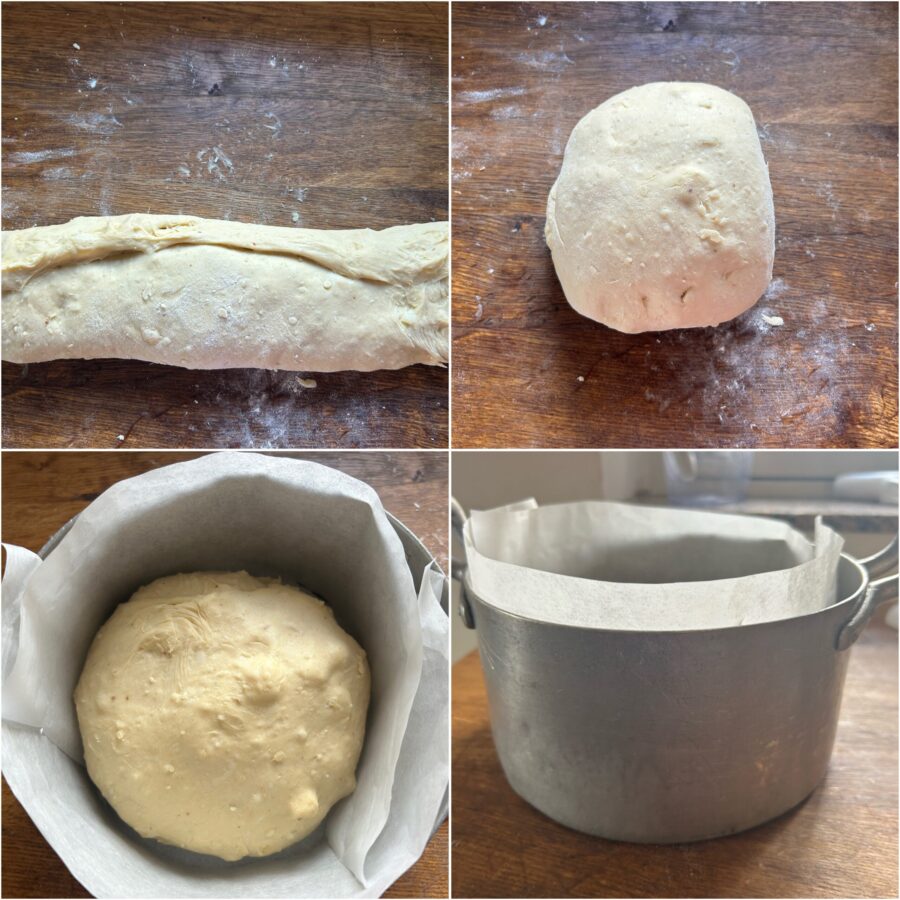
Transfer the dough into a tall pan lined with parchment paper and let it rise until tripled in volume. Times are indicative, but in a warm place it may take about 3 to 4 hours.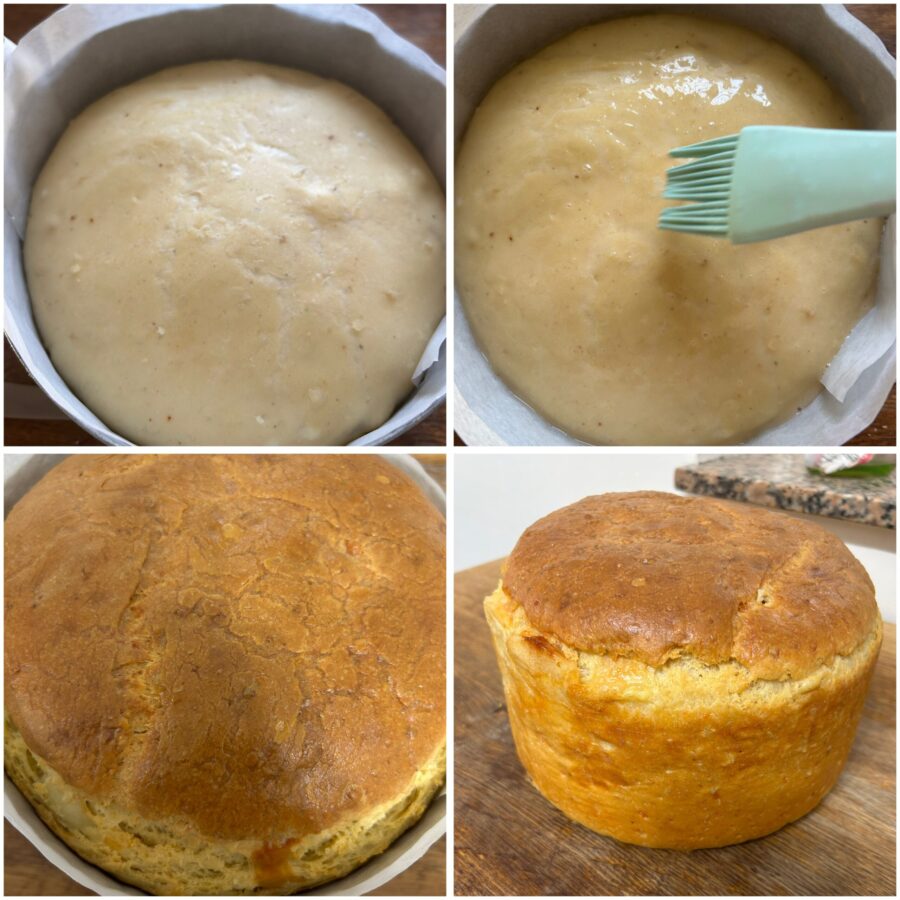
Brush the surface with an egg beaten with water or milk and bake in a preheated conventional oven at 320°F for 60 minutes.
Ideally use a kitchen thermometer and measure the internal temperature: it should not be lower than 198°F and not exceed 201°F.
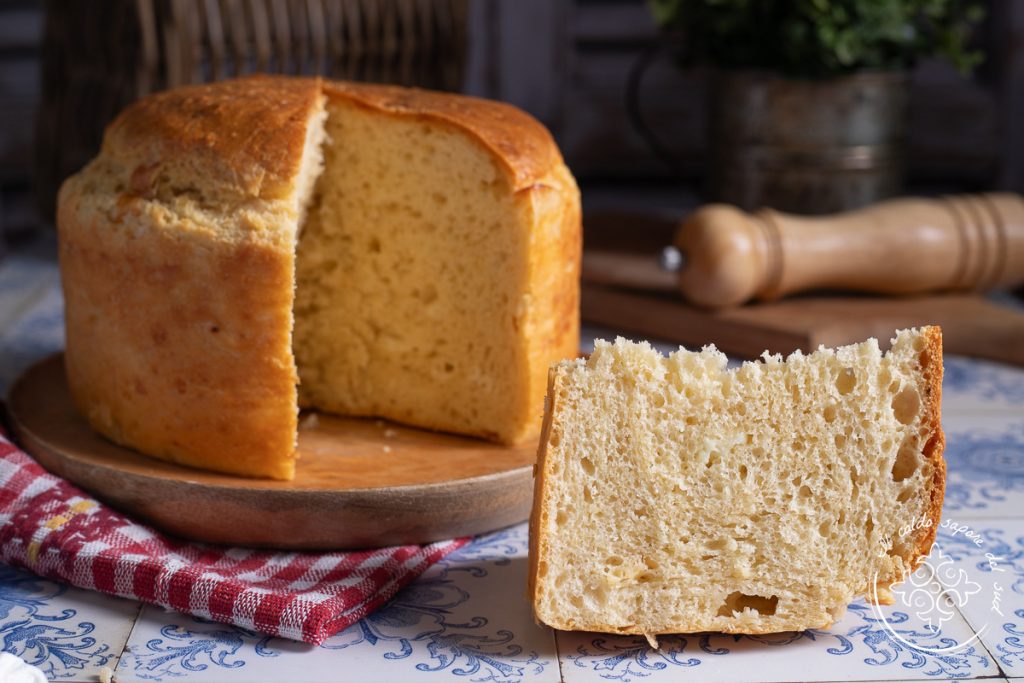
Take from the oven and let cool for 15 minutes before removing from the pan. Allow to cool completely before serving.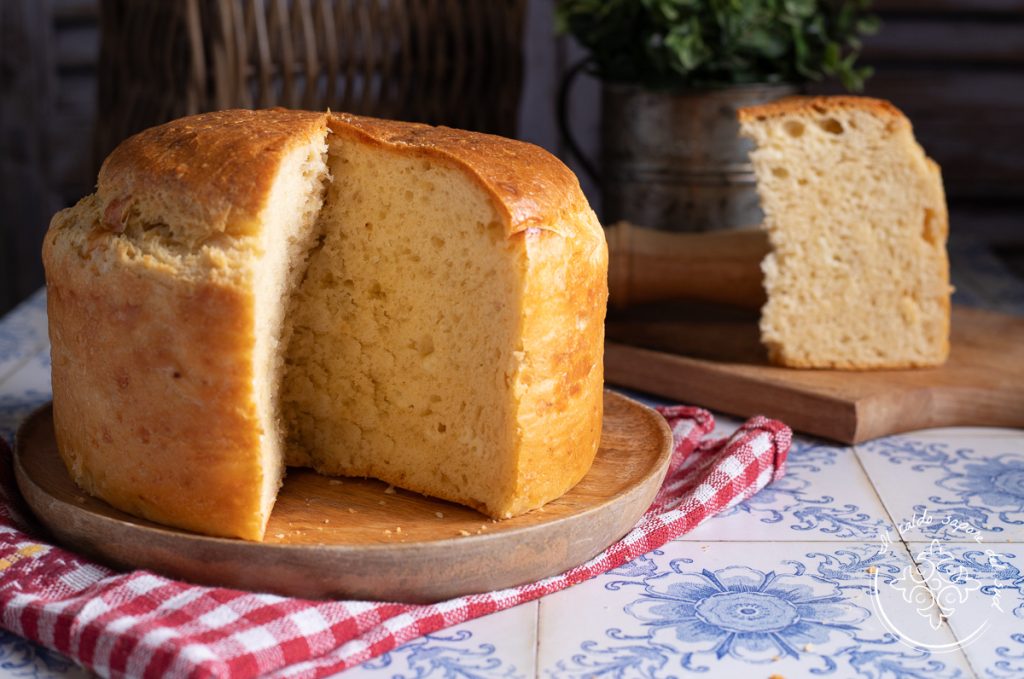
Storage notes and tips
For the best result use aged cheeses, such as pecorino and Parmesan: they give the Easter cheese pie an intense aroma and a drier structure.
If you prefer, you can replace part of the pecorino with other hard cheeses, according to family tradition or regional variant (Umbrian cheese pie or Marchigiana crescia di Pasqua).
Cheese cubes can be added in larger quantities to obtain a richer, more flavorful interior.
It is important to work the dough until it is smooth and elastic: this step allows the cheese pie to rise in height during fermentation and baking.
The pan should be tall and narrow: you can use a panettone mold or a classic aluminum pan lined with parchment paper or a suitably sized ovenproof pot.
The Easter cheese pie can be prepared the day before: resting improves its aroma and texture.
Once baked and completely cooled, it keeps for 2–3 days stored well sealed in a food bag.
Before serving, you can briefly warm the slices in the oven to enhance the aroma.
If you want to keep up with my recipes, follow me also on:
pinterest; X, you tube and tiktok.
Frequently Asked Questions
When is the cheese pie eaten?
The cheese pie is traditionally eaten for breakfast on Easter morning, as an appetizer at the Easter lunch, during the Easter Monday picnic,
and on the Easter menu alongside cured meats, hard-boiled eggs and rustic pies.
It is one of the most beloved savory leavened breads of the Easter period and is often prepared on Good Friday or Holy Saturday to be enjoyed during the holidays.Can it be prepared in advance?
Yes, the Easter cheese pie can be prepared the day before.
Resting helps develop aromas and flavors, making it even tastier the next day.How do you store the cheese pie?
Once baked and completely cooled, it keeps for 2–3 days at room temperature if well sealed in a food bag or wrapped in cling film.
Can the Easter cheese pie be frozen?
Yes, it can be frozen after baking and once completely cooled.
To eat, let it thaw at room temperature and briefly warm it in the oven. Unfortunately the texture will change and it may become a bit crumbly.Which pan should be used for the Easter cheese pie?
It is advisable to use a tall and narrow pan, such as a panettone mold or an aluminum pan lined with parchment paper.
This allows the dough to develop in height during leavening.What to serve with the Easter cheese pie?
It is traditionally served with mixed cured meats, hard-boiled eggs and fresh cheeses, and is often included in the Easter menu or the picnic basket for Easter Monday.
Can the Easter cheese pie be made with sourdough?
Yes, the Easter cheese pie can also be prepared with sourdough, as is traditional in many areas of Umbria and Marche.
In that case you can replace the baker’s yeast with about 150 g of refreshed sourdough, proportionally reducing the amounts of flour and liquids in the recipe.
Proofing times will be longer: the dough must rise until doubled both in the first phase and after shaping in the pan. For this reason it is advisable to prepare it the day before Easter, to obtain a more digestible and fragrant result.