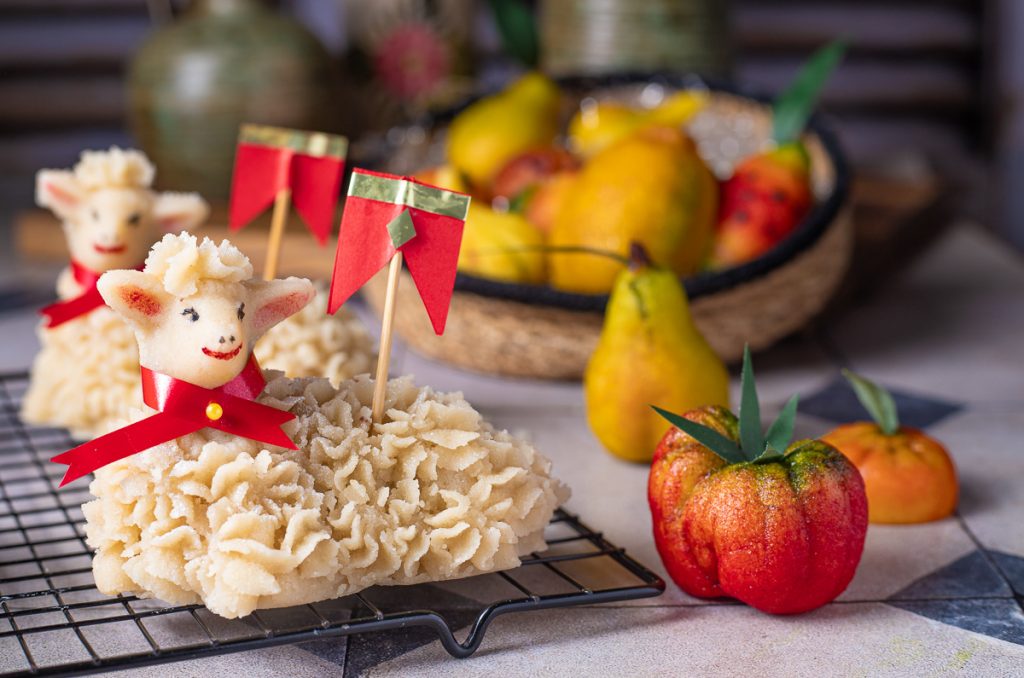
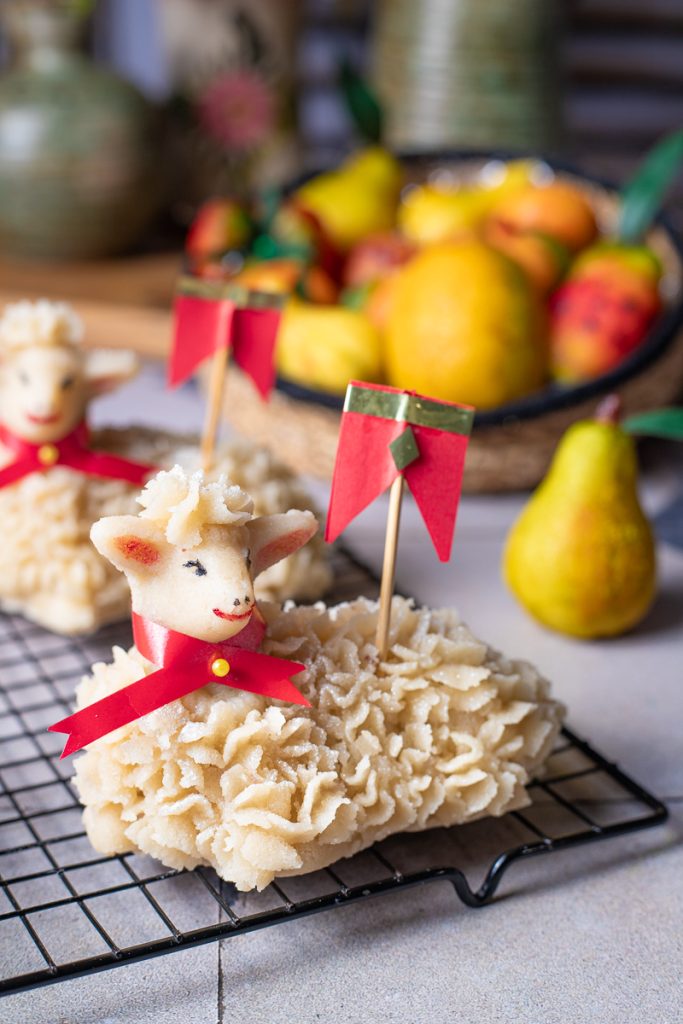
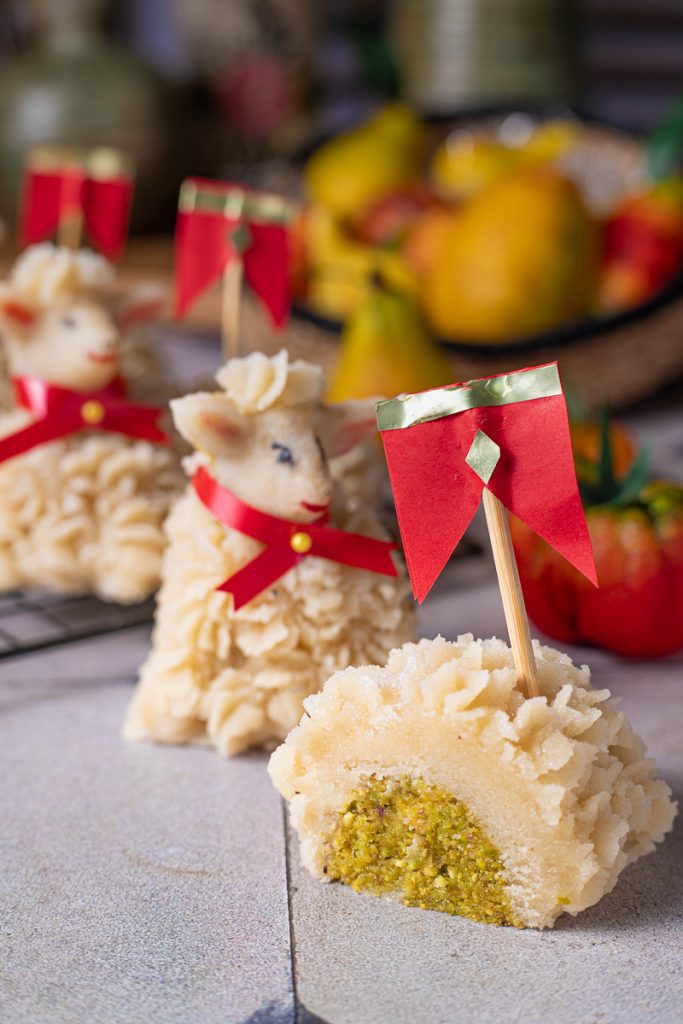
Easter Lamb of Favara, a traditional recipe of Sicilian cuisine. The Easter Lamb of Favara is a typical Sicilian Easter sweet, a well-known and appreciated recipe and a richer, more sumptuous variant of the classic marzipan or martorana lamb, from which it differs both in appearance and in the delicious pistachio paste filling. This small masterpiece of pastry art, like many other sweet delicacies from all over Sicily, is the fruit of convent pastry traditions, destined for the tables of the aristocracy and high clergy at Easter or other important festivities, just like the Sicilian cassata, frutta martorana, ricotta cannoli, cassatelle or minnuzze, olivette and much more.
Let’s go to the kitchen now and discover how to make the Easter Lamb of Favara. But first, if you want to stay updated on my recipes you can follow my Facebook page (here) and my Instagram profile (here) and find many more in my book “Sicily on the Table”.
Also check these other Sicilian dessert recipes:
- Difficulty: Difficult
- Cost: Medium
- Rest time: 1 Day
- Preparation time: 2 Hours
- Portions: 5 pieces
- Cooking methods: No-bake
- Cuisine: Italian
- Seasonality: Spring, Easter
Ingredients to make the Favara lamb
- 5 1/4 cups almond flour
- 4 1/6 cups powdered sugar (confectioners' sugar), pure, without cornstarch
- 5 1/3 tbsp glucose syrup
- 5 drops almond extract
- 2 drops vanilla extract
- 1/4 cup water
- 2 cups pistachios (shelled, unsalted)
- 1 1/4 cups granulated sugar
- 2 2/3 tbsp glucose syrup
- 2 tbsp water
- as needed food coloring
- as needed cornstarch (for the molds)
Tools
- Mold
- Piping bag
- Star tips
- Bowls
- Brushes
Preparation
For this recipe you will need pure powdered sugar without cornstarch; I therefore recommend making it at home with a good blender. I use a Smoothie Maker.
To make the marzipan lamb you could also use the hot method used for the marzipan for cassatelle or minnuzze, which is done without glucose, but I don’t recommend it because marzipan tends to dry out and become hard.
This quantity yields 4 lambs with a 200 g base each, plus the weight of the marzipan curls.
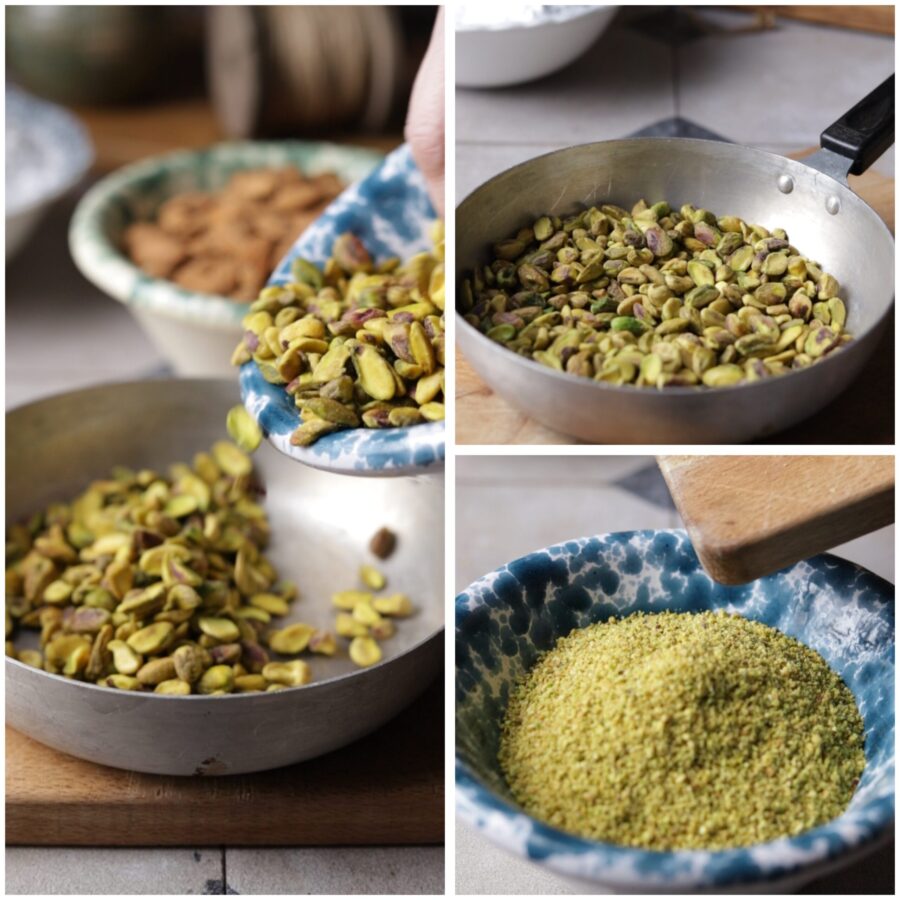
Before starting the actual preparation of the lamb, I recommend preparing the pistachio flour that will be used for the pistachio paste. After purchasing them, strictly unsalted, place them in a pan and toast them, stirring often, until you smell the characteristic aroma of toasted nuts—do not burn them; you should only let them lightly brown (I do not peel them; I leave the skin for a more intense flavor).
Alternatively, bake them at 320°F in an air fryer for 5 minutes or for a little longer in the oven, without increasing the temperature. Let them cool and grind them finely with a food processor such as a Bimby or with the same blender mentioned above.
Let’s move on to the doughs, starting with the marzipan. Once the sugar is prepared, mix it together with the almond flour, add the glucose syrup—this will help keep the marzipan soft—then the flavorings and the water.
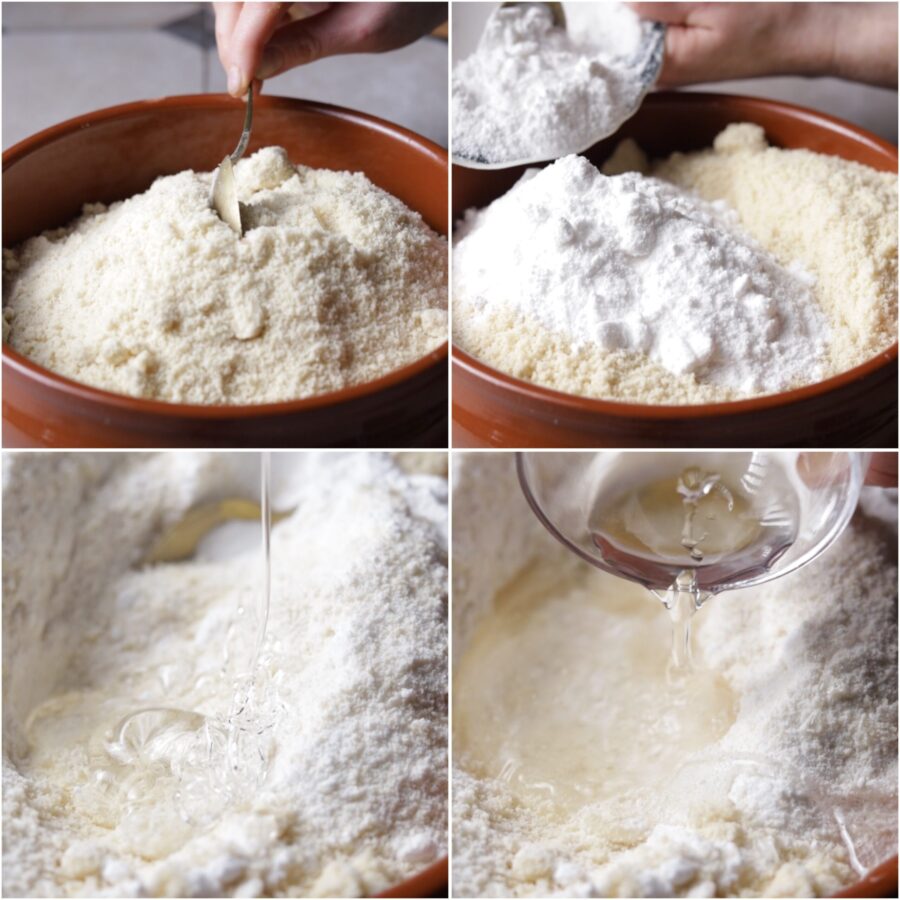
Mix everything and then begin working vigorously with your hands so that the almond flour releases its oil and the sugar dissolving makes the mass more workable. Do not add more water; knead until you obtain a plastic, moldable dough. The procedure for the pistachio paste is the same:
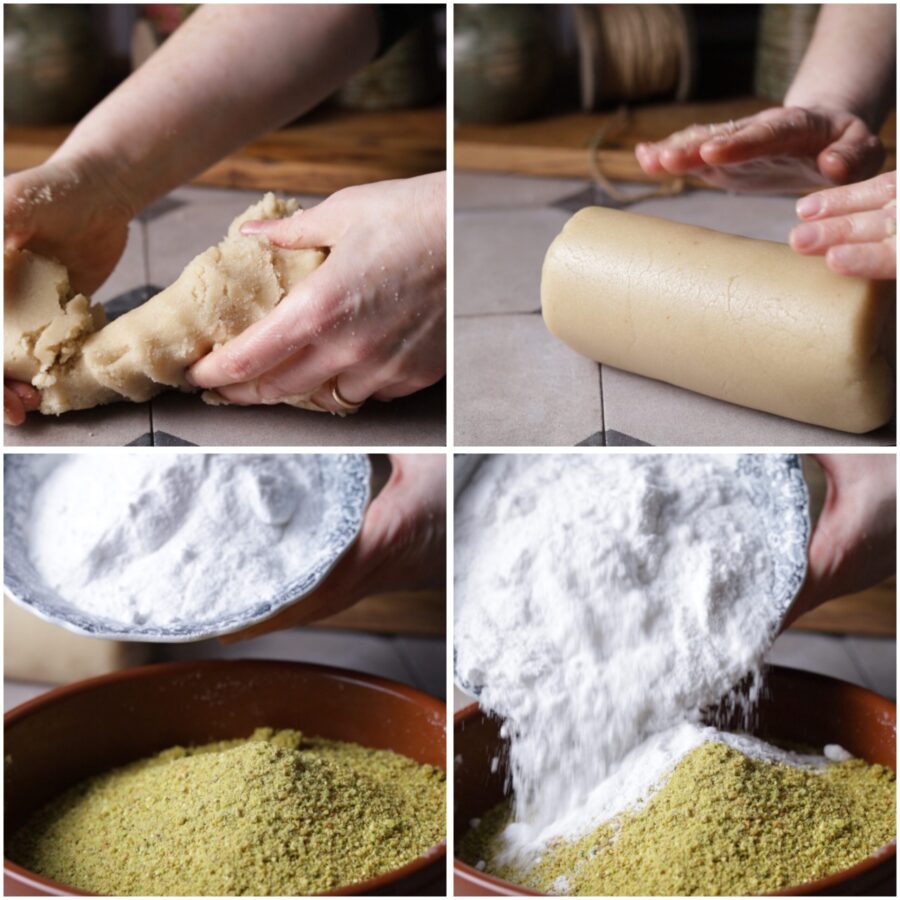
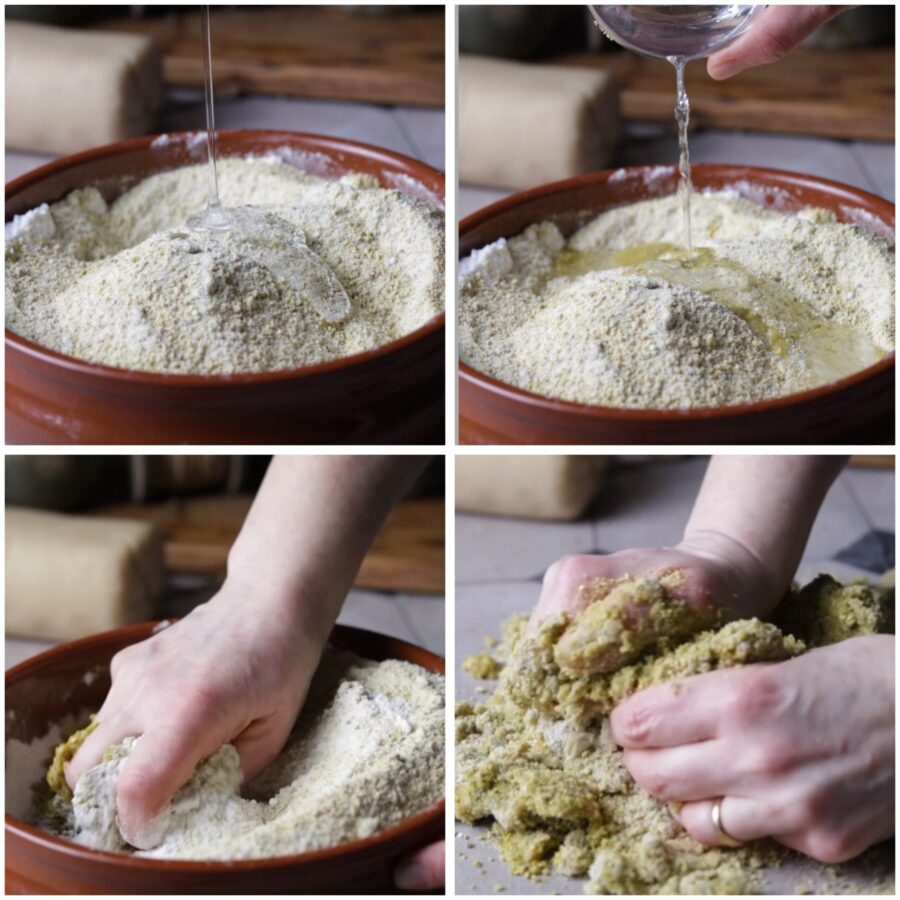
mix sugar and pistachio flour, add glucose and water and work the mixture.
It’s time to form the lambs with the molds: brush both halves generously with cornstarch, roll a cord from a piece of marzipan and lay it in the mold, shaping it to fill it completely and form a rather roomy cavity.
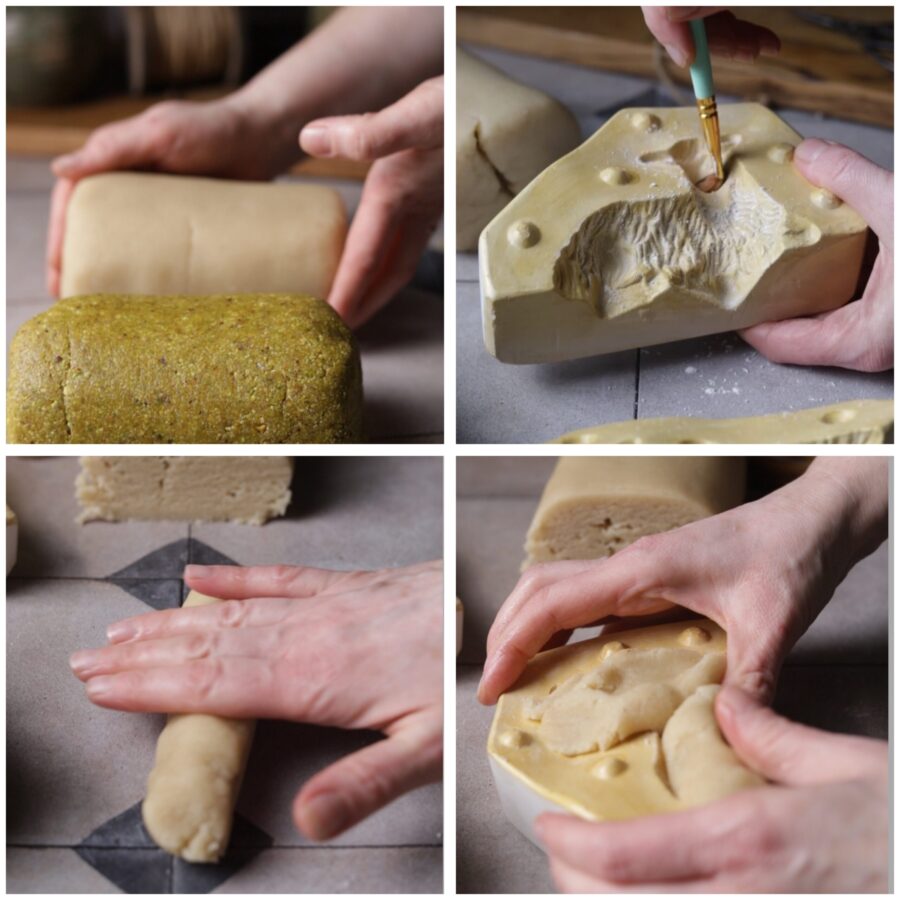
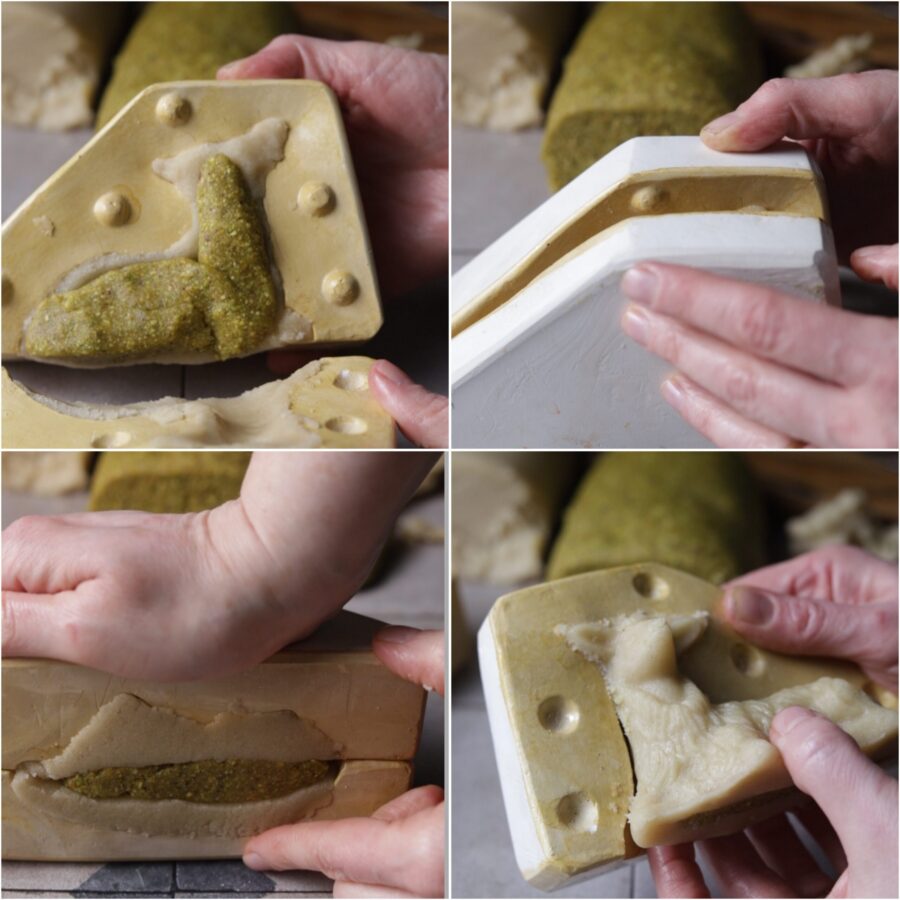
along the entire “L” shape that forms the lamb’s body. Roll a cord also with the pistachio paste and lay it in the cavity, without pressing it down. Shape the second half of the lamb in the same way as the first,
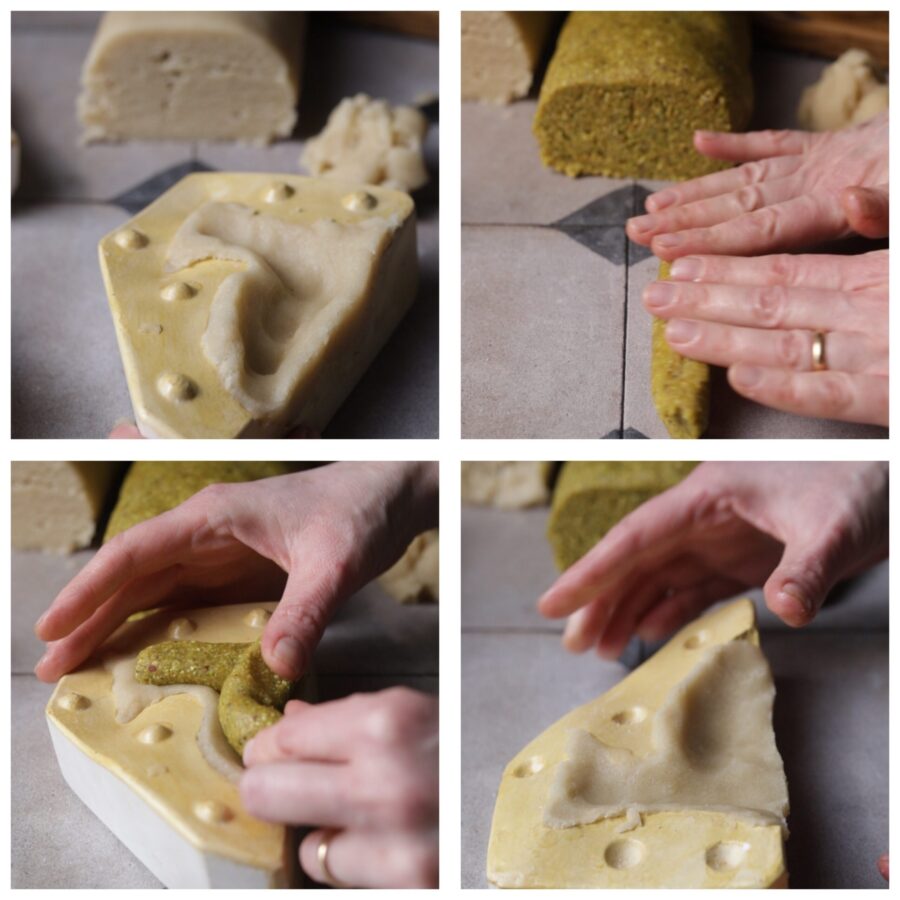
let the two halves meet and press well so that no gaps remain; press also on the base and unmold the lamb.
Remove the excess dough with the tip of a knife and prepare the curls: crumble about 1 1/2 cups (about 5.3 oz) of marzipan with your fingers, gather it in a bowl and add a little water—just enough to obtain a soft but not too loose mixture. Fill a piping bag fitted with a star tip with the mixture and decorate each lamb with little rosettes of marzipan.
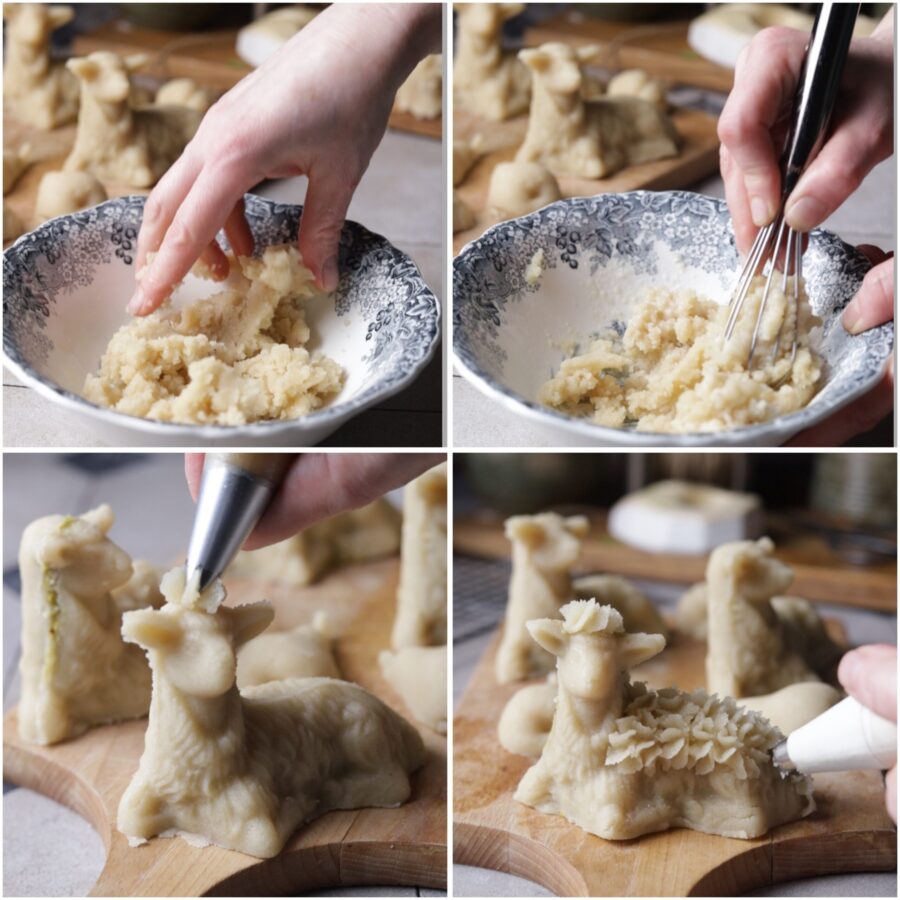
Let them air-dry for 24 hours before proceeding with decoration.
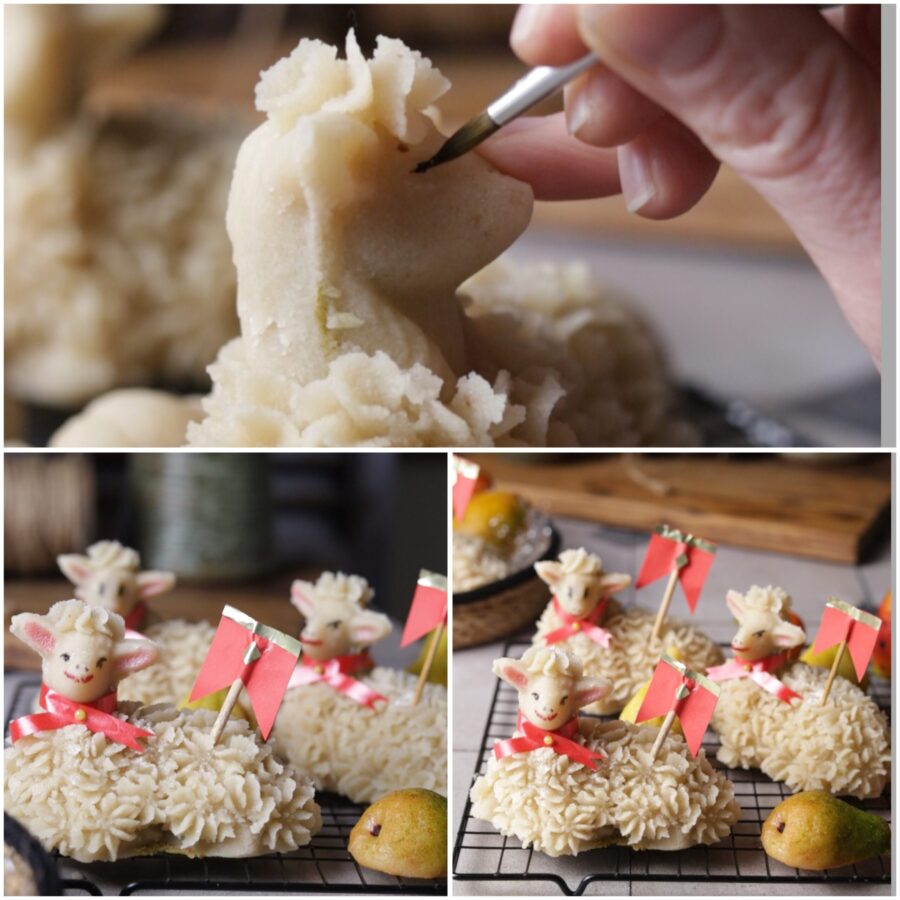
Then finish with the trimmings (I made mine at home with red and gold paper and wooden skewers used for spring rolls, trimmed) and red ribbons.
You could replace the glucose with orange blossom honey, but I don’t recommend it. Using glucose syrup the marzipan will stay soft longer and you won’t get the overpowering taste of honey, which could mask the aroma of the almonds.
To store the Favara Easter lamb, before packing in the appropriate cellophane baskets, give it a light spritz of liqueur suitable for sweets.
Marzipan keeps for several months, but I suggest enjoying it within a month so that the flavor doesn’t deteriorate. You can gift the lamb together with frutta martorana.
If you want to stay updated on my recipes, follow me also on:
Pinterest; X, YouTube and TikTok.
From here, you can return to the HOME and discover new recipes!