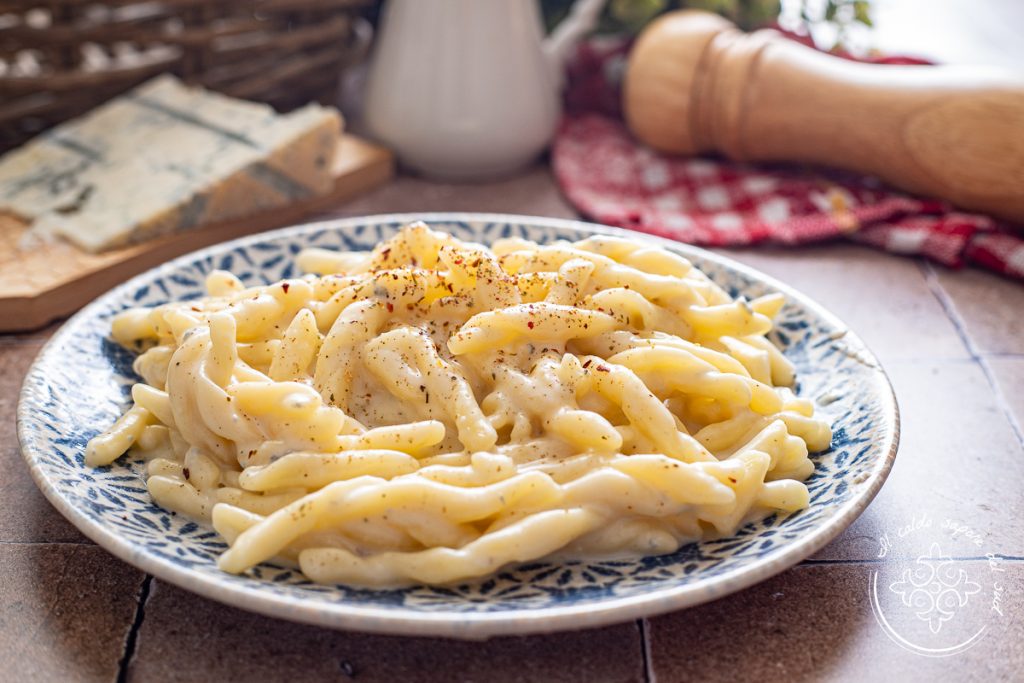
The creamy four-cheese pasta without cream is one of those quick and economical first courses that don’t need reinventing, just to be made well. It’s a typical Italian first course, as famous as Pasta alla carbonara, amatriciana or puttanesca, and just as delicious. The four-cheese pasta is much searched for because it promises creaminess, flavor and immediacy, but is often weighed down by too much cream or cheeses combined without balance. In this cream-free version the four-cheese sauce starts from warm milk, which welcomes the cheeses one at a time and lets them melt slowly, creating a smooth, uniform cream that naturally binds to the pasta, also great on pizzas, bread, tasty crostini and bruschette..
The spicy gorgonzola is the first to melt, giving character to the base. Taleggio softens the flavor, fontina builds the structure, while Parmesan completes the cream and makes it rounder. It’s the same balance you find in preparations like four-cheese pinsa, where each cheese has a precise role. Black pepper, added at the end, only gives depth without covering the cheeses’ taste.
The original four-cheese pasta recipe doesn’t belong to a specific regional tradition but was born in home kitchens, especially in Northern Italy, where melting cheeses with milk was a simple and direct way to dress pasta. Similar preparations are found in dishes like oven-gratinated four-cheese risotto, where cheese fusion is central to the recipe. Over time, however, four-cheese has become a classic of Italian and Mediterranean and contemporary vegetarian cooking, even if prepared in a thousand different ways. In our version, we avoid shortcuts and work on timing and temperature, because those are what make the difference in the final result.
The preparation begins by heating the milk over low heat, without bringing it to a boil. When it is warm, add the spicy gorgonzola cut into cubes, stirring until it starts to melt. At that point add the taleggio and the fontina, always little by little, continuing to stir over low heat until you obtain a smooth cream. Only at the end is the Parmesan incorporated, which binds and stabilizes the sauce. A grind of black pepper finishes the base.
The pasta, cooked al dente, is mixed directly into the pot with the four-cheese cream and gently tossed. If needed, add a little cooking water to adjust the consistency. The sauce should coat the pasta, not overwhelm it. Let’s go to the kitchen — I’ll show you the step-by-step recipe, but before we start cooking I remind you that if you want to stay updated on new recipes you can follow my Facebook page (here) and my Instagram profile (here).
If you love cheese recipes, here are a few more tasty ideas:
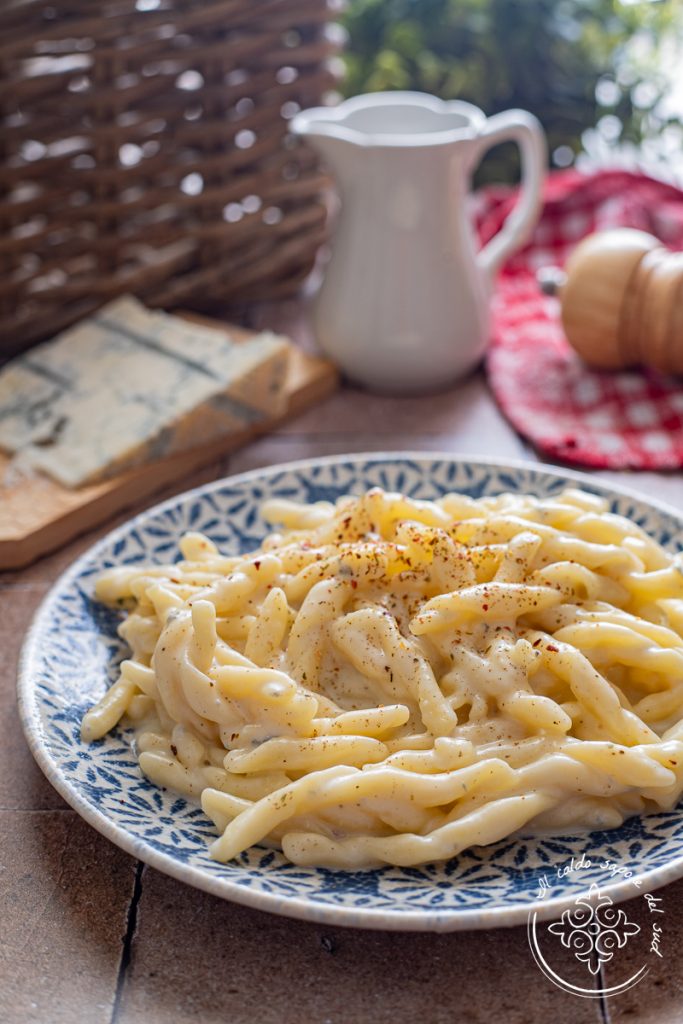
- Difficulty: Very easy
- Cost: Very inexpensive
- Preparation time: 10 Minutes
- Portions: 4
- Cooking methods: Stovetop
- Cuisine: Italian
- Seasonality: All seasons
Ingredients to make four-cheese pasta
- 18 oz fresh pasta (or 13 oz dried)
- 1 cup milk
- 3.5 oz gorgonzola (spicy)
- 3.5 oz fontina (or Emmental)
- 3.5 oz Taleggio (or another soft cheese)
- 2.5 oz Parmesan (or Grana)
- to taste black pepper
- to taste salt (only for the pasta water)
Tools
- Pots
- Whisk
- Stovetop
Preparation of four-cheese pasta
To make four-cheese pasta, cut the cheeses into regular cubes. The gorgonzola, fontina and taleggio should be prepared before you start cooking, so they are ready to be added one by one. This step is important to ensure even melting and a smooth, lump-free cream.
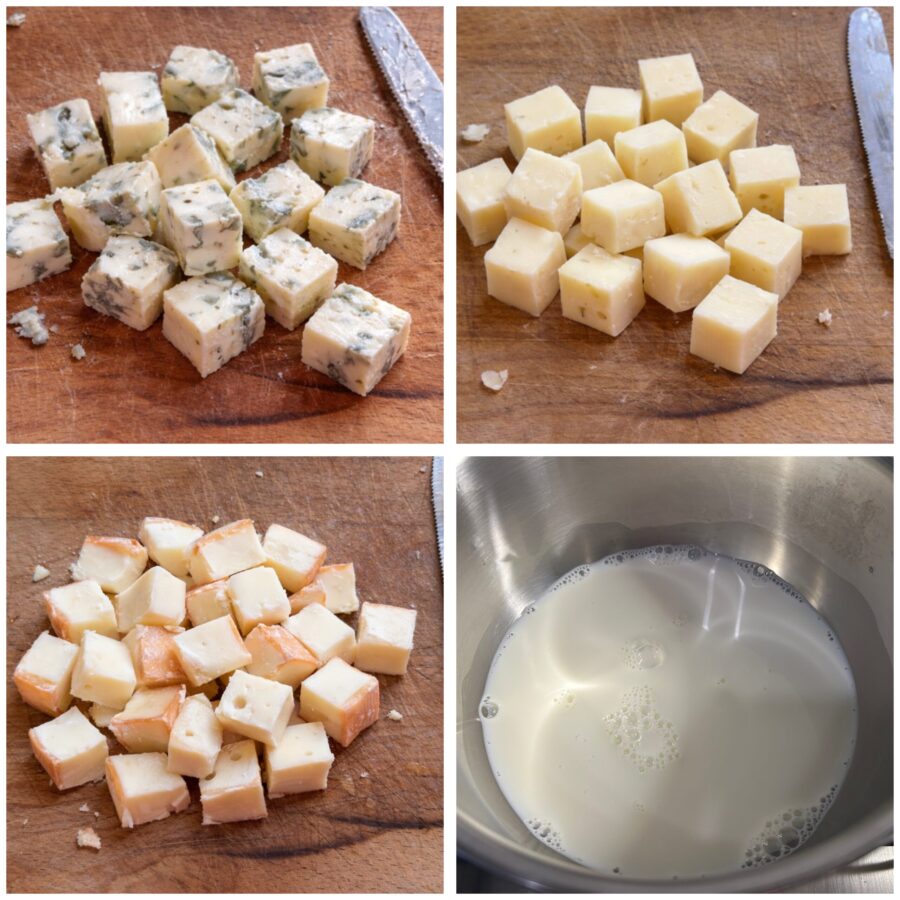
Pour the milk into a large saucepan and place it over low heat. The milk should warm slowly without reaching a boil. When it is warm, add the gorgonzola cubes and let them soften for a moment before you start stirring.
With a whisk, stir gently, keeping the heat low, until the gorgonzola begins to melt and the milk becomes slightly thicker and fragrant.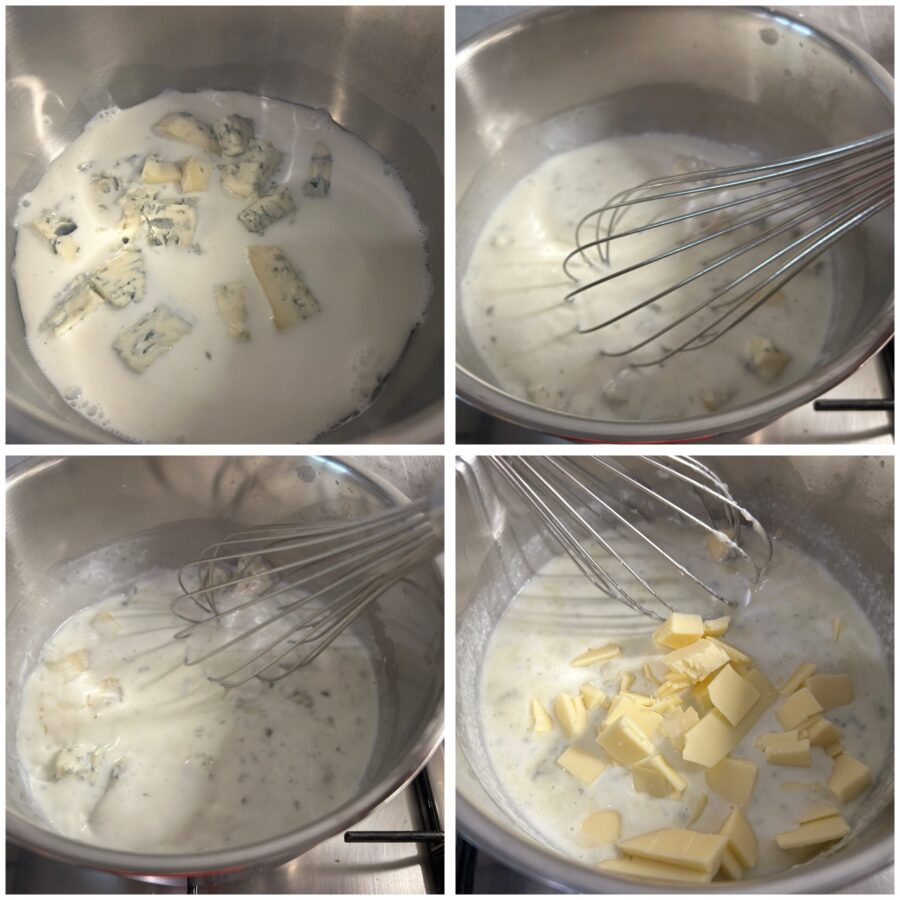
Add the fontina and the taleggio cubes little by little, continuing to stir with the whisk. The cheeses should melt gradually, without rushing, until you obtain a smooth and homogeneous cream.
Finally add the grated Parmesan and stir again until you have a uniform mixture where the cheese has blended with the milk. Finish with a grind of black pepper and turn off the heat.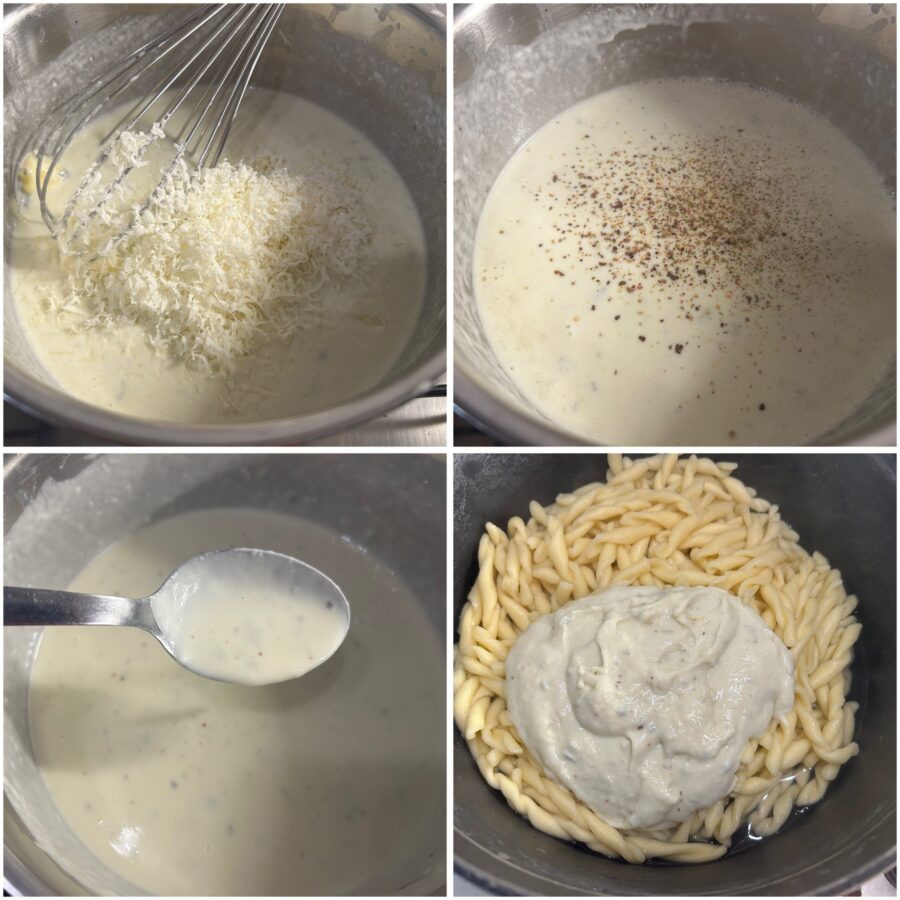
The four-cheese cream is ready when it coats the spoon and slides slowly, remaining fluid and enveloping. If it appears too runny, know that it will thicken a bit as it cools.
Use it to dress your pasta and enjoy!
Storage notes and tips
Four-cheese pasta should be enjoyed immediately, as soon as it is tossed, when the cream is still soft and enveloping. As it cools, the cheeses tend to firm up and the sauce loses some of its natural fluidity.
If there are leftovers, you can store them in the refrigerator for one day in an airtight container. When reheating, add a few tablespoons of milk and warm very gently on the stove or in a pan, stirring often to bring the cream back to the right consistency. The cheese cream keeps in the fridge, in an airtight container, up to 3 days,
For a perfect result it is important to keep the heat always low while preparing the sauce: the cheeses must melt slowly, never boiling. The size of the cubes is also fundamental, because uniformly cut cheeses melt more evenly.
Adjust the pepper only at the end and in moderation so it perfumes the cream without covering the cheeses’ flavor. If you prefer a milder taste, you can slightly reduce the gorgonzola or choose a less spicy version, keeping the method unchanged.
If you want to stay updated on my recipes, follow me on:
Pinterest, YouTube, Twitter and TikTok.
From here, you can return to the HOME and discover new recipes!
FAQ (Questions and Answers)
Can four-cheese pasta be made without cream?Yes, four-cheese pasta can be made without cream. In this version, creaminess is achieved by working the cheeses over low heat with milk and tossing with the hot pasta so that the cheeses’ natural fats bind properly.
What is the secret to a smooth, lump-free four-cheese sauce?
The secret is temperature. Cheeses must be melted slowly, never bringing the mixture to a boil, while stirring constantly. Gradual addition of the more aged cheeses also helps achieve an even consistency.
Which pasta shapes are best for four-cheese pasta?
Short shapes that hold the sauce well are ideal, such as fusilli, cavatelli or strozzapreti. Their surface allows the cream to cling better, making the dish more balanced.Can four-cheese pasta be prepared in advance?
It is preferable to eat it freshly made. If necessary, the sauce can be prepared shortly beforehand and kept warm, adding a tablespoon of cooking water when tossing to restore the right consistency.
How do you adjust the final flavor of four-cheese pasta?
Black pepper should be added at the end, in moderation, so as not to cover the cheeses’ flavor. Salt should also be dosed carefully because the cheeses already provide natural saltiness.
What other cheeses can I use for four-cheese pasta?
Four-cheese pasta can be customized by choosing cheeses with different characteristics to maintain balance and creaminess. You can replace one of the cheeses with another soft or semi-hard cheese, such as Asiago, mild caciocavallo, mild provolone or toma, then adjust the final flavor. The important thing is to balance a more intense cheese with milder ones, avoiding too many very aged cheeses.