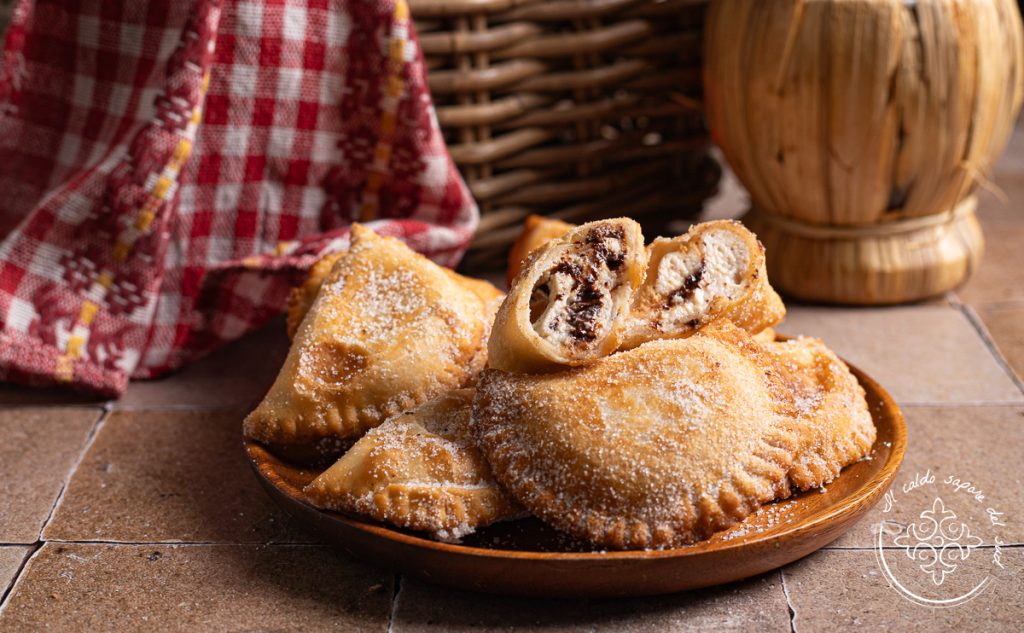
Fried Ricotta Cassatelle, the Sicilian recipe for Carnival treats and more. In Sicilian cuisine, cassatelle are not a single pastry but a broad family of preparations that vary in shape, dough and filling from one area to another. They range from Minnuzze di Sant’Agata, also known as Sant’Agata’s cassatelle, to the cassatelle of Agira filled with cocoa, and to the more common oven-baked ricotta cassatelle.
Among all these versions, the fried ricotta cassatelle are one of the most beloved and recognizable preparations, symbolizing home cooking and festive occasions, and are a classic example of ricotta-based Sicilian sweets, like the classic cassata or the baked version. Each area of the island preserves its own interpretation, passed down over time through simple gestures and family recipes.
In some places very similar pastries are called raviole di ricotta: the Catania versions are famous, both fried and baked, and there are variations made with a red wine dough, filled with fresh ricotta and mosto cotto, with a dark color and intense aroma. Although similar in shape to cassatelle, raviole have their own identity and are particularly tied to the tradition of eastern Sicily.
Among the best-known variants are also the ricotta cassatelle from Castellammare del Golfo, typical of western Sicily, which can be fried or baked and are considered one of the signature desserts of the Trapani area.
It is this very tradition that inspired today’s recipe: fried ricotta cassatelle, simple, fragrant and deeply rooted in Sicilian cooking.
This mosaic of pastries tells the story of island cuisine well: few ingredients, ancient gestures and endless local nuances. The name changes, the filling changes, but the spirit remains: a homemade pastry tied to festivities and moments of sharing.
Ready to make them together? Let’s head to the kitchen, but before we start cooking, remember that if you want to stay updated on new recipes you can follow my Facebook page (here) and my Instagram profile (here).
Also check out these typical Sicilian sweets:
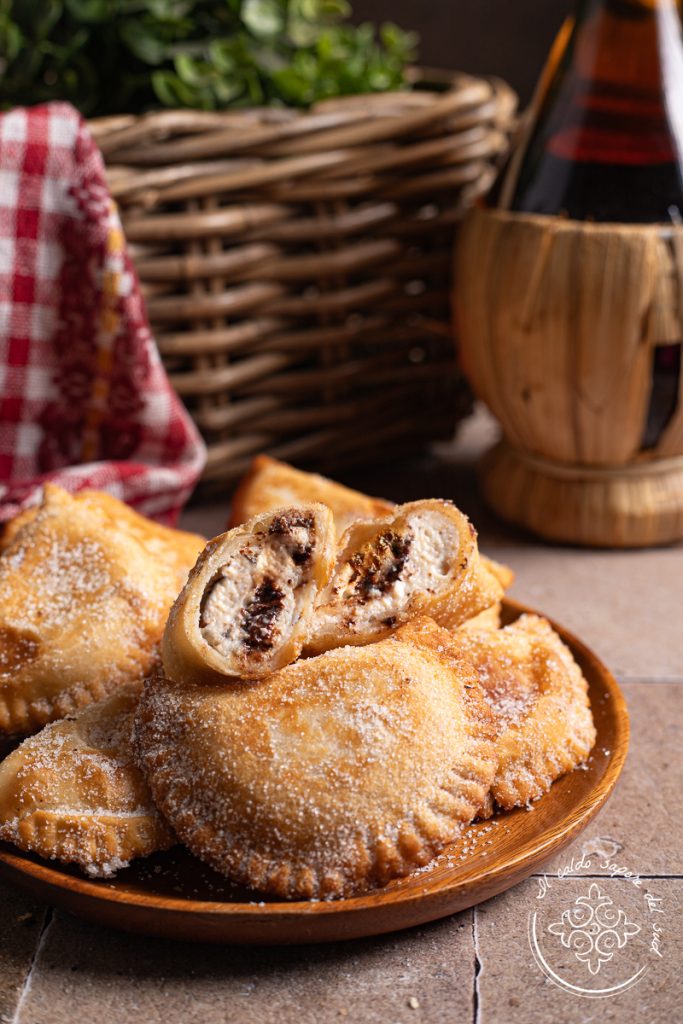
- Difficulty: Very easy
- Cost: Very inexpensive
- Rest time: 30 Minutes
- Preparation time: 30 Minutes
- Portions: 30Pieces
- Cooking methods: Frying
- Cuisine: Italian
- Seasonality: All seasons
Ingredients to make fried ricotta cassatelle
- 4 cups 00 flour (type 00 / all-purpose)
- 1 cup white wine (or Marsala)
- 1/3 cup extra-virgin olive oil (or lard)
- 6 tbsp + 1 tsp granulated sugar
- 1 pinch salt
- to taste lemon zest
- 3 cups sheep's milk ricotta
- 1/2 cup granulated sugar
- 1 tsp vanilla extract
- 2 oz (about 1/3 cup) dark chocolate (in flakes or chocolate chips)
Tools to make fried ricotta cassatelle
- Bowls
- Deep frying pan
- Pastry cutter
- Skimmer
Preparation of fried ricotta cassatelle
I kneaded the cassatelle using olive oil, but if you want to follow tradition, use lard. They will turn out even more crisp and crumbly.
In a large bowl combine the flour, oil, wine, sugar and a pinch of salt. Work the dough in the bowl and then move to the work surface.
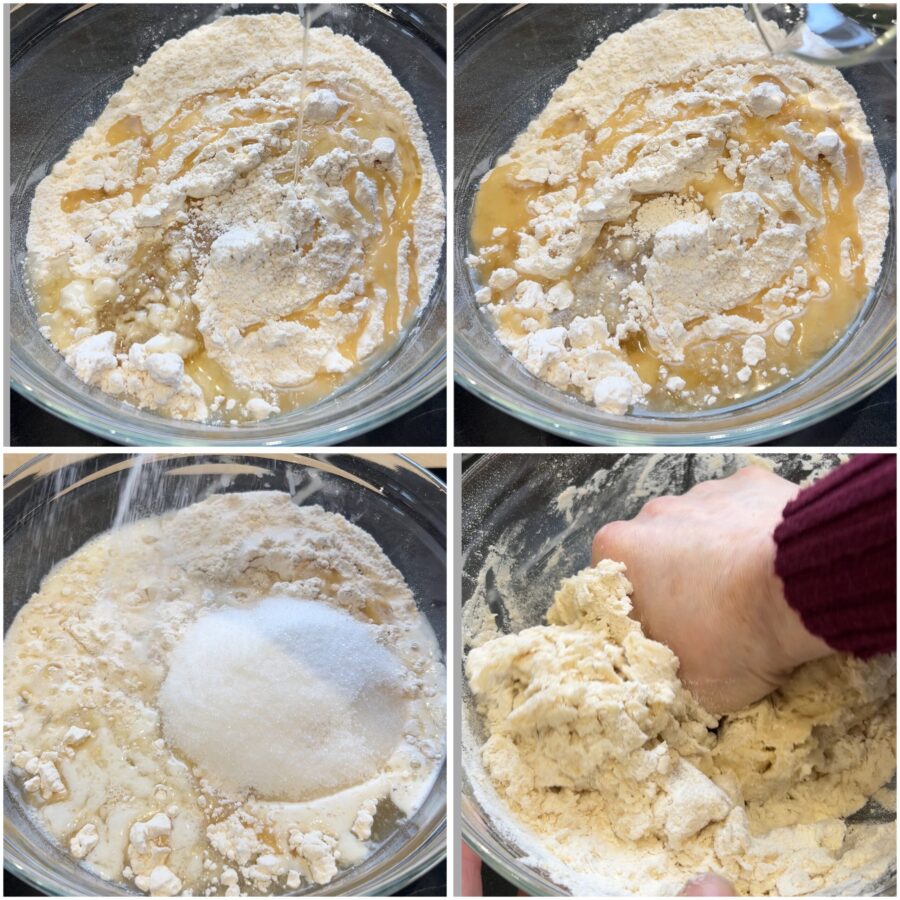
Continue kneading until you obtain a compact and elastic dough. The dough will feel resistant, but do not give up and resist the urge to add more wine or oil. Shape the dough into a ball as homogeneous as possible, wrap it in plastic wrap and let it rest at room temperature for at least 30 minutes: this step is essential to be able to roll out the sheet without it shrinking.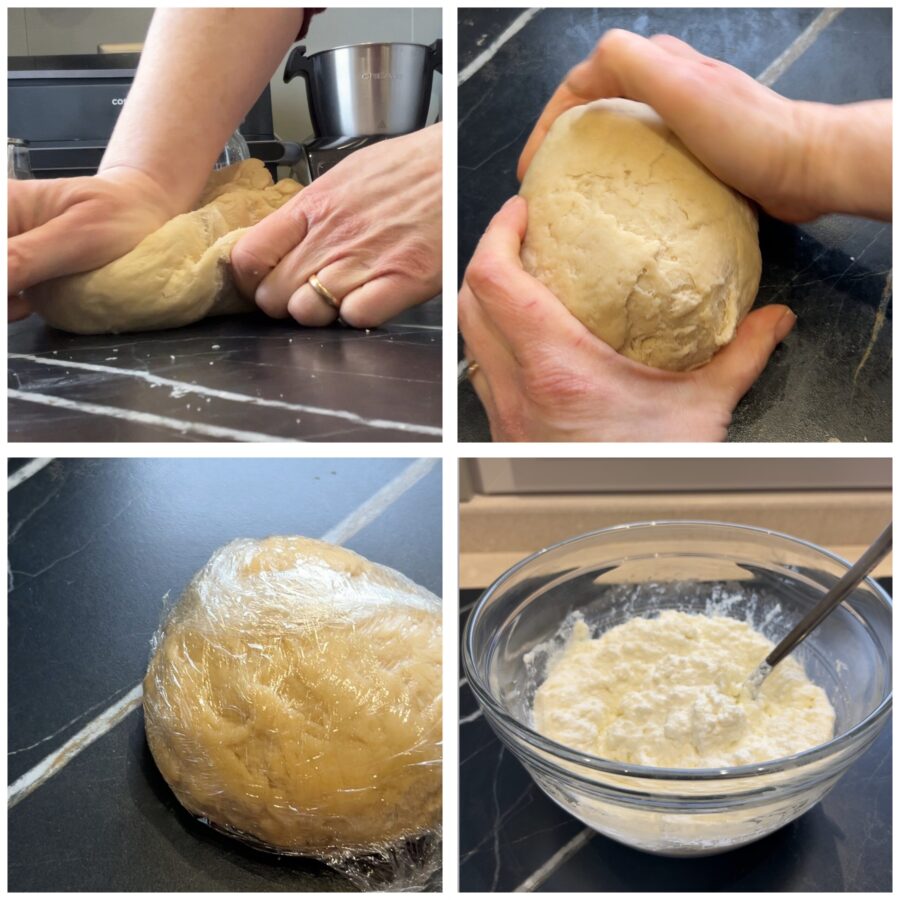
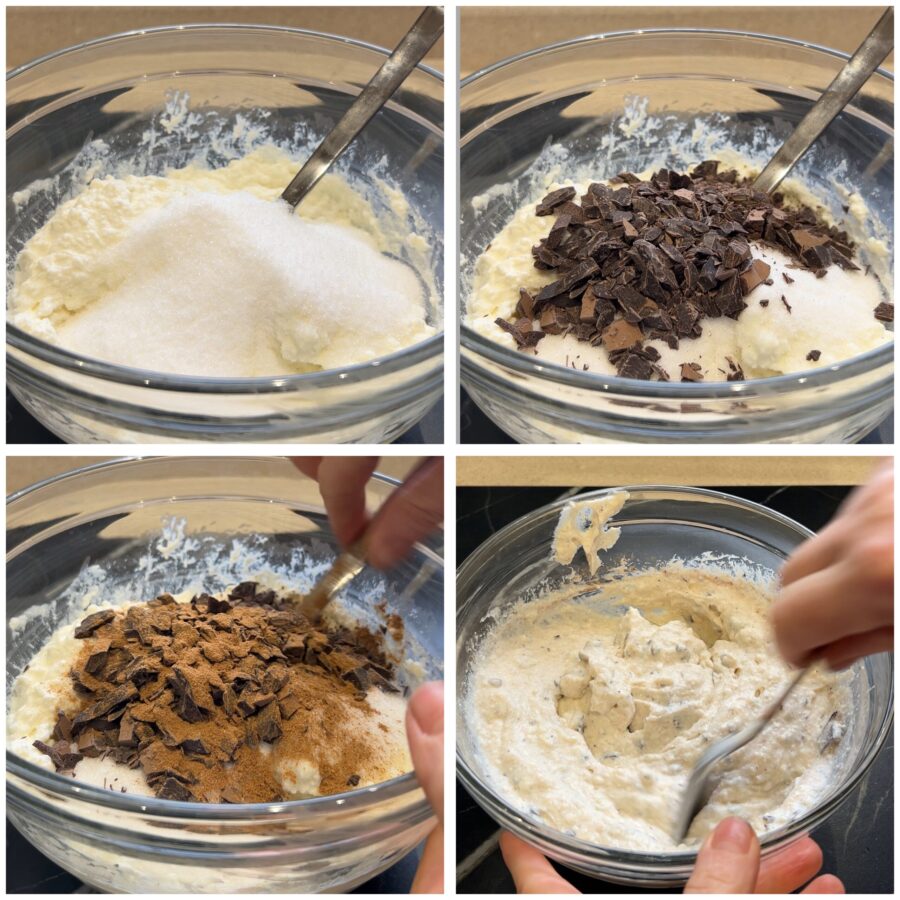
Collect the cold, well-drained sheep’s milk ricotta in a bowl. Add the sugar and mix until you get a smooth cream. Stir in the dark chocolate chips and, if you like, a dusting of cinnamon and the vanilla extract. Mix well: the filling should be creamy but firm enough to hold its shape.
Take the dough back and divide it into several portions. Roll each portion with a rolling pin until you get a thin sheet, but not transparent.
The dough must be elastic and even, ready to hold the filling without breaking during frying.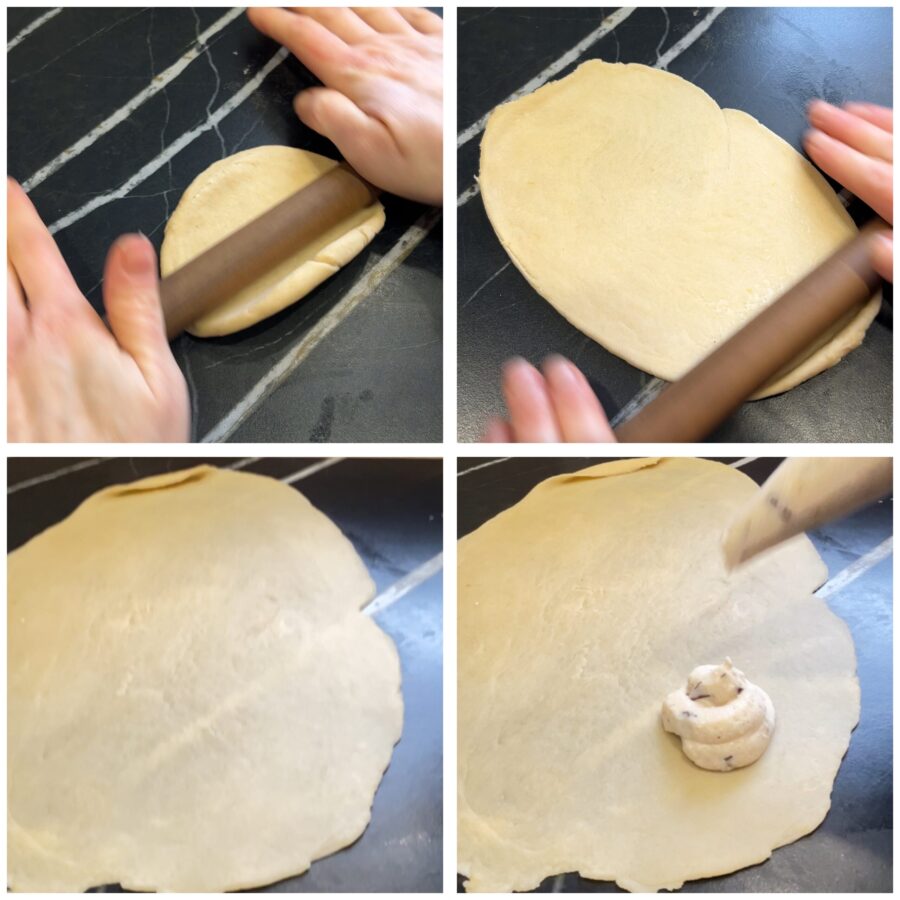
Place small mounds of filling on the sheet well spaced apart; you can use a spoon or a piping bag. Fold the dough over itself to cover the filling and press gently around each portion to remove air.
Before sealing, lightly brush the edges of the dough with a little water. Fold the dough over the filling and press gently with your fingers to make it adhere well and remove any air inside.
Finish the edges with a fluted pastry wheel, not too close to the filling, and seal with the tines of a fork to ensure the cassatelle are perfectly sealed and won’t open during frying.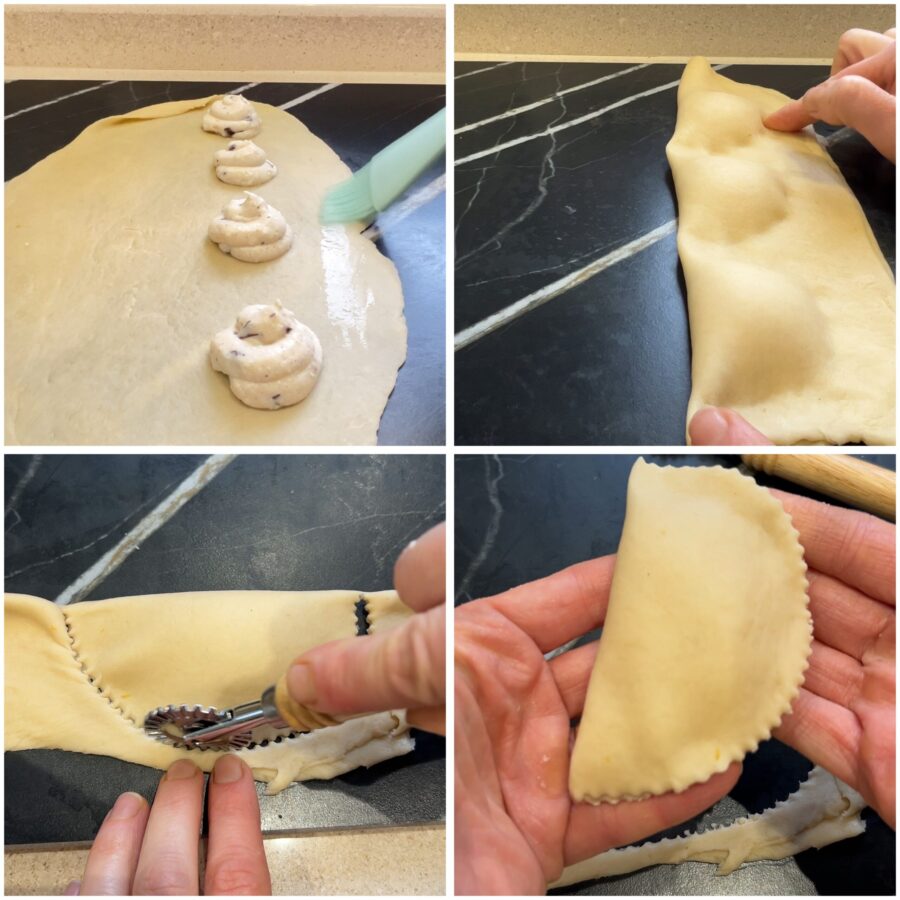
Finish making all the cassatelle and lay them on a cotton cloth so the surface can dry a bit and they will be ready to fry. Heat plenty of vegetable oil in a deep pan. When the oil is hot, immerse a few cassatelle at a time and fry until evenly golden, turning them gently.
They will puff slightly during cooking and take on a beautiful golden color.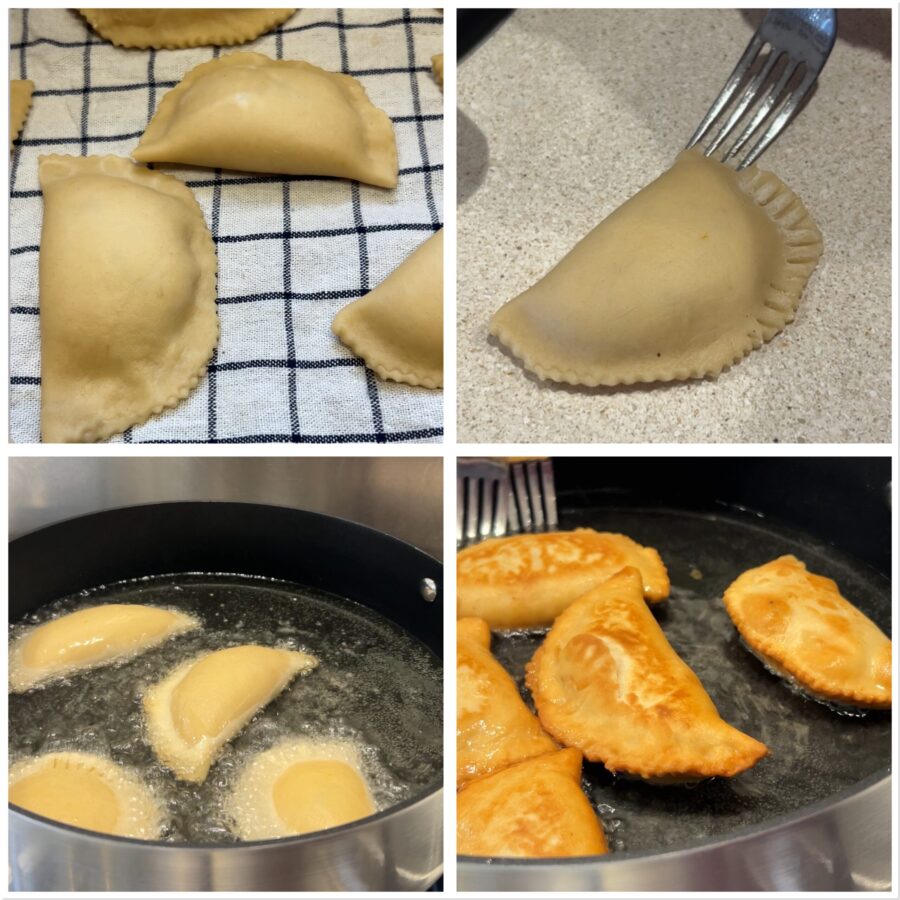
Drain the cassatelle on paper towels and immediately roll them in granulated sugar while they are still hot.
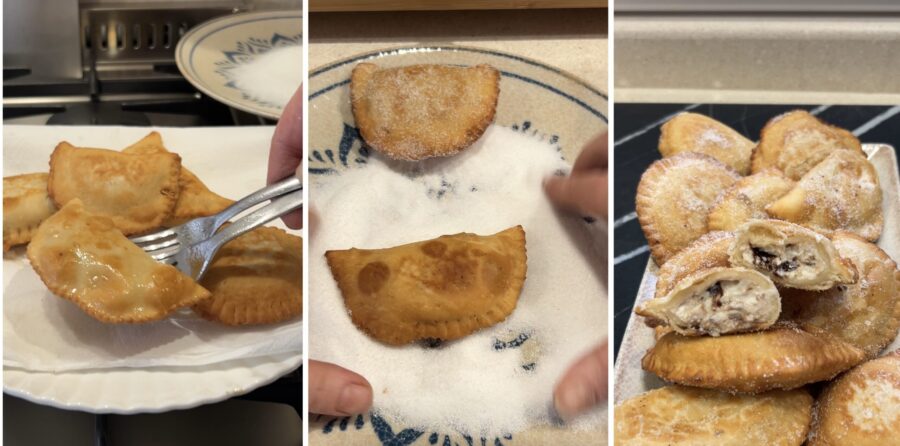
Serve them warm or cold: the shell will remain crisp and the filling soft and fragrant.
Storage notes and tips
Fried ricotta cassatelle are at their best just after preparation, when the sheet is crisp and the filling is soft and aromatic.
If you need to store them, you can keep them at room temperature for one day, well covered, avoiding humid places.
They can also be refrigerated for 1–2 days, knowing, however, that the pastry will tend to lose crispness. In that case, bring them back to room temperature or heat them slightly before serving.
An important tip concerns the ricotta: it must be very dry, preferably drained the day before, to prevent the filling from releasing moisture during frying.
Always seal the edges of the cassatelle carefully, removing the air inside: it’s the secret for an even fry without openings.
Cassatelle can be prepared in advance and fried at the last minute, to bring a pastry that is always crisp to the table.
If the oil gets dirty because a cassatella opens, skim it with a sieve.
If you want to stay updated on my recipes, follow me on:
Pinterest, YouTube, Twitter and TikTok.
From here, you can return to the HOME and discover new recipes!
FAQ (Questions and Answers)
Can I prepare the cassatelle in advance?Yes, you can prepare them and store them raw in the refrigerator for a few hours, placed on a cotton cloth and covered with another cotton cloth. Fry them just before serving.
Can I freeze the cassatelle?
Yes, you can freeze them raw, spaced well apart. Once frozen, fry them directly without thawing, paying attention to the oil temperature.
Which ricotta should I use for fried cassatelle?
Sheep’s milk ricotta is the most traditional and aromatic. Alternatively you can use cow’s milk ricotta, provided it is very dry.
Why do cassatelle open while frying?This happens if the edges are not well sealed or if air remains inside. Press well around the filling and finish the edges with a pastry wheel or fork.
Can I bake them instead of frying?
Yes, but the result will be different. The fried version is traditional and crispier; baked ones are drier and less golden.
What does cassata (and cassatella) mean?
Cassata (and its diminutive cassatella) indicates a pastry that encloses a filling and the name probably derives both from the Arabic qas‘at, meaning “bowl” or “container”, and from the Latin caseum, meaning “cheese”, referring to the traditional Sicilian desserts filled with ricotta.