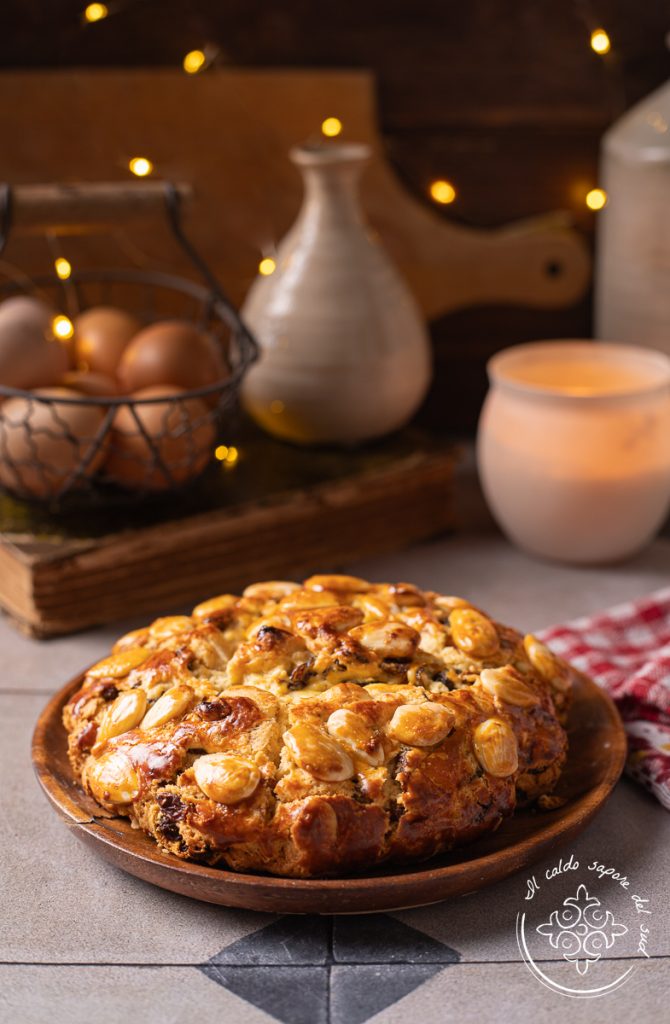
Genoese low pandolce recipe taken from Massari’s book “Cresci.” Among all the Christmas sweets — along with panettone, pandoro, panforte and many others — the Genoese pandolce low certainly deserves a place of honor. Unlike the tall Genoese pandolce, it is easier to make, and like the first is a perfect union of taste and aromas.
I am Sicilian, it’s true, but I am in love with cooking and especially with Italian cuisine. I love travelling and learning about traditions and typical dishes from every place I visit. For a long time I was tempted to prepare one of the most important sweets of the Genoese Christmas tradition, which I had the chance to taste at a Genoese friend’s home. Among all the Christmas desserts he offered were the famous Ricciarelli di Siena, a delicious citrus mascarpone cream to enjoy with panettone and pandoro, and a delightful soft white nougat made at home.
When preparing the Genoese low pandolce — as traditional as Genoese pesto — I didn’t want to improvise, since I’m not Ligurian and I know Italians are protective of traditional recipes. I relied on Master Massari and took the recipe from his book “Cresci,” which also calls for adding almonds to create a richer, more sumptuous cake (as the master notes).
I hope I have done justice to this dessert, which was greatly appreciated in my home, and if you follow me I will explain how I prepared it. But first let’s talk a little about the origins of pandolce, which is said to have been born when Doge Andrea Doria launched a competition among Genoese pastry chefs to create a dessert that represented the wealth and power of the Republic. The requested dessert had to be simple to prepare, nourishing, easy to transport and able to keep for a long time, so it would be suitable for sailors’ long sea voyages: in short, an opulent bread rich in raisins, pine nuts, candied fruit and fennel seeds. According to some historians, however, pandolce derives from an ancient Persian recipe for a sweet bread with dried fruit and honey offered as a gift to the king on the first day of the year: the Genoese, great navigators and merchants, would have adopted this recipe during their travels to the East and modified it over time. The two theories are not mutually exclusive and are rather complementary: it is likely that the dessert’s origins are very ancient and that it evolved over time, combining different traditions and enriching itself with new ingredients brought back by Genoa’s trade voyages.
Today, the Genoese pandolce is a typical dessert of the Ligurian Christmas tradition, but it is prepared all year round in both the tall and low versions. Let’s go to the kitchen and make the Genoese pandolce. If you want to stay updated on all my recipes, you can follow my Facebook page (here) and my Instagram profile (here).
Also see:
- Difficulty: Very easy
- Cost: Medium
- Preparation time: 10 Minutes
- Portions: a cake of about 1.1 lb (500 g)
- Cooking methods: Oven
- Cuisine: Italian
- Seasonality: Autumn, Winter
Ingredients for making Genoese pandolce
- 4 tbsp Butter (at room temperature)
- 6 tbsp Powdered sugar
- 1 2/3 tbsp Marsala wine
- 1 egg Egg
- 1 1/4 cup All-purpose flour (or weak (low-protein) flour)
- 1/2 tsp Ground fennel seeds
- 3/4 tsp Baking powder
- 1 cup Raisins
- 1/3 cup Candied orange peel (zest)
- 3 tbsp Pine nuts
- 2 tsp Milk (only if necessary)
- 2/3 cup Peeled almonds (optional)
- as needed Egg (for finishing)
- as needed Powdered sugar (for finishing)
Preparation of Genoese pandolce
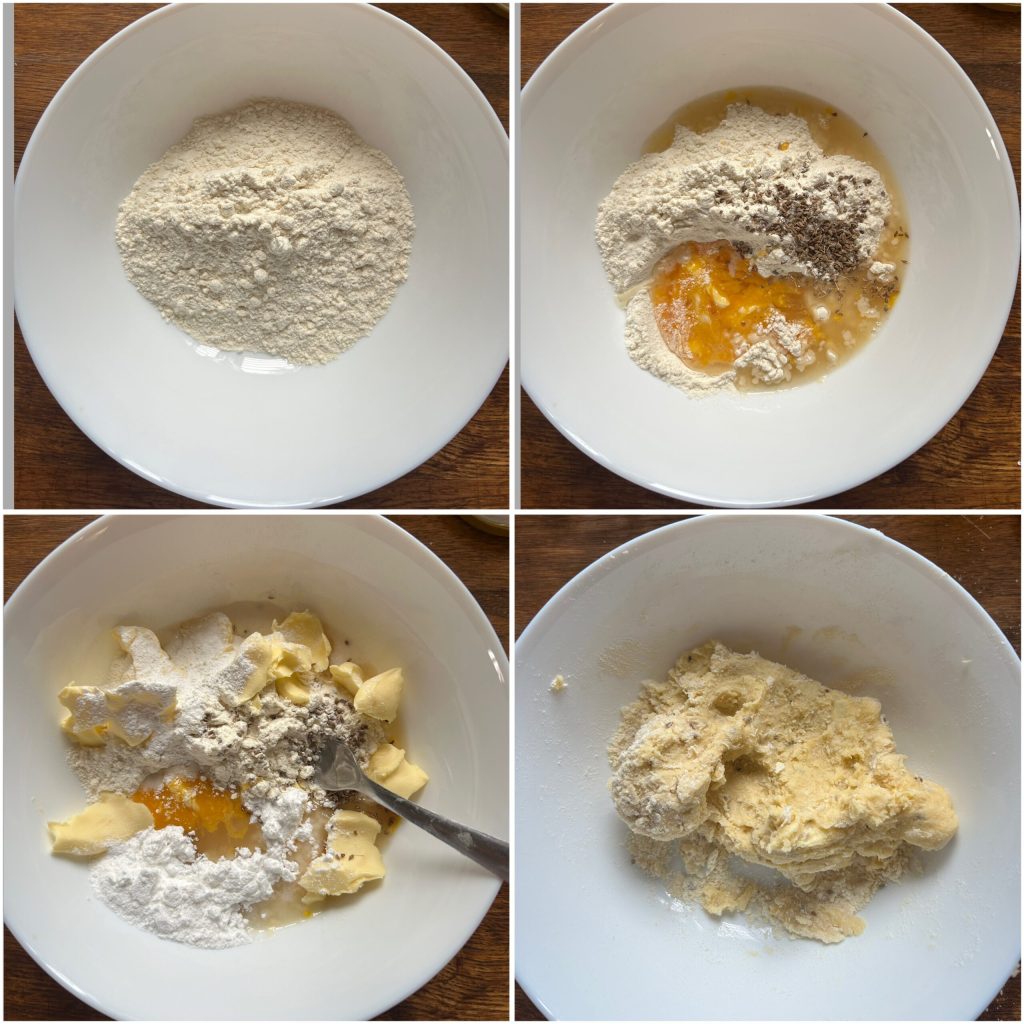
Prepare all the ingredients, toast the pine nuts in a small pan, then move on to the dough. Put the flour, sugar, egg, ground fennel seeds, marsala, baking powder and butter in a bowl, work roughly, then turn everything out onto the work surface.
Without overworking the dough, as if making a shortcrust, fold in the raisins, candied fruit and part of the almonds.
Round the dough with the help of a spatula and a little flour, then flatten to form a slightly low round loaf. Brush with egg, cover the surface with the almonds and brush these with yolk as well.
Score the surface and create a triangular pattern.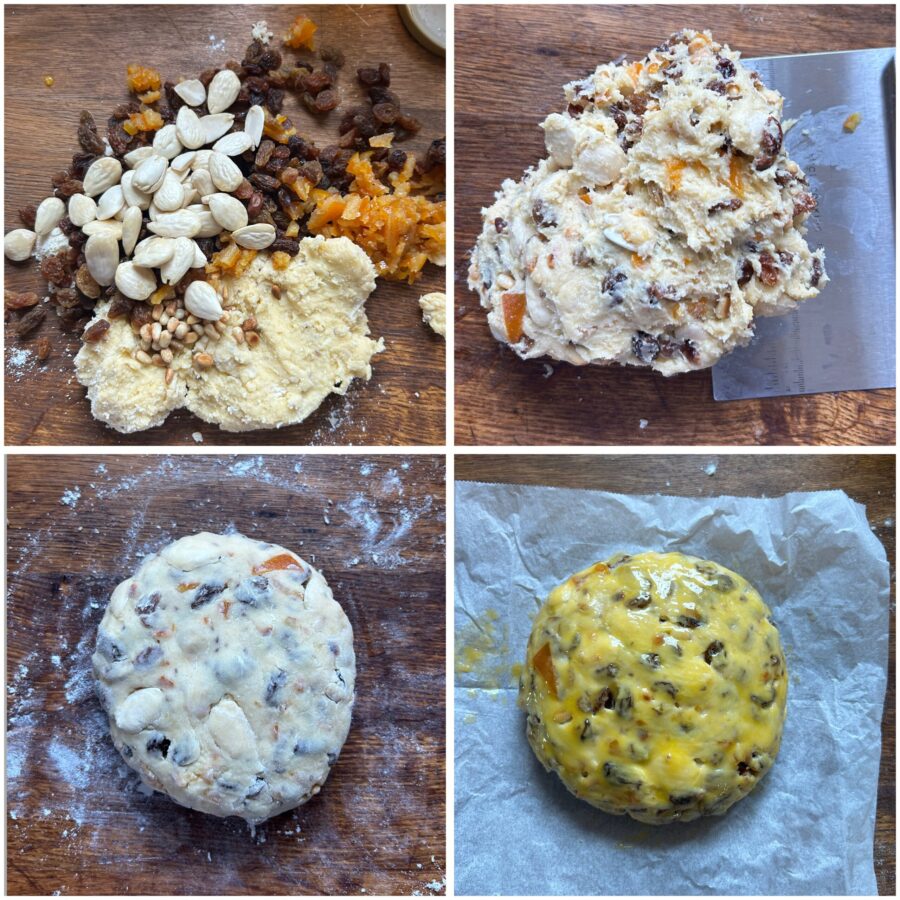
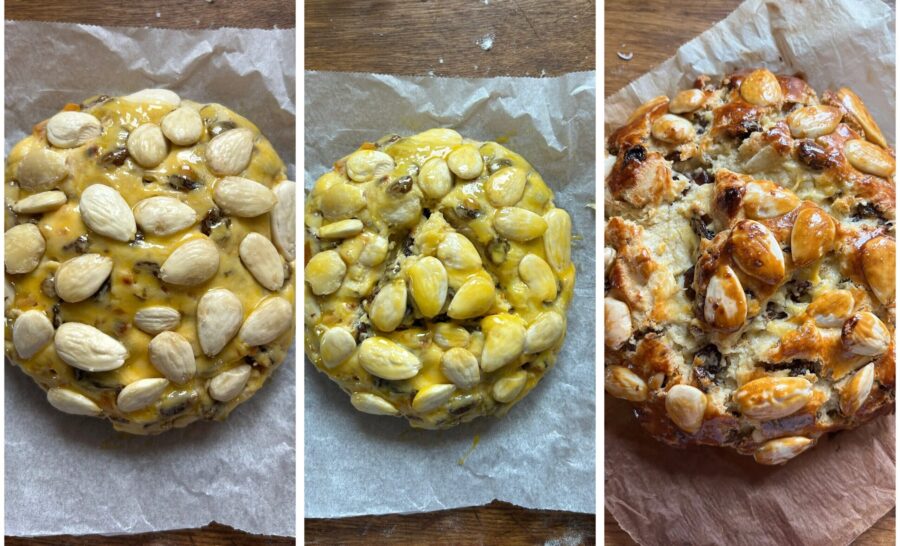
Bake:
– 18 minutes at 392°F for a 100 g (3.5 oz) loaf;
– 33 minutes at 392°F for a 500 g (about 1.1 lb) loaf;
– 45 minutes at 392°F for a 750 g (about 1.65 lb) loaf;
– 55 minutes at 392°F for a 1 kg (about 2.2 lb) loaf.
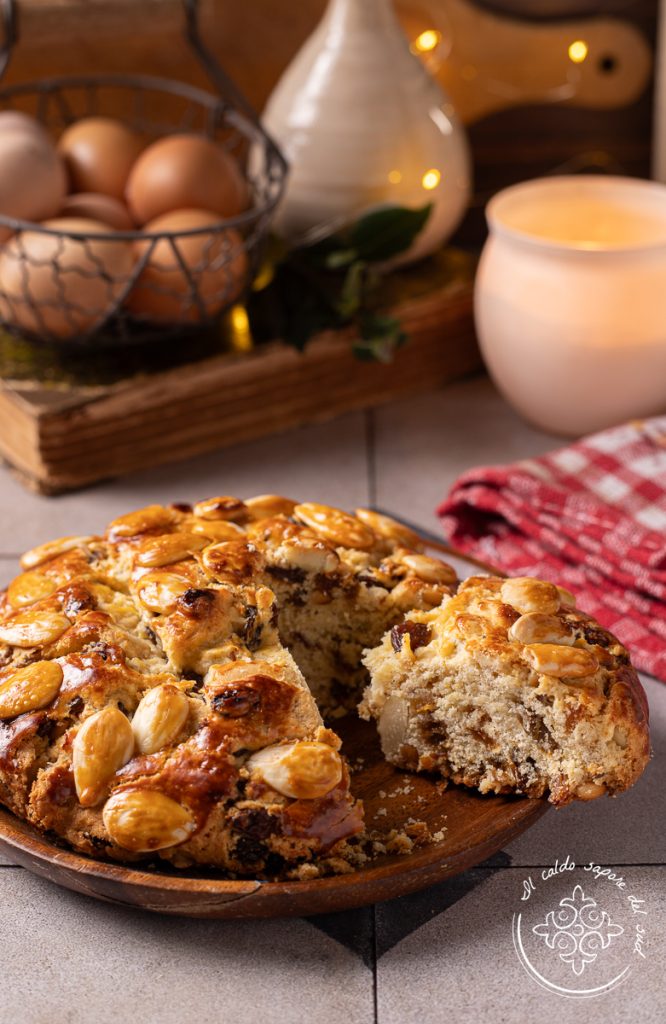
Do the skewer test: insert a skewer into the cake and it should come out slightly moist; overbaking will make the pandolce dry. Dust with powdered sugar before serving, if you like.
Regarding the almonds on the surface, Master Massari says they are a useful variation to enrich the cake and are not part of the traditional appearance. I recommend adding them — they really give an extra touch!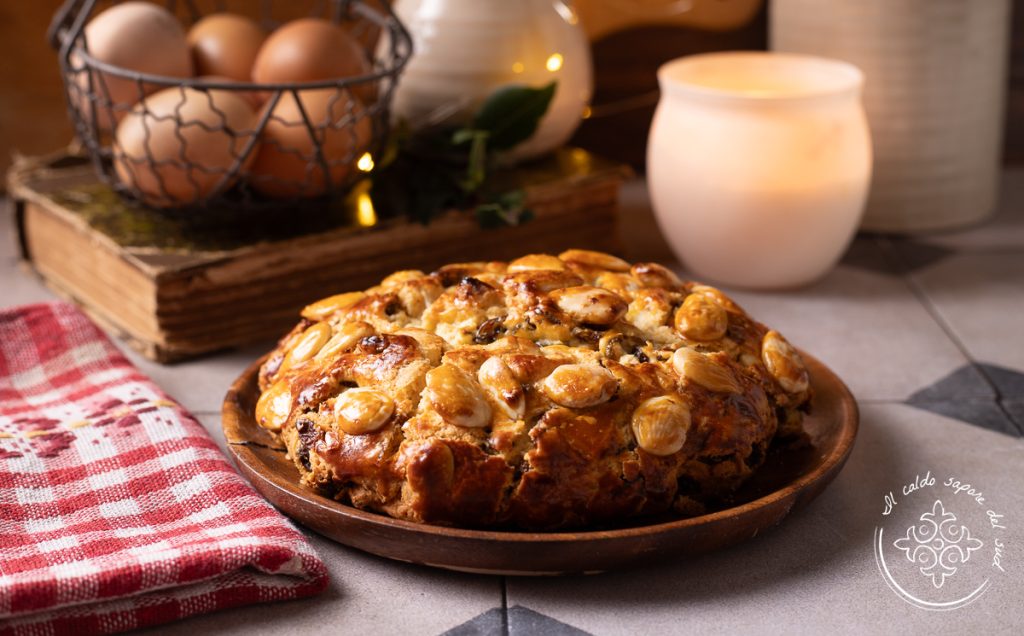
The Genoese low pandolce keeps at room temperature for about 15 days when wrapped in plastic wrap.
Notes
If you want to stay updated on my recipes, follow me on:
Pinterest, YouTube, Twitter and TikTok.
From here, you can return to the HOME and discover new recipes!