Genoese Pesto with a blender. Genoese pesto, grandma’s recipe, but… with a blender (and let’s hope grandma doesn’t read the recipe! ;-)). We’ve made many pesto recipes, but you know what? Our blog was missing the traditional Genoese pesto and today we’ll somehow fix that! I should mention that the true Genoese pesto must be patiently made with DOP Genovese basil using a marble mortar, which I bought but haven’t used ;-)… So here we are: after the Basil and lemon pesto, the Basil and walnut pesto and the Pistachio pesto, and even the black cabbage pesto, comes the Genoese Pesto with a blender, to be distinguished from the true grandma’s Genoese pesto, which is made with a mortar!! Ready to head to the kitchen? Let’s go, but before we roll up our sleeves I remind you that if you want to stay updated on new recipes you can follow my Facebook page Facebook and my profile Instagram.
Take a look:
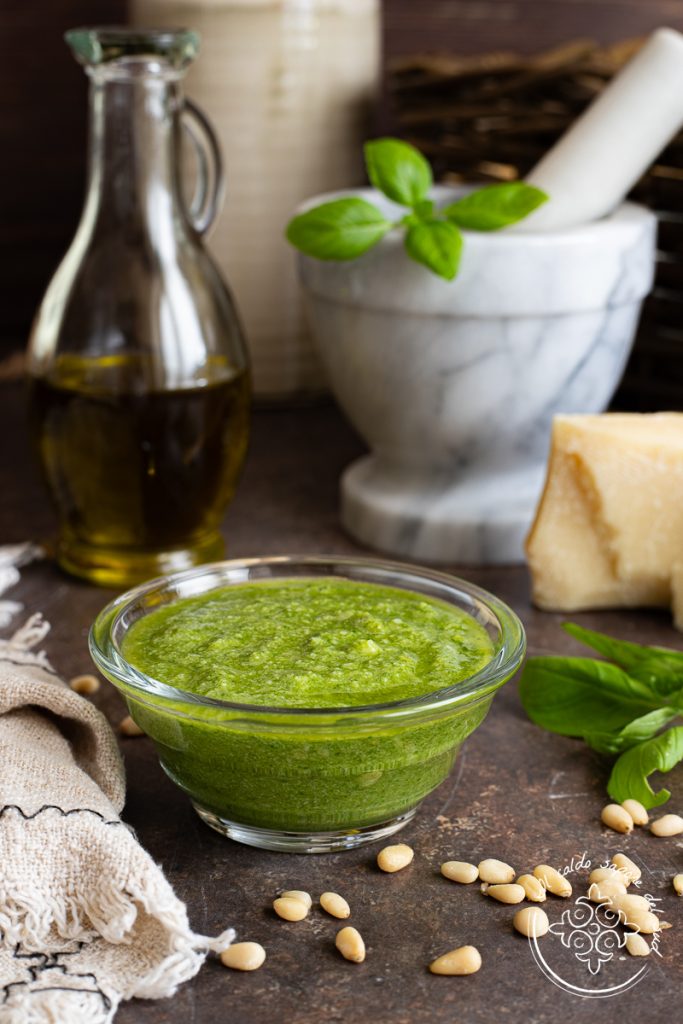
- Difficulty: Very easy
- Cost: Budget-friendly
- Preparation time: 5 Minutes
- Cooking methods: No-cook
- Cuisine: Italian
- Seasonality: Spring, Summer
Ingredients to make Genoese pesto
- 4 cups (packed basil leaves; about 3 oz / 80 g) basil
- 1/2 cup (grated; about 2 oz / 50 g) Parmigiano Reggiano DOP (very aged)
- 1/3 cup (about 1 oz / 30 g) Pecorino Sardo
- 1.5 oz (about 40 g) pine nuts
- 1/2 tsp salt (coarse)
- 1 clove garlic
Tools
- Blender
Preparation of Genoese pesto
Start with a very cold bowl and cold cheese: this will prevent the pesto from darkening.
To make Genoese pesto with a blender, pull the leaves off the basil stems and rinse them quickly under cold running water, using a sieve. Meanwhile, place the blender jar in the fridge. Transfer the leaves onto a towel and pat them dry gently so they are thoroughly dry. Gather them in the cold blender jar and blend quickly until you obtain a creamy pesto. Avoid warming it because it would darken: our pesto is ready to be used.
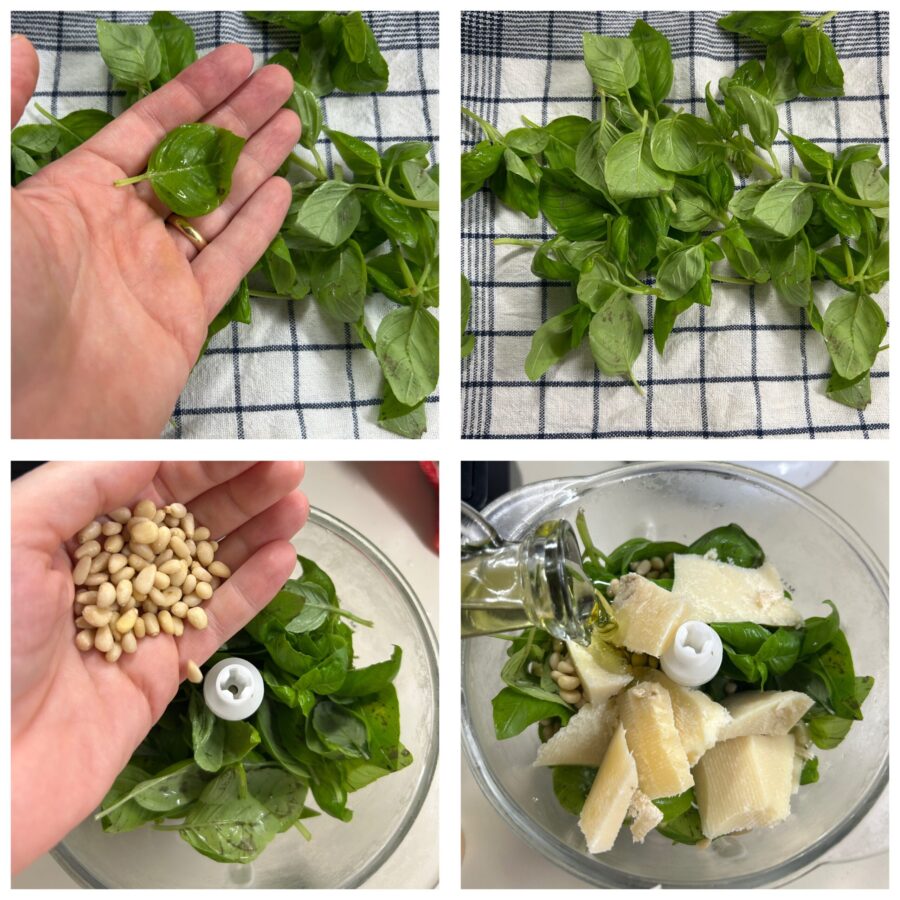
For pesto using a mortar, crush the garlic with the pestle until creamy, add the pine nuts and continue in the same way. Once you have a paste, add the basil leaves and the coarse salt. When you reach a creamy, homogeneous consistency, add the Pecorino in small pieces and work it in by continuing to pound with the pestle, then add the very aged Parmigiano Reggiano and keep combining, alternating pounding with rotating movements. When all the ingredients have formed a cream, pour in the oil and rotate the pestle for a few more seconds: the Genoese pesto is ready to be enjoyed.
Storage and notes
Genoese pesto can be used immediately or stored in the fridge in a clean, dry jar well covered with oil for up to 3–4 days.
Alternatively, you can freeze the pesto in small jars.
If you want to stay up to date with my recipes, follow me also on:
From here, you can return to the HOME and discover new recipes!