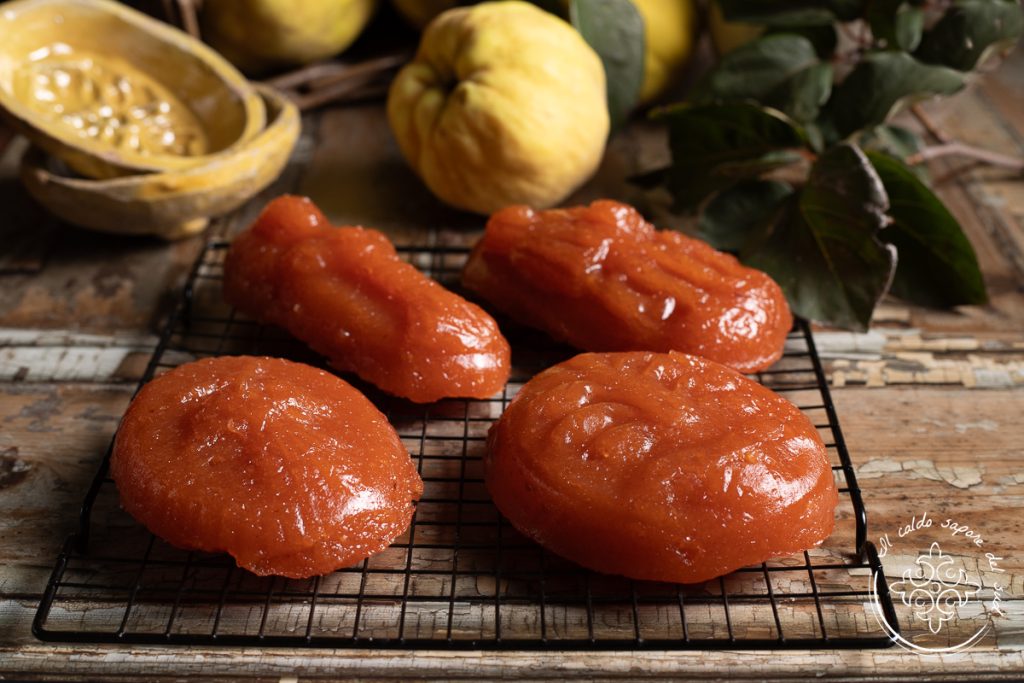
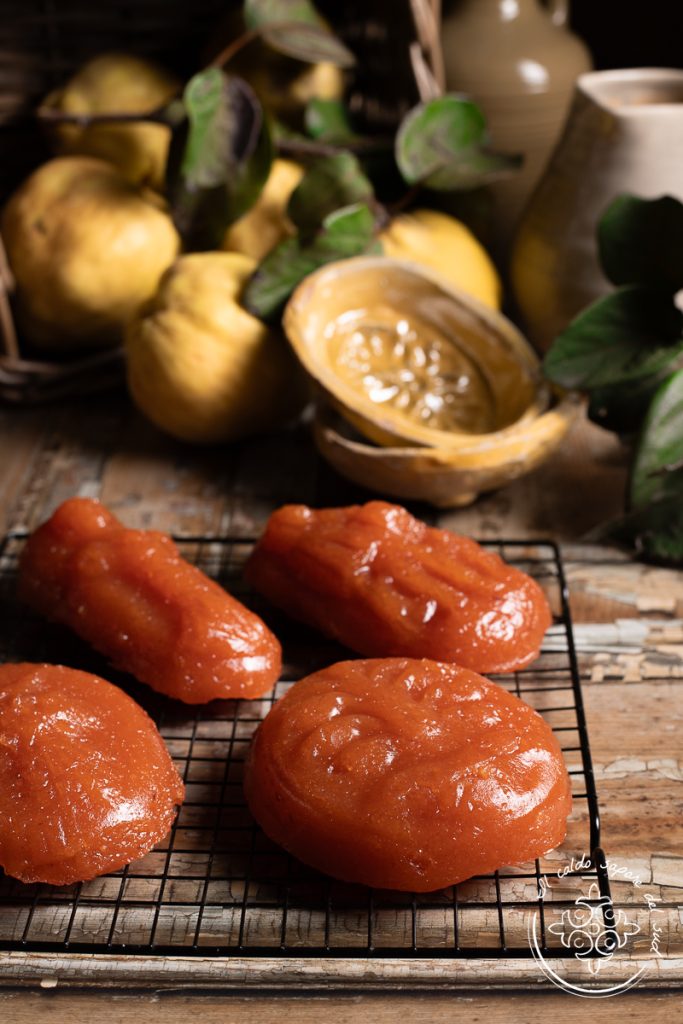
Quince Paste (grandma’s recipe): the Sicilian quince paste recipe I learned from my grandmother, who, by the way, was from Trentino. A “firm quince jam” that is delicious, similar in taste to quince jam, but different in texture, and a recipe that is part of traditional Sicilian cuisine. My grandmother was indeed from Trentino, but having married a Sicilian she learned our traditional recipes and quince paste was one of the autumn sweets she made most often, together with quince marmalade. She had a quince (or quince pear, I can’t remember) tree in her garden, so in November these fruits were always available and she prepared the famous quince jelly, also known as quince paste. But do you know what a quince is? Rich in benefits for our health, the quince (the name changes depending on the fruit shape) is a fruit that helps the heart and the intestine by keeping cholesterol under control and fighting constipation. Known since antiquity, today it is a nearly forgotten fruit, tart and hard in texture, practically inedible raw, but wonderful cooked and used to prepare both sweet and savory dishes of all kinds. Today I want to make quince paste with you, the same fragrant and foolproof recipe my grandmother used to make, a typical sweet in many areas of Italy: easy to prepare, tasty and very energy-rich. Together with rame di Napoli, ossa di morto and nzudde it is part of the wide assortment of autumn sweets and especially part of the “sweets of the dead”, those linked to the Sicilian “All Saints” tradition.
A humble and ancient sweet, quince paste used to be formed in special terracotta molds that were also used for mustarda made from must or prickly pears, and were gifted to relatives, friends and especially children from November until Christmas. This is because the high pectin content helps it set firm and compact after some resting time.
Today quince paste is rarely found commercially and only in some renowned pastry shops might you find it as a small dessert perhaps glazed in chocolate, but we will make the true Sicilian quince paste recipe and shape it in the traditional molds used in the past.
Ready to run to the kitchen? Let’s go, our recipe awaits, but before you rush to the stove I remind you that if you want to stay updated on new recipes you can follow my Facebook page and my Instagram profile.
Also check out:
- Difficulty: Easy
- Cost: Very inexpensive
- Preparation time: 20 Minutes
- Cooking time: 3 Hours
- Portions: 20 (about 3.5 lb)
- Cuisine: Italian
Ingredients for making quince paste
- 2 lb 10 oz quinces (or a little more)
- 4 cups Sugar
- 1 tsp Ground cinnamon
- 2 Cloves (ground)
- 1 Lemon (juicy)
Tools
- Pot
- Food mill
- Stove
- Wooden spoon
How to make quince paste
Wash the quinces thoroughly and remove the fuzzy coating. Cut them into quarters and remove seeds and cores; do not remove the peel because it contains the pectin needed for the mixture to set.
Cut the quinces into chunks, place them in a pot and cover with water halfway up. Add the juice of one lemon (juicy). Cook until the water has evaporated and the quinces have broken down.
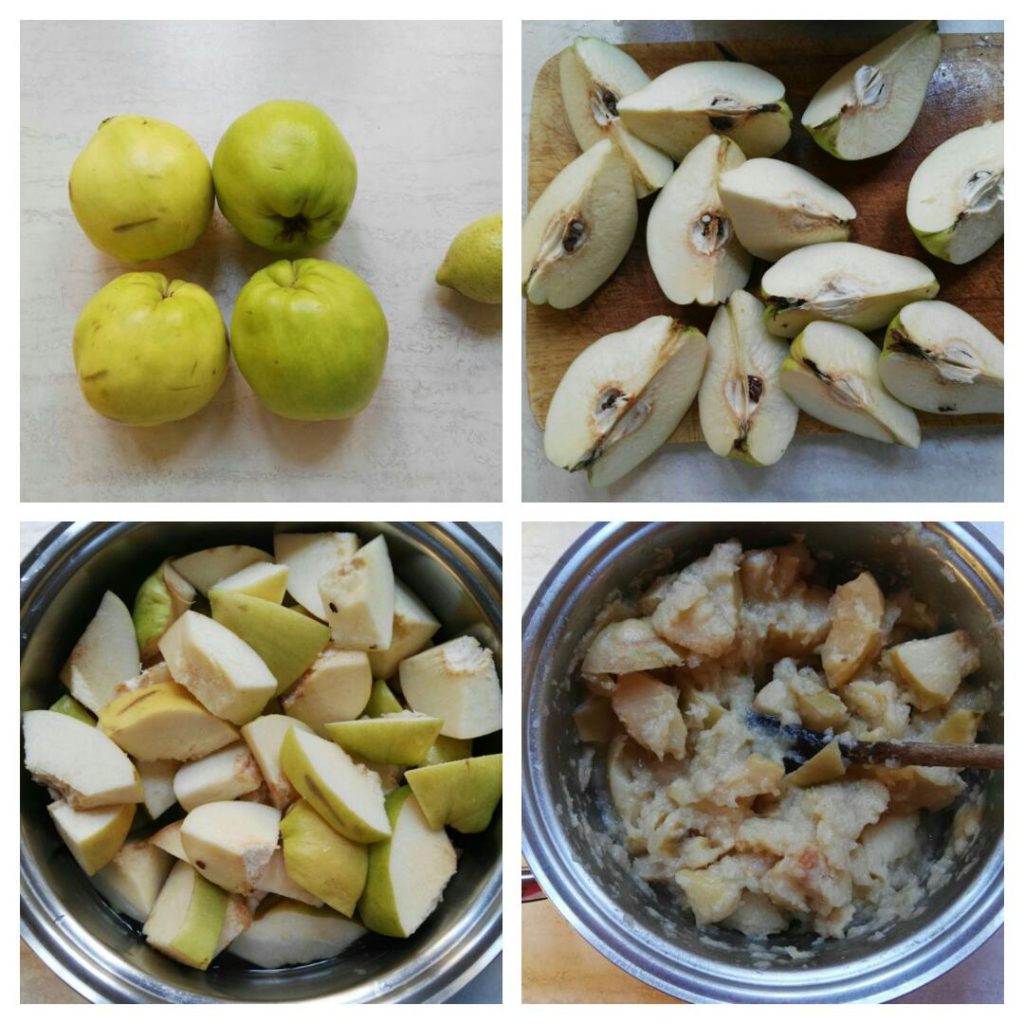
Pass the cooked quinces through a sieve or food mill to obtain a puree and weigh it.
Add slightly less sugar by weight than the puree. I used about 4 cups of sugar for roughly 2.2 lb (1 kg) of puree. Add the ground cinnamon and two cloves, ground or finely crushed.
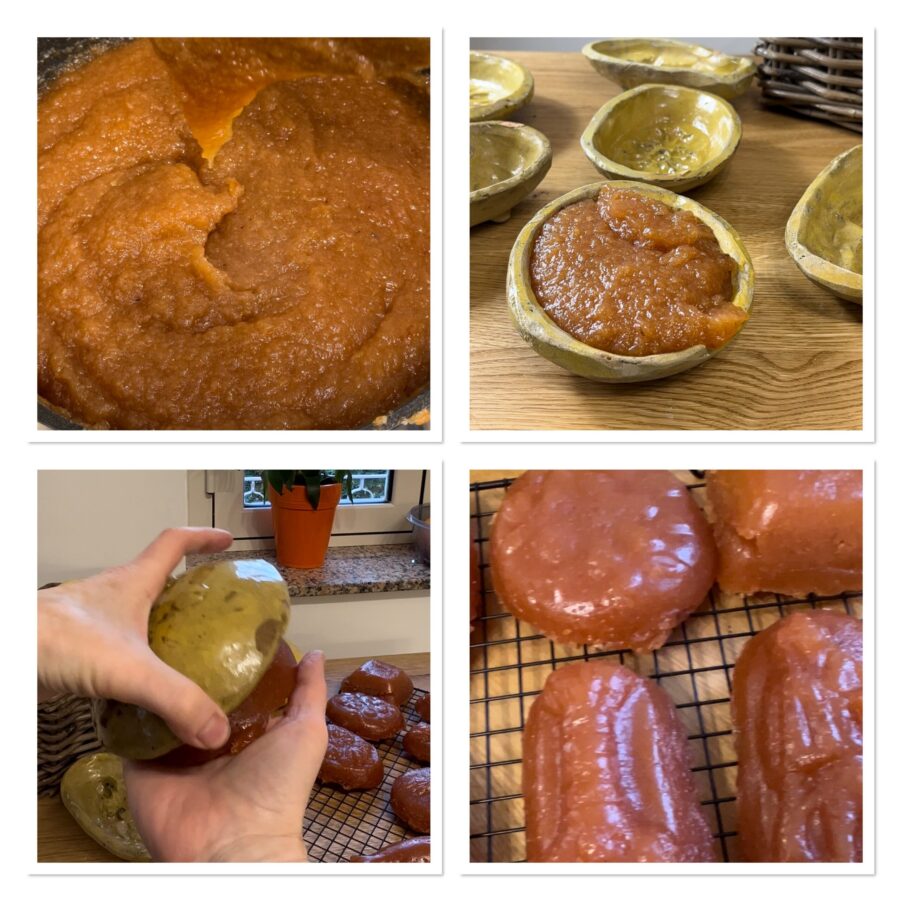
Cook over very low heat for about 2 hours and 30 minutes; toward the end you will need to stir very, very frequently to prevent it from sticking.
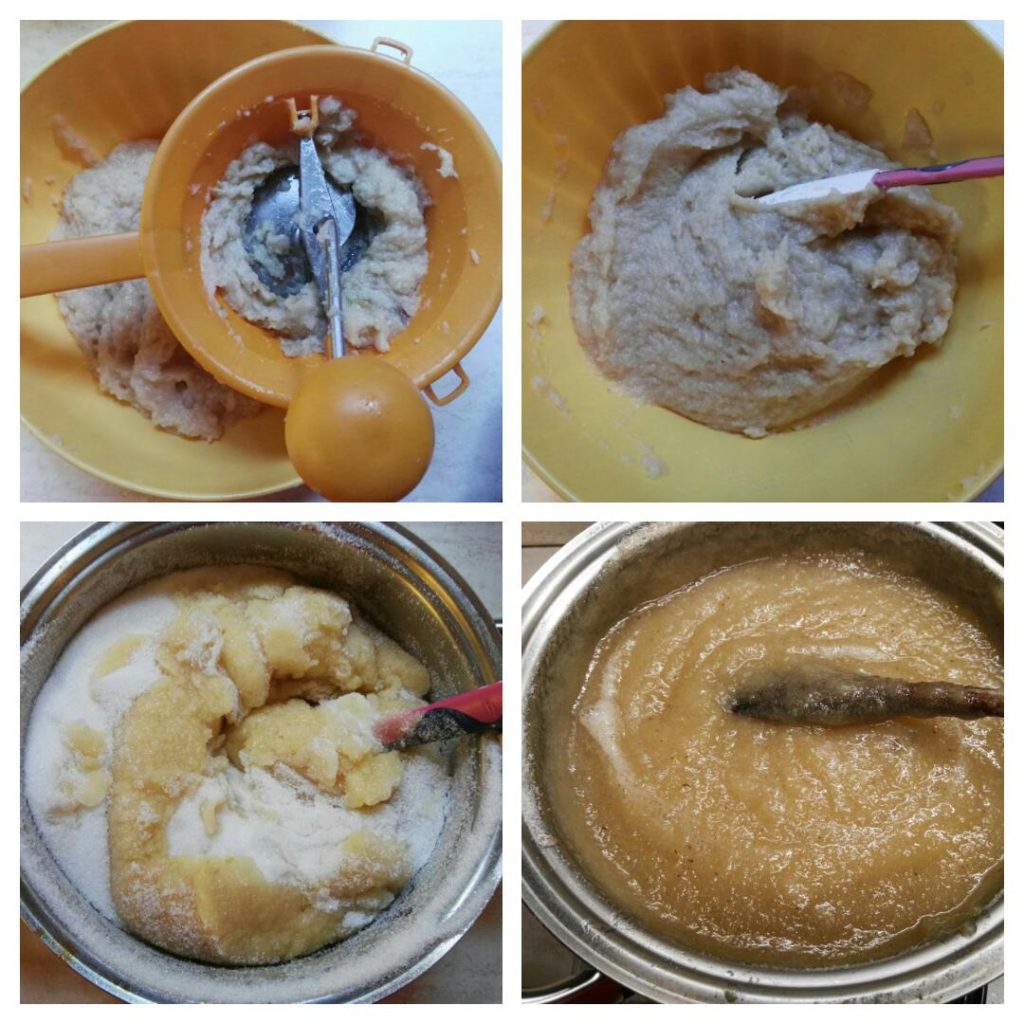
When the quince paste is ready you will notice it becomes a bit darker on the surface and the sugar will tend to crystallize. The texture will change from matte to almost translucent; when stirred it will pull away from the pot and will be reluctant to leave the wooden spoon.
Add another tablespoon of lemon juice, let it cook a few more minutes and then turn off the heat.
At this point you can fill your molds. I use traditional terracotta molds, but you can also use moistened or greased plates or a moistened or greased baking pan.
If the cooking has gone well, it will firm up in a couple of hours and you can unmold it as soon as it has cooled.
If it was undercooked, the quince paste will take longer to firm up — sometimes even days — and in that case there’s little to do but wait for it to dry.
Once unmolded, leave the quince paste exposed to air on a rack to dry; the drier it is, the more it will form a whitish patina on the surface from crystallized sugar.
Drying is essential if you want to preserve the product for the winter months; it is not necessary if you plan to eat it right away.
Store the dried quince paste in a cool, dry place. It will harden further but will remain delicious.