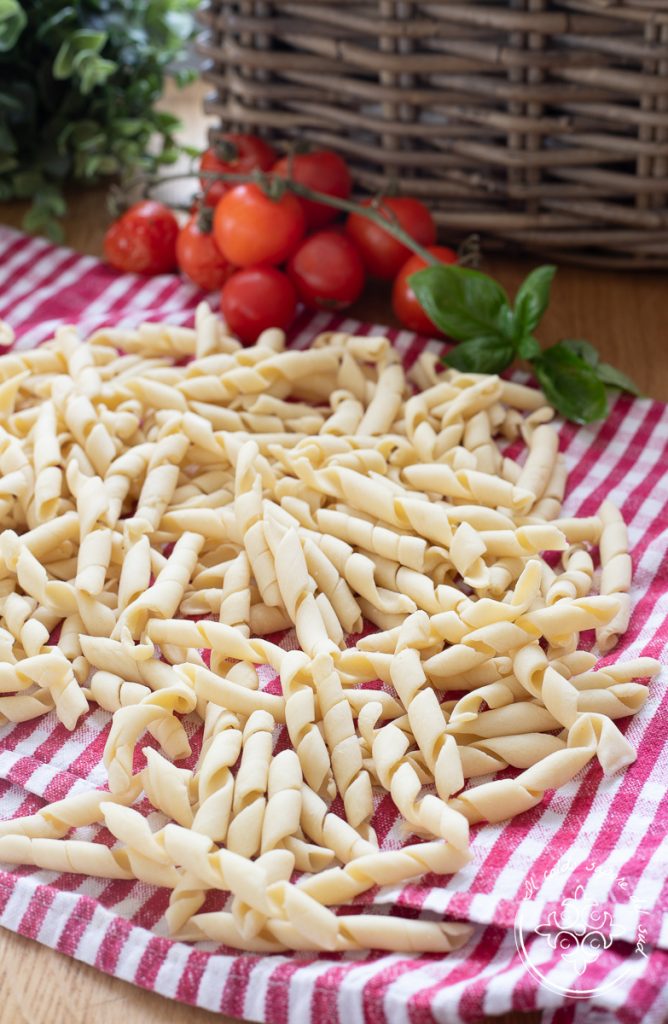
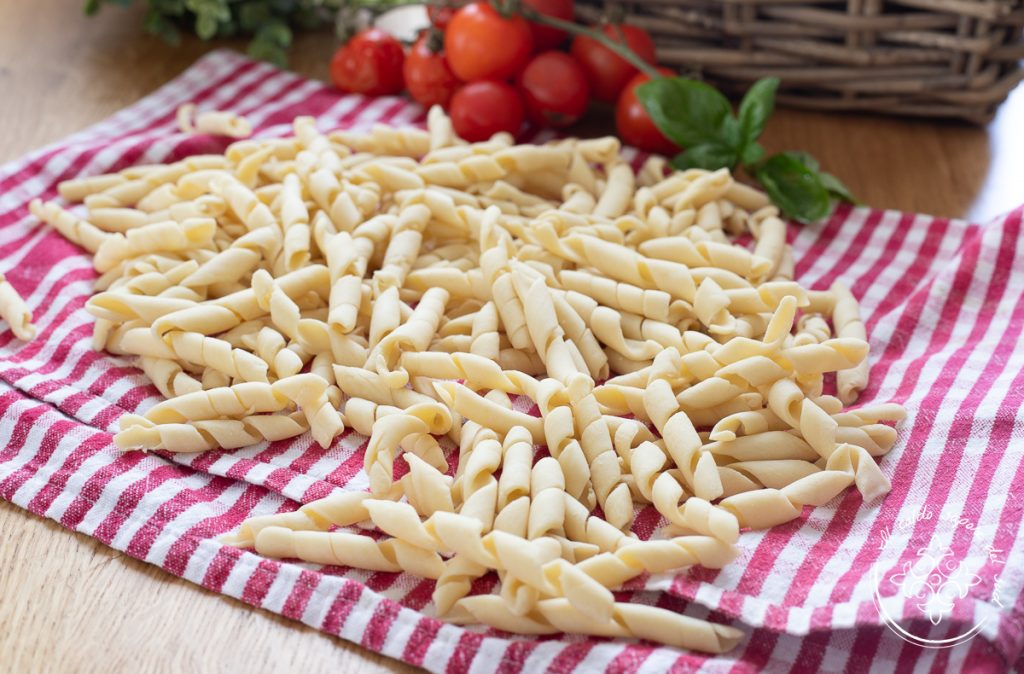
Handmade Busiate are a fresh pasta typical of Trapani which, by tradition, is usually dressed with a pesto based on tomatoes, olive oil, almonds, basil, pecorino and little else — in other words what is known as pesto alla trapanese. They are part of the many Sicilian recipes you should never miss. Busiate, a typical Sicilian pasta shape, are essentially a long fusillo about 2 to 3 1/8 inches long (in the traditional version), originating from the province of Trapani. You may also find a longer version today. The name derives from the branch of the local wild herb called buso, which was used to twist the pasta. These long, thin strips of pasta rolled into a spiral and made from durum wheat semolina, like Maccheroni al ferretto or Sardinian Gnocchetti, hold many different and flavorful sauces, enhancing their taste and creating delicious and elegant first courses. Today I’ll tell you how to make homemade busiate. The process might seem difficult, but with a bit of patience you’ll be able to make perfect ones! Ready to get into the kitchen with me and get your hands on the dough? Let’s go — but as always, before we roll up our sleeves I remind you that if you want to stay updated on my recipes you can follow my Facebook page and my Instagram profile.
(Thanks to Marilù for teaching me this wonderful recipe and for passing on her technique — and above all her love and passion).
Check out these fresh pasta recipes:
- Difficulty: Very easy
- Cost: Very inexpensive
- Rest time: 10 Minutes
- Preparation time: 30 Minutes
- Portions: 5
- Cooking methods: Stovetop
- Cuisine: Italian
- Seasonality: All seasons
Ingredients to make busiate
- 14 oz (about 3 1/4 cups) re-milled durum wheat semolina
- 7 fl oz (about 3/4 cup + 1 tbsp + 1 tsp) water (very hot or slightly more)
Tools
- wooden skewer
Preparation
Fresh pasta is different from dried pasta and it does not expand during cooking; I therefore recommend kneading at least 100 g of flour per person — about 3.5 oz (¾ cup) per person.
Pour the flour into a bowl and add the very hot water little by little, stirring with a spoon. Turn everything onto the work surface and work the dough until it becomes compact and homogeneous.
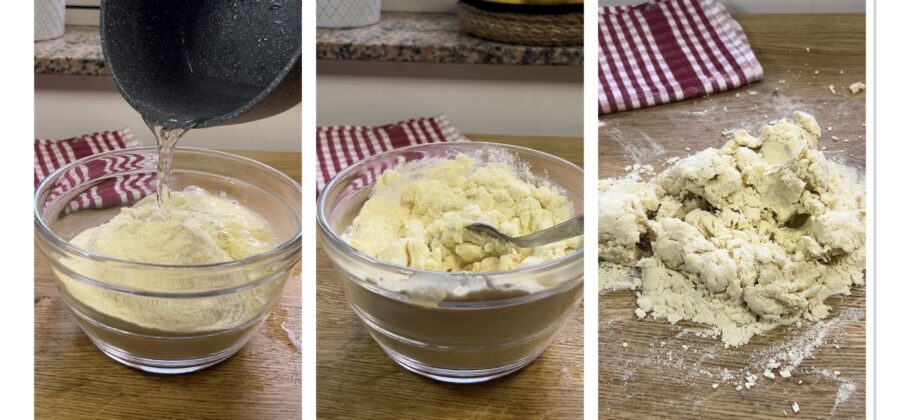
Fresh pasta dough is very dry and rather difficult to work with. If the amount of water added is not sufficient, add a little more (remember that flours absorb differently), but be careful not to obtain a soft dough because you won’t be able to form the busiate.
Form a ball as smooth and homogeneous as possible, cover it with a bowl and let it rest for about ten minutes. Then cut off a small piece and roll it into a long, thin rope, keeping the rest of the dough covered so it doesn’t dry out.
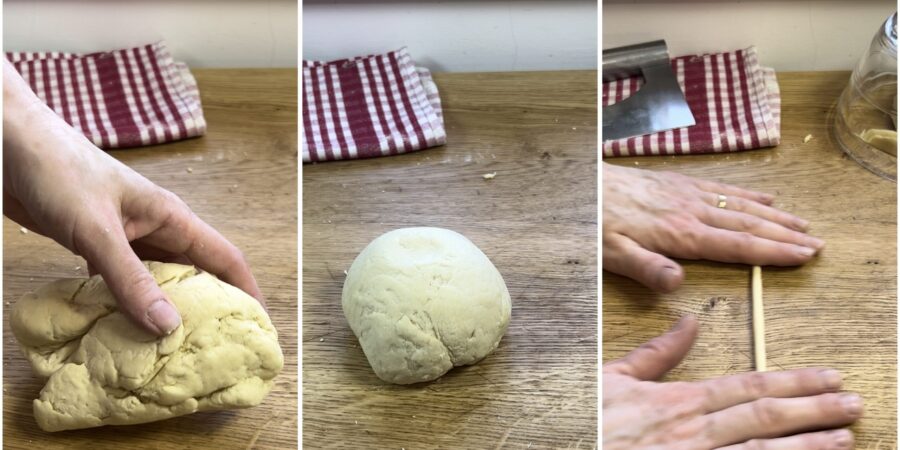
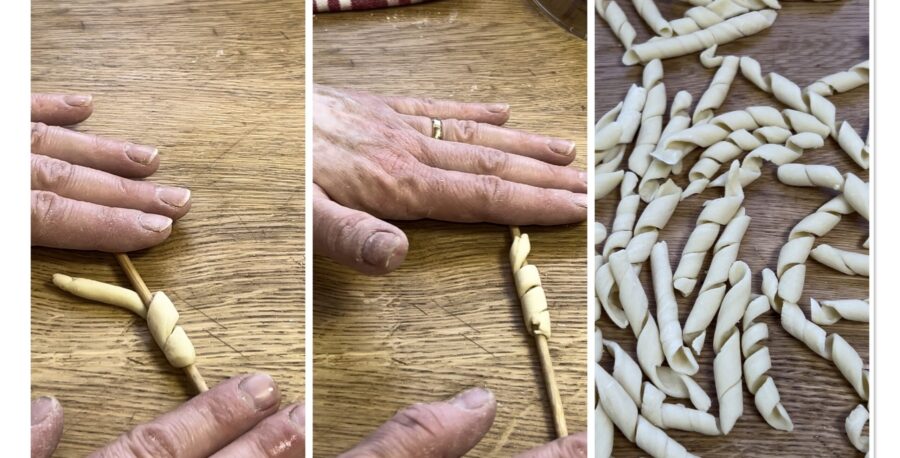
Divide the rope into equal pieces of about 4 inches and twist them around the skewer with a slow hand movement. Then press back and forth with your hand, as shown in the video below. Gently slide the pasta off the skewer and lay it on a clean kitchen towel.
The busiate are ready.
To cook, as with any other type of pasta, plunge the busiate into plenty of boiling, lightly salted water — they will need only two to three minutes once the water returns to a boil. Dress them with the sauce of your choice.
Storage
If you intend to dry the pasta, place it in a basket where it can breathe and store it in a dry, cool and well-ventilated place.
Follow me on social media to stay updated on new recipes: Pinterest; Twitter; YouTube; TikTok.
From here you can return to the HOME and discover new recipes