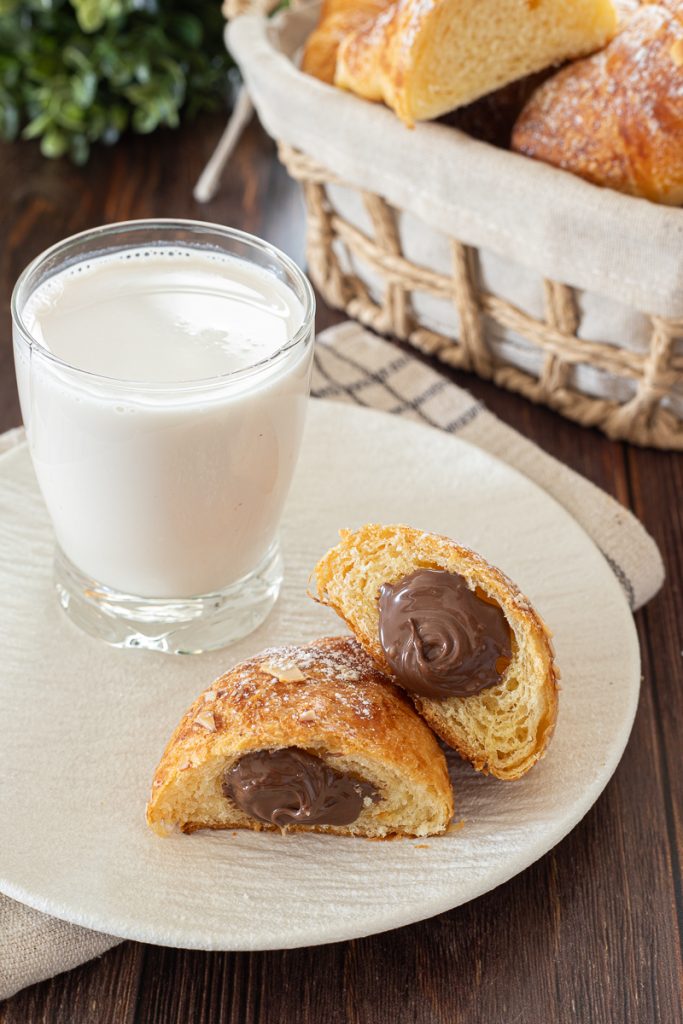
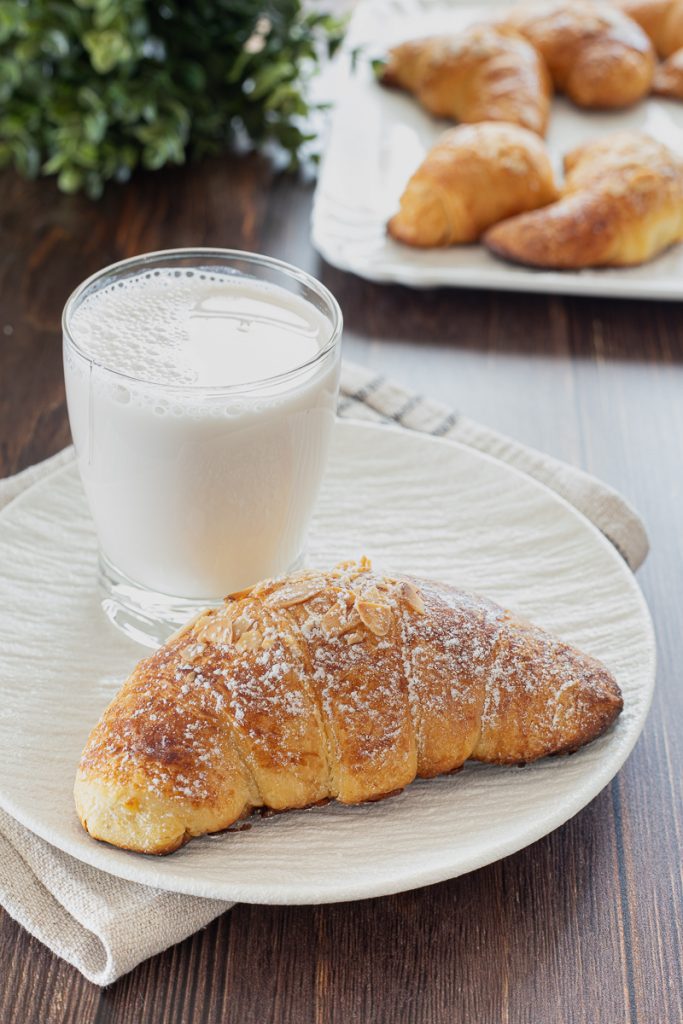
French layered croissants, a grandmother’s recipe, made with a leavened homemade puff pastry. A few days ago I decided to get hands-on and prepared these delightful croissants! Do you remember when we made the cipolline with half puff pastry? Perhaps from that moment you already understood my passion for this kind of basic dough, and today I wanted to try a breakfast classic: laminated brioches or croissants! It’s true the process might seem complicated, but follow it step by step and there won’t be any problems — you’ll make butter-scented croissants just like those from French boulangeries!
Making croissants at cool temperatures is ideal; I don’t recommend it in summer, since heat is an enemy of laminated dough. With the right precautions and rest periods in the fridge you can still do it. You can fill them either before baking or after baking with homemade hazelnut spread, pistachio cream or jams and preserves; I prefer to fill them after baking so they are fuller and don’t get messy while baking.
Let’s go to the kitchen! If 20–22 croissants are too many, once formed place them on a tray and freeze them. When they are firm, store them in a food bag and use as needed: just put them in a warm oven with the light on — they will take about six hours to proof.
With the same recipe you can make Pain au chocolat and laminated twists. As always, before you start, if you want to stay updated on new recipes you can follow my Facebook page and my Instagram profile.
Also look at:
- Difficulty: Difficult
- Cost: Medium
- Preparation time: 12 Hours
- Portions: About 20 croissants
- Cooking methods: Oven
- Cuisine: Italian
- Seasonality: All seasons
Ingredients to make the layered croissants
- 1/2 cup Water
- 2 cups Type 0 flour (250)
- 1 tsp Active dry yeast (Or 0.5 oz fresh yeast)
- 4 cups Type 0 flour
- 3/4 cup Sugar
- 1 tbsp Malt (Or honey)
- 5 1/4 tbsp Butter
- 4 eggs Eggs
- 2/3 cup Whole milk
- 2 tsp Salt
- 1 tsp Vanilla extract
- 1/3 cup Candied orange peel (Blended or fresh grated zest)
- 11.3 oz Butter
- as needed Type 00 flour
Tools
- Rolling pin
- Stand mixer
- Oven
- Baking sheet
- Bowl
- Brush
Preparation of French croissants
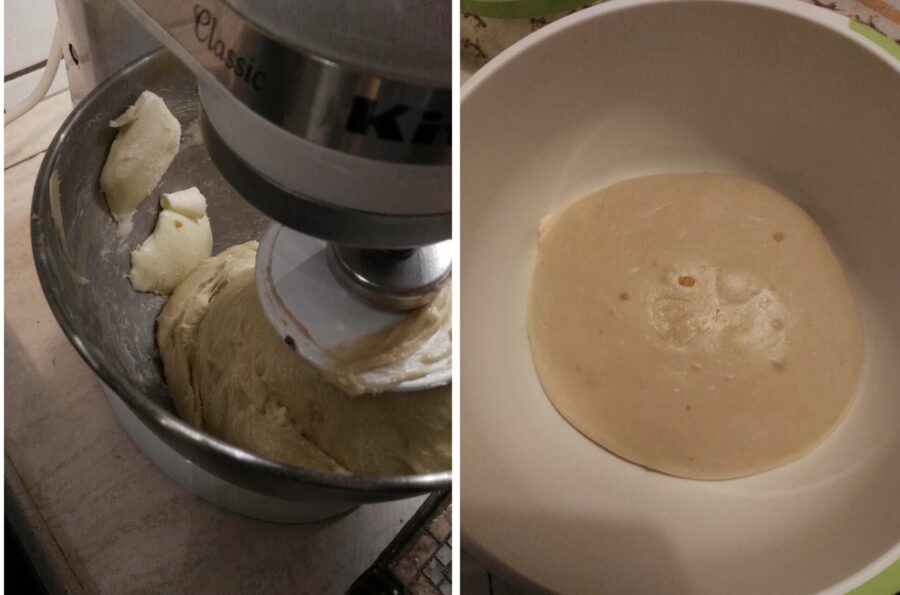
To start making our laminated brioches, begin with the sponge: put the lukewarm water, the flour and the yeast into the bowl of the stand mixer and work until you obtain a smooth, homogeneous dough; you can also mix by hand. Shape the sponge into a ball and place it in a bowl of room-temperature (not cold) water. After about twenty minutes the dough will float and it will be time to proceed; otherwise wait.
(If you decide to use less yeast, before placing the dough in water wait about fifteen minutes and adjust accordingly, since fermentation will naturally take longer).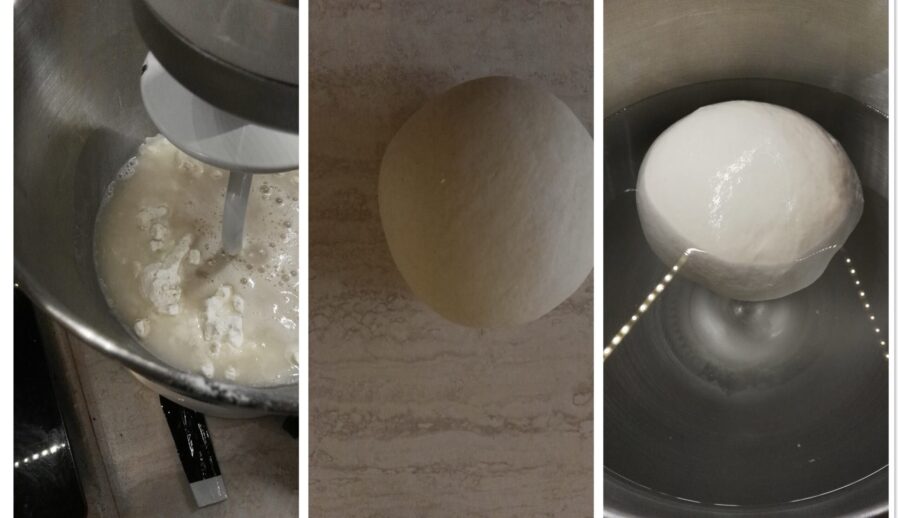
Take the sponge, break it into pieces and place it in the stand mixer together with the rest of the ingredients for the base dough, except for the butter, the orange paste and the salt.
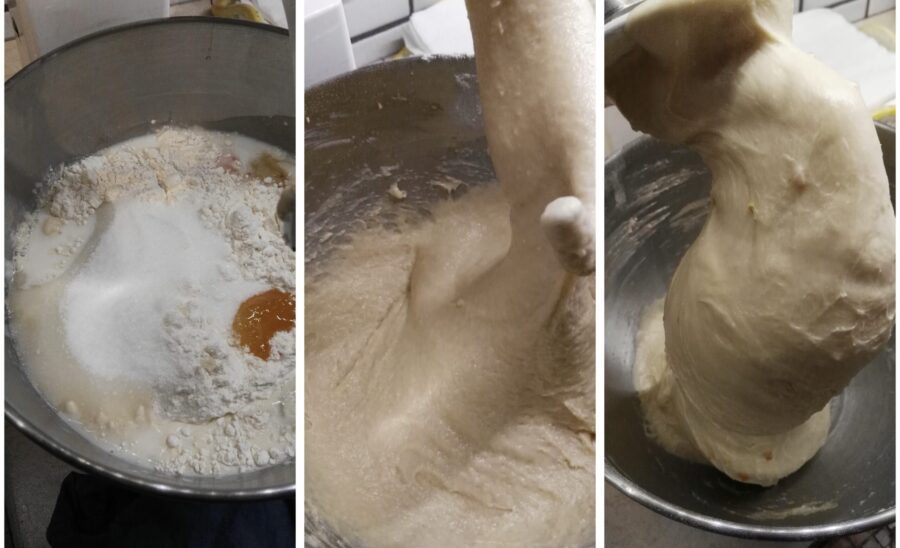
Start the mixer and work until the dough reaches the windowpane stage; the dough, initially very soft, will take about 20 minutes to gain structure and dry out. When properly staged, the dough will be smooth, homogeneous and will wrap around the hook leaving the bowl clean. Add the salt, then the butter and finally the orange paste; run the mixer again until you obtain a homogeneous, smooth, well-developed mass. Shape the dough into a ball, put it in a bowl and refrigerate for 6–8 hours.
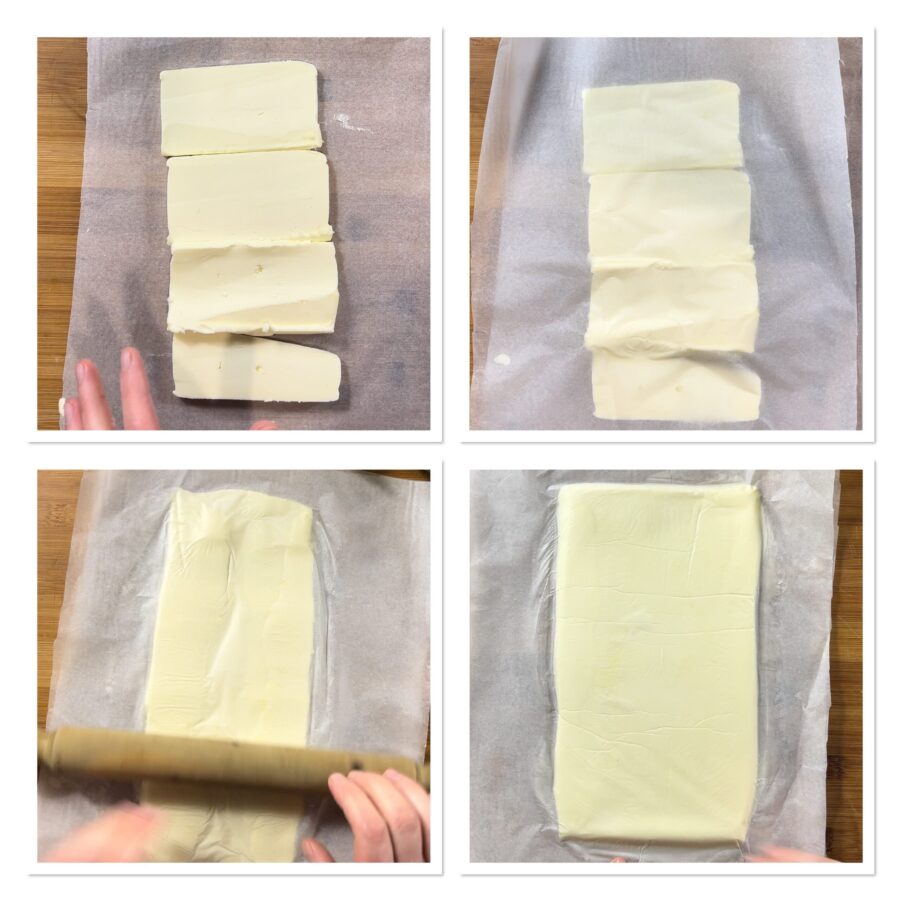
After the dough has rested, prepare the butter for laminating. Take a large sheet of parchment paper, place the butter cut into pieces on it and close like a package. Work the butter until you obtain a rectangular sheet about 0.16 in (about 1/6 in) thick, approximately 13 3/4 in high and 7 7/8 in wide, with clean edges. Put it in the fridge to firm up.
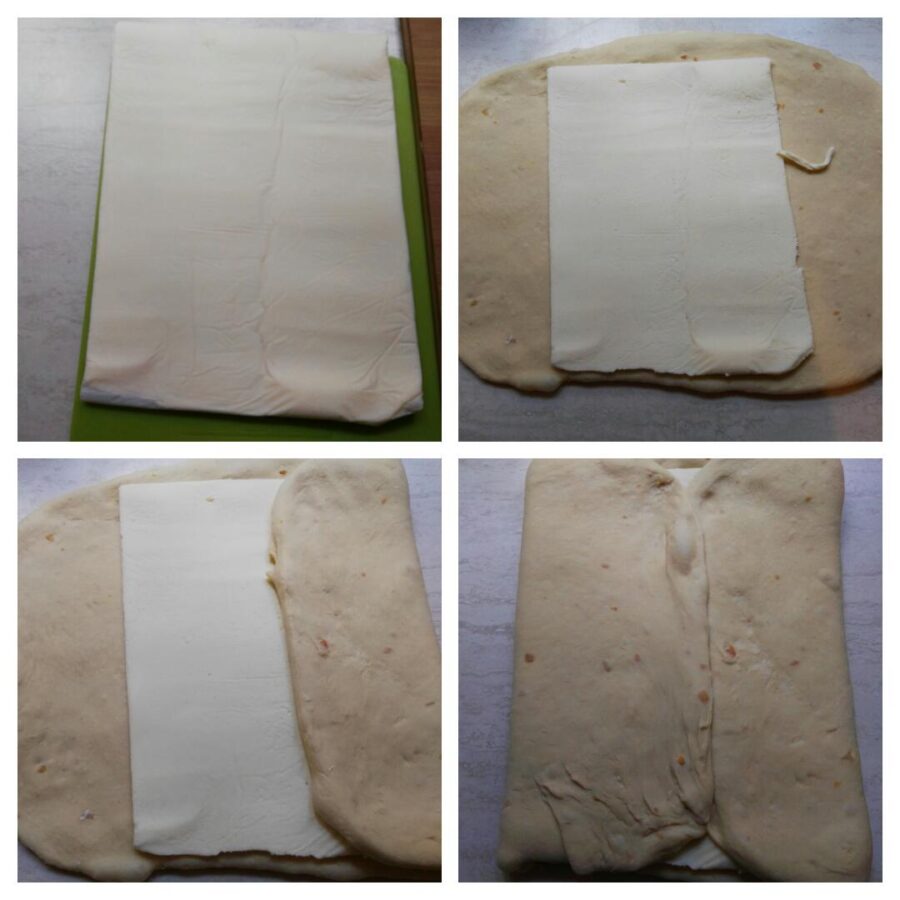
After the resting time, take the dough out and roll it into a rectangle large enough to encase the butter sheet prepared earlier (keep the butter in the fridge until use). See the photo below to understand how to “encase” the butter.
Gently roll out the dough with the butter enclosed to form a rather long rectangle, then perform a letter fold (threefold). You will have a rectangle — place it with the short side towards you and roll it out again into a long rectangle, fold into thirds once more and refrigerate for 30 minutes.
After that time, roll out again into a narrow, long rectangle, keeping the short side always towards you, repeat the series of threefolds and refrigerate for another half hour.
After which, roll out the dough and repeat the final series of folds. Be careful when rolling the dough not to tear the layers that will form.
Refrigerate for the last thirty minutes.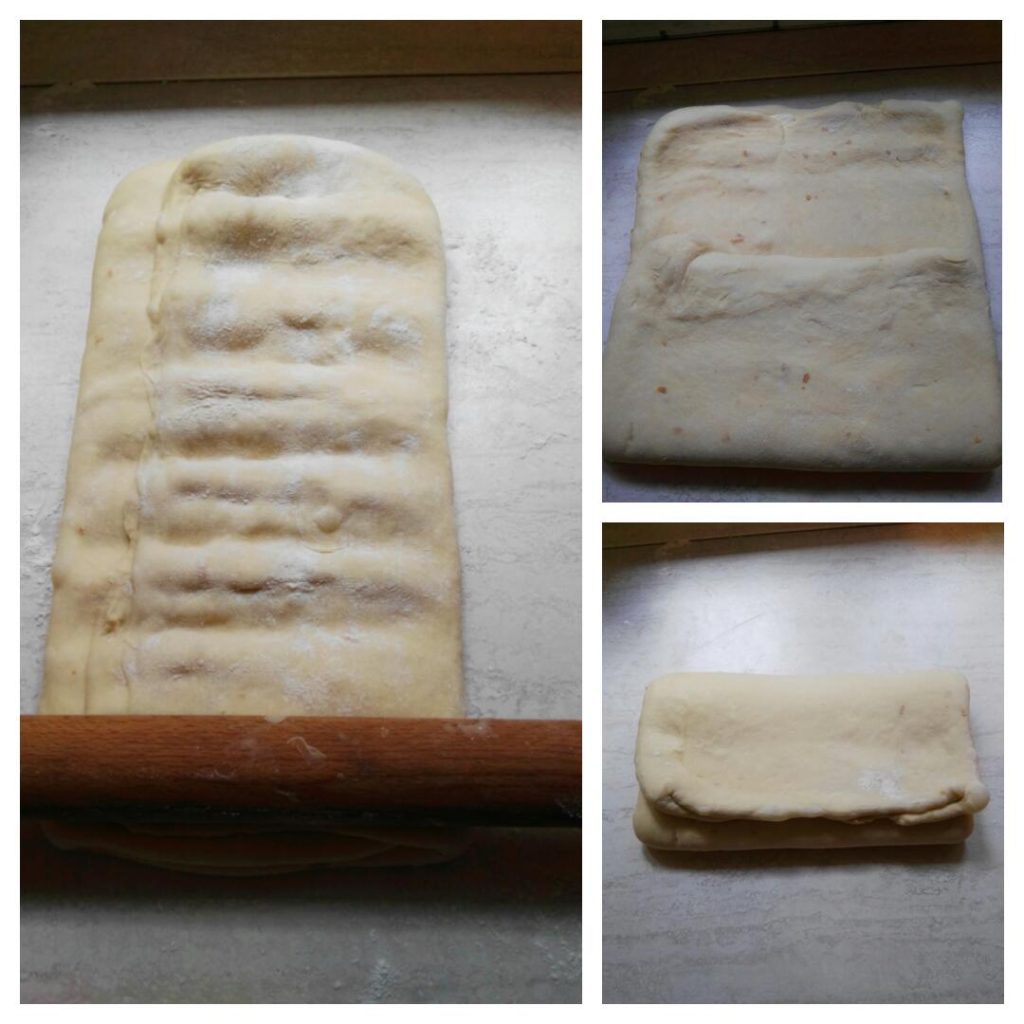
After the resting time you can shape the croissants: divide the laminated block in half and return one half to the fridge. With the other half roll out a rectangle about 3/16 in thick and roughly 9 7/8 in tall (length as needed). Using a pizza wheel or cutter cut triangles with a base of about 4 3/4 in and make a small 5/8 in incision at the base. You can decide to fill the croissants immediately or after they are baked and cooled; I prefer to fill them after baking.
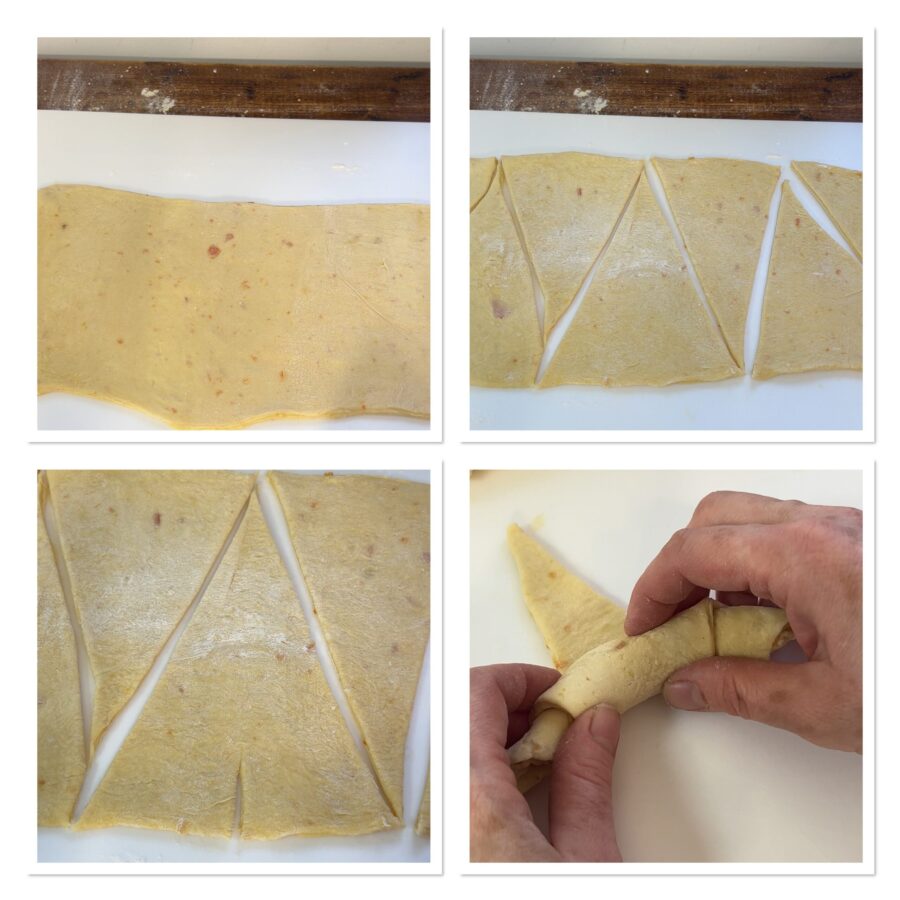
Roll the croissants from the base towards the tip, curving to form a crescent shape, as in the photo.
Proof the croissants at 82°F for about 2–3 hours. If you don’t have a proofing box, place them in the oven with the light on — you’ll achieve an internal temperature of about 79°F.
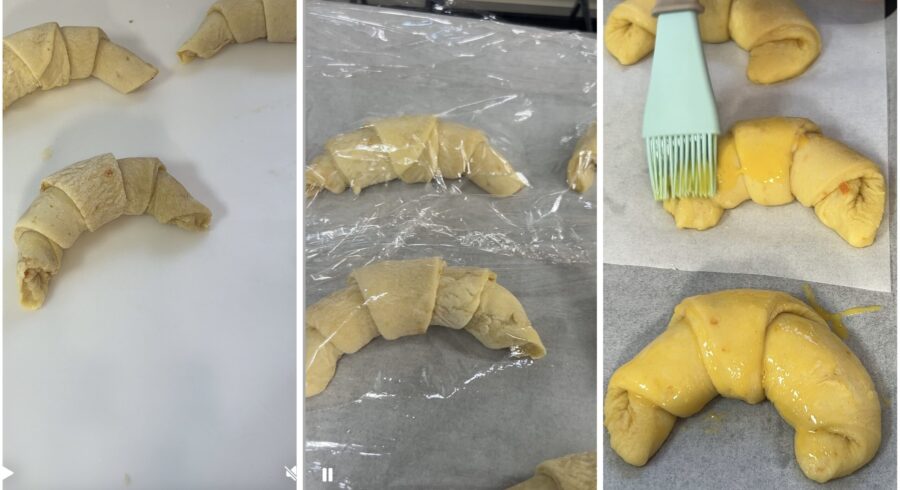
After proofing the croissants will be puffed and doubled. Brush them with beaten egg mixed with milk and, if desired, sprinkle with pearl sugar or sliced almonds.
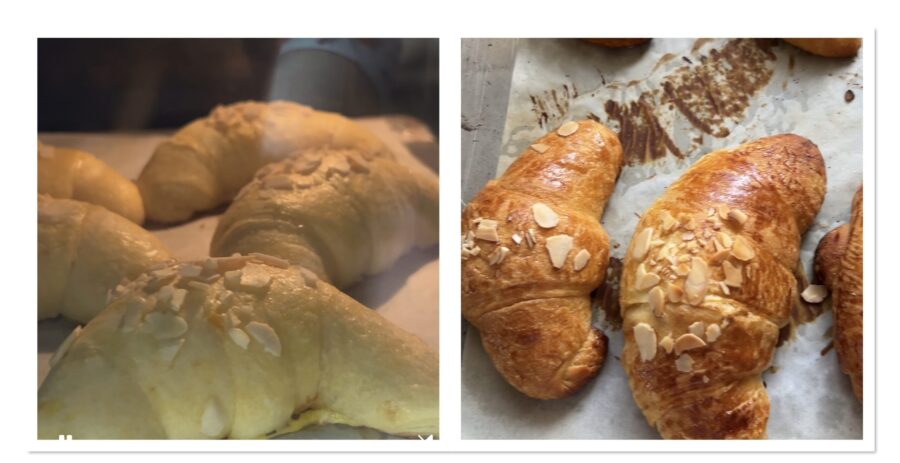
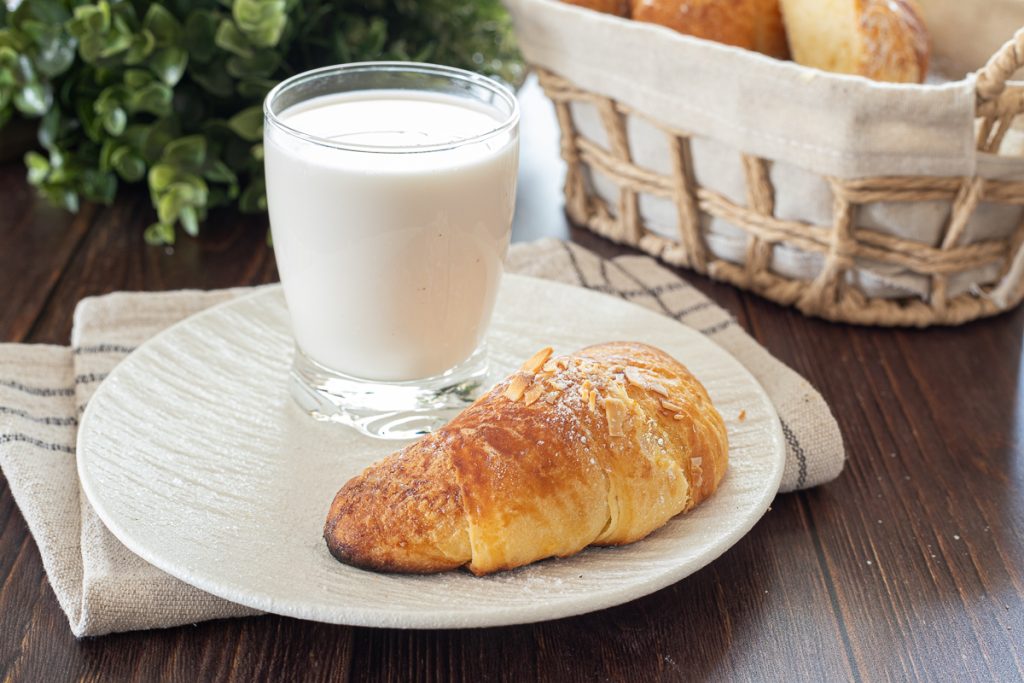
Bake at 356°F for 15 minutes, cool on a rack and enjoy.