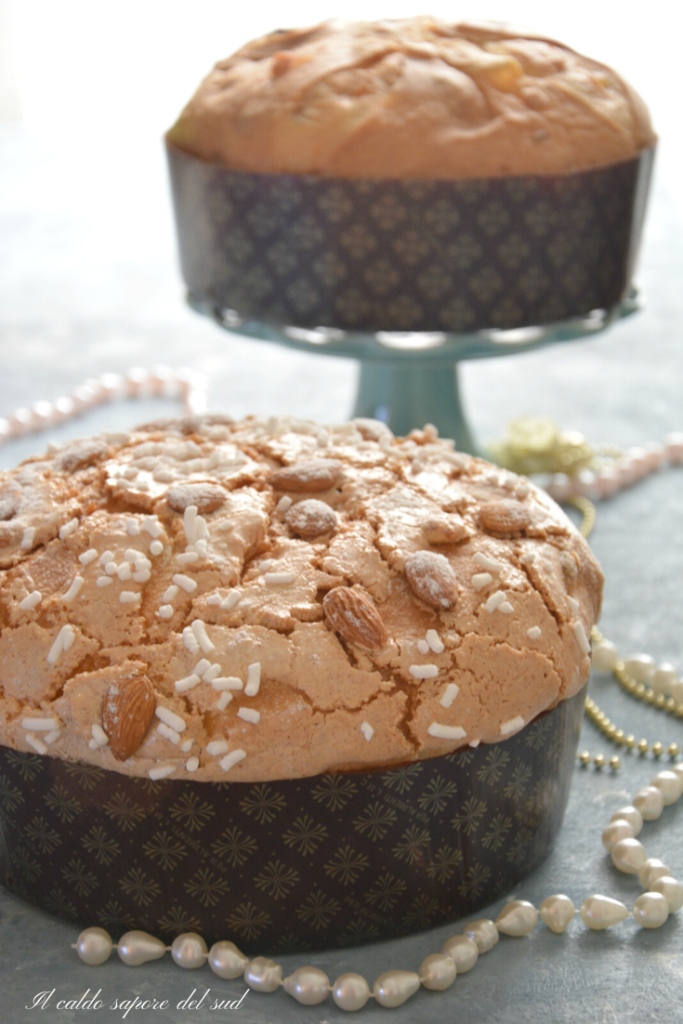
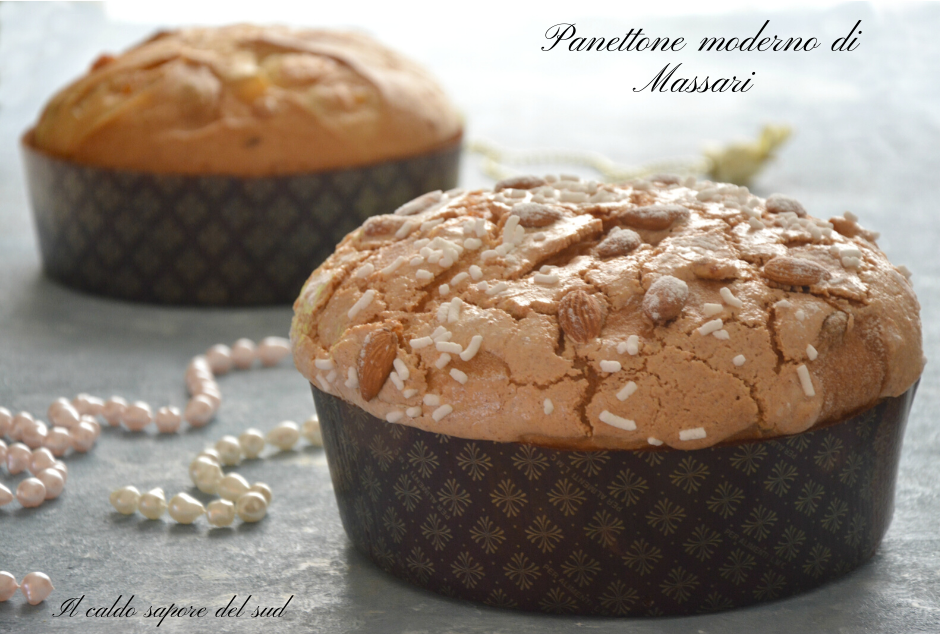
Modern Panettone by Massari.
Making large leavened breads is definitely my passion, but before being able to pull out a decent one from the oven you lose count of the wasted eggs and mistakes made. So if you don’t succeed right away, don’t give up and try again. It’s not easy at the beginning, but little by little you’ll get the hang of it and you’ll be able to bake panettones as easily as you would a simple bundt cake. This recipe is taken from the book by Massari and Zoia “Cresci”. Since the recipes in the book are written for very large quantities, I had to adapt the amounts for home preparation, so the calculations underwent slight rounding, but the recipe is the same. I promise that if you follow it step by step there won’t be problems. To start a large leavened dough you essentially need time, a good active sourdough starter and a very strong flour, with W 360 P/L 55. Time is necessary to follow a fermentation that will not wait for you: when you must start the second dough you must be at home, and the same applies when you must put it in the oven; going past the fermentation time will mean wasting time and work. The sourdough starter must be strong and well mature, so refresh it often in the days before the preparation and, at the time you will use it, it should have been refreshed at least three consecutive times, once every three hours. So, if you decide to mix in the evening, you can do the first refresh at 12:00, the second at 15:00, the third at 18:00 and then mix at 21:00. I recommend doing the first dough in the evening, so it will be ready in the morning and you can bake the panettone by the following evening. As for the flour you must use a very strong flour, with very high W and P/L; you rarely find it in common supermarkets, but online you can find good technical flours for large leavened breads at very reasonable prices. Concerning the total weight, I calculated to obtain about 1.2 kg of dough because during baking the dough will lose around 10% of its weight which we must compensate, and also during handling, especially the first times, you might lose some dough, so it is better to prepare a little extra. Final tip: the panettone can be eaten immediately, but it is preferable to eat it after a couple of days, when the inclusions have released their aroma. Large leavened breads made with sourdough also keep for up to a month: let them dry in the air for at least twelve hours after baking and then store them in a food bag, possibly lightly sprayed with pure pastry alcohol. Naturally, the further you go from freshness the more the flavor suffers; I would recommend not exceeding 15 days.
I remind you that if you want to stay updated on all my other recipes you can follow my Facebook page and my Instagram profile
If you liked this recipe, also check out:
–Modern Panettone by Massari;
Massari’s Chocolate and Gianduia Panettone;
Massari’s Old-Milan Panettone;
Modern Panettone by Massari;
Massari’s Easter Colomba;
Savory Yogurt Panettone without Eggs and Butter;
Massari’s Nadalin;
Easy Soft Savory Panettone without Eggs.
- Difficulty: Very difficult
- Cost: Expensive
- Preparation time: 1 Day
- Cooking time: 55 Minutes
- Portions: 1 kg of panettone (about 2.2 lb)
- Cuisine: Italian
Ingredients
- 2.5 oz (about 1/3 cup) sourdough starter (well matured and refreshed at least three consecutive times before mixing)
- 1 7/8 cups (about 8 oz) 00 flour (W 360 P/L 55)
- 1/3 cup (about 2.3 oz) granulated sugar
- 6 tbsp (about 2.8 oz) butter
- 3 fl oz (about 1/3 cup) water
- 3 egg yolks egg yolks
- 2/3 cup (about 2 oz) 00 flour (W 360 P/L 55)
- 4 egg yolks egg yolks
- 6 tbsp (about 2.7 oz) granulated sugar
- 6 tbsp (about 3.0 oz) butter (of the best quality)
- 3 tbsp (about 1.4 fl oz) water (approximately)
- 1 packet vanillin powder (or the seeds of one vanilla bean)
- 1 tbsp (about 0.5 oz) honey
- 1 tsp salt
- 3/4 cup (about 3.9 oz) raisins
- 3/4 cup (about 3.9 oz) candied orange (small dice)
- 1/3 cup (about 2 oz) candied citron (small dice)
- 1/3 cup (about 2 oz) almonds (if you have some bitter ones, add a few)
- 1/4 cup (about 1.1 oz) hazelnuts
- 3/4 cup (about 6 oz) granulated sugar
- 2 tsp cornmeal (polenta-type)
- 2 tsp potato starch
- 2 1/3 egg whites (about 2.5) egg whites (about 70 g total)
- to taste powdered sugar
- to taste whole almonds (for decoration)
- to taste almond flakes (for decoration)
Tools
- Planetary mixers
- Mixing bowl
- Oven
Preparation
Put the soft butter, the sugar, the water at 68°F (20°C) and the flour into the mixing bowl of your stand mixer and mix until the dough begins to come together, then add 1/3 of the egg yolks.
Gradually the dough’s texture will change and it will seem to tear; keep going, don’t give up and continue mixing, increasing the speed as needed.
It will take at least fifteen minutes before the dough is ready. When the mass is silky, elastic and homogeneous — in other words when it has come together on the hook — you can proceed with the subsequent additions. Then add the sourdough starter, which must have been refreshed at least three consecutive times and be well matured.
When the starter has been fully absorbed by the dough, add the rest of the yolks and continue mixing.
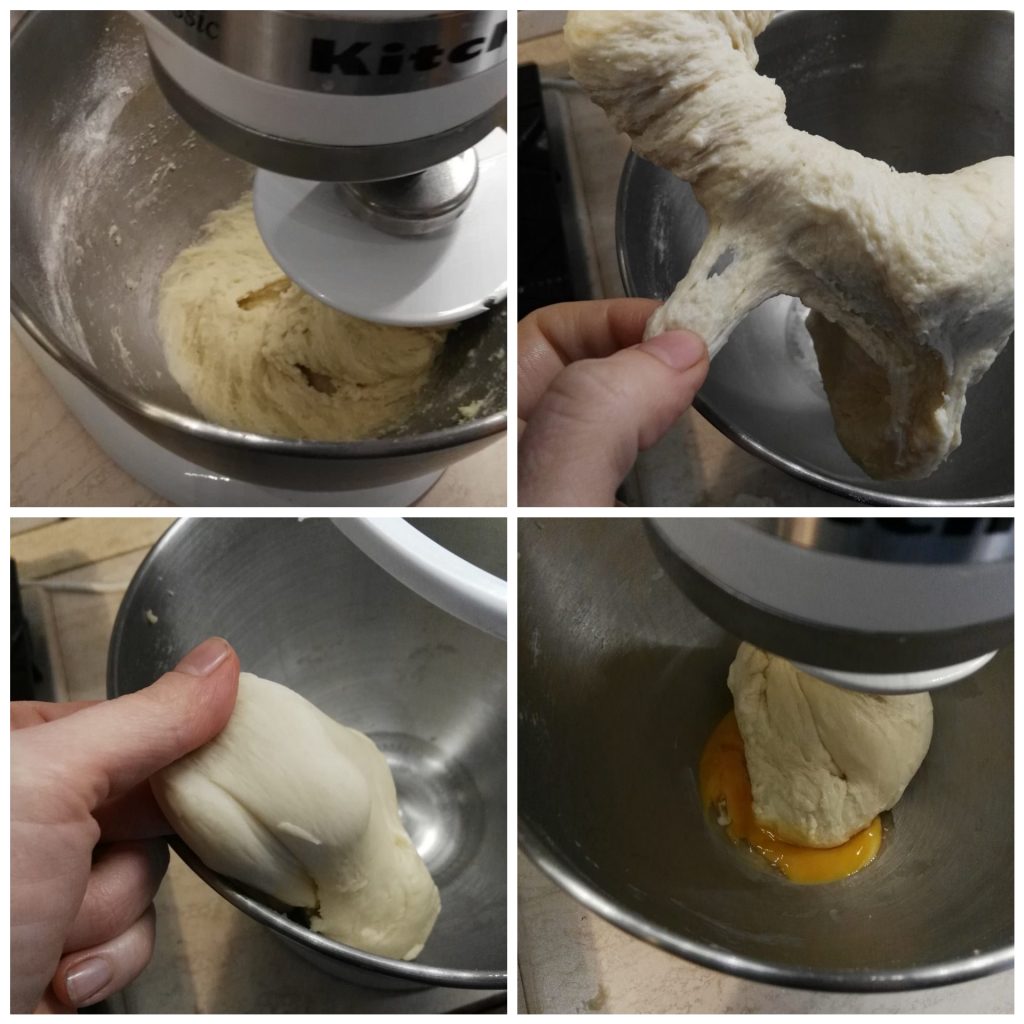
When the dough sticks to the mixer hook leaving the bowl clean and appears shiny (but not too shiny, which would mean it has been overworked), you have finished the first dough.
Turn the mass out onto a non-floured work surface, set aside a walnut-sized piece and shape the main dough into a smooth ball using a bench scraper (pirlate).
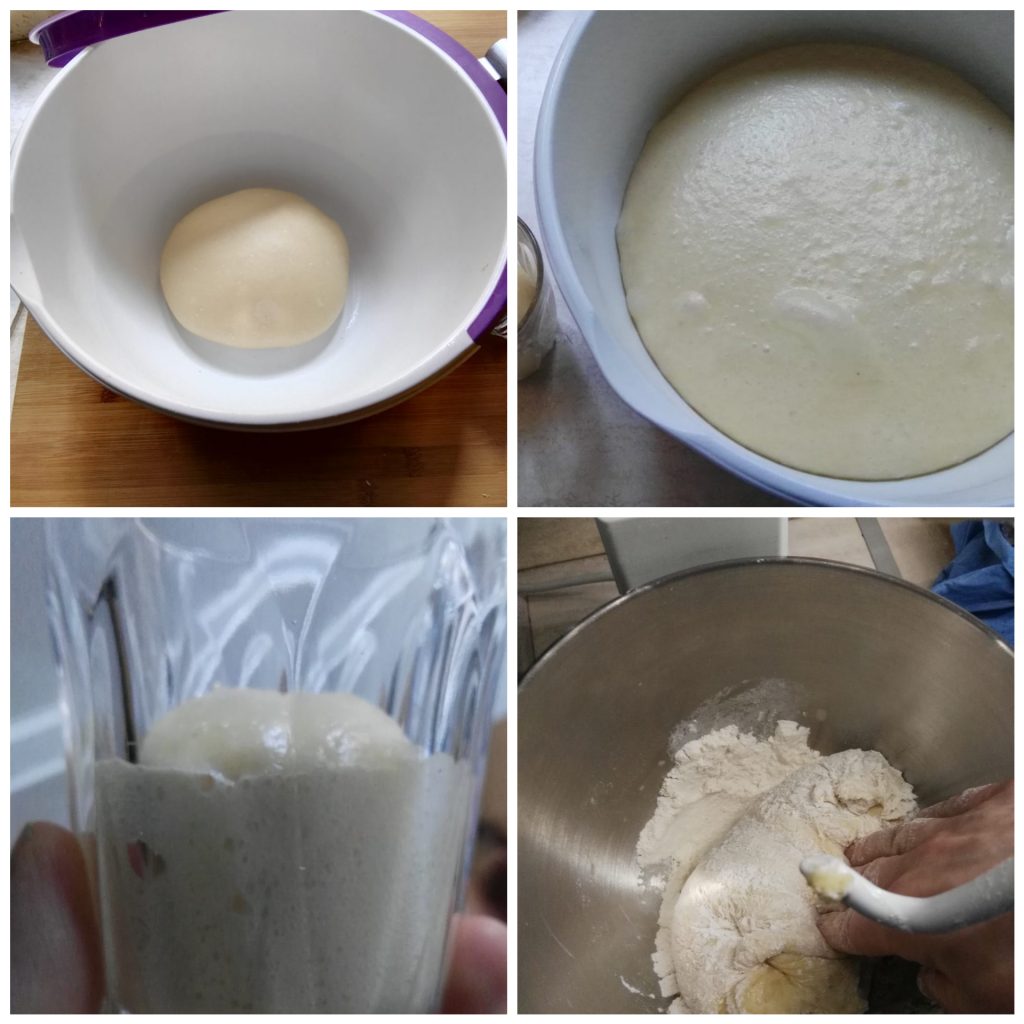
Also shape the walnut-sized piece and place it in a glass; it will be used to monitor the progress of the fermentation.
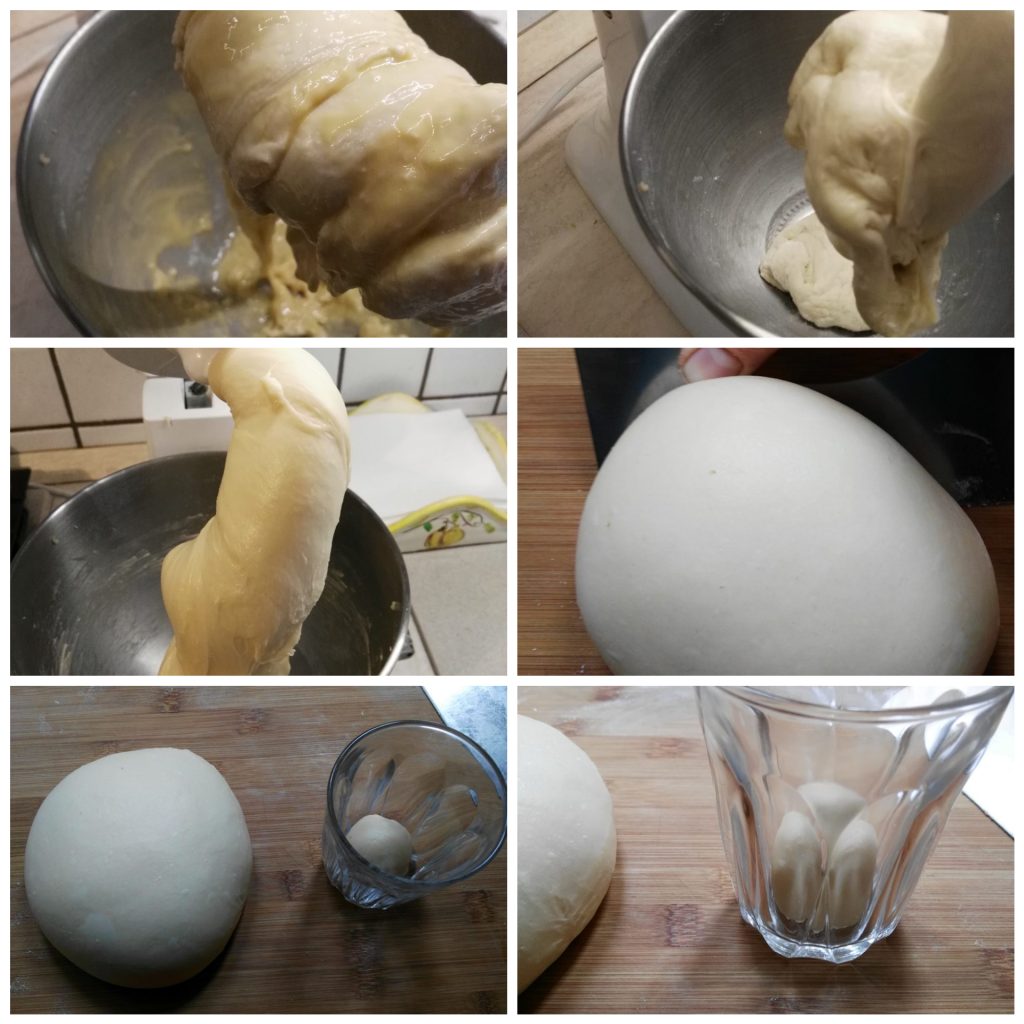
Let the dough rest covered in a bowl together with the reserved piece inside a proofing chamber at 79°F/82°F (26°C/28°C) for at least ten to twelve hours, until it has tripled in size. Of course, if you don’t have a proofing chamber you can warm your oven with the pilot light on to obtain a temperature of about 79°F (26°C).
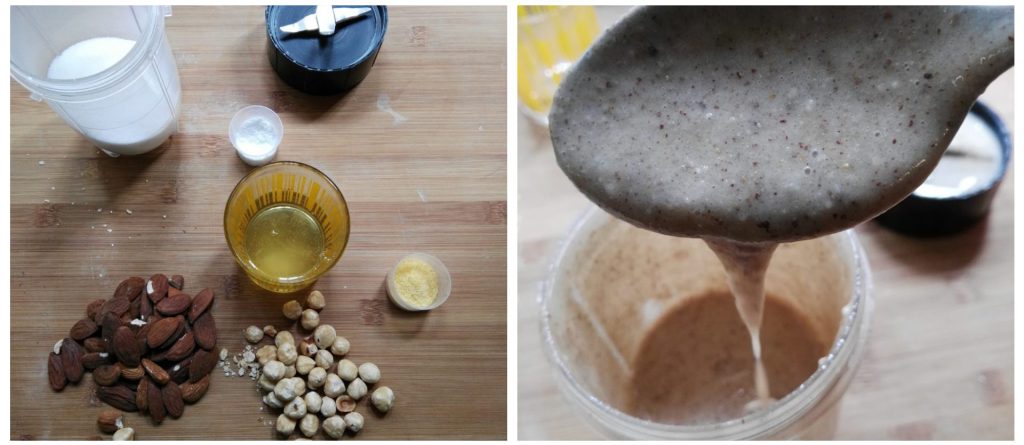
I recommend preparing the glaze when you close the first dough. Blitz and reduce all the glazing ingredients to a powder, then add the egg whites. Store in the fridge until needed (it will keep for several days).
If you closed the dough the evening before, as advised, the next morning—if everything went well—you will find the mass tripled. Since this is not an exact science, if there are delays, wait and do not proceed: insufficient fermentation will delay subsequent rises by a time equal to three times the missing fermentation from the previous step. (In the glass you will see the little reserved dough used to monitor the fermentation).
Place the risen dough into the mixer, add the flour and aromatics and allow them to be incorporated—this will take about 18 minutes—until the dough is smooth and has come together on the hook.
Continue with the other ingredients and add the sugar and the honey.
Immediately after, add 1/3 of the yolks.
The mass will first tear, then regain its consistency.
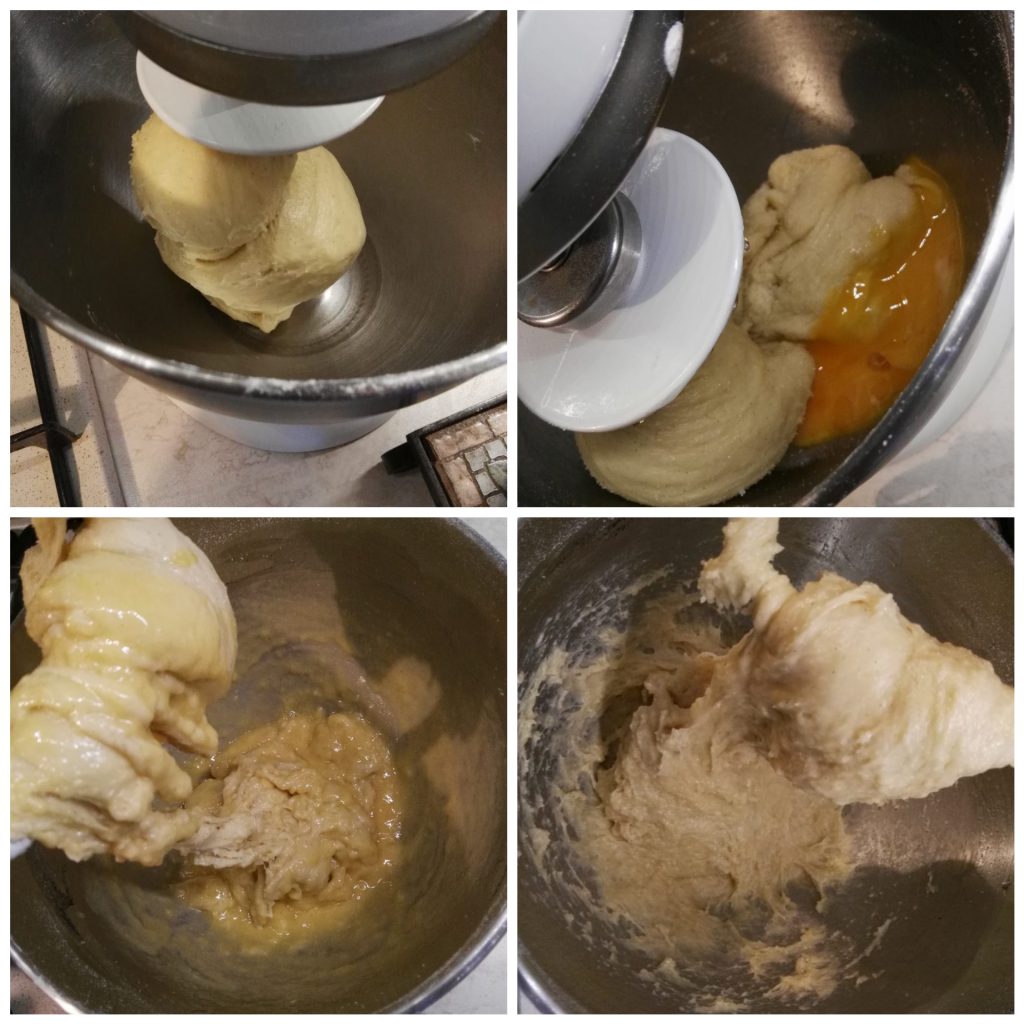
Only when the dough is perfectly developed on the hook (absolutely not before) should you add the salt and the rest of the yolks and let the dough come together again.
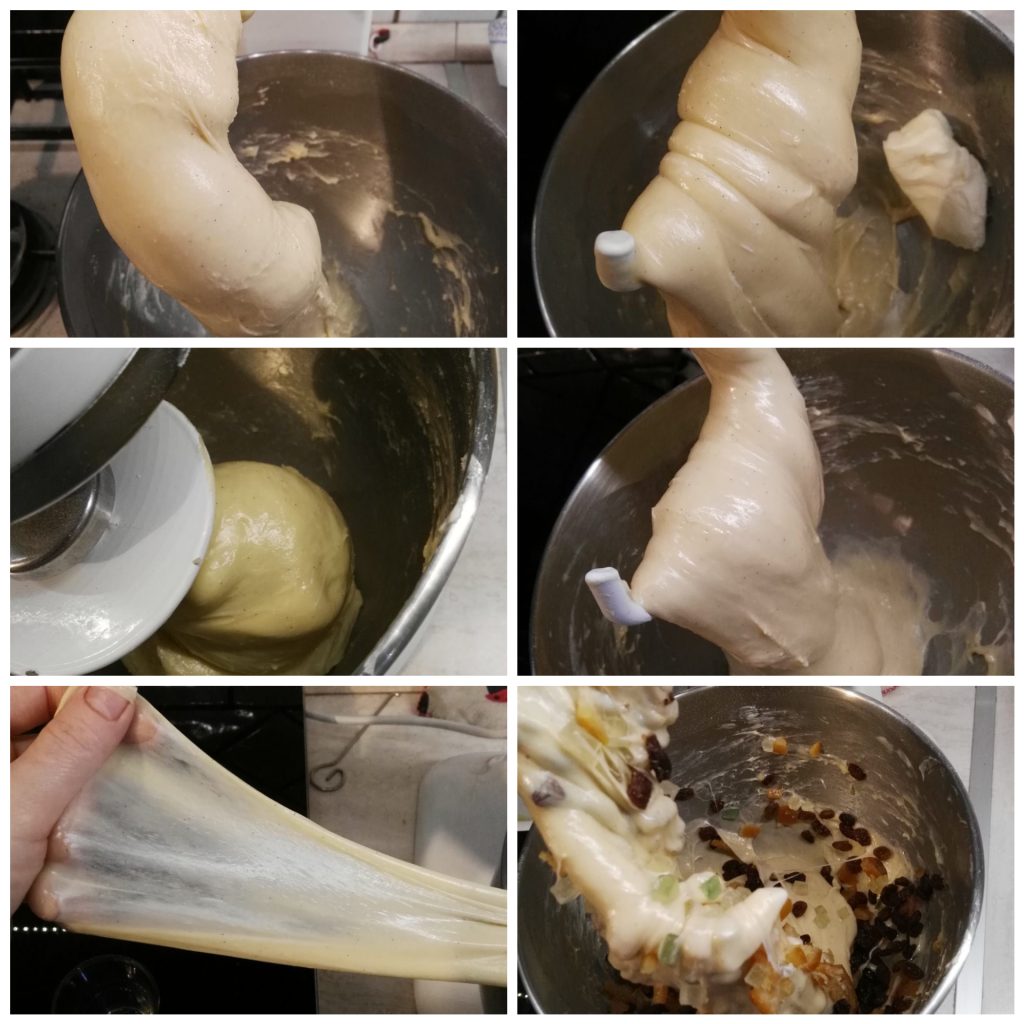
At perfect development, and not before, add the soft but not melted butter, keeping back about 0.5 oz (roughly 15 g). Wait for everything to come back together perfectly and add the water little by little; this is used only to adjust the dough, so you may decide not to pour it all in.
When the dough is perfect, pulling a flap will stretch it like a sheet, forming almost a window pane without tearing.
It is time to add the melted butter we had reserved, the candied peels, citron and raisins. The raisins were first soaked for a couple of hours and then left overnight between two sheets of absorbent paper to dry without becoming dry again (so prepare them when you close the first dough).
To better incorporate the inclusions, turn the dough out onto the work surface and fold the edges toward the center a couple of times; do not use any flour at this stage.
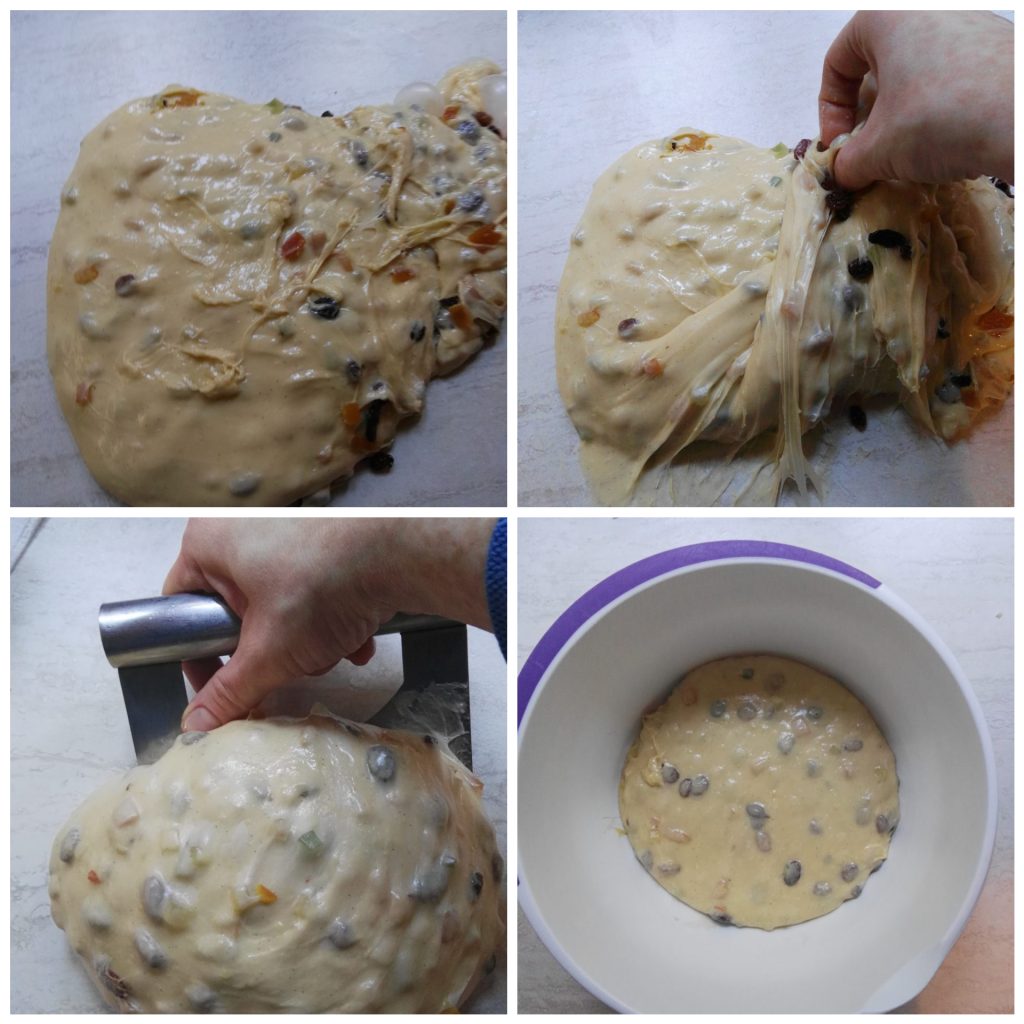
Shape the dough into a ball (pirlate) and place it in a bowl; put the bowl in the oven or proofing chamber at 79°F/82°F (26°C/28°C) for one hour so it can start to rise again.
After an hour, turn it out onto the work surface and let it rest exposed to the air for half an hour (the recipe does not technically require this, but it helps dry the surface slightly and give tension before the final shaping).
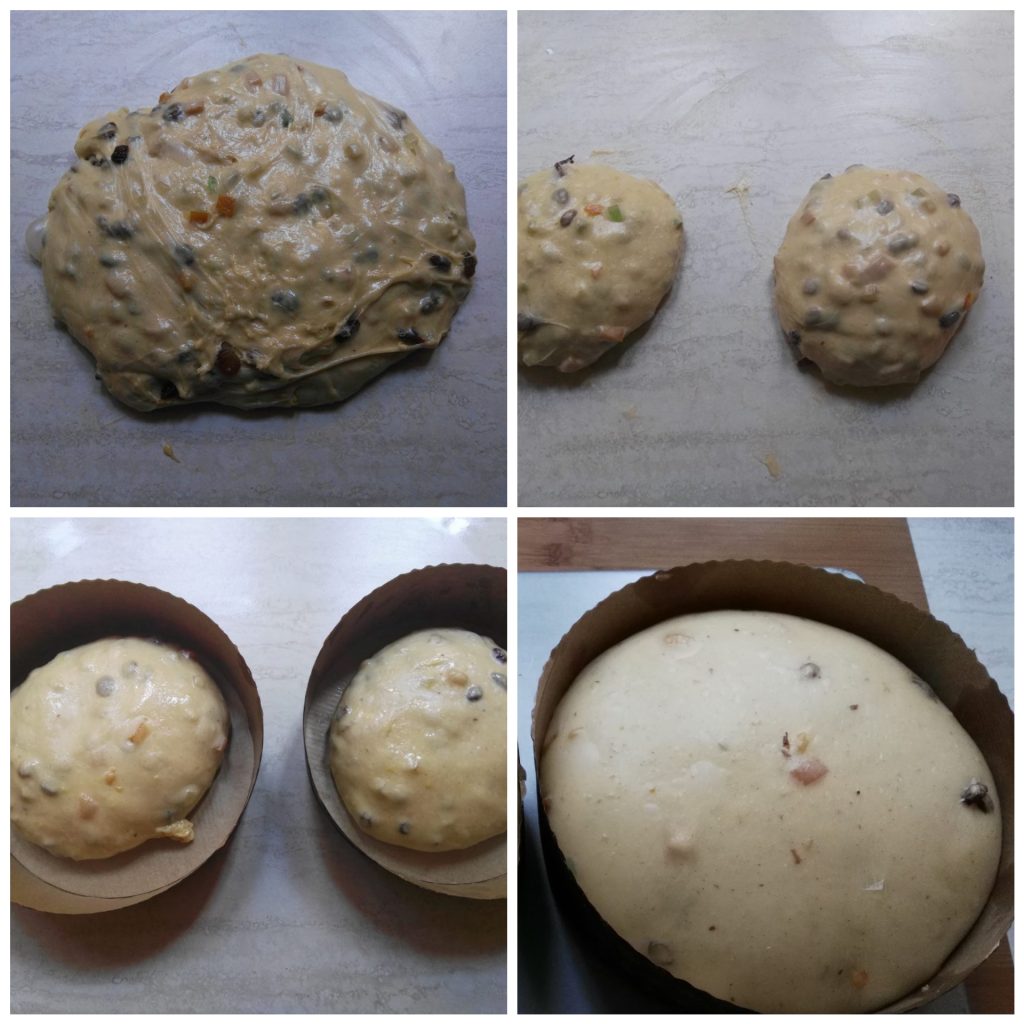
Portion the dough, shape it into balls, let it rest another fifteen minutes and then repeat the shaping. I made two panettones of 1/2 kg each.
Place them in baking molds and let them proof in the oven or proofing chamber for the necessary time.
After 6 to 8 hours at 79°F/82°F (26°C/28°C) the dough should be risen. When the panettone has reached about 3/8 in (1 cm) from the rim or slightly less, you can bake it: preheat the oven to 338°F (170°C). Now you can decide whether to glaze the panettone or not.
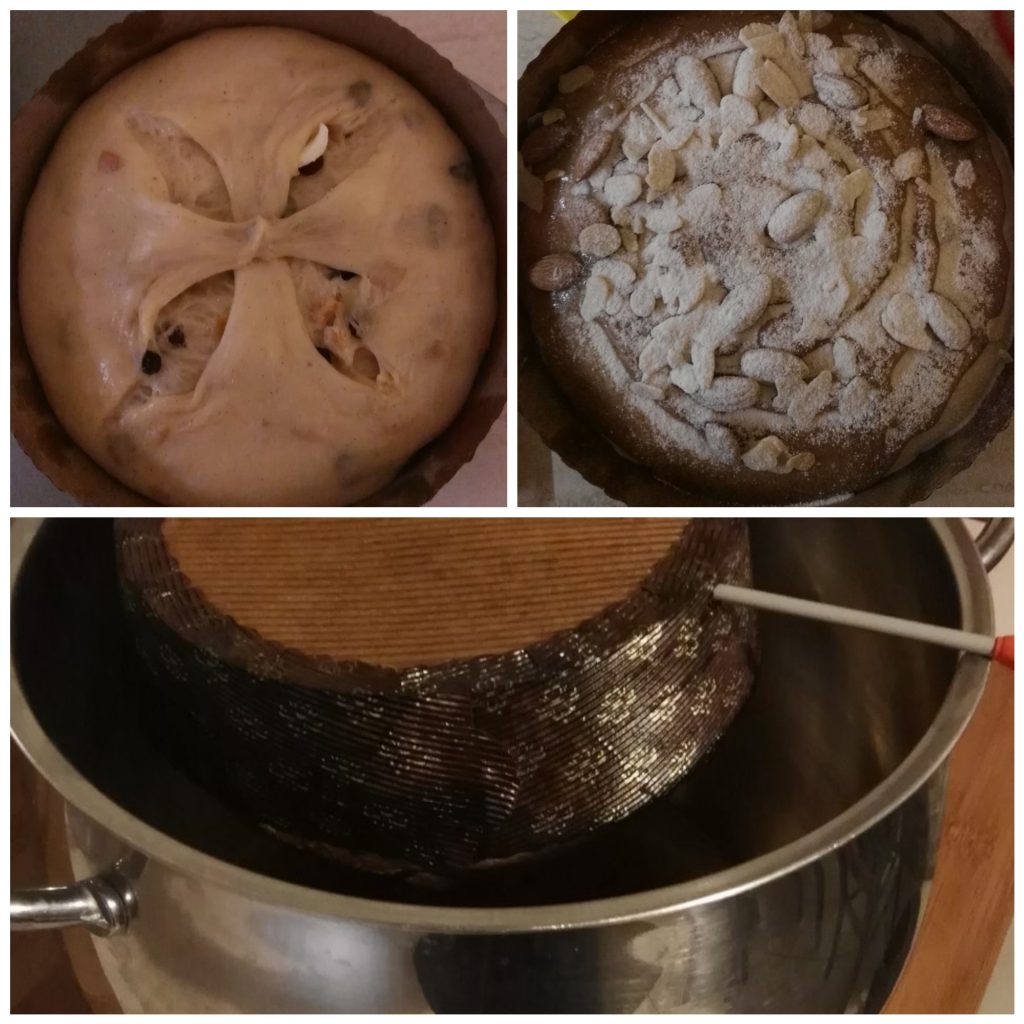
If glazing, put the amaretti-style glaze into a piping bag fitted with a narrow tip, pipe it over the panettone, add whole almonds and almond flakes and dust with powdered sugar.
If not glazing, make a cross incision with a razor blade or a sharp blade, notch it slightly, insert small knobs of butter and close the flaps.
Place in the oven on the second-to-last shelf. The 1 kg portions will be baked after 55 minutes at 338°F (170°C); the 500 g portions will be done after 33 minutes at the same temperature. In any case, check the internal temperature: it should not exceed 205°F (96°C), so get a probe thermometer to monitor it. As soon as you take them out of the oven, insert skewers (even knitting needles) and turn them upside down immediately; keep them in this position for at least two hours.