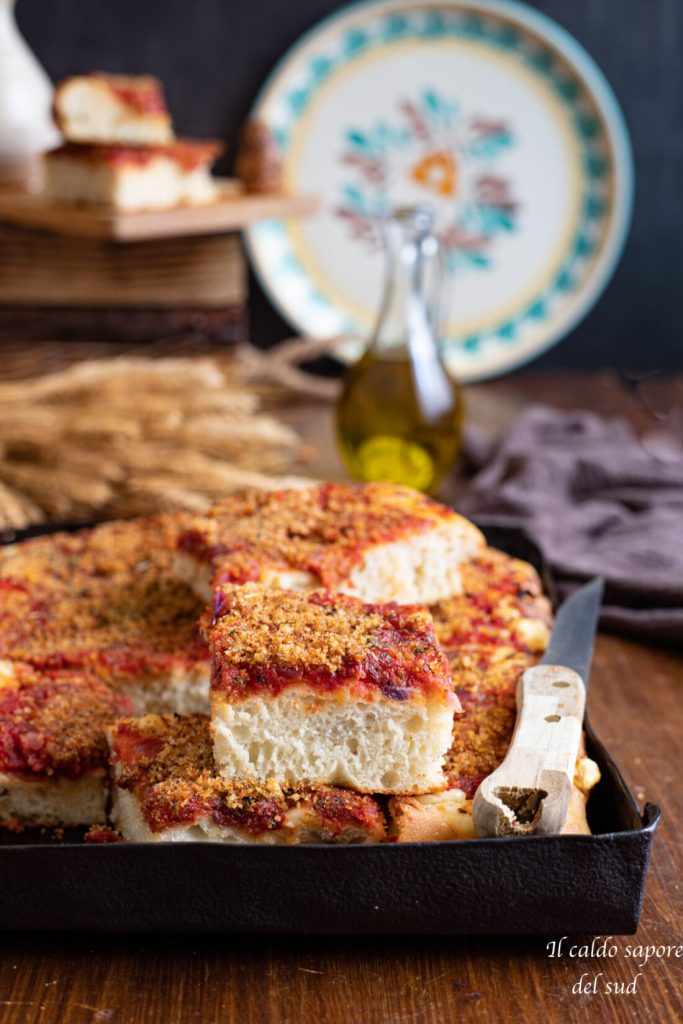
Palermitan Sfincione, the original recipe explained step by step, with photos of every stage.
The Palermitan sfincione, grandma’s recipe or the Sicilian sfincione, is a typical savory bread you can find throughout western Sicily and is part of the Sicilian cuisine and grandma’s recipes. Tall, soft and with an intense flavor, the sfincione is a cloud of tender goodness typical of Palermo’s street food, alongside Panelle, Arancini, various Sicilian rosticceria, Bagherese sfincione and much more. A leavened bread enriched with “la conza”, that is a topping made of tomato sauce and onions, anchovies, breadcrumbs, oregano and caciocavallo. A sort of thick, very soft pizza with an intense aroma that’s hard to refuse! The sfincione dough is simple, you can mix it by hand or use a stand mixer. The original recipe calls for lard in the dough, as is common for Sicilian rosticceria dough in general, but excellent results are also obtained using vegetable or olive oil.
The sfincione, which as the name suggests should be soft as a sponge (spongia in Latin), can be made with a long 24-hour fermentation, a quick rise using dry or fresh baker’s yeast or even with sourdough starter. In this recipe we’ll show you how to make a quicker Palermitan sfincione with dry baker’s yeast, but I’ll also give notes for the other methods.
If you love Palermo street food, I also recommend checking the recipes for cuccia and Palermitan fried Iris.
Let’s go to the kitchen now and discover how to make Palermitan sfincione. Before rolling up our sleeves, remember that if you want to stay updated on all my other recipes, you can follow my Facebook page and my Instagram profile.
Check out these Sicilian recipes:
- Difficulty: Very easy
- Cost: Very inexpensive
- Rest time: 2 Hours 30 Minutes
- Preparation time: 30 Minutes
- Portions: 6
- Cooking methods: Oven
- Cuisine: Italian
Ingredients
- 1 7/8 cups re-milled durum wheat semolina
- 2 1/2 cups all-purpose flour (type 0)
- 2 tsp salt
- 1 7/8 cups warm water (warm)
- 3 tbsp extra-virgin olive oil (or about 3 1/2 tbsp lard)
- 2 tbsp sugar
- 1 tsp active dry yeast (or 12 g fresh (about 0.4 oz))
- 14 oz onions (about 3 medium, preferably white)
- to taste water
- to taste salt
- 1 tsp sugar
- 4 anchovies in oil (about 8 fillets in oil or salted)
- 1 3/4 cups tomato pulp (or canned peeled tomatoes)
- to taste extra-virgin olive oil
- to taste oregano
- 1/4 cup breadcrumbs
- 7 oz caciocavallo (Sicilian, semi-aged; dice 2/3 and grate the rest)
Tools
- 1 Bowl
- 1 Baking pan
- 1 Frying pan
Preparation
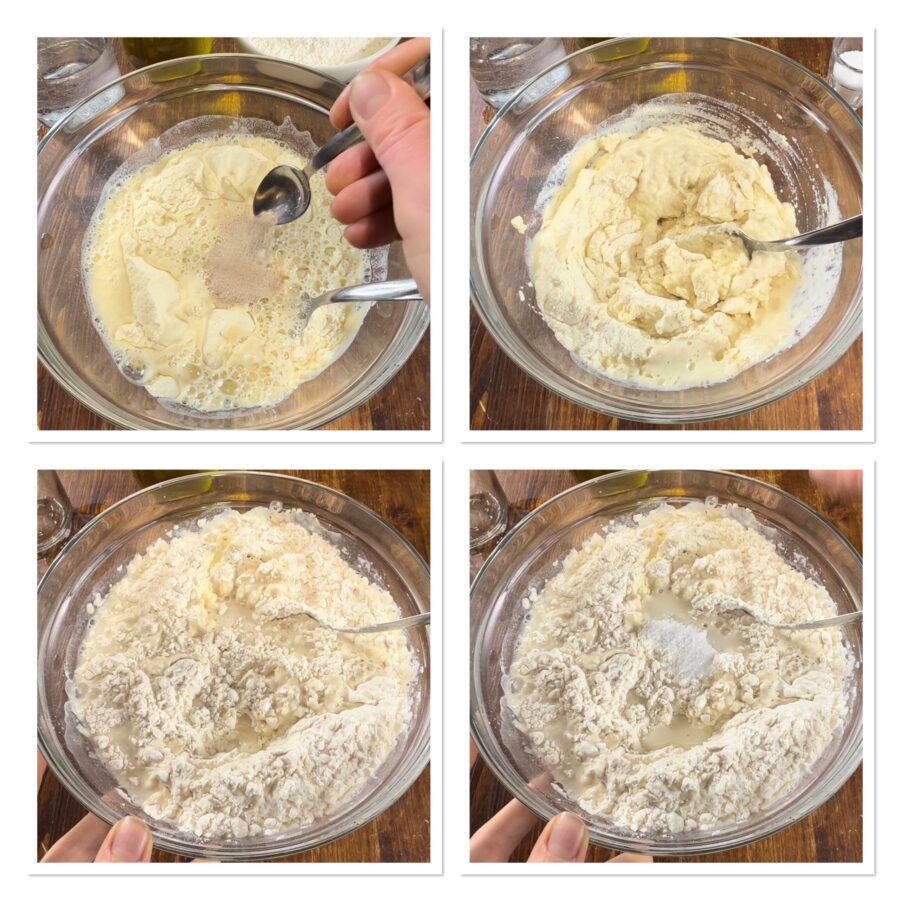
Gather the re-milled semolina in a bowl, add almost all the water, the sugar and the yeast, and mix. Then add the all-purpose flour (type 0), the olive oil (which can be substituted with lard), the salt and the remaining water. Combine everything with a spoon, cover with a cloth and let rest for 20 minutes.
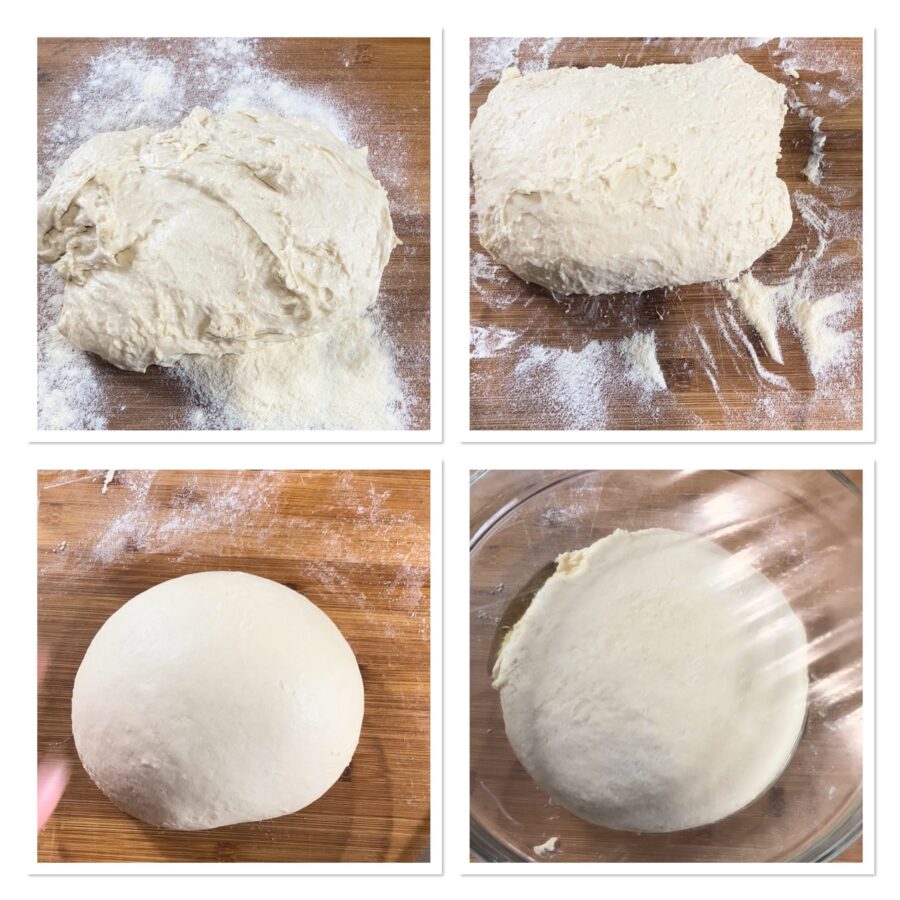
After the rest, flour a work surface and turn the dough out; it will be wet and sticky at first.
Resist the temptation to add more flour and start working the dough using a bench scraper and performing slap-and-fold folds (here). You will see the dough soon gain structure, becoming elastic, smooth and uniform. Place it in a bowl brushed with olive oil, cover with plastic wrap and put it in the oven with the light on or somewhere warm to rise until doubled in volume. Timing is relative; it may take 2–3 hours depending on ambient temperature.
While the dough is rising, prepare the topping.
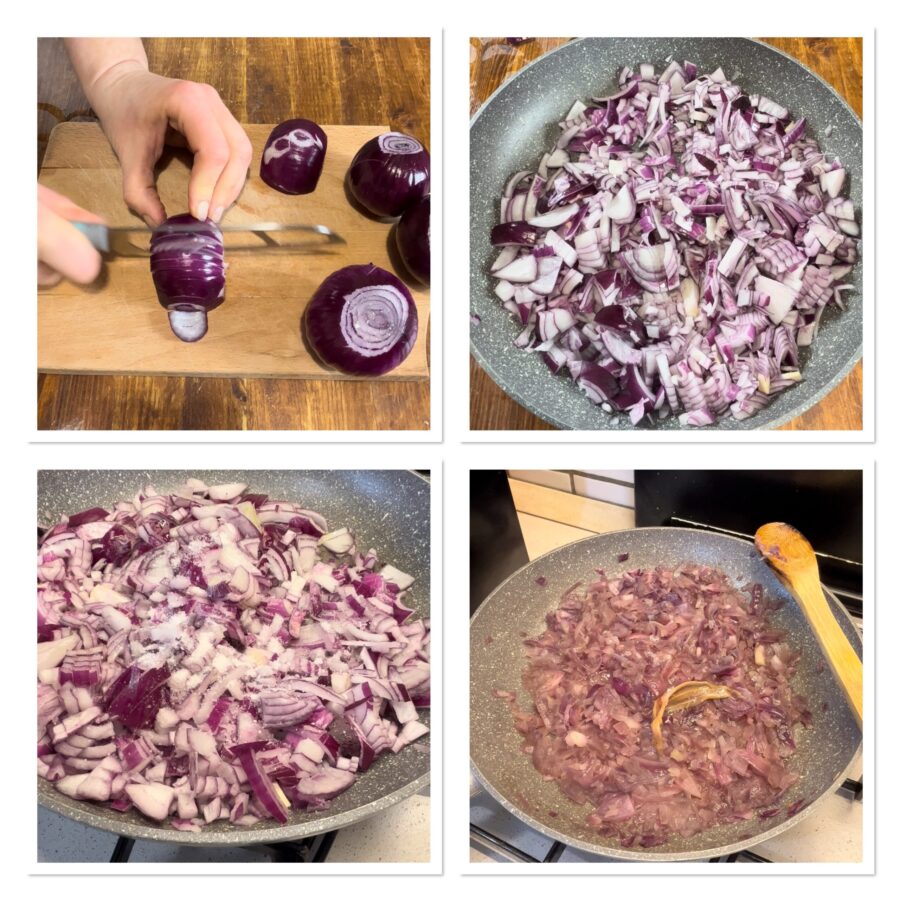
Peel and slice the onions; it’s preferable to use white onions or a variety that cooks quickly. I used red onions; they work well but are a bit darker than ideal.
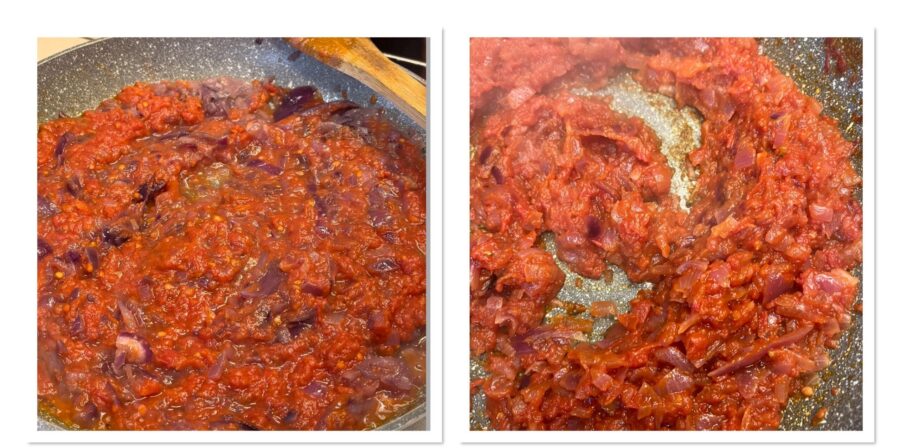
Put them all in a frying pan, add some water, salt and a generous splash of oil, and let them simmer gently over low heat until soft and the water has evaporated. When the liquids have evaporated, add two anchovy fillets, let them brown a little, and as soon as they have dissolved add the tomato pulp or blended peeled tomatoes, salt and one teaspoon of sugar.
Let it simmer over medium heat until you obtain a very thick and hearty sauce. Turn off the heat, transfer to a bowl and let cool.
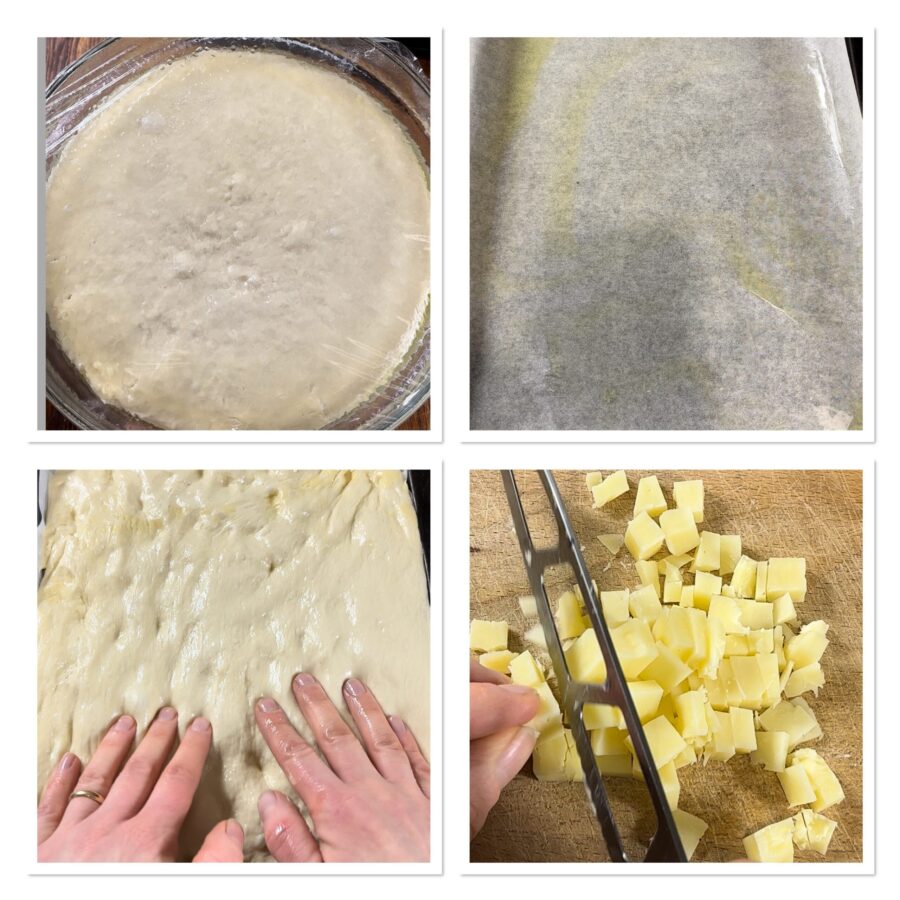
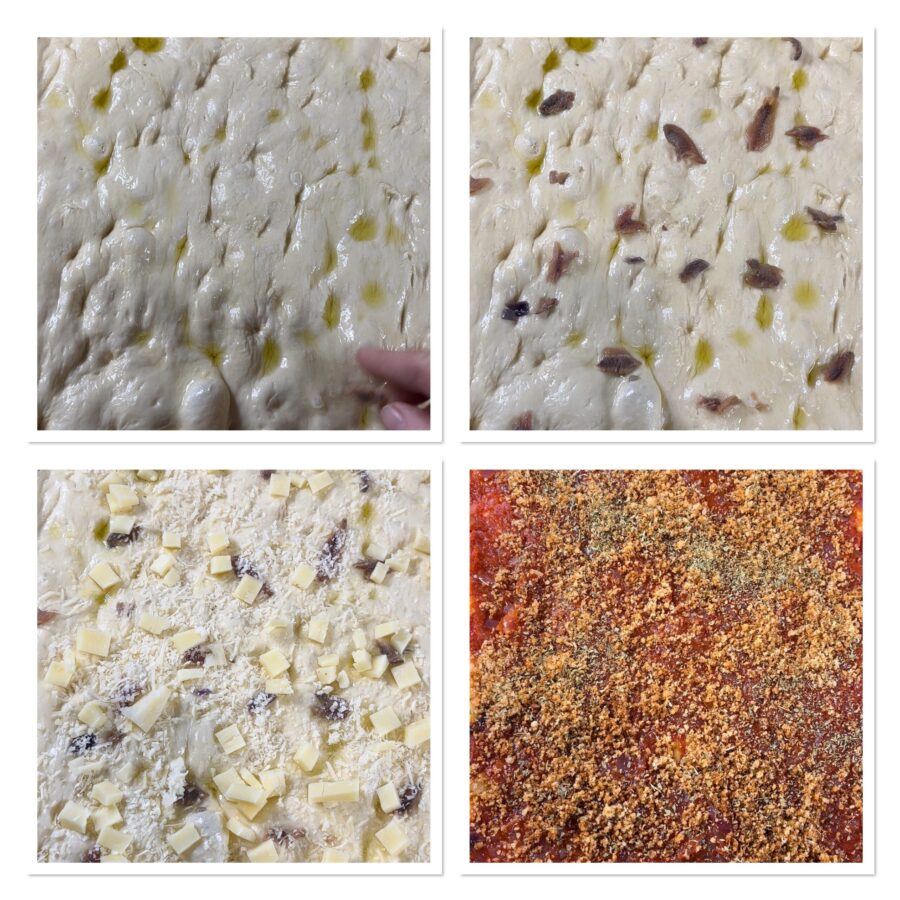
As soon as the dough has doubled in volume, line a baking pan with parchment paper, brush it generously with oil and turn the dough onto it.
Stretch it with your hands without deflating it too much and cover the entire pan.
Cut 2/3 of the caciocavallo into cubes and grate the rest.
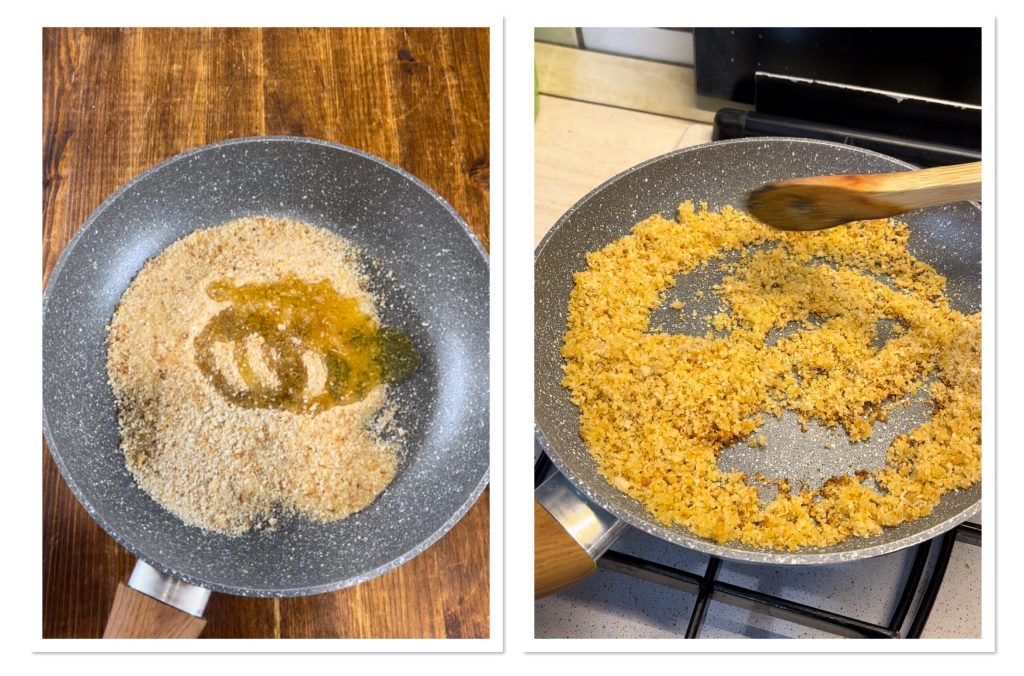
Put the breadcrumbs in a pan, add a generous drizzle of olive oil and toast over high heat, stirring often and taking care not to burn them. Once browned the “muddica atturrata” (toasted breadcrumbs) will be ready.
Spread a good drizzle of oil on the base of the sfincione, add the torn anchovy fillets, the caciocavallo cubes and the grated cheese.
Evenly spread the onion sauce, sprinkle with breadcrumbs and oregano and leave to rise again in a warm place for at least 40 minutes.
Bake in a conventional (static) oven at 356°F for 40 minutes. Remove from the oven when the bottom and edges are golden brown and the sfincione has reached a nice golden color.
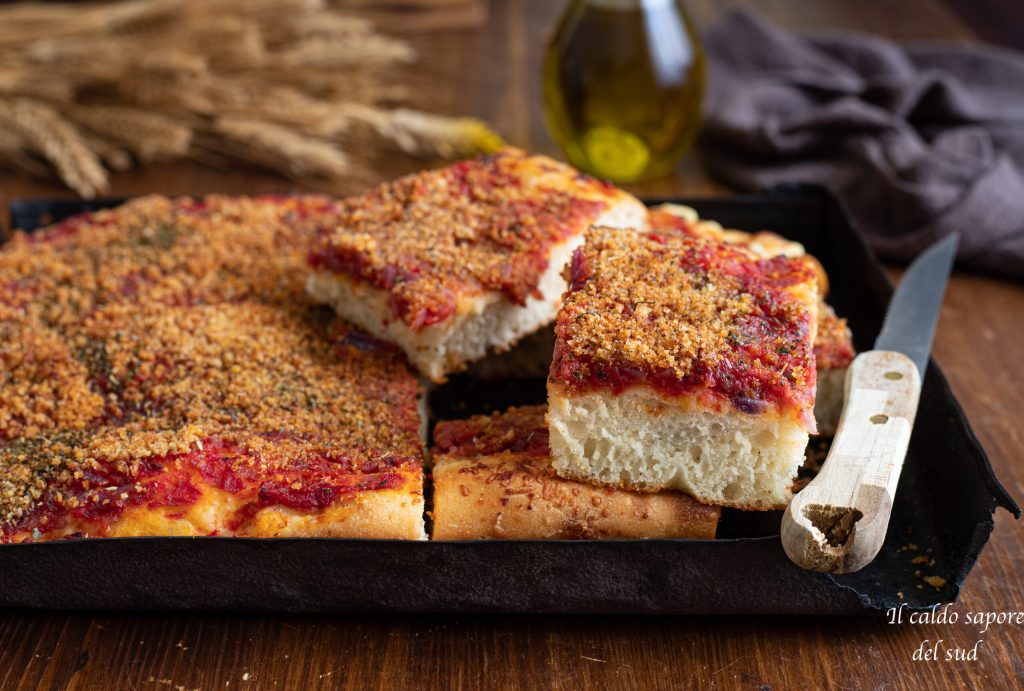
Serve warm or at room temperature. Its aroma, softness and unique flavor will make you fall in love!
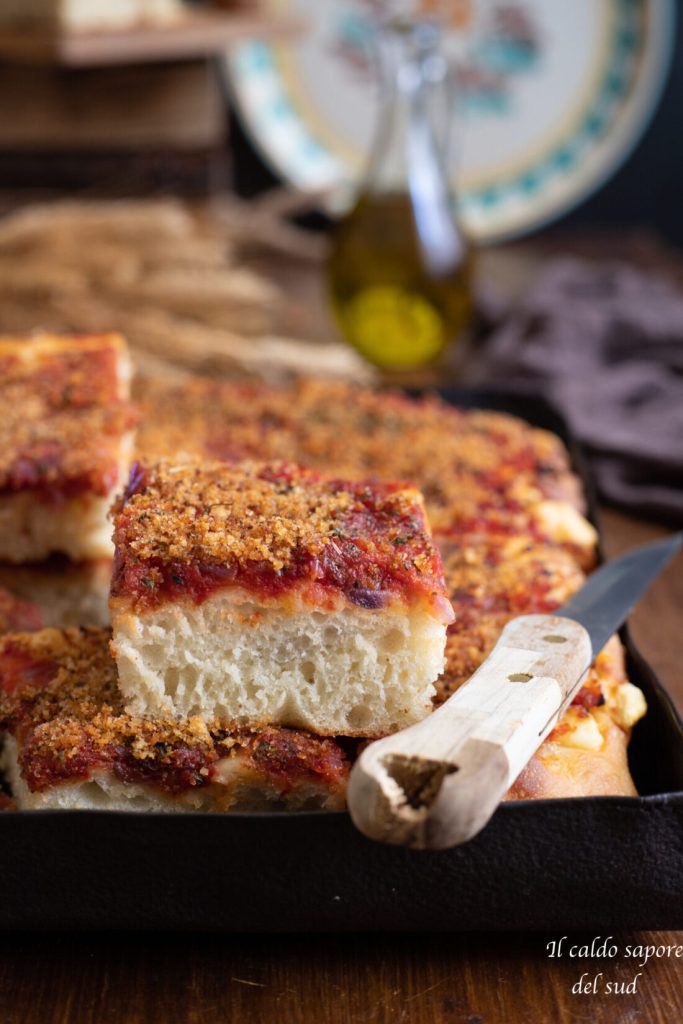
The sfincione is ready. If possible, eat it the same day; leftovers should be wrapped in plastic wrap, stored at room temperature and consumed within 24 hours.
If you want to make a long-fermentation sfincione with a rest in the fridge, add only 1 g of dry baker’s yeast (about 1/3 tsp) or 3 g fresh (about 0.1 oz), make the dough, let it rest 3 hours at room temperature and then refrigerate overnight. After that time, take it out, let it double and come to room temperature before using.
If you prefer to make the sfincione with sourdough starter, replace 60 g of all-purpose flour (about 1/2 cup) and 40 g of water (about 2 2/3 tbsp) with 100 g of sourdough starter (about 3.5 oz or roughly 1/2 cup). Once the dough is formed and has risen, proceed as above. In this case, the second rise should last at least 90 minutes.