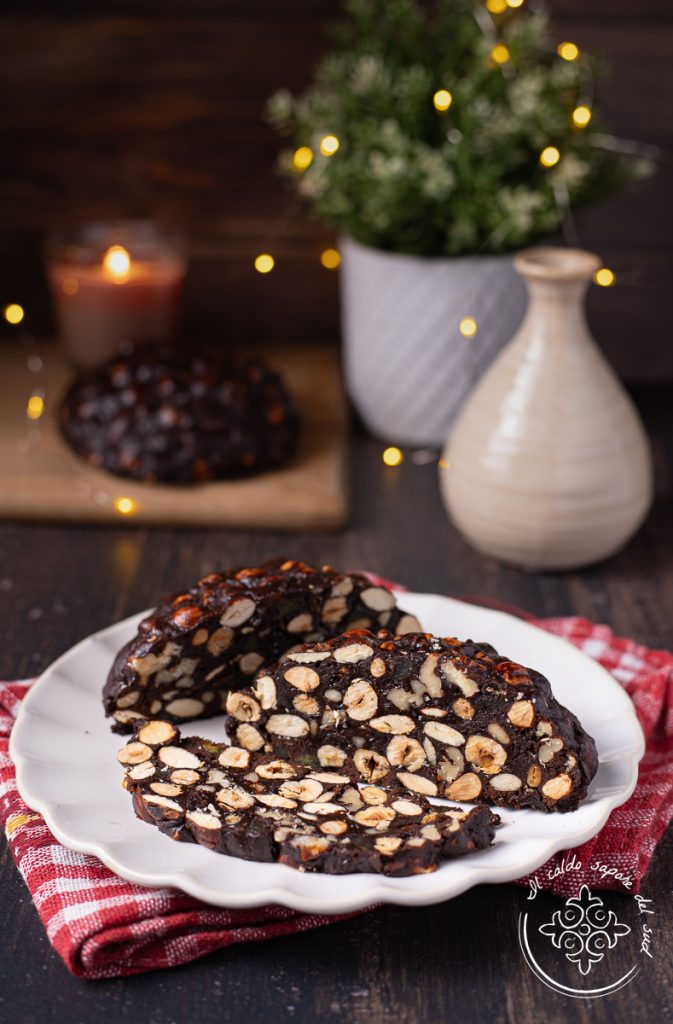
Original Panpepato of Terni recipe. The Panpepato of Terni is one of those desserts to make at Christmas, typical of Umbria and in particular the city of Terni, and it will make our holiday menu for Christmas and New Year’s original and special, together with panettone, Pandoro, Pandolce, soft homemade white nougat, Zelten, Genoese Pandolce and many others. Panpepato is one of the oldest and most seductive sweets of the Italian tradition, a mix of spices, dried fruit and intense flavors that dates back to the Middle Ages. The panpepato recipe varies from region to region and over time has produced three main types of panpepato, each with well-defined characteristics: Tuscan panpepato, Ferrara panpepato and Panpepato of Terni.
The Tuscan panpepato, often associated with panforte, is rich in honey, almonds and candied orange, has a compact and slightly soft texture, and its flavor is balanced and less spiced than other versions. It is a dessert that recalls the gastronomic wealth of Siena, together with cantucci and ricciarelli and the medieval Tuscan cities, where sugar and spices were precious goods.
Ferrara’s panpepato, characterized by a chocolate glaze and a very dark dough from cocoa, is also known as “pampepato.” Its taste is more pronounced, with bitter and spicy notes that make it unique.
The true star of our recipe, however, is the Panpepato of Terni, famous for the richness of its ingredients: hazelnuts, walnuts, almonds, candied citron, candied orange, raisins, cocoa, pepper, coffee, cinnamon and above all honey and vino cotto, which bind all the ingredients together, making the dough compact and aromatic. The presence of pepper and spices, from which the name panpepato derives, is particularly evident and gives the Terni specialty a warm, enveloping final note that we all associate with the holidays and seasonal recipes.
The Umbrian panpepato, symbol of the city of Terni, is still prepared today following family recipes passed down through generations. Every household keeps its own version, but the essence remains the same: a robust, rich, energy-packed dessert that tells the story of an honest and hardworking land. The Panpepato of Terni is not only a Christmas sweet but a gastronomic heritage representing tradition, identity and passion. Are you ready to make it with me? Let’s head to the kitchen, but before discovering the recipe I remind you that if you want to stay updated on all my recipes you can follow my Facebook page (here) and my Instagram profile (here).
Also look:
- Difficulty: Very easy
- Cost: Medium
- Preparation time: 30 Minutes
- Portions: 3 Pieces
- Cooking methods: Oven
- Cuisine: Italian
- Seasonality: Christmas, New Year's Eve
Ingredients to make Panpepato of Terni
- 7 oz dark chocolate
- 4 oz walnut kernels
- 7 oz almonds
- 3.5 fl oz vino cotto (or other honey)
- 2/3 cup all-purpose flour
- 3 1/2 tbsp honey (wildflower)
- 2 espresso shots coffee (espresso or moka)
- 1 oz pine nuts
- 2 oz candied citron (or candied orange and mandarin)
- 2 oz raisins
- 1 tbsp unsweetened cocoa powder
- 1 tsp ground cinnamon
- 1/4 tsp nutmeg (ground)
- 1/4 tsp black pepper
- 1.5 fl oz fortified wine (or brandy)
- to taste orange zest (grated)
Tools
- Bowl
- Baking sheet
- Oven
Preparation of the panpepato
The quantities for Panpepato of Terni, as with any traditional recipe, are never exact. Every family adapts the recipe to their tastes: some don’t like candied fruit and omit it, some add more or less coffee, some add only a pinch of pepper, others none at all or even an excess, and some prepare it by feel without weighing anything. Today, for convenience, I will give you weight indications.
To make panpepato, toast the hazelnuts (commercially available already toasted in many cases) and the almonds in a hot oven at 338°F for 10 minutes, and toast the pine nuts for a couple of minutes—be careful, they burn quickly.
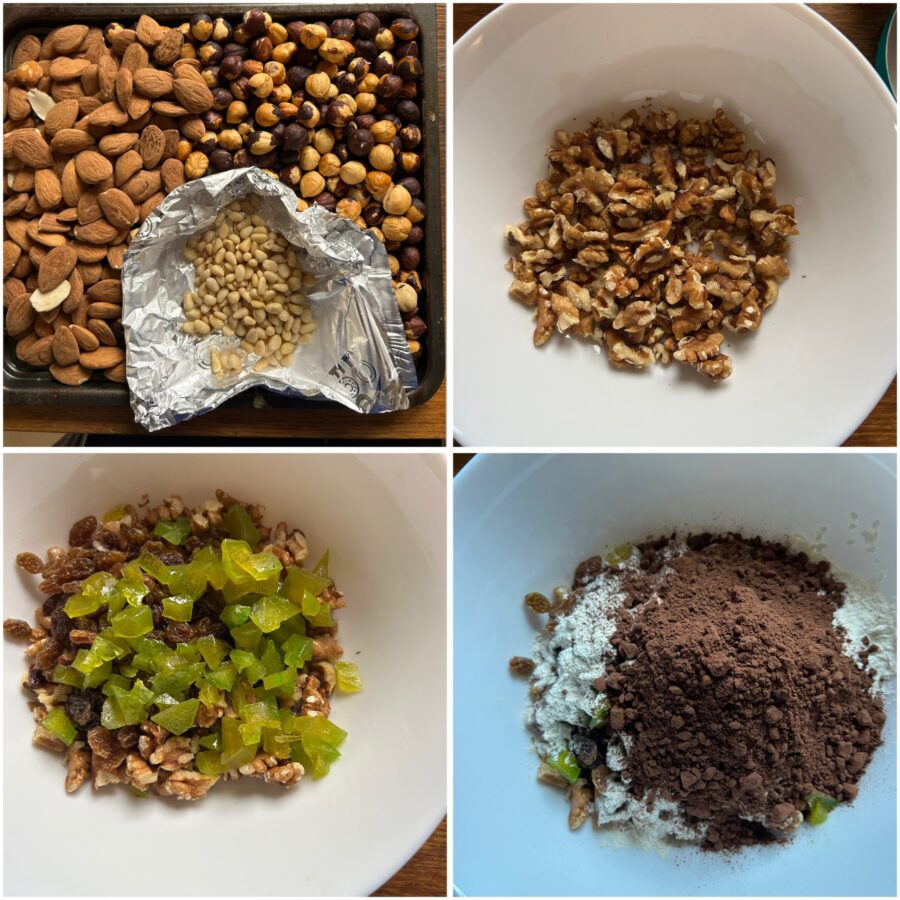
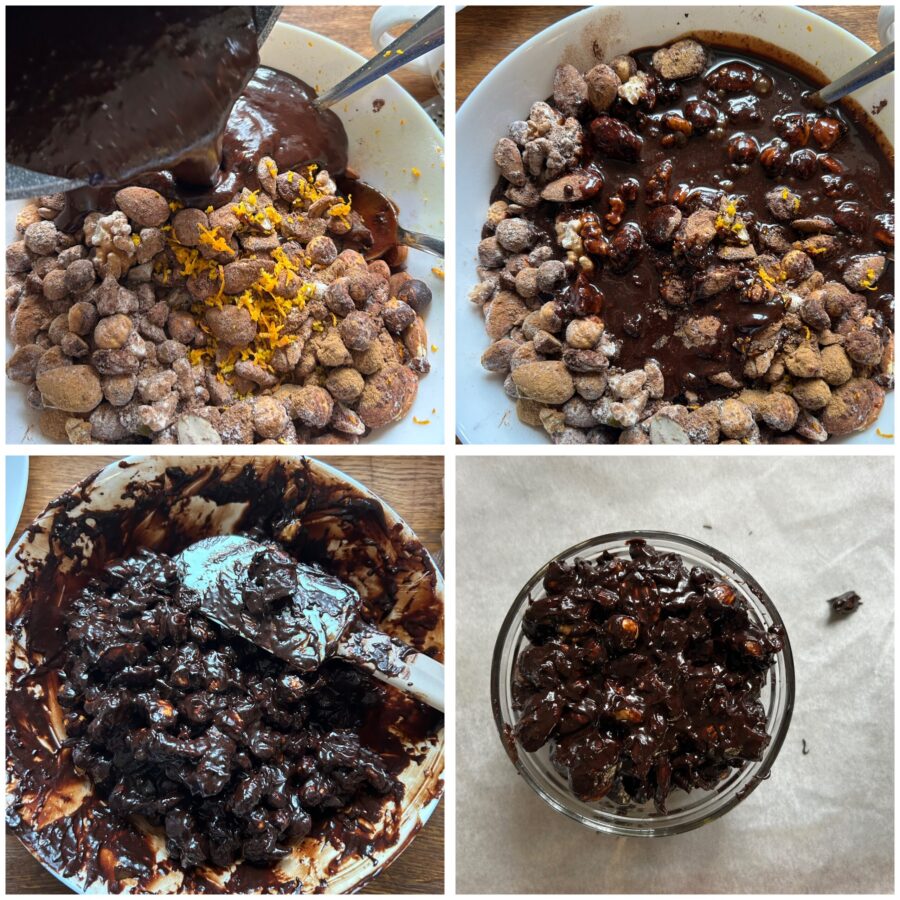
Chop the walnut kernels and collect them in a bowl together with the raisins rehydrated for 10 minutes in warm water and well squeezed. Add the candied fruit, the flour, the cocoa, the toasted nuts and the aromatics, along with the grated orange zest, and mix.
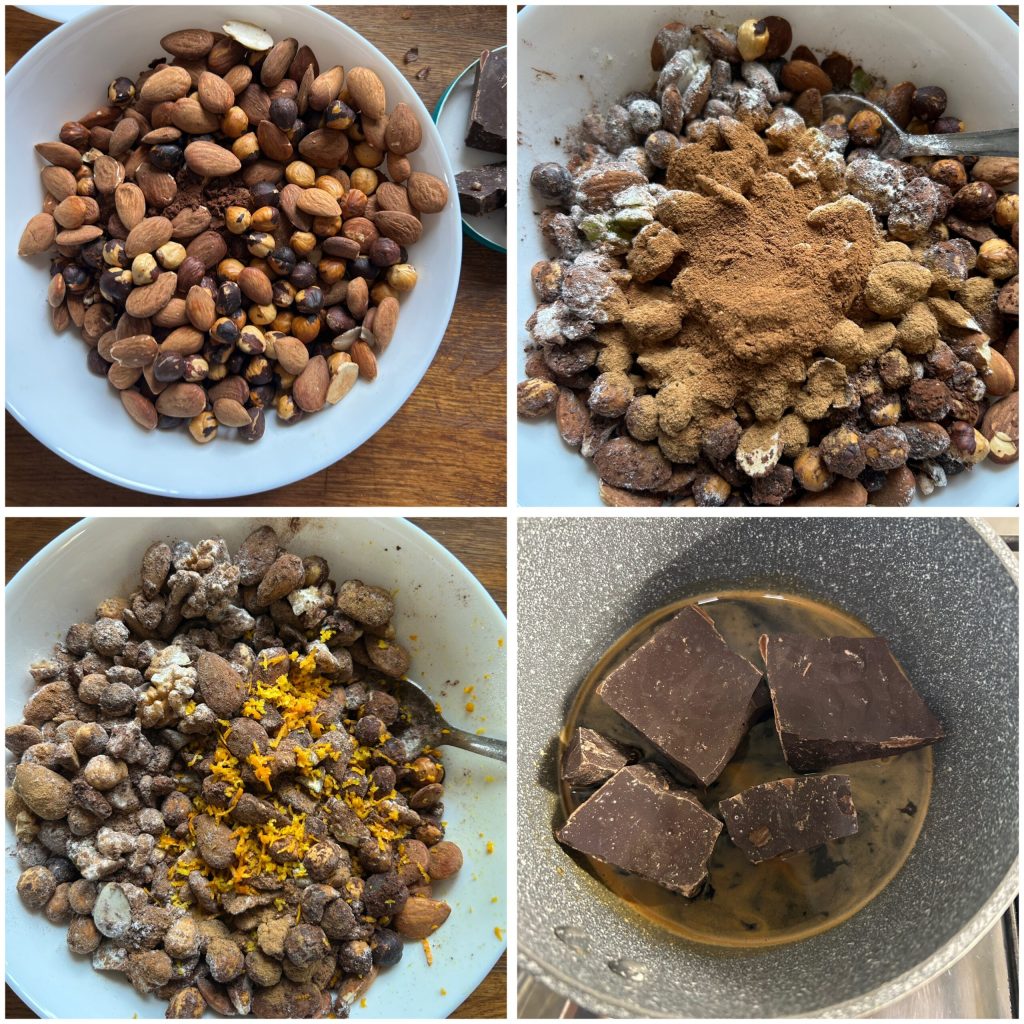
Pour the coffee into a small saucepan, add the chocolate and melt it over very low heat, stirring constantly; then add the fortified wine or brandy, the honey and the vino cotto (you can substitute with more honey).
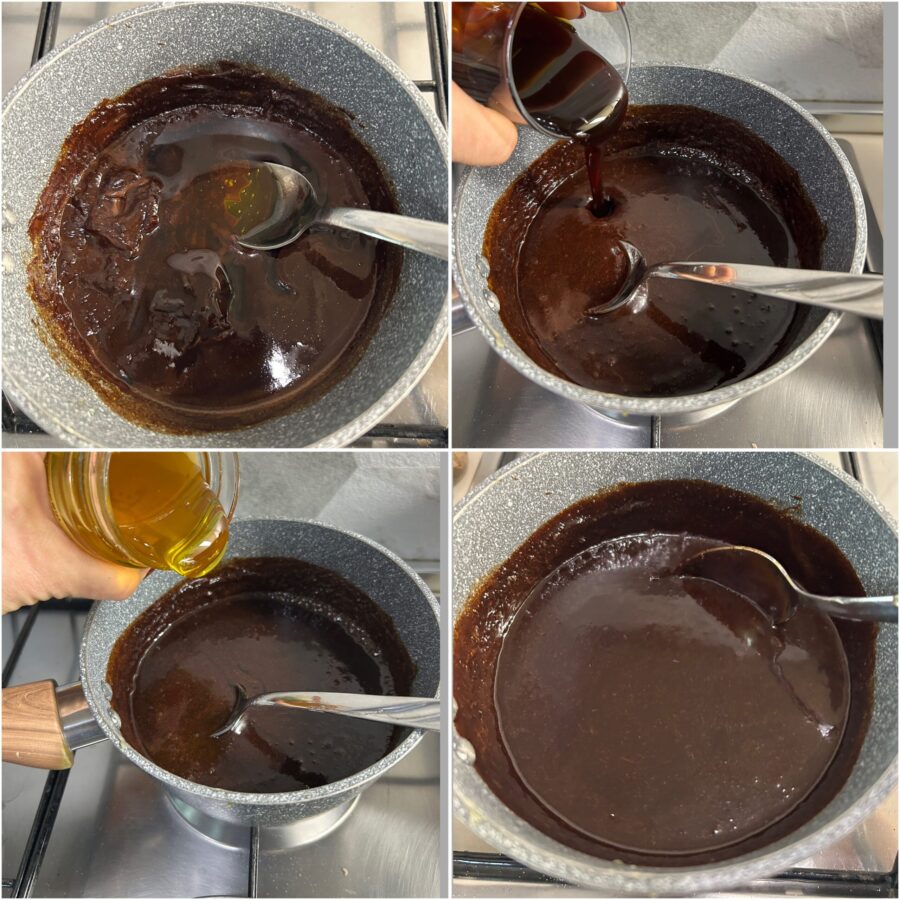
Pour this mixture over the rest of the ingredients and combine. Let it rest from 30 minutes up to overnight covered with cling film; a long rest is not mandatory, but for some, the longer the rest, the more fragrant the panpepati will be. After resting, with lightly oiled hands or better with a pair of gloves, shape 3 or 4 panpepati.
To speed things up, shape them using a small lightly oiled bowl: fill it with the mixture, press, level and invert onto a baking sheet lined with parchment paper. Bake the panpepati at 356°F in a static oven for about 15 minutes and let them cool in the oven. Do not overbake them or they will dry out; also consider that panpepato firms up when cold and that dried fruit tends to burn in the oven.
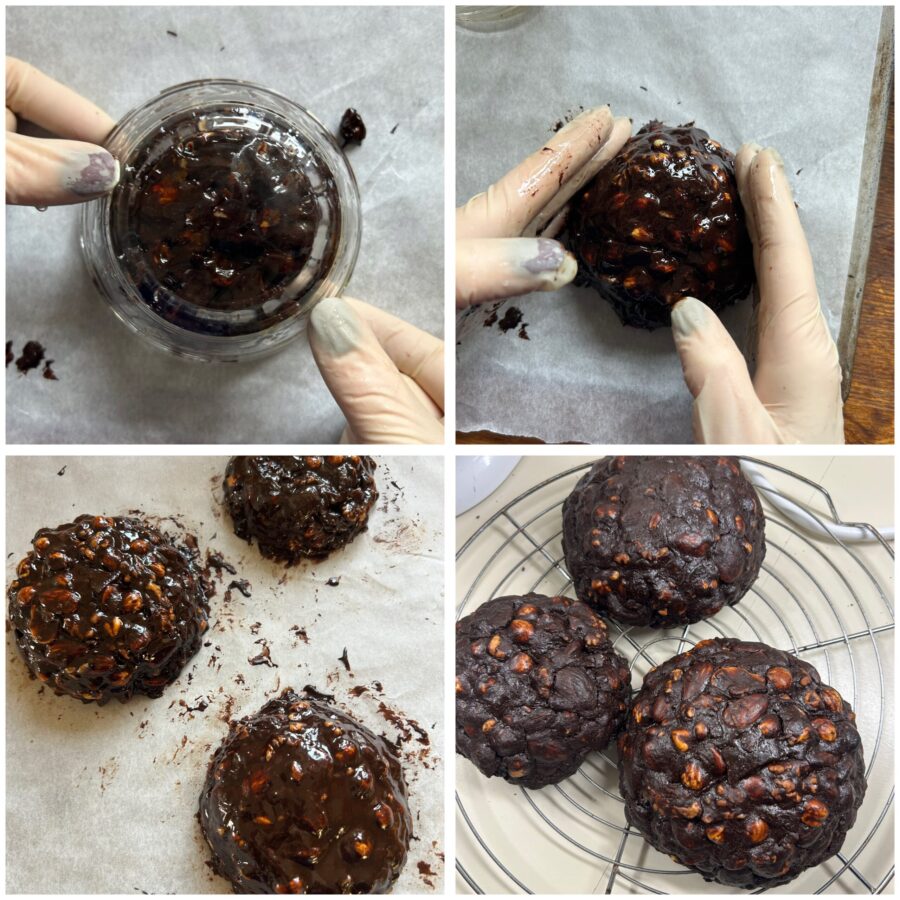
Our panpepati are ready to be enjoyed or gifted.
Storage notes and tips
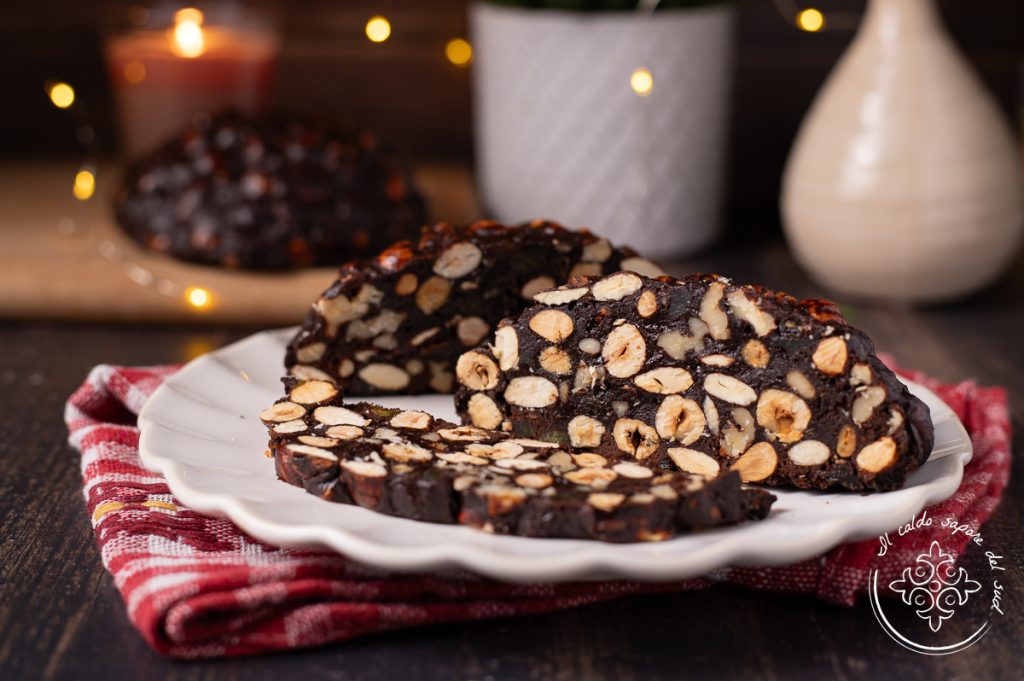
The panpepato keeps well if stored sealed in an airtight container or in a suitable bag for several months and is served in slices nicely arranged on a festive plate.
If you want to stay updated on my recipes, follow me on:
Pinterest, YouTube, Twitter and TikTok.
From here, you can return to the HOME and discover new recipes!