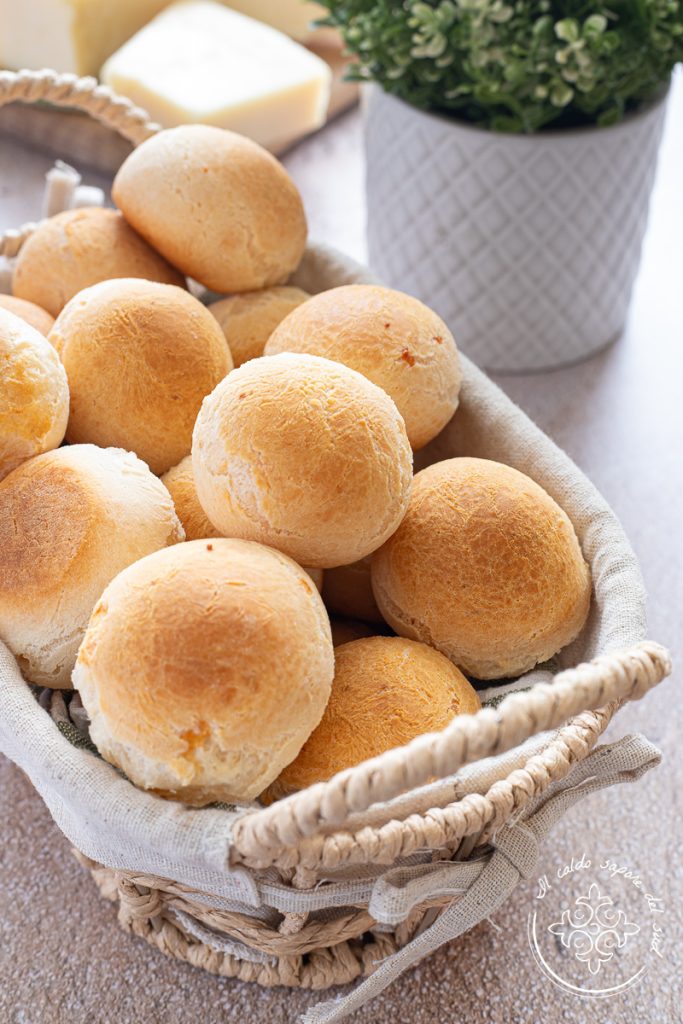
Brazilian cheese rolls, also known as pão de queijo, are small savory, unleavened balls made with tapioca flour that are irresistibly tasty — crunchy on the outside and soft and stringy on the inside. They are prepared with just a few ingredients and have a unique texture thanks to the use of tapioca flour, a starch extracted from cassava, which makes these rolls naturally gluten-free. They are much loved in Brazil and are often served for breakfast or as a snack during the day. Their peculiarity is that they do not require rising, so they are quick to make and perfect when you want something tasty without waiting for leavened dough to rest.
The dough is made by heating milk and oil and pouring them over the tapioca flour so it hydrates and becomes elastic. Chopped cheese and the egg are then added, working the mixture until you get a soft, workable dough.
At this point, small balls are formed, placed on a baking sheet and baked. During baking the rolls puff up and form a golden crust while the inside remains soft, slightly elastic and full of flavor thanks to the cheese. If you like savory cheese preparations, on my blog you can also find the traditional Easter cheese pie, a recipe much loved during Easter festivities.
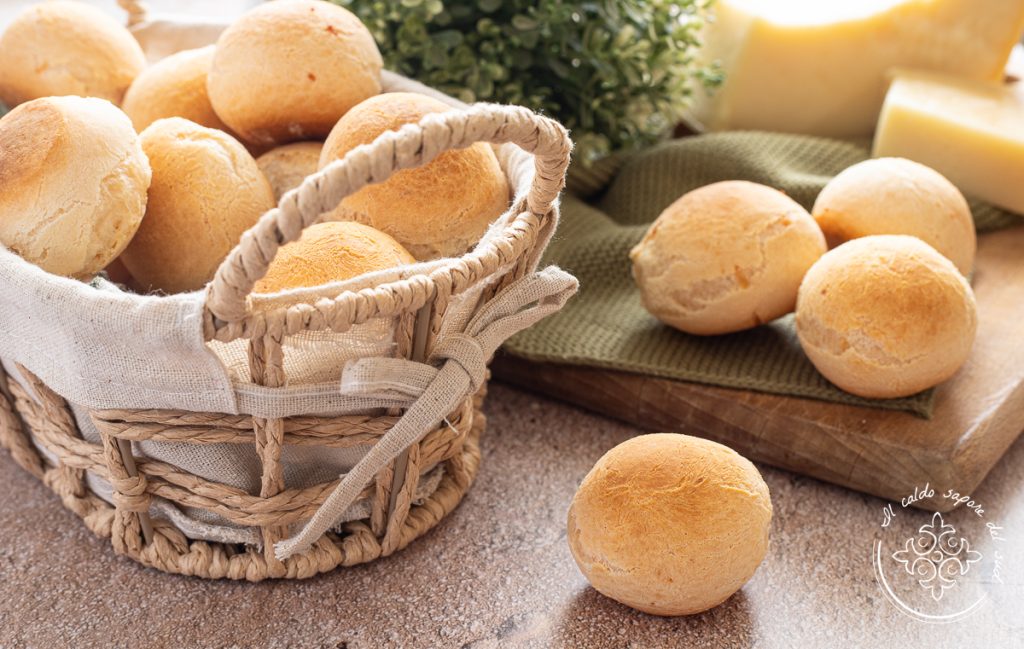
Unlike the Easter pie, which requires dough leavening, these Brazilian cheese rolls are much quicker to prepare and are a perfect solution when you have little time but want to put something aromatic and tasty on the table. The result is unleavened cheese rolls, golden on the outside with an airy, stringy crumb that makes them truly irresistible. They are perfect to serve as an appetizer, aperitif, snack or accompaniment to cold cuts, but they are also excellent simply enjoyed warm right out of the oven.
Also check these bread roll recipes:
- Difficulty: Very easy
- Cost: Inexpensive
- Preparation time: 30 Minutes
- Cooking time: 25 Minutes
- Cooking methods: Stovetop, Oven
- Cuisine: International
- Seasonality: All seasons
Ingredients to make Pão de queijo: Brazilian cheese rolls
With a few ingredients we prepare pão de queijo, the famous Brazilian cheese rolls without leavening, crunchy on the outside and soft inside.
- 2 1/2 cups tapioca starch (manioc starch) (starch – tapioca)
- 5/8 cup whole milk
- 7 tbsp sunflower oil
- 3/4 cup grated Parmesan (about 2.5 oz)
- 1 oz pecorino (about 1/4 cup)
- 3.5 oz cheese (stringy (pasta filata) or semi-hard)
- 1 pinch salt
- 1 egg (medium)
Tools to make
- Oven
- Baking sheet
- Saucepan
Steps to make Pão de queijo: Brazilian cheese rolls
Cut the semi-hard cheese into pieces and transfer them to a food processor. Pulse until you obtain a rather fine crumb. In a small saucepan pour the milk and the oil and bring them almost to a boil. When the liquid is very hot, remove from the heat.
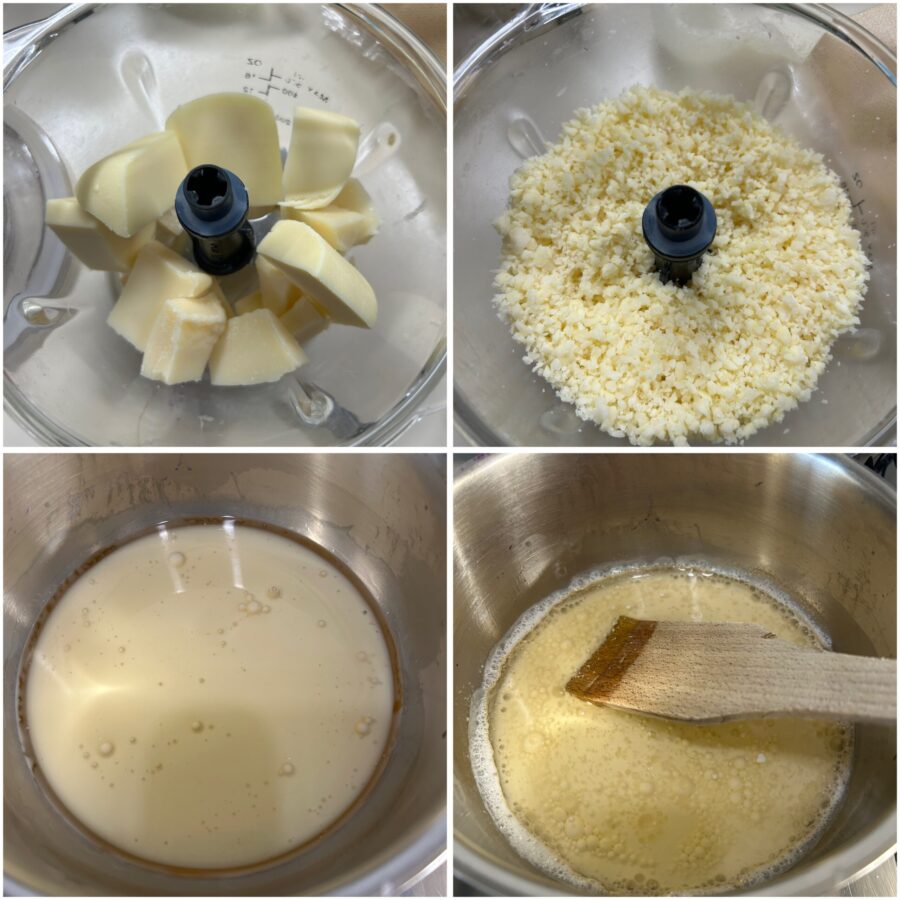
Pour about 2 1/8 cups of tapioca flour over the hot liquid and the cheese. Stir immediately with a spatula until you obtain a fairly compact mixture.
Transfer the mixture to the work surface and let it cool slightly. When it is no longer too hot, knead lightly (the dough will release a little oil, which is normal — blot it from the work surface and continue) and add the egg. Work the dough with your hands until it becomes softer and more uniform, but still slightly sticky.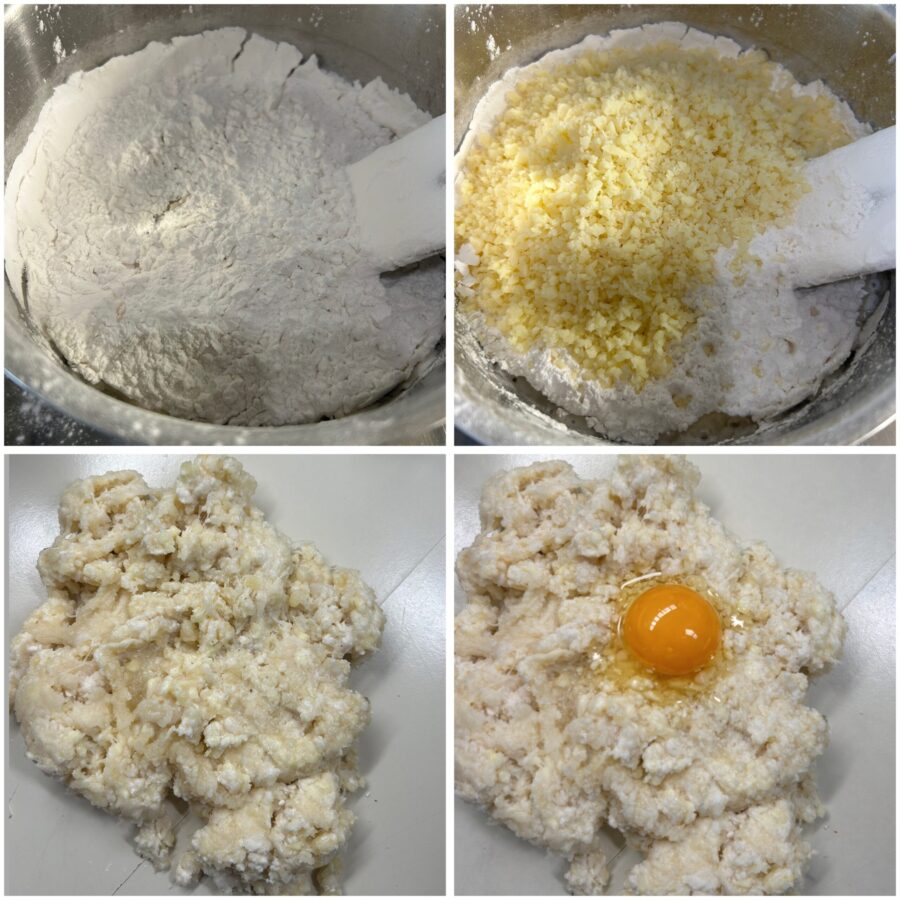
If necessary, dust with a little tapioca flour taken from the total to make the dough easier to handle.
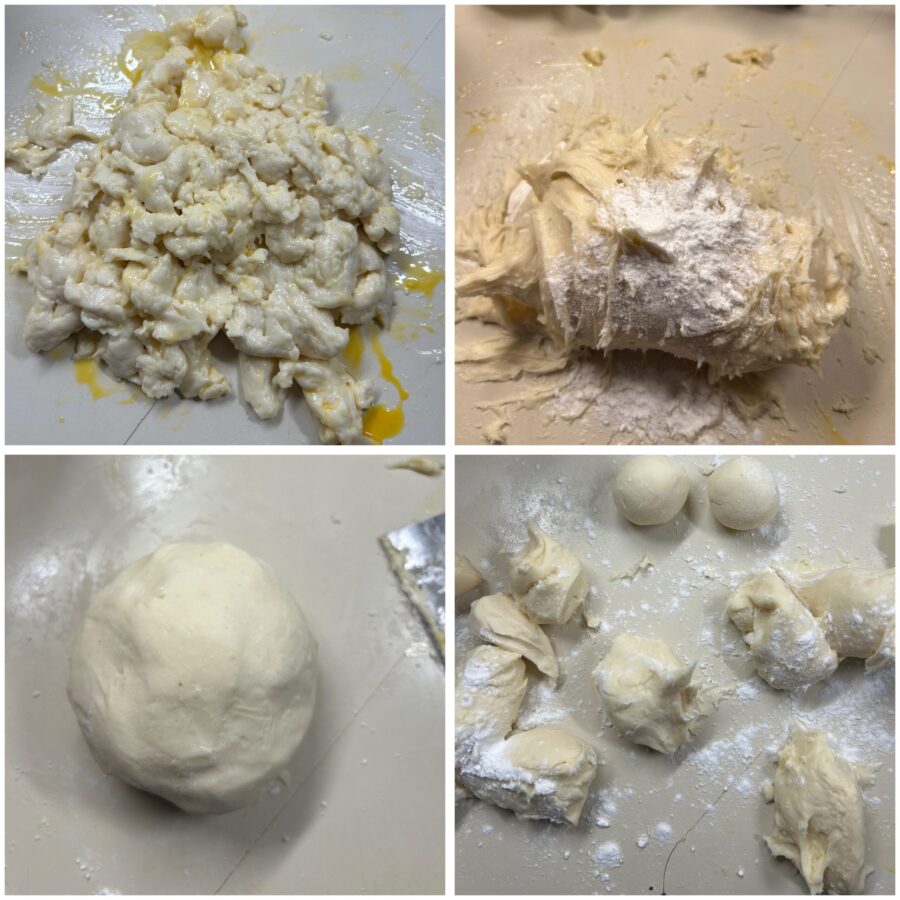
Divide the dough into small pieces and form balls about the size of a walnut.
Place them on a baking sheet lined with parchment paper, leaving a little space between each.
Bake in a preheated oven at 356°F for about 20-25 minutes, until the rolls are puffed and lightly golden.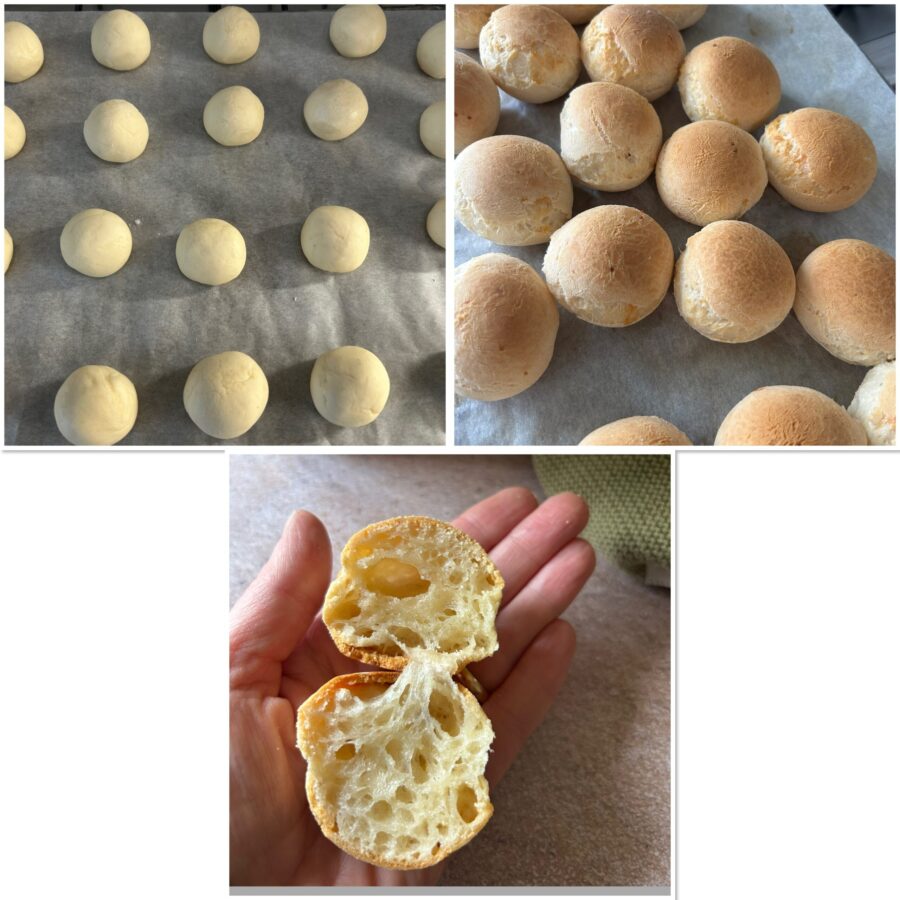
Remove the pão de queijo from the oven and let them cool for a few minutes before serving. They are delicious still warm, when the inside remains soft and slightly stringy.
Storage notes and tips
Pão de queijo, the traditional Brazilian cheese rolls, are best just out of the oven, when the inside is still soft and slightly elastic and the surface is golden and crunchy.
If you have leftovers, you can store them at room temperature for about one day in an airtight container or covered with a clean cloth to prevent them from drying out.
To enjoy them best the next day, you can reheat them for a few minutes in a hot oven to restore a slightly crisp surface and a softer interior.
These cheese rolls can also be frozen. After shaping the dough balls, place them on a tray and put them in the freezer. Once frozen you can transfer them to a food bag and store them for up to 2 months.
When you want to bake them, you can cook them directly from frozen, adding a few extra minutes to the baking time.
For a more intense flavor you can use more aged cheeses or mix two different types of cheese. If the dough is too soft you can add a tablespoon of tapioca flour, while if it is too firm you can soften it with a tablespoon of milk.
Tapioca flour is often also found under these names:
tapioca starch
manioc starch
tapioca starch
Frequently asked questions
Can I prepare pão de queijo in advance?
Yes, you can prepare the dough in advance and keep it in the refrigerator for a few hours. When ready to use, simply form the balls and bake them in the oven.
Can pão de queijo be frozen?
Yes, Brazilian cheese rolls can be frozen either raw or already baked. If you freeze them raw you can bake them straight from frozen, adding a few extra minutes to the baking time.
Can I use another type of flour?
To achieve the typical texture of pão de queijo it is important to use tapioca flour, which makes these rolls soft and elastic. Using regular wheat flour would give a very different result.
Which cheese should I use for pão de queijo?
You can use different types of cheese, preferably with a pronounced flavor. Parmesan, pecorino or other aged cheeses work very well.
Can I use potato starch or cornstarch?
Better not. For pão de queijo the essential ingredient is tapioca flour (manioc starch). It provides the characteristic texture: a soft, elastic and slightly stringy interior.
If you use other starches:
Potato starch → the rolls become more crumbly and less elastic.
Cornstarch (maizena) → the result is denser and less airy.
In both cases they will not puff up in the same way and will not have the typical texture of pão de queijo.