Sauce with capers and olives alla puttanesca, Grandma’s recipe for a first course — a humble dish typical of southern Italy that is now part of the national culinary tradition. Even before pasta, in Southern kitchens you would make the sauce, and the puttanesca was born like this: as a ready, intense condiment, made with ingredients that were never missing from the pantry. Tomato, salt-packed capers, black olives, anchovies: a few elements, but bold, which give us a quick and tasty first course, as famous as carbonara, amatriciana, Pasta alla Norma or Spaghetti alla Nerano and many more.
The puttanesca is a recipe of popular origins, with roots disputed between Naples and Rome, but it has in any case become a heritage of all of Southern Italy and beyond. The spaghetti alla puttanesca recipe in homes didn’t need exact measures: it was made ‘by eye’, following the scent of the hot oil and the sound of the anchovies melting slowly in the pan.
For us this sauce is a family recipe; we’ve always made it the way the recipe calls for: capers are rinsed and roughly chopped with a knife, garlic perfumes the oil without ever burning, anchovies disappear slowly, leaving only flavor. The canned tomatoes are crushed with a fork so the sauce stays rustic and true. The cooking is slow until the color darkens and the aroma fills the kitchen.
It’s a sauce that isn’t sweetened or adjusted.
It is what it is: bold, Mediterranean, homely.
The origin of the name puttanesca is not certain and, as often happens with popular recipes, it is surrounded by several stories.
According to the most widespread hypothesis, the term would derive from the bold and ‘cheeky’ character of the sauce: strong, immediate flavors that hit you at the first taste. A popular name born in everyday speech, not in a cookbook.
There are also those who connect the name to the working-class neighborhoods of Naples, where this condiment was served in homes and taverns as a simple but flavorful dish, becoming the Naples-style olive and caper sauce. Whatever the truth, one thing is certain:
puttanesca was not born to provoke, but to nourish, using what was available, transforming a few ingredients into a memorable sauce. On the blog Il caldo sapore del Sud you’ll find other sauces and traditional preparations born from the same old gestures and food memory, like the famous Catanese-style meat sauce. Follow me in the kitchen, and if you want to stay updated on all my recipes you can follow my Facebook page (here) and my Instagram profile (here).
Have a look:
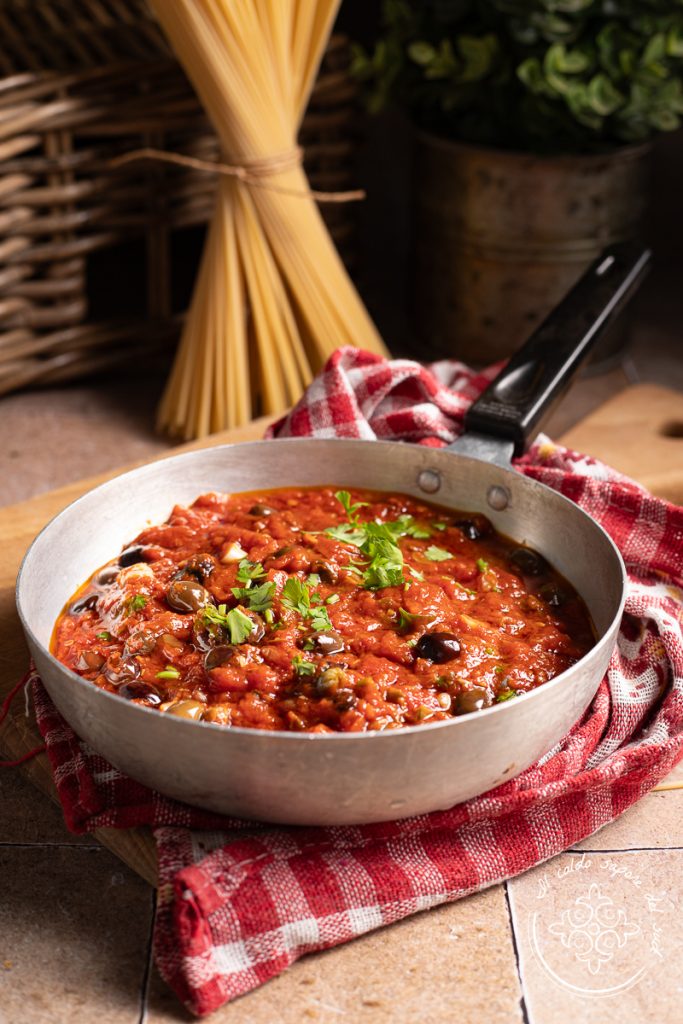
- Difficulty: Very easy
- Cost: Very inexpensive
- Preparation time: 10 Minutes
- Portions: 4
- Cooking methods: Stovetop
- Cuisine: Italian
- Seasonality: All seasons
Ingredients to make puttanesca sauce
- 14 oz (about 1 can / 14 oz) peeled tomatoes (canned)
- 2 cloves garlic
- to taste extra virgin olive oil
- 3/4 oz (about 2 tbsp) capers (salt-packed) (rinsed)
- 3 oz (about 1/2 cup) Gaeta olives (or Taggiasca)
- to taste salt (only if needed)
- 6 fillets anchovy fillets
- to taste parsley
Homemade puttanesca sauce: a Southern recipe full of memory
- Skillet
Preparation of puttanesca sauce
In a large skillet, heat a generous amount of extra virgin olive oil with the garlic cloves thinly sliced. The garlic should only perfume the oil.
Rinse the salt-packed capers several times, dry them and roughly chop them with a knife.
Add the chopped capers and let them flavor the hot oil.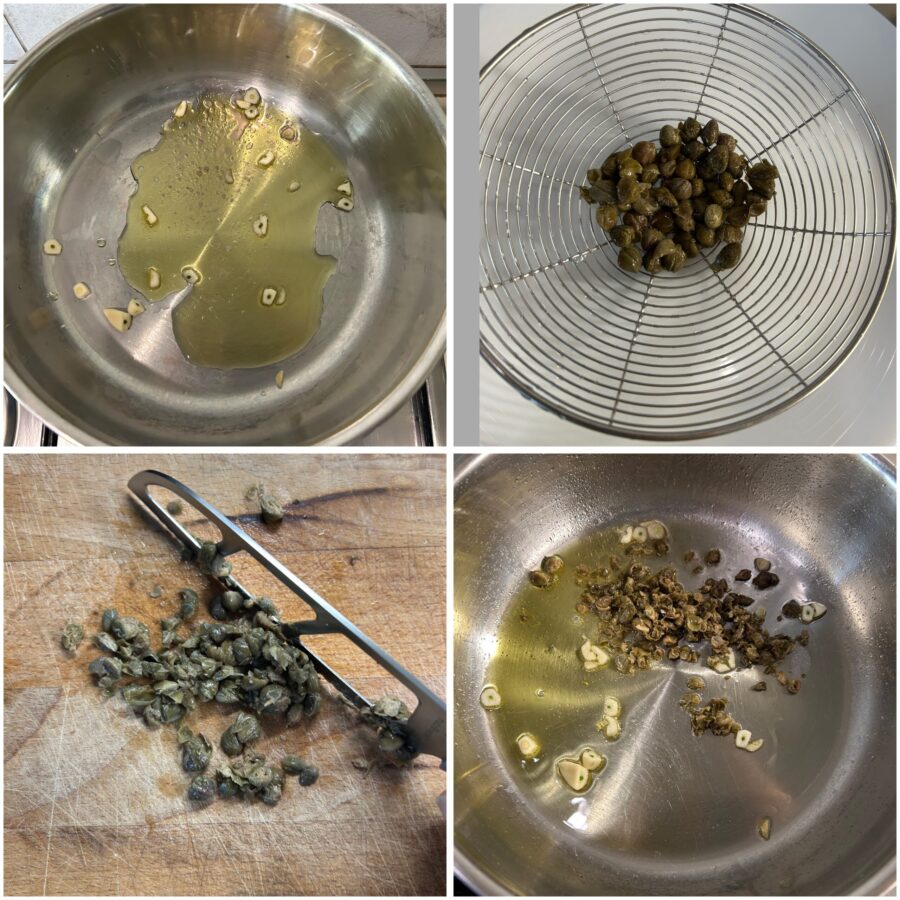
Add the anchovy fillets and stir gently: they will melt slowly, forming the base of the sauce. Crush the canned tomatoes directly in the pan with a fork or by hand.
Stir and let cook over medium heat, without rushing, until the sauce becomes thick, glossy and darker.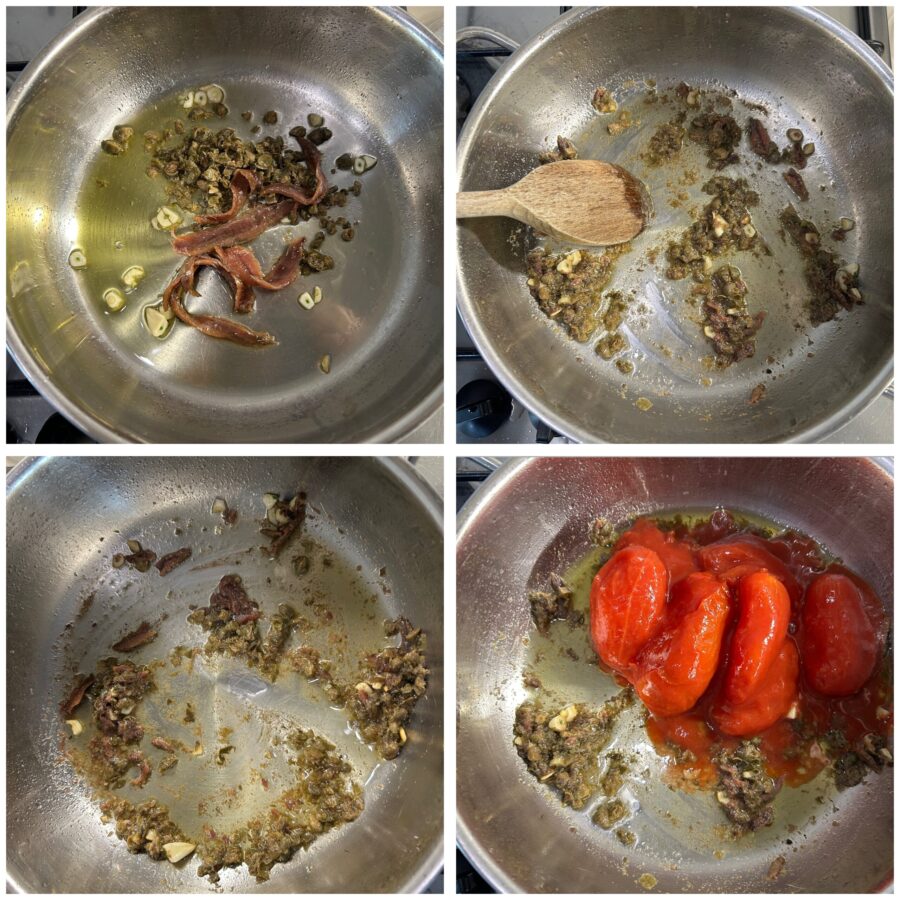
Add the olives whole or slightly crushed, and continue cooking for a few minutes.
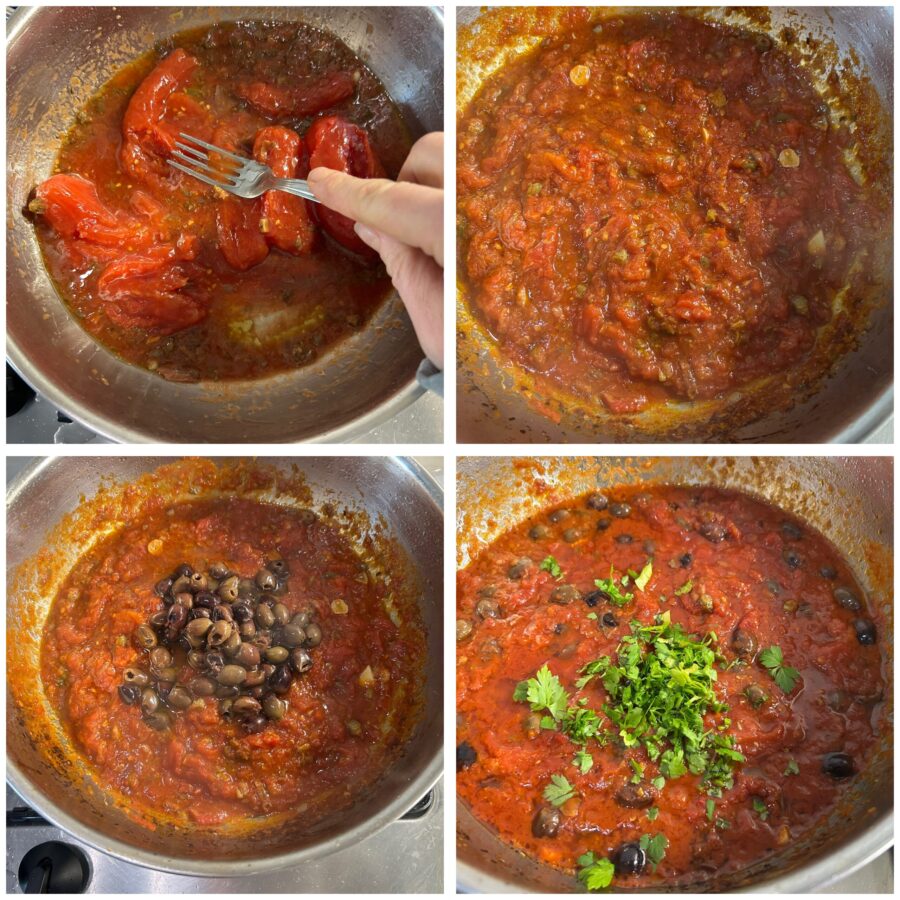
At the end of cooking, add chopped fresh parsley and, if you like, a pinch of chili pepper.
Storage notes and tips
Puttanesca sauce keeps in the refrigerator in a well-sealed container for 2–3 days.
Like all traditional sauces, it’s even better the next day because the flavors have time to meld. It can also be frozen, preferably without the parsley, and used when needed directly in a pan, gently reheating with a drizzle of oil.
House tips:
Don’t add salt before tasting: capers, anchovies and olives already provide sufficient saltiness.
The sauce should not be dried out too much: it should remain soft and glossy.
Excellent not only for pasta, but also on bruschetta, with eggs, fish, or simple vegetables.
If you have leftovers, it’s never really a leftover: it’s a ready-made base, as they used to make it once.
If you want to stay updated on my recipes, follow me on:
Pinterest, YouTube, Twitter and TikTok.
From here, you can return to the HOME and discover new recipes!
FAQ (Questions and Answers)
What is puttanesca sauce?Puttanesca sauce is a condiment from Southern Italy made with tomato, capers, black olives and anchovies. It’s a simple and bold sauce, born as a home recipe using ingredients that were always on hand.
What is the origin of puttanesca sauce?
The origin of puttanesca sauce is disputed between Naples and Sicily. In both cases it was born as a popular, quick dish made with few ingredients but with an intense flavor typical of Mediterranean cuisine.
Can I prepare puttanesca sauce in advance?
Yes, puttanesca sauce can be prepared in advance and stored in the refrigerator for 2–3 days. It’s often even better the next day.
Yes, puttanesca sauce can be frozen in portions, preferably without fresh parsley. When ready to use, heat it slowly in a pan with a drizzle of oil.
Which dishes pair well with puttanesca sauce?Puttanesca sauce is perfect for pasta, but can also be used on bruschetta, with eggs, fish or simple vegetables.