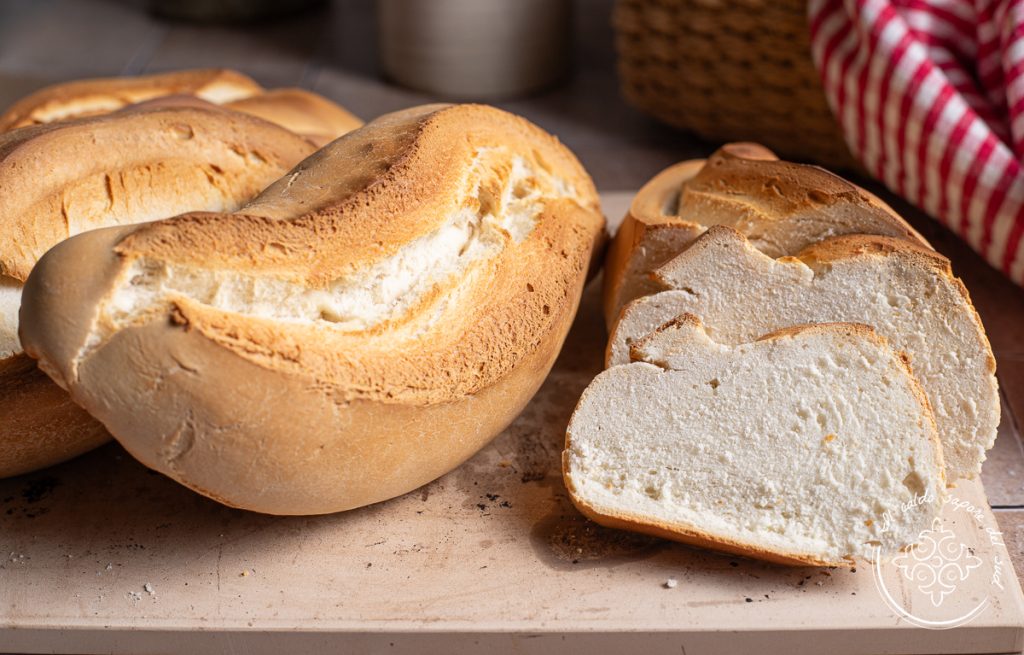
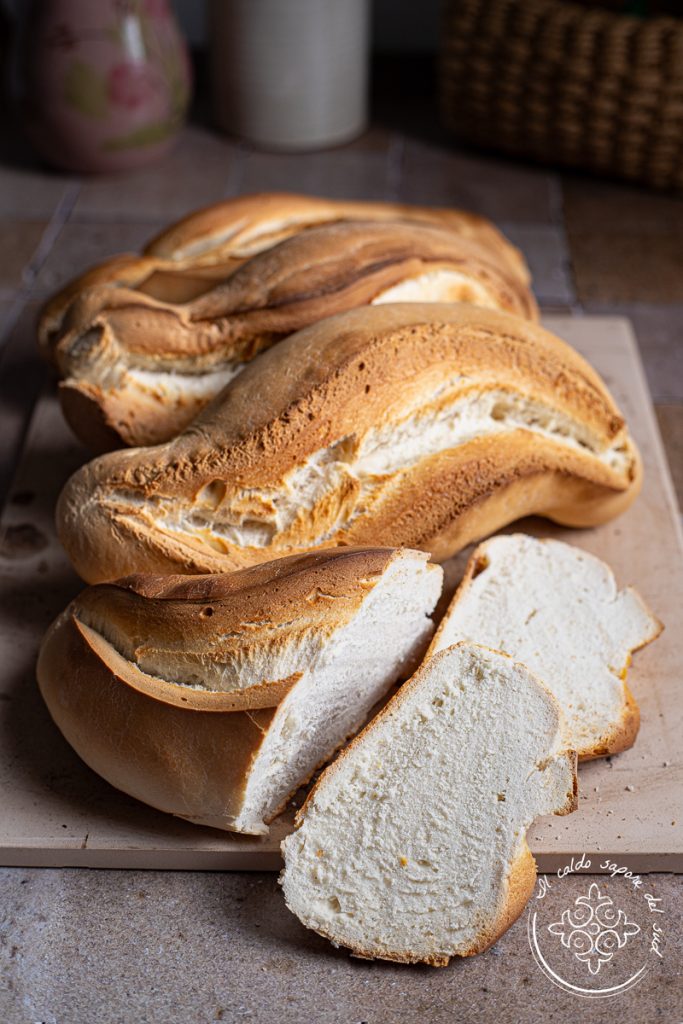
Ragusan homemade bread, the traditional hard-dough bread as it used to be made.Sicilian cuisine and grandmother’s recipes are numerous and the Ragusan hard-dough bread, made with re-milled semolina, fully belongs among them, like Mafalde or Cucciddatu, so today we’ll make it together! Hard-dough bread is made with a low-hydration dough: the crumb is very dense, the crust smooth, thick and crunchy, and the work is demanding. Dough worked with about 40% water becomes stiff, compact and very firm. In the past, when bread was made in large quantities to be used throughout the week, it was worked with the BRIULA, a flat wooden form on which it was “sbriuniato”; a pole fixed as a pivot was used like a lever to press and make the dough ever smoother and more homogeneous. In our recipe today we will use a mixer, but for small quantities you can use a stand mixer or, with effort, work by hand. The hard-dough bread, with its characteristic “S” shape, was traditionally made with natural sourdough, refreshed the evening before; making bread was a convivial, joyful moment involving many women from the family or neighborhood. Today we’ll make a household version: only four loaves and we’ll let them rise with brewer’s yeast. One last curiosity: semolina hard-dough bread is typical of eastern Sicily and was the sailors’ bread; working with little water produces a hard, compact crust which prevents water evaporation and helps the bread stay good longer. Now it’s time to go to the kitchen and get your hands on the dough — are you ready? Let’s go, but before rolling up our sleeves, remember that if you want to stay updated on all my recipes you can follow my Facebook page (here) and my Instagram profile (here) and on my blog you’ll find many homemade bread recipes that might interest you!
4 lb 7 oz (about 12 cups)re-milled durum wheat semolina
3 3/4cupswater
2 tbsp + 2/3 tsp (about 1.41 oz)salt
2 1/4 tsp (7 g)active dry yeast(or 12 g fresh yeast or 300 g (about 10.6 oz) sourdough starter)
1/2tbspmalt (or honey)
Tools
Stand Mixers
Baking Stones
Oven
Preparation of Ragusan Hard-Dough Bread
To make hard-dough bread you can knead by hand, but I prefer to use a mixer or a stand mixer. The dry dough is hard to work, so using the right tools will reduce the effort.
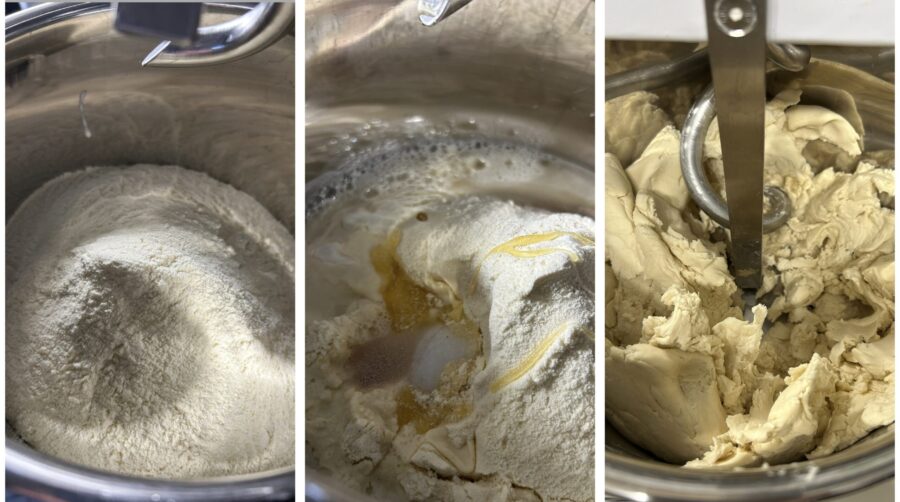
Put the flour, about 850 ml of water (about 3 1/2 cups), the yeast dissolved in a little water, the malt (or honey) and the salt (away from the yeast) into the mixer. Start the machine and work for 20 minutes at medium speed. If the dough struggles to come together, add the remaining water, but do not exceed the total amount. The machine will have difficulty turning the dough into a single smooth piece, but after 20-30 minutes at most, turn it out onto the work surface.
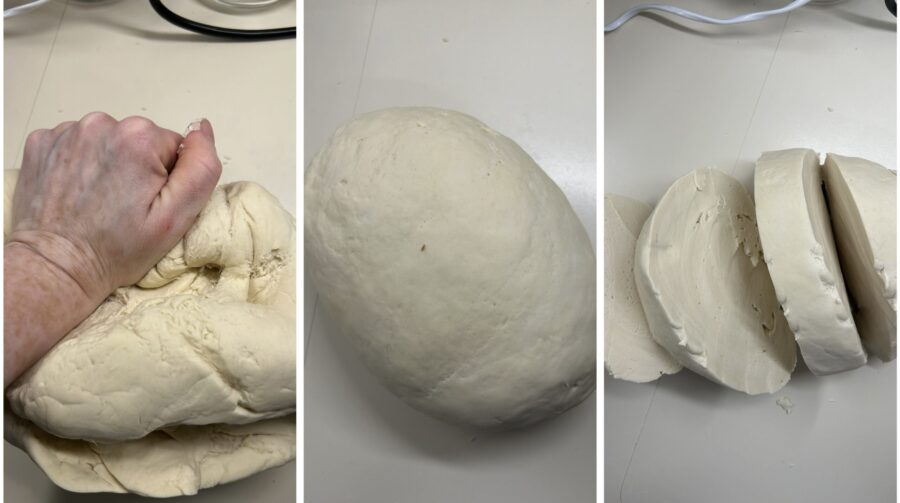
Work it by hand a little more until you obtain a single mass as smooth as possible. If you can’t, let it rest for another 10 minutes covered with a cloth and resume kneading. Then shape into a ball and divide into 4 equal pieces.
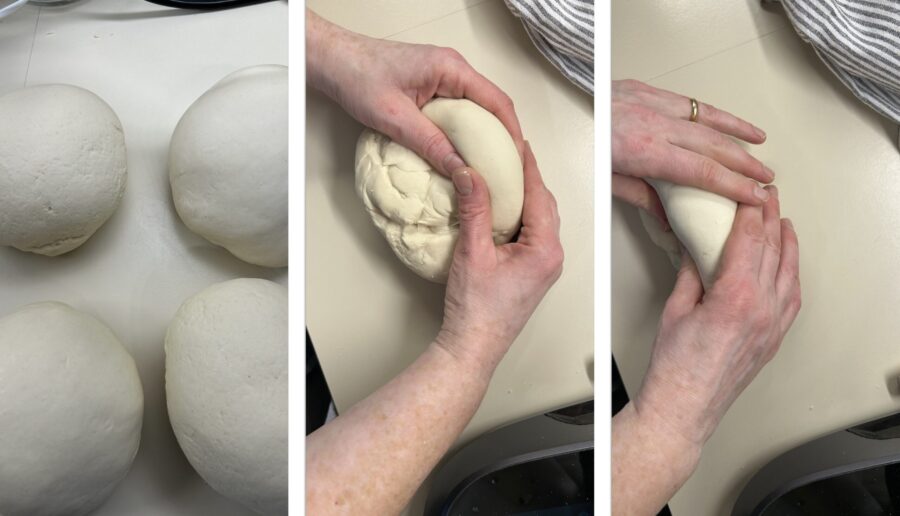
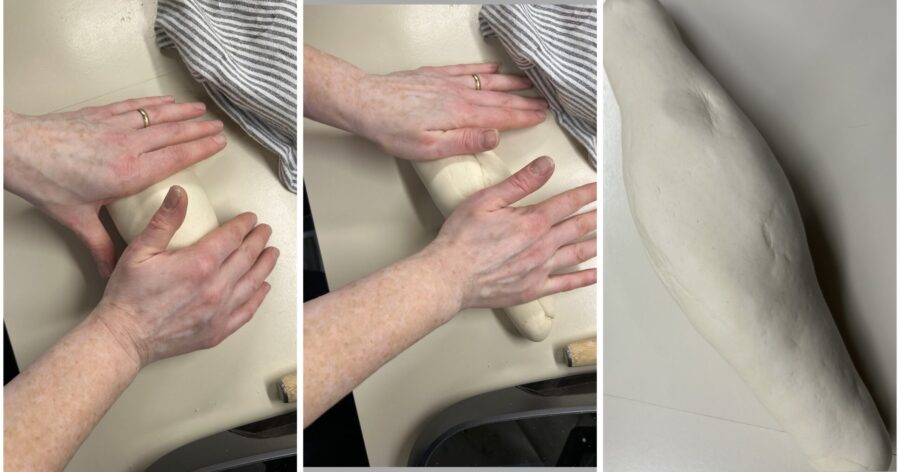
Work each piece into a ball and let rest 10 minutes, covered with a cloth or plastic wrap. Shape the bread by working it with both hands, folding the dough over itself several times (see the video below),
while at the same time stretching it so it stays thicker in the center.
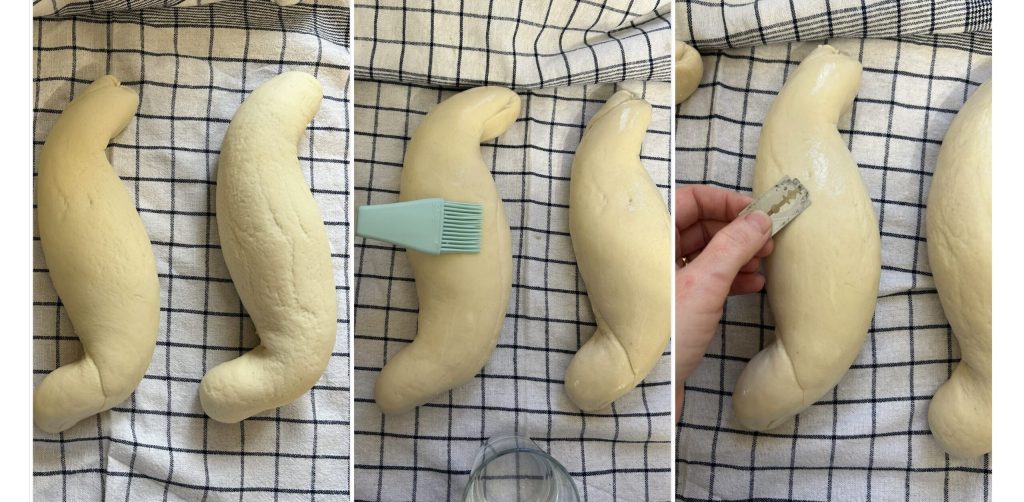
Give it an “S” shape and place in a warm spot to proof for about 2-3 hours.
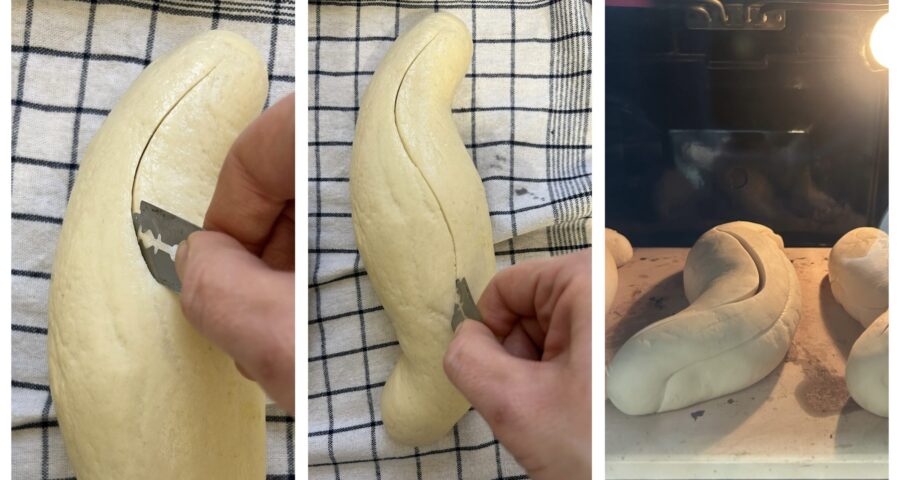
When the “S” loaves look light and well risen, brush them with water, score the center with a razor or knife and bake in a preheated oven at 446°F for 30 minutes and then at 356°F for the following 15 minutes.
If you have a baking stone, use it. Place it in a cold oven and bring everything up to temperature; once hot, lay the bread on it and proceed with baking.
Let cool slightly and enjoy.
Here’s how to shape the bread:
nn
Storage and tips
Our hard-dough bread keeps well for up to 2-3 days, especially in winter if kept in a cotton bag, although it will gradually lose crispness. In summer its shelf life is much shorter and it tends to dry out quickly unless stored in a plastic food bag.
Proofing times are indicative: when working with yeast there are no certainties and everything depends on the ambient temperature and the temperature at which you work. You will need to manage the proofing times according to your conditions, independently of my indications.
You can replace the brewer’s yeast with 300 g of strong, well-refreshed sourdough starter; proofing times will triple.
If you want to stay updated on my recipes, follow me also on:
"The warm taste of the South" is the blog where you'll find authentic recipes from traditional Sicilian and Italian cuisine. Pasta dishes, meat and fish mains, desserts, and much more…