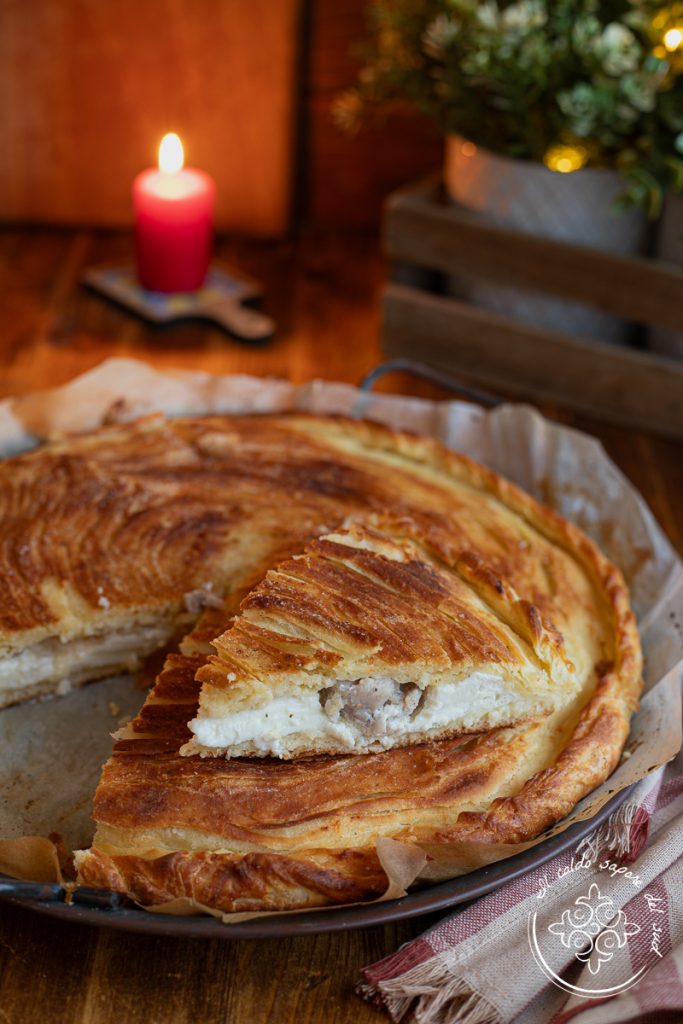
The Christmas dish of Ragusa is the unavoidable sfuogghiu made with ricotta and sausage, a dish that is part of Sicilian cuisine and grandmother’s recipes and an ideal preparation to enrich the holiday menu if you don’t know what to cook for Christmas and New Year’s Eve. “U sfuogghiu ragusano with sausage and ricotta” is one of the oldest and most representative savory pastries of the province of Ragusa together with the Scaccia ragusana in its many variants, and many other dishes that are part of the rich peasant tradition of the Iblei area, such as the Cucciddatu scaniatu of Scicli. A Sicilian dish with an intense flavor and a particular texture given by the peculiar layering using lard, different from traditional puff pastry, it wins you over at the first bite and has its roots in the humble recipes of grandmothers. This savory pie, prepared with a thin, crisp, and very simple-to-make layered dough, contains a filling rich in fresh sausage, ricotta, marjoram and black pepper and is a true symbol of Sicilian home cooking.
In tradition, sfuogghiu was prepared mainly in the winter period, when sausage was available fresh after the classic pig butchering. In many families of the Iblei area it was also enjoyed during holidays, particularly at Christmas, New Year’s and during large Sunday gatherings. Still today it represents a convivial holiday dish, perfect to share and ideal as a appetizer, a buffet savory or a substantial main course.
On our blog we often celebrate recipes that tell the true essence of the Sicilian territory and the Ragusano sfuogghiu, different from the equally famous Sfoglio delle Madonie (which is a sweet made with tuma), thanks to its simple yet flavorful filling, fits perfectly among dishes that unite memory, territory and authentic tastes. In preparing the Iblean sfuogghiu, the combination of the sweetness of ricotta and the bold flavor of sausage makes this savory pie irresistible, while the thin layers allow the filling to remain soft, creamy and aromatic when cut. Making the original Ragusano sfuogghiu at home means bringing a piece of Sicilian identity to the table: a rich, tasty dish deeply tied to the culinary culture of the South. Ideal for those who love discovering typical recipes and ancient flavors, sfuogghiu always conquers thanks to its simplicity and authentic taste, and especially because of the particular texture of its layered crust. Let’s go to the kitchen and prepare the “Ragusano sfoglio” together, but before revealing the recipe I remind you that if you want to stay updated on all my recipes you can follow my Facebook page (here) and my Instagram profile (here).
Also take a look at these other recipes for Sicilian savory pies:
- Difficulty: Very easy
- Cost: Budget-friendly
- Rest time: 3 Hours
- Preparation time: 30 Minutes
- Portions: 6
- Cooking methods: Oven
- Cuisine: Italian
- Seasonality: Winter, Christmas
Ingredients to make Ragusano sfuogghiu
- 1 3/4 cups re-milled durum wheat semolina
- 1 egg (optional, you can replace with water)
- 2 tbsp lard
- 1 tsp salt (not heaping)
- 1 1/2 tbsp sugar
- 1 tsp active dry yeast (or about 0.35 oz (10 g) fresh)
- 1/3 cup (80 ml) water (you may need 90–100 ml depending on the flour)
- 4 tbsp lard
- 3/4 lb sausage (plain or with wild fennel)
- 1 1/4 cups cow's milk ricotta
- to taste salt
- to taste black pepper
- to taste marjoram
- 2 tbsp milk
- 1 pinch sugar (optional)
- 1 pinch ground cinnamon (optional)
Tools
- Bowl
- Stand mixer -But you can also knead by hand
- Oven
- Baking sheet
- Rolling pin
- Pastry brush
Preparation of Ragusano sfoglio
Before starting the recipe, I mention that I kneaded the base using a stand mixer, but it’s not essential — you can also proceed by hand.
To make the Ragusano sfoglio, put the flour, egg, lard, sugar and the fresh yeast (or reactivated dry yeast) in a little water taken from the total, into the bowl of the stand mixer.
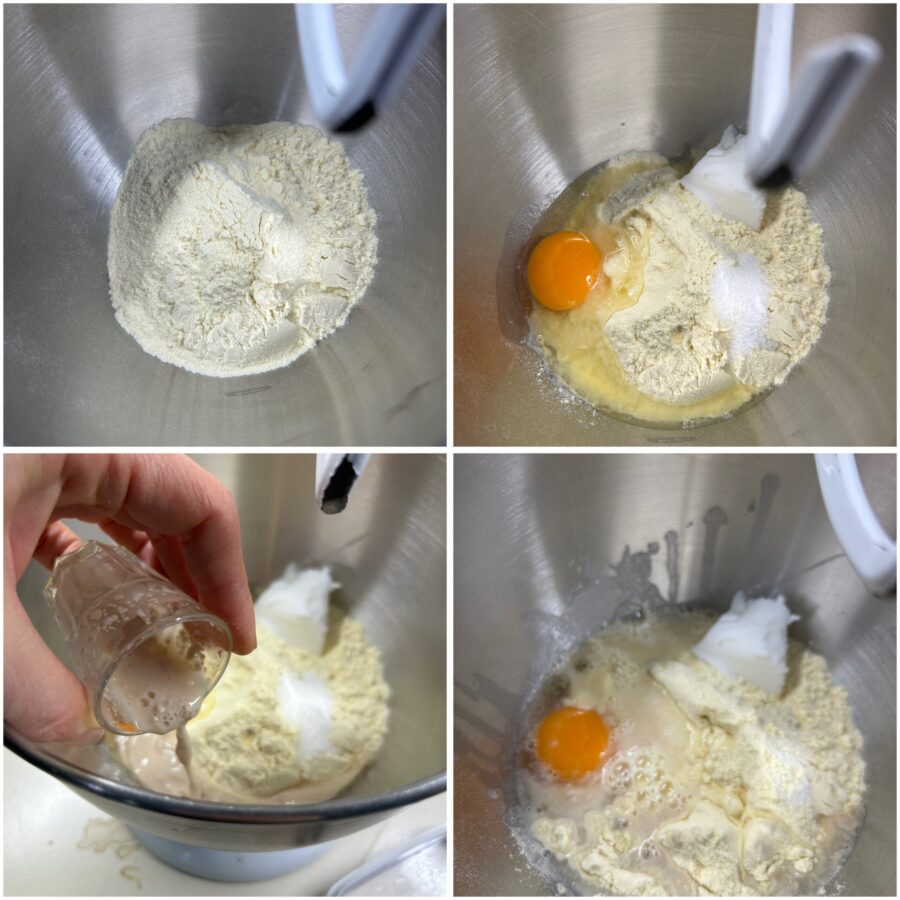
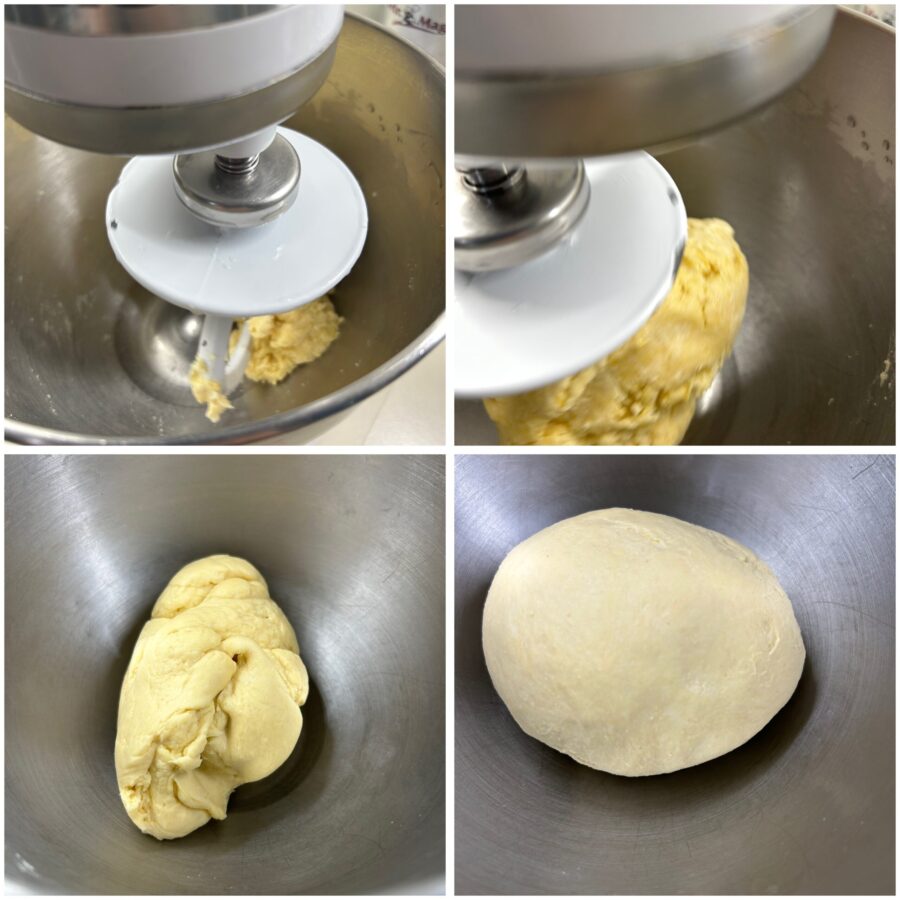
Start kneading, add the salt and work until you obtain a smooth, elastic and homogeneous dough. Form the dough into a ball, place it in a bowl or in the mixer bowl, cover with plastic wrap and let it rise until doubled: this will take about 2 to 3 hours.
Once doubled, roll out the dough with a rolling pin and a little flour to form a very thin sheet.
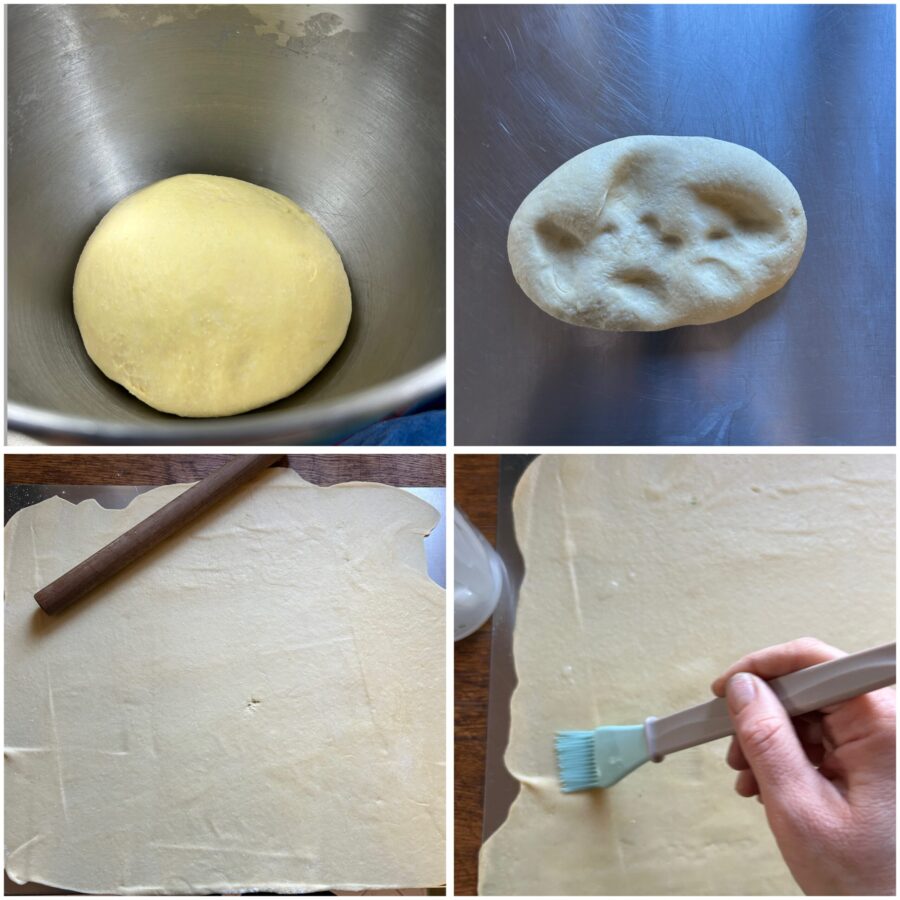
Brush the dough sheet with melted lard, roll it up into a tight long cylinder, and as you roll, brush the dry part with more lard.
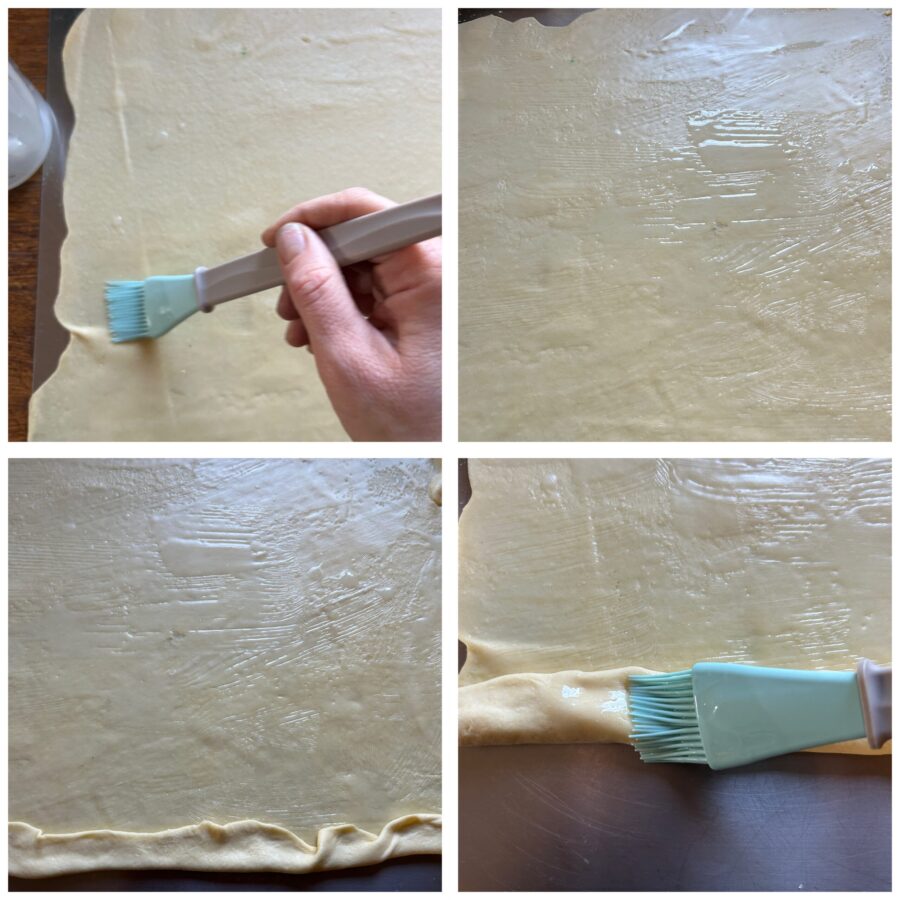
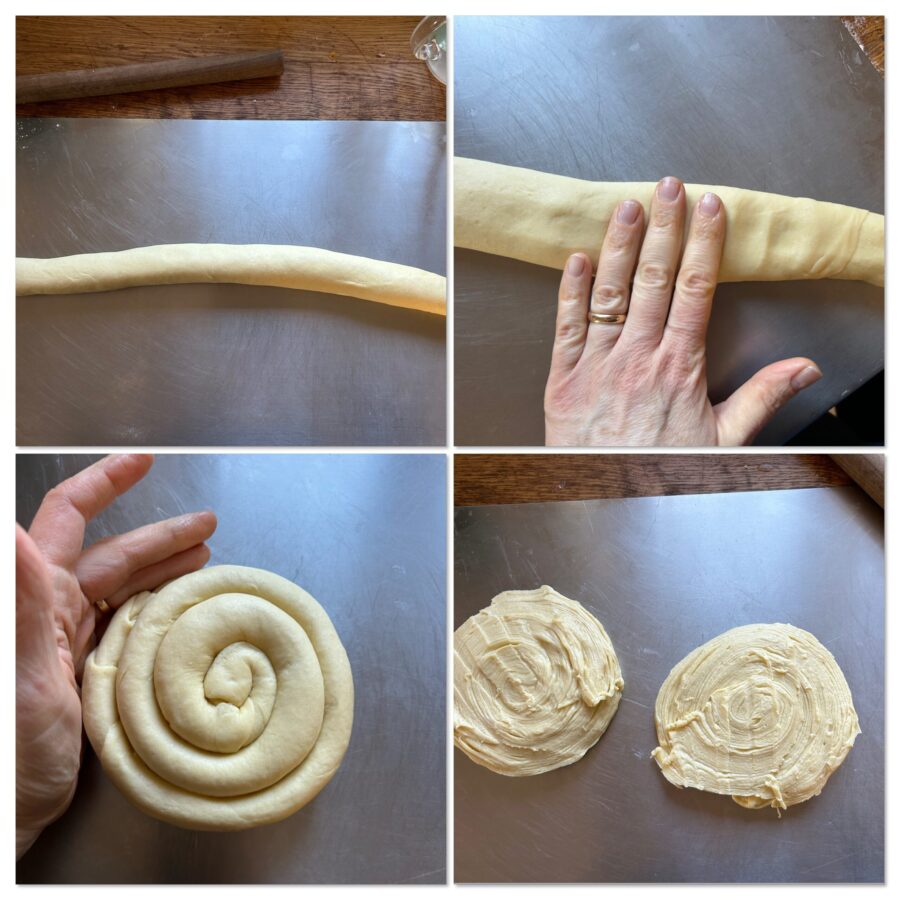
Flatten the cylinder slightly and then roll it up to form a snail shape. Let it rest for 10 minutes in the fridge covered with plastic wrap and divide the snail in half to form two identical discs.
Starting from the center and working outward, gently roll out the first disc, using a little flour if needed. With the layered side facing up, place the pastry disc on a baking sheet lined with parchment paper and fill it with ricotta, a sprinkle of pepper and marjoram (I don’t use it because I don’t like it), salt if necessary, and the sausage broken up and freed from its casing (which is already quite salty). Roll out the second pastry disc and use it to cover the filling.
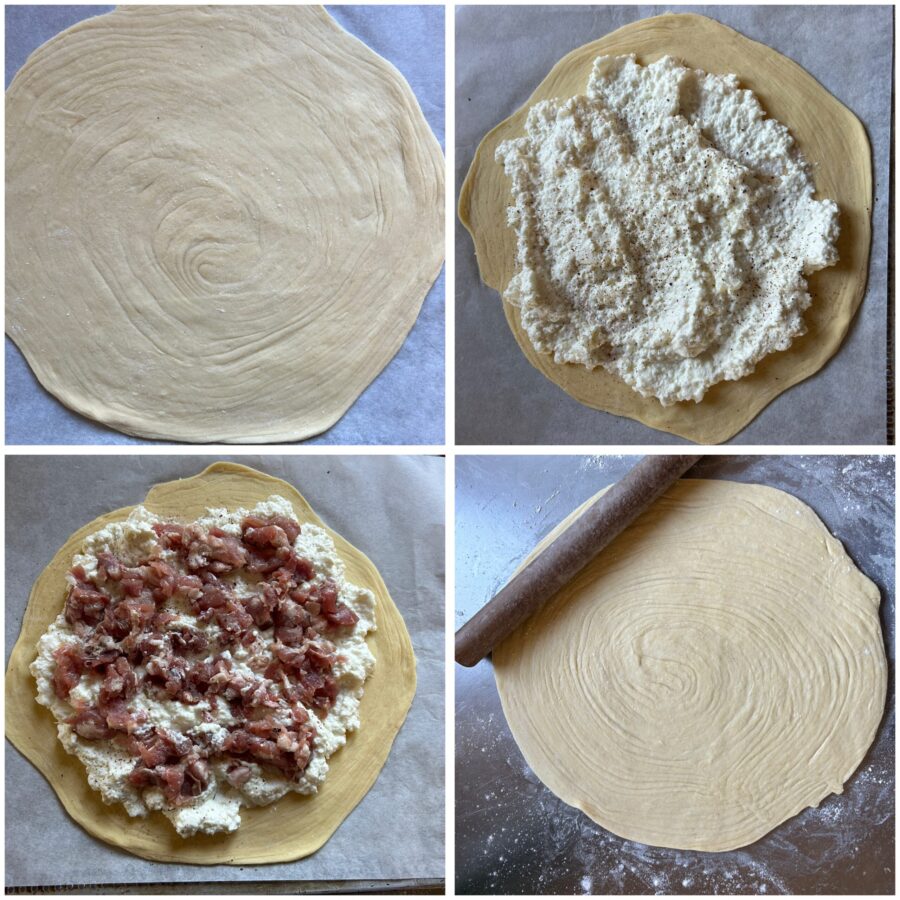
Seal the edges and then create the “u rieficu” (the rim) by folding the edges of the discs inward.
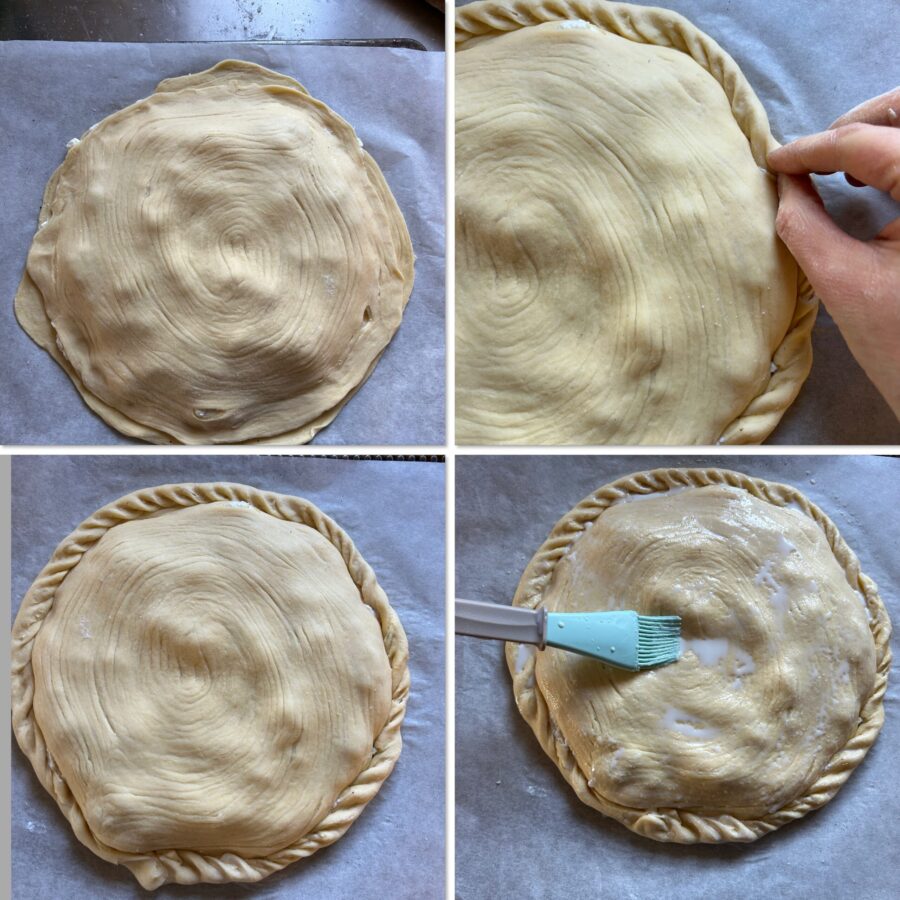
If you like, sprinkle with a pinch of sugar (and cinnamon) and bake in a preheated oven at 392°F (200°C), static mode, for 35–40 minutes or until the desired golden color is reached.
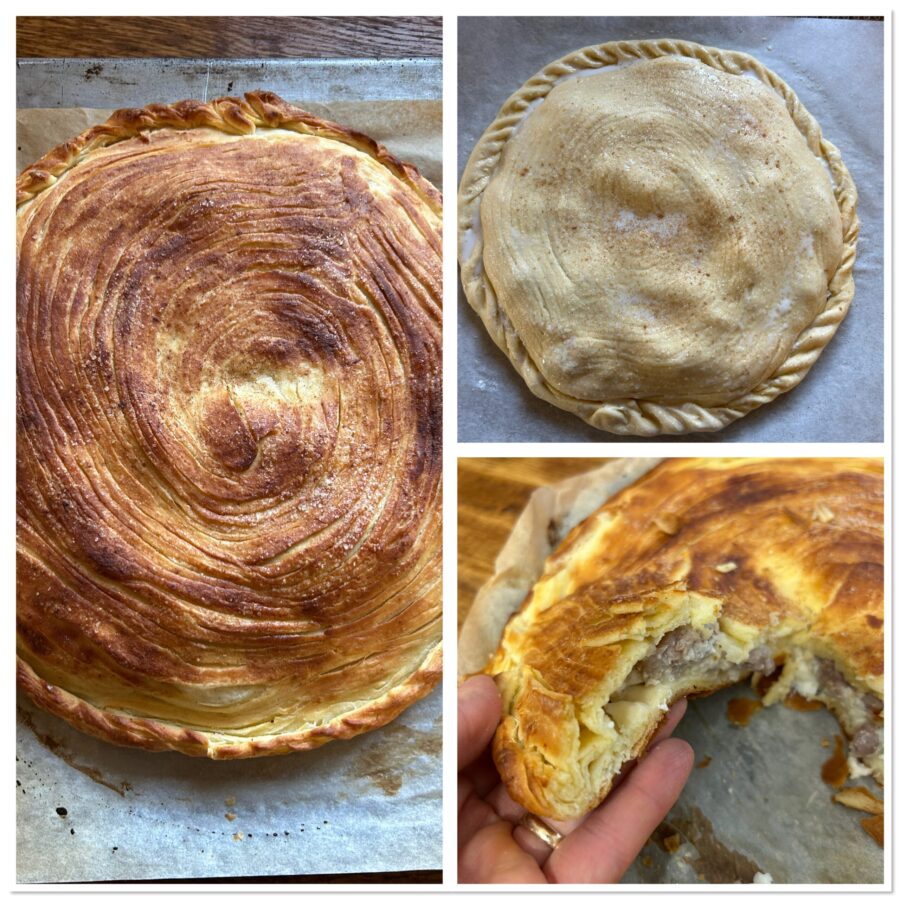
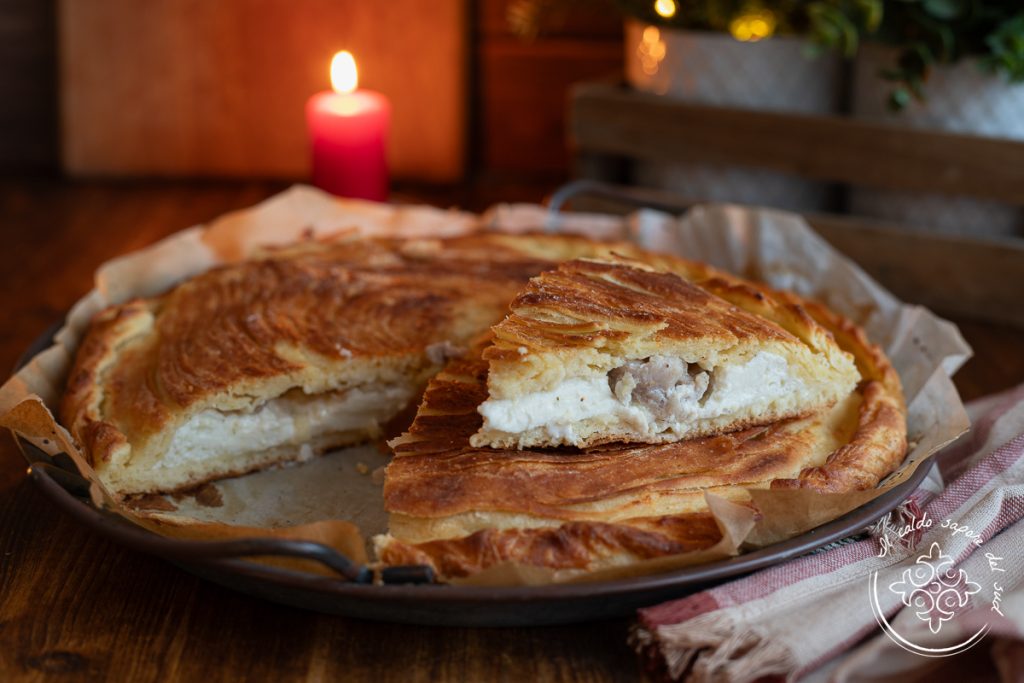
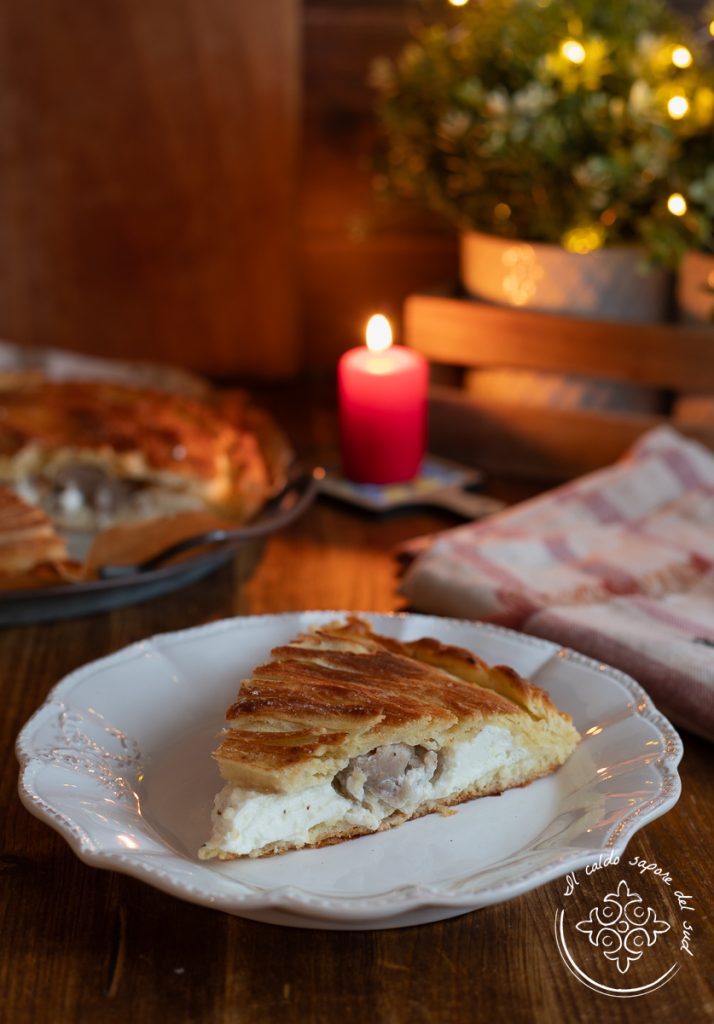
The sfuogghiu is ready: remove from the oven, let it cool slightly and enjoy.
Storage notes and tips
Enjoy the sfuogghiu while it is still hot and crisp, but if you have leftovers, store them in the refrigerator in an airtight container and reheat before eating.