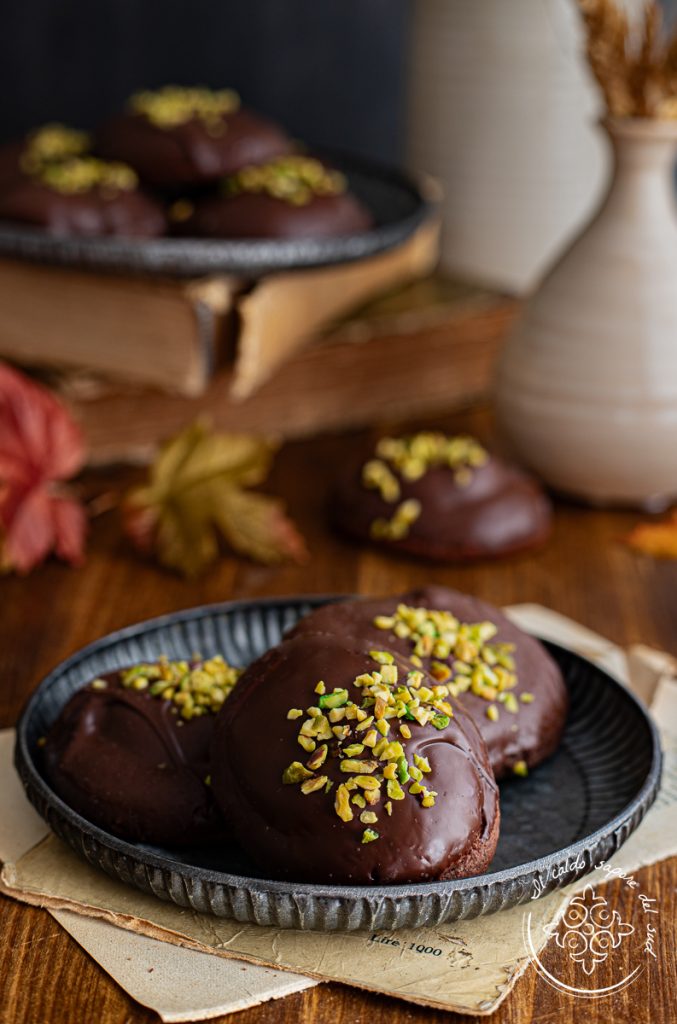
Rame di Napoli — original grandmother’s Catanian recipe. Among all the recipes of Sicilian cuisine, a place of honor is held by the Rame di Napoli, the famous “sweets of the dead” made with chocolate. Traditional and delicious, tied to autumn and its recipes and present in every bakery, bar, pastry shop and grocery from October to December, these typical autumn sweets of Catania—together with “ossa di morto“, “nzuddi“, marzipan fruit, mostarda and cotognata—are linked to the “feast of the dead” and the day of remembrance of the departed and must never be missing from Sicilian tables. Today we’ll learn how to make very soft rame di Napoli. But how did the tradition of the ramette di Napoli and all these other sweets begin? The tradition goes back to a time when children had to be taught to visit their deceased loved ones: all the children who had honored their relatives received sweets and gifts from them (through their parents) on November 2nd. This helped to perpetuate the love between new and past generations, between grandparents and grandchildren, and between those who had passed and those still alive, so that the day of sorrow would be softened by the anticipation of the gifts and sweets that the “mutticeddi” (the dear dead) would bring. Today, unfortunately, the tradition yields to celebrations that are not ours, but I really hope our cultural identity is not lost. That’s why every year I make traditional sweets for my children. But where does the name “rame di Napoli” come from? We don’t know the exact origin of the name; there are several theories: one says they were invented by a Neapolitan pastry chef, another links it to an act of vassalage of Sicily to Naples during the Kingdom of the Two Sicilies. The most plausible theory explains that during the Bourbon empire, after the union of the Kingdom of Naples with the Kingdom of Sicily, a coin was minted containing an alloy of copper, replacing the more precious gold and silver. The people thought to immortalize the event by creating a sweet that reproduced that coin, thus inventing the rame di Napoli. Tradition says these sweets, rich in spices, aromas and cocoa, were made with leftover biscuits and various sweets that could be cleverly recycled. Today this is no longer the case, but to remember the tradition we add finely ground biscuits to the base dough. The recipe I propose is the traditional one, although in recent years there has been a flourish of variations in Catania with different coatings and fillings. I will also tell you how to make rame di Napoli filled with Nutella and rame di Napoli filled with pistachio cream. Ready to roll up your sleeves? Let’s go to the kitchen—you’ll see that the original Catanian rame di Napoli recipe will make you fall in love!
If you want to stay updated on all my recipes, you can follow my Facebook page (here) and my Instagram profile (here). You can find this recipe and many other Sicilian recipes in my book: Sicily is on the table.
(READ THE RECIPE IN ENGLISH: Rame di Napoli original Sicilian recipe)
Also have a look:
- Difficulty: Easy
- Cost: Budget-friendly
- Preparation time: 2 Hours
- Cooking time: 7 Minutes
- Portions: 40 Pieces
- Cuisine: Italian
Ingredients to make Rame di Napoli — original Catanese recipe
- 4 cups All-purpose flour (00 flour)
- 1 cup Granulated sugar
- 2/3 cup Lard (or butter, but I recommend lard)
- 1 cup Unsweetened cocoa powder
- 3.5 oz Almonds (toasted)
- 1.5 cups Dry cookies (crushed)
- 2 Large eggs
- 2 tsp Ground cinnamon
- 6 Cloves
- 1 tbsp Candied orange (or orange marmalade)
- 1 packet Vanillin (vanilla powder)
- 2.5 tsp Baking ammonia (ammonium bicarbonate) (or half a packet of baking powder)
- 1.67 cups Milk (you may need up to 2.5 cups; adjust as needed)
- 14 oz Dark chocolate (50% cocoa)
- as needed Chopped pistachios (or toasted almond pieces)
- 7 oz Dark chocolate for coating
- as needed Pistachio spread
- as needed Hazelnut spread (e.g., Nutella)
How to make Rame di Napoli — original Catanese recipe
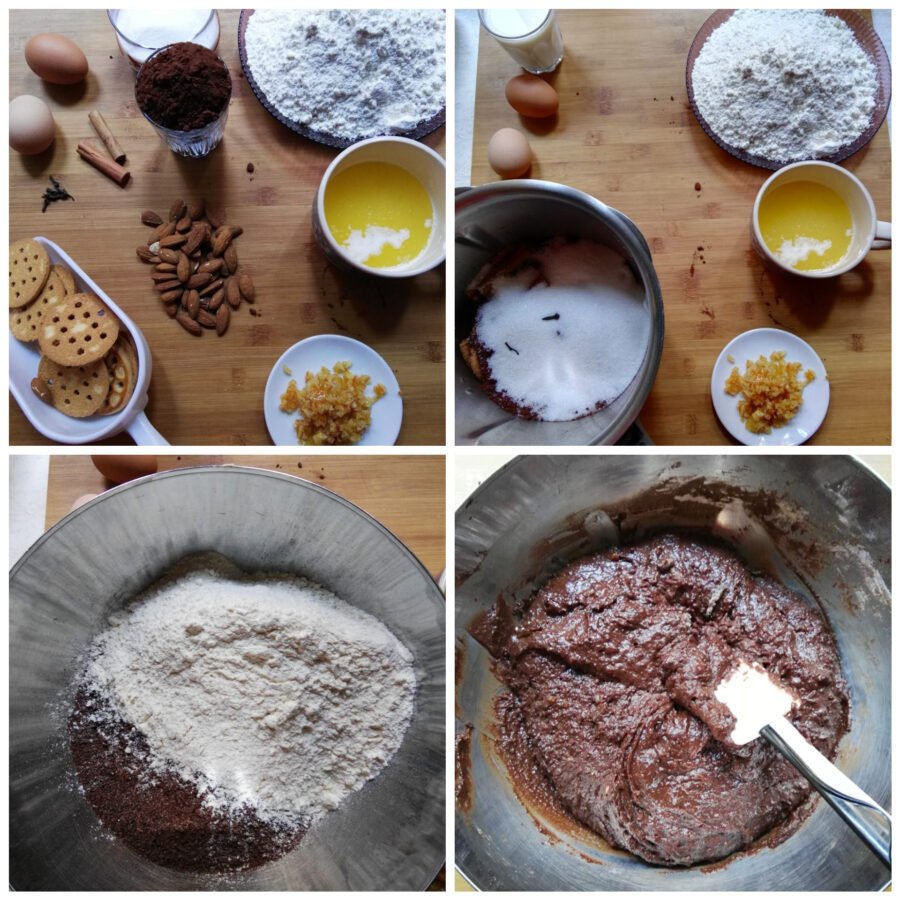
To make rame di Napoli, start by chopping and mixing together all the dry ingredients: cocoa, vanillin, sugar, crushed cookies, cinnamon, cloves and almonds briefly toasted in a pan. Pour everything into a large bowl and add the flour.
Add the soft lard at room temperature, the eggs, the candied orange peel very finely chopped or blended, and the milk little by little.
Work until you obtain a mixture similar to a thick cream—soft but not liquid—then finish by adding the baking ammonia or baking powder.
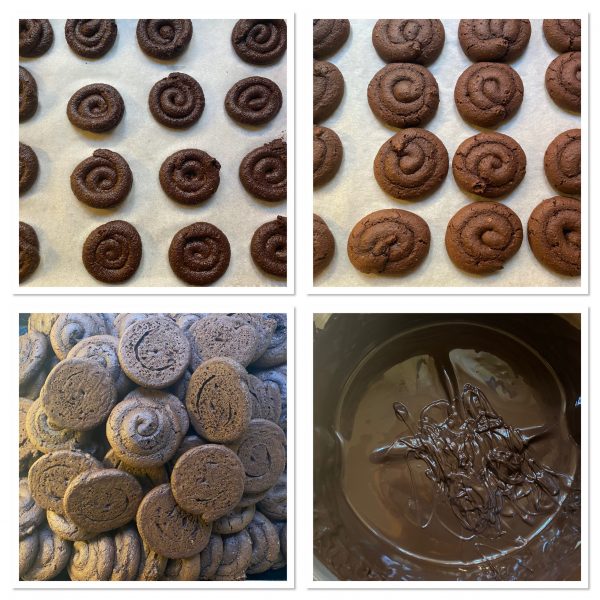
Fill a piping bag fitted with a round tip with the mixture and pipe snail-shaped spirals about 1.5 in wide (approximately 4 cm).
Bake for about 7 minutes at 356°F (180°C). Do the toothpick test; if they are ready, remove immediately, take off the baking sheet and let cool. Be careful: because they are small, they can dry out very quickly.
When the dough is all used up, prepare the chocolate.
I melt it at 99°F (37°C) using my food processor.
Alternatively, melt it in a bain-marie, making sure hot water does not touch the chocolate container. Be careful with the temperature—you must not exceed 99°F (37°C). Keep the flame low; overheating will ruin the chocolate, which would then set with difficulty, becoming dull and uneven. Ideally you would temper the chocolate properly, but glazing some 40 rame would be laborious, so at least avoid stressing the chocolate with too much heat.
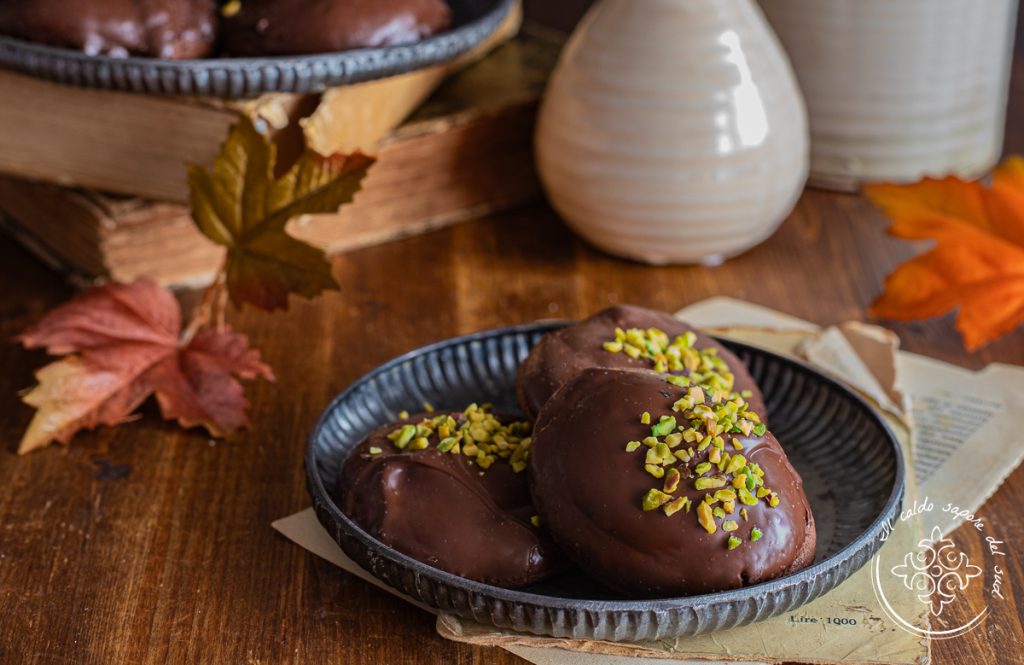
With a spatula, spread the chocolate over the rame, or dip them by the rounded side into the chocolate, then place them on parchment paper and sprinkle with a pinch of chopped pistachios or almonds.
As soon as the chocolate has set, you can enjoy your sweets.
Rame keep well in a tin box or under a glass dome for a few days, but the further they get from freshness the more they lose in terms of crispness and softness.
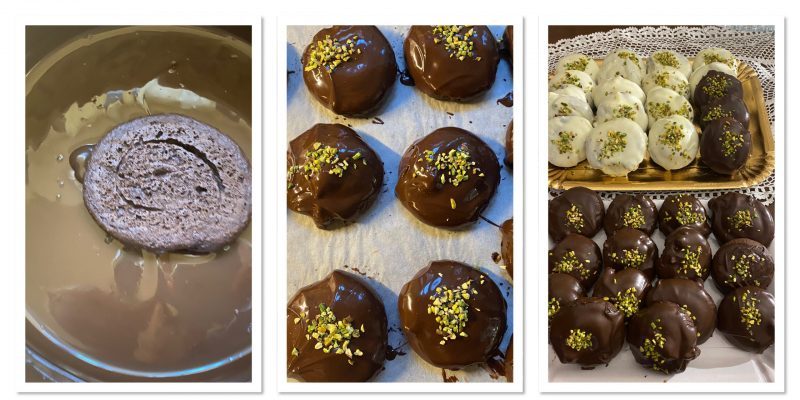
If you love white chocolate, you can also choose to glaze them with it. Melt it very gently, avoiding heating it beyond 95°F (35°C). I recommend melting it in a bain-marie, ensuring the bowl does not touch the water but is only warmed by the steam.
If you want to fill the rame di Napoli with Nutella or pistachio cream, once the rame are cold, use your thumb to create a small indentation in the center of each piece, but do not hollow them out completely.
Spoon a small amount of spread into each hole and place them in the freezer for 20–30 minutes.
After the time has passed and the filling has set, glaze the rame and sprinkle with chopped nuts.
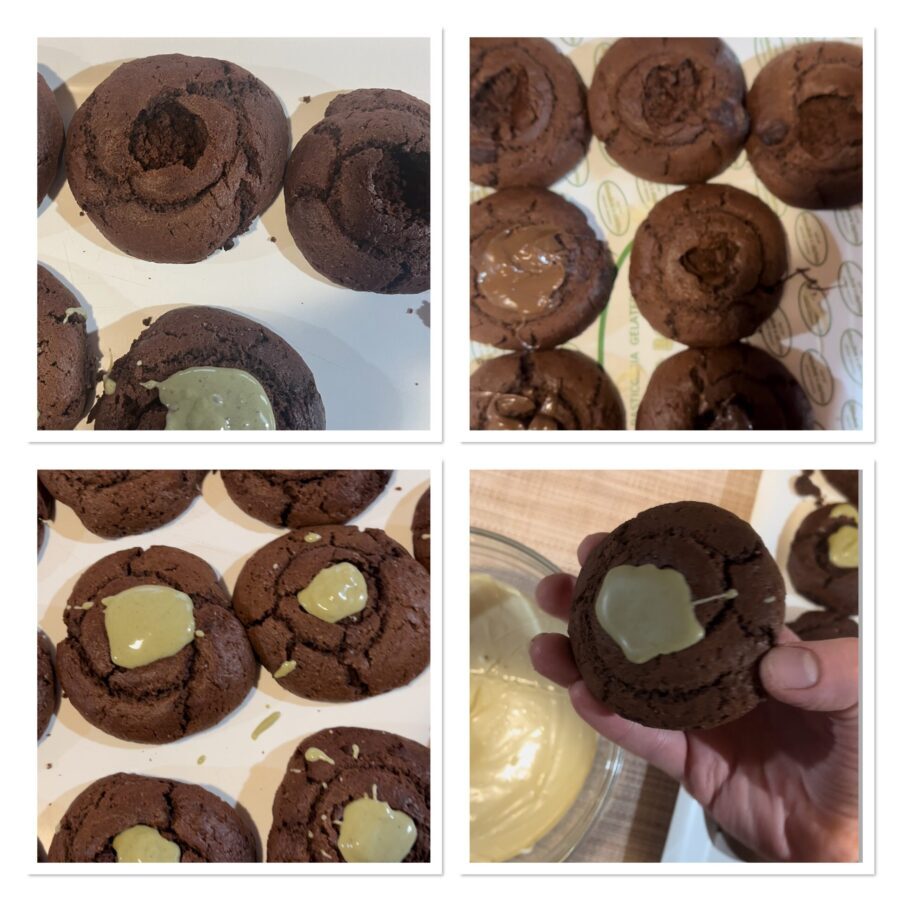
You’ll see that on the cold rama the coating chocolate will set in an instant!
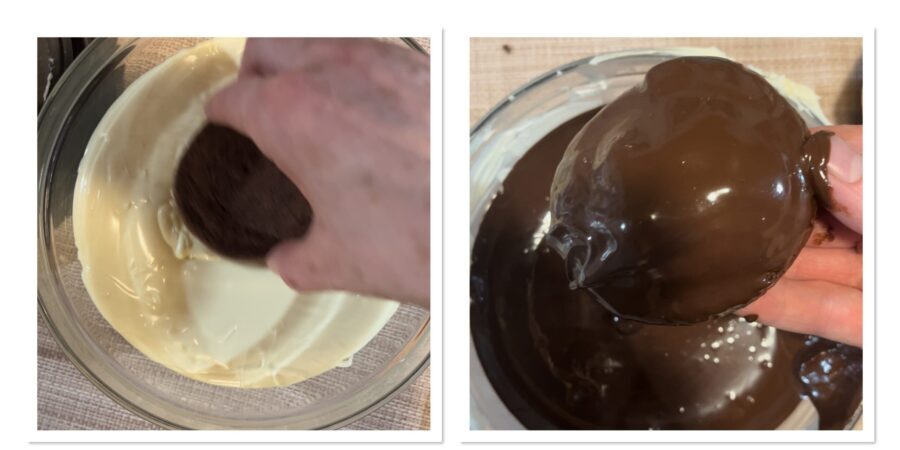
Rame di Napoli can be stored for a few days at room temperature, covered with a tea towel or a sheet of aluminum foil. Unfortunately, as with all pastries, the fresher they are the softer and more delicious they will be.
Notes
If you want to stay updated on my recipes, follow me on:
Pinterest, YouTube, Twitter and TikTok.
From here you can return to the HOME and discover new recipes