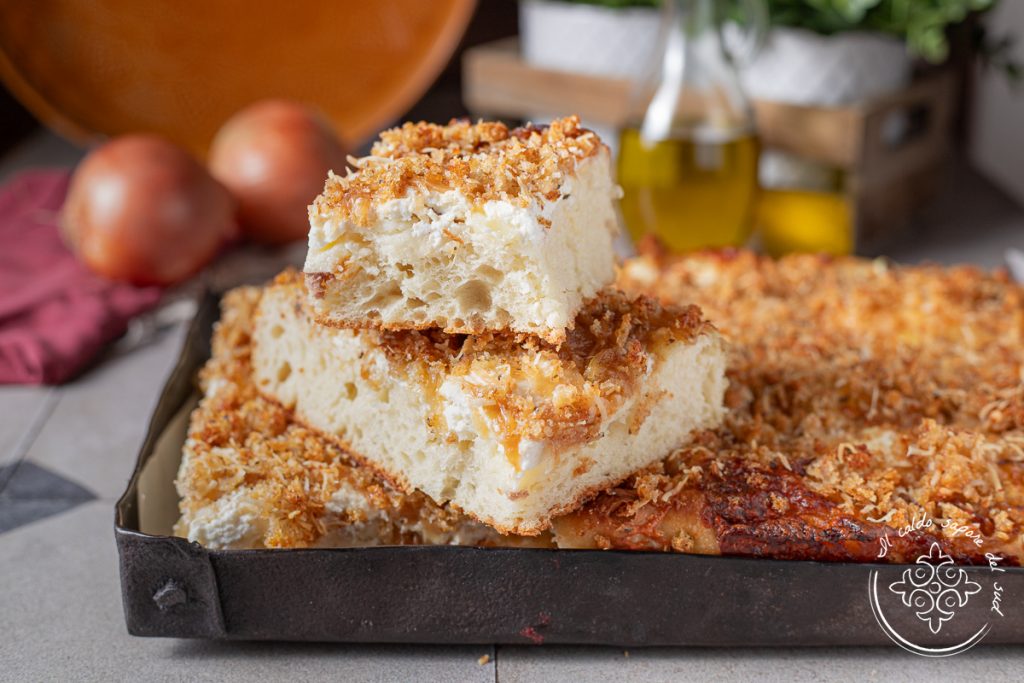
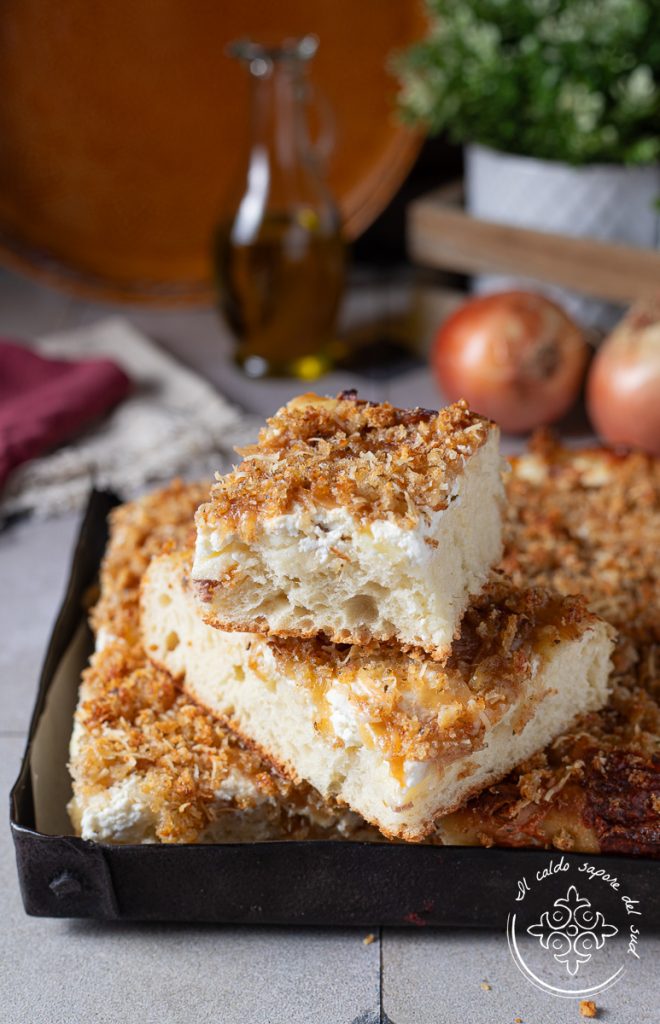
Original Bagheria sfincione recipe, explained step by step, with photos of every stage. The white sfincione, or Bagheria sfincione, is one of the many preparations of Sicilian cuisine and grandmother’s recipes, which anyone visiting Sicily must absolutely try, along with the classic Palermo sfincione. The Bagheria sfincione, a variation of the more traditional Palermo sfincione, is a little taller, white and seasoned with onions, anchovies, tuma and ricotta, but without tomato. It is usually made in round pans, unlike the Palermo version which is made in square pans. To speed things up, I allowed myself to bake it in a single large rectangular pan instead of making two round pans and baking them one after the other. But back to us: Bagheria is a town a few kilometers from Palermo, and with Palermo a great rivalry was born between these two gastronomic specialties, comparable to the rivalry between Arancino and Arancina. In recent years, however, the bad feelings seem to have disappeared and the two variants coexist as two well-defined and delicious realities. The Bagheria sfincione, which as the name suggests should be soft like a sponge (spongia in Latin), can be made with a long 24-hour fermentation, with a quick rise using dry or fresh baker’s yeast and also with sourdough starter. In this recipe we’ll discover how to make a quick Bagheria sfincione with dry baker’s yeast, but I will also give you indications for the other methods. Let’s go to the kitchen now and discover the grandmother’s Bagheria sfincione recipe. Before we roll up our sleeves, I remind you that if you want to stay updated on all my other recipes, you can follow my Facebook page and my Instagram profile.
Also check out these Sicilian recipes:
- Difficulty: Very easy
- Cost: Budget-friendly
- Rest time: 3 Hours 30 Minutes
- Preparation time: 20 Hours
- Portions: 8
- Cooking methods: Oven
- Cuisine: Italian
- Seasonality: All seasons
Ingredients to make Bagheria sfincione
- 1 3/4 cups (about 10.6 oz) re-milled durum wheat semolina
- 2 1/2 cups (about 10.6 oz) type 0 flour (all-purpose style)
- 2 tsp salt
- 1 1/8 tsp active dry yeast (or 12 g fresh yeast)
- 3 tbsp extra virgin olive oil (or about 3 1/2 tbsp lard)
- 2 tbsp sugar
- 1 7/8 cups water (about 15 fl oz)
- 12 fillets anchovies in oil (or salt-cured, well cleaned and rinsed)
- 12 oz (about 3/4 lb) cheese (Sicilian tuma)
- 14 oz (about 1 lb) sheep ricotta (drained for 24 hours in the fridge)
- 3-4 medium white onions (cleaned and peeled)
- as needed extra virgin olive oil
- 3 cups (about 7 oz) bread crumbs (from stale bread)
- 2 oz caciocavallo (Sicilian)
- 1 pinch oregano
Tools
- Mixer
- Pizza cutter / Baking pan
- Oven
- Pan
- Lid
Preparation
I kneaded the dough for the Bagheria sfincione with a mixer, but you can use a stand mixer the same way. The dough can also be worked by hand, but in that case I refer you to the procedure for the classic Palermo sfincione (link above). The sfincione dough is very wet because at the end of baking you should obtain “a sponge”; working with a mixer or stand mixer will help you get a good gluten development and will make it easier.
Put the two flours and the water into the bowl of your machine, start it running and add the yeast. A little later add the sugar and work until you obtain a very well-developed dough.
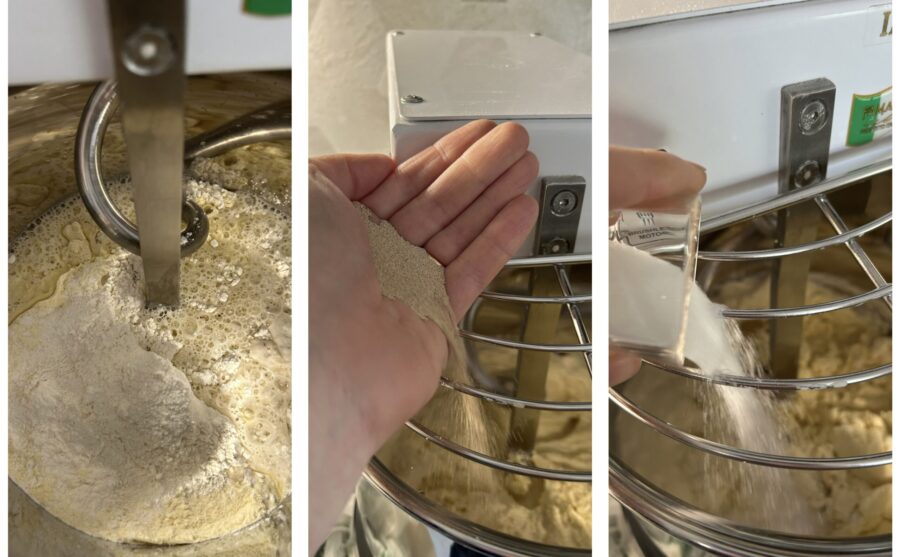
Pour the oil in a thin stream and let the dough develop again before adding the salt.
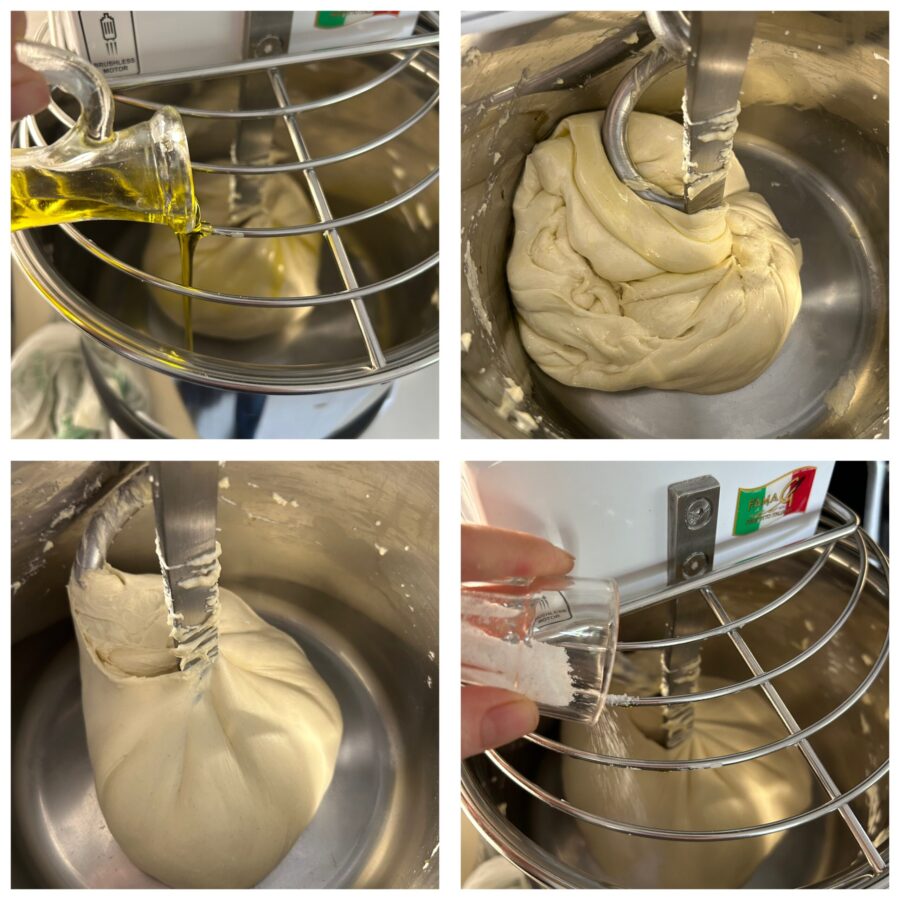
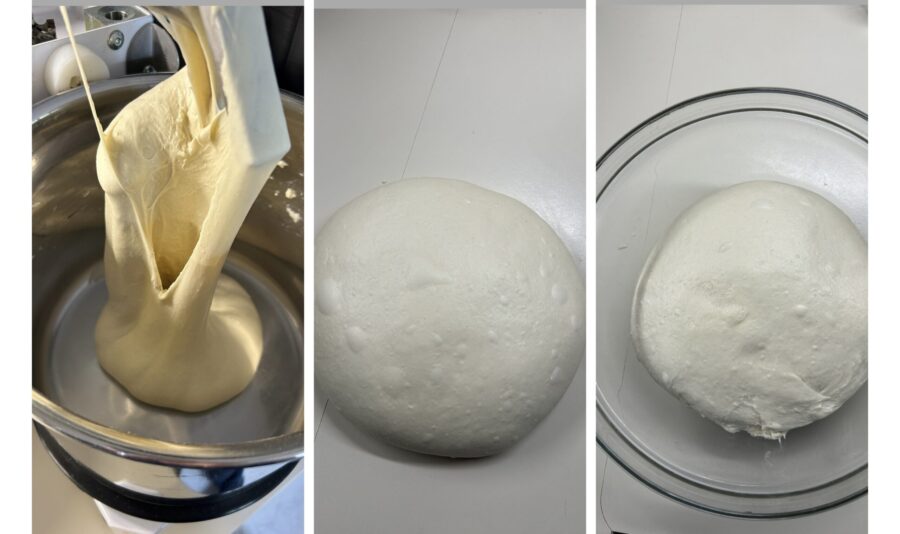
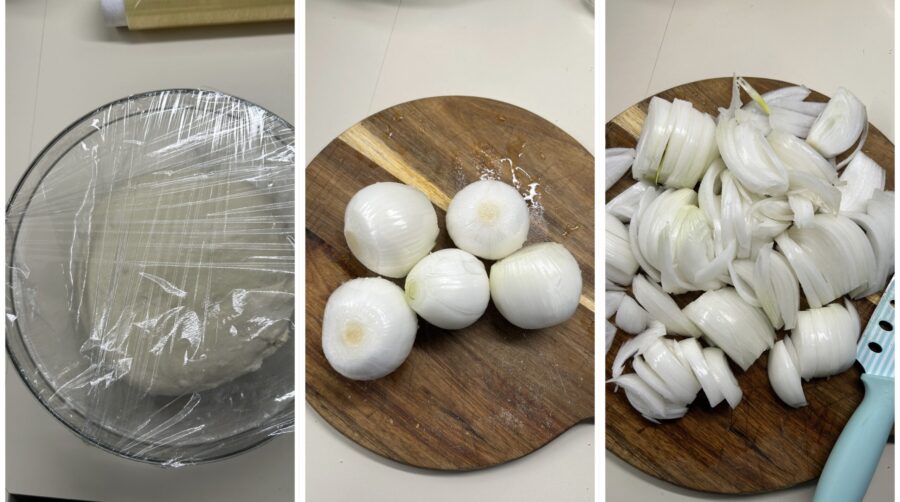
Once the salt is absorbed you should have a well-developed dough; turn it out onto the work surface, shape it into a smooth ball and place it in a bowl. Cover with plastic wrap and leave it to rise in a warm place until doubled in size.
While the dough is rising, peel the onions and slice them roughly.
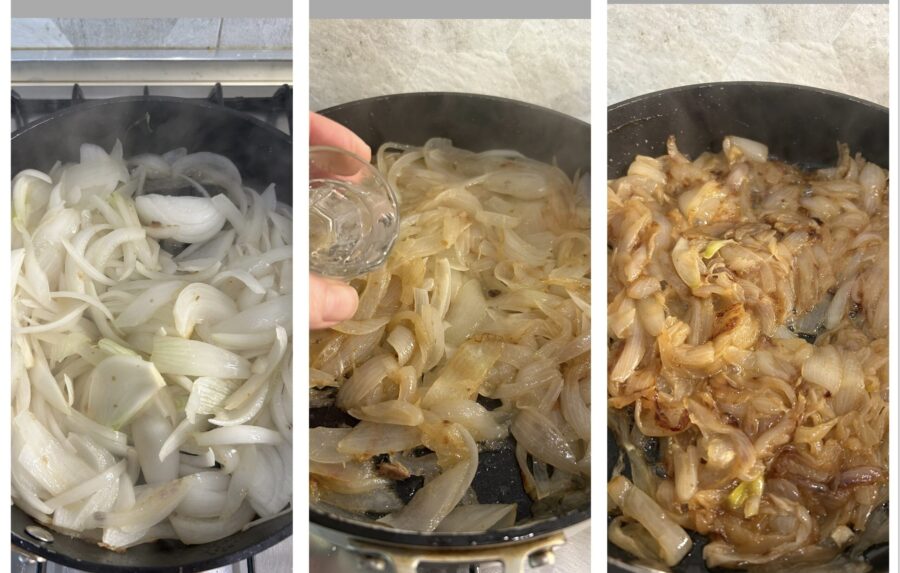
Pour a generous splash of oil into a pan, add 6 anchovy fillets and let them melt over low heat, stirring often. Add the onions, sprinkle with salt and let them soften over a lively flame for a couple of minutes.
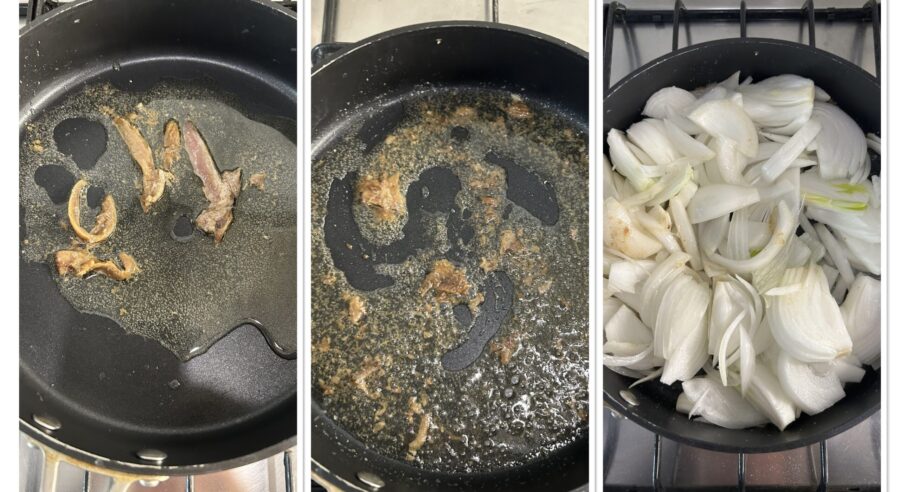
As soon as the onions begin to sweat, place the lid on the pot and continue cooking for 35 minutes over the lowest heat; the onions must stew. If they dry out too much, add a small glass of water and stir. Cook until the onions are very soft and much reduced in volume. Let cool.
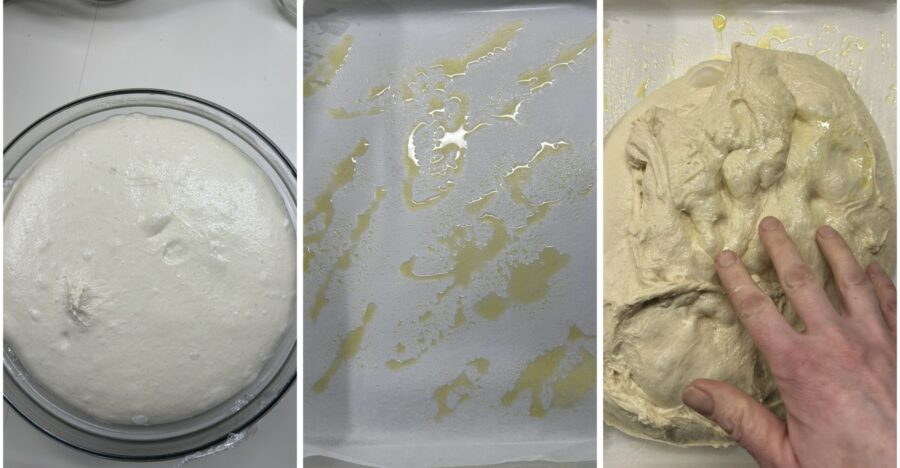
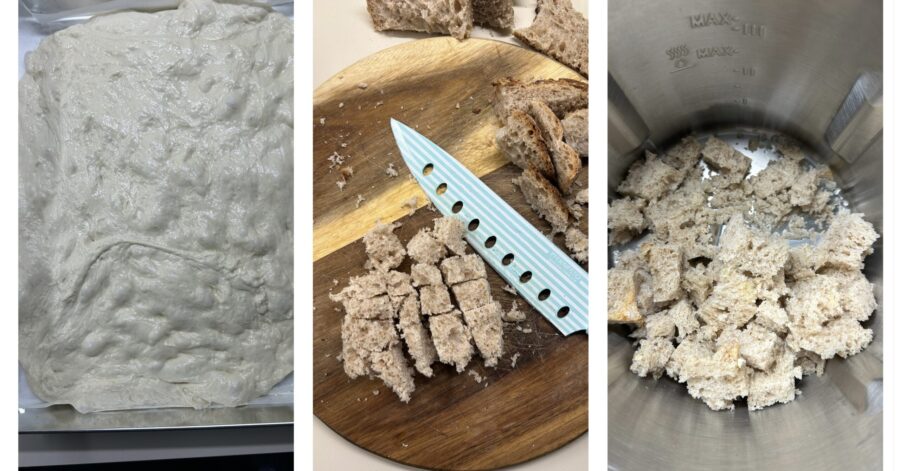
Once the dough has risen (and not before, otherwise you’ll risk a hard and chewy sfincione), line the baking pan with parchment paper, brush it with a little oil, place the dough in it and, without deflating it too much, spread it with oiled hands until it covers the whole surface.
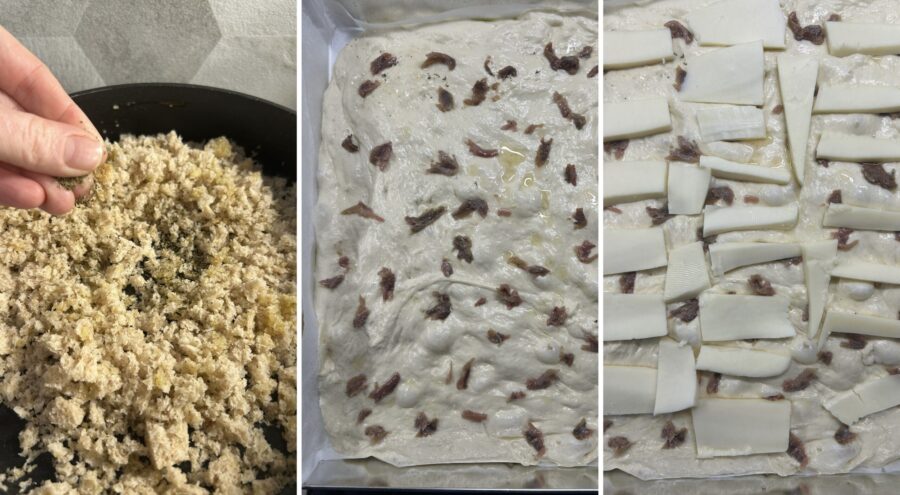
Return it to a warm place to rise for another 20–30 minutes. Meanwhile prepare the breadcrumbs. Use stale bread one or two days old; as I said I used my timilia bread. Remove the crust, cut the crumb into cubes and put them in the blender. Pulse roughly for a few seconds.
Then move the crumbs to a pan, add a drizzle of oil and toast over medium heat, stirring often.
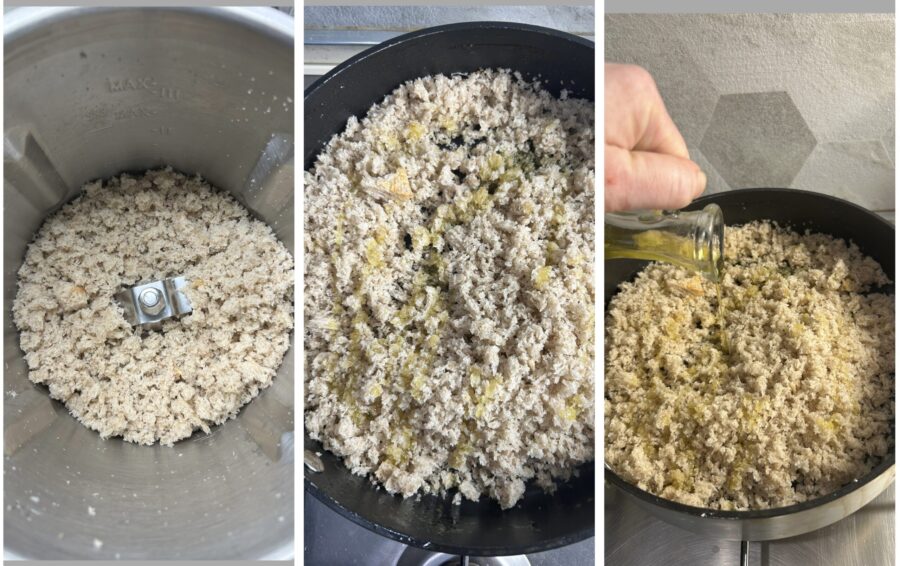
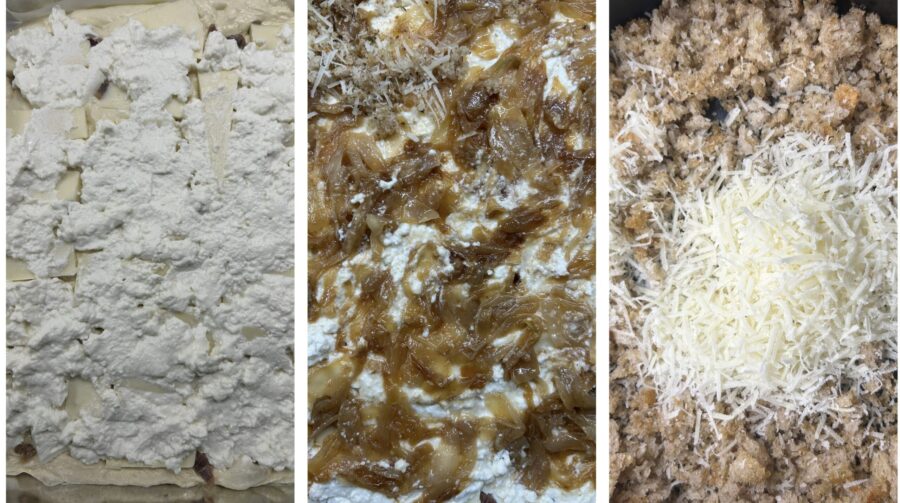
Add the oregano, mix and set aside to cool. It’s time to fill the base of our sfincione: break up the anchovy fillets and distribute them evenly on top, add slices of tuma and
finish with a layer of sheep ricotta that was put to drain the day before. Cover with the stewed onions, spread them well on top, and mix the caciocavallo with the crumbs.
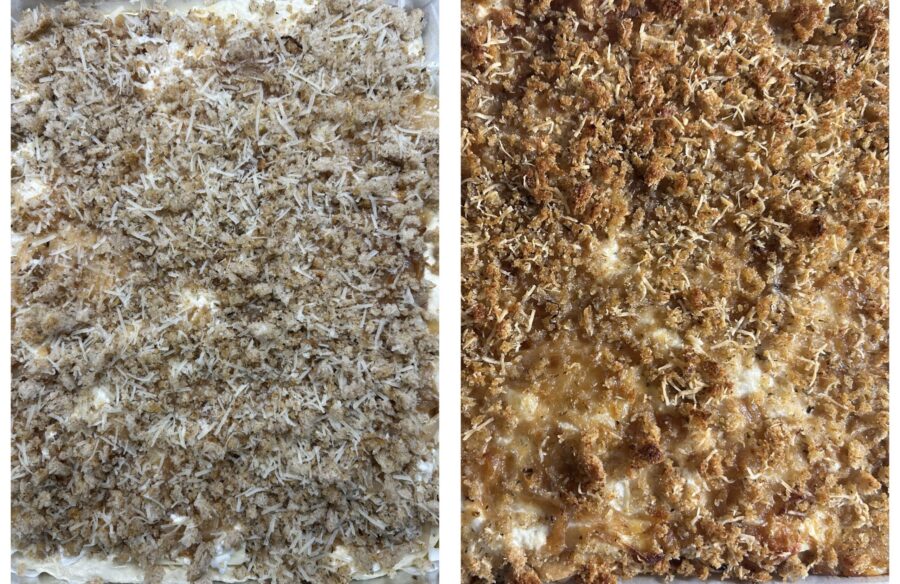
Cover the entire surface of the sfincione with the crumbs and bake in a hot oven at 392°F for 35–40 minutes, lowering the temperature to 356°F if it browns too quickly. Our sfincione is ready: let it cool slightly and enjoy immediately, although I assure you it is also very good at room temperature.
If you want to make a long-fermentation sfincione with a rest in the fridge, simply add only 1 g of dry baker’s yeast or 3 g of fresh yeast, create the dough, leave it 3 hours at room temperature and then put it in the fridge overnight. After that time, take it out and once doubled and acclimatized it can be used.
If instead you want to make a sfincione with sourdough starter, replace 60 g of type 0 flour and 40 g of water with 100 g of sourdough starter. Once the dough is formed and has risen, proceed as above. In that case the second rise must last at least 90 minutes.
Storage and tips
The sfincione is best eaten the same day. Any leftovers should be covered with plastic wrap, kept at room temperature and consumed within 24 hours. I used the dry yeast directly in the bowl because I know the brand I choose always works; however I usually recommend activating it before adding it to the dough. To activate dry baker’s yeast, dissolve it in half a glass of water taken from the total liquids provided in the dough, add half a teaspoon of sugar, stir and if after 20 minutes the glass is full of foam, your yeast is active and ready to use. Alternatively use fresh yeast, which is much more reliable.
If you want to stay updated on my recipes, follow me also on:
pinterest; twitter, you tube and tiktok.
From here you can return to the HOME and discover new recipes!