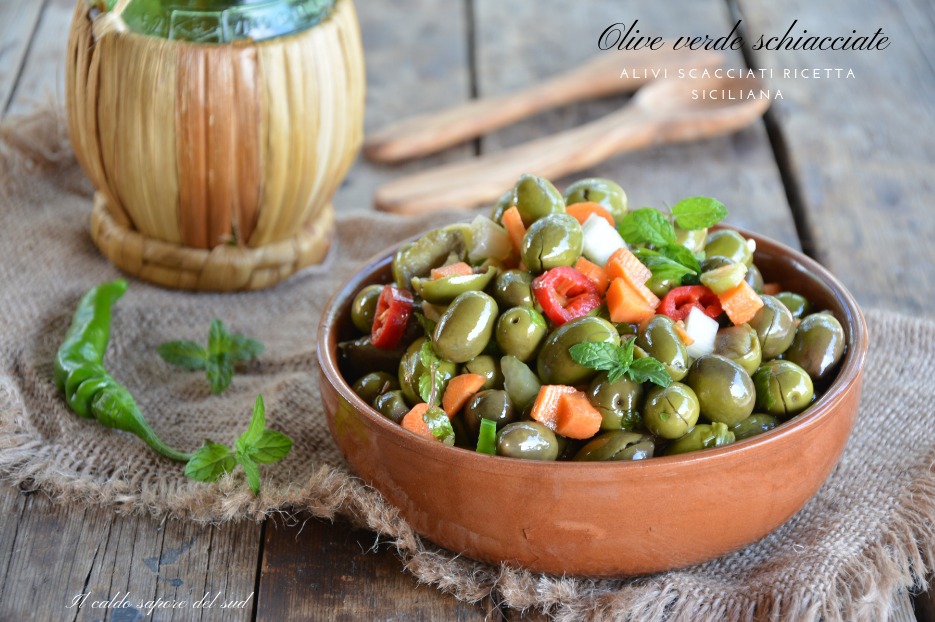
Grandma’s recipe for crushed green olives of the famous Sicilian crushed olives or “alivi scacciati”, a traditional dish of Sicilian cuisine, a tasty appetizer and an excellent humble dish to enjoy with a good slice of Sicilian semolina bread. Today we’ll discover how Sicilian crushed green olives are made: have you ever heard of them? Do you know the saying “one leads to another”? That’s exactly how our seasoned crushed olives behave, just like our baked black olives Sicilian-style: you taste one, then another, and before you know it the jar is empty and only the count of the pits convinces you you’ve eaten too many! Crushed green olives never miss from our table in autumn; they make a delightful appetizer and a much-appreciated side dish, perhaps served with a delicious cuccidatu, the characteristic bread of our region, or with a loaf made from ancient grain flours. The best olives to pick for our tasty “alivi scacciati” are of course the larger, meatier ones: green olives picked at maturity. The process is very simple, but it takes a few days of patience — curious? Let’s go to the kitchen and discover the Sicilian crushed olives recipe together. Before we roll up our sleeves, if you want to stay updated on my recipes you can follow my Facebook page (here) and my Instagram profile (here).
Also check out:
- Difficulty: Very easy
- Cost: Very inexpensive
- Preparation time: 12 Days
- Portions: 4 lb 7 oz
- Cooking methods: No cooking
- Cuisine: Italian
- Seasonality: Autumn
Sicilian crushed green olives: ingredients…
- 4 lb 7 oz green olives (freshly picked)
- 4 lb 7 oz salt
- extra virgin olive oil (a generous amount)
- to taste white wine vinegar (a generous amount)
- 2 fresh hot chili peppers (fresh)
- to taste parsley (chopped)
- 2 carrots
- 1 stalk celery (tender, chopped)
- to taste mint (if desired)
- pinches oregano
- 2 cloves garlic (if you like)
Preparation
Preparing crushed olives and giving them good flavor is a process that requires patience, because freshly picked olives are very bitter and only the processing makes them develop a great taste. Once you have picked or bought the olives, wash them well under running water and drain them. Crushing the olives can be messy and the juice may splash, so for this step organize yourself and wear an apron. To crush them you can use a meat tenderizer, a hammer or any suitable tool: a single solid blow will do. I used a bottle with a thick bottom.
After crushing them, sprinkle two or three handfuls of salt over the olives and mix. Let them rest like this for at least one hour. After resting, cover them with water and let them sit for 24 hours. After that time, rinse the olives and change the water again, adding 100 g of salt per liter of water (about 100 g = roughly 6 tablespoons of salt per 1 L).
Proceed by doing a complete change of water and salt every 24 hours for about 10–12 days, keeping the amount of 100 g of salt per liter constant. As the days go by and the brine is changed, their color will darken because the water penetrating them removes bitterness but also causes some oxidation.
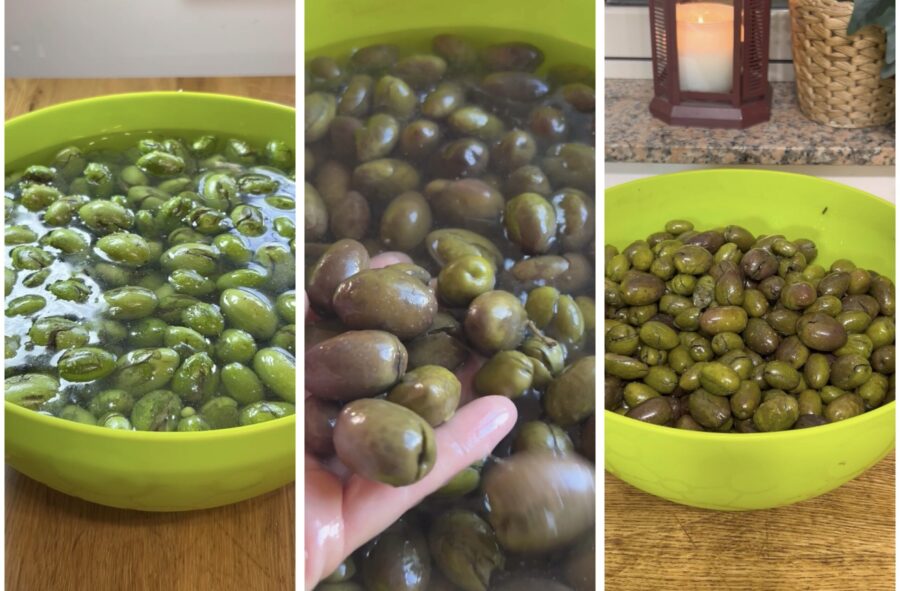
Around the eighth day of soaking you can start tasting them and judge the level of bitterness. In about 10 days, give or take, they should have developed a good flavor and lost their bitterness. At that point the crushed olives will be ready and it will also be time to season them; if, however, they are too salty, leave them to soak for a couple more hours in plain water. If you want to add extra flavor to the olives (and I always do), from around day 6–7 add 1 cup (about 8 fl oz / 240 ml) of white wine vinegar at each water change. Finally, our crushed olives will be ready to be seasoned!
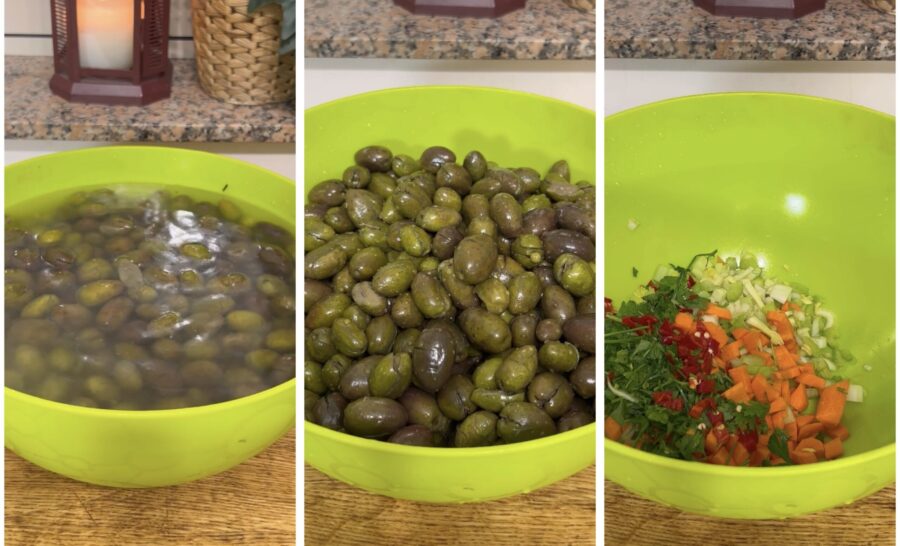
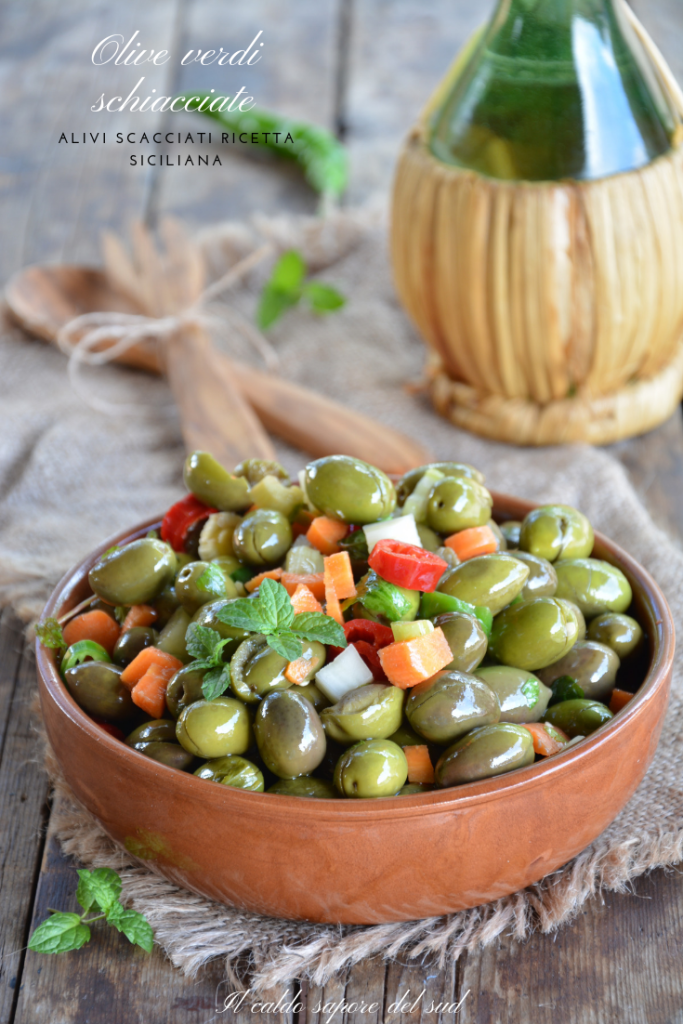
Rinse them, drain well and collect them in a bowl. Pour in vinegar to taste and plenty of extra virgin olive oil, add oregano, garlic, mint, chopped parsley and celery and carrot pieces, mix and enjoy after 2 hours of resting. Or, since we made a full 4 lb 7 oz batch, pack them into jars, making sure to add enough oil to completely cover their contents.
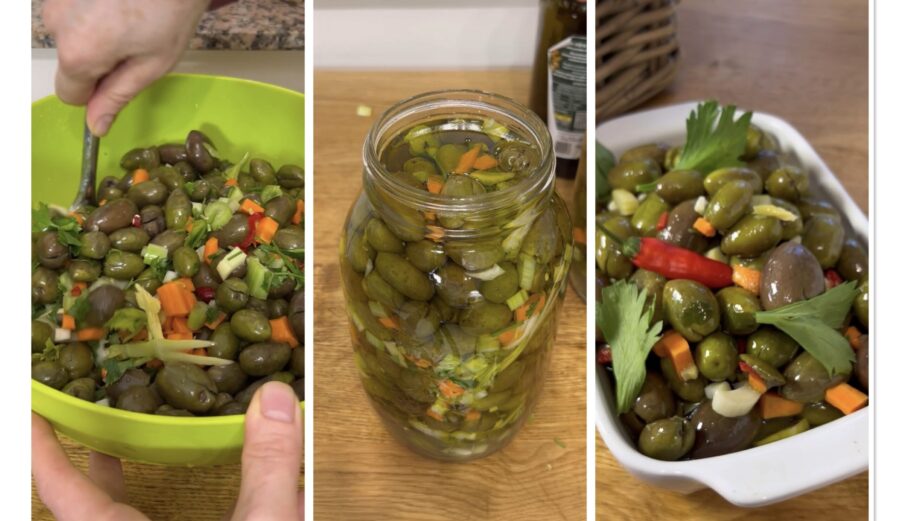
The longer seasoned crushed olives rest, the better they become.
Storage, notes and tips
I keep the olives prepared this way in the fridge and consume them within a couple of months; for longer storage periods I couldn’t say, they finish quickly in my house! In the fridge the oil will tend to solidify, but a few minutes at room temperature brings it back to its normal state.
I have heard that unseasoned crushed olives can be frozen and used as needed, but I have never tried it so I cannot confirm whether this method works.
If you want to stay updated on my recipes, follow me on:
Pinterest, YouTube, Twitter and TikTok.
From here you can return to the HOME and discover new recipes!