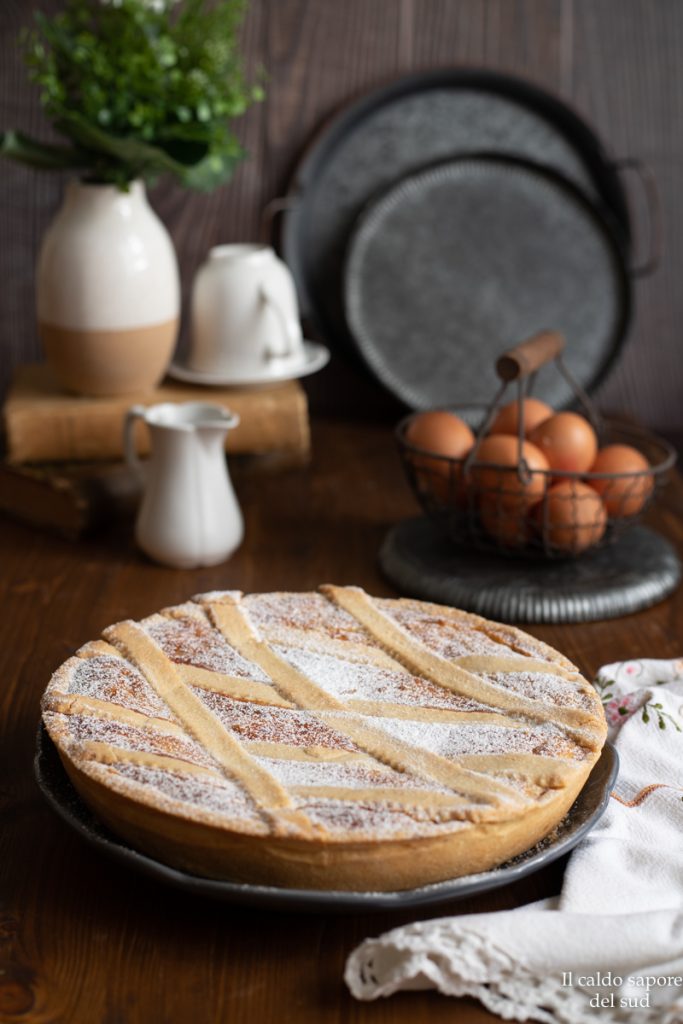
Traditional Neapolitan pastiera, grandma’s recipe with precooked wheat, a preparation that together with Casatiello, the tortano and Pizza chiena is part of the large and colorful collection dedicated to Campanian recipes. The traditional Neapolitan pastiera, a traditional Easter dessert, is essentially a tart made with a lard shortcrust pastry base and a filling of ricotta and boiled wheat cooked in milk. A rich and sumptuous dessert that cannot be missing from Easter menu ideas, it’s a bit time-consuming to make, but truly worth trying and today we’ll prepare it together.
The Neapolitan pastiera is one of the emblematic desserts among traditional Campanian recipes prepared at Easter. In the classic original pastiera recipe there are 7 decorative strips and the aromas used are orange zest, vanilla and orange blossom water, and the main filling ingredients are cooked wheat and ricotta. Today many variations have been added to the traditional recipe, like the chocolate pastiera, and often the ricotta in the original version is replaced by pastry cream, creating the pastiera with pastry cream. But what is the origin of the pastiera and why does the Neapolitan pastiera have 7 strips?
According to a legend, the siren Partenope chose the Gulf of Naples as her home and delighted the locals with her melodious, sweet voice. To thank her the people began to celebrate a rite in which they offered the siren seven gifts (just like the strips): flour, eggs, wheat, orange blossom, ricotta, sugar and spices. Each of these gifts had its own symbolism and, worked together by the skilful hands of the siren Partenope, gave rise to the famous Neapolitan pastiera.
Of course these are just “tales” or rather legends, and although the origin of this dessert has roots in antiquity and has been lost in time, today the Neapolitan pastiera is a dessert that is a heritage of the whole of Italy, where the tradition of cooking wheat and using it in many desserts is common to many regions. In Sicily, for example, cuccia is a typical spoon dessert based on ricotta, candied fruit and cooked wheat.
But let’s go to the kitchen now; we’ll discover how to make the pastiera with precooked wheat, much more practical and faster than the version that requires long cooking and soaking of the wheat, but equally delicious. Before we start, if you want to stay updated on my recipes you can follow my page Facebook and my profile Instagram.
Take a look at these Neapolitan desserts.
- Difficulty: Easy
- Cost: Medium
- Preparation time: 1 Hour
- Portions: 12-14 slices
- Cooking methods: Oven
- Cuisine: Italian
- Energy 291.44 (Kcal)
- Carbohydrates 39.31 (g) of which sugars 23.72 (g)
- Proteins 6.08 (g)
- Fat 12.79 (g) of which saturated 5.81 (g)of which unsaturated 6.35 (g)
- Fibers 1.09 (g)
- Sodium 90.43 (mg)
Indicative values for a portion of 100 g processed in an automated way starting from the nutritional information available on the CREA* and FoodData Central** databases. It is not food and / or nutritional advice.
* CREATES Food and Nutrition Research Center: https://www.crea.gov.it/alimenti-e-nutrizione https://www.alimentinutrizione.it ** U.S. Department of Agriculture, Agricultural Research Service. FoodData Central, 2019. https://fdc.nal.usda.gov
Ingredients to make the original pastiera
- 1 2/3 cups ricotta (preferably sheep's ricotta)
- 1 1/8 cups granulated sugar
- 1 1/2 cups cooked wheat (precooked grano cotto)
- 1 1/4 cups milk
- 3 large eggs
- 2 tbsp butter
- 1 cup candied fruit (about 3.5 oz orange and 1.8 oz citron)
- 2 tsp orange blossom water
- to taste orange zest
- to taste lemon zest
- 1 pinch salt
- 1 tbsp vanilla extract
- 1 tbsp wildflower honey
- 3 1/2 cups all-purpose flour (00)
- 7/8 cup lard (or butter)
- 1 1/3 cups powdered sugar
- 2 small eggs
- to taste lemon zest
- 1 tsp vanilla extract (or vanillin)
- to taste powdered sugar (for finishing)
Grandma’s recipe for pastiera: useful tools.
- Pan for pastiera pan, 11 in
- Oven
- Rolling pin
- Parchment paper
How to make the original Neapolitan pastiera
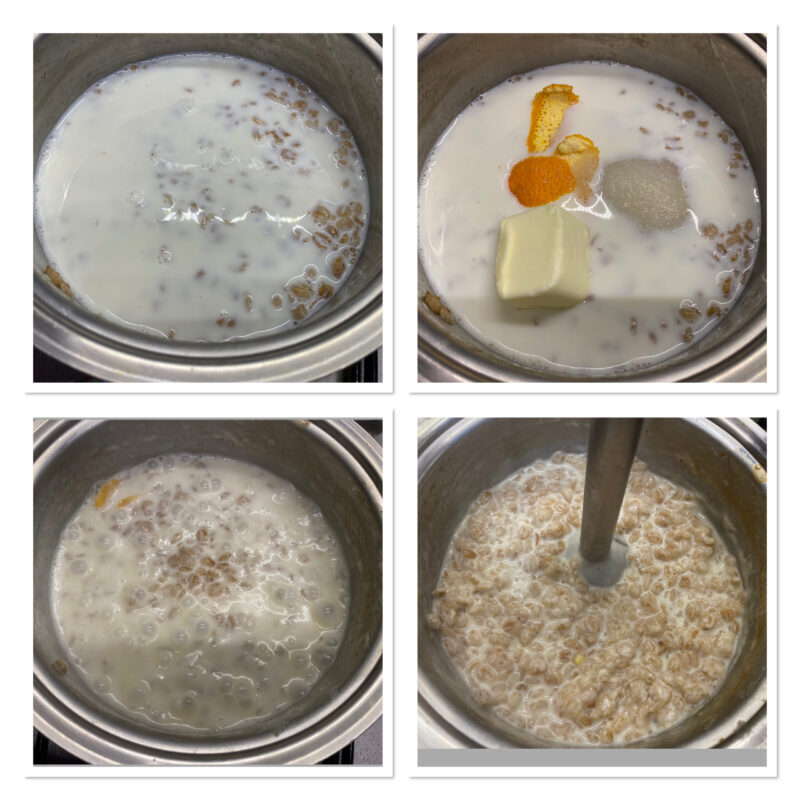
Put the precooked wheat in a pot, cover with the milk and add the butter, two tablespoons of sugar taken from the total and the orange and lemon zests.
Cook for about 20-30 minutes over moderate heat or until all the milk has been absorbed, leaving a thick and creamy mixture, then remove the zests.
You can either leave the wheat as it is or give it a short blend with an immersion blender to make everything creamier.
Let cool.
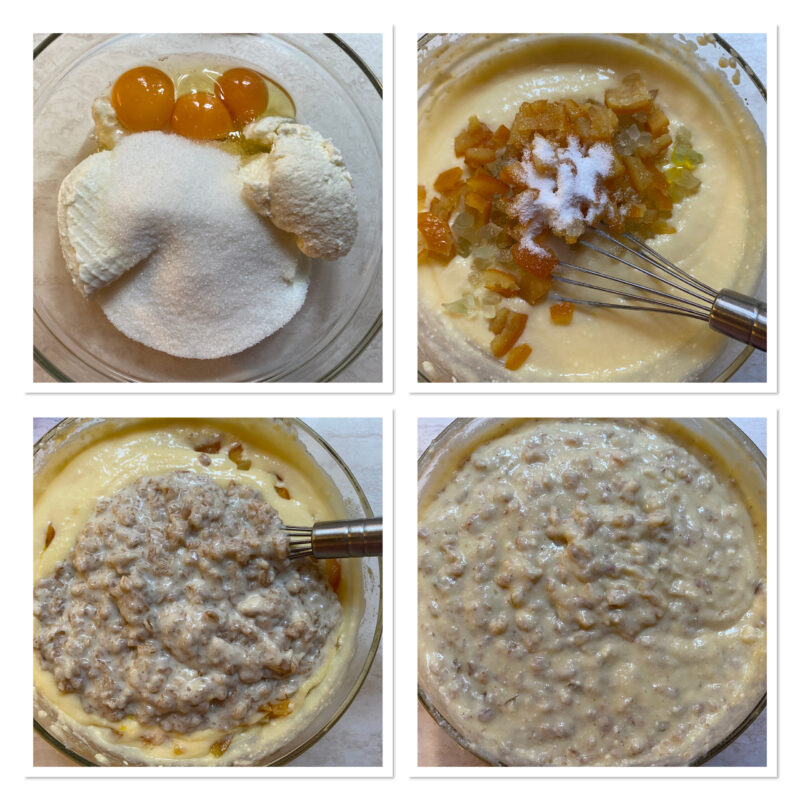
In a large bowl work the ricotta with the eggs, the sugar, the aromas, the honey and the candied fruit.
Once you obtain a smooth and homogeneous mixture add the already cold or warm cooked wheat mixture and combine.
Place in the fridge.
Pour the flour on a work surface, add the lard (or butter) and work everything together until you get a crumbly mixture.
Make a well, add the eggs, the sugar, the vanilla extract and work until you obtain a smooth and homogeneous dough, wrap in cling film and place in the fridge for 30 minutes.
After resting, roll the dough to a thickness of 0.2 in (about 1/5 in) on a sheet of parchment and with a quick move lift and flip it onto the pan (so that the parchment is on top and not underneath).
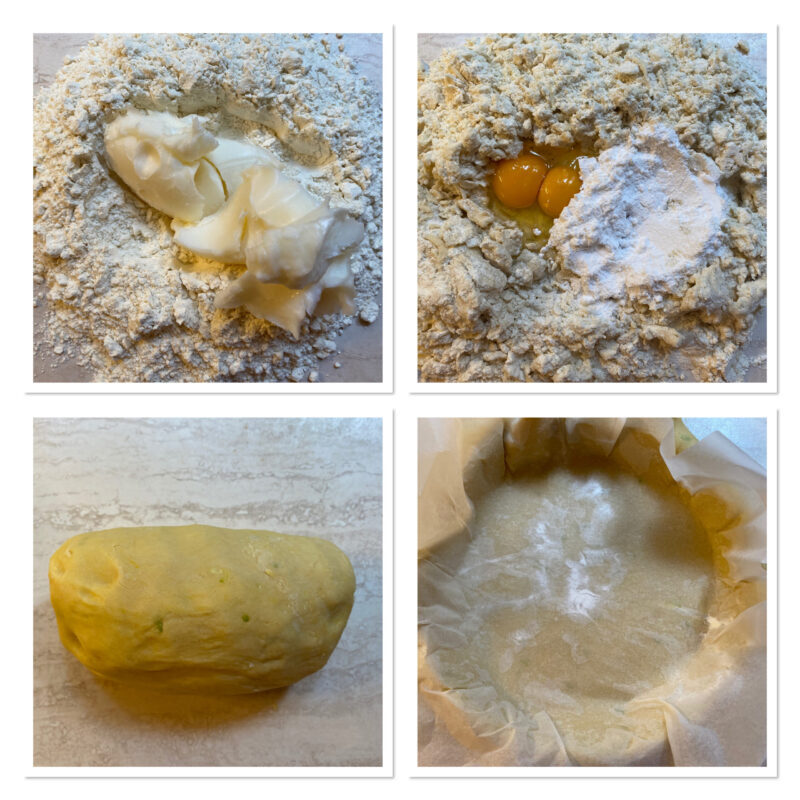
Run the rolling pin over the pan to trim the excess pastry and pour the ricotta and wheat mixture into the pan.
Roll out the remaining dough and make the typical strips (7, at least that seems to be required), cutting them with a fluted pastry wheel (not smooth, another recently imposed constraint).
Decorate the pastiera and bake in a conventional oven at 356°F for about 1 hour and 10 minutes.
During baking the pastiera will rise (just like a cheesecake), it may crack a little, but that’s normal.
After the hour, remove from the oven and let cool before unmolding.
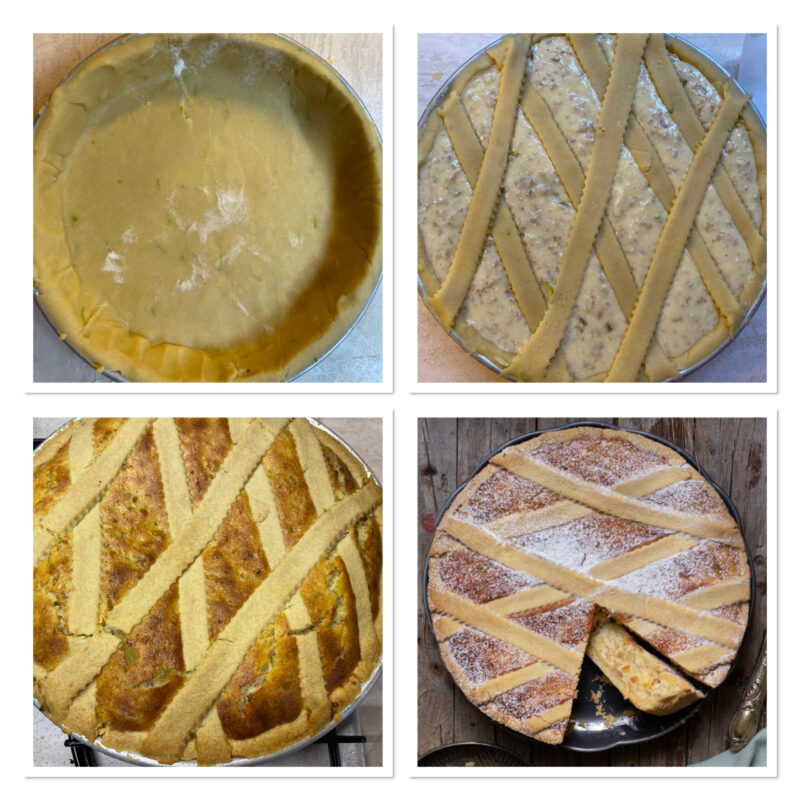
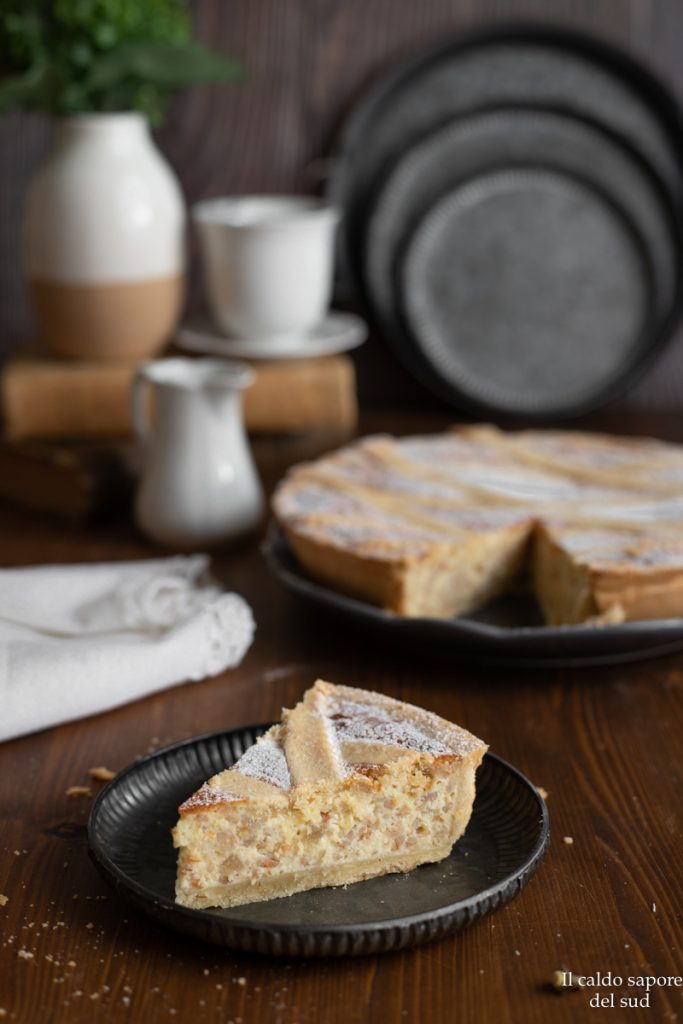
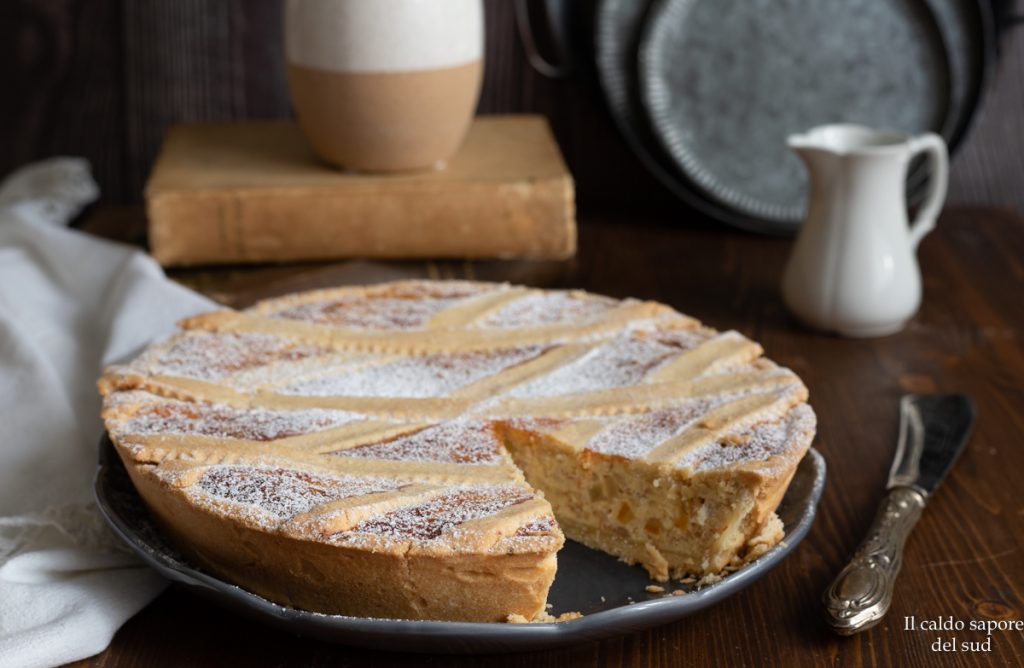
The pastiera should be eaten at room temperature after at least one day of resting (some say even three) so that the aromas can fully develop, and perhaps dusted with powdered sugar.
It can be kept at cool room temperature for two or three days covered with a cotton or linen cloth; others store it at room temperature for up to 7-10 days from preparation. Some prefer to refrigerate it or freeze it already portioned.
We never keep it beyond three days; following our tradition I make two on Good Friday and we eat them over Easter and Easter Monday.
From here, you can go back to the HOME and discover new recipes!
If you want to stay updated on my recipes, follow me also on:
pinterest; X, you tube and tiktok.
From here, you can go back to the HOME and discover new recipes!
“This recipe contains some affiliate links, from which a small portion of proceeds is obtained without any change in price. They are simply purchase suggestions, with no obligation.”
Frequently Asked Questions
What is Neapolitan pastiera?
The Neapolitan pastiera is a traditional Campanian dessert made with ricotta, cooked wheat, eggs and aromas, consumed mainly at Easter.
What is the secret to a creamy pastiera?The secret of grandma’s pastiera is resting: it must rest at least 24 hours before serving, so the filling becomes compact and creamy and the aromas blend perfectly.
Why does the Neapolitan pastiera have 7 strips?
According to tradition, the 7 strips of the pastiera represent the seven gifts offered to the siren Partenope: flour, ricotta, eggs, wheat, orange blossom, sugar and spices.
How long should the pastiera rest before serving?
The pastiera should rest at least 24 hours before serving to allow the aromas to meld and to achieve a firmer, creamier texture.
Is Neapolitan pastiera a vegetarian recipe?
Yes, the Neapolitan pastiera is vegetarian because it is made with ingredients such as ricotta, eggs, wheat and sugar, without the use of meat or fish.