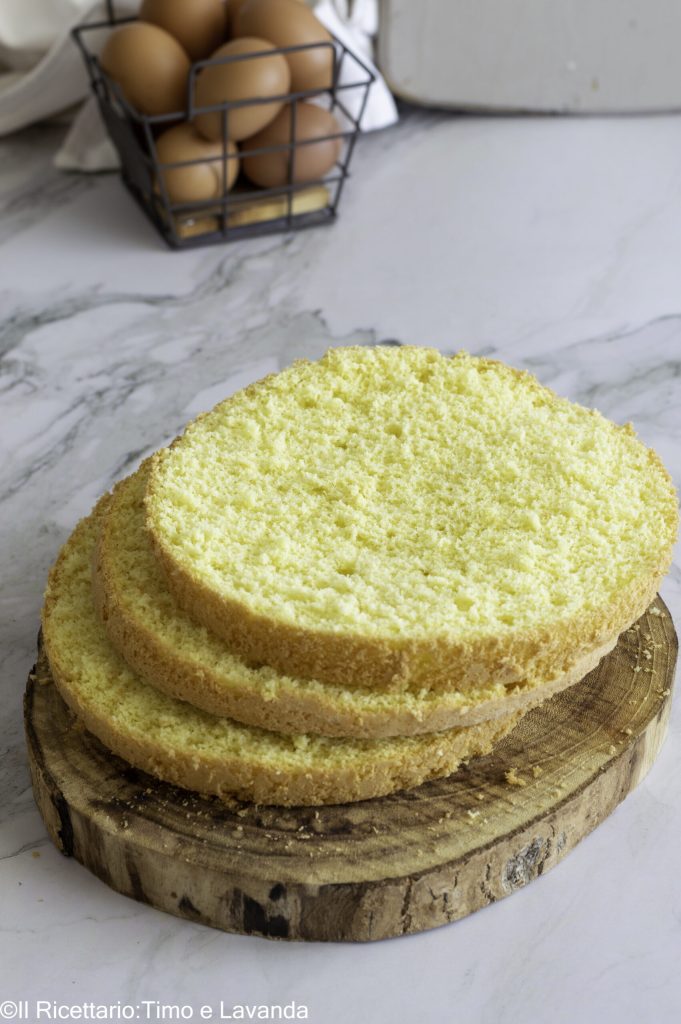
The gluten-free sponge cake I propose today has a very soft texture but at the same time remains compact and absorbs soaking syrup well without crumbling. This sponge cake is excellent filled with creams, whipped cream, fruit, but also simply with jams and preserves to enjoy at breakfast or as a snack. It stays soft for one day in a closed bag and can also be frozen to be thawed later at room temperature in a few hours, remaining as fragrant as freshly baked.
The origins of the sponge cake date back to the mid-1700s when the Genoese cook Giobatta Cabona was sent to Spain with Ambassador Domenico Pallavicini and on the occasion of a banquet presented an extremely light cake, which in his honor was named by the Spanish court pasta genovese or pate génoise. From this derived a simplified version to honor the Spanish court that took the name “pan di Spagna” (sponge cake). The differences between the two preparations lie in the method: pasta genovese is prepared warm, while sponge cake is prepared cold. The main ingredients are eggs, sugar and flour.
In the gluten-free sponge cake gluten is replaced with very fine rice flour, potato starch and cornstarch. The structure is not given by gluten, but by the air incorporated into the whipped eggs.
The success of the gluten-free sponge cake depends on 3 factors:
– Correct whipping of the eggs which must triple in volume.
– Balance between starches: rice flour = structure, potato starch = lightness, cornstarch = stability.
– Stable, not aggressive baking; 338°F (conventional oven) is the ideal temperature.
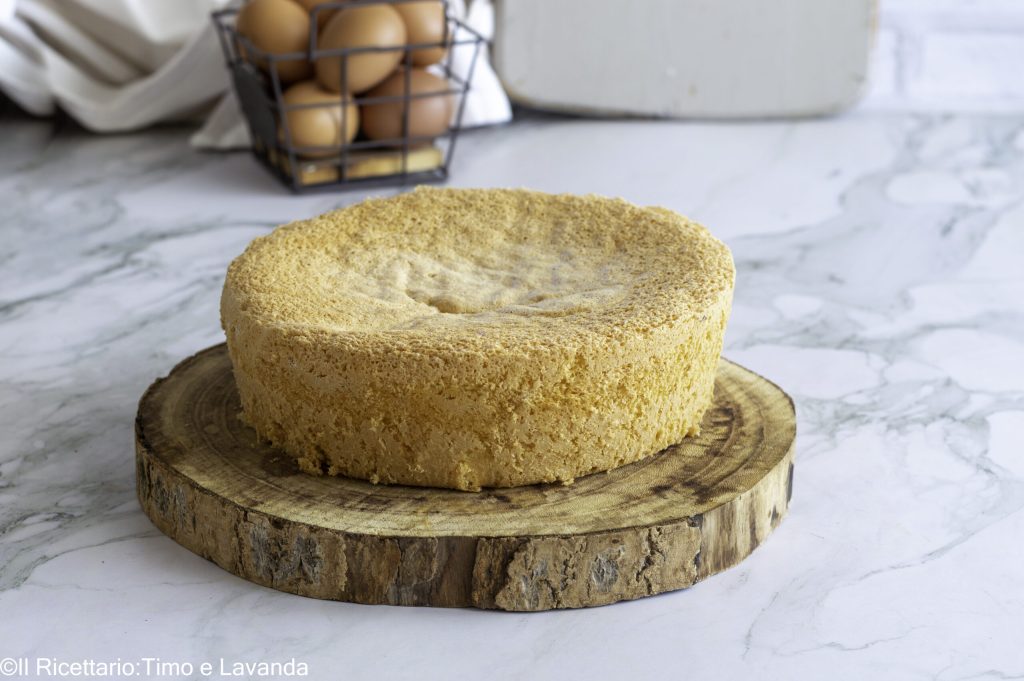
A perfect gluten-free sponge cake should be about 2–2.4 inches high (approximately 5–6 cm), elastic, not wet but not dry either, with a fine crumb.
If it crumbles the flours are unbalanced; if it is gummy the eggs and sugar were not whipped enough. You can see all these details well in the video recipe.
If you don’t want to miss all the new recipes follow me also on my FB page, on my IG profile and on my YouTube channel
Also discover recipes made with sponge cake
- Difficulty: Medium
- Cost: Economical
- Preparation time: 25 Minutes
- Cooking methods: Oven
- Cuisine: Italian
- Seasonality: All seasons
- Energy 178.26 (Kcal)
- Carbohydrates 34.52 (g) of which sugars 20.17 (g)
- Proteins 4.53 (g)
- Fat 2.91 (g) of which saturated 1.13 (g)of which unsaturated 1.37 (g)
- Fibers 0.00 (g)
- Sodium 113.16 (mg)
Indicative values for a portion of 80 g processed in an automated way starting from the nutritional information available on the CREA* and FoodData Central** databases. It is not food and / or nutritional advice.
* CREATES Food and Nutrition Research Center: https://www.crea.gov.it/alimenti-e-nutrizione https://www.alimentinutrizione.it ** U.S. Department of Agriculture, Agricultural Research Service. FoodData Central, 2019. https://fdc.nal.usda.gov
Ingredients
- 3 large eggs
- 1/2 cup granulated sugar
- 2/3 cup very fine rice flour (gluten-free)
- 2 1/2 tbsp cornstarch
- 1 pinch salt
- 1 vanilla bean
Tools
- 1 Bowl
- 1 Mixer Electric whisk or stand mixer
- 1 Pan Springform pan 8.7 in (9-inch)
Procedure
Whip the eggs in a stand mixer or with an electric mixer together with the sugar, salt and flavorings.
The mixture should be voluminous, pale and foamy; this will take about 12-15 minutes.
It should allow you to “write” on the surface and remain stable.
Gently fold in, with a spatula and using upward motions, the sifted rice flour mixed with the cornstarch, adding it little by little.
Never stir vigorously.
Pour the batter into the pan previously buttered (or oiled) and floured.
Bake in a preheated conventional oven at 338°F for 30-35 minutes; do the toothpick test.Leave inside the turned-off oven for 5 minutes.
Then invert onto a rack.
Wait at least 6–8 hours before slicing.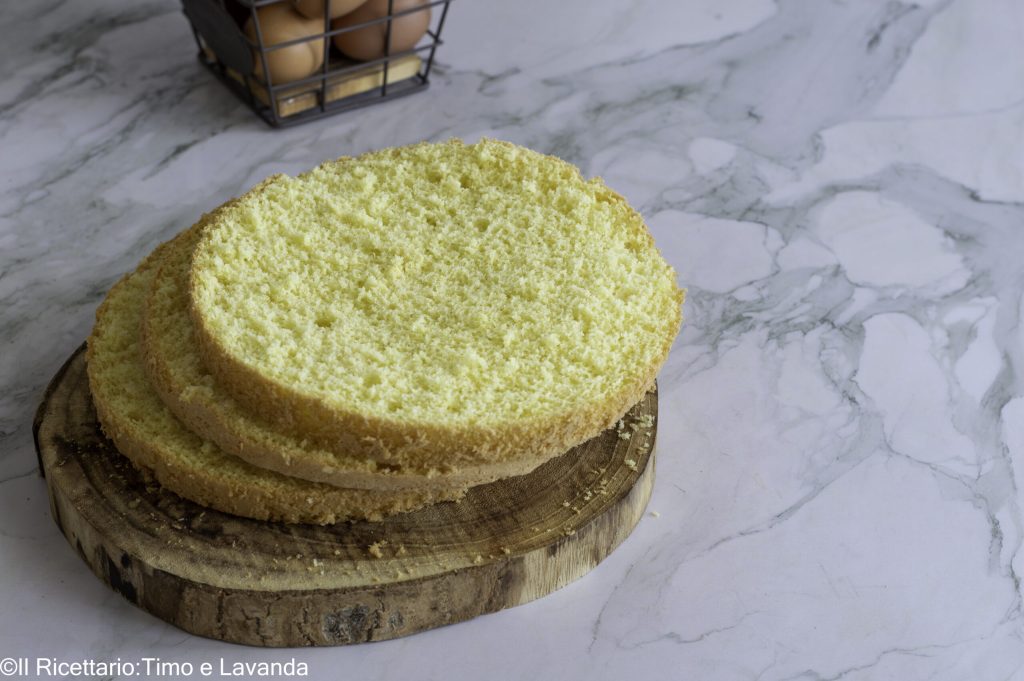
WARNING: consult the Italian Celiac Association handbook and read the ingredient labels carefully to ensure they are not contaminated with gluten
Variations
With cornstarch for a more structured sponge cake, ideal for Cake Design. Replace the cornstarch with the same amount of potato starch for a lighter sponge cake.
Cocoa Sponge Cake 60 g rice flour, 20 g unsweetened cocoa powder and 20 g potato starch. (About 1/2 cup rice flour, 1/4 cup cocoa, 2 1/2 tbsp potato starch.)
Cocoa Sponge Cake 60 g rice flour, 20 g unsweetened cocoa powder and 20 g potato starch. (About 1/2 cup rice flour, 1/4 cup cocoa, 2 1/2 tbsp potato starch.)
Cocoa Sponge Cake 60 g rice flour, 20 g unsweetened cocoa powder and 20 g potato starch. (About 1/2 cup rice flour, 1/4 cup cocoa, 2 1/2 tbsp potato starch.)
Storage
Room temperature: 2 days wrapped in cling film.
Refrigerator: 4 days wrapped in cling film.
Freezer: 2 months wrapped in cling film.
Thaw at room temperature, do not use microwave.
Thaw at room temperature, do not use microwave.
FAQ (Questions & Answers)
Why doesn’t my gluten-free sponge cake rise enough?
In most cases the problem is not the gluten-free flour, but the whipping of the eggs.
The sponge cake (also in the gluten-free version) does not use chemical leavening: the rise depends exclusively on the air incorporated during whipping.
The main causes are eggs whipped for less than 10 minutes, or eggs taken cold from the fridge.
Batter deflated when adding the flours.
To achieve maximum volume, use room-temperature eggs.
The mixture must triple in volume and must be able to “write” on the surface.
If the whipping is perfect, the sponge cake will rise even without gluten.Why does my gluten-free sponge cake sink in the center after baking?
This is one of the most frequent problems.
Causes can be insufficient baking: if the center is not completely cooked it will collapse as soon as it comes out of the oven.
Opening the oven too early: in the first 30 minutes the structure is fragile. Opening the oven causes a thermal shock.
Deflated batter: if air is lost while adding the flours the structure won’t hold.
Too high a temperature: excessive temperature creates a crust too quickly while the inside remains unstable.Is the gluten-free sponge cake drier than the traditional one?
Not necessarily. If it turns out dry, causes can be too much rice flour compared to the starches, or overbaking.
Rice flour absorbs more liquids than 00 (all-purpose) flour. For this reason it is important to balance it with potato starch or cornstarch.
To keep it soft wrap it in cling film as soon as it’s cool and don’t store it uncovered.
Lightly soak before filling.
If well made, the difference in softness is minimal.Why does my gluten-free sponge cake taste too strongly of egg?
The eggy taste is linked to insufficient whipping or low-quality eggs.
When the eggs are whipped correctly they incorporate air and lose the intense flavor.
To avoid the problem: whip for at least 12 minutes
Use very fresh eggs.
Proper whipping almost completely eliminates the strong aroma.Is it necessary to add baking powder to the gluten-free sponge cake?
No, it is not necessary. The true sponge cake is born as a whipped batter without leavening agents.
However, if you are a beginner, you can add: 1/2 teaspoon of gluten-free baking powder
It is not mandatory, but it can give extra reassurance.
Be careful though: too much baking powder can create large holes and an irregular structure.Why does my gluten-free sponge cake crumble when I slice it?
The gluten-free structure is slightly more delicate. It will crumble if it was sliced while still warm
It hasn’t rested at least 6–8 hours. For a perfect slice wait until the next day and use a long serrated knife.
Resting is essential to stabilize the crumb.Can I prepare the gluten-free sponge cake the day before?
Yes, in fact it is recommended. Rest stabilizes the structure, improves slicing and evens out moisture.
Keep it wrapped in cling film at room temperature.Can I freeze the gluten-free sponge cake?
Yes, it freezes very well.
Procedure: cool completely, wrap in double cling film, place in a freezer bag
Duration: up to 2 months.
To thaw: leave at room temperature, do not use microwave. Once thawed it retains softness and structure.Why is my gluten-free sponge cake gummy?
A gummy effect can be due to too much starch, insufficient baking, or excessive internal moisture.
Always check that the toothpick comes out completely dry.