
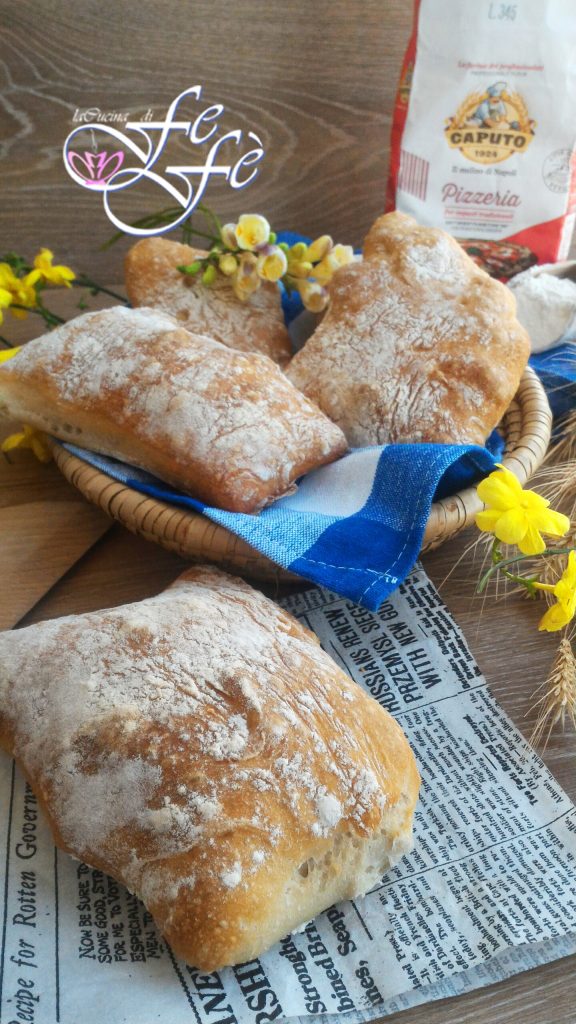
Here we are at the usual appointment with the column The Granary, on the occasion of which I am pleased to propose and share a recipe to which I am very attached for obvious reasons of territorial belonging. These are the flatbreads, typical buns widespread in the province of Catania where I live, with a somewhat irregular rectangular shape. We Sicilians love them very much, especially for their characteristic crunchy crust and light and well-aerated crumb inside, which makes them irresistible and particularly suitable for any type of filling. I’ll just say that personally in the family, apart from the mafalde, I have no memories of other types of bread at the table! Indeed, I would even say that I enjoyed them even during my university years during lunch breaks, between lessons! There are two versions, one with durum wheat semolina, and the one I will show you with high hydration, used mostly in large-scale distribution, and made simply with type 0 or type 00 flour but only if of high quality. But what does high hydration mean? A highly hydrated dough, if worked correctly, with method and care, will result in lighter in weight even before cooking. Once baked, the alveolation will be more developed and the crumb structure less dense. In this case, I propose an 80% hydration, which means that the amount of water that will be added to the dough will be equal to 80% of the weight of the flour. To better understand this proportion, it will be enough to simply add 800 ml of water for every 1 kg of flour. Understand well then that, the more water will be incorporated, the greater the evaporation during cooking, as well as the greater the expansion of the dough partly due to the CO2 produced during leavening. It seems a complex process, but it will only require a little attention. Moreover, the recipe I propose today is very easy to make! Few and simple folds in a bowl and without even too many steps. In return, you will bake fragrant and light buns at home! And you will like them so much that you will want to make them again!
Other types of bread you might be interested in:
- Difficulty: Easy
- Cost: Economical
- Rest time: 5 Hours 30 Minutes
- Preparation time: 15 Minutes
- Portions: 8 buns
- Cooking methods: Oven
- Cuisine: Italian
- Seasonality: All seasons
Ingredients
⚠ THIS RECIPE CONTAINS ONE OR MORE AFFILIATE LINKS. The products I recommend are the same ones I use in my recipes; buying them through my blog helps support me and my work, while it will cost you nothing extra!
- 4 cups type 0 flour (I use Caputo Nuvola)
- 1.7 cups water (lukewarm)
- 2 tsp instant yeast
- 1.5 tsp salt
Tools
- 1 Pitcher
- 1 Teaspoon
- 1 Large Bowl
- 1 Wooden Spoon
- 1 Scraper
- 1 Baking Sheet
- 1 Mat
Steps
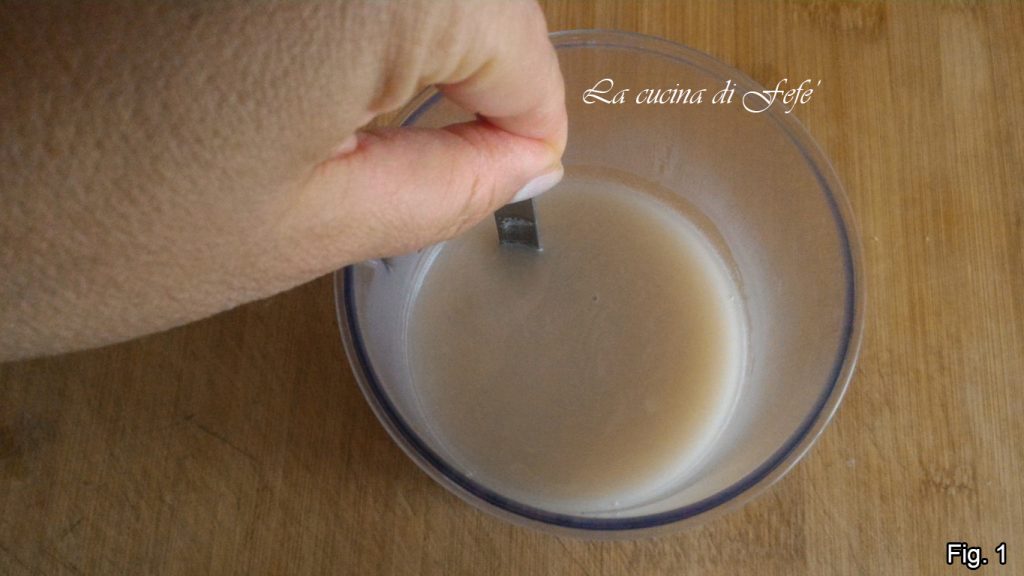
In a pitcher, completely dissolve the yeast in the lukewarm water (fig. 1).
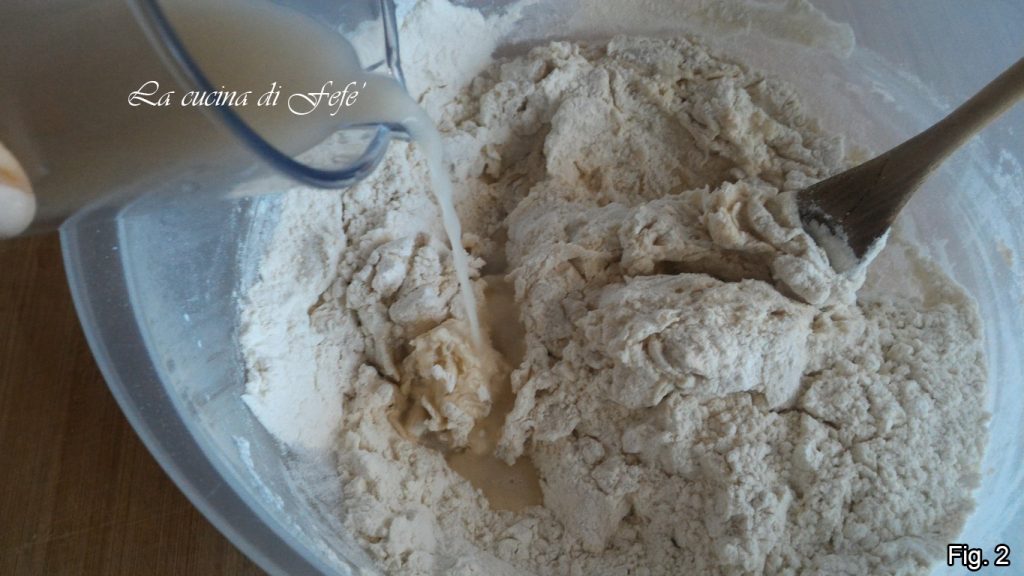
Pour the flour* into a large bowl and gradually add the water where you dissolved the yeast in a trickle, stirring with a wooden spoon (fig. 2).
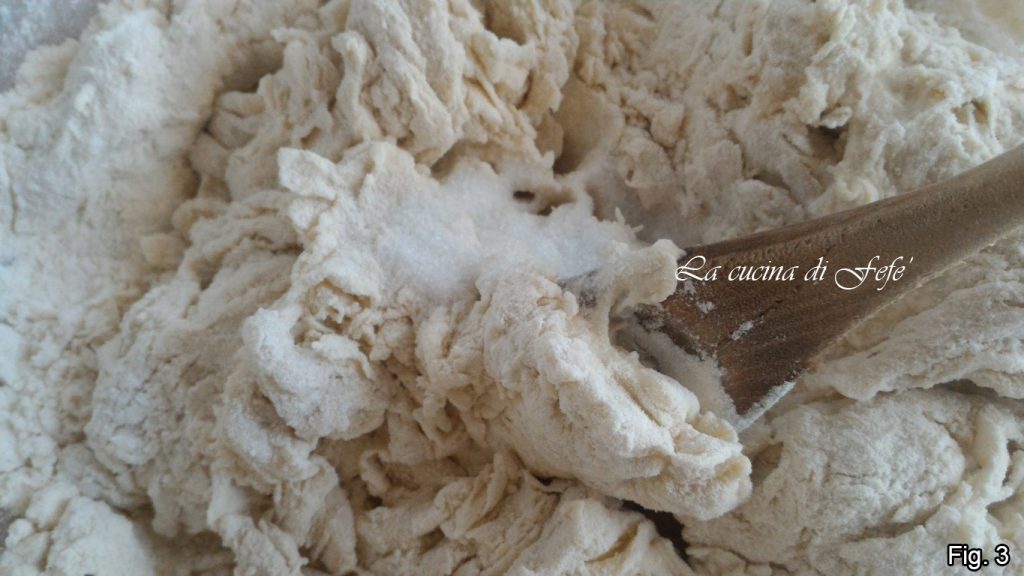
Work for a few minutes, then add the salt (fig. 3).
At this point, work the dough by hand still in the bowl for a few minutes. Obviously, it will remain very sticky, don’t worry, it’s absolutely normal (fig. 4).
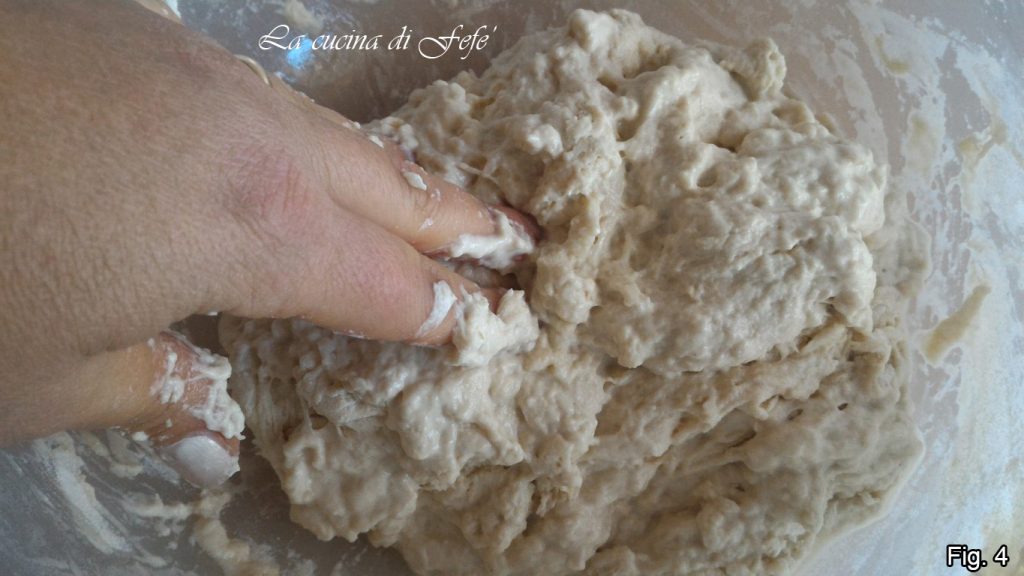
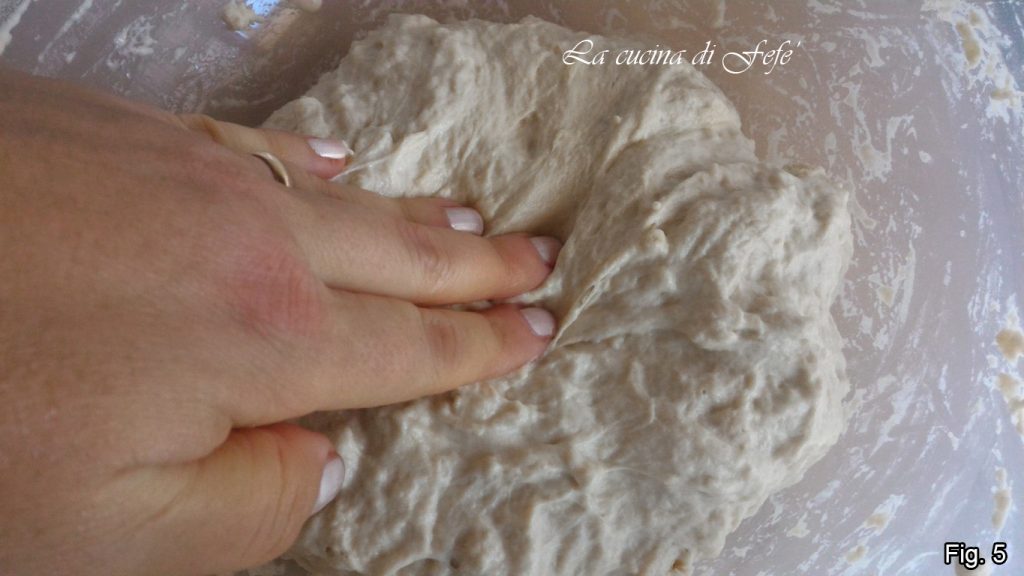
Make a round of simple folds on itself, then cover with plastic wrap or a lid and let rise for about 1 hour in the oven turned off with the light on (fig. 5).
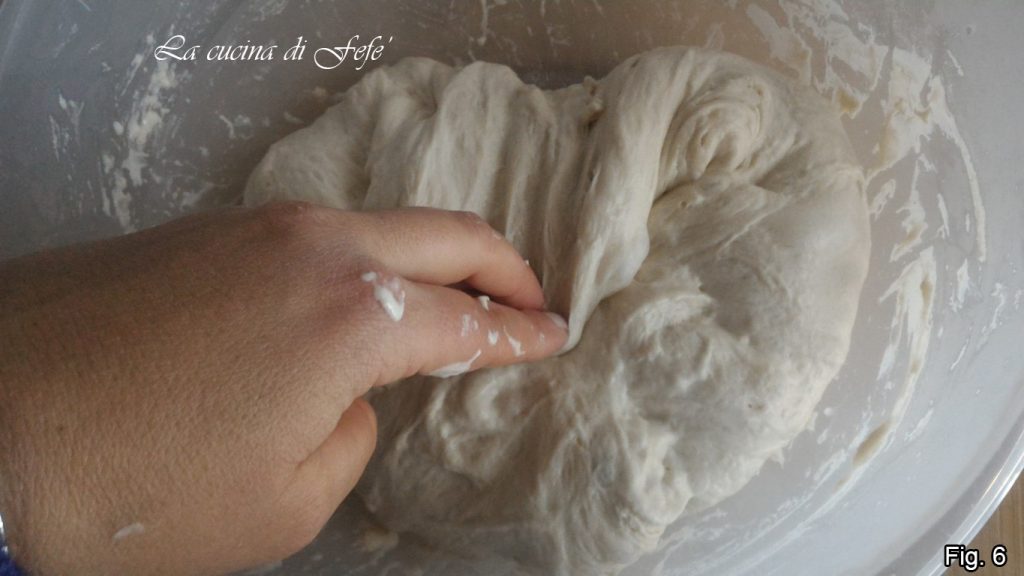
After this time, wet your hands** and perform two rounds of “stretch and fold” in the bowl, i.e., lifting the dough from the outside and then folding it towards the center on itself. You will notice immediately that the dough will change in appearance and, from coarse, will become smoother and more homogeneous (fig. 6).
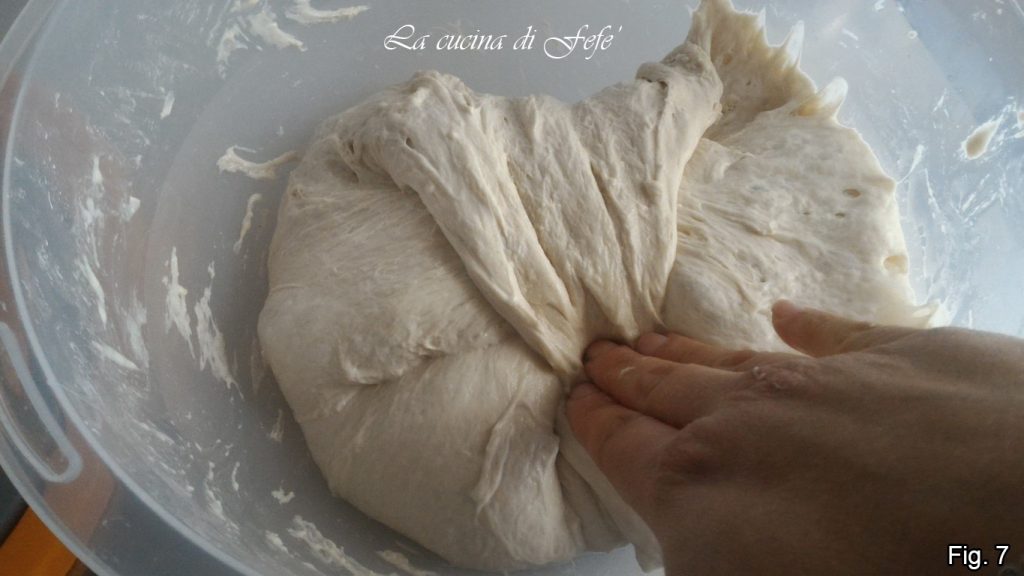
Put it back to rest covered for another 1 hour, then take the dough and perform, always with wet hands, two more rounds of folds, repeating this operation for three times with intervals of always 1 hour (fig. 7).
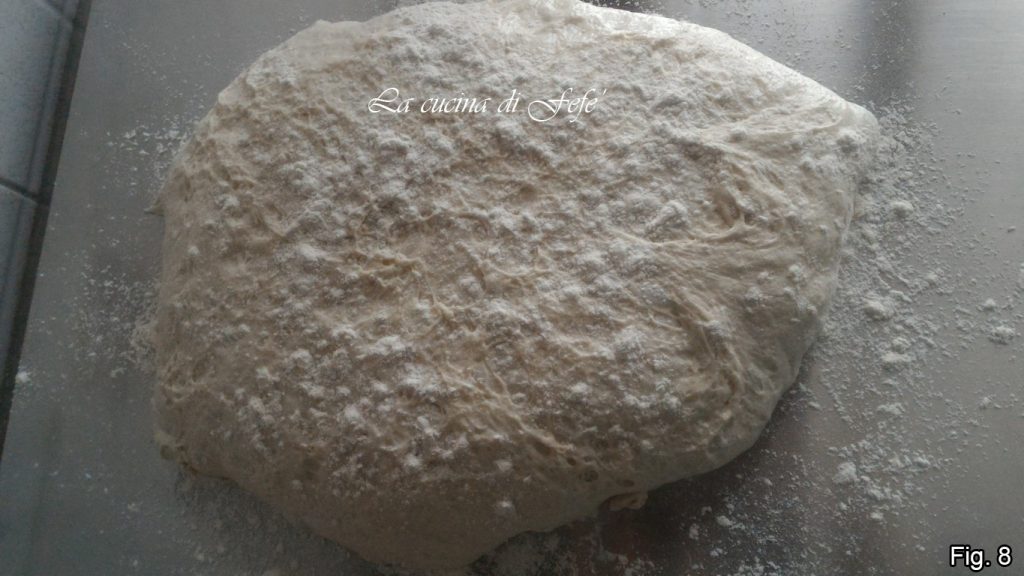
Complete the three phases of bowl folds and the subsequent rest, lightly flour the surface of the dough and a little more abundantly the work surface, then turn it onto the workbench, letting it fall without forcing it, or at most helping yourself with a scraper (fig. 8).
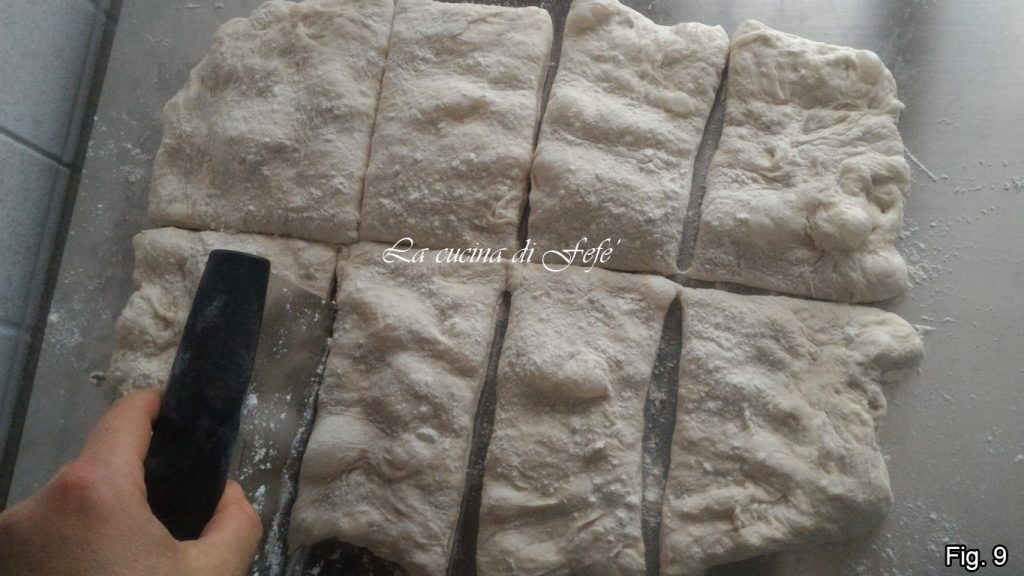
Gently spread with well-oiled hands, form a rectangle of about 20 x 12 inches and proceed with the shaping, dividing the dough into 8 irregular pieces with the help of a scraper (fig. 9).
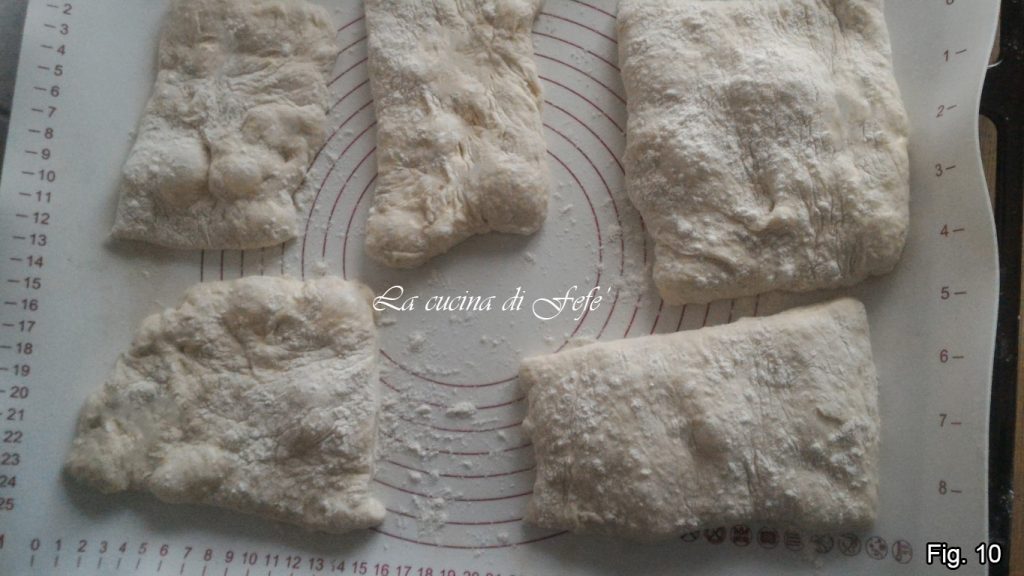
Transfer the obtained buns onto a baking sheet covered with parchment paper and cover with plastic wrap. Let them rise for another 30 minutes, just enough time to preheat the oven. Bake at 428°F for about 25-30 minutes or until the buns are puffed and golden. (fig. 10).
Remove from the oven and let cool on a rack before serving.
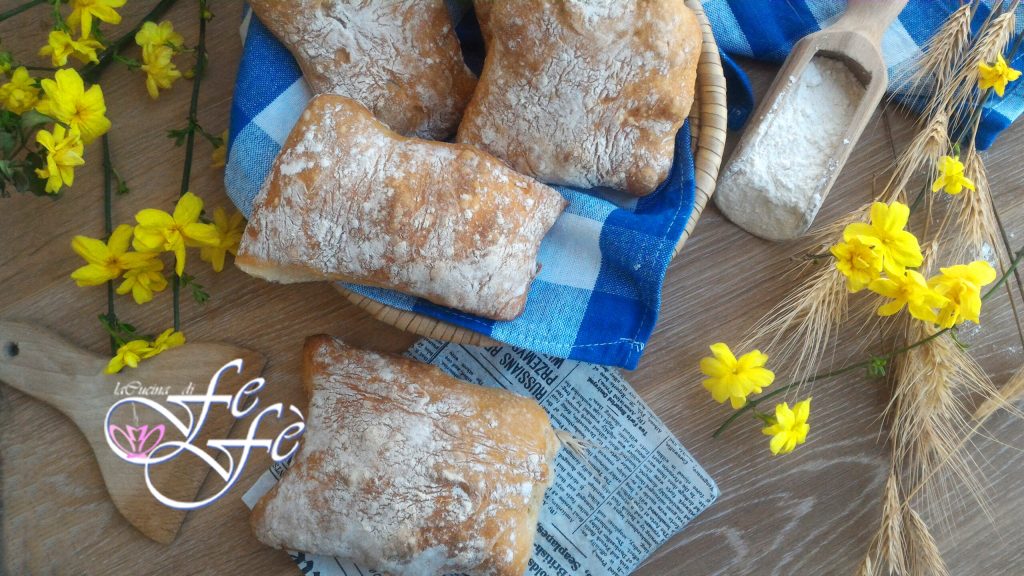
And voila… your Catanian flatbreads are ready to be enjoyed!


You can fill them with cold cuts and cheeses or whatever your imagination suggests!
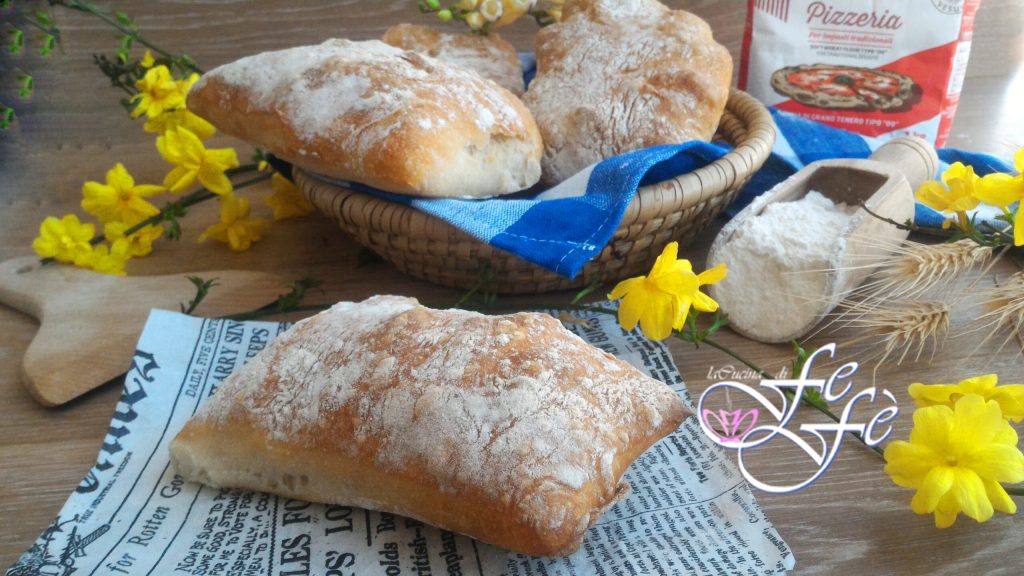
Enjoy from FeFè’s kitchen!
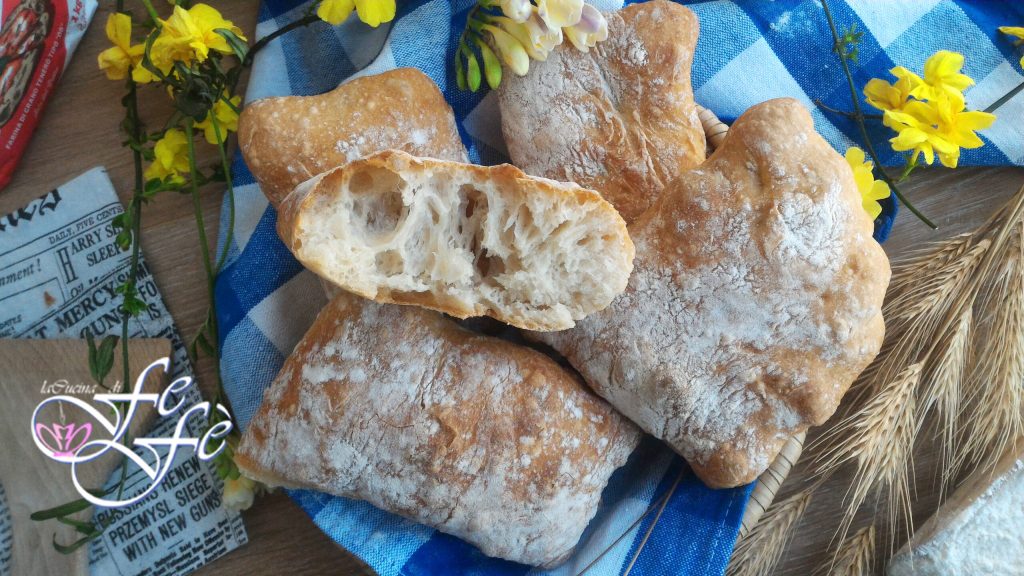
Storage
👉You can store the flatbreads, once completely cooled at room temperature, in a paper bag suitable for bread. They will remain soft for up to a maximum of 2 days.
👉You can store the flatbreads, once completely cooled at room temperature, in a paper bag suitable for bread. They will remain soft for up to a maximum of 2 days.
Tips, Notes, Variations, and Suggestions
🟣* First of all, choose a good flour, with around 12.5% protein. I used Caputo pizzeria type or Nuvola will work well too.
🟣** During the folding phase, it is practical to have a basin with water nearby to wet your hands often, so that the dough does not stick to your fingers. Also, keep the bowl in which the bread rises very moist so it does not stick to the sides. A light coating of oil will suffice.
THE COLUMN
The Granary–Baking time, is the column that every first and third Thursday of the month proposes a basket full of incredible and irresistible ideas, many recipes that you can visit by visiting the official pages of Facebook, Instagram and also Pinterest
 If you are cooking enthusiasts like us, we invite you to put on an apron and replicate our recipes! If you do, don’t hesitate to write to us for advice and suggestions, and to let us know if you liked them, please! Now I’ll leave you to the preparations of my talented colleagues:
Sabrina: Guinness Cake (Dairy Free)
Simona: Pane Senatore Cappelli and type with biga
Zeudi: Saffron Bread Sunflowers
