
Zimtsterne: Recipe for Vegan and Gluten-Free Christmas Cinnamon Cookies
If you love spicy aromas, you cannot miss the Zimtsterne, the famous “cinnamon stars” typical of the Christmas tradition in Switzerland, Germany, and Austria. These spicy Christmas cookies are not only delicious, but naturally gluten-free thanks to their almond flour base.
The light version: Egg-free and lactose-free Zimtsterne
In this special version, I transformed the original recipe into a vegan dessert perfect for those with intolerances or following a plant-based diet. The secret? I replaced the egg whites in the dough and royal icing with aquafaba (the cooking water from chickpeas).
Aquafaba is a magic ingredient: it is absolutely flavorless, does not alter the taste of the cookies, and allows for a vegan royal icing that is shiny and thick like traditional icing. It is the perfect trick to lighten your preparations without sacrificing the original texture.
How to prepare cinnamon stars
Preparing Zimtsterne is also very simple and fun, an excellent activity to do in the kitchen with children. You will need just a star-shaped cutter to create these cookies with a slightly crunchy and rough texture, which contrasts divinely with the smoothness of the icing on top.
Why choose this recipe for Christmas 2025:
It is certainly ideal for celiacs, vegans, and lactose intolerant individuals. Their versatility makes them perfect to serve at Christmas, New Year’s, or to gift in a tin box for cookies. They remain irresistible to enjoy in the afternoon as a snack with a hot cinnamon infusion or as a dessert.
CURIOSITY: Did you know that aquafaba is the cooking liquid of legumes, particularly chickpeas and cannellini beans? So don’t throw it away, as it can be used as an egg white substitute in many other recipes, especially vegan ones. This ingredient was named by American engineer Goose Wohlt, combining the Latin words aqua and faba, meaning bean.
Other Christmas cookies you might be interested in:

- Difficulty: Easy
- Cost: Medium
- Rest time: 3 Hours
- Preparation time: 25 Minutes
- Portions: 22 Pieces
- Cooking methods: Electric Oven
- Cuisine: European
- Seasonality: Christmas
Ingredients
⚠ THIS RECIPE CONTAINS ONE OR MORE AFFILIATE LINKS. The products I recommend are the same ones I use in my recipes; purchasing them through my blog helps support me and my work, while it won’t cost you anything extra!
- 7 oz almond flour
- 2/3 cup powdered sugar
- 4 tablespoons aquafaba (chickpea preserving liquid)
- 3 drops lemon juice
- 2 teaspoons ground cinnamon
- 1/2 teaspoon ground ginger
- 1 orange zest (untreated)
- 1 pinch salt
- 2 tablespoons aquafaba
- 2 drops lemon juice
- 2/3 cup powdered sugar
Tools
- 1 Electric Whisk
- 1 Bowl
- 1 Cling Film
- 1 Rolling Pin
- 1 Cutter star-shaped
- 1 Baking Tray
- 1 Spatula
- 1 Mat
- 1 Piping Bag
- 1 Cooling Rack
Preparation
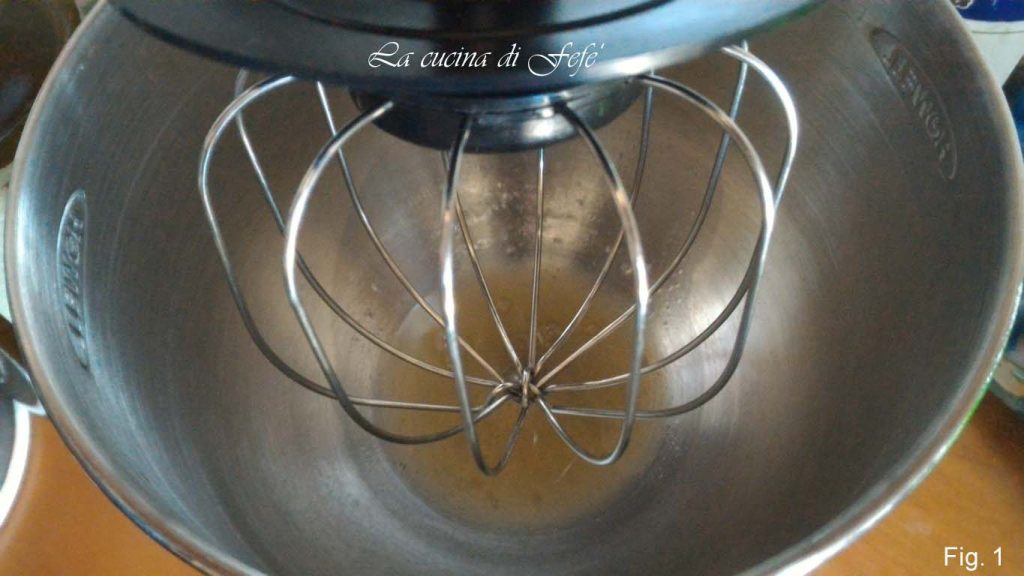
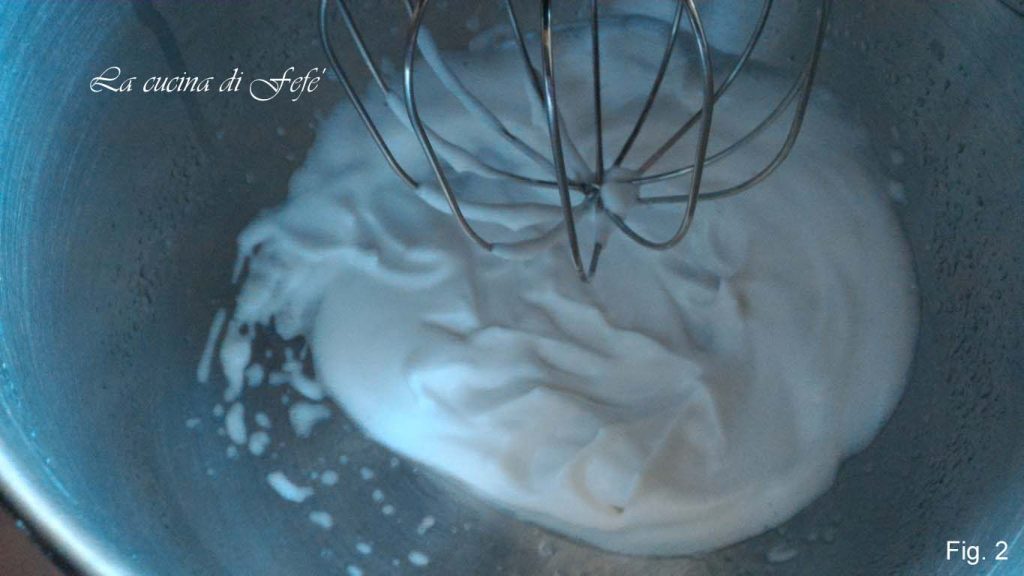
Start by whipping the aquafaba with 3 drops of lemon juice for about 10′ using an electric whisk or in the bowl of a stand mixer (fig. 1).
You should achieve a foamy consistency (fig. 2).
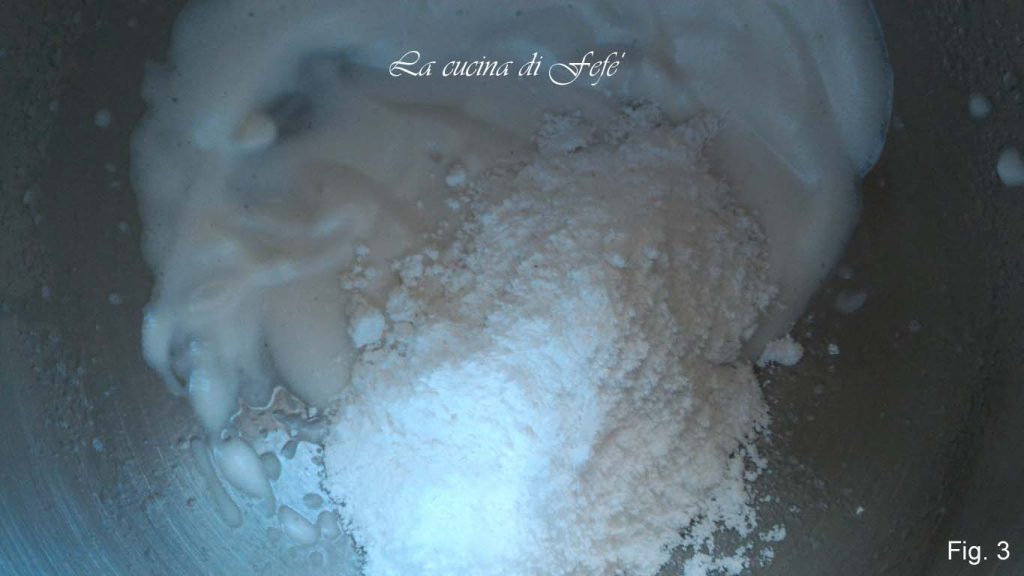
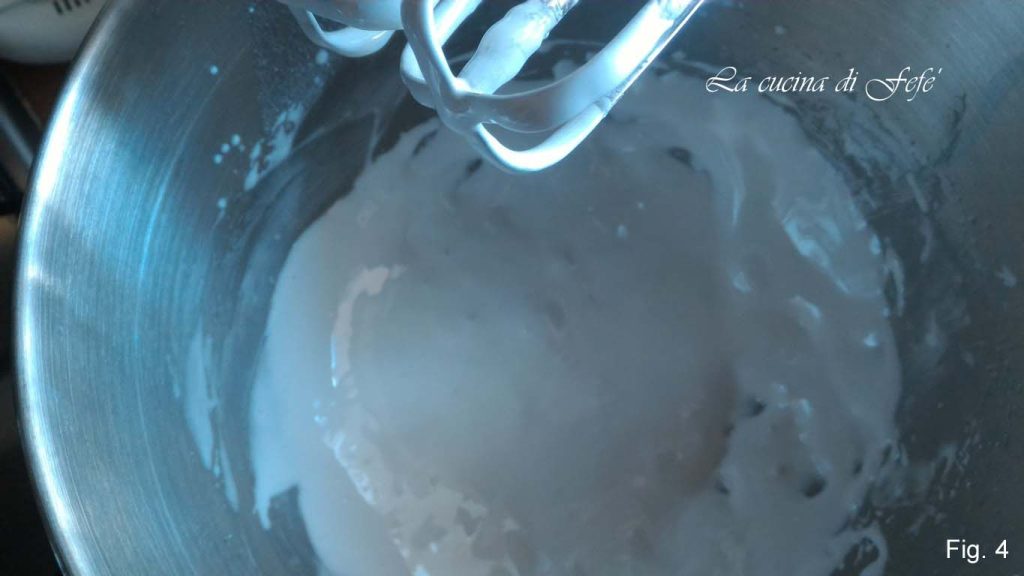
Then gradually incorporate the sifted powdered sugar and continue to whisk for another 3′ approximately (fig. 3).
Until you achieve a smooth, compact, and shiny consistency (fig. 4).
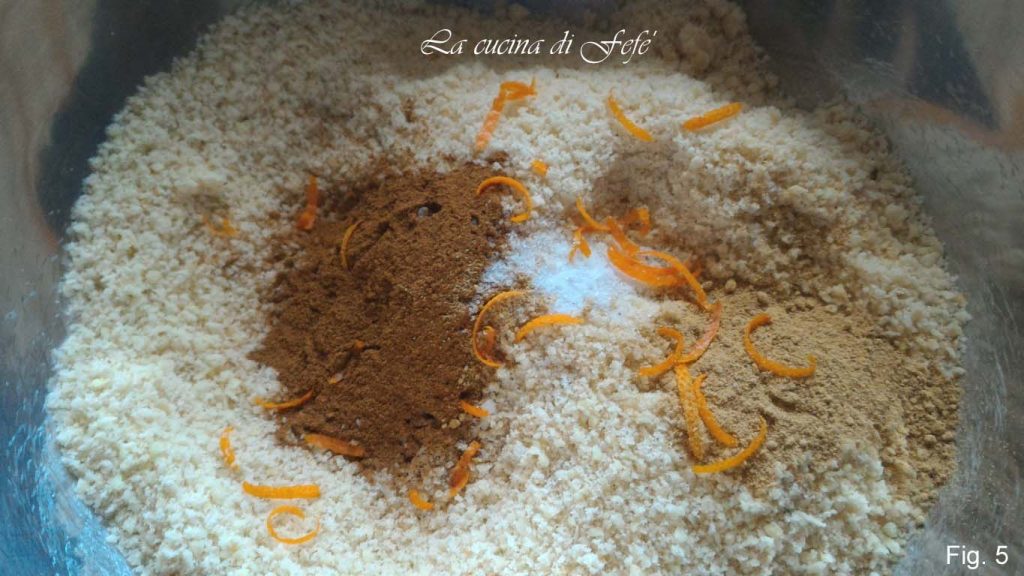
Separately, combine the almond flour, cinnamon, ginger, grated orange zest, and a pinch of salt and mix well (fig. 5).
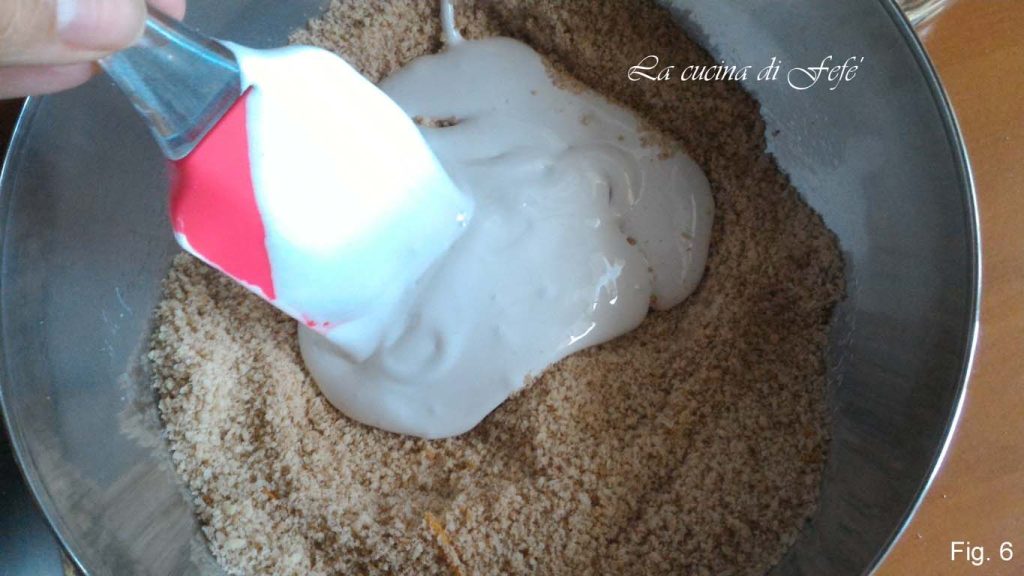
Pour the aquafaba and sugar mixture over the almonds (fig. 6).
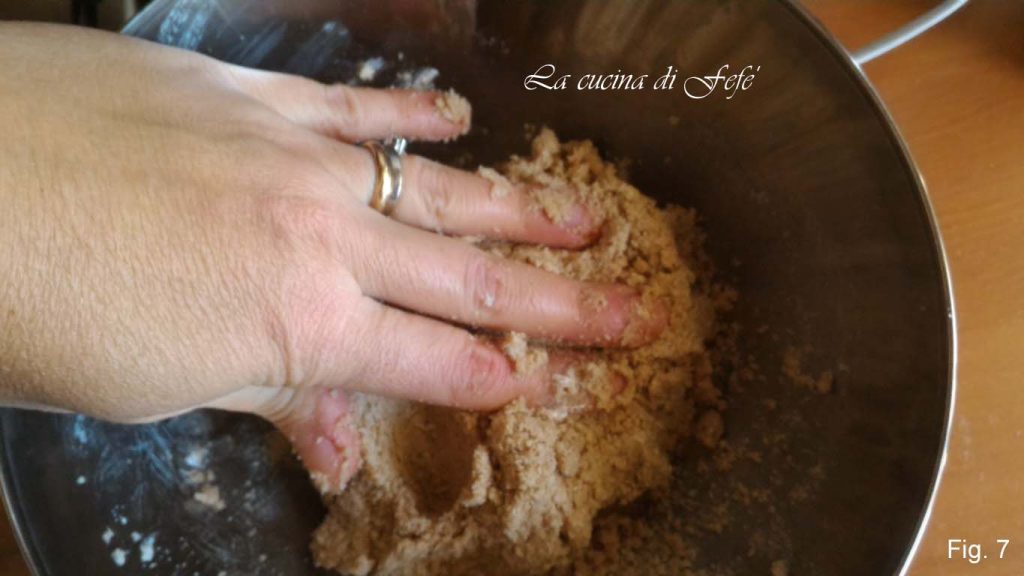
Mix with a spatula, then proceed with your hands (fig. 7).
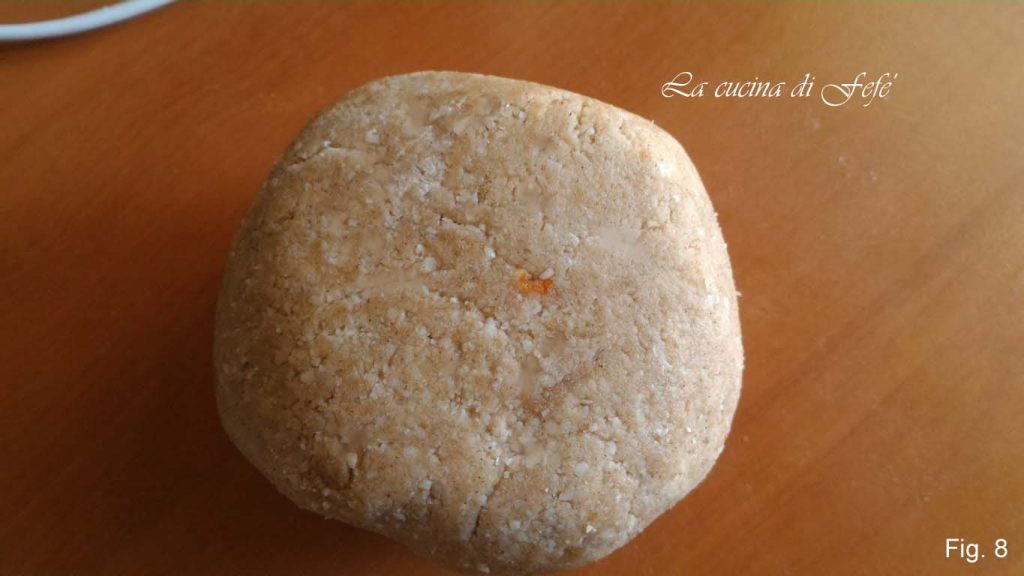
After a few seconds, you will obtain a consistent and slightly sticky dough (fig. 8).
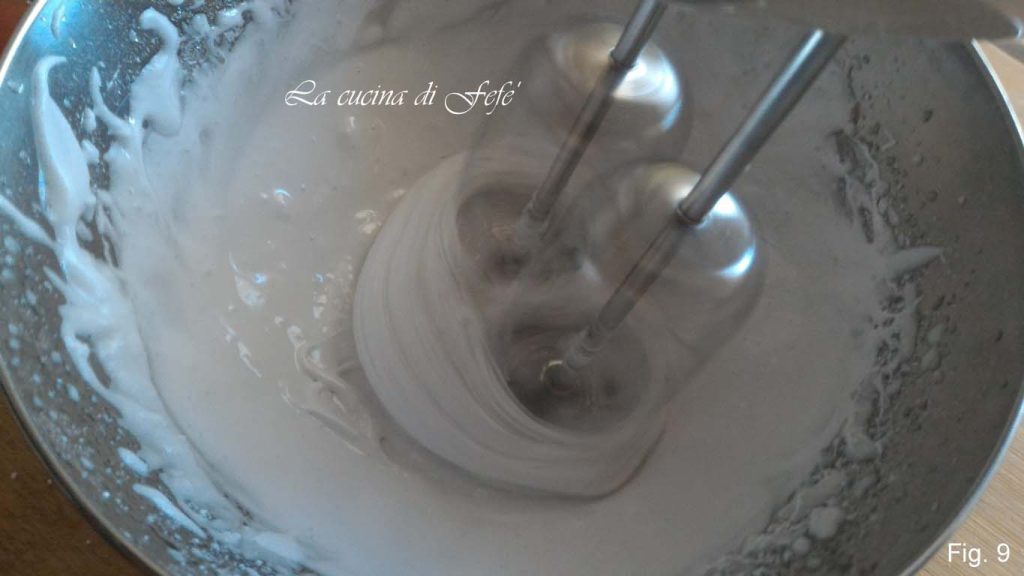
Cover with cling film and let rest in the fridge for at least 1 hour. Meanwhile, prepare your icing, working the aquafaba with a few drops of lemon juice using a whisk, then gradually incorporate the sifted powdered sugar (fig. 9).
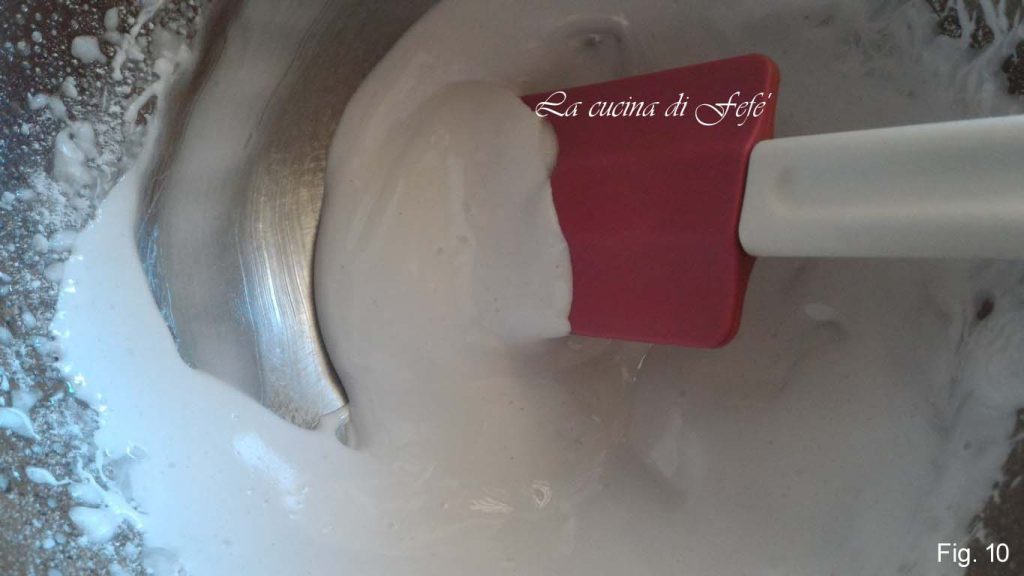
When the sugar and aquafaba icing is dense and you can write by lifting it with a spoon, it’s ready. Transfer it to a piping bag and set aside (fig. 10).
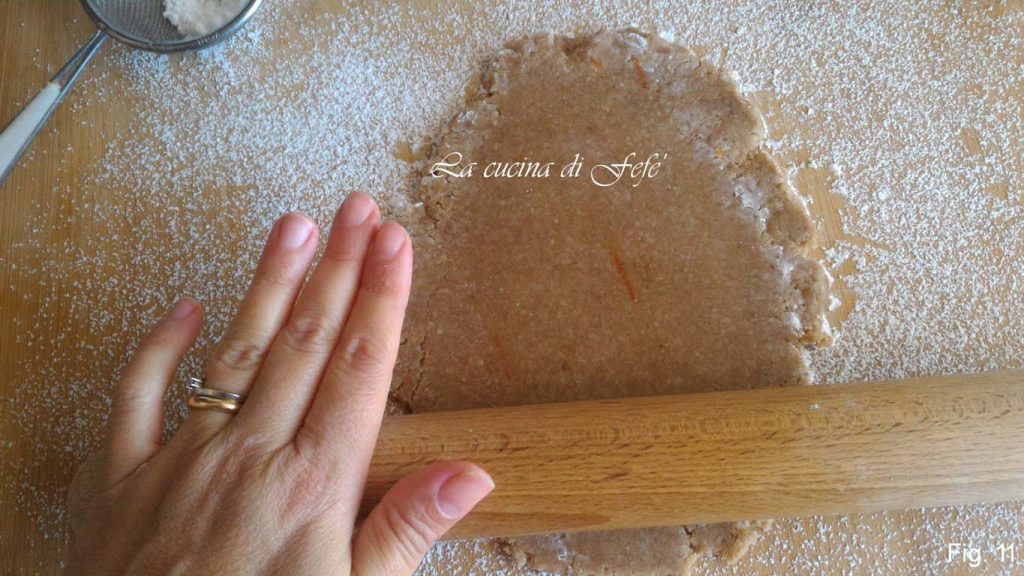
After the indicated time, dust the work surface and rolling pin with powdered sugar, then roll out the dough to a thickness of about 1/5″ (fig. 11).
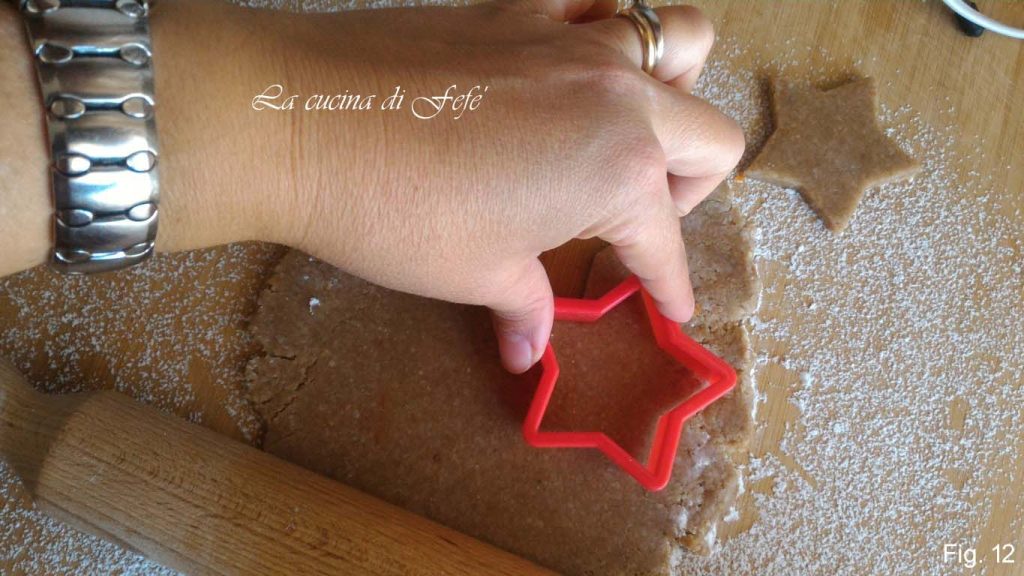
Cut out your stars using a cookie cutter (fig. 12).
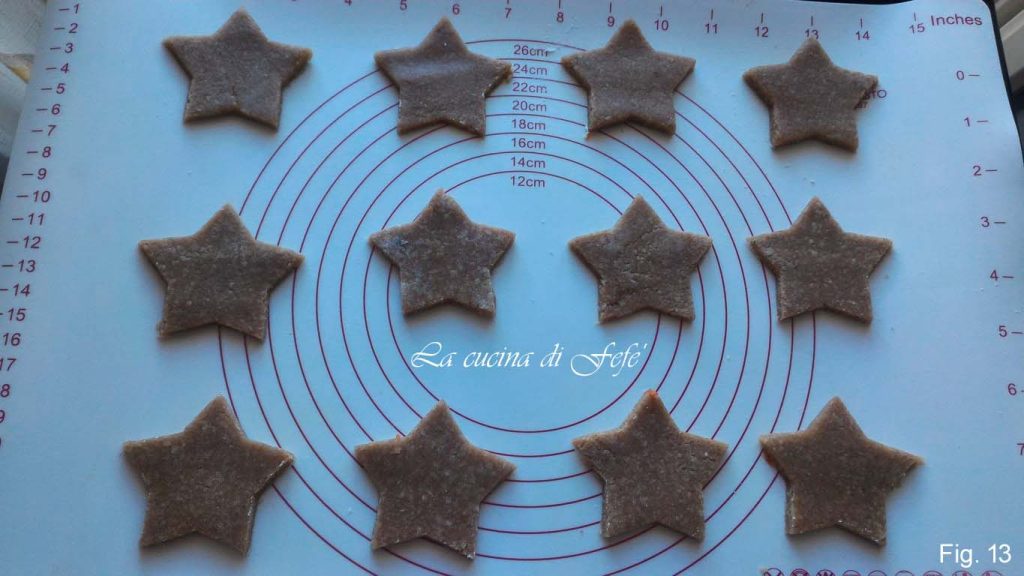
As you create your zimtsterne, place them on a baking tray previously lined with baking paper (fig. 13).
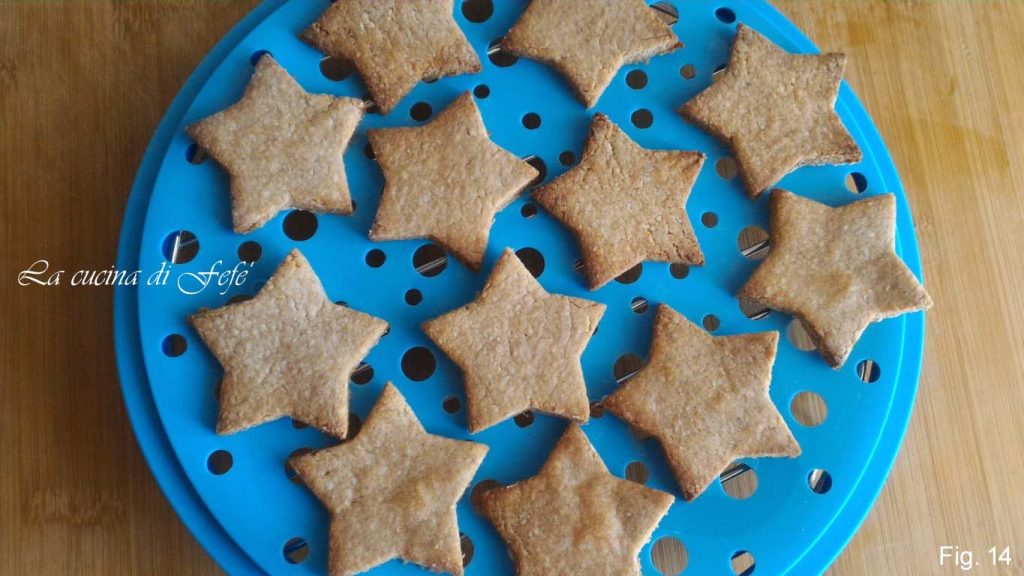
Bake in a preheated oven at 340°F for about 12′-13′. The baking time may vary depending on the oven you are using. Therefore, check and evaluate after about 8′-10′. Once baked, remove from the oven and let cool completely on a cooling rack (fig. 14).
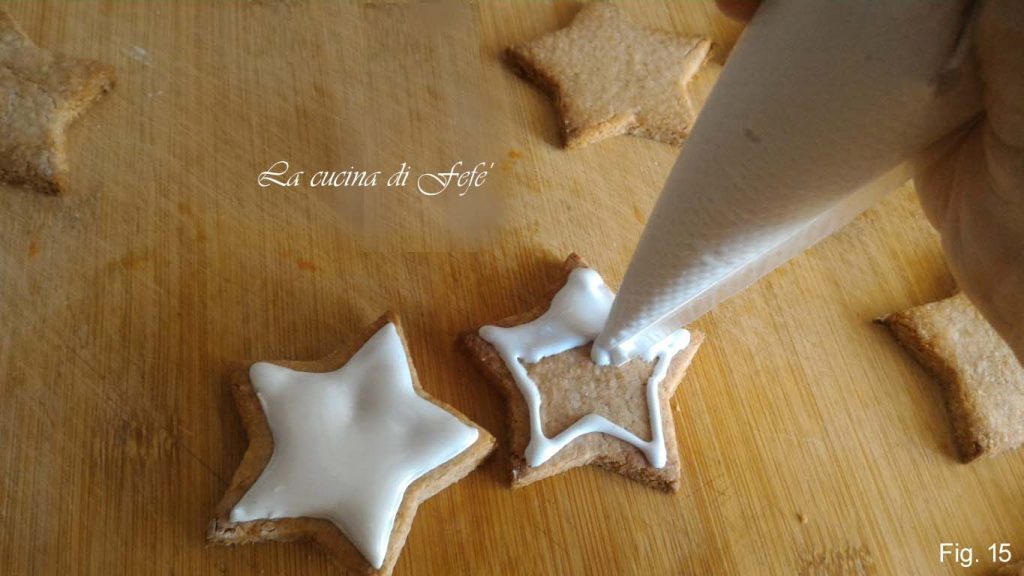
Proceed to glaze the zimtsterne, spreading the icing first on the edges of the star and then gradually in the center (fig. 15).
Let the icing dry before serving.
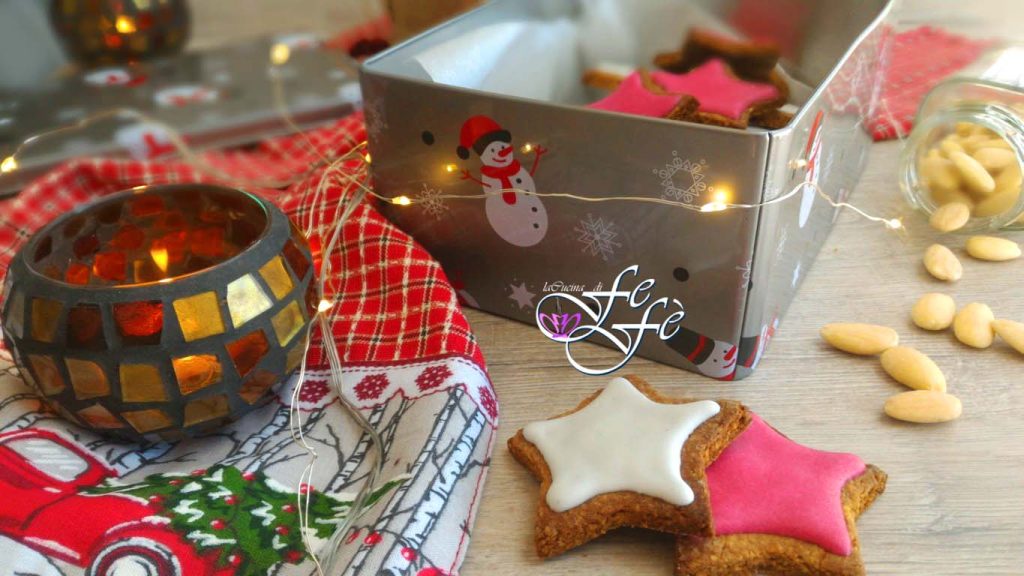
I had some leftover colored icing from gingerbread cookies and wanted to play with the effect.
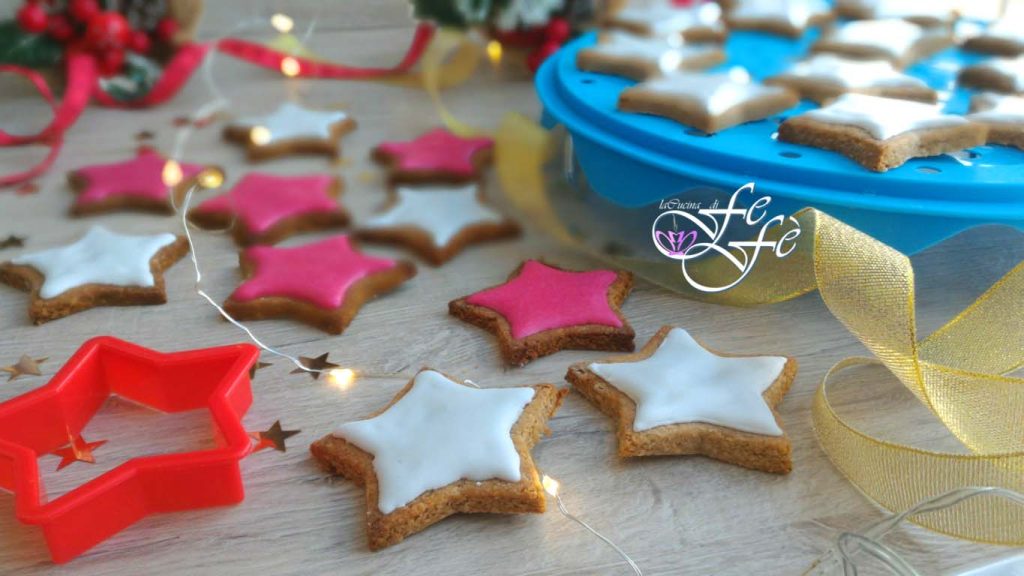
And voila…your zimtsterne cookies are ready to be enjoyed!

Enjoy from La Cucina di FeFè!
Storage
👉 You can store zimtsterne cookies at room temperature for up to 1 month, provided they are inside a cookie box or airtight container.
Tips, notes, variations, and suggestions
🟣*The non-vegan alternative: naturally, for those without dietary needs, it is possible to make these wonderful cookies following the traditional recipe, that is, replacing the aquafaba with 1 egg white both for the dough and for the royal icing. For the icing: 1 egg white, 80g powdered sugar, 3 drops lemon juice
🟣The icing will take at least a couple of hours to harden! However, if you want to gift them, before packaging the cookies, leave them exposed to the air for at least 12 hours! It may seem that the icing has dried, but otherwise, you risk undoing your work and the final result! Therefore, do not stack the cookies before the due time and have a little patience!
🟣The icing will take at least a couple of hours to harden! However, if you want to gift them, before packaging the cookies, leave them exposed to the air for at least 12 hours! It may seem that the icing has dried, but otherwise, you risk undoing your work and the final result! Therefore, do not stack the cookies before the due time and have a little patience!
