
Homemade Lentil Flour: Savings and Health with Protein Cookies
My first experiment of home production of lentil flour was a success! Thanks to the use of a domestic stone mill, creating whole and fresh flours has become a breeze. This technique is revolutionizing my way of cooking, allowing me to cut costs and enhance the quality of my dishes.
Why produce your own legume flour?
Today more than ever, attention to budget and quality is essential. Choosing to grind lentils at home offers immediate advantages. Firstly, saving on groceries: The cost of raw materials (dry lentils) is significantly lower than pre-packaged flour, which is not always easy to find; food safety: Zero risk of cross-contamination with gluten or other allergens, a vital aspect for those with intolerances. Finally, maximum nutrition: you will obtain a whole flour rich in plant-based proteins, fibers, minerals, and vitamins.
Cookies with Lentil Flour: The Healthy and Protein Snack
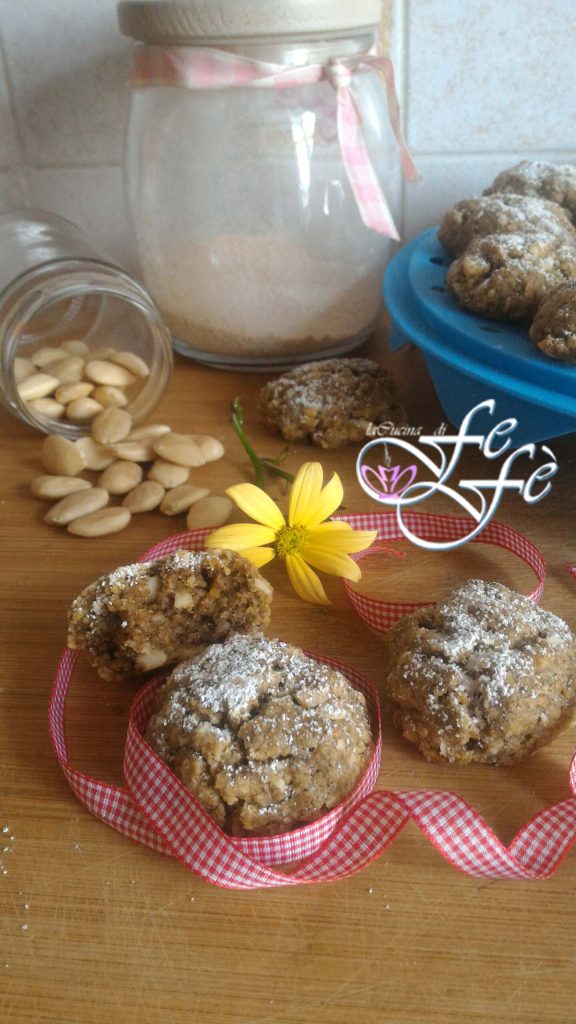
The first recipe I want to propose to you is therefore some irresistible cookies, perfect for a snack or an end of meal without guilt. The addition of lentil flour makes these shortbread cookies a real protein boost.
The secret of the texture: Thanks to a balanced mix of a little yeast and baking soda, the cookies develop characteristic cracks on the surface during baking, maintaining a soft and delicious heart. They were literally a hit!
If you like to vary and pay attention to what you eat from the first meal of the day, try these fantastic alternatives:
- Difficulty: Easy
- Cost: Very Cheap
- Rest time: 30 Minutes
- Preparation time: 15 Minutes
- Portions: About 20 cookies
- Cooking methods: Oven
- Cuisine: Italian
- Seasonality: Autumn, Winter, and Spring
Ingredients
⚠️ THIS RECIPE CONTAINS ONE OR MORE AFFILIATE LINKS. The products I recommend are the same ones I use in my recipes; buying them through my blog helps support me and my work, while it costs you nothing extra!
- 1.25 cups type 1 flour (or all-purpose flour)
- 3/4 cup lentil flour
- 3.5 oz blanched almonds
- 1/2 cup brown sugar
- 1/3 cup potato starch
- 2 tablespoons oat flakes
- 5 tablespoons peanut oil
- 1 egg
- 1/4 cup milk
- 1/3 teaspoon baking soda
- 1/2 teaspoon baking powder
- 1 pinch salt
- as needed powdered sugar
Tools
- 1 Mixer
- 2 Bowls
- 1 Sifter
- 1 Wooden Spoon
- 1 Hand Whisk
- 1 Baking Tray
- 1 Mat
- 1 Cooling Rack
Steps
Start by grinding the oat flakes in a mixer for a few seconds until they are powdered. Do the same with the blanched almonds (fig. 1 and 2).

 The latter must be chopped part more coarsely into grains (about 50 g) and the rest reduced to flour (fig. 3).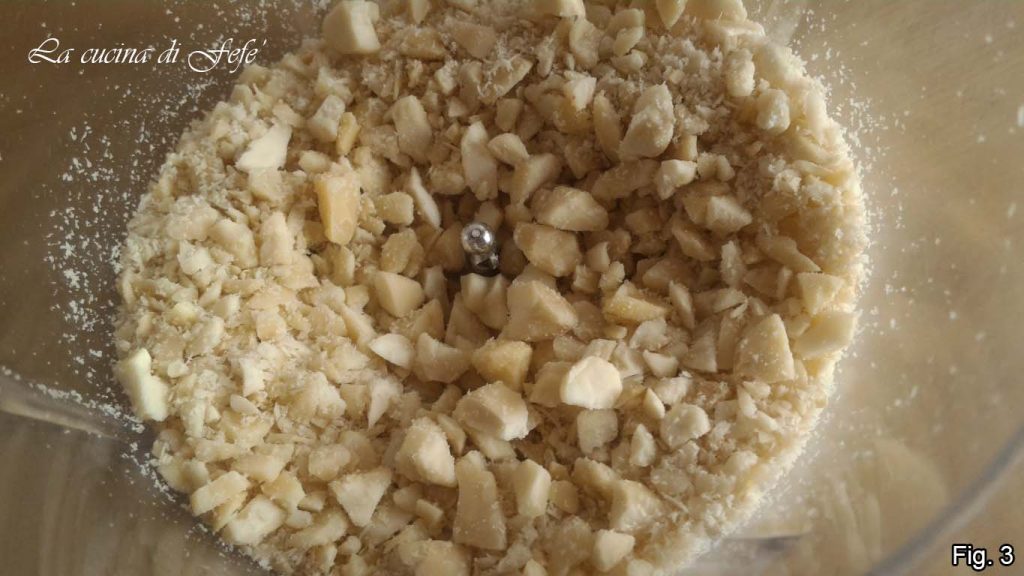
In a large bowl, combine all the powders. Start with the two flours previously sifted with the baking powder and baking soda, then also add the oat flakes, the almonds reduced to flour and the potato starch also sifted (fig. 4 and 5).

 Add the brown sugar, a pinch of salt and mix (fig. 6).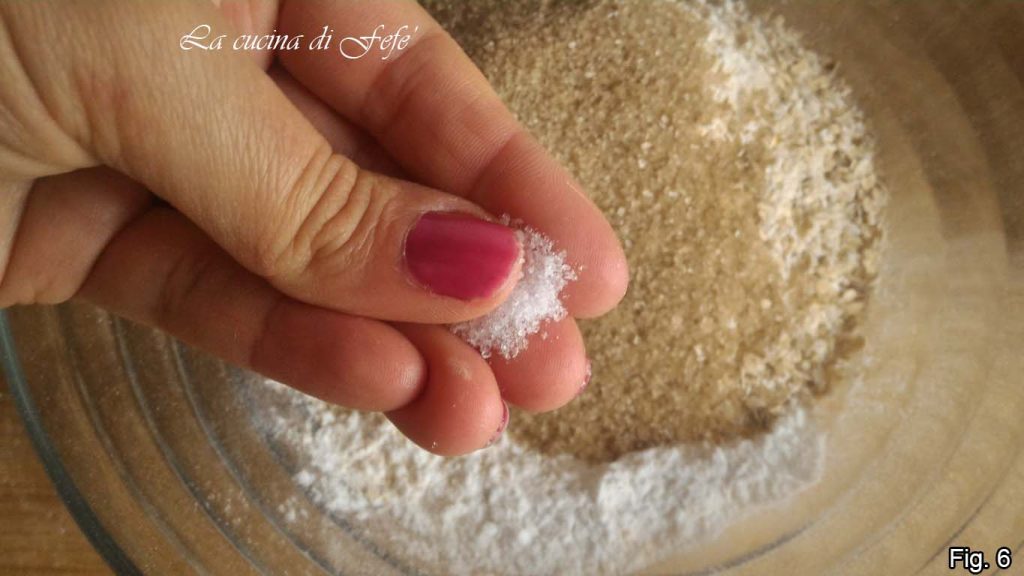
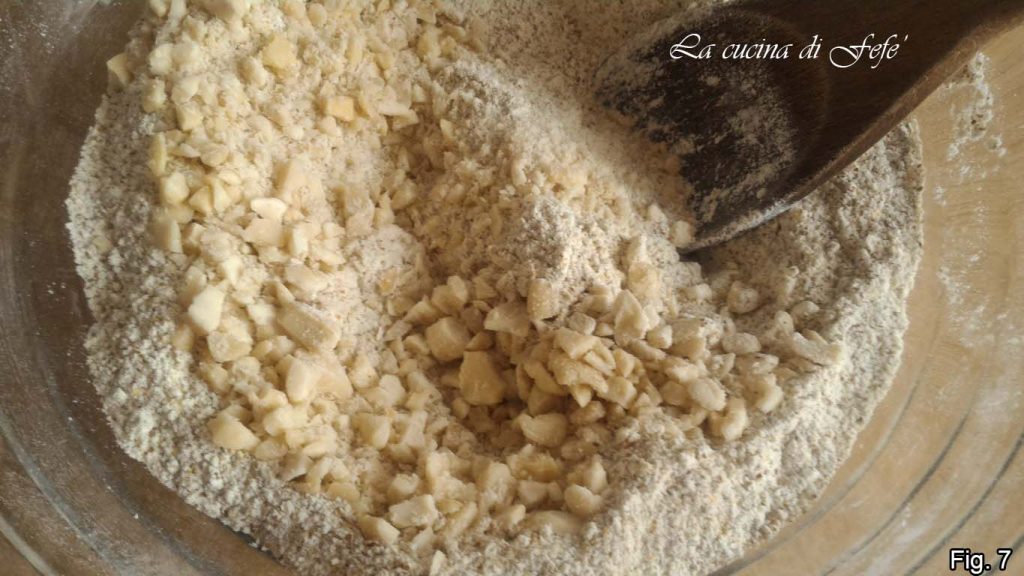
Add also the chopped almond grains and mix again (fig. 7).
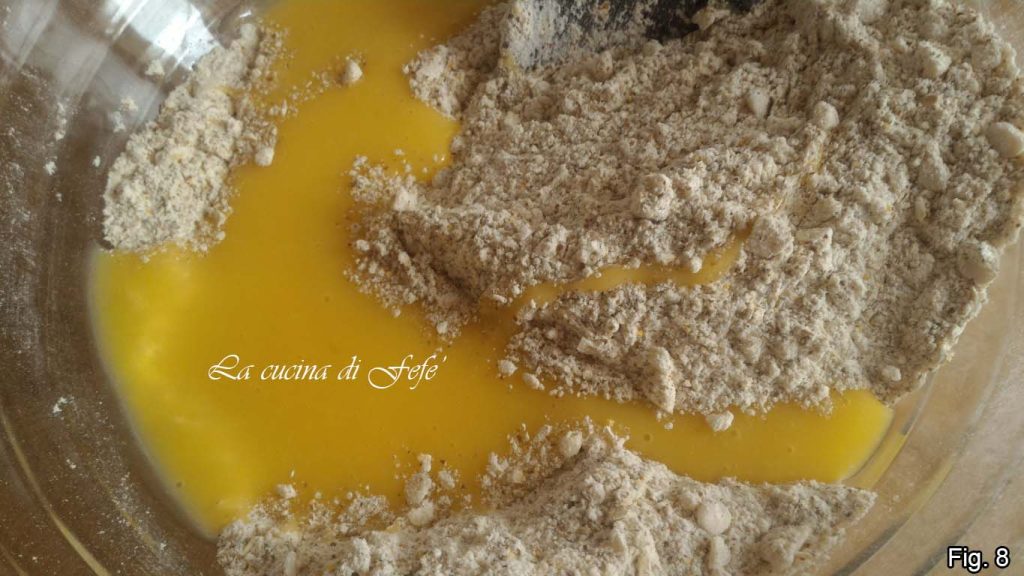
Separately, in another bowl, beat the egg, milk, and oil with a hand whisk, then add them to the powder mix, stirring with a wooden spoon (fig. 8).
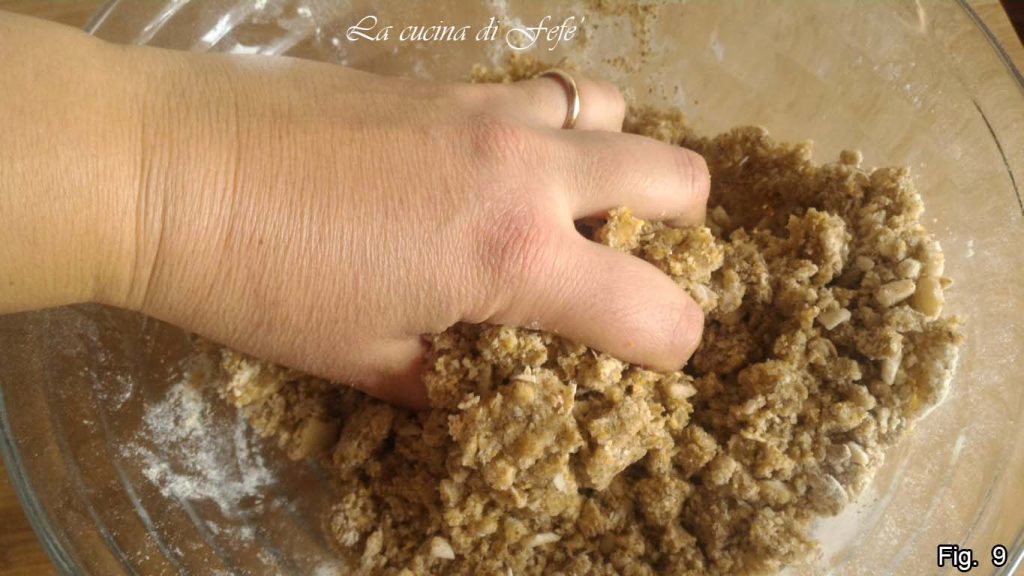
When the mixture becomes more solid, start kneading by hand until you get a compact and grainy mixture (fig. 9).
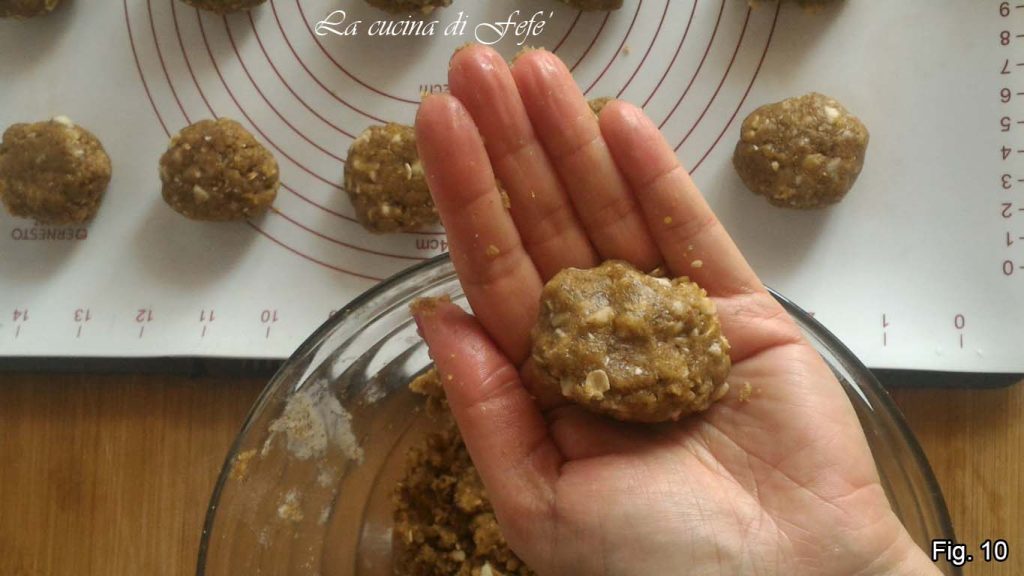
With your hands always well moist, take small portions of this mixture and form balls slightly larger than a walnut (fig. 10).
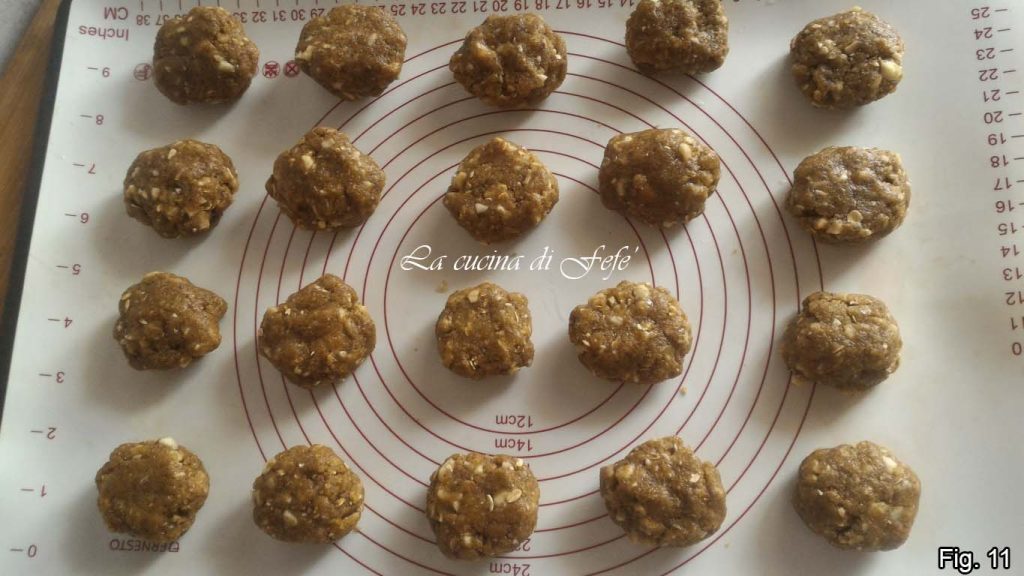
Place them well apart on a baking tray lined with parchment paper and bake in a preheated static oven at 350°F for about 15-18 minutes, but always check based on the power of your oven (fig. 11).
Remove from the oven and let cool completely on a rack (fig. 12).

Sprinkle with powdered sugar if desired.


 And voilà… the cookies with lentil flour and almonds are ready to be enjoyed!
Bon Appetit from La Cucina di FeFè!

Storage
👉 You can store the cookies with lentil flour and almonds at room temperature in a suitable airtight container for one week.
Tips, Notes, Variations, and Suggestions
🔵How to substitute lentil flour in this recipe: Lentil flour is chosen in these cookies for its high protein content. If you wish to replace it while maintaining the same nutritional profile or a similar texture, you can substitute it with other legumes that have a more neutral flavor. Suitable substitutes include: chickpea flour, the most common substitute. It has a similar structure but a slightly more pronounced flavor (which fades with cooking). Pea flour, similar in nutritional values, tends to be sweeter but may give a greenish tint to the dough. Soy flour is also excellent for its high protein content and helps make cookies very crumbly thanks to the natural lecithin it contains. Finally, more unusual is Lupin Flour, also very high in protein and with an intense yellow color, it gives a very pleasant toasted note. If you want to avoid the herbal aftertaste typical of legumes, try also oat flour which can make the cookies very soft and “comforting”. It is also rich in fiber and has a moderate glycemic index. Finally, rice flour (preferably whole): For a very crunchy and light texture (but less protein).
