
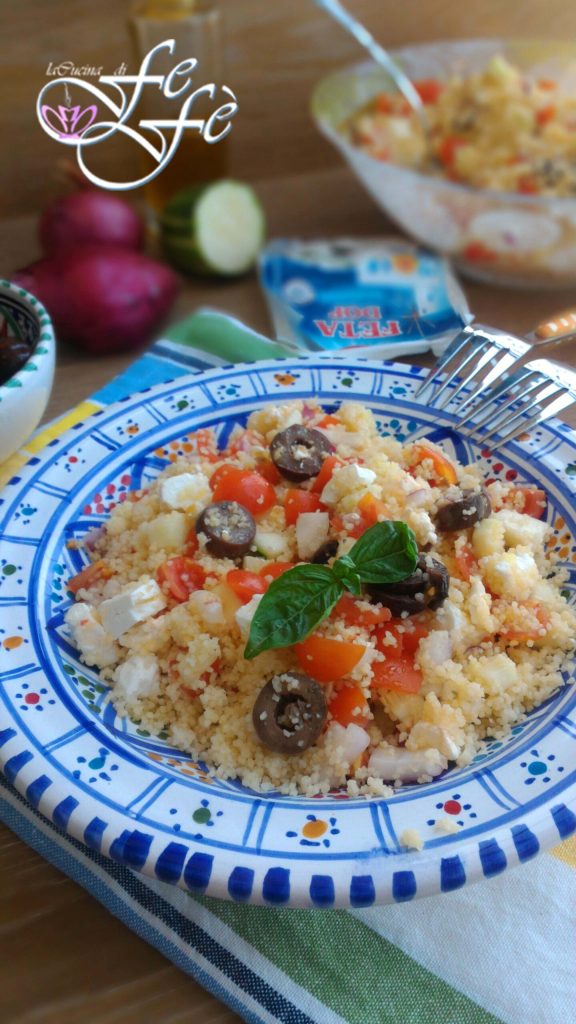
Perhaps in these seven years of blogging, I have never told you about my immense love for couscous! It might be due to the connection with my homeland, as even today, after the Arab domination, it remains a real gem in the Sicilian tradition of Trapani, with a Festival in San Vito lo Capo! It’s so versatile in the kitchen; I would eat it every day if I could! The dish I’m presenting today is incredibly unique because it marries three cultures, the Arab, Greek, and Italian. A superb contamination, where the culinary heritage of Morocco, Algeria, and Tunisia meets the flavors of Greek and Italian cuisine! This is thanks to the feta in the first case, a semi-hard yet crumbly cheese made with goat and sheep milk, and the use in the second case of the Calabrian red onion, Pachino cherry tomatoes, and Pugliese melon. A combination I highly recommend trying because it will surprise you with its final result and ease of preparation! For those who cannot find cherry tomatoes and melon, you can always substitute with grape tomatoes and cucumbers. The result will still be excellent! Just steam the couscous for a few minutes, cut all the ingredients raw, and assemble them. A piece of cake! You’ll get a vegetarian, colorful, fresh and light main course, which can also be prepared a day in advance, to be enjoyed during your summer outdoor lunches or at informal dinners with friends! Try it and let me know.
CURIOSITY: Did you know that couscous arrived in Sicily from Africa starting from the Arab domination? Later, it spread more massively in the nineteenth century, when workers from the Trapani area began to travel to Tunisian coasts exporting culture and tradition. Naturally, there are differences between Trapani’s couscous and that of North Africa, which specifically concern the cooking phase.
Source: www.scorcidimondo.it
If you love, like I do, to enjoy fresh and light dishes in summer, here are some other ideas to inspire you:
- Difficulty: Very Easy
- Cost: Economical
- Preparation time: 10 Minutes
- Portions: 4
- Cooking methods: Steam
- Cuisine: Italian
- Seasonality: Spring, Summer
Ingredients
⚠ THIS RECIPE CONTAINS ONE OR MORE AFFILIATE LINKS. The products I recommend are the same ones I use in my recipes; purchasing them through my blog helps support me and my work, and it won’t cost you anything extra!
- 1 cup couscous
- 1 cup cherry tomatoes
- 5 oz feta cheese
- 1 Pugliese melon (or 1 cucumber)
- 1 Tropea red onion
- 2 oz Greek black olives (or baked black olives)
- A few leaves basil
- 2 tablespoons extra virgin olive oil (+ as needed for seasoning)
- as needed salt
Tools
- 1 Cutting board
- 1 Pan
- 1 Lid
- 1 Fork
- 1 Knife
- 1 Bowl
- 1 Salad bowl
Steps
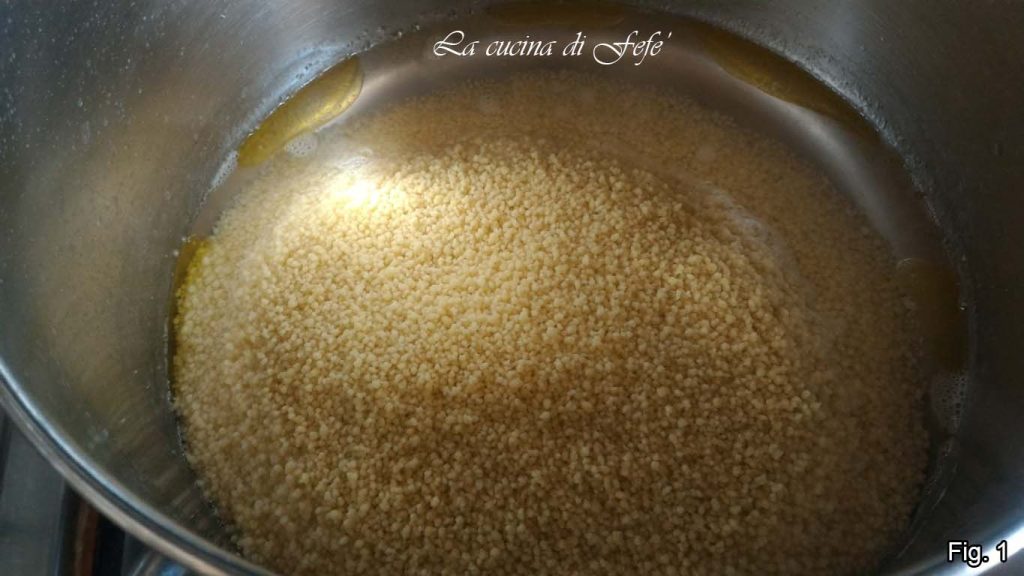
Measure the same amount of water as the couscous, unless the package indicates otherwise. Transfer the water to a pan along with 2 tablespoons of oil, turn on the heat and when it almost boils, turn off and drizzle in the couscous.
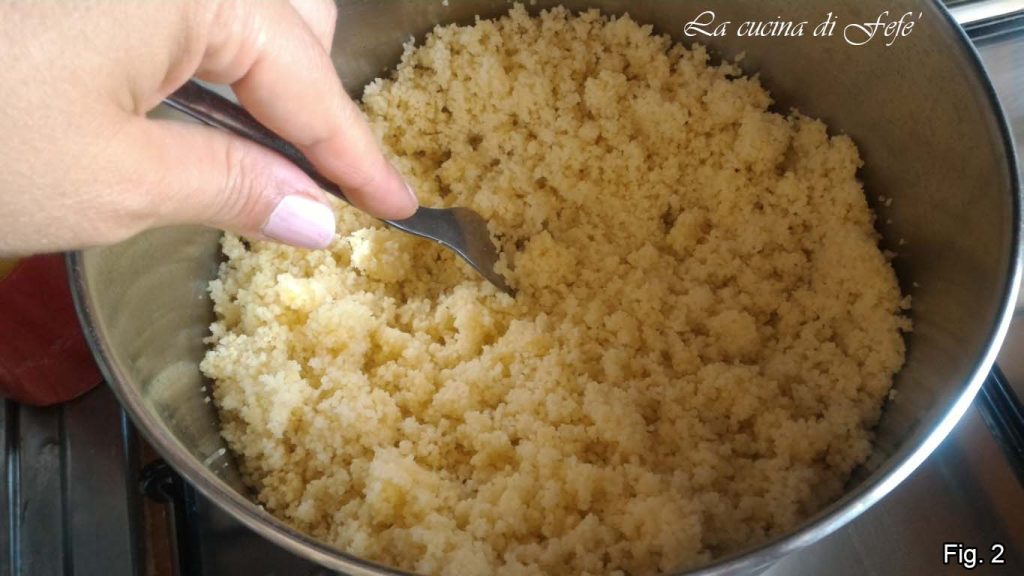
Cover with a lid and let it rest for 5′. The water will be completely absorbed. Lift the lid and fluff the couscous with a fork.
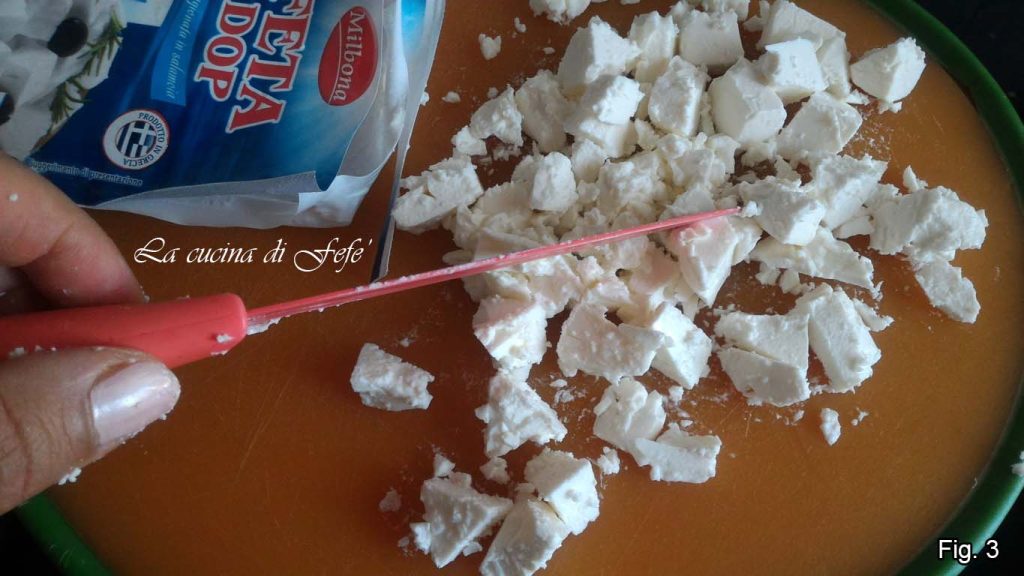
Transfer to a large salad bowl and let it cool down. Meanwhile, on a cutting board, cut the feta into cubes.
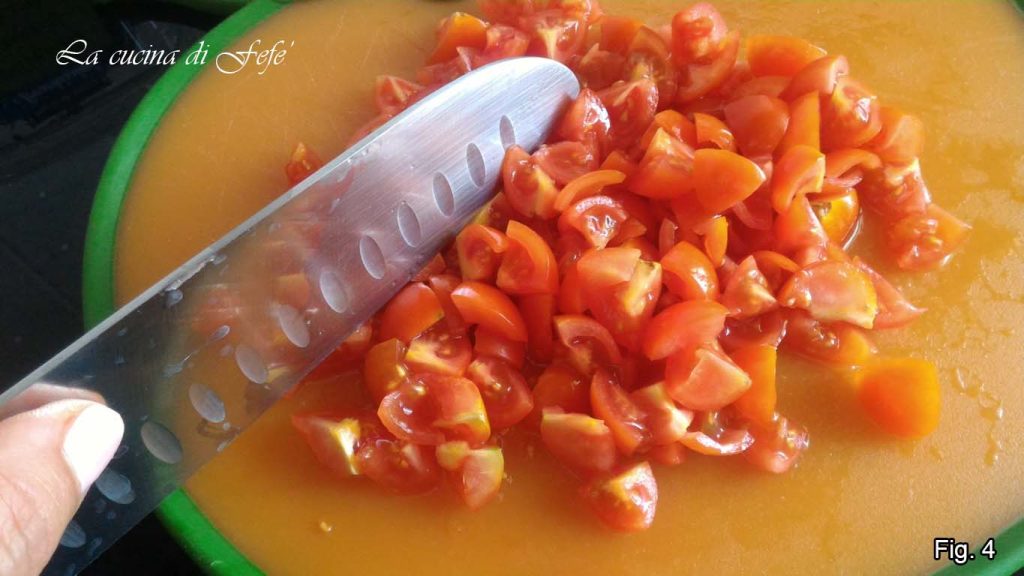
Wash and dry the cherry tomatoes with paper towels, then cut them into quarters if they are larger or in half for smaller ones.
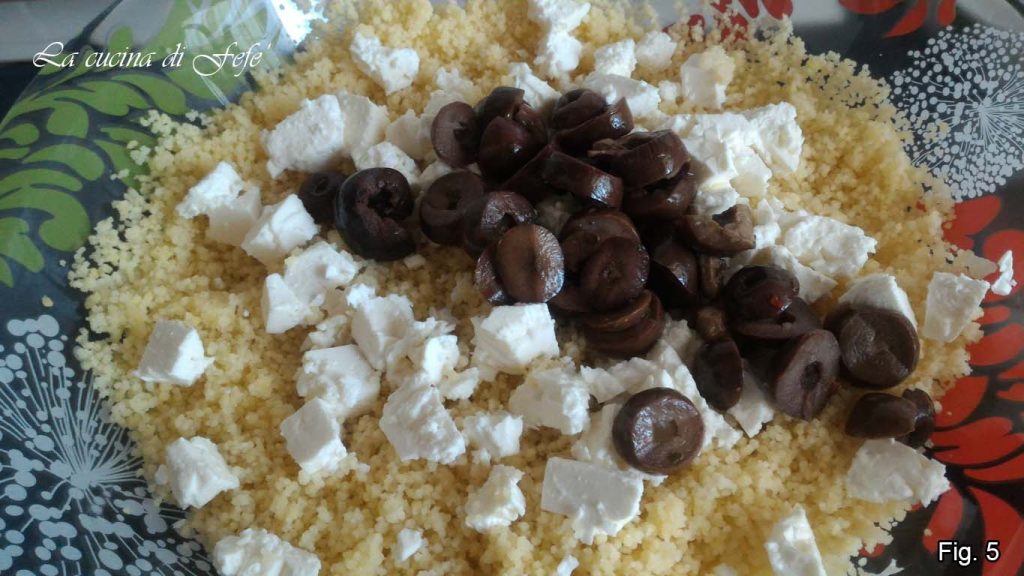
Start assembling your couscous by adding the feta and pitted olives.
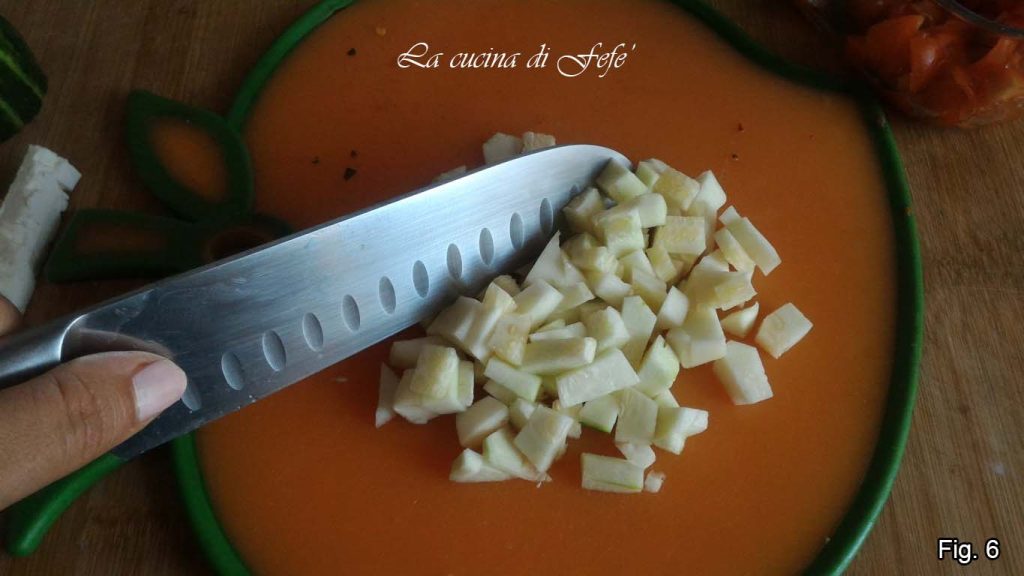
Wash, peel, and cut the Pugliese melon into chunks.
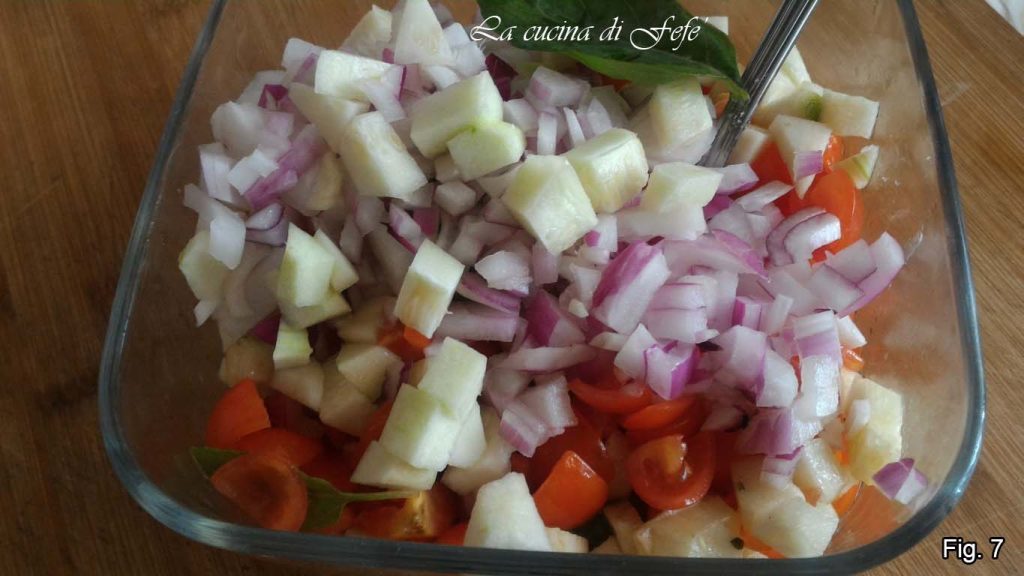
Add it to the cherry tomatoes and the onion also cut into chunks. Season with oil, salt and basil leaves, and mix well.
Add the dressing to the couscous and mix well, then refrigerate until serving. If you prefer, it can also be served and enjoyed immediately, slightly warm.
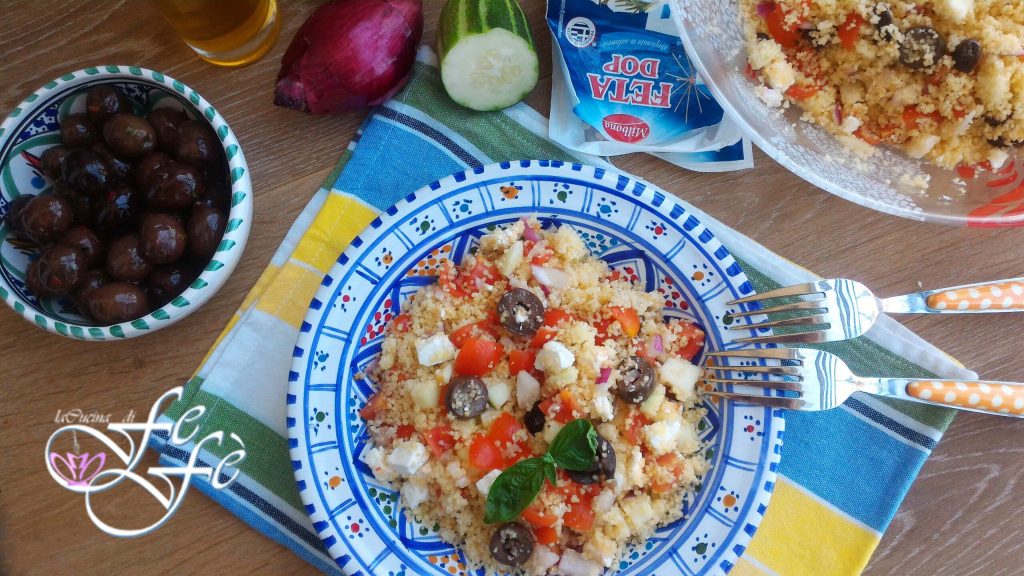
And voilà… the Greek couscous is ready to be enjoyed!
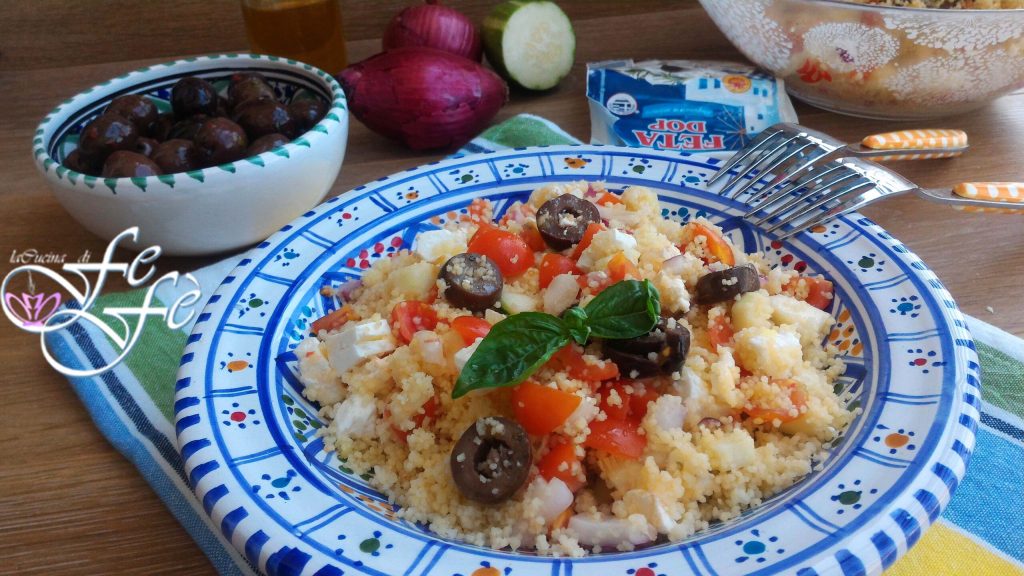
Bon Appetit from La Cucina di FeFè!
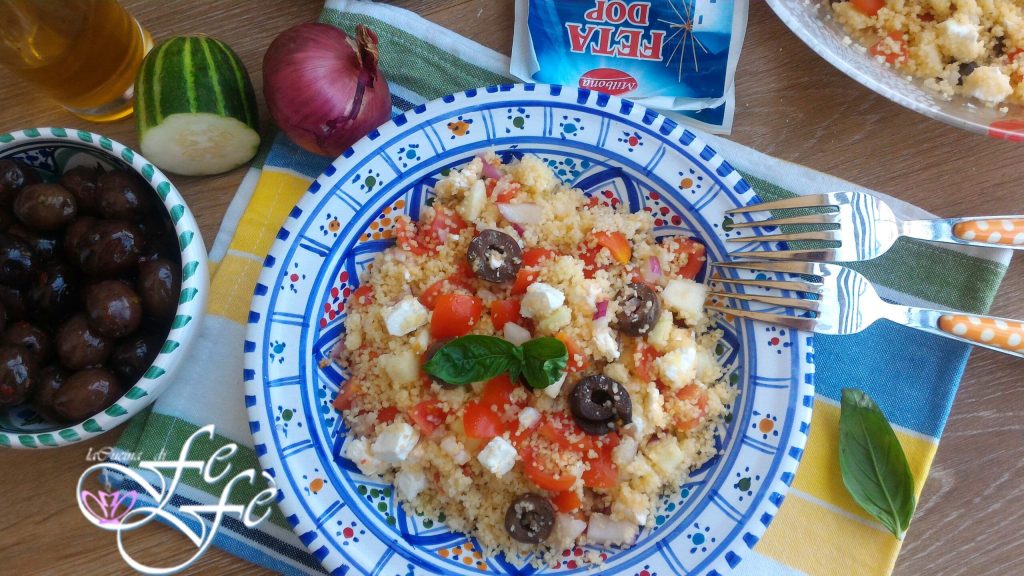
Storage
👉 Greek couscous can be stored in the refrigerator for up to 3 days in appropriate refrigeration containers, preferably glass.
